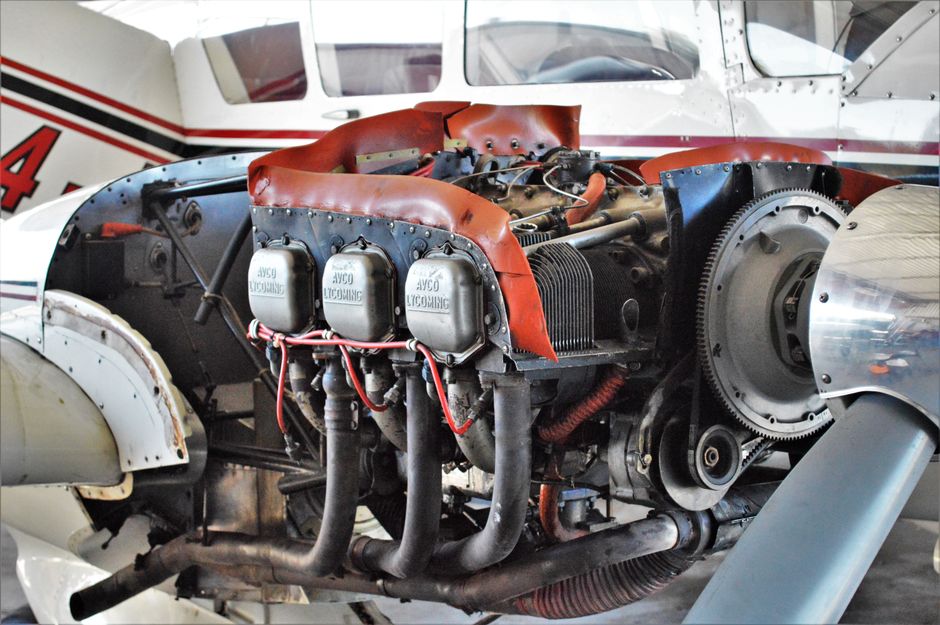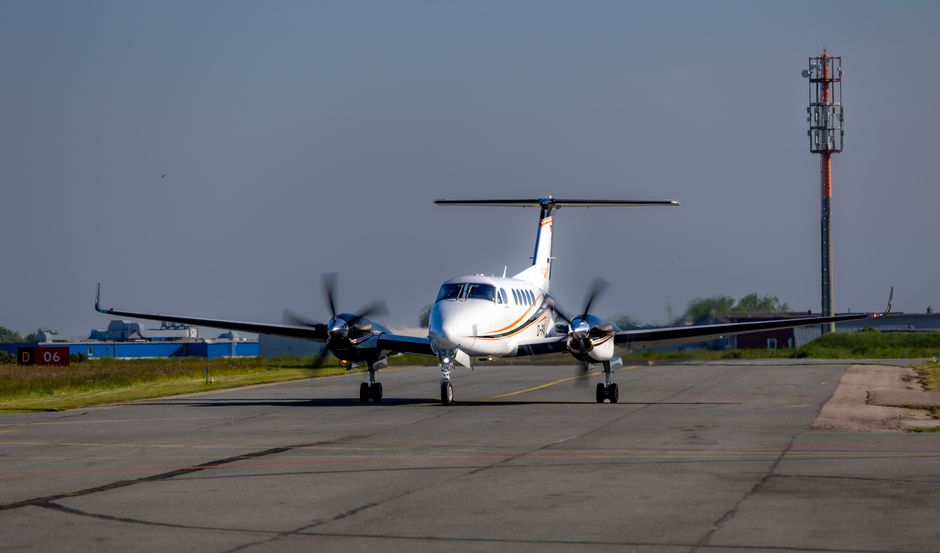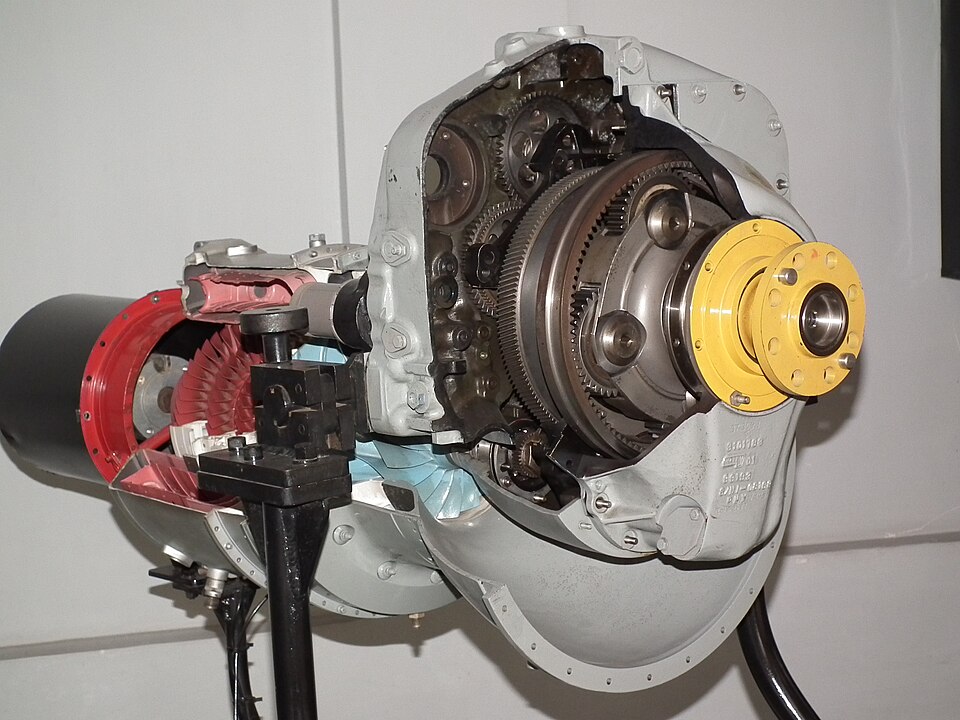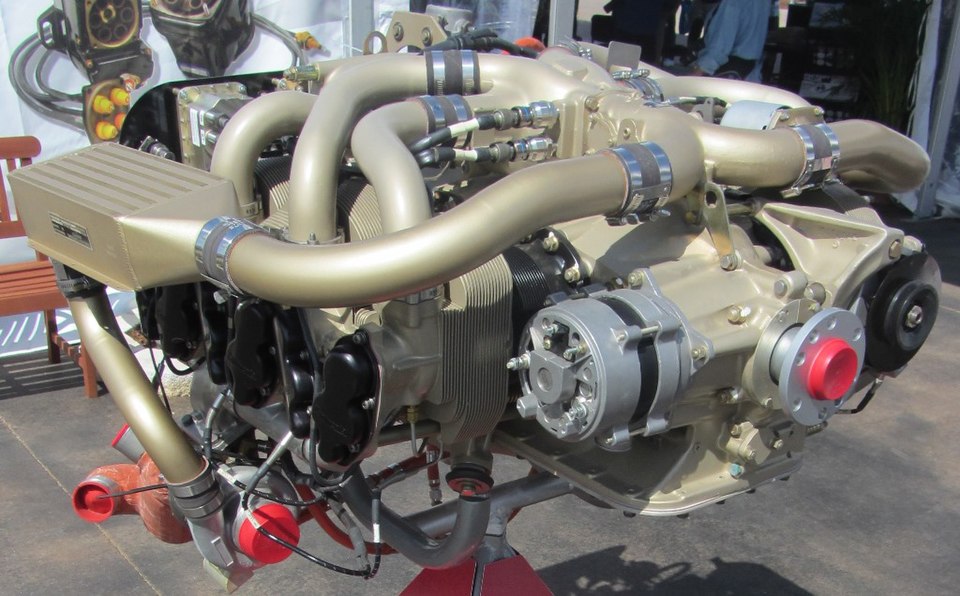
If you've been shopping for a high-performance piston single — or trying to make sense of what's under the cowl of your current airplane — you've almost certainly run into two names: the Continental IO-550 and its turbocharged sibling, the TSIO-550.
Both engines share the same family tree, the same displacement, and a whole lot of internal architecture. But they perform very differently once you leave the pattern and start climbing.
The difference between these two engines really comes down to one fundamental thing: how well they breathe at altitude. That single factor shapes everything from cruise speed to overhaul costs to which airplane you should be looking at in the first place.
This guide breaks down the Continental IO-550 vs TSIO-550 in plain language — what makes them different, where each one excels, and what ownership actually looks like day to day.
Key Takeaways
The Continental IO-550 is a naturally aspirated engine best suited for low- to moderate-altitude flying, while the TSIO-550 is a twin-turbocharged version of the same engine built to deliver consistent power at high altitudes. Both engines share a 552 cubic-inch displacement and a six-cylinder horizontally opposed layout, but the TSIO-550 adds two turbochargers that maintain near sea-level manifold pressure well above 20,000 feet. The IO-550 is simpler and generally less expensive to maintain; the TSIO-550 delivers altitude performance the naturally aspirated version simply cannot match — and that difference is the heart of the Continental IO-550 vs TSIO-550 comparison.
| Feature | IO-550 | TSIO-550 |
| Displacement | 552 in³ (9.05 L) | 552 in³ (9.05 L) |
| Horsepower | 280–310 hp | 310–360 hp |
| Max RPM | 2,700 rpm | 2,500–2,700 rpm |
| Induction | Naturally aspirated | Twin turbocharged |
| Compression Ratio | 8.5:1 | 7.5:1 |
| TBO | 1,900–2,200 hrs | 1,800–2,200 hrs |
| Typical Aircraft | Bonanza, Cirrus SR22 | Cirrus SR22T, Cessna P210 |
| Fuel | 100/100LL avgas | 100/100LL avgas (some variants: 94UL) |
| Relative Complexity | Lower | Higher |
| Relative Overhaul Cost | Lower | Higher |
Flying411 helps pilots cut through the noise when comparing aircraft engines and evaluating ownership options. It's a practical, no-fluff resource worth bookmarking before your next aircraft search.
A Quick History of the Continental 500 Series
To fully understand the IO-550 and TSIO-550, it helps to know where they came from. Continental Aerospace Technologies™ — formerly known as Teledyne Continental Motors, or TCM — introduced the 500-series engine family in 1964, initially powering the Beechcraft Bonanza and the Cessna Centurion. That is a legacy worth pausing on: these engines have been trusted by pilots for more than six decades, across hundreds of thousands of flight hours.
The 550-series itself traces its lineage directly to the IO-520, long one of the most widely used piston aircraft engines in general aviation. The generational progression is elegantly simple. The IO-470 came first. The IO-520 was essentially an IO-470 fitted with cylinders featuring a slightly larger bore — increasing displacement to 520 cubic inches. Then the IO-550 extended the stroke by a quarter of an inch (from 4.0 to 4.25 inches), pushing displacement to 552 cubic inches without changing the basic engine architecture.
Fun Fact: The 500 series is said to have powered more general aviation aircraft over its lifetime than almost any other piston engine family. Continental's 500-series lineup includes both 520 and 550 cubic-inch models in naturally aspirated and turbocharged configurations — covering a remarkable range of performance needs from a single design family.
Most parts are interchangeable across these engine generations, which makes the 500 series especially appealing for operators who want upgrade flexibility. Continental Aerospace Technologies™ continues to produce both new and rebuilt variants of these engines today. If you want to see how Continental's broader lineup stacks up against its main competitor, this comparison of Continental vs Lycoming aircraft engines is a helpful place to start.
Understanding the IO-550: The Naturally Aspirated Workhorse
The IO-550 stands for Injected, Opposed, 550. It is a six-cylinder, horizontally opposed, air-cooled, fuel-injected engine that produces between 280 and 310 horsepower depending on the variant. The first IO-550 was delivered in 1983, and the type remains in production today — a strong signal of its durability and market acceptance.
What Makes the IO-550 Stand Out
A few characteristics define this engine and explain why it has remained a popular choice for decades:
- Fuel injection from the start: There is no O-550 carbureted variant. The IO-550 was designed from day one with fuel injection, delivering better fuel distribution across all six cylinders and more reliable starting compared to carbureted engines.
- High compression ratio: The naturally aspirated IO-550 runs an 8.5:1 compression ratio, which extracts maximum energy from every gallon of avgas at low to moderate altitudes.
- Max RPM of 2,700: Most IO-550 variants are rated at 2,700 rpm. Producing full rated horsepower at a lower RPM than the IO-520 (which ran higher) means less mechanical stress per operating cycle.
- Long TBO on key variants: The IO-550-N, -P, and -R variants carry a 2,200-hour TBO — among the longest in the normally aspirated general aviation class.
- Multiple variants for different airframes: The IO-550 family includes the -A, -B, -C, -D, -E, -F, -G, -L, -N, -P, and -R, each optimized for specific aircraft installations and power requirements.
Pro Tip: The IO-550-N is one of the most common variants in the fleet, powering the Cirrus SR22. If you're shopping for an SR22, understanding the engine's time remaining to TBO is one of the most important factors in valuing the aircraft.
The IO-550 was built as an evolution of the IO-520, producing more torque at lower RPM through increased displacement — not by spinning faster, but by doing more work with each piston stroke. That efficiency advantage pays dividends in fuel economy and engine longevity.
IO-550 Variant Quick Reference
| Variant | HP | RPM | Notes |
| IO-550-A/B/C | 300 hp | 2,700 | Early variants, various airframes |
| IO-550-D | 300 hp | 2,700 | Cessna 182 STC applications |
| IO-550-F/L | 300 hp | 2,700 | Cross-flow head design |
| IO-550-N/P/R | 310 hp | 2,700 | Cirrus SR22, 2,200-hr TBO |
Understanding the TSIO-550: Turbocharged Altitude Performance
The TSIO-550 — Turbocharged, Supercharged, Injected, Opposed, 550 — is the twin-turbocharged version of the same basic engine. It shares the same 552 cubic-inch displacement, the same bore and stroke, and most of the same core architecture. The defining difference is forced induction.
By adding two turbochargers, the TSIO-550 compresses the incoming air before it enters the combustion chamber. This effectively allows the engine to maintain near sea-level intake conditions even at high altitudes, where the air is thin and naturally aspirated engines begin losing power rapidly. The turbochargers are driven by exhaust gases, so they add power capability without drawing mechanical energy from the crankshaft.
Key Specs and Capabilities
- Power range: Most variants produce between 310 and 360 hp, with some variants such as the TSIO-550-B rated at 350 hp at 2,700 rpm.
- Lower compression ratio: The TSIO-550 uses a 7.5:1 compression ratio rather than the IO-550's 8.5:1. Lower compression prevents detonation under boost pressure — a critical design consideration in any turbocharged engine.
- Weight penalty: The twin turbochargers and associated hardware add roughly 56 to 70 pounds compared to a naturally aspirated IO-550 of similar configuration.
- Higher operating ceiling: The TSIO-550 maintains full rated manifold pressure well above where the IO-550 begins losing power — a key advantage for pilots who routinely operate above 18,000 feet.
Good to Know: The TSIO-550-K, used in the Cirrus SR22T, is designed to run on 94UL fuel thanks to its lower 7.5:1 compression ratio. As the aviation industry continues to transition away from leaded avgas, this fuel flexibility may become increasingly valuable to operators.
The TSIO-550 powers aircraft like the Cirrus SR22T and several pressurized singles where consistent power output at high altitude is essential to mission performance. The turbocharged configuration also expands the engine's practical cruise altitude ceiling, allowing pilots to climb above most weather and take advantage of favorable winds at flight levels inaccessible to naturally aspirated aircraft.
Continental IO-550 vs TSIO-550: 8 Key Differences That Matter to Pilots
This is where the comparison gets practical. Here is what you will actually experience as a pilot or owner when choosing between these two powerplants.
1. Altitude Performance
This is the most important difference between the two engines, and it shapes everything else. A naturally aspirated engine like the IO-550 loses manifold pressure as it climbs because there is less air per unit volume at higher altitudes. The throttle can be pushed full forward and the engine will still produce less and less power as altitude increases.
The IO-550, with its larger displacement compared to the IO-520, holds on a bit longer. Many operators report that a well-running IO-550 can maintain reasonable manifold pressure up to around the upper teens in altitude — somewhat better than the older IO-520, which is said to begin losing pressure around 18,000 feet. But once that ceiling is reached, performance falls off meaningfully.
The TSIO-550 does not face this limitation in the same way. Its turbochargers continuously compress the intake air, keeping the engine producing near-rated power at altitudes well above 20,000 feet — all the way up to the airframe's certified service ceiling.
Heads Up: Altitude performance numbers vary significantly based on temperature, density altitude, and the specific variant. Always cross-check performance data against the Pilot's Operating Handbook for your specific aircraft and engine combination.
2. Horsepower Output
The IO-550 produces between 280 and 310 hp across its variants. The TSIO-550 pushes 310 to 360 hp — and critically, it delivers that power consistently at cruise altitudes where the IO-550 would be significantly down on rated output.
At sea level, the difference in raw horsepower between similarly rated variants is modest. At 22,000 feet, the gap widens considerably: the IO-550 may be producing well under its rated output, while the TSIO-550 continues to produce near-rated power.
3. Engine Weight
A naturally aspirated IO-550 weighs roughly 456 to 510 pounds depending on the specific variant and installed accessories. The TSIO-550 is heavier — the twin turbochargers alone add approximately 56 to 70 pounds, and the associated oil cooler, intercooler, and ducting add more weight still. Fully equipped turbocharged 550-series variants can weigh between roughly 540 and 670 pounds.
That is a meaningful difference for weight-and-balance calculations, particularly in high-performance singles where useful load is already at a premium.
4. Fuel Consumption and Fuel Flexibility
At similar percentage-of-power cruise settings, fuel burn numbers between the two engines are not dramatically different. Both run on 100LL avgas as standard, and both reward careful leaning technique with meaningful fuel savings.
The TSIO-550-K stands out here: it is certified to run on 94UL fuel, a significant practical advantage as the general aviation industry moves away from leaded 100LL. The standard IO-550, with its higher 8.5:1 compression ratio, is more sensitive to fuel octane and does not share this flexibility.
In practice, pilots flying turbocharged aircraft at altitude often operate at higher power percentages — which increases fuel flow beyond what the horsepower numbers alone might suggest.
Pro Tip: At power settings of 65% or less, both the IO-550 and TSIO-550 can typically be leaned aggressively — right to peak exhaust gas temperature (EGT). This is one of the best ways to extend engine life and reduce operating costs on either engine.
5. Maintenance Complexity
The IO-550 is a relatively straightforward engine to maintain. Without turbochargers, there are no wastegate actuators, no intercooler cores to inspect, no turbo bearing seals, and no turbine inlet temperature (TIT) limits to manage. Annual inspection and routine maintenance costs are generally lower than for the TSIO-550.
The TSIO-550 demands more attention. Turbocharger care is critical: proper cooldown periods after landing, careful management of boost pressure during climb, and consistent TIT monitoring are all non-negotiable. Continental cylinders in turbocharged applications are known to be more susceptible to early wear when the engine is not operated carefully — something owners of TSIO-520 and TSIO-550 aircraft often discover the hard way.
The turbocharger components add meaningful cost to each overhaul cycle, and pre-TBO cylinder replacements are more common in turbocharged variants than in normally aspirated ones.
6. TBO and Overhaul Costs
Most IO-550 variants carry a TBO (Time Between Overhaul) of 1,900 to 2,200 hours. The IO-550-N, one of the most common variants in the fleet, is rated at 2,200 hours. Factory overhaul costs for IO-550 engines vary by provider and configuration, but are generally lower than for turbocharged variants.
The TSIO-550 family carries TBOs generally in the range of 1,800 to 2,200 hours depending on the specific variant. Factory overhaul costs for the TSIO-550-K — the Cirrus SR22T engine — are significantly higher than for a comparable normally aspirated IO-550. The turbochargers themselves represent meaningful additional cost at each overhaul interval.
Good to Know: Smart owners of 550-series aircraft typically set aside an engine reserve fund on a per-hour basis to avoid sticker shock at overhaul time. Planning for pre-TBO cylinder replacements — especially on turbocharged variants — is a wise approach to budgeting for long-term ownership.
Flying411 has guides on aircraft ownership costs that can help you build a realistic budget before committing to a high-performance airplane.
7. Aircraft Applications
The IO-550 is found in a wide range of popular aircraft:
- Beechcraft Bonanza (F33A and A36) — IO-550-B
- Cirrus SR22 (normally aspirated versions) — IO-550-N
- Columbia 300 and 350 — IO-550-N
- Various Cessna 200-series models and STC-equipped conversions
The TSIO-550 powers aircraft requiring altitude performance:
- Cirrus SR22T — TSIO-550-K
- Cessna P210 (certain variants and STC configurations)
- Various pressurized and turbonormalized singles
The supplemental type certificate (STC) market has meaningfully expanded the TSIO-550's reach. A number of STC providers offer conversion paths that allow certain airframes to accept turbocharged 550-series engines, giving owners of older aircraft a route to improved altitude performance.
8. Compression Ratio and Fuel Sensitivity
The IO-550's 8.5:1 compression ratio extracts maximum energy from each charge of air and fuel — but it also makes the engine more sensitive to fuel octane quality. Running lower-octane fuel in a high-compression engine risks detonation, which can cause serious internal damage if left unchecked.
The TSIO-550's 7.5:1 compression ratio is a deliberate engineering decision. Lower compression reduces sensitivity to fuel octane, which is why the TSIO-550-K can run on 94UL. As avgas supplies and formulations continue to evolve across general aviation, this design choice may prove to be a lasting advantage for turbocharged 550-series operators.
How Both Engines Relate to the IO-520 and TSIO-520
You cannot fully appreciate the IO-550 and TSIO-550 without understanding their predecessors. The IO-520 and TSIO-520 are still among the most widely operated piston engines in general aviation, and the 520-to-550 upgrade path is a well-worn one.
The relationship between these engines is direct and logical. The IO-520 displaces 520 cubic inches using a bore of 5.25 inches and a stroke of 4.0 inches. The IO-550 stretches that stroke to 4.25 inches, increasing displacement to 552 cubic inches. The result is more torque at lower RPM — the IO-550 can achieve its full rated power output without spinning as fast as the IO-520, which is generally better for internal engine components.
The turbocharged TSIO-520 and TSIO-550 follow exactly the same pattern. Both use forced induction to maintain power at altitude; the 550-series simply does it from a larger displacement base, which means it reaches altitude power ceilings slightly higher than the TSIO-520 before the turbochargers are working at their limits.
Fun Fact: According to various aviation sources, the TSIO-520 has been said to be one of the most widely installed turbocharged piston engines in general aviation history. Its successor, the TSIO-550, carried forward that legacy with improved displacement and, on certain variants, greater fuel flexibility.
Most engine mounts, accessories, and ancillary components are largely compatible across the 520 and 550 families, which is why the upgrade path from a TSIO-520 to a TSIO-550 has been pursued by many owners seeking more performance from their existing airframe. This kind of engine-family continuity is one of Continental's most practical engineering advantages.
For context on how Continental's smaller engines compare within the broader landscape, the Continental O-200 vs Lycoming O-235 comparison shows how the same manufacturer's design philosophy plays out at the low-displacement end of the spectrum. And if you're exploring alternative powerplants for lighter aircraft, Lycoming O-235 vs Rotax 912 covers the budget-conscious end of the piston market with useful depth.
Operating Tips for Both Engines
Good engine management separates powerplants that reach TBO from ones that require expensive pre-TBO intervention. The following practices apply to both the IO-550 and TSIO-550 — with a few additional considerations for the turbocharged variant.
Ground Operations and Leaning
Both engines are set up with a rich idle mixture to facilitate cold starts. Taxiing full-rich is unnecessary and genuinely hard on the engine — it contributes to exhaust valve carbon deposits, wastes fuel, and can dilute the oil film on cylinder walls. The right approach is to lean aggressively for taxi: pull the mixture back until the engine stumbles slightly, then enrichen just enough for smooth idle.
Cruise Power Management
Continental has historically recommended up to 75% power for continuous cruise, but many experienced operators favor 55–65% for better fuel economy and long-term engine health. At 65% power or below, both the IO-550 and TSIO-550 can typically be leaned right to peak EGT without risk — a setting that reduces fuel burn and promotes cleaner combustion.
Running at lower RPM with a higher manifold pressure (rather than high RPM with low MP) is generally easier on both engines. For the TSIO-550 specifically, this approach also helps manage the heat load on the turbocharger components.
Quick Tip: If your aircraft has engine monitor capabilities — and on a modern Continental-equipped piston single, it almost certainly does — use it. Monitoring individual cylinder EGT and CHT allows you to lean more confidently and catch developing cylinder issues before they become expensive.
Turbocharged-Specific Practices (TSIO-550)
The TSIO-550 adds a layer of discipline that the IO-550 does not require. After a flight at high power, the turbocharger bearings and housings are extremely hot. Idling the engine for several minutes at low power before shutdown allows oil flow to carry heat away from the turbocharger internals. Shutting down a hot turbocharger without this cooldown period is one of the most common causes of premature turbocharger failure.
Turbine inlet temperature is the limiting parameter on the TSIO-550. Mixture adjustments — especially after a throttle change — can cause TIT to spike rapidly. Inattention here is one of the most direct paths to expensive overhaul surprises.
Heads Up: Continental cylinder issues in turbocharged applications are notably more common when engines are operated aggressively without proper temperature management. The TSIO-550 rewards careful, methodical pilots — and it is less forgiving of inattention than the naturally aspirated IO-550.
A Note on the IOF-550 and FADEC
It is worth mentioning one additional variant in the 550-series family: the IOF-550. This is an IO-550 equipped with an Aerosance FADEC (Full Authority Digital Engine Control) system. Rather than relying on the pilot to manually manage the mixture control, FADEC automates fuel flow management based on operating conditions.
The practical advantages of FADEC are meaningful. It removes the risk of operator leaning errors, can optimize fuel economy automatically, and simplifies cockpit workload — particularly for pilots transitioning from turbine aircraft or for training environments. While the IOF-550 is not a mechanically different engine, it represents a significant operational departure from standard IO-550 management.
Good to Know: FADEC-equipped engines eliminate the traditional red mixture knob from the cockpit. For pilots accustomed to manual mixture management, the transition to a FADEC-equipped airplane requires a mental adjustment — but most operators report that the workload reduction is well worth it.
A turbocharged FADEC variant, the TSIOF-550-J, also exists. It combines the altitude performance of the TSIO-550 with automated engine management — an appealing combination for operators who want turbocharged performance without the full complexity burden of manual TIT and mixture control.
Which Engine Is Right for You?
The answer depends almost entirely on where and how you fly.
Choose the IO-550 if:
- Most of your flying takes place below roughly 15,000 feet
- You want simpler maintenance and lower overhaul costs
- You are buying a Beechcraft Bonanza, Cirrus SR22 (non-turbocharged), Columbia, or similar normally aspirated aircraft
- Minimizing empty weight for useful load is a priority
- You prefer a less complex powerplant with fewer critical operating considerations
Choose the TSIO-550 if:
- You regularly fly above 18,000 feet or need to climb high to avoid weather
- You want consistent cruise speeds at altitudes where the IO-550 is down on power
- You are operating or buying a Cirrus SR22T or a similar turbocharged or pressurized platform
- You are willing to invest the time and discipline that careful turbocharged engine management requires
- Fuel flexibility — particularly 94UL capability on the TSIO-550-K — is a meaningful priority for your operation
For most private pilots flying cross-country at moderate altitudes, the IO-550 offers excellent performance with lower complexity and total operating cost. Pilots who need to routinely cross mountain ranges, climb above weather, or cruise at flight levels inaccessible to naturally aspirated aircraft will find the TSIO-550's altitude capability genuinely transformative.
Keep in Mind: The best engine for your operation is not necessarily the most powerful one — it is the one that fits your typical mission, your maintenance budget, and your discipline as a pilot. Both the IO-550 and TSIO-550 are excellent engines when operated correctly.
If you are evaluating turbo-related powerplants in a different displacement class, it may also be helpful to look at how turbocharged Rotax engines compare. The Rotax 914 vs 915 article covers that comparison in detail, and Rotax 915iS vs 916iS digs into the newer FADEC-equipped turbocharged options for lighter sport and experimental aircraft.
Conclusion
The Continental IO-550 and TSIO-550 are both proven, capable aircraft engines with decades of service history behind them. The IO-550 is the simpler, more affordable choice that excels at low to moderate altitudes and rewards pilots with straightforward operation and solid TBO life. The TSIO-550 is the altitude performer — delivering consistent power well above where the normally aspirated engine runs out of breath, at the cost of greater mechanical complexity and higher total ownership expenses.
Understanding the Continental IO-550 vs TSIO-550 difference is not just an academic exercise. It directly shapes which aircraft you should buy, how you should fly it, and what you will spend to keep the engine healthy over the long term. Whether you are choosing between an SR22 and an SR22T, evaluating a Bonanza, or simply trying to decode a logbook entry, knowing your engine means knowing your airplane.
For clear, practical guidance on aircraft engines, ownership costs, and buying decisions, Flying411 is the resource worth bookmarking before your next move in aviation.
Frequently Asked Questions
What does TSIO stand for in TSIO-550?
TSIO stands for Turbocharged, Supercharged, Injected, Opposed — indicating the engine is turbocharged, fuel-injected, and uses a horizontally opposed cylinder arrangement.
Can an IO-550 be converted to a TSIO-550?
Not through a direct swap, but supplemental type certificates (STCs) exist for adding turbonormalizing systems to IO-550-powered airframes. This approach adds turbocharging while retaining the IO-550's compression ratio — a common path for owners seeking better altitude performance without a full engine replacement.
How often do Continental 550-series engines need spark plug inspection?
Continental generally recommends inspecting and rotating spark plugs approximately every 100 hours, with replacement intervals depending on plug type and operating conditions. Following the manufacturer's maintenance schedule closely is the most reliable approach.
Is the TSIO-550 more reliable than the IO-550?
Both engines are considered reliable when properly maintained. The TSIO-550 has more components — particularly the turbochargers — that require attentive management and represent additional potential failure points compared to the simpler IO-550. Reliability on the TSIO-550 is closely tied to how disciplined the operator is with temperature management and cooldown procedures.
What aircraft most commonly use the IO-550?
The most widely operated IO-550-powered aircraft include the Beechcraft Bonanza (F33A and A36), the Cirrus SR22 (non-turbocharged versions), the Columbia 300 and 350, and various Cessna 200-series models, depending on the specific variant and any STC modifications applied.
What is the difference between the IO-550 and IO-520?
The IO-520 and IO-550 share nearly identical architecture. The key difference is stroke length: the IO-550 has a quarter-inch longer stroke, which increases displacement from 520 to 552 cubic inches. The IO-550 produces its full rated horsepower at a lower RPM than the IO-520, which generally means slightly less mechanical stress per operating hour.
How does the TSIO-550-K differ from other TSIO-550 variants?
The TSIO-550-K was developed specifically for the Cirrus SR22T. It uses lower-compression 7.5:1 pistons — the same as other TSIO-550 variants — but was further refined with structural and cooling enhancements tailored to the SR22T airframe. Notably, it is certified to operate on 94UL fuel, making it one of the more forward-looking options in the 550-series family as the general aviation industry works toward reducing reliance on leaded 100LL avgas.
Is it worth upgrading from an IO-520 to an IO-550?
For many operators, yes — particularly if the airframe supports an STC for the IO-550 and the IO-520 is approaching overhaul anyway. The IO-550 produces more torque at lower RPM, which many pilots find results in smoother operation and slightly better climb performance. The longer TBO on certain IO-550 variants is also a meaningful financial consideration when planning an overhaul budget.