Two engines have powered more General Aviation aircraft than almost anything else in the sky — the Lycoming IO-540 and the Continental IO-550. Both are naturally aspirated, fuel-injected, six-cylinder powerhouses. Both have logged millions of flight hours on everything from backcountry bush planes to slick composite speed machines. And yet, pilots argue about them constantly at every hangar, fly-in, and online forum you can find.
So what's actually going on here? Are these engines really that different, or is the debate mostly tribal loyalty?
The answer is: a bit of both. The Lycoming IO-540 and Continental IO-550 share a lot of common ground — but they also have genuine, meaningful differences in design philosophy, power delivery, fuel burn, maintenance habits, and the types of aircraft they call home. Understanding those differences can help you make a smarter decision when buying, upgrading, or shopping for your next airplane.
This guide breaks down everything you need to know about the Lycoming IO-540 vs Continental IO-550 debate — from the basics of how each engine works to real-world performance, ownership costs, and which one might be the better fit for your flying style.
Key Takeaways
When comparing the Lycoming IO-540 and Continental IO-550, both engines are excellent six-cylinder powerplants, but they suit different aircraft and flying styles. The IO-540 is known for its torquey, low-revving power delivery and widespread use in heavier, high-wing aircraft. The IO-550 runs at higher RPM, produces more peak horsepower in many configurations, and is found in faster, sleeker airplanes like the Cirrus SR22. Neither engine is universally "better" — the right choice depends on your aircraft, mission, and maintenance preferences.
| Feature | Lycoming IO-540 | Continental IO-550 |
| Displacement | 540 cubic inches | 550 cubic inches |
| Typical HP Range | 235–300 hp | 280–310 hp |
| TBO (typical) | 2,000 hours | 1,700–2,000 hours |
| RPM (max) | 2,575–2,700 RPM | 2,700 RPM |
| Fuel Injection | Yes | Yes |
| Common Aircraft | Piper, Beechcraft, Cessna twins | Cirrus SR22, Beechcraft Bonanza |
| Overhaul Cost (est.) | $25,000–$40,000+ | $25,000–$45,000+ |
| Lean of Peak Capable | Yes (with proper setup) | Yes (with proper setup) |
Flying411 is your go-to resource for general aviation knowledge. Whether you're comparing engines or shopping for your next aircraft, Flying411 helps you fly smarter.
A Brief History of Two Powerplant Dynasties
To understand the rivalry, you have to understand where each engine came from.
Lycoming has been building aircraft engines since the 1920s, and its flat-engine designs have been a staple of general aviation since the postwar boom. The Lycoming IO-540 family emerged in the 1950s and 1960s to power a growing fleet of larger single-engine and light twin aircraft. Over the decades, it became one of the most produced piston aircraft engines in history.
Continental — now trading as Continental Aerospace Technologies — has a similarly storied history. Its engines powered some of the most iconic aircraft of the mid-20th century. The IO-550 is a more recent development, derived from the earlier IO-520 (and before that, the O-520 family), with Continental engineering more displacement and performance into the design starting in the 1980s and 1990s.
Fun Fact: The Continental IO-520 — the IO-550's direct predecessor — was the engine of choice for the legendary Beechcraft Bonanza for many years. The IO-550 evolved from that lineage to meet growing demand for higher-output powerplants in faster GA aircraft.
Both engines represent decades of refinement. Neither is new technology in the radical sense — but both continue to be improved, supported, and produced today.
Understanding the Basics: What Makes These Engines Different?
Before diving into specific numbers, it helps to understand the fundamental design differences between these two engine families.
Displacement and Cylinder Design
The Lycoming IO-540 displaces 540 cubic inches across six cylinders, while the Continental IO-550 squeezes out 550 cubic inches. That's a small difference on paper — but the way each engine achieves its displacement tells a bigger story.
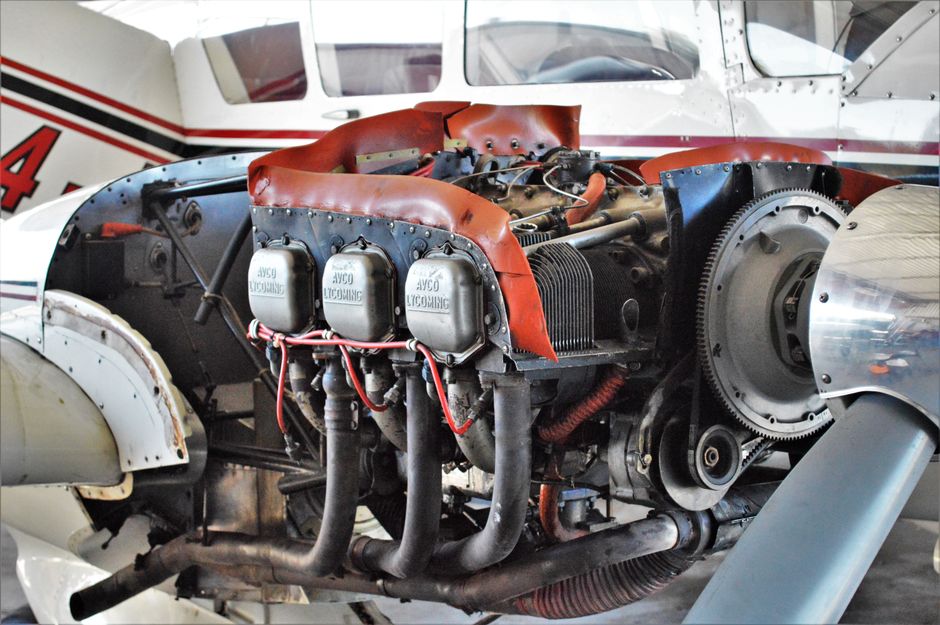
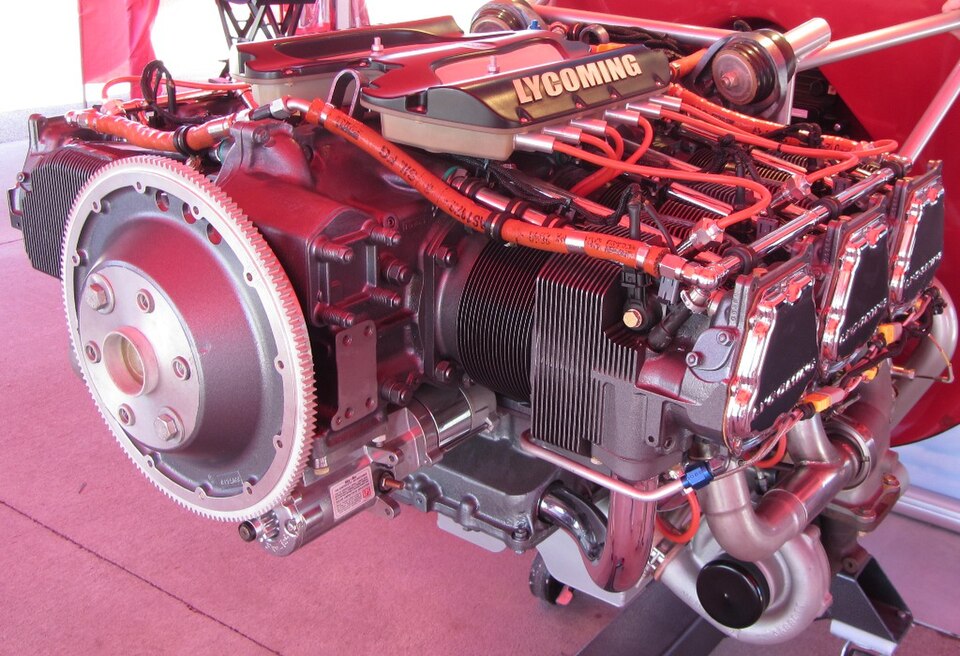
Lycoming uses a horizontally opposed layout with a relatively large bore and stroke combination. Its cylinders are mounted directly to the crankcase in a way that's become synonymous with "Lycoming feel."
Continental has traditionally used a slightly different approach to cylinder geometry. The IO-550 features what many describe as a smoother, higher-revving character compared to the more torque-heavy Lycoming.
The Angle Valve vs. Parallel Valve Debate
One of the most talked-about differences in the Lycoming vs Continental world is valve orientation.
Continental's IO-550 uses an angle valve cylinder design. The intake and exhaust valves are angled, which allows for a larger combustion chamber, a more centrally located spark plug, and generally better breathing at higher RPM. This design is one reason Continental engines tend to produce strong peak horsepower and run efficiently at high power settings.
Lycoming's IO-540 uses a parallel valve design in many of its variants (though some variants do use angle valves). Parallel valve heads are simpler, time-tested, and work very well across a wide RPM range.
Good to Know: The angle valve design in Continental engines is one reason they're particularly well-suited for higher-performance applications. It contributes to strong top-end power and efficient combustion geometry.
Crankshaft and Engine Architecture
Another notable difference: the crankshaft in each engine.
Lycoming uses a four-throw crankshaft with a nitrided steel design that many mechanics praise for durability. Continental's crankshaft design differs in geometry and has historically required different maintenance attention. Neither is definitively superior — but they do require different approaches to overhaul and inspection.
Power, Performance, and RPM Characteristics
Let's get into the numbers that matter for actual flying.
Lycoming IO-540: Torque and Low-End Grunt
The IO-540 is known for producing strong torque at relatively low RPM. Most variants redline at around 2,575 to 2,700 RPM, and they produce peak torque lower in the RPM range than many comparable Continental engines.
This makes the IO-540 feel responsive and authoritative at lower throttle settings. It's a great engine for aircraft that need strong climb performance with heavy loads — think backcountry flying, floatplanes, or bush operations.
Common power ratings for the IO-540 family include 235 hp, 250 hp, 260 hp, 290 hp, and 300 hp variants, depending on the specific model and compression ratio.
Continental IO-550: High-Revving Horsepower
The Continental IO-550 tends to shine at higher RPM settings. Most variants reach their peak horsepower — often 300 hp or slightly more — closer to the 2,700 RPM redline.
This gives IO-550-powered aircraft a different feel: a bit smoother at cruise, with a slight tendency to "like" being run at or near max RPM to produce best power. Pilots flying IO-550-equipped aircraft like the Cirrus SR22 often describe a silky, high-revving character that pairs well with the aircraft's slippery aerodynamics.
Pro Tip: If you're evaluating an aircraft with an IO-550 and want to feel it at its best, make sure you run it up to the numbers it was certified for. Running a Continental IO-550 at reduced RPM for extended periods can sometimes lead to incomplete combustion and valve-related issues.
Fuel Consumption: GPH, LOP, and Real-World Burn
Fuel burn is one of the biggest ownership considerations for any piston aircraft, and both engines are capable of very efficient operation — if you fly them correctly.
Typical Fuel Burn Numbers
| Operating Mode | IO-540 (approx.) | IO-550 (approx.) |
| Full Rich, Full Power | 20–25 gph | 22–26 gph |
| 75% Power, Best Power | 15–18 gph | 16–20 gph |
| Lean of Peak (LOP) | 10–14 gph | 10–14 gph |
| Economy Cruise | 11–15 gph | 12–15 gph |
These figures are approximate and vary significantly by specific variant, aircraft installation, altitude, and pilot technique.
Lean of Peak Operations
Both engines are capable of lean of peak operations when properly set up with modern fuel nozzles, engine monitors, and the right technique. Flying LOP can reduce fuel burn significantly — sometimes by 30–40% compared to full-rich operation — while also reducing cylinder head temperatures and engine wear.
The IO-550 has a reputation for being slightly more tolerant of aggressive LOP operations due to its angle valve cylinder design, which supports more complete combustion. The IO-540 can absolutely be flown LOP, but some variants require more careful leaning technique.
Why It Matters: Flying lean of peak is one of the most impactful ways to reduce fuel costs and extend engine life. Both the IO-540 and IO-550 support LOP operations, but proper training and a quality engine monitor are essential before attempting it.
For more background on how different engine families approach fuel injection and mixture management, the comparison of Continental vs. Lycoming aircraft engines is a great place to start.
Where You'll Find These Engines: Aircraft Applications
The IO-540 and IO-550 each have a well-established list of aircraft they call home. Understanding these pairings helps clarify what each engine was designed to do.
Aircraft Powered by the Lycoming IO-540
- Piper PA-32 Cherokee Six / Saratoga — the IO-540 is practically synonymous with this aircraft family
- Piper PA-34 Seneca (paired engines in the twin configuration)
- Piper PA-44 Seminole (certain variants)
- Beechcraft Travel Air (some configurations)
- Cessna 210 variants (some configurations used IO-540 derivatives)
- Various experimental and homebuilt aircraft — the IO-540 is extremely popular in the experimental world due to availability and parts support
The IO-540 also has turbocharged cousins — the TIO-540 — which bring forced induction to the platform for high-altitude performance.
Fun Fact: The Lycoming IO-540 family is one of the longest-running and most diverse piston engine families in aviation history, with dozens of certified variants spanning several decades of production.
Aircraft Powered by the Continental IO-550
- Cirrus SR22 — perhaps the most recognizable modern IO-550 application
- Beechcraft Bonanza G36 — the Continental IO-550 replaced earlier IO-520 variants in this iconic aircraft
- Beechcraft Baron 58 (Continental-powered versions)
- Piper PA-46 Malibu Mirage — powered by the Continental TSIO-520, a close relative
- Columbia 400 / Cessna TTx — turbocharged TSIO-550 variant
- Various Mooney models — the Mooney M20 series has been fitted with Continental IO-550 variants in several configurations
The Continental IO-550 also spawned the turbocharged TSIO-550, which appears in high-performance singles and twins needing significant altitude performance.
TBO, Overhaul, and Long-Term Ownership Costs
Time Between Overhaul — commonly called TBO — is one of the most important engine specs for any aircraft owner.
Lycoming IO-540 TBO
The Lycoming IO-540 typically carries a manufacturer-recommended TBO of 2,000 hours. Many operators achieve this or come close to it with proper maintenance, regular use, and attention to oil consumption and valve health.
One thing Lycoming engines are well-known for: they tend to be forgiving of the "fly it regularly" principle. An IO-540 that gets flown frequently, kept on a regular oil change schedule, and treated with care can often reach or approach TBO without major surprises.
Continental IO-550 TBO
The Continental IO-550 typically carries a TBO of 1,700 to 2,000 hours, depending on the specific variant and whether it's a factory new or rebuilt engine.
Heads Up: TBO is a manufacturer recommendation, not an FAA mandate for most Part 91 operators. Many owners fly well past TBO with regular inspections and monitoring. However, for insurance and resale purposes, engines approaching or beyond TBO are worth scrutinizing carefully.
Overhaul Costs: What to Budget
Engine overhaul is one of the biggest expenses in aircraft ownership. Here's a rough breakdown:
| Engine | Field Overhaul (est.) | Factory Rebuild (est.) |
| Lycoming IO-540 | $25,000–$35,000 | $35,000–$50,000+ |
| Continental IO-550 | $25,000–$40,000 | $38,000–$55,000+ |
These are ballpark figures and vary considerably based on the specific overhaul shop, parts prices, condition of your core, and current market rates. Always get multiple quotes.
Flying411 covers everything from engine decisions to buying and selling aircraft — check out the resources at Flying411 for guidance on what to look for when evaluating an airplane's engine status before purchase.
The IO-540 vs IO-550: A Head-to-Head Breakdown
Here's where we pull it all together. If you're trying to decide between an aircraft powered by an IO-540 versus one with an IO-550, here are the key factors to weigh:
1. Power Output and Peak HP
The Continental IO-550 generally edges out the IO-540 in peak horsepower — many IO-550 variants are rated at 300 hp or slightly above, while the IO-540 typically tops out at 300 hp in its highest-output configurations. The difference is modest, but real.
2. Torque and Low-RPM Performance
The Lycoming IO-540 produces more torque lower in the RPM range. For aircraft that need strong climb performance with heavy loads — or for operations where you're often flying at partial power — this can be an advantage.
3. Fuel Efficiency and LOP Capability
Both engines are capable of efficient LOP operations. The Continental IO-550's angle valve design may offer a slight edge in combustion efficiency at the top of the RPM range, while the IO-540's parallel valve design is proven and predictable across the power band.
4. Maintenance Culture and Mechanic Familiarity
This matters more than people sometimes admit. In many parts of the U.S., Lycoming engines have a slight edge in mechanic familiarity, particularly at smaller FBOs and rural airports. Both engines have excellent parts availability, but Lycoming's parts ecosystem is often described as marginally simpler to navigate.
5. Aircraft Platform and Mission
This is often the deciding factor. If you're buying a Cirrus SR22, you're buying an IO-550. If you're buying a Piper Saratoga, you're buying an IO-540. The engine comes with the airframe — and that pairing has been optimized over thousands of hours of engineering and certification work.
6. Valve and Cylinder Health
Continental IO-550 engines have a reputation for valve-related issues — particularly exhaust valve sticking and guide wear — if operated improperly or left to sit for extended periods. Lycoming IO-540 engines have their own known issues, including camshaft and lifter concerns in engines that sit unused.
Keep in Mind: Regardless of which engine you own, regular flying is one of the best maintenance practices you can follow. Piston aircraft engines that sit unused are far more likely to develop corrosion, sticking valves, and cam/lifter wear than those that are flown consistently.
7. Turbocharged Variants
Both engine families offer turbocharged options. The Lycoming TIO-540 and the Continental TSIO-550 are both excellent high-altitude powerplants, with the TSIO-550 appearing in some of the fastest naturally-aspirated-adjacent singles available in General Aviation.
If you're interested in how turbocharging changes the performance equation, the comparison of Rotax 914 vs 915 offers a useful look at how turbo vs. normally aspirated plays out in a different engine family context.
8. Resale Value and Market Demand
Aircraft equipped with Continental IO-550 engines — particularly Cirrus SR22 and Bonanza G36 models — tend to command strong resale values due to market demand for those airframes. IO-540-powered aircraft like the Piper Saratoga also hold reasonable value, though the market for each type varies by year, condition, and region.
Quick Tip: When evaluating any aircraft purchase, always check the engine's time since new (TSN) and time since overhaul (TSOH). An engine with 1,800 hours SMOH is a very different proposition than one with 200 hours on a fresh factory rebuild.
Comparing the IO-540 and IO-550 Families to Other Engines
It's worth briefly noting how these engines stack up against other options in the GA ecosystem.
The IO-540 and IO-550 are both significantly more powerful than four-cylinder alternatives like the Lycoming O-360 or O-320, or the Continental O-200. For a sense of how those smaller engines compare to each other, the Continental O-200 vs Lycoming O-235 breakdown offers useful context on the Lycoming vs. Continental question at a smaller displacement.
For pilots interested in modern alternatives — particularly in the light sport or experimental categories — the Lycoming O-235 vs Rotax 912 and Rotax 915iS vs 916iS comparisons show how radically different modern engine philosophies have become.
But for certified, high-performance single-engine and light twin operations, the IO-540 and IO-550 remain the dominant choices — and are likely to remain so for the foreseeable future.
What Pilots Actually Say: Real-World Impressions
Beyond specs and numbers, pilot feedback is revealing. Here's a summary of what the community tends to say about each engine:
IO-540 owners often describe it as:
- Torquey and responsive
- Easy to understand and work on
- Excellent for high-load operations
- "Just runs" with proper maintenance
IO-550 owners often describe it as:
- Smooth and refined at cruise
- Strong performer at higher altitudes
- Requires attention to valve health
- Well-matched to slick, high-speed airframes
Neither engine gets universally glowing reviews, and neither gets universally criticized. Both have loyal followings for good reasons.
Good to Know: Online aviation forums can be a great source of real-world owner experience, but they can also amplify problems disproportionately. An engine failure story gets far more attention than the tens of thousands of trouble-free hours flown on the same platform. Keep this in mind when reading forum threads about either engine.
Making the Decision: Which Engine Should You Choose?
The honest answer is that for most buyers, the engine chooses you — because you're buying an aircraft, not just an engine.
But if you're in a position to genuinely choose between airframes that offer either option, here's a simple decision framework:
Choose the IO-540 if:
- You need strong climb performance with heavy loads
- You fly frequently from shorter strips or challenging terrain
- You prefer a simpler, well-understood maintenance culture
- You're buying a Piper, certain Beechcraft, or an experimental
Choose the IO-550 if:
- You want maximum cruise performance and top-end power
- You're buying a Cirrus SR22 or Bonanza G36
- You're comfortable with slightly more attentive valve maintenance
- You want an engine with a strong reputation in high-performance composite airframes
Whatever engine your aircraft has — or whatever you're shopping for — Flying411 is a trusted resource for aircraft listings, ownership tips, and aviation guidance. Visit flying411.com to see what's available in your market.
Conclusion
The Lycoming IO-540 vs Continental IO-550 debate has filled hangar bull sessions and online forums for decades — and honestly, that's a good thing. Both engines deserve the attention. They're mature, capable, well-supported powerplants that have earned their place at the heart of general aviation.
The IO-540 is a workhorse: torquey, proven, and beloved in a wide range of aircraft that demand reliable power across a wide RPM range. The IO-550 is a thoroughbred: refined, efficient at cruise, and perfectly at home in the fast, sleek airframes that define modern high-performance GA flying.
Neither engine is a bad choice. The better question is: which aircraft is right for your mission? Start there, and the engine decision usually follows naturally.
If you're still comparing options or shopping for your next aircraft, Flying411 is a great place to start — with resources, listings, and guidance to help you find the right airplane and powerplant combination for the way you fly.
FAQs
Is the Lycoming IO-540 better than the Continental IO-550?
Neither engine is objectively better — they excel in different areas. The IO-540 offers strong low-RPM torque and is well-suited for heavier aircraft and high-load operations, while the IO-550 produces strong peak horsepower and works well in faster, slicker airframes like the Cirrus SR22.
How long does a Continental IO-550 last?
The Continental IO-550 carries a manufacturer-recommended TBO of 1,700 to 2,000 hours, depending on the variant. With proper maintenance, regular flying, and good operational habits (including lean-of-peak techniques), many engines approach or reach this figure.
What aircraft use the Lycoming IO-540?
The IO-540 powers a wide range of aircraft, including the Piper PA-32 Cherokee Six, Piper Saratoga, and various experimental aircraft. It's also used in some Cessna and Beechcraft models.
Can you run both the IO-540 and IO-550 lean of peak?
Yes, both engines are capable of lean-of-peak operations with proper setup, including an accurate engine monitor and well-calibrated fuel nozzles. Many owners use LOP operations to significantly reduce fuel burn and cylinder temperatures.
What is the difference between the IO-550 and the IO-520?
The Continental IO-550 is a development of the earlier IO-520, with slightly larger displacement (550 vs. 520 cubic inches), revised cylinder design, and generally higher power output. The IO-520 is the older design and is still found in many aircraft, but the IO-550 is considered the more modern successor.