Picture two pilots standing in front of their half-built experimental aircraft. One wants to blast through high-altitude backcountry strips in the Rockies. The other just wants reliable, familiar power he can wrench on himself with parts from down the street.
Both are looking at the same two engines: the Rotax 916 iS and the Titan 340.
These two powerplants sit at an interesting crossroads in light aviation today. They're both popular, both capable, and both carry loyal followings. But they come from very different design philosophies — and they reward very different types of pilots.
Picking the wrong one could mean leaving performance on the table, fighting your airframe's weight budget, or finding yourself stuck without a mechanic who knows your engine. Picking the right one could be the best decision you ever make for your build.
This post compares the differences, similarities, and more between Rotax 916 vs Titan 340 in detail.
Key Takeaways
The Rotax 916 iS is a turbocharged, fuel-injected engine producing 160 hp at a very light 189 lbs, making it exceptional for high-altitude and weight-limited aircraft. The Titan 340 is a normally aspirated, Lycoming-style engine producing up to 180 hp at around 245–260 lbs, offering a familiar, simpler platform with a lower entry price. If you fly at sea level and want simplicity and lower upfront cost, the Titan 340 is a strong choice. If you need consistent power at altitude, lighter weight, and modern electronic engine management, the Rotax 916 iS is the better long-term investment.
| Category | Rotax 916 iS | Titan 340 |
| Horsepower | 160 hp (takeoff), 137 hp (continuous) | Up to 180 hp |
| Weight | ~189 lbs (dry, with gearbox) | ~245–260 lbs (dry) |
| Induction | Turbocharged + intercooled | Normally aspirated |
| Max Altitude | 23,000 ft (full power to 15,000 ft) | Sea-level limited |
| TBO | 2,000 hours | 2,000–2,400 hours (ASTM) |
| Fuel | Avgas, Mogas, up to 10% ethanol | Primarily 100LL avgas |
| Cooling | Air + liquid-cooled heads | Air-cooled |
| Approx. Price (new) | ~$49,500+ | ~$28,000–$40,000+ (varies by config) |
| Pilot Interface | FADEC, single-lever | Throttle, mixture, carb heat (or EFI) |
| Best For | High altitude, weight-limited builds, international use | Low-altitude, budget-conscious, familiar builds |
If you're still weighing your engine options, Flying411 is a great place to start — connecting buyers and builders with the resources and aircraft knowledge they need to make confident decisions.
What Makes These Two Engines Different at Their Core
Before comparing spec sheets, it helps to understand where each engine comes from. They're built on completely different foundations, and that shapes everything — from how you fly them to how you fix them.
The Rotax 916 iS: Modern Aviation Tech in a Light Package
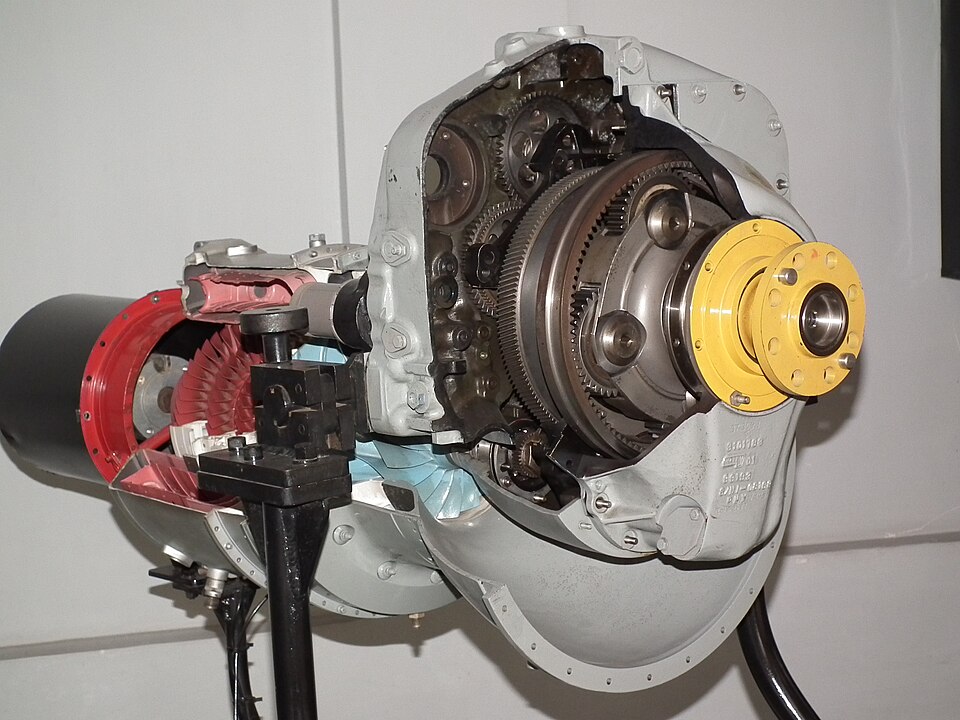
The Rotax 916 iS (often written as 916iS or 916is) is the newest member of BRP-Rotax's legendary 9-series family. Rotax introduced it publicly at the Sun 'n Fun Aerospace Expo in March 2023, debuting it in the CubCrafters Carbon Cub UL. It builds directly on the well-proven Rotax 915 iS platform — carrying over the same basic architecture but with recalibrated software, a reinforced crankshaft, beefed-up gearbox, larger intercooler, and an improved oil system to handle the added thermal load of more power.
The result? A turbocharged engine producing 160 hp at takeoff and 137 hp continuous, all from a package weighing just 189 lbs. That includes the reduction gearbox, turbocharger, and intercooler. That is a genuinely impressive number.
Fun Fact: The Rotax 916 iS can maintain full takeoff power all the way up to 15,000 feet — that's the critical altitude. It can operate up to 23,000 feet total. That kind of altitude performance from a sub-200-lb engine is remarkable by any measure.
The 916 iS uses FADEC (Full Authority Digital Engine Control), giving it redundant electronic fuel injection and ignition, automated mixture management, and a simplified single-lever throttle experience. It also runs on Mogas, avgas, and fuel with up to 10% ethanol — a huge plus for pilots flying internationally or in remote areas where 100LL may not be available.
The Titan 340: A Proven American Stroker With Deep Roots
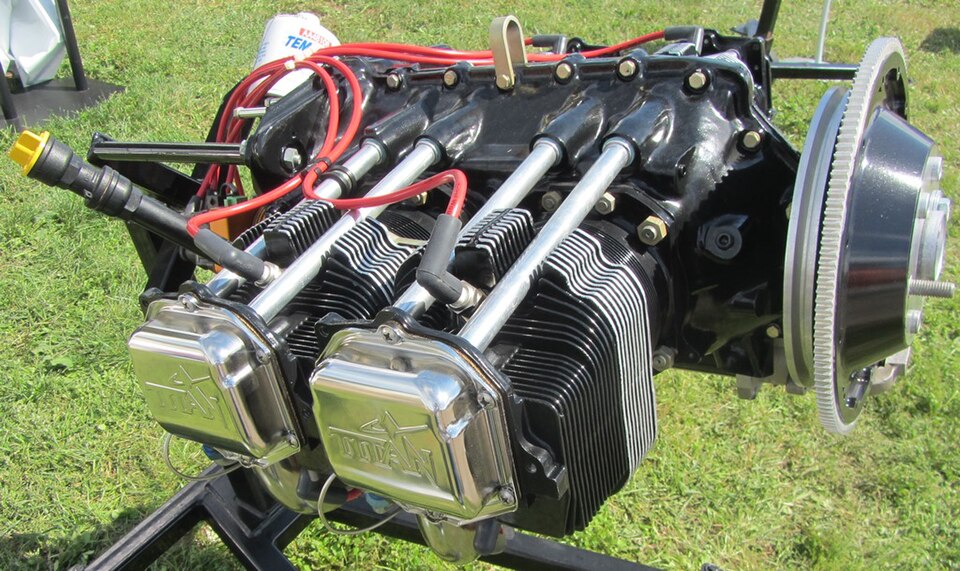
The Titan 340 has a different kind of heritage. It was originally developed by Engine Components, Inc. (ECi) — now owned by Continental Aerospace Technologies — as a stroker variant of the classic Lycoming O-320 platform. The idea was clever: take the compact O-320 footprint, stroke the crankshaft to 340 cubic inches of displacement, and extract up to 180 hp from that small package.
It weighs roughly 20 lbs less than a standard O-360 while putting out similar power. CubCrafters was one of the first big adopters, working with ECi to create the X340CC — a lightened version of the engine specifically for the Carbon Cub SS.
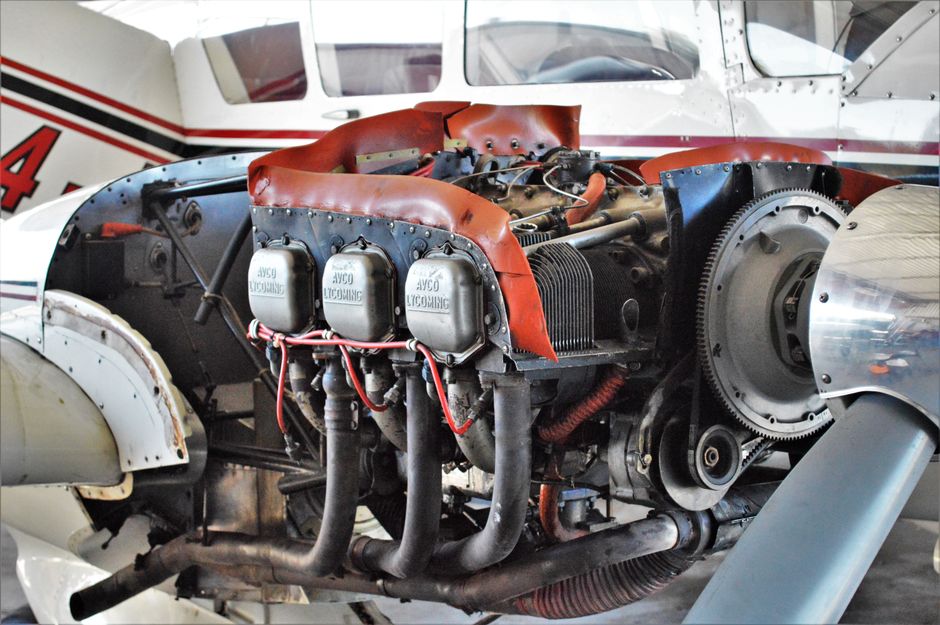
Good to Know: The Titan 340 is technically a Lycoming-lineage engine — not a Continental. Continental bought ECi and markets the Titan line, but the architecture traces back to Lycoming design. This matters for parts sourcing and mechanic familiarity.
The Titan 340 is direct-drive, air-cooled, and available with carburetors or fuel injection. It runs on avgas (100LL primarily), though in a pinch, premium automotive fuel can be used. It fits into an O-320 cowling and uses similar engine mounts and exhaust — a big deal for builders retrofitting an existing airframe.
Rotax 916 iS vs Titan 340: Head-to-Head Comparison
Here's where things get interesting. Let's go through the key categories one by one.
1. Horsepower and Power Delivery
On paper, the Titan 340 wins the horsepower race: up to 180 hp versus the Rotax 916's 160 hp at takeoff.
But raw peak numbers only tell part of the story.
The Titan 340 is a normally aspirated engine. Like all normally aspirated engines, it loses power as altitude increases. At a density altitude of 8,000 feet — common at high-elevation airports on warm summer days — a naturally aspirated engine may only be producing 70–75% of its sea-level power. So that 180 hp starts shrinking fast.
The Rotax 916, by contrast, is a turbocharged engine with a critical altitude of 15,000 feet. That means it can hold its full rated power all the way up to 15,000 feet MSL. At 8,000 feet density altitude? You still have close to full power on tap.
For sea-level takeoff at a coastal airport on a cool day, the Titan 340 produces more raw horsepower. For a hot August takeoff at a 6,000-foot Colorado strip, the Rotax 916 wins convincingly.
Why It Matters: If your home airport or typical flying area sits above 4,000–5,000 feet MSL, or if you frequently fly in hot weather, the turbocharger advantage of the Rotax 916 could make a bigger real-world difference than the 20-hp peak gap suggests.
2. Engine Weight and Aircraft Impact
This is one of the most decisive differences between these two engines.
The Rotax 916 iS weighs approximately 189 lbs — and that includes the reduction gearbox, turbocharger, and intercooler. The Titan 340 weighs approximately 245–260 lbs depending on configuration. That's a difference of roughly 55–70 lbs.
In light aircraft, especially LSA-category builds capped at 1,320 lbs max takeoff weight, every pound matters. Shaving 60 lbs off the nose means 60 more lbs of fuel, baggage, or passenger. For a two-seat STOL machine where useful load is always tight, this is a real advantage.
Pro Tip: Weight savings at the engine don't just help useful load — they can simplify ballast requirements and give you more flexibility with avionics and cockpit upgrades without busting your weight budget.
3. Altitude Performance
This category almost speaks for itself, but let's spell it out.
- Rotax 916 iS: Full takeoff power maintained to 15,000 ft. Maximum operating altitude of 23,000 ft.
- Titan 340: Normally aspirated. Power decreases with altitude at the standard atmospheric rate — roughly 3% per 1,000 feet.
The 916 iS is not simply turbonormalized (which would just restore sea-level pressure). It is a turbocharged (boosted) engine that can produce full-rated power above sea level. For backcountry flying in mountainous terrain, high-altitude strip operations, or cross-country flights over the Rockies, this is a defining advantage.
The CubCrafters Carbon Cub UL — the first aircraft to use the Rotax 916 — was specifically chosen because of the engine's ability to outperform the Titan CC340 in high-density altitude scenarios, according to CubCrafters.
4. Fuel Type and Flexibility
- Rotax 916 iS: Runs on Mogas (minimum AKI 91), avgas 100LL, leaded or unleaded, up to 10% ethanol
- Titan 340: Designed for 100LL avgas; premium automotive fuel permitted only in emergencies
This is a bigger deal than it might seem at first glance.
Avgas (100LL) is reliable and widely available at US airports. But prices fluctuate, and 100LL contains lead — an environmental concern that may affect its long-term availability. The EPA and FAA have both been working toward a transition to unleaded aviation fuels.
The Rotax 916's multi-fuel capability means it can run on cheaper Mogas at many airports and car stations. For international operations, this flexibility is essential in regions where avgas simply isn't available. That's actually one of the main reasons CubCrafters chose the 916 iS for the Carbon Cub UL — to open international markets.
The fuel burn picture is also favorable for the Rotax. At cruise in eco mode, the 916 iS reportedly consumes in the range of roughly 6–7 gph at typical cruise settings. The Titan 340, when properly leaned with fuel injection, can achieve under 8 gph at 65–75% power, but carburetor-equipped variants tend to burn more. The Rotax's FADEC system automatically optimizes the air-fuel mixture, making economy easier to achieve without pilot input.
Keep in Mind: Fuel burn comparisons between these two engines are highly sensitive to power setting, altitude, and whether you're running carbureted or injected. Real-world numbers vary. Talk to owners of each engine in similar airframes for the most relevant data.
5. Engine Weight, Cooling, and Installation Complexity
The Rotax 916 uses a hybrid cooling system: air-cooled cylinders with liquid-cooled cylinder heads. This is the same proven approach Rotax has used across the 9-series family. It keeps temperatures in check at high power settings, especially the heads where thermal stress is greatest.
The Titan 340 is fully air-cooled, like most traditional Lycoming-family engines. Air cooling is simpler — no coolant system, no radiator, no plumbing. But it requires well-designed baffling and proper cowling airflow management to keep CHTs in check during high-power operations.
The Rotax 916 also requires an intercooler for the compressed turbo air. This adds to installation complexity — more plumbing, more things to inspect, and a slightly different maintenance workflow. However, Rotax's engine and avionics integration via the FADEC system simplifies day-to-day operation considerably: there's no mixture control to manage in flight.
Installing a Titan 340 in an existing O-320 airframe is often fairly straightforward. The engine fits the same cowling, uses the same engine mount dimensions, and connects to familiar exhaust and baffle systems. That said, if you're swapping from a carbureted to an injected version, there are fuel system changes to account for.
6. Maintenance, TBO, and Support
Both engines carry a TBO of approximately 2,000 hours. The Titan 340 can also reach up to 2,400 hours under ASTM standards depending on configuration.
- Titan 340: Follows the familiar Lycoming maintenance workflow. Most A&P mechanics with experience on O-320s or O-360s will be comfortable with this engine. Parts are widely available through Continental's supply chain and aftermarket suppliers. Carburetor models are especially simple to work on.
- Rotax 916 iS: Requires an authorized Rotax technician for many service items. Rotax has a broad service network in the US, but it's not as universally accessible as traditional Lycoming-style mechanics. On the plus side, the FADEC system can be connected to Rotax's BUD diagnostic software — similar to how a car gets plugged into a code reader — making troubleshooting faster and more precise.
Heads Up: The Rotax 916 iS is a relatively new engine, introduced in 2023. While it builds on proven 9-series technology, long-term real-world reliability data is still accumulating compared to the Titan 340's longer track record in the field.
The Rotax 916 is also eligible for the Rotax Care extended warranty program, which covers the engine for five years or to TBO.
7. Price and Cost of Ownership
This is where the two engines diverge most sharply.
- Rotax 916 iS: Approximately $49,500 at launch, including a five-year warranty, according to AOPA reporting. This is a significant upfront investment.
- Titan 340: Starting prices have historically been in the $28,000–$40,000+ range depending on configuration, though prices have risen and wait times have extended significantly in recent years. Community discussions suggest costs can now approach or exceed $40,000+ for a fully configured engine.
The Rotax 916's higher price reflects its advanced technology: FADEC, turbocharging, intercooler, electronic fuel injection, and gearbox — all included in the package. The Titan 340 is more of a "you get what you configure" engine, with cost varying widely based on ignition type, fuel delivery, and accessories.
Over the full TBO lifecycle, the Rotax's better fuel efficiency and potential Mogas savings can help close the price gap — but the upfront delta is real and worth factoring into your budget.
For help evaluating the full picture of engine and avionics packages, financing options, and aircraft decisions, Flying411 offers a wealth of resources to support your aviation journey.
Which Aircraft Platforms Use These Engines?
Both engines have found homes in some of the most beloved STOL and experimental aircraft on the market.
Titan 340 aircraft include:
- CubCrafters Carbon Cub SS (CC340 variant)
- American Legend Super Legend HP
- Just Aircraft SuperSTOL
- Kitfox STi
- Rans S-21 (as an option)
- Zlin Outback / Shock Cub (European market)
Rotax 916 iS aircraft include:
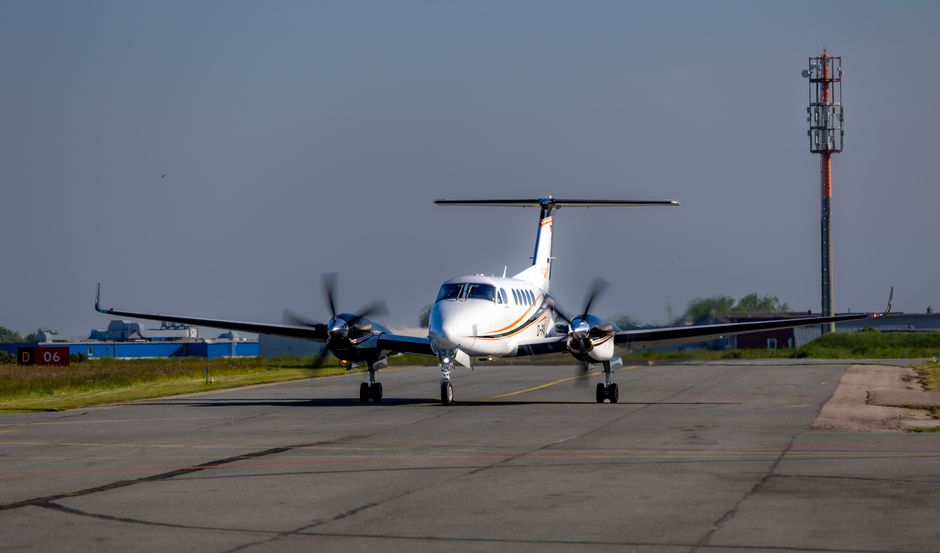
- CubCrafters Carbon Cub UL (the debut aircraft)
- Kitfox Super Sport
- Bristell B23 Turbo (certification in progress)
- Various experimental and kit builds
Fun Fact: The CubCrafters Carbon Cub UL powered by the Rotax 916 iS set an unofficial altitude record for its class, reportedly reaching above 37,000 feet during testing — an extraordinary demonstration of the engine's high-altitude capability.
It's worth noting that CubCrafters themselves use the Titan CC340 in the Carbon Cub SS (their classic production model) and the Rotax 916 iS in the Carbon Cub UL. The switch to the Rotax engine for the UL was driven specifically by weight savings, fuel flexibility, and international market needs. This real-world side-by-side context from a single respected manufacturer is about as direct a comparison as you'll find.
How the Rotax 916 iS Relates to the Rotax 915 iS
If you've been researching either of these engines, you've almost certainly come across the Rotax 915 iS — the predecessor to the 916. Understanding the difference matters.
The Rotax 915 iS produces 141 hp (some sources cite 135 hp continuous). The new Rotax 916 iS bumps that up to 160 hp at takeoff. According to Rotax, the 916 iS achieves the same maximum continuous power as the 915is but with 10–20% lower fuel consumption — a meaningful gain.
Marc Becker, head of the Rotax aviation engine division, described the 916 as essentially the same base engine as the 915 with "recalibrated software" and strengthened components. It also fits into existing 915 iS installations, which simplifies upgrades for builders who originally planned around the 915.
| Feature | Rotax 915 iS | Rotax 916 iS |
| Max Takeoff HP | 141 hp | 160 hp |
| Continuous HP | 135 hp | 137 hp |
| TBO | 1,200 hours (original) | 2,000 hours |
| Weight | ~185 lbs | ~189 lbs |
| Fuel Efficiency | Baseline | 10–20% better than 915 at same power |
The original Rotax 912 and Rotax 912 iS family are still popular in lighter, lower-powered builds — but the 916 represents the current top of the Rotax engine lineup for performance-oriented light aircraft. If you want to understand where the full Rotax and Lycoming family sits in the broader market, this comparison of Lycoming vs Continental vs Rotax aircraft engines is an excellent place to start.
Rotax 916 iS vs Titan 340: Which One Is Right for Your Aircraft?
Here's the honest breakdown. Neither engine is universally better. The right choice depends entirely on your mission, your airframe, and your priorities.
Choose the Rotax 916 iS if:
- You fly at high altitudes or in mountainous terrain. The 916's ability to hold full power to 15,000 feet is a genuine game-changer for backcountry and mountain flying.
- Your aircraft is weight-sensitive. Saving 55–70 lbs at the nose is significant in any LSA build and gives you more flexibility in useful load.
- You want modern, simplified cockpit management. FADEC eliminates the mixture control and automates fuel/ignition — less to think about in flight.
- You fly internationally or in areas with limited avgas access. The Rotax 916's multi-fuel capability makes it far more versatile globally.
- You value long-term fuel economy. Mogas capability and eco-mode efficiency can reduce operating costs over time.
- You're building a Carbon Cub UL or similar platform designed around the 916. Some airframes are purpose-built for this engine.
- You want a newer, warrantied engine with modern diagnostics. The five-year Rotax Care warranty and BUD diagnostic system add a layer of confidence.
- Your aircraft needs to meet ultralight-class weight limits in international markets. The 916's lighter footprint is critical for sub-400 kg empty weight targets.
Choose the Titan 340 if:
- You fly primarily at or near sea level. At low altitudes, the Titan 340's normally aspirated 180 hp is robust and more than adequate.
- Your budget is tighter. The Titan 340 has a significantly lower upfront cost than the Rotax 916.
- You want Lycoming-familiar maintenance. Most A&P mechanics in the US can work on the Titan 340 without specialized training.
- Your airframe is designed around an O-320/O-360 footprint. The Titan 340 fits existing cowlings, mounts, and exhaust — making it an easier swap for many builds.
- You prefer simplicity. Direct drive, air cooling, and conventional magneto or electronic ignition make for a mechanically simple powerplant.
- Avgas is reliably available where you fly. If you're always near airports with 100LL, the Titan's fuel limitation is rarely a problem.
- You have an existing RANS S-21 or similar kit aircraft with Titan-approved installation data. Sticking with the factory-supported configuration can save engineering headaches.
Quick Tip: If you're flying in the western US where density altitudes above 8,000 feet are common in summer, the turbocharged advantage of the Rotax 916 iS is often more valuable in the real world than the Titan's 20-hp edge at sea level.
A Note on the Rotax 912, Lycoming, and Deciding Between Families
If you're researching these two engines, you may also be considering the broader question of Rotax vs Lycoming vs Lycoming-clone powerplants. The Titan 340, while sold by Continental, is fundamentally a Lycoming-architecture engine. Understanding that lineage helps you make a well-informed decision.
The popular Rotax 912 vs ULPower 350i comparison and Rotax 916 vs IO-360 deep dive are both worth reading if you want additional context. And if you're considering a Lycoming O-360 or IO-360 as an alternative to the Titan 340, the Lycoming O-360 vs IO-360 breakdown and IO-540 vs IO-390 comparison offer helpful perspective on what different displacement and induction configurations actually mean in practice.
Conclusion
The Rotax 916 vs Titan 340 decision ultimately comes down to what kind of flying you do and what your build demands.
If your world is mountain strips, hot summer density altitudes, tight weight budgets, and international destinations — the Rotax 916 iS is a remarkable piece of engineering that genuinely delivers on its promises. It's the future of LSA and experimental engine technology, and its weight and altitude advantages are real.
If your flying is mostly at sea level, your budget is firm, and you want an engine your A&P can work on without any specialized training — the Titan 340 is a proven, capable, cost-effective powerplant with a long track record and strong community support.
Both engines are solid choices in the right context. The key is matching the engine to your mission, not just chasing the biggest number on the spec sheet.
Ready to take the next step in your aircraft buying or building journey? Flying411 has the resources, listings, and community knowledge to help you make the right call — with confidence.
FAQs
What is the main difference between the Rotax 916 iS and the Titan 340?
The Rotax 916 iS is a turbocharged, FADEC-equipped engine weighing about 189 lbs that maintains full power to 15,000 feet. The Titan 340 is a normally aspirated, Lycoming-based engine producing up to 180 hp at sea level, weighing roughly 245–260 lbs, and following a more traditional maintenance workflow.
Can the Rotax 916 iS replace the Titan 340 in a Carbon Cub?
Not directly as a bolt-on swap — the two engines have different architectures, cooling requirements, and mounting systems. CubCrafters specifically designed the Carbon Cub UL around the 916 iS with significant airframe changes, while the Carbon Cub SS continues to use the Titan CC340. Consult your airframe manufacturer before attempting any engine swap.
Is the Titan 340 a Lycoming or a Continental engine?
The Titan 340 is sold by Continental Aerospace Technologies, but it is based on the Lycoming O-320 architecture. Continental acquired the original manufacturer (Engine Components, Inc.) and markets the Titan lineup. Most pilots and mechanics treat it as a Lycoming-type engine from a maintenance standpoint.
How does the Rotax 916 iS compare to the Rotax 915 iS?
The 916 iS produces 160 hp at takeoff versus 141 hp for the 915 iS. The 916 also launched with a 2,000-hour TBO (the original 915 started at 1,200 hours), and is reportedly 10–20% more fuel-efficient at equivalent power settings. It fits into existing 915 iS installations.
Is the Rotax 916 iS certified for certified aircraft, or only experimental?
The 916 iS A is ASTM compliant for use in Light Sport Aircraft. The 916 iSc A variant is certified according to EASA CS-E standards for use in type-certificated aircraft in Europe. FAA certification efforts for US type-certified aircraft use were in progress at the time of publication — check with Rotax or your aircraft manufacturer for the most current certification status.