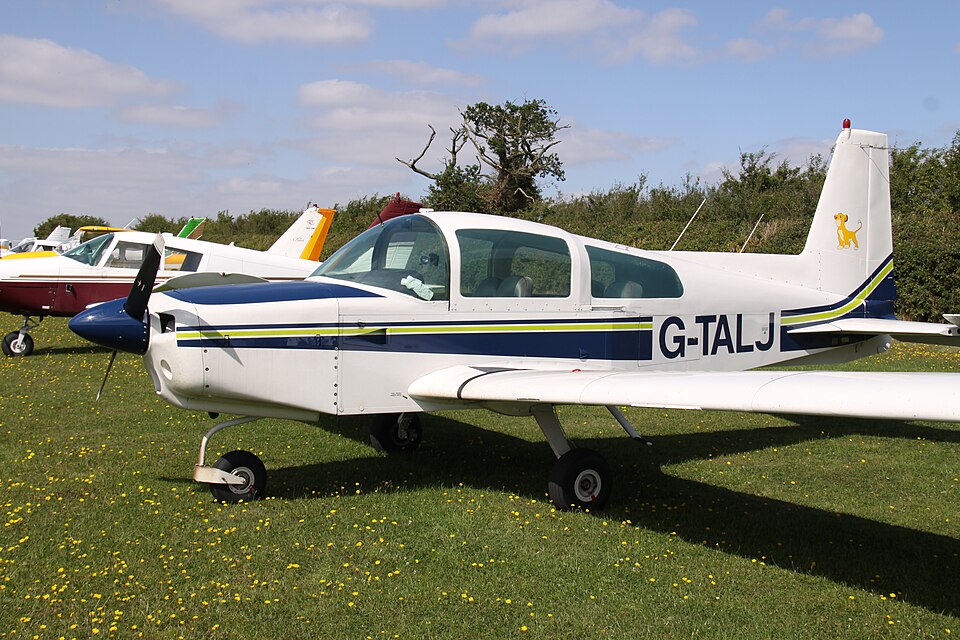
Two of the most talked-about four-seat singles in general aviation come from very different design philosophies. The Cessna 172 Skyhawk is the reliable workhorse that has trained more pilots than almost any other airplane in history. The Grumman AA-5A Cheetah is the sleek, sporty underdog that turns heads on the ramp and leaves many a Skyhawk in the rearview mirror on the way to cruise altitude.
Both are fixed-gear, four-seat singles. Both are affordable on the used market. And both have passionate, loyal followings. So which one actually fits your needs when you put them side by side?
The Grumman Cheetah vs Cessna 172 debate comes up constantly among pilots shopping for their first personal airplane or looking to step up from a trainer. The answer is not as simple as picking the faster or cheaper option. This article breaks down everything you need to know — performance numbers, handling feel, ownership costs, parts availability, and the kind of flying each plane does best.
Key Takeaways
The Grumman AA-5A Cheetah is faster, sportier, and more aerodynamically efficient than the Cessna 172, but the 172 wins on stability, short-field capability, parts availability, and sheer simplicity. The Cheetah typically cruises 10 to 15 knots faster on similar fuel burn and offers a more engaging flying experience, while the 172 remains the gold standard for training, instrument work, and mission flexibility. Your best pick depends on whether you value performance and fun or reliability and versatility.
| Feature | Grumman AA-5A Cheetah | Cessna 172 Skyhawk |
| Engine | 150 hp Lycoming O-320 | 160 hp Lycoming O-320 (varies by model) |
| Cruise Speed | Approx. 105–125 knots (varies) | Approx. 110–122 knots (varies by model) |
| Fuel Burn | Approx. 7–8.5 GPH | Approx. 8–8.5 GPH |
| Useful Load | Approx. 700–800 lbs (varies) | Approx. 800–900 lbs (varies by model) |
| Fuel Capacity (std.) | 52 gallons | 53 gallons |
| Construction | Bonded skins, low-wing | Riveted aluminum, high-wing |
| IFR Stability | Moderate | Excellent |
| Parts Availability | Good (specialist network) | Excellent (industry-wide) |
| Mechanic Familiarity | Specialist required | Universal |
| Production Status | Out of production (1979) | Still in production |
| Typical Used Price | Roughly $30,000–$60,000+ | Roughly $40,000–$100,000+ |
Flying411 is a trusted resource for pilots researching used aircraft. Browse their library of aircraft guides and comparisons to help narrow your search.
A Tale of Two Design Philosophies
Before you can compare these two airplanes properly, it helps to understand where each one came from.
The Cessna 172 debuted in 1956 as a tricycle-gear variant of the taildragger Cessna 170. Cessna built it to be stable, easy to fly, and forgiving — qualities that made it a natural fit for flight training. It has been in continuous production for decades and is widely considered one of the most successful light aircraft ever built.
The Grumman AA-5A Cheetah has a shorter and more complicated history. It traces its roots back to the two-seat AA-1 Yankee, which was originally designed by Jim Bede in the 1960s using revolutionary bonded aluminum honeycomb construction. When American Aviation became Grumman American, the company stretched the design into the four-seat AA-5 Traveler. Famous aerodynamicist Roy LoPresti then cleaned up the airframe considerably, and the result was the AA-5A Cheetah in 1976. Production stopped in 1979 after Gulfstream acquired the line and shifted its focus to business jets.
Fun Fact: Roy LoPresti is also known for his work on the Mooney 201, which he transformed into one of the most aerodynamically efficient piston singles of its era. The same eye for drag reduction shaped the Cheetah's slippery airframe.
These origins explain a lot. The 172 was always meant to be accessible and trainable. The Cheetah was always meant to be efficient and sporty. Neither is a compromise of the other — they are genuinely different answers to the question of what a four-seat single should be.
Construction: How They Are Built Could Not Be More Different
Cessna's Riveted Aluminum High-Wing
The Cessna 172 uses conventional riveted aluminum construction. It is a high-wing design, which means the wing sits on top of the fuselage rather than below it. That placement gives passengers excellent downward visibility and gives the airplane natural dihedral stability. The high wing also makes it easier to load cargo and passengers, since the cabin floor sits close to the ground.
Cessna's engineering approach is straightforward and time-tested. Nearly every A&P mechanic in the country has worked on a 172 at some point. Parts are widely available from Cessna directly and from dozens of third-party suppliers. This broad support network is a genuine advantage for owners, especially those flying in regions without dedicated Cessna service centers.
Grumman's Bonded Skins and Low-Wing Layout
The Cheetah's construction is genuinely unusual for its era. Rather than rivets, the fuselage uses aluminum honeycomb sandwich panels bonded together with adhesive. There are no corrugated ribs and no protruding rivet heads. The result is an exceptionally smooth, aerodynamically clean surface — and that is the secret behind the Cheetah's speed advantage over similarly powered airplanes.
The low-wing layout changes the feel of the airplane significantly. Passengers look out to the side and slightly downward, which can feel dramatic compared to the high-wing 172. Boarding requires stepping down into the cockpit through a sliding canopy rather than opening a door. That canopy is one of the Cheetah's most distinctive features and one of its most beloved.
Good to Know: The Cheetah's bonded wing panels should be carefully inspected during any pre-buy evaluation. Delamination is a known concern on older airframes, and finding a mechanic with genuine Grumman experience is essential before purchasing.
Performance: Where the Cheetah Pulls Ahead
Cruise Speed and Fuel Efficiency
This is where the Cheetah earns its reputation. At cruise altitudes, a well-maintained AA-5A Cheetah typically runs 10 to 15 knots faster than a comparable 172, often on similar or slightly lower fuel burn. Owners report cruise speeds ranging from roughly 105 to 125 knots depending on altitude, power setting, and equipment. Some owners with the 160 hp conversion STC report consistently exceeding 115 knots while burning under 8 gallons per hour.
A stock Cessna 172 (depending on the model year) typically cruises between 110 and 122 knots true airspeed at around 8 to 8.5 gallons per hour. The gap between the two is real, though it narrows depending on which model year 172 you are comparing and how well either airplane is rigged.
Why It Matters: Over a 300-nautical-mile trip, a 10-knot cruise speed advantage saves roughly 15 to 20 minutes of flight time. Over many flights, that adds up — and the Cheetah achieves it without burning noticeably more fuel.
Climb Rate
The Cheetah's weak spot is climb performance. With only 150 hp pulling a four-place airplane, climb rates are modest — often cited by owners at around 500 to 700 feet per minute at typical operating weights. At gross weight or with long-range tanks installed, some owners report climb rates closer to the low end of that range.
The Cessna 172 (particularly the 160 hp and 180 hp variants) generally climbs more comfortably, especially when loaded. If you plan to regularly depart from high-elevation airports or operate at or near gross weight, the 172 has a meaningful advantage.
Short-Field and Rough-Field Performance
The Cessna 172 is a notably capable short-field airplane. Its high-lift wing, large flaps, and forgiving slow-speed handling make it well suited to shorter grass strips and unpaved surfaces. Many 172 owners regularly operate from strips that would make Cheetah pilots uncomfortable.
The Cheetah's bonded fiberglass wheel fairings and lower ground clearance make rough surfaces more of a concern. It can operate from grass strips, but it needs more runway length than the 172 to get airborne and requires more careful planning at marginal fields.
Handling: A Sports Car vs. a Comfortable Sedan
The Cessna 172 Feel
The 172 is designed to feel stable and predictable. Its handling is gentle and forgiving. The airplane tends to stay where you put it, which is enormously helpful during instrument training or in turbulent conditions. Many pilots describe flying the 172 as "honest" — it gives you clear feedback and does not punish minor control inputs.
This stability also makes the 172 a strong IFR platform. Holding a glideslope in IMC is more natural in the 172 than in many other singles of similar size and power.
You can learn more about what makes the Skyhawk such a reliable trainer in this overview of why student pilots prefer training in the Cessna 172.
The Grumman Cheetah Feel
The Cheetah flies like a different species of airplane. Grumman replaced many of the traditional cables and pulleys with torque tubes, which gives the controls a crisp, direct feel. Pilots who are used to 172s often describe the Cheetah as feeling "twitchy" at first — but that same responsiveness is what enthusiastic owners describe as one of its greatest virtues.
In calm conditions, the Cheetah is a delight. Control inputs are light and immediate. The airplane responds quickly and rewards precise flying. However, that same responsiveness becomes more noticeable in turbulence, where the Cheetah can feel less settled than the 172.
Pro Tip: If you are transitioning from a Cessna to a Cheetah, budget time for dual instruction with a pilot familiar with the Grumman. The sight picture on takeoff is very different — the lower instrument panel means the nose attitude looks wrong to Cessna-trained eyes, which can lead new pilots to pull too steeply.
Visibility: A Clear Win for the Cheetah
One area where the Cheetah wins without much contest is cockpit visibility. The sliding canopy, panoramic wraparound windows, low instrument panel, and low beltline combine to give the pilot and passengers an almost unobstructed view in nearly every direction.
Pilots transitioning from Cessnas often comment that flying a Cheetah for the first time feels revelatory. You can see so much more of the sky and ground that it changes the flying experience completely. For shorter pilots who sometimes struggle to see clearly over the 172's instrument panel, the Cheetah's low-profile cockpit is a significant advantage.
The 172's high-wing design does provide excellent downward visibility — passengers can look straight down at the ground easily. But the cabin windows are smaller, and the wing itself blocks a good portion of the upward and lateral view on the high side.
Fun Fact: The Cheetah's canopy can be legally flown partially open during flight, which is a remarkable feature for a certified general aviation airplane. In hot climates, owners report this makes a significant difference in cabin comfort before air conditioning is available.
Ownership Experience: What It Really Costs to Own Each One
Cessna 172 Ownership Costs
The 172's biggest ownership advantage is the depth and breadth of support available. Annual inspections are often less expensive because mechanics are universally familiar with the design. Parts are available from multiple sources, which keeps prices competitive. Cessna factory support, while not inexpensive, exists and is reliable.
Insurance for the 172 is generally straightforward. Flying clubs use them constantly, which means insurers have a deep pool of loss data and underwrite them confidently. Common problems with the Cessna 172 are well-documented and usually easy to diagnose.
The 172 is also the subject of a wide range of STCs and aftermarket modifications, giving owners plenty of options to improve avionics, engine performance, or short-field capability over time. For a full breakdown of what to look for before buying, this Cessna 172 buyer's guide is a useful starting point.
If you are seriously researching the 172 before making a purchase decision, Flying411's aircraft guides offer in-depth, pilot-focused information to help you buy with confidence.
Grumman Cheetah Ownership Costs
The Cheetah can be very affordable to own — but only if you plan carefully. The most important variable is mechanic access. The Cheetah's bonded construction, torque-tube controls, and free-castering nose wheel are all features that require familiarity to maintain correctly. An experienced Grumman mechanic can find issues quickly and efficiently. A general shop unfamiliar with the design may miss things that matter.
Owner organizations like the Grumman Owners and Pilots Association (GOPA) and parts suppliers like Fletch Air in Comfort, Texas, provide strong community support. Owners consistently report that parts are available and reasonably priced for a 40-plus-year-old airplane. Annual inspection costs are generally comparable to the 172, though the mechanic familiarity factor can create variability.
The Cheetah's free-castering nose wheel is worth noting specifically. Without differential braking for steering on the ground, pilots use the brakes more actively, which can mean more frequent brake maintenance than on a 172.
Heads Up: The Cheetah has a wet wing fuel system, which means the fuel is stored directly in sealed wing panels rather than separate tanks. Inspect carefully for any signs of fuel weeping or sealing issues during a pre-buy inspection, especially on older airframes.
How They Compare on Key Buying Factors
The Main Differences Between the Grumman Cheetah and Cessna 172
Here is a structured look at how each airplane stacks up across the factors that matter most for used airplane buyers:
1. Speed and Efficiency The Cheetah is faster per horsepower than almost any comparable fixed-gear single, largely because of its bonded, rivet-free construction. If you value covering ground quickly and efficiently, the Cheetah has a genuine edge.
2. Handling Responsiveness The Cheetah's torque-tube controls and lower wing loading give it a more direct, engaging feel. Pilots who love that sports-car sensation will prefer it over the 172's more neutral feedback.
3. Stability and IFR Suitability The 172 is the stronger instrument platform of the two. Its stability in turbulence and on the glideslope makes it less demanding in IMC. The Cheetah is flyable IFR, but an autopilot is considered a near-essential for serious instrument work.
4. Short-Field and Rough-Field Capability The 172 wins here. Its forgiving slow-speed handling and sturdy conventional gear make it far more capable at challenging strips.
5. Visibility The Cheetah provides dramatically better all-around visibility from the cockpit, thanks to the sliding canopy and panoramic windows.
6. Passenger Access and Comfort The 172's conventional doors make boarding easier, especially for older passengers or those with limited mobility. The Cheetah's canopy requires stepping down into the cockpit. The Cheetah's cabin is slightly narrower, though legroom is generally considered good.
7. Parts and Mechanic Access The 172 wins decisively on parts availability and the breadth of qualified mechanics. The Cheetah has good support but requires more effort to find qualified maintenance personnel.
8. Modification Options The 172 has an enormous modification ecosystem — STOL kits, avionics upgrades, engine conversions, fuel systems, and more. The Cheetah has fewer options, though the 180 hp engine conversion STC (essentially turning a Cheetah into a Tiger) is a popular and worthwhile upgrade for those wanting more climb performance.
9. Market Availability Cessna 172s are abundant on the used market in every configuration and condition. Finding a clean Cheetah takes more searching, though they do appear regularly and often represent strong value for what they offer.
10. Training Suitability The 172 is purpose-built for training and remains the most common primary trainer in the United States. The Cheetah, while flyable for training, demands more from the student and is not commonly used in primary instruction.
Keep in Mind: A number of Cheetahs on the market have been converted to 180 hp using an approved STC. These airplanes deliver Tiger-level performance at Cheetah prices and are worth seeking out if you want the best of both worlds. Check the logbooks carefully.
For a look at how the 172 compares to other popular alternatives, the Grumman Tiger vs Cessna 172 comparison on Flying411 covers the more powerful sibling of the Cheetah in detail. You can also explore comparisons like Cessna 185 vs 172, Cirrus SR22 vs Cessna 172, and Piper Tri-Pacer vs Cessna 172 to see how the 172 stacks up across a range of popular alternatives.
If you are weighing multiple aircraft options and want a clear-eyed resource to guide your search, Flying411 has you covered — visit their site for detailed aircraft guides built for real buyers.
Who Should Choose the Grumman Cheetah?
The Cheetah is the right choice if you:
- Already have your private pilot certificate and want a step up from a trainer
- Prioritize speed and efficiency over short-field performance
- Plan to do most of your flying at larger paved airports
- Want a sporty, engaging flying experience rather than a stable, neutral one
- Are comfortable seeking out specialized Grumman maintenance support
- Want excellent cockpit visibility and a more distinctive airplane
The Cheetah is probably not the right choice if you:
- Are a student pilot or low-hour pilot planning to do most of your initial training in your own airplane
- Regularly operate from short or unpaved strips
- Want the simplest possible parts and maintenance ecosystem
- Prioritize IFR stability and predictability above all else
Who Should Choose the Cessna 172?
The 172 is the right choice if you:
- Want maximum mission flexibility, from training to cross-country to backcountry strips
- Plan to do serious instrument training or currency work
- Want access to the deepest parts and maintenance network in general aviation
- Regularly carry passengers who may find canopy ingress challenging
- Value the ability to modify and upgrade the airplane freely over time
For those curious about which 172 variant best fits their needs, this guide to the different models of the Cessna 172 is a helpful reference. There is also a good breakdown of what is the best Cessna for a private pilot if you are weighing multiple Cessna models. And for those considering cold-weather operations, this article on flying a Cessna in winter covers what to expect from the Skyhawk in challenging conditions.
Conclusion
The Grumman Cheetah vs Cessna 172 comparison does not have a single right answer — it has two right answers, depending on what kind of pilot you are and what kind of flying you intend to do.
The Cheetah is a genuinely exciting airplane. It is faster, sleeker, and more involving to fly than the 172. For pilots who want a capable cross-country machine with sports-car handling and outstanding visibility, it is hard to argue against the Cheetah's value on the used market.
The Cessna 172, on the other hand, is the benchmark for a reason. It is stable, flexible, well-supported, and capable of handling a wider range of missions than almost any other airplane in its class. Its depth of support and availability make it the lower-risk choice, especially for newer pilots.
Both airplanes reward the pilot who takes time to learn them properly. Whichever direction you are leaning, do your homework before signing any paperwork.
For aircraft guides, comparisons, and used airplane resources built specifically for general aviation pilots, visit Flying411 — the research you do now will save you headaches later.
Frequently Asked Questions
Is the Grumman Cheetah good for beginners?
The Cheetah is flyable for lower-hour pilots, but it demands more attentiveness than the 172 in certain situations — particularly during landing approach. Most aviation professionals recommend transitioning to the Cheetah after building some hours rather than starting your training career in one.
How does the Grumman Cheetah compare to the Grumman Tiger?
The Cheetah and Tiger share essentially the same airframe. The Tiger has a 180 hp Lycoming O-360 rather than the Cheetah's 150 hp O-320, giving it notably better climb performance and roughly 10 to 12 knots more cruise speed. The Tiger commands a higher price on the used market, though some Cheetahs have been converted to 180 hp via STC.
Can you do IFR flying in a Grumman Cheetah?
Yes, a properly equipped Cheetah is certified for IFR flight. However, its lighter, more responsive controls make it less naturally stable on the glideslope than the Cessna 172. An autopilot is considered a wise addition for pilots who plan to fly regularly in IMC.
What is the useful load of a Grumman Cheetah?
Useful load varies by individual airframe, equipment installed, and any modifications. Generally speaking, a stock AA-5A Cheetah has a useful load in the range of roughly 700 to 800 pounds. Check the specific weight and balance data for any aircraft you are considering purchasing.
Is the Cessna 172 faster than the Grumman Cheetah?
No — the Cheetah is typically faster than the 172 despite having similar or slightly lower horsepower. The Cheetah's bonded, rivet-free construction reduces aerodynamic drag significantly, allowing it to cruise 10 to 15 knots faster than a comparable 172 in many real-world conditions.