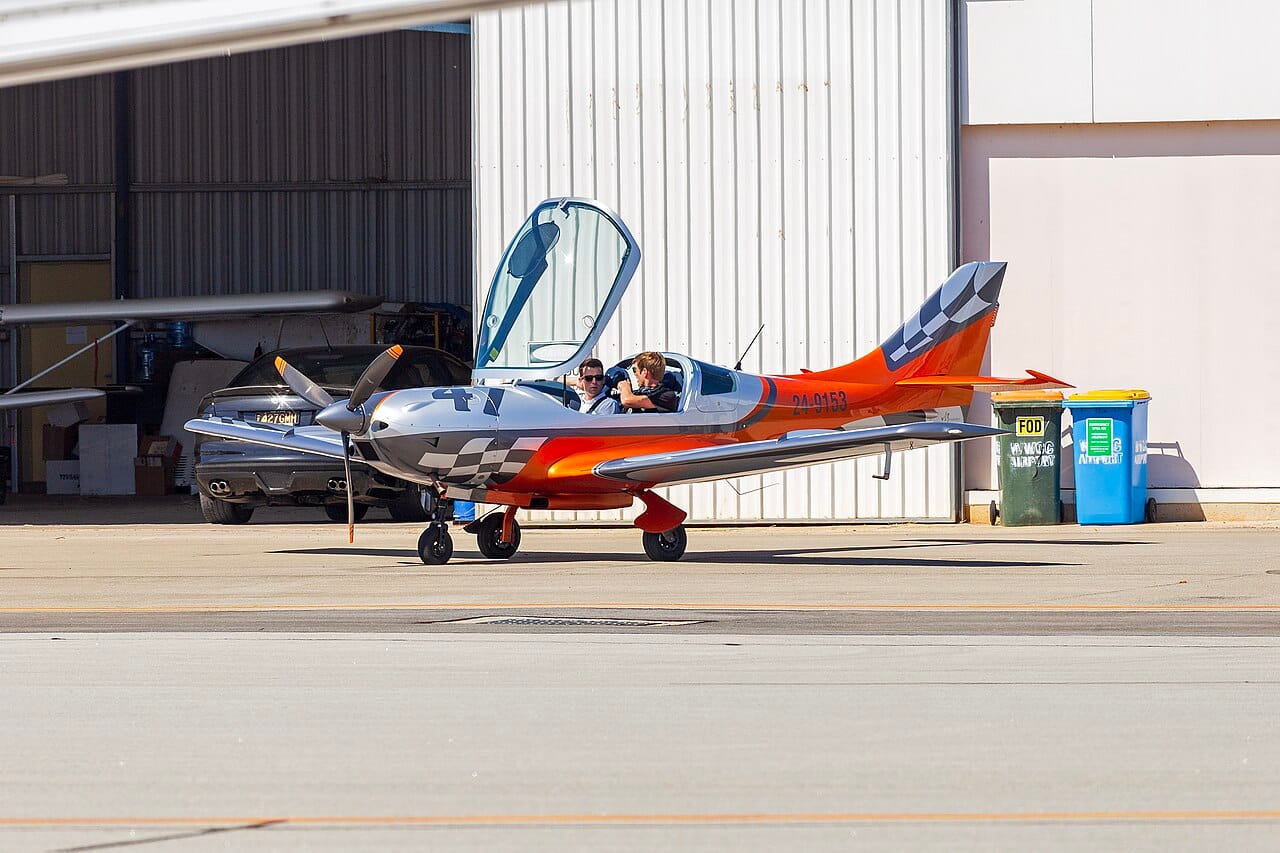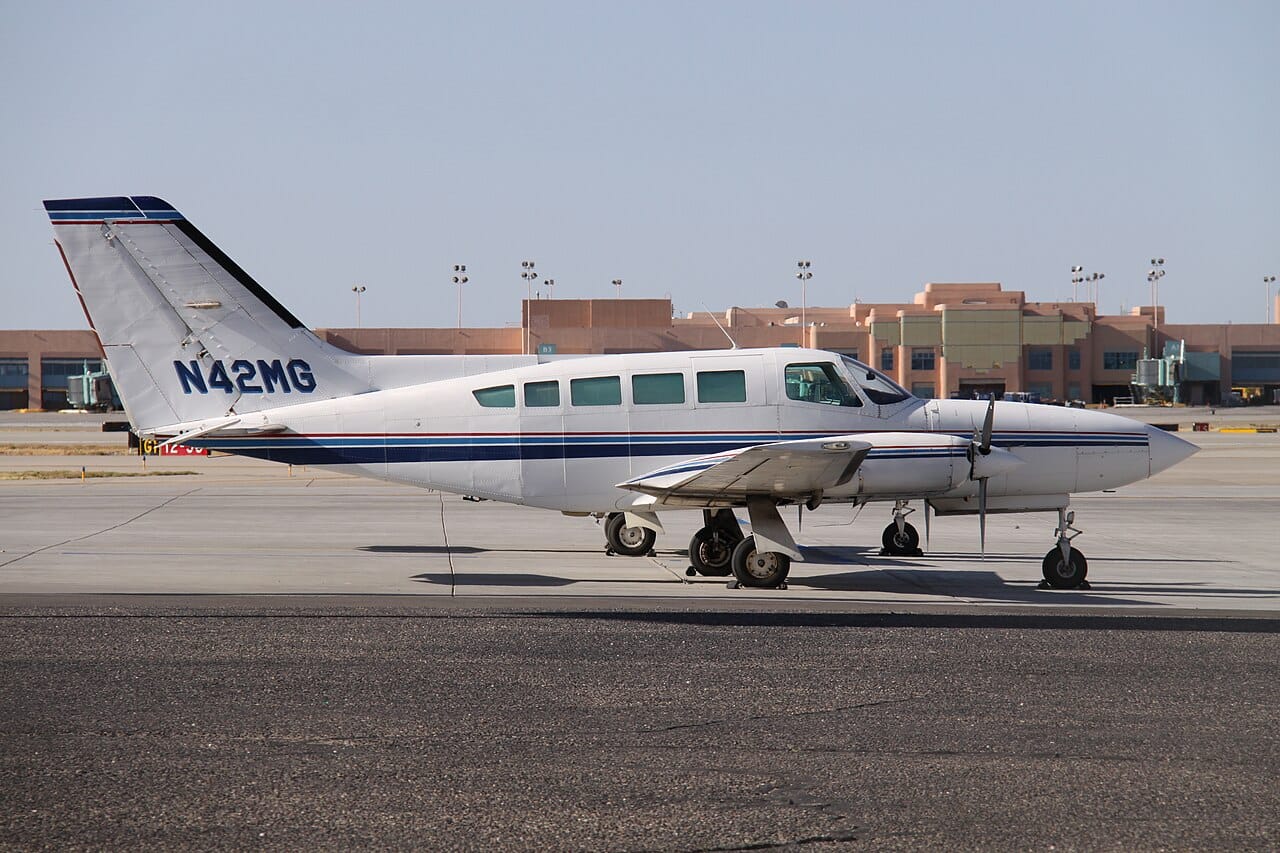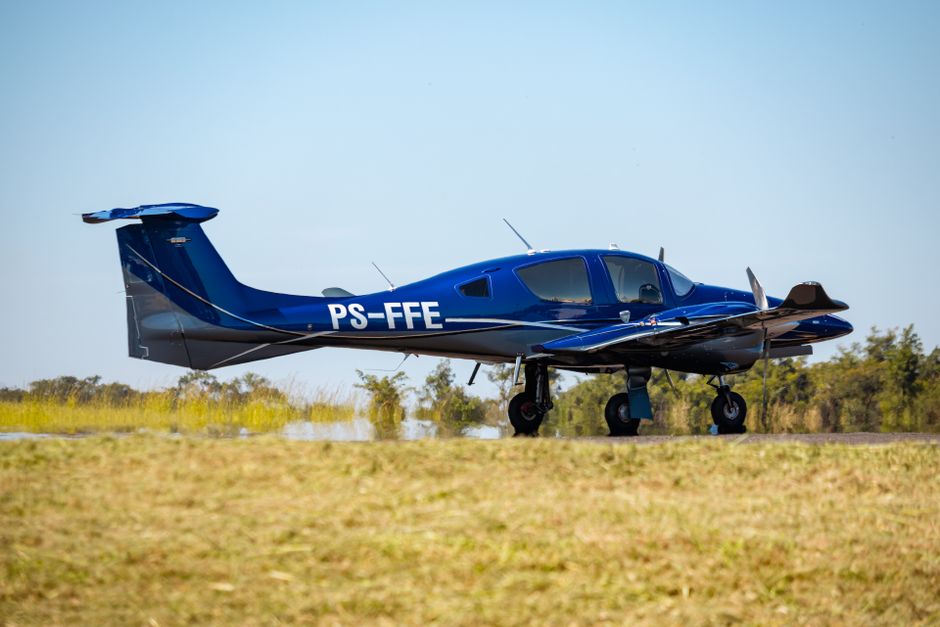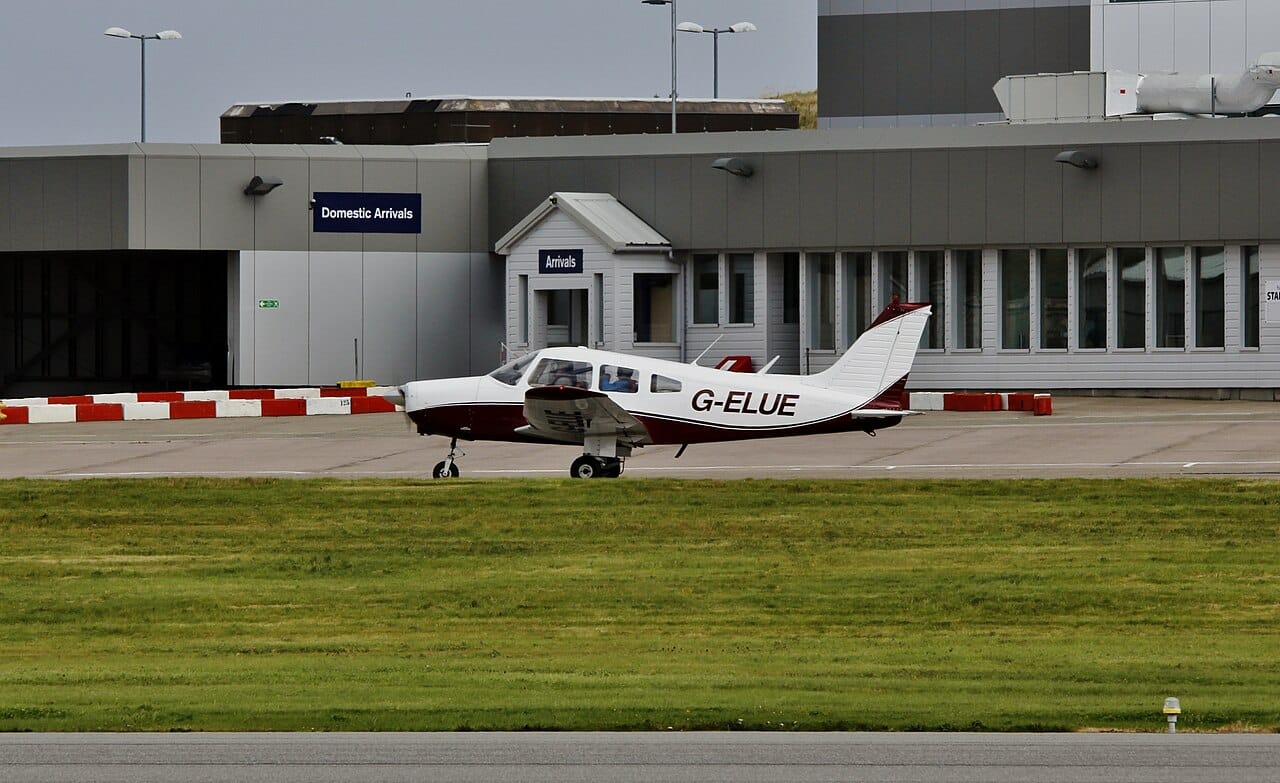
Beech built roughly 4,400 airplanes across the entire Musketeer family — Musketeer, Sport, Sundowner and Sierra — between 1963 and 1983. Cessna built more than 44,000 Skyhawks. That ten-to-one gap is the single most important number in any honest look at Beechcraft Sundowner vs Cessna 172 and Piper Cherokee ownership, because fleet size quietly sets what you pay for parts, how easy it is to find a mechanic who has seen one before, and how many people raise their hand when you decide to sell.
The Sundowner almost always carries a lower asking price than a comparable Skyhawk or Cherokee of the same vintage and similar equipment. That discount is the whole reason buyers look at it. The question is whether the discount is a bargain or a down payment on a harder ownership experience.
The Short Answer
If you want the widest, best-built cabin for the least money, you fly mostly local or short cross-countries, and you plan to keep the airplane for a decade or more, the Sundowner is a genuine bargain — you are buying Beech structure and two cabin doors for Cessna 150 money, and the lower purchase price is real cash in your pocket. If you need the airplane to be easy — easy to insure, easy to get fixed at any field, easy to sell in sixty days — buy the Cessna 172. And if you want to haul four adults and bags faster than either of them on roughly the same fuel, the Piper Cherokee 180 is the one that actually does the job. The Sundowner's weakness is not quality; it is thin market support and a sluggish climb, and both of those cost you money in ways the purchase price hides.
What the Lower Purchase Price Really Buys
Start with what these airplanes are. The Beech Model 23 family began in 1963 with a 160-hp Musketeer, picked up a 165-hp Continental IO-346 in the A23 and B23 Musketeer II and Custom, and settled into the C23 — which took the Sundowner 180 name in 1972 and ran to 1983 — with a 180-hp Lycoming O-360. There is also the fixed-gear 150-hp Sport (A23-19/B19) and the retractable 200-hp Sierra (C24R), which is a different ownership conversation entirely.
What you get for the money is real. The Sundowner cabin is the widest of the three, roughly 44 inches across, with two cabin doors and an optional rear baggage door. The structure is heavy-gauge Beech work — the airplane feels like a scaled-down Bonanza in the way the doors close and the controls feel in cruise. It is stable, pleasant in turbulence, and approved for intentional spins in the utility category, which the Cherokee 180 is not.
The Cessna 172 gives you a high wing, two doors, shade on the ramp, great visibility down, and the deepest support network in general aviation. The Cherokee 180 gives you one door on the right side, a low wing, and the best useful load in this group — often 1,050 to 1,150 pounds depending on year and equipment, which is 100 to 200 pounds more than either the Sundowner or a Skyhawk of the same era.
As of October 2026, Flying411 had 9 Cessna 172 aircraft listed, asking $79,000 to $315,000 with a median of $135,000 across model years 1959 to 2001, and 6 Piper Cherokees listed, asking $60,000 to $175,000 with a median of $75,000 across model years 1962 to 1976. Those are asking prices on live listings, not appraisals, and the spread tells you most of what you need to know: panel and engine time move these prices far more than the badge on the tail.
Keep in Mind: "Cherokee" covers a lot of ground. A 140 with 150 hp, a 180, an Archer and a Warrior are all PA-28s with very different payload and speed. When you compare prices, compare model numbers, not family names.
Edge: Sundowner, on dollars per square foot of cabin — nothing else in the class gives you this much airplane for the entry price.
Cost to Run: Fuel, Annuals and the Parts Question
Fuel is where the 160-hp Skyhawk quietly wins. A 172N or 172P planned at 8 to 8.5 gallons per hour will burn roughly a gallon and a half less than a Sundowner or Cherokee 180 worked at 75 percent power, which is about 9.5 to 10 gph. Over 100 hours a year, at a typical 2026 self-serve 100LL price, that is real money — enough to pay for most of an annual inspection.
Annual inspections run in the same band for all three. These are simple fixed-gear singles, and shops commonly quote $2,000 to $3,500 for a clean annual with nothing major found, more if the airplane is 50 years old and has been sitting. The spread between the three types shows up not in inspection labor but in what the inspection finds and what the replacement part costs.
That is the Sundowner's real tax. Common wear items — windshields, cowling pieces, flap and aileron skins, interior trim, some control hardware — are Beech-specific and supported through Textron Aviation at Beech prices. Owners in the Beech Aero Club, the type club for the Musketeer family, consistently report longer waits and higher invoices than a Cessna or Piper owner would see for the same item, and a healthy salvage and used-parts trade exists precisely because of it. For a 172 or a Cherokee, the aftermarket is enormous and most parts are a phone call away.
Think of it like owning a well-built imported sedan in a town where every shop stocks parts for the two domestic brands. Nothing is wrong with your car. You just wait longer and pay more every time something breaks.
Heads Up: Price out a windshield, a cowling and a set of brake discs for each type before you buy, not after. On a $70,000 airplane, one awkward Beech part can wipe out a year of the fuel savings you thought you were getting.
Edge: Cessna 172, on total cost to run — lowest fuel burn and the cheapest parts in general aviation.
Flying411 keeps four-seat piston singles from Beech, Cessna and Piper in one place, so you can compare engine time, panel and asking price across types instead of guessing from memory.
| Specification | Beech C23 Sundowner (1972–83) | Cessna 172N / 172P (1977–86) | Piper PA-28-180 Cherokee (1963–73) |
| Engine | Lycoming O-360-A4K, 180 hp | Lycoming O-320-H2AD (N) / O-320-D2J (P), 160 hp | Lycoming O-360-A4A, 180 hp |
| Recommended TBO | 2,600 hr factory-new/rebuilt; 2,000 hr overhauled | 172N: 2,400 hr; 172P: 2,600 hr factory-new/rebuilt, 2,000 hr overhauled | 2,600 hr factory-new/rebuilt; 2,000 hr overhauled |
| Propeller | Fixed pitch | Fixed pitch | Fixed pitch |
| Max gross weight | 2,450 lb | 2,300 lb (N) / 2,400 lb (P) | 2,400 lb |
| Typical useful load | ~950 lb | ~900–950 lb | ~1,050–1,150 lb |
| Usable fuel | 52 or 58 gal, depending on serial/configuration | 40 gal standard, 50 gal long range | 48 gal |
| Typical cruise (75%) | 110–115 kt | 105–110 kt | 120–124 kt |
| Typical fuel burn | ~10 gph | ~8–8.5 gph | ~9.5–10 gph |
| Cabin width (approx.) | ~44 in | ~40 in | ~42 in |
| Cabin doors | Two | Two | One, right side |
| Intentional spins | Approved, utility category | Approved, utility category | Prohibited |
| Total production, family | ~4,400 (Musketeer/Sport/Sundowner/Sierra, 1963–83) | 44,000+ (all 172s) | 32,000+ (all PA-28s) |
Performance and Payload: Same 180 Horsepower, Different Results
The Sundowner and the Cherokee 180 share essentially the same engine, and they do not share the same performance. The Beech is heavier and draggier, and it shows: owners plan 110 to 115 knots where a Cherokee 180 owner plans 120 to 124 on the same fuel. Over a 400-nautical-mile trip, that is close to half an hour of difference.
Climb is the Sundowner's sorest point and the thing first-time Beech buyers complain about most. Book figures put sea-level climb just under 800 feet per minute, which is competitive on paper with both rivals. Loaded to gross on a warm afternoon at a field a few thousand feet up, owners report it feels considerably flatter than that, and flatter than a Cherokee 180 in the same conditions. If you live in the mountain west, this matters more than any parts-price argument in this article.
Where the Sundowner claws back ground is range and comfort. Sundowner fuel capacity varies by serial number and configuration. Earlier C23s in the applicable series may have about 58 gallons usable, while later airplanes beginning with serial M-1517, and earlier airplanes modified under Beech Service Instruction 0624-281, have about 52 gallons usable — still more than the 40 gallons usable in a standard-tank 172N. Pair that with the widest cabin and two doors, and it is a better two-person touring airplane than its cruise speed suggests. Just check the actual tanks on the specific airframe, because earlier Musketeers were built with much smaller fuel capacity and the type has been modified over sixty years.
On payload, the Cherokee 180 is simply the best of the three. Depending on the individual airplane's empty weight, a Cherokee 180 with its roughly 48 gallons of usable fuel can still leave around 750 to 850 pounds for people and bags. A Sundowner with full tanks leaves around 600. A 172N with long-range tanks leaves less again. None of these is a true four-adults-plus-luggage airplane with full fuel, but the Cherokee comes closest.
Why It Matters: Buyers shop on cruise speed and then live with climb rate and useful load. Fly the specific airplane at your typical weight, on a typical day, from your home field — not a demo flight solo with half tanks.
Edge: Piper Cherokee 180, clearly — faster and carries more on the same engine.
Our deeper look at the two mainstream options, Cessna 172 vs Piper Cherokee, goes further into the high-wing versus low-wing training question if that is the real decision you are making.
Maintenance, Airworthiness Directives and Finding a Mechanic
All three use Lycoming four-cylinder engines, but their current recommended TBOs are not identical. Under Lycoming Service Instruction 1009BF, the O-360 engines used in the Sundowner and Cherokee 180, and the O-320-D2J used in the 172P, may have a 2,600-hour TBO when qualifying as factory-new or factory-rebuilt engines, while overhauled examples generally remain at 2,000 hours. The 172N's O-320-H2AD is listed at 2,400 hours. A field overhaul on an O-320 or O-360 in 2025–2026 generally lands somewhere in the $30,000 to $45,000 range depending on shop, accessories and what the crankcase and crankshaft need, with factory rebuilt and overhauled engines priced higher. On an airplane worth $70,000 to $120,000, engine overhaul remains one of the biggest numbers in the ownership plan, but the reserve should be based on the exact engine model, its overhaul history and the applicable interval in the current Lycoming guidance.
The type-specific items are where you should spend your pre-buy attention:
- Piper PA-28: FAA Airworthiness Directive 2020-26-16 requires inspection of the lower main wing spar caps on certain PA-28 and PA-32 models once a calculated "factored service hours" threshold is reached. Most privately flown Cherokees are nowhere near it, but former trainers can be. Ask the seller to show you the calculation.
- Cessna 172: the 172N's Lycoming O-320-H2AD had well-documented camshaft and tappet wear problems early in its life; Lycoming addressed it through service bulletins and parts changes, and many have since been overhauled correctly or converted under STC to an O-320-D2J or a 180-hp O-360. Also review compliance with the Cessna seat-rail AD (2011-10-09) and whether the owner has worked through Cessna's Supplemental Inspection Documents, which are not mandatory for most US Part 91 owners but tell you where to look for corrosion and fatigue.
- Beech 23 family: there is no single headline AD that defines the type, which is good news. The real risks are age and neglect — corrosion in the wing and fuselage structure, tired fuel system components, and parts that were deferred because the owner could not source them. A pre-buy by a shop that has actually opened up a Musketeer is worth flying the airplane to.
Pro Tip: Before you buy any Beech 23, join the Beech Aero Club and read the members' maintenance archive. Thirty dollars of membership and one evening of reading will tell you more about the specific airplane you are looking at than a generic pre-buy checklist will.
Edge: Draw between the Cessna and the Piper; the Sundowner loses on mechanic familiarity, not on engineering.
Flying411 keeps airframe hours, engine time since overhaul and avionics details on every listing in one place, so you can compare what you are actually buying rather than what the headline price suggests.
Resale: How Long Does It Take to Sell?
This is where the Sundowner's bargain either holds up or falls apart. A clean, well-equipped Cessna 172 is close to currency. There is a buyer in every state, a flight school that might want it, and an appraiser who has priced a hundred of them. A Cherokee 180 is nearly as liquid. A Sundowner is a specialty item sold to a smaller pool of people who already know what it is, and sellers routinely wait longer and negotiate harder.
The flip side is that you bought in at a discount too. If you hold the airplane for ten or fifteen years and fly it, the lower entry price largely offsets the softer exit. Where the Sundowner hurts you is if you need to sell in a hurry, or if you are buying with a plan to upgrade in two or three years. Short holds punish thin markets.
There is also the financing and insurance angle. Lenders and underwriters are comfortable with 172s and Cherokees because they have decades of claims and valuation history on them. Expect a little more paperwork and a little less flexibility on a less common type, particularly if you are a low-time pilot. Quote insurance before you sign anything — the premium difference across types in this class is usually modest, but your hours and ratings can swing it more than the make does.
Good to Know: The same market thinness that hurts you at sale time helps you at purchase time. If you are buying, a type with few bidders means your offer gets taken seriously.
Edge: Cessna 172, by a wide margin.
Which One Should You Buy?
The first-time owner who wants the lowest risk. Buy the Cessna 172. Every A&P knows it, every instructor can teach in it, parts are everywhere, and when life changes in three years you will sell it quickly at a predictable number. You will pay more going in and burn the least fuel going around. If you are weighing it against the Piper trainers, our comparisons of the 172 and the Archer and the 172 and the Warrior break down the same decision at a finer grain.
The family that actually loads the airplane. Buy the Cherokee 180. It carries the most, cruises the fastest of the three, and the single door is a smaller inconvenience than most buyers expect once they have a routine. The spar AD calculation is a pre-buy item, not a reason to avoid the type.
The long-haul owner who values comfort and build quality over speed. Buy the Sundowner — and buy the best one you can find rather than the cheapest one you can find. Two doors, the widest cabin in the class, five-plus hours of fuel and real Beech structure, for less money than the alternatives. Budget an extra $3,000 to $5,000 a year above what a Skyhawk owner spends for the awkward parts and the occasional long wait, plan to keep it, and the arithmetic works. Fly out of a high-elevation or hot field, or need to resell soon, and it does not.
The buyer who wants something different for the same money. There are other off-mainstream four-seaters with similar economics. The Grumman Cheetah against the 172 and the Tiger against the Cessna 177B Cardinal are worth reading before you commit, because the trade-offs rhyme: more airplane per dollar, fewer shops that know it.
Flying411 keeps Beechcraft, Cessna and Piper singles side by side in one place, so you can compare what the discount types are really asking against the mainstream ones in the same week.
The Honest Verdict on the Cheap Beech
The Sundowner is not a lemon and it is not a secret. It is a solid, comfortable, slightly slow airplane that Beech did not build many of, and the market has priced that in. On Beechcraft Sundowner vs Cessna 172 and Piper Cherokee, the decision really comes down to how long you intend to own it. Over fifteen years, the Beech's lower purchase price and roomier cabin outweigh higher parts costs for most owners. Over three years, the Cessna's liquidity and cheap parts win almost every time, and the Cherokee splits the difference while hauling more.
Whichever way you lean, judge the individual airplane ahead of the type. A $95,000 Sundowner with a 300-hour engine, clean logs and a modern GPS will cost you less to own over five years than a $70,000 Skyhawk with a runout engine and a cardboard box full of missing records. If you are curious how Beech's bigger singles stack up against the same Piper lineup, our look at the Bonanza against the Cherokee covers the step up.
When you are ready to compare listings, visitFlying411and see what is on the market today.