Ask around and you will hear the JMB VL-3 called the fastest light-sport aircraft in the world. The honest version is less tidy: under the rules that existed until 2025, the VL-3 could never have been a US special light-sport aircraft at all, because it has retractable landing gear and cruises well past the old 120-knot ceiling. In Europe it is an ultralight. In the United States it has been sold as a kit for the Experimental Amateur-Built category. That single legal detail shapes everything about owning one, from who may sign off the inspection to what an insurance broker will quote you.
The choice most buyers actually face is narrower and more expensive than "which fast LSA." It is which engine to hang on the nose: the 100-horsepower Rotax 912, or the turbocharged 141-horsepower Rotax 915 iS. That decision moves the purchase price, the fuel bill, the overhaul reserve, the useful load and the list of shops that can touch the airplane. Getting it wrong costs real money for as long as you own the airplane.
What You Are Actually Buying
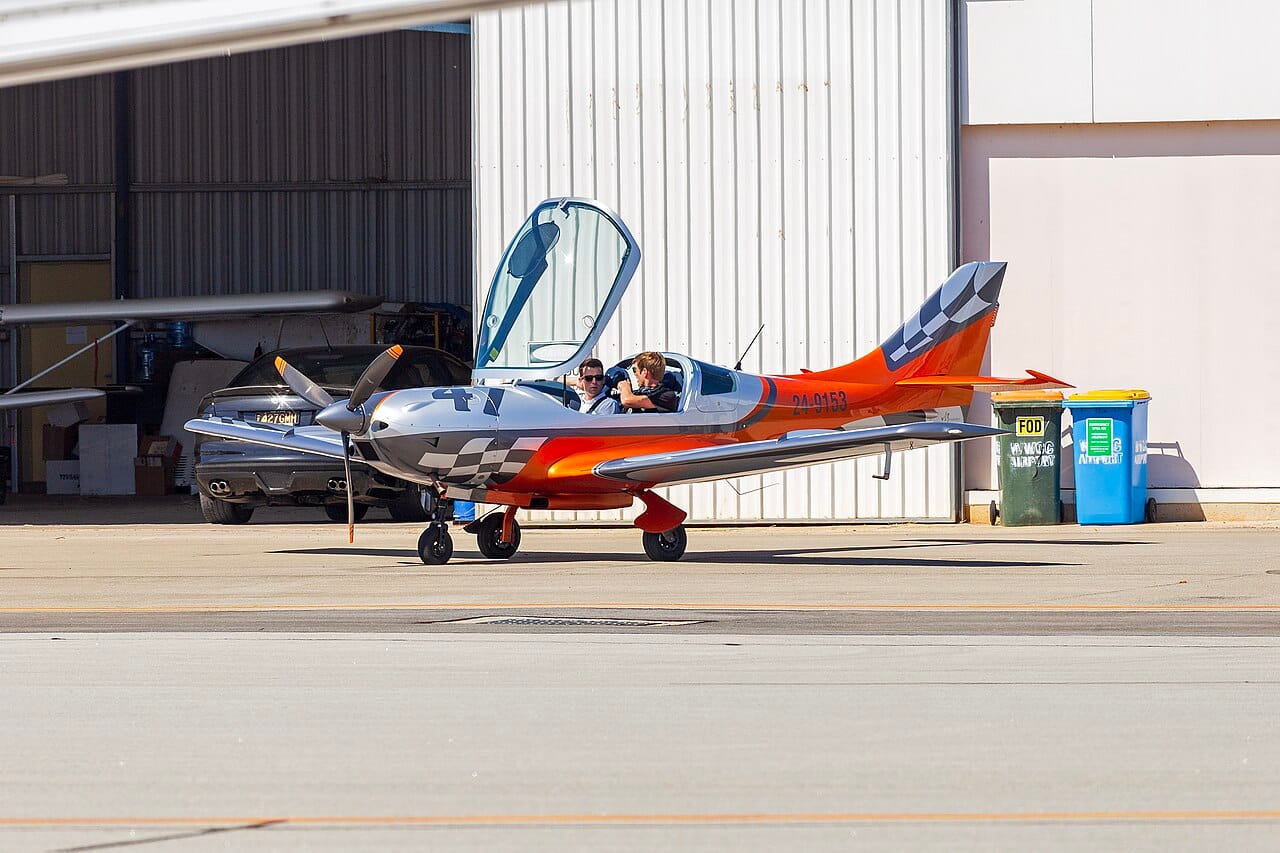
The VL-3 is a carbon-fibre, low-wing two-seater with electrically retractable gear, designed in the Czech Republic and built by JMB Aircraft, which says several hundred are now flying worldwide. Typical configurations use an 8.0-metre wing, with a short-span option for buyers chasing speed, and maximum takeoff weights set by the category the airplane lives in — 472.5 kg under the older European ultralight limit, 600 kg under the newer one.
Think of it less as a trainer and more as a sports car with wings: two seats, modest baggage, long legs and a cruise speed that embarrasses airplanes costing twice as much. It is not an airplane for grass strips with a load of camping gear, and it is not an airplane you rent out to recover costs. In the Experimental Amateur-Built category, you cannot use it for commercial rental or primary flight training, for an Experimental Amateur-Built VL-3, the annual condition inspection may be performed by an appropriately authorized A&P, the holder of the experimental-aircraft-builder repairman certificate for that aircraft, or, where the aircraft's operating limitations permit it, a properly rated light-sport repairman under the expanded MOSAIC privileges.
Good to Know: MOSAIC is now in effect. Since October 22, 2025, sport pilots may operate qualifying airplanes under 14 CFR Section 61.316 without the old 120-knot speed or fixed-gear restrictions. Airplanes must meet the 59-knot VS1 limit and the other Section 61.316 requirements, and retractable gear or a manual controllable-pitch propeller requires additional training and an instructor endorsement. Separate MOSAIC rules governing certification of light-sport category aircraft became effective July 24, 2026.
What the Extra 41 Horsepower Actually Buys
The 912 series is the engine that made modern light aviation affordable: 1,352 cc, four cylinders, liquid-cooled heads, a gearbox-driven prop, 2,000-hour TBO, and a fuel appetite closer to a motorcycle than a Lycoming. Carbureted (912 ULS) or fuel-injected (912 iS Sport), it will push a clean VL-3 to roughly 135 to 145 knots on about 17 to 20 litres an hour, depending on how the airplane is rigged and propped.
The 915 iS is the same basic architecture with a turbocharger and intercooler bolted to it, plus full fuel injection and dual engine control units. Rotax rates it at 141 hp for five minutes and 135 hp maximum continuous, and — the part that matters most — it holds takeoff power to 15,000 feet. A naturally aspirated 912 is making less and less power every thousand feet you climb. The 915 does not notice until the air gets very thin. JMB publishes maximum cruise figures near 300 km/h, about 160 to 165 knots, for the 915-powered VL-3.
So the extra horsepower buys perhaps 20 knots down low and considerably more up high, plus climb performance that changes what a hot, high-altitude summer day feels like. It does not buy range. Push a 915 hard and it drinks 28 to 34 litres an hour, which is roughly double a 912 iS Sport.
Why It Matters: Rotax lists the 912 ULS at 59.8 kg (132 lb) dry and the 915 iS at 84.8 kg (187 lb). Add a heavier in-flight adjustable propeller, more coolant and more oil, and the turbo version typically costs you 30 kg of useful load. On a two-seat airplane with a 600 kg maximum, that is a passenger's overnight bag plus 20 litres of fuel — gone before you load anything.
| Item | VL-3 with Rotax 912 (ULS / iS Sport) | VL-3 with Rotax 915 iS |
| Rated power | 100 hp (5 min), 95 hp max continuous | 141 hp (5 min), 135 hp max continuous |
| Induction | Carbureted (ULS) or fuel injected (iS Sport), naturally aspirated | Turbocharged and intercooled, fuel injected, dual ECU |
| Dry weight | 59.8 kg (132 lb), ULS | 84.8 kg (187 lb) |
| Power at altitude | Falls off steadily with density altitude | Takeoff power maintained to 15,000 ft |
| Manufacturer cruise (VL-3) | About 250–270 km/h, roughly 135–145 kt | About 290–305 km/h, roughly 160–165 kt |
| Cruise fuel burn | 17–20 L/h (4.5–5.3 US gph) | 28–34 L/h (7.5–9.0 US gph) at high cruise |
| TBO | 2,000 hours (912 series also carries a 15-year calendar limit) | 1,200 hours |
| Fuel | Min 95 RON mogas (E10 accepted on iS) or 100LL | Min 95 RON premium mogas or 100LL; oil change interval halves on leaded fuel |
| Propeller | Ground-adjustable or in-flight adjustable | In-flight adjustable, constant-speed, rated for 141 hp |
| Who services it | Most Rotax-familiar shops and, on an EAB airframe, the owner-builder | Rotax-experienced shop with appropriate diagnostic capability; current iRMT training and BUDS2 access are strongly desirable for troubleshooting |
Flying411 keeps Rotax-powered light aircraft listings in one place, so you can compare 912 and 915-powered airframes side by side instead of guessing what the engine upgrade is worth.
Retractable Gear: The Part Buyers Underestimate
The VL-3's electric gear is a big piece of why it is fast, and a big piece of why it costs more to own than a fixed-gear composite two-seater of similar size. Three bills follow from it.
Insurance
Underwriters price retractable gear on an experimental airframe conservatively, and hull value on a well-equipped VL-3 is high for the class. Owners report that quotes improve substantially after the first 50 to 100 hours in type, and that a factory or dealer transition course is often a condition of coverage rather than a nice-to-have. Get a quote in writing before you sign a purchase agreement — not after.
Inspection and rigging
A condition inspection on a retractable includes jacking the airplane, swinging the gear, checking the emergency extension, inspecting the actuator and microswitches, and verifying the gear-warning system. Budget more shop hours than a fixed-gear airplane needs, every year, forever.
Gear-up risk
A belly landing in a carbon airframe is not a bent-firewall repair the way it is in aluminium. It is a composite repair, often with the propeller and engine involved, and on an imported airframe the parts come from Central Europe with the lead time and currency exposure that implies.
Pro Tip: Ask the seller for photographs of the gear legs, uplocks and doors taken during the last inspection, and for the emergency extension check entry in the logbook. A VL-3 that has lived at a seaside field or on rough grass tells you a lot through its gear hardware.
What It Costs Per Hour
The figures below use 100LL at $6.50 a US gallon, a common 2025 self-serve price in the US, and premium mogas at $4.00 where the airport allows it. Engine reserve is derived from overhaul quotes Rotax shops have been giving — high teens to low twenties of thousands of dollars for a 912-series engine and substantially more for a 915 iS — divided across the applicable published TBO: 2,000 hours for the 912 and 1,200 hours for the 915 iS. These are direct costs only: no hangar, no insurance, no avionics subscriptions, no airframe reserve.
| Direct cost per hour | 912 iS Sport | 915 iS |
| Cruise burn | 17 L/h (4.5 gph) | 30 L/h (8.0 gph) |
| Fuel at $6.50/gal (100LL) | $29 | $52 |
| Fuel at $4.00/gal (mogas) | $18 | $32 |
| Oil and filter (approx. 3 L synthetic per change, 100 h interval) | About $1 | About $1 |
| Engine reserve to 2,000 h TBO | $9–$11/hr at 2,000-hour TBO | about $30–$37/hr at 1,200-hour TBO |
| Fuel burned on a 300 nm leg | About 13–15 gal | About 15–17 gal (faster, so less time) |
Notice the last row. Because the 915 is quicker, the fuel penalty on a fixed trip is smaller than the hourly numbers suggest — you are burning more per hour for fewer hours. The engine-reserve penalty remains substantial, however: with a 1,200-hour published TBO versus 2,000 hours for the 912, the 915 has to recover its higher overhaul cost over far fewer operating hours. At list, a 915 iS also costs substantially more than a 912 before the airframe, propeller and installation differences are counted.
Keep in Mind: Rotax applies calendar limits as well as hour limits. The 912 series carries a 2,000-hour or 15-year TBO, whichever comes first, and the rubber parts — hoses, carburetor sockets, fuel lines — are on a five-year replacement schedule regardless of hours. A low-time 2009 airframe is not the bargain it looks like. Our guide on how often a Rotax 912 needs servicing walks through the intervals.
Maintenance Reality: Carbs or Computers
A carbureted 912 ULS is the most owner-friendly engine in this comparison. Oil changes, coolant changes, carburetor balancing and the 100-hour items are within reach of a careful owner working to the Rotax manuals — see our walkthroughs on changing the oil, balancing the carbs and changing the coolant for what that work involves.
The 915 iS is a different animal. There are no carburetors to sync, which some owners count as a win, but there are two engine control units, a turbocharger with a wastegate, an intercooler and the 915 iS also adds an electronic diagnostic system for which BUDS2 capability and current Rotax iRMT training are highly useful, especially for troubleshooting and ECU-related work. If the nearest such technician is three hours away by road, that is a cost, and it is the cost nobody puts in the spreadsheet.
Heads Up: Before you buy a 915-powered airplane, phone the shop you intend to use and ask whether they have current Rotax iRMT training and BUDS2 capability. Those are strong indicators that the shop is properly equipped to diagnose and support the 915 iS.
Flying411 keeps experimental and light-sport listings in one place, so you can compare what sellers are asking for 912-powered and 915-powered airframes with similar hours and panels.
Which Version Fits Which Owner
Plainly: if most of your flying is local, under 300 nautical miles, from a sea-level or low-elevation field, the 912 is the better buy. You give up around 20 knots, you save a large sum at purchase, you halve the engine reserve and you can have the airplane worked on almost anywhere Rotax parts are sold. The 912-powered VL-3 is still faster than most certified fixed-gear singles burning twice the fuel.
If you live in the mountain West, routinely fly 500-plus nautical mile legs, or want the climb and high-altitude cruise the airframe is capable of, the 915 iS earns its keep. The turbo turns a fast airplane into a genuine cross-country machine that can top weather in the teens and still true out near 160 knots. That is the use case, and if it is not your use case you are paying for capability that sits on the ramp.
If you are still weighing engines more broadly, our comparison of the 916, 915, 914 and 912 covers the whole family, and the 915 iS versus 916 iS breakdown explains what the newest 160-hp option changes. For the wider ownership picture, the advantages and disadvantages of owning an LSA is worth reading before you commit.
Fun Fact: JMB has also flown a turbine VL-3 using the Czech PBS TP100 engine — proof of how much airframe margin the design has. It is a niche within a niche, and nothing in this comparison applies to it.
Flying411 keeps retractable-gear light aircraft in one place, so you can compare gear type, engine and equipment without opening a dozen tabs.
Making the Call
The JMB VL-3 rewards an owner who knows exactly what the airplane is for. Buy the 912 if the mission is fun flying with the occasional long weekend, and spend the saved money on avionics, a hangar and a transition course. Buy the 915 iS if you need the climb and the altitude, and budget for the heavier engine reserve, the thinner useful load and the shorter list of qualified shops. Either way, treat the retractable gear as a permanent line item rather than a free speed upgrade, and verify insurance and inspection costs before money changes hands.
When you are ready to compare listings, visitFlying411and see what is on the market today.
Frequently Asked Questions
Is the JMB VL-3 a light-sport aircraft in the United States?
Not historically. Retractable gear and its cruise speed put it outside the old special light-sport rules, so US examples have been registered as Experimental Amateur-Built kits. The FAA's MOSAIC final rule, announced in July 2025, removes those two barriers for future light-sport certification, but it is the manufacturer's decision whether to pursue a US S-LSA certificate.
How fast is the VL-3 really?
JMB publishes maximum cruise figures of roughly 160 to 165 knots for the 915 iS version and about 135 to 145 knots for 912-powered airplanes. Actual numbers depend on wingspan option, propeller, gear doors and how the individual airframe was finished.
Can a sport pilot fly one?
Potentially. Under current MOSAIC sport-pilot rules, the airplane does not have to hold a light-sport category airworthiness certificate. It must have met the performance and design limits in 14 CFR Section 61.316 since original certification, including a VS1 of no more than 59 knots CAS. Retractable gear and a manual controllable-pitch propeller are permitted with the required endorsements.
Does the 915 iS have to burn 100LL?
No. Rotax permits premium automotive fuel of at least 95 RON, and 100LL is allowed. Running leaded fuel halves the oil-change interval and loads the gearbox and valve train with deposits, so most owners use mogas where the field allows it.
What should a pre-purchase inspection focus on?
Gear actuator, uplocks, microswitches and emergency extension; composite condition around the gear bays and wing root; ECU fault history on a 915 through BUDS2; engine rubber-part dates against the five-year limit; and complete logbook evidence of the 100-hour and five-year Rotax items. On an Experimental Amateur-Built airframe, also review the operating limitations and confirm who is currently authorized to perform the annual condition inspection.
How does it compare on cost to a certified retractable?
Fuel burn is dramatically lower than a piston retractable like a Mooney, and Rotax overhauls cost less than a turbocharged Continental or Lycoming. Our Mooney M20K buyer's math gives a useful benchmark for what a certified turbocharged retractable actually costs per hour.