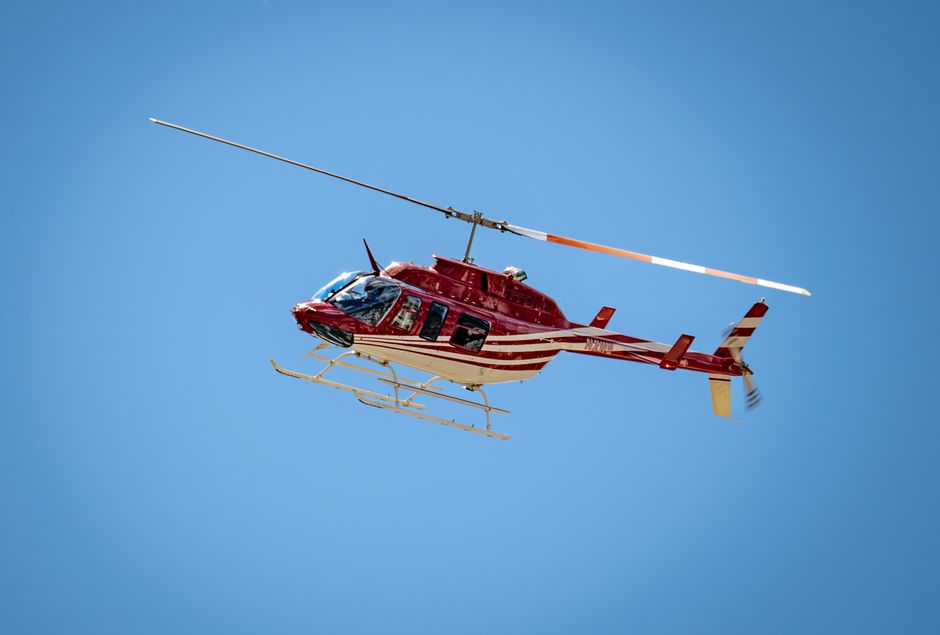
The LongRanger burns roughly eight gallons an hour more than the JetRanger. Fly 300 hours a year with Jet-A at about $6.50 a gallon, and that single difference is close to $15,600 before you have touched the engine reserve, the insurance bill or a single inspection. That is the honest starting point for anyone weighing a Bell 206B JetRanger III vs 206L LongRanger purchase: the two share a family resemblance, a parts network and a flight manual philosophy, but they do not share a cost structure.
What follows is a side-by-side look at where the money actually goes, and where the bigger machine quietly wins.
| Item | Bell 206B-3 JetRanger III | Bell 206L-4 LongRanger IV |
| Engine | Rolls-Royce (Allison) M250-C20J | Rolls-Royce M250-C30P |
| Takeoff power (installed) | 317 shp | 490 shp |
| Seats | 5 (pilot + 4) | 7 (pilot + 6) |
| Max gross weight | 3,200 lb | 4,450 lb |
| Typical payload, full fuel | ~800–900 lb | ~1,300 lb |
| Main rotor diameter | 33 ft 4 in | 37 ft 0 in |
| Usable fuel | 91 US gal | 110.7 US gal |
| Typical fuel burn | 25–28 gph | 33–38 gph |
| Cruise speed | ~115 kt | ~110–115 kt |
| Range, no reserve | ~374 nm | ~324 nm |
| Engine Overhaul Basis | C20-series modular schedule; major modules up to 3,500 hr with applicable HMI/life limits | C30-series modular schedule; compressor/gearbox on condition, turbine interval per current Rolls-Royce limits |
| Production span | 206B-3 from 1977; 206B line ended 2010 | 206L family 1975–2017 |
| Natural mission | Training, patrol, light utility, personal | EMS, tours, 6-seat charter, utility |
| Engine Rating | C20J: 420 shp uninstalled mechanical rating | C30P: 726 shp uninstalled thermodynamic rating |
What the extra money actually buys
The LongRanger is not a stretched JetRanger in name only. Bell stretched the cabin by about 30 inches, added a wide hinged double door on the left side for passenger and cargo access, and created a larger rear cabin that can be arranged with club-style seating. The main rotor grew by nearly four feet in diameter, the gross weight went up by more than 1,200 pounds, and the engine moved from the M250-C20 family to the larger C30 family.
Payload is where you feel it. A typically equipped 206B-3 lifts roughly 800 to 900 pounds after full fuel — that is three adults and light bags, or four adults if you leave fuel behind. A 206L-4 with the same full tanks still has around 1,300 pounds to play with. Six real people with real luggage fit in the LongRanger. They do not fit in the JetRanger, and no amount of careful weight-and-balance arithmetic changes that.
Why It Matters: If your typical mission is two people and a camera, the LongRanger's extra capability is dead weight you pay for on every flight hour. If your typical mission is four passengers plus a pilot, the JetRanger will force you into two trips or a fuel stop, and two trips costs more than one bigger helicopter ever did.
Speed is almost a non-issue. Both cruise in the 110 to 115 knot band. You are not buying the LongRanger to go faster; you are buying it to carry more and to hold performance on a hot day. The C30P-powered L-3 and L-4 keep hover performance at density altitudes where a JetRanger is already trading fuel for passengers.
Flying411 keeps light turbine helicopter listings in one place, so you can compare JetRanger and LongRanger airframes by total time, engine time since overhaul and equipment before you ever call a broker.
Purchase price and what the market rewards
Both models trade in a mature, liquid market. More than 7,000 aircraft in the 206 family were built, and the support network — shops, parts, training, type-club knowledge — is as deep as anything in civil rotorcraft. That depth is worth real money at resale, and it is one reason a well-kept 206 tends to hold value better than a niche turbine single.
Asking prices swing far more on time remaining than on model year. A JetRanger with 200 hours left on the engine and an airframe approaching a major component retirement is a very different purchase from one with a fresh overhaul and clean logs, even if the two were built the same year. The same applies to the LongRanger, only the dollar swings are larger because the components are larger.
Three things consistently move the number on either type:
- Engine time since overhaul, and whether the modules were overhauled together or piecemeal.
- Life-limited component status on the transmission, mast, rotor hub and tail rotor drive — all of it published in the airworthiness limitations section of the Bell maintenance manual.
- Damage history and corrosion, especially on airframes that spent a career near salt water in utility or offshore work.
Heads Up: A cheap turbine helicopter is usually cheap for a reason you will pay for within 300 hours. Before you sign anything, have a shop that knows the type pull the component cards and price out everything due in the next two years. On a LongRanger that exercise can uncover a six-figure liability hiding behind an attractive asking price.
The hourly numbers: fuel and engine reserve
This is the heart of the comparison, and it is mostly arithmetic.
Fuel
Plan 25 to 28 gallons per hour in a 206B-3 and 33 to 38 in a 206L-4. Using a 2025 full-service Jet-A price of about $6.50 a gallon, that is roughly $175 an hour versus roughly $230. Over 300 hours, about $52,500 against about $69,000. Fuel price varies enormously by region and by whether you have a self-serve tank on the field, so run your own number — but the gap between the two stays proportional wherever you buy.
Engine reserve
The M250 is maintained by module rather than by treating the entire engine as one simple TBO item. Current Rolls-Royce guidance lists 3,500-hour overhaul intervals for major C20-series modules, with a 1,750-hour turbine heavy-maintenance inspection, while C30-series compressor and gearbox modules are generally maintained on condition and the turbine carries its own applicable overhaul interval. The difference is what the overhaul costs when the hour meter gets there. As of 2025, shops quote M250-C20 series overhauls in a range that is roughly half to two-thirds of what a C30 series overhaul commands. Set aside somewhere in the neighborhood of $60 to $75 per hour for the JetRanger's engine and $100 to $130 per hour for the LongRanger's, and revisit those figures with a quote from your chosen shop rather than treating them as fixed.
The M250 is maintained by module — compressor, gas producer turbine, power turbine and gearbox — which is genuinely helpful for an owner. You are rarely writing one enormous cheque. You are writing several medium ones, spread out, and the modular design has a lot to do with why this engine family shows up on almost every list of the most reliable helicopter engines in service.
Good to Know: Some operators run M250 modules on condition under an approved program rather than to a hard TBO. That can stretch calendar ownership considerably, but it does not remove the reserve — it just changes when you spend it. Budget as if the hard number applies and be pleasantly surprised.
Putting it together
Add fuel, engine reserve, scheduled inspections, dynamic component reserves and routine consumables, and a realistic direct operating cost lands somewhere around $400 to $500 an hour for a 206B-3 and around $550 to $675 an hour for a 206L-4, in 2025 dollars, for a privately operated aircraft at moderate utilization. Commercial operations under Part 135 sit higher because of added inspection, recordkeeping and training requirements.
Now divide by seats. At $450 an hour with four passenger seats, the JetRanger costs about $113 per occupied seat-hour. At $600 an hour with six, the LongRanger costs about $100. If you genuinely fill the seats, the bigger helicopter is the cheaper one. If you fly with two people aboard most days, the JetRanger wins by a wide margin and it is not close.
Flying411 gathers turbine helicopter listings, specifications and ownership guides in one place, so you can test your own mission profile against real airframes instead of brochure averages.
Inspections, parts and shop time
Here the two are more alike than different, which is good news. The inspection architecture — recurring hourly and calendar checks, progressive options, and the airworthiness limitations that govern retirement lives — follows the same Bell logic on both types. A shop that knows the JetRanger knows the LongRanger.
The difference is scale. LongRanger components are bigger, there are more of them, and the labor hours on a heavy inspection run longer. Parts prices follow the same pattern. Expect the LongRanger's routine maintenance line to run somewhere in the region of 25 to 40 percent above the JetRanger's for equivalent utilization, with the exact figure depending on your shop's labor rate and how the aircraft has been treated.
Two upgrade paths are worth knowing about on both types. Composite main and tail rotor blades approved by supplemental type certificate — Van Horn Aviation's products are the best known — carry longer retirement lives and far better corrosion resistance than the original metal blades. They cost more up front and can lower cost per hour over a long ownership. Second, soundproofing and interior kits are plentiful for the 206 family, which matters more than owners expect on a helicopter that spends its life carrying passengers who are not pilots.
Pro Tip: Ask any seller whether the aircraft has been on a manufacturer-endorsed maintenance program and whether the engine has ever been "hot started." A recorded overtemperature event follows the engine forever and shows up as a discount at resale — yours, not just theirs.
Insurance, training and the pilot question
Hull value drives the premium, and LongRanger hull values run higher, so the LongRanger's insurance bill is higher for the same pilot. Liability limits matter too: if you carry six passengers rather than four, underwriters price the exposure accordingly.
Pilot experience is the bigger lever. Turbine helicopter underwriters look hard at total rotorcraft time, turbine time and make-and-model time. A low-time owner-pilot stepping up from a piston machine will pay meaningfully more and may be required to fly with a mentor pilot for a set number of hours. The JetRanger is the easier sell to an underwriter simply because so many pilots have flown one — it is the trainer of record for a whole generation of commercial rotorcraft pilots, the way the Cessna 172 is for fixed wing.
If you are making the jump from piston to turbine for the first time, read our explainer on how piston and turbine helicopters differ, and get familiar with turbine start procedure before your first lesson. The start sequence is where expensive mistakes happen, and both of these types are unforgiving of a sloppy one.
Keep in Mind: Neither aircraft is a solution to occasional travel. If you fly fewer than about 100 hours a year, fixed costs — hangar, insurance, annual inspection, calendar-limited items — dominate your hourly number and charter almost always wins. Our breakdown of whether owning a helicopter is worth it works through that math.
Which variant to buy within each family
The model badge on the door is only half the story. Inside each family, the variants differ enough to change your budget.
JetRanger: buy the 206B-3
The 206B-3, the JetRanger III, arrived in 1977 with the M250-C20J and an improved tail rotor. It is the version with the best performance, the strongest parts availability and the best resale of the 206B line. Earlier 206A and early 206B airframes are cheaper and perfectly airworthy, but you inherit lower gross weight and an older engine variant. Unless you have a specific reason, pay the difference for a B-3.
LongRanger: the L-1 needs a closer look
The 206L-1 uses the M250-C28B, an engine variant that never achieved the fleet size of the C20 or C30 and is correspondingly harder and costlier to support. Many L-1s have been converted to the C30P under supplemental type certificate, and those conversions are usually the better buy — more power, better hot-and-high performance and mainstream parts support. An unconverted L-1 should be priced accordingly.
The 206L-3 brought the C30P as standard with a 4,150 lb gross weight. The 206L-4 raised gross weight to 4,450 lb and upgraded the drive system to match. Production ran to 2017, so the L-4 population includes the newest airframes in the comparison, and it is the version most operators want. Expect to pay for that.
Flying411 tracks JetRanger and LongRanger variants side by side, so you can see how an L-1 conversion, an L-3 and an L-4 stack up on hours, equipment and condition in a single view.
Who should buy which
Choose the 206B-3 JetRanger III if you fly with one to three passengers, operate from sea-level or moderate-elevation fields, and want the lowest defensible hourly cost in a turbine single. It is the cheaper aircraft to buy, cheaper to insure, cheaper to fuel and cheaper to overhaul, and the pool of pilots and mechanics who know it intimately is enormous. For personal transport, patrol, photo work and light utility, it remains one of the most sensible turbine helicopters anyone has built.
Choose the 206L-4 LongRanger IV if you routinely need five or six seats, carry litters or bulky cargo through the double doors, or operate high and hot. You will spend more per hour, but you will spend less per seat when the seats are full, and the mission you can actually complete is broader. For EMS, tour work and six-passenger corporate shuttling, the JetRanger simply cannot do the job.
The mistake to avoid is buying LongRanger capability for a JetRanger mission because the purchase price gap looked manageable. Acquisition cost is the smallest number in turbine helicopter ownership. Fuel, reserves and inspections decide whether you keep flying the thing in year five.
Conclusion
On pure cost to own and operate, the Bell 206B JetRanger III is the cheaper helicopter, and the margin is real: roughly $55 an hour less in fuel, roughly $40 to $55 an hour less in engine reserve, a lower insurance premium and a lighter maintenance bill. Over 300 hours a year that difference sits comfortably above $40,000. The Bell 206L LongRanger earns its higher number only when you use the cabin — and when you do, its cost per occupied seat drops below the JetRanger's.
Match the machine to the mission you fly most weeks, not the one you fly twice a year. Then buy on component time and logbook quality rather than on paint, because in the 206 family those are the pages that set your real cost of ownership. If you are still weighing the category itself, our comparisons of the best light turbine helicopters and business helicopter models for executive travel are good next reads, along with our look at plane versus helicopter ownership costs.
When you are ready to compare listings, visitFlying411and see what is on the market today.