There is something truly memorable about the moment a turbine helicopter engine comes to life. The low whine of the gas producer spinning up, the smell of jet exhaust, and then the slow, steady turn of the rotor blades overhead. It feels like controlled power waking up from a deep sleep.
But that moment does not happen by accident. Starting a turbine helicopter is a carefully sequenced process that demands your full attention every single time. Miss a step, rush a gauge, or open the throttle too soon, and you could damage an engine that costs as much as a house to repair or overhaul.
This guide breaks down how to start a turbine helicopter in a clear, practical way. You will find the key steps, the instruments to watch, the startup failures to avoid, and the warm-up habits that keep engines healthy for the long run. Think of it as the friendly briefing you wish someone had given you before your first turbine transition.
Key Takeaways
Starting a turbine helicopter requires following a specific sequence of steps in the correct order. You begin with a thorough pre-start inspection, switch on the battery and fuel systems, engage the starter, monitor N1 speed, introduce fuel at the right moment, watch the Turbine Outlet Temperature (TOT) closely, and allow the engine to stabilize at idle before increasing power. Every model is slightly different, so your Pilot's Operating Handbook (POH) is always the final authority. Rushing or skipping steps is the most common cause of costly hot starts, hung starts, and engine damage.
| Key Takeaway | Quick Detail |
| Always follow your POH | Procedures vary by helicopter model |
| Throttle must be fully closed at starter engagement | Open throttle causes hot starts |
| Fuel introduction timing is critical | Typically at 12-15% N1, depending on model and temperature |
| Monitor TOT throughout the start | Exceeding limits even briefly causes serious damage |
| Rotor should turn by 25% N1 | No rotor movement by this point = abort start |
| Release starter at approximately 58-60% N1 | Engine becomes self-sustaining above this speed |
| Let engine stabilize at idle for at least one minute | Do not rush to full power |
| Battery must be fully charged | A weak battery is a leading cause of hung starts |
If you are working toward a turbine rating or just want to better understand your aircraft, Flying411 is a great resource to bookmark. Their aviation blog covers everything from engine basics to ownership decisions in plain, easy-to-follow language.
What Makes a Turbine Helicopter Different
Before getting into the startup steps, it helps to understand why turbine helicopters require such a specific process in the first place.
A turbine engine, also called a turboshaft engine in helicopter applications, operates on continuous combustion. Unlike a piston engine that fires in strokes and cycles, a turbine burns fuel and air in one continuous stream once it gets going. That is part of what makes turbines so powerful and reliable. But it also means the startup phase is uniquely demanding.
The Gas Producer and Power Turbine
Most light-to-medium turbine helicopters use a free turbine design. This means the gas producer section (often called N1 or Ng) spins independently from the power turbine section (often called N2 or Np). The gas producer drives the compressor and generates hot gas. The power turbine captures that energy to spin the rotor system.
During startup, you are primarily concerned with N1 speed. Getting N1 to a self-sustaining level before releasing the starter is the core goal of the whole procedure.
Good to Know: The terms N1 and N2 mean different things in helicopter turbines versus fixed-wing jet engines. In helicopters, N1 usually refers to the gas generator/compressor speed, while N2 refers to the power turbine speed linked to the rotor. Always confirm terminology in your specific POH.
Why Startup Causes the Most Engine Stress
Every time you start a turbine engine, it goes through thermal shock. Cold metal components are suddenly exposed to combustion temperatures that can reach several hundred degrees Celsius. Start cycles are counted and logged in the technical record because they contribute to the engine's service life just like flight hours do.
This is also why it often makes more sense to keep a turbine running for a short ground wait rather than shutting it down and starting again. Starting and stopping repeatedly burns through start cycles faster, and those cycles have real maintenance cost implications.
Fun Fact: A turbine engine's internal turbine blades are said to spin at speeds that can exceed 50,000 RPM in some designs. That is why even a brief overtemperature event during startup can cause microscopic damage that shows up as a maintenance problem weeks or months later.
The Instruments You Will Be Watching
Before you touch any switch, know the gauges. Startup is a monitoring task as much as it is a procedural one.
N1 (Gas Producer RPM)
N1 shows you how fast the gas producer is spinning, expressed as a percentage of its maximum design speed. During startup, you are tracking N1 to know when to introduce fuel, when the engine is self-sustaining, and when to release the starter.
TOT (Turbine Outlet Temperature)
The TOT gauge is the most important instrument during any turbine start. It tells you the temperature of the exhaust gases leaving the turbine section. This is your early warning for a hot start. The engine must be running, and TOT must be below its limit (often listed as 150 degrees Celsius or lower before starter engagement on many models) before you even begin.
Oil Pressure
Engine oil pressure must begin rising shortly after the starter is engaged. If it does not, you have a problem that needs attention before the start continues.
N2 and Rotor RPM (Nr)
As the engine builds speed and the power turbine comes up, the rotor will begin to turn. Most aircraft require the rotor to begin rotating by the time N1 reaches around 25%. No rotor movement at that point is a signal to abort.
Pro Tip: Get in the habit of noting the TOT reading before every start. If TOT is already elevated above the pre-start limit on a cool morning, you may be looking at residual heat from a recent shutdown or a gauge issue. Do not start until TOT has dropped into the acceptable range.
Pre-Start: The Steps Before You Touch the Starter
The actual engine start is only as safe as the preparation that comes before it. A proper pre-start routine protects the engine, the airframe, and everyone nearby.
Walk Around and Visual Inspection
Check the rotor system for tie-downs, damage, and obstructions. Make sure all cowlings are secured, drain plugs are in, and the fuel caps are closed. Check the fuel quantity and confirm the fuel type. Turbine helicopters run on Jet-A (or Jet-A1) fuel, not avgas, and fueling with the wrong type is a serious error.
Check the oil level on both the engine and transmission. Look for any visible leaks, cracks, or anything that looks out of the ordinary. This visual check is not a formality. It is your last line of defense before committing to a flight.
Cockpit Setup
- Adjust seat and pedals before engine start
- Set all switches to off
- Circuit breakers should be in (seated), except those called for in your checklist
- Ensure doors are secured and passengers are briefed with seatbelts fastened
- Confirm the area around the helicopter is clear of people and objects
For helicopters like the Bell 206 JetRanger, which is one of the most widely trained-on turbine helicopters in the US, the pre-start sequence covers all of the above and also includes checking that the rotor tie-down has been removed and that the throttle is confirmed fully closed.
Heads Up: Never start a turbine helicopter with the rotor tied down. If the engine fires and the throttle advances, the drive system will attempt to turn the rotor regardless. Something will break, and it will not be cheap.
Battery On and Initial Checks
Turn the battery on and observe the caution light panel. On most turbine helicopters, you should see the Engine Out, Transmission Oil Pressure, and Low Rotor RPM lights illuminated at this stage. This is normal and expected. Test the caution lights and low rotor RPM audio warning system before proceeding.
Check the TOT gauge. If the engine was running recently, residual heat may still be present. The TOT should be at or below the pre-start limit (commonly 150 degrees Celsius on many models) before the starter can be engaged safely.
Turn on the fuel boost pump and confirm fuel pressure is in the normal range. Fuel valve should be confirmed open.
How to Start a Turbine Helicopter: The Core Sequence
The exact numbers in this section are based on general turbine helicopter practice, particularly aircraft similar to the Bell 206-series. Always verify specific values in your aircraft's POH before flying. Temperatures, RPM thresholds, and timing vary between models.
Step 1: Confirm Collective Is Full Down and Throttle Is Fully Closed
Before engaging the starter, the collective must be at its full-down position to keep the rotor system unloaded. The throttle must be completely closed. This is non-negotiable. Starting with any throttle opening is one of the leading causes of hot starts.
Why It Matters: A partially open throttle floods the combustion chamber with fuel before enough air is present to cool the turbines. The result is a rapid, dangerous spike in TOT. Even a brief exceedance can render the engine unserviceable.
Step 2: Engage the Starter
Press the starter button and observe N1 begin to climb. At the same time, watch for engine oil pressure to start rising. The starter motor is now spinning the compressor, drawing air through the engine and building toward a speed where combustion can be initiated and sustained.
Keep an eye on TOT. It should be stable or dropping slightly as cool air moves through the engine.
Step 3: Introduce Fuel at the Correct N1 Speed
The threshold for introducing fuel varies by model and ambient temperature. On many common turbine helicopters:
- Above +7 degrees Celsius (45 degrees Fahrenheit): Introduce fuel at approximately 15% N1
- Between -18 and +7 degrees Celsius (0 to 45 degrees Fahrenheit): Introduce fuel at approximately 13% N1
- Below -18 degrees Celsius (0 degrees Fahrenheit): Introduce fuel at approximately 12% N1
To introduce fuel, roll the throttle open to the idle position. Do not snap it open. A smooth, controlled roll to idle is what you are looking for.
Flying411 covers the key differences between piston and turbine helicopter startup procedures in a dedicated article, which is especially helpful if you are transitioning from a piston helicopter to a turbine for the first time.
Step 4: Monitor TOT at Light-Off
Within a few seconds of introducing fuel, the ignitors will fire and the engine will light. You will see a sharp rise in TOT. This is normal. Your job is to watch the climb and make sure it does not exceed the starting limit.
On many turbine helicopters, the starting TOT limit is around 927 degrees Celsius, though this varies. If TOT approaches that limit and the engine has not yet become self-sustaining, you need to act immediately by closing the throttle and aborting the start.
Manage the TOT rise by gently adjusting the throttle. Small inputs only. You are trying to keep the TOT from spiking too high while still allowing the engine to accelerate through the start cycle.
Step 5: Confirm Rotor Is Turning by 25% N1
As N1 climbs, the power turbine will begin to spool up and the main rotor should start to rotate. Most procedures specify that the rotor must be turning by the time N1 reaches approximately 25%.
If the rotor is not turning by this point, close the throttle and continue running the starter to motor the engine clear of residual fuel before investigating. Starting with a rotor that will not move risks a rotor droop stall and potential drivetrain damage.
Step 6: Release the Starter at Approximately 58-60% N1
As N1 approaches 58-60%, the engine becomes self-sustaining. This is the point where combustion is producing enough energy to drive the compressor without assistance from the starter motor.
Release the starter. The engine should continue to accelerate to idle speed on its own. If RPM begins to fall or stabilize at a low value after starter release, this is a hung start. Close the throttle and motor the engine with the starter to clear the fuel.
Keep in Mind: Releasing the starter too early (before the engine is self-sustaining) is a common beginner mistake. Wait for the N1 indication to confirm the engine has enough speed to keep itself running before releasing.
Step 7: Stabilize at Idle for at Least One Minute
Once the engine is at idle, let it stabilize. Do not rush to advance the throttle. This warm-up period lets oil temperature build, allows the metal components to expand gradually, and gives you time to verify that all engine instruments are reading normally.
Check:
- Engine oil pressure is in the normal range
- TOT has settled to a stable idle value
- N1 and N2 are within normal idle parameters
- No caution lights remain illuminated (except those expected at this stage)
Step 8: Advance Throttle and Complete Runup
After at least one minute at idle, advance the throttle to the intermediate position (around 70% N1 on many models), then turn on the generator, avionics, and other electrical systems in the sequence your checklist specifies.
After the generator is on and electrical systems are running normally, advance the throttle to full open. The N2 governor will take over and maintain rotor RPM in the normal range. Perform the engine runup checks as required by your checklist, including confirming the governor holds RPM and checking hydraulic system function.
Common Startup Failures and What to Do
Understanding what can go wrong during a turbine start is just as important as knowing the correct steps. These are the failures every turbine pilot needs to recognize.
Hot Start
A hot start occurs when the Turbine Outlet Temperature exceeds its limit during the start sequence. It is typically caused by introducing fuel too early, having the throttle open before engaging the starter, a low battery that cannot spin the compressor to sufficient speed before fuel is introduced, or a mechanical issue with the fuel control.
If you see TOT climbing rapidly toward or past the limit, close the throttle immediately and abort the start. Do not attempt another start until maintenance has inspected the engine.
Fun Fact: A hot start can make an engine completely unserviceable in a matter of seconds. The cost of inspecting and potentially replacing hot-section components following a significant overtemperature event can run into the tens of thousands of dollars.
Hung Start
A hung start happens when the engine lights but RPM does not accelerate to idle. It gets "stuck" at a low RPM. This is usually caused by a weak battery, a faulty starter, a fuel control issue, or a combination of these. A hung start also causes elevated TOT because there is not enough airflow to cool the turbine properly.
Abort a hung start by closing the throttle. Then use the starter to motor the engine without fuel to clear it before attempting a restart with a fully charged battery or ground power unit.
No Light-Off (Failed Start)
If fuel is introduced at the correct N1 speed but the engine does not light within a few seconds, close the throttle. Motor the engine on the starter for 15-30 seconds to purge fuel from the combustion chamber before attempting another start.
Low Battery Problems
The engine relies totally on the battery or Auxiliary Power Unit (APU) for startup. A weak battery could run out of power before the combustion process becomes self-sustaining, which is disastrous. Always verify battery condition before a turbine start. If there is any doubt, use a ground power unit.
Pro Tip: If your helicopter has been sitting unused for a while, check the battery charge before attempting a start. A battery that tests fine on the charger can still fail to deliver enough amperage to spin a turbine compressor to the required N1 speed.
Startup in Cold and Hot Weather
Ambient temperature affects turbine starts more than many pilots expect, and both extremes bring their own challenges.
Cold Weather Starts
Cold temperatures increase fuel viscosity and reduce battery efficiency. This is why most procedures call for introducing fuel at a slightly lower N1 threshold in cold weather -- the engine needs a bit more help from the starter to ensure ignition is successful.
Oil pressure will also be slow to rise in very cold conditions. Allow more time for oil to circulate and temperatures to normalize before advancing power. Ensure engine and transmission oil levels are checked with appropriate oil types for the expected temperature range.
For context on how cold-weather operations compare across different helicopter types, the comparison of piston helicopters versus turbine helicopters covers some practical ownership and operational differences that are worth reviewing.
Hot Weather Starts
High ambient temperatures mean the air entering the compressor is less dense. This reduces the engine's ability to cool the turbine during startup. TOT will climb faster and stay higher during a hot-weather start. Be prepared to manage the throttle more actively.
High altitude adds a similar challenge. Thinner air at altitude has the same density-reducing effect as high temperature at sea level. Combination of high heat and high altitude requires particular attention to TOT management.
Good to Know: Some turbine helicopters are equipped with Full Authority Digital Engine Control (FADEC) systems that automate much of the fuel scheduling during startup. Even on FADEC-equipped aircraft, pilots are still required to monitor the start and are ready to abort if something goes wrong.
Shutdown: Completing the Cycle Properly
The way you shut down a turbine helicopter is nearly as important as how you start it. Improper shutdown is a leading cause of bearing damage and accelerated component wear.
Cool-Down at Idle
Before closing the throttle, bring the engine back to idle and let it stabilize for a minimum of two minutes. This allows oil to circulate and carry heat away from the bearings and turbine components. Shutting down from a high power setting without a proper cool-down can cause oil in the bearing housings to "coke," forming deposits that cause premature wear.
Shutdown Sequence
- Throttle to flight idle
- Confirm flight controls are in a safe position (frictions on as desired)
- Turn off engine anti-ice and pitot heat if on
- Allow TOT to stabilize for the required cool-down period (commonly two minutes)
- Close throttle completely (some aircraft require pressing a release button before closing)
- Confirm N1 is decelerating to zero
- Radios and avionics off
- Fuel valve off
- Generator off
- Battery off
- All switches off as required
Allow the rotor to coast to a complete stop. Apply gentle cyclic inputs to minimize droop stop contact during deceleration, per your aircraft's procedures.
If you are curious about how turbine helicopters compare to their piston-powered counterparts in real-world operations, Flying411's article on the safest piston helicopter options offers a useful perspective for pilots considering their first aircraft purchase.
Turbine Helicopter Startup Across Different Models
While the core sequence described above reflects common practice, it is worth noting that procedures vary meaningfully from one model to the next.
| Aircraft Model | Notable Startup Detail |
| Bell 206B JetRanger | Two different fuel control types existed; each required its own procedure. Using the wrong one could damage the engine. |
| Bell 206L LongRanger | Features an inteli-start system, but the manual start process is still required knowledge. Snap-opening the throttle causes immediate hot start risk. |
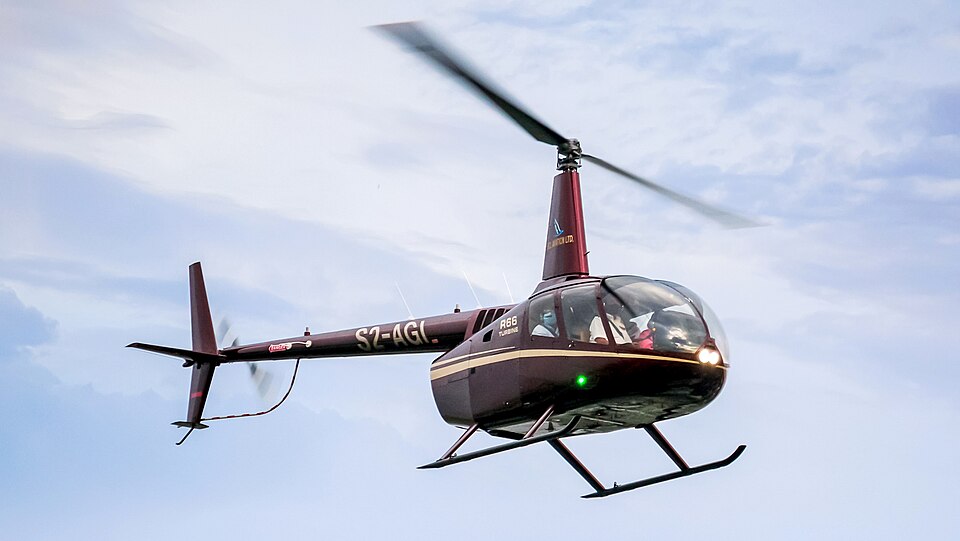
| Robinson R66 | Uses a Rolls-Royce 250 turbine engine. Storage and startup interval requirements are outlined in the engine maintenance manual. |
| Airbus H125 (AS350) | Turbomeca Arriel engine; Turbomeca/Safran engines generally require a startup at least every seven days if hangared to maintain bearing lubrication. |
| Bell 407 / 412 series | Larger turbine helicopters with more complex electrical systems; ground power unit use is common for training environments. |
This table is general reference only. Always use the POH and approved checklist for your specific aircraft, serial number, and engine configuration.
For pilots thinking about stepping up from a two-seat trainer, Flying411's article on piston-powered ultralight helicopters and their overview of the largest piston engine helicopters help frame what the turbine transition actually means in practical terms.
Quick Tip: When transitioning to a new turbine model, aim to personally start and shut down the aircraft at least once per hour of instruction. The startup and shutdown are where most expensive mistakes happen, and repetition builds both procedure fluency and instrument scan confidence.
Why Turbine Transition Training Matters
If you are coming from a piston helicopter background, the turbine transition is more than just a new checklist to memorize. The power characteristics, engine management philosophy, and instrument scan habits are all different.
Torque management, for example, is a primary concern in turbine helicopters. Turbine engines can deliver power far in excess of what the drivetrain components are designed to handle. An over-torque event in a turbine helicopter can result in maintenance costs that run well into the hundreds of thousands of dollars. No exaggeration.
The startup and shutdown phases are where new turbine pilots are most vulnerable to costly errors. Proper training with an experienced turbine instructor -- one who has you personally perform the startup and shutdown during every lesson -- is the best investment you can make.
For pilots weighing the overall decision between rotary and fixed-wing, Flying411 also covers the broader question of helicopter versus plane ownership and operation, which is worth reading before committing to either type.
Why It Matters: Understanding turbine engine management from the ground up, literally, makes you a safer and more confident pilot in every phase of flight. The habits you build at engine start carry over into how you manage power, torque, and temperature throughout the entire flight.
Ready to deepen your aviation knowledge? Flying411 has a full library of articles covering helicopter types, ownership decisions, and practical flying guides tailored for both student and experienced pilots.
Conclusion
Learning how to start a turbine helicopter properly is one of the most important skills a pilot can build. It is the foundation of everything else. Get it right, and the rest of the flight starts on solid ground. Rush it, skip a step, or ignore a gauge, and you risk damage that can ground an aircraft for weeks and cost a small fortune to fix.
The core message is simple. Know your gauges. Follow your POH. Never open the throttle before the starter is engaged. Introduce fuel at the right N1 speed for the conditions. Watch TOT like your career depends on it, because it might. Let the engine warm up before adding power, and cool down properly before shutdown.
Every turbine helicopter has its own personality, and the only way to truly learn it is time in the seat with a qualified instructor who holds you accountable to the checklist every single time.
For more practical aviation guides, startup procedures, ownership breakdowns, and everything in between, visit Flying411 and explore a resource built specifically for pilots who take their flying seriously.
Frequently Asked Questions
What is a hot start in a turbine helicopter?
A hot start happens when the Turbine Outlet Temperature exceeds the engine's starting temperature limit during the startup sequence. It most commonly occurs when the throttle is not fully closed before the starter is engaged, or when fuel is introduced before N1 reaches the minimum required speed for adequate airflow and cooling.
How long should you let a turbine helicopter warm up before takeoff?
Most turbine helicopter procedures call for at least one full minute of idle stabilization after startup before advancing the throttle. After advancing to full open and completing runup checks, additional warm-up time at a low power hover may be appropriate depending on the ambient temperature and the specific aircraft manufacturer's guidance.
Can you start a turbine helicopter with a low battery?
A low or weak battery is a significant risk factor during turbine startup. The battery must be able to spin the engine to a sufficient N1 speed before fuel is introduced. If it cannot, the result is typically a hung start or a hot start. A ground power unit should be used when battery condition is in doubt.
Why does a turbine helicopter need to be started regularly even when not flying?
Many turbine engine manufacturers recommend running the engine at least once every seven days when the aircraft is in storage. This keeps oil circulating through the bearings and helps prevent corrosion on bearing surfaces and other engine components. Specific storage requirements are found in the engine maintenance manual.
What is the difference between N1 and N2 in a helicopter turbine engine?
In most helicopter turbine engines, N1 refers to the gas generator or compressor speed, which is the section the starter spins during startup. N2 refers to the power turbine speed, which is mechanically connected to the rotor system through the transmission. Both are expressed as a percentage of their maximum design speeds. During startup, N1 is the primary parameter to monitor.