If you have ever watched a sleek helicopter lift off from a mountain pad or hospital rooftop, there is a good chance it was a light turbine. These machines sit in a sweet spot that many pilots and operators find hard to resist. They are smaller and more affordable than the heavy iron used by the military, but they pack far more power and reliability than a piston-powered ship.
The best light turbine helicopter for you depends on what you need it to do. Are you flying tours over the Grand Canyon? Checking power lines in the backcountry? Commuting between cities? Each mission points to a different answer. This article breaks down the top models on the market, what makes them stand out, and how to think through the decision like a pro.
Key Takeaways
The best light turbine helicopters combine compact size with turbine-engine reliability, making them the preferred choice for tour operators, law enforcement, utility work, and personal aviation across the United States. Models like the Robinson R66, Bell 505, Airbus H125, and MD 500 series regularly top shortlists because they balance purchase price, operating costs, payload, and versatility better than most alternatives.
| Helicopter | Engine | Seats | Best Use Case | Approx. New Price |
| Robinson R66 | Rolls-Royce RR300 | 5 | Tours, training, personal | ~$1.1M |
| Bell 505 Jet Ranger X | Safran Arrius 2R | 5 | Corporate, EMS, tours | ~$1.4M |
| Airbus H125 | Safran Arriel 2D | 5+1 | Utility, high-altitude, tours | ~$2.7M |
| MD 500E | Allison 250-C20B | 5 | Utility, law enforcement | ~$1.5M |
| Leonardo AW009 | Pratt & Whitney | 8 | EMS, corporate, offshore | ~$3M+ |
| Enstrom 480B | Allison 250-C20W | 4 | Training, personal | ~$900K |
| Schweizer 333 | Allison 250-C20W | 3 | Training, utility, tours | ~$800K used |
At Flying411, we cover the full spectrum of rotary and fixed-wing aviation so you always have the knowledge you need before making your next aircraft decision.
What Makes a Helicopter "Light Turbine"?
Before diving into specific models, it helps to understand exactly what puts a helicopter in the light turbine category. The term covers a broad range of aircraft, but a few defining traits tie them all together.
Engine Type
The core difference is the powerplant. Turbine helicopters use a gas turbine engine, usually a turboshaft design, to drive the rotor system. These engines burn jet-A fuel and produce power through a spinning turbine rather than pistons firing up and down.
Compared to piston alternatives, turbine engines offer higher power-to-weight ratios, smoother operation, and better performance at altitude. If you want a deeper look at how these two engine families compare, the guide on piston vs. turbine helicopters is a great starting point.
Weight and Size Class
"Light" generally refers to a maximum takeoff weight (MTOW) of roughly 6,000 pounds or less, though definitions vary by regulatory context. Most light turbine helicopters seat between two and six people and are designed to be flown by a single pilot. They are nimble, efficient, and easy to hangar compared to medium or heavy-lift machines.
Good to Know: The FAA does not use a formal "light turbine" certification category. The term is an industry shorthand based on weight class and engine type, not a regulatory label.
Cost Tier
Light turbines typically fall between piston helicopters and the larger medium-category machines in terms of both purchase price and operating cost. New models can range from under $1 million to around $3 million depending on equipment, avionics, and manufacturer.
Why Pilots Choose Turbine Power
Piston helicopters have their place. They are cheaper to buy and can be excellent for training and local touring. But once a pilot or operator has flown turbine, many never want to go back.
Reliability and Maintenance
Gas turbine engines have fewer moving parts than piston engines and tend to require less frequent overhauls. They also handle heat and altitude better, which matters a lot in the western United States where density altitude can quickly rob a piston of its power.
Fun Fact: Turbine engines used in helicopters are closely related to jet engines used in airliners. The core thermodynamic cycle is the same; the main difference is how the energy is extracted and used.
Performance at Altitude
If you fly in Colorado, Utah, Wyoming, or anywhere else with significant terrain, turbine power is not just a luxury. Many mountain operations require it. The Airbus H125, for example, has set altitude records that no piston helicopter could approach, which is why it is the helicopter of choice for high-elevation rescue and utility work.
Fuel Availability
Jet-A fuel is available at virtually every general aviation airport in the country. Some remote areas that carry only avgas can pose a problem for piston operators. Turbine pilots rarely have to worry about fueling logistics.
Pro Tip: When planning a cross-country turbine flight, check jet fuel pricing along your route ahead of time. Jet-A prices vary more than most people expect from airport to airport, and a short fuel stop can save hundreds of dollars on a long trip.
Best Light Turbine Helicopters Available Today
This is the heart of the question. These are the models that consistently show up on operator shortlists, aircraft broker inventories, and flight school fleets across the United States.
Robinson R66
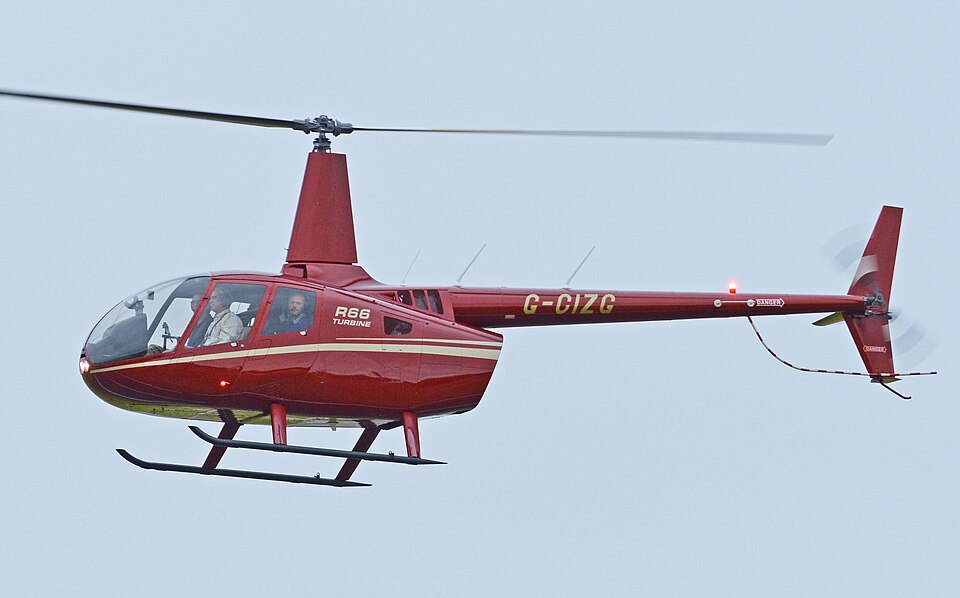
The R66 is the turbine evolution of Robinson's hugely popular R44 piston helicopter. It uses a Rolls-Royce RR300 engine and seats five, making it practical for small tour groups, family trips, and personal transportation.
Robinson built a reputation for producing affordable, well-supported helicopters, and the R66 carries that tradition forward into the turbine world. Its lower purchase price compared to European competitors makes it a popular entry point for operators moving up from piston power.
Key strengths:
- Lowest new price in the light turbine category
- Strong parts and support network across the U.S.
- Good fuel efficiency for its class
- Familiar feel for pilots transitioning from the R44
Potential drawbacks:
- Lower payload and performance ceiling than larger turbines
- Single-engine only
- Less cabin space than competitors like the Bell 505
Why It Matters: Robinson sells more helicopters than any other manufacturer in the world, which means used R66s are relatively easy to find and mechanics familiar with the airframe are widely available.
Bell 505 Jet Ranger X
The Bell 505 carries one of the most iconic names in aviation. The original Bell 206 Jet Ranger defined the light turbine category for decades, and the 505 is its modern spiritual successor. It uses a Safran Arrius 2R engine and brings updated avionics, a wider cabin, and improved performance to the platform.
Tour operators, corporate clients, and EMS providers all use the 505. Its combination of brand recognition, cabin comfort, and performance makes it one of the most versatile options in the class.
Key strengths:
- Excellent cabin visibility and passenger comfort
- Strong brand recognition and resale value
- Good high-altitude performance
- Modern Garmin avionics suite standard
Potential drawbacks:
- Higher purchase price than the R66
- Parts support outside North America can be slower than domestic operators prefer
Airbus H125 (formerly AS350)
The H125 is arguably the most capable single-engine helicopter in the light turbine class. Its Safran Arriel 2D engine produces exceptional power, and the airframe is designed to handle demanding utility, rescue, and high-altitude missions that would push other helicopters to their limits.
The H125 is ubiquitous on mountain tour pads in places like Grand Canyon, Glacier National Park, and Alaska. Law enforcement, fire suppression, and aerial photography operators all rely on it heavily. If your mission involves challenging environments, the H125 is hard to beat.
Key strengths:
- Industry-leading high-altitude and hot-day performance
- Extremely versatile with wide range of utility configurations
- Proven in demanding environments worldwide
- Strong resale value
Potential drawbacks:
- Higher purchase price than R66 or older MD 500 series
- Maintenance can be more costly than some competitors
Keep in Mind: The H125 was formerly known as the AS350 B3e (and earlier variants as the Ecureuil or "Squirrel" in Europe). You may see older models listed under the AS350 designation in used aircraft databases.
MD 500 Series (MD 500E / MD 530F)
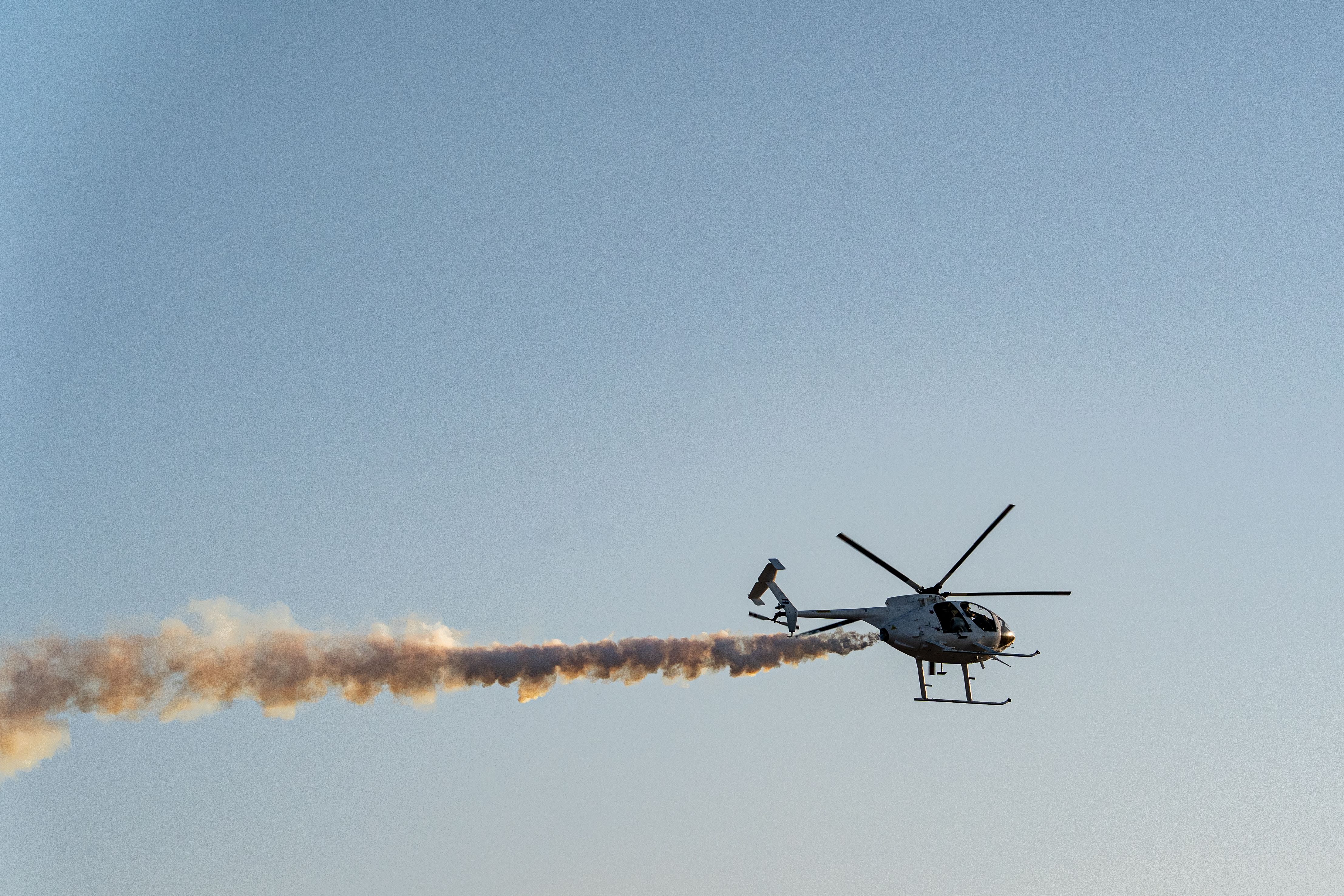
The MD 500 lineage traces back to the Hughes 500, a design originally developed for the U.S. military. The distinctive egg-shaped fuselage and no-tail-rotor NOTAR versions are immediately recognizable. These helicopters have a loyal following among utility operators, law enforcement agencies, and aerial survey companies.
The MD 530F, also called the Lifter, adds a more powerful Rolls-Royce 250-C30 engine for improved hot-and-high performance. The NOTAR versions eliminate the conventional tail rotor, reducing noise and improving safety when operating in confined areas.
Key strengths:
- Compact, maneuverable airframe
- NOTAR option is exceptionally quiet and safe
- Long operational history and battle-tested design
- Popular with law enforcement and military surplus operators
Potential drawbacks:
- Older design compared to newer competitors
- Cabin is narrow and can feel cramped for passengers
Leonardo AW009 (formerly AgustaWestland AW009)
The AW009 represents the upper end of the light turbine category. It seats up to eight people in its transport configuration and is available with a wide range of mission equipment for EMS, offshore operations, and corporate transport. Its larger footprint puts it near the boundary between light and medium categories.
If passenger capacity and mission flexibility are priorities, the AW009 is worth a serious look despite its higher price point.
Key strengths:
- Largest passenger capacity in the light turbine class
- Excellent for EMS and offshore operations
- High build quality and advanced avionics
Potential drawbacks:
- Significantly more expensive than R66 or MD 500
- Operating costs are closer to medium-category helicopters
Enstrom 480B
The Enstrom 480B is a domestically produced light turbine built in Menominee, Michigan. It seats four and uses an Allison 250-C20W engine that has proven itself in thousands of hours of flight across many aircraft types. The 480B is popular for training, personal use, and light utility work.
Enstrom is a smaller manufacturer, so parts and service networks are more limited than Robinson or Bell. But operators who know the brand tend to be fiercely loyal to it.
Key strengths:
- Made in the USA
- Good visibility and handling for training
- Competitive purchase price
Potential drawbacks:
- Smaller manufacturer means more limited support network
- Lower performance ceiling than H125 or Bell 505
Fun Fact: Enstrom has been producing helicopters since the early 1960s, making it one of the longer-running helicopter manufacturers in American history.
Schweizer 333
The Schweizer 333 is no longer in production, but a strong used market makes it worth including here. It seats three and uses the same Allison 250-C20W turbine found in the Enstrom 480B. The 333 is frequently used for flight training at turbine-rated schools and for low-budget utility work.
For buyers who want turbine experience at a lower entry price, a well-maintained used 333 can be an attractive option. Checking the safety record of any used helicopter is always recommended before purchase.
Good to Know: If you are evaluating used piston helicopters alongside turbines, the guide on the safest piston helicopters offers a useful baseline for understanding how different designs compare on safety metrics.
Light Turbine vs. Piston: Making the Call
For pilots considering a move to turbine power, the comparison almost always comes down to budget and mission requirements.
Piston helicopters can cost significantly less to buy and maintain over their lifetime. For a private owner flying a modest number of hours per year in favorable conditions, a piston machine may be the smarter financial choice. Understanding piston engine helicopter startup and operating procedures is also simpler, which lowers the barrier to entry for newer pilots.
Turbines make more sense when:
- Flights regularly involve high terrain or hot weather
- Payload requirements push the limits of piston power
- Reliability is critical for commercial operations
- Operating hours are high enough to spread maintenance costs across many flights
- Passengers or clients expect a higher-quality experience
Heads Up: Insurance premiums for turbine helicopters are generally higher than for piston equivalents. Factor this into your total cost-of-ownership calculation before committing to a purchase.
There are also interesting options at the smaller end of the piston world worth understanding before ruling them out entirely. Some operators start with piston-powered ultralight helicopters before stepping up to turbine power, which can be a cost-effective way to build rotor time.
Cost of Ownership: What to Budget Beyond the Purchase Price
Purchase price is just the beginning. Owning a light turbine helicopter involves a predictable set of ongoing costs that every serious buyer should model before signing anything.
Engine Overhaul Reserve
Gas turbine engines require periodic overhauls at intervals specified by the manufacturer. These overhauls can cost anywhere from $150,000 to $400,000 or more depending on the engine type and operator. Smart operators set aside a monthly engine reserve from day one so the bill is not a surprise when overhaul time arrives.
Insurance
Annual hull and liability insurance for a light turbine helicopter can run from roughly $15,000 to $50,000 per year or more depending on the aircraft's value, the pilot's experience, and the type of operations being conducted.
Hangar and Storage
Most turbine operators hangar their aircraft rather than tying them down outside. Hangar costs vary widely by location, from a few hundred dollars per month at a rural airport to several thousand at a major metropolitan facility.
Fuel
Jet-A consumption for most light turbines falls in the range of 20 to 45 gallons per hour depending on the aircraft and power setting. At current fuel prices, hourly fuel costs typically run from $80 to $200 per flight hour.
Pro Tip: If you are evaluating a purchase based on operating economics, ask your broker or flight department for actual operator cost data from the specific airframe you are considering. Published numbers from manufacturers are often optimistic.
Whether you are buying your first turbine or upgrading to a newer model, Flying411 can help you navigate the market with confidence and clarity.
High-Altitude Performance: A Deciding Factor for Many U.S. Operators
The United States has some of the most demanding helicopter operating environments in the world. From the Rocky Mountains to the Colorado Plateau to the Sierra Nevada, large portions of the country sit well above sea level. For operators based in or flying regularly through these regions, high-altitude performance is not optional.
Density Altitude Explained
Density altitude is the altitude your aircraft "feels" based on the combination of actual elevation, temperature, and humidity. On a hot summer afternoon in Denver, for example, the air can feel as thin as it does at a significantly higher elevation on a cool day. This reduces rotor efficiency and limits the power available from the engine.
Turbine engines handle density altitude challenges far better than piston engines. The Airbus H125 in particular has earned a strong reputation for exceptional hot-and-high performance. There are well-documented accounts of this helicopter operating at altitudes where most other light turbines would struggle significantly.
Why It Matters: If your home airport sits above 4,000 feet MSL, turbine power is not just a performance upgrade. For many operations, it becomes a safety requirement.
Comparing High-Altitude Capability
| Helicopter | Service Ceiling (approx.) | Hot-and-High Notes |
| Airbus H125 | ~23,000 ft | Industry-leading high-altitude performer |
| Bell 505 | ~18,000 ft | Strong for most U.S. mountain operations |
| Robinson R66 | ~14,000 ft | Adequate for most low-to-mid elevation missions |
| MD 530F | ~19,300 ft | Improved over base 500E for high-altitude |
| Enstrom 480B | ~17,400 ft | Suitable for moderate terrain environments |
Note: Service ceilings are manufacturer figures and may not reflect real-world operational limits under all conditions. Always consult the flight manual for your specific aircraft.
Use Cases: Matching the Right Helicopter to the Right Mission
No single helicopter dominates every role. Understanding what each model does best helps narrow the field quickly.
Tour Operations
Operators running sightseeing tours need a helicopter that is visually impressive, comfortable for passengers, and economical to operate at high flight hours. The Bell 505 and Robinson R66 both perform well here. The H125 is the dominant choice for mountain tour operations in the western United States.
Law Enforcement and Public Safety
Police aviation units typically prioritize versatility, speed, and low observability. The MD 500 NOTAR series has a long history in law enforcement because of its quiet operation and agile handling. The Airbus H125 and Bell 505 are also common in police fleets.
EMS and Air Ambulance
Emergency medical service operations demand reliability, speed, and enough cabin space to work on a patient in flight. The Leonardo AW009 is a natural fit here. Some EMS operators also use the Bell 505 in single-pilot IFR-equipped configurations.
Utility and External Load Work
Sling load operations, power line patrol, precision construction work, and aerial survey all fall under utility. The H125 is the gold standard in this category due to its power and external load capacity. The MD 500 series is also widely used for lighter utility tasks.
Personal and Corporate Transport
Private owners and corporate flight departments want comfort, reliability, and low operating headaches. The Bell 505 leads here with its polished cabin and modern avionics. The R66 attracts budget-conscious personal owners who still want turbine reliability.
New vs. Used: Considerations for Light Turbine Buyers
The used market for light turbine helicopters is active in the United States. Aircraft like the R66, H125, and MD 500 series have large installed fleets, which means qualified mechanics, spare parts, and used inventory are all relatively easy to find.
Advantages of Buying New
- Known maintenance history from day one
- Latest avionics and safety systems
- Full manufacturer warranty
- Financing options are typically more favorable
Advantages of Buying Used
- Lower purchase price
- Faster acquisition timeline
- No waiting for a build slot with high-demand manufacturers
- Some older airframes carry upgrades that would cost extra on a new aircraft
Quick Tip: Before buying any used turbine helicopter, have it inspected by an independent mechanic who is not connected to the seller. A thorough pre-purchase inspection can surface problems that are invisible in a logbook review.
It is also worth understanding how helicopters compare to fixed-wing aircraft in terms of total cost and utility. The broader comparison of helicopter vs. plane ownership can help frame that decision if you are still weighing your options.
The Largest and Most Capable Light Turbines
Some buyers need to push the boundaries of what a "light" turbine can do. If you need maximum payload, range, or capability before crossing into true medium-category aircraft, a few options are worth knowing about.
The Leonardo AW009 is the largest in terms of seating within the category. The MD 530F pushes performance with its uprated engine. Some operators also look at the upper range of piston designs for context, including the largest piston engine helicopters, before settling on a turbine solution that fits their actual needs.
Conclusion
Choosing the best light turbine helicopter is not about finding the one that wins every spec comparison. It is about finding the one that fits your mission, your budget, and your operating environment. The Robinson R66 is a smart, affordable entry point. The Bell 505 balances comfort and performance beautifully. The Airbus H125 owns the high-altitude and utility space. The MD 500 brings decades of proven design to operators who need maneuverability and compactness.
The right answer depends on what you are trying to accomplish in the air. Take the time to fly the candidates, talk to operators who use them daily, and model the full cost of ownership before you commit.
When you are ready to take the next step, Flying411 has the resources, guides, and community knowledge to help you make the best decision for your aviation goals.
Frequently Asked Questions
What is considered a light turbine helicopter?
A light turbine helicopter is generally defined as a turbine-powered rotorcraft with a maximum takeoff weight of roughly 6,000 pounds or less. The term is an industry convention, not a formal FAA certification category.
Is the Robinson R66 the cheapest turbine helicopter you can buy new?
The R66 is among the most affordable new turbine helicopters available in the United States, with prices typically starting around $1.1 million depending on configuration. The Enstrom 480B and used Schweizer 333 can sometimes undercut that price depending on market conditions.
How many hours does a light turbine helicopter engine last before overhaul?
Most turbine helicopter engines have time between overhaul (TBO) intervals set by the manufacturer, commonly in the range of 2,500 to 4,000 hours. Actual intervals vary by engine model and may be subject to on-condition extensions approved by regulators.
Can a light turbine helicopter fly IFR?
Some light turbine helicopters can be equipped for instrument flight rules (IFR) operations, but not all are certified for it out of the box. The Bell 505, for example, is available in an IFR-capable single-pilot configuration. Always confirm the specific aircraft's certification before planning IFR operations.
What is the difference between a turboshaft and a turbojet helicopter engine?
Virtually all helicopter turbine engines are turboshaft designs. A turboshaft extracts almost all of the gas turbine's energy output as shaft power to drive the rotor. A turbojet, by contrast, produces thrust through exhaust velocity and is used in fixed-wing jets. The two designs are related but serve different purposes.