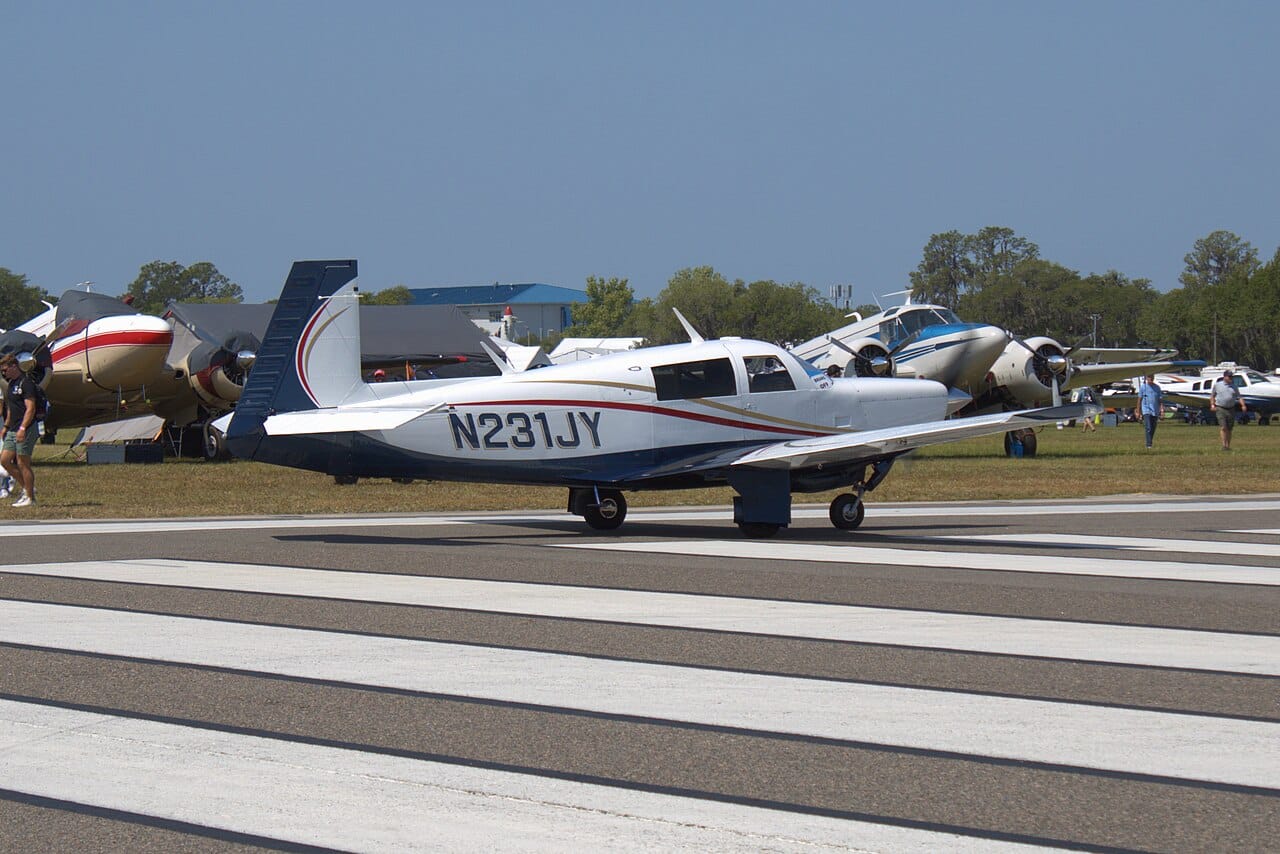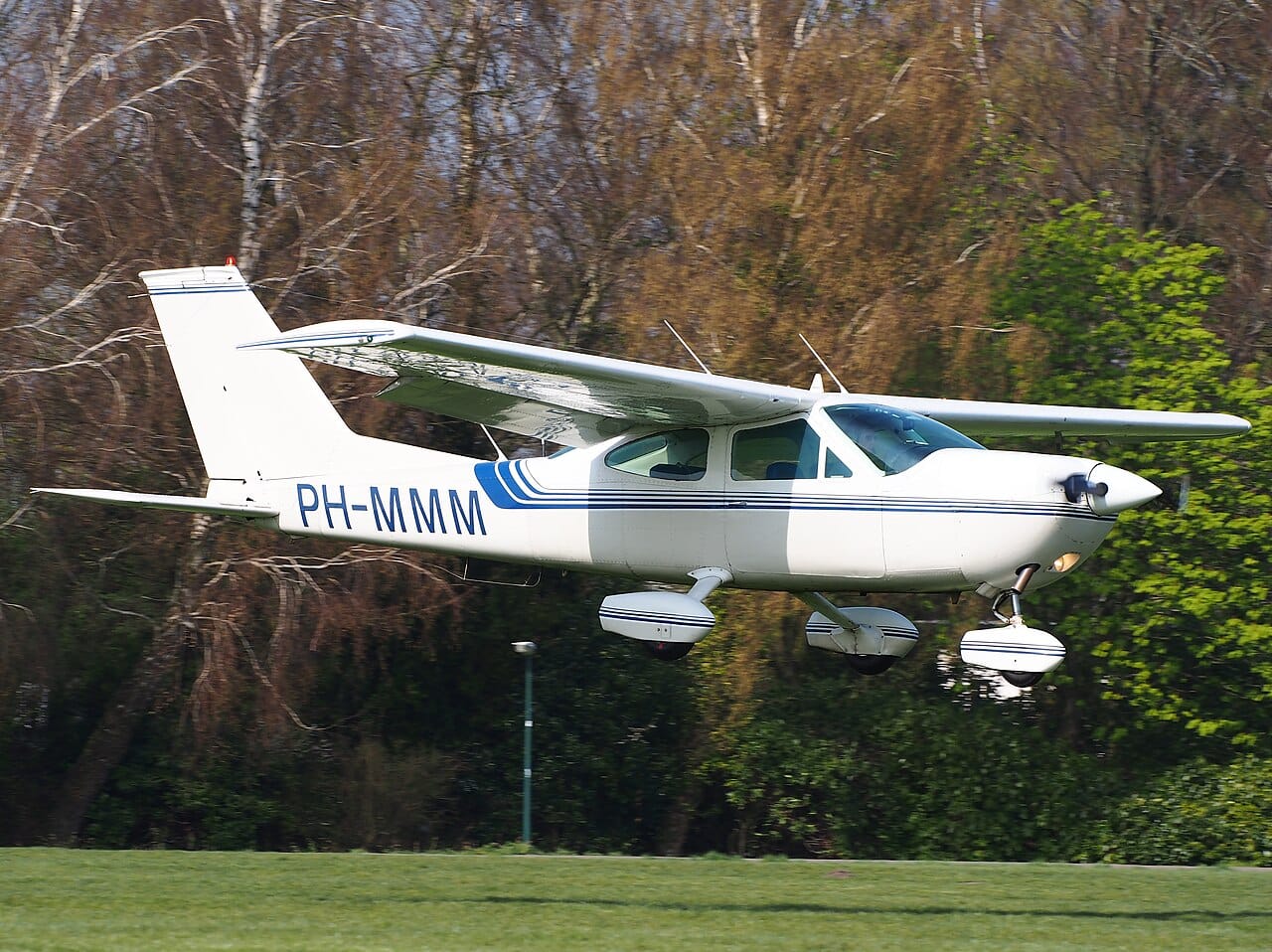
Both airplanes use 180-horsepower Lycoming O-360-series four-cylinder engines, but not the same exact variant. The AA-5B Tiger uses the O-360-A4K, while the 177B Cardinal uses O-360-A1F6-series engines depending on year. Same fuel burn, near enough, at around 9 to 10 gallons an hour in cruise.Yet the Grumman Tiger generally cruises faster, with the advantage varying by Cardinal model year and operating conditions. That single difference is the cleanest way to understand the whole Grumman Tiger vs Cessna 177B Cardinal question: one airplane spends its horsepower on speed, the other spends it on load, comfort and short-field manners.
That is not the only thing separating them on a cost sheet. The Cardinal turns a constant-speed propeller. The Tiger turns a fixed-pitch one. Propellers with moving parts need overhauls, governors need attention, and that is a recurring line item the Tiger owner simply never writes a check for.
So which one is actually cheaper to buy and cheaper to keep? The honest answer depends less on the badge on the cowl than on how you fly, where you keep it, and how patient you are about finding a clean example. Here is the full picture.
Key Takeaways
The Grumman Tiger (AA-5B) is usually the cheaper airplane to own year to year. It is lighter, faster on the same fuel, simpler to inspect, and has no constant-speed propeller to overhaul. The Cessna 177B Cardinal costs a bit more to feed and maintain, but it gives you a wider cabin, doors you can actually load through, softer gear for grass and gravel, and a parts pipeline backed by Textron. Purchase prices overlap heavily, so condition and avionics will swing the deal far more than the model choice. If you fly mostly two people and a couple of bags on 300-mile legs from paved runways, the Tiger wins on cost per mile; if you haul family, dogs and camping gear off a rough strip, the Cardinal earns its extra couple of thousand dollars a year.
| Question | Short answer |
| Cheaper to buy? | Roughly even. 1970s Tigers and 177Bs both commonly trade in the $70,000–$140,000 band depending on engine time and panel. Later AG-5B Tigers sit well above that. |
| Cheaper to operate per hour? | Tiger, by roughly $15–$25 an hour at 100 hours a year. |
| Cheaper per nautical mile? | Tiger, clearly. About 14–15 nm per gallon versus about 12 for the Cardinal. |
| Better useful load? | Tiger, usually, despite a lower gross weight, because it is roughly 150 lb lighter empty. |
| Better cabin and loading? | Cardinal. Wider cabin, huge doors, no wing strut in the way. |
| Better on grass and short strips? | Cardinal. |
| Easier parts support? | Cardinal, through Textron and a very active type club. |
What Each Airplane Actually Is
The AA-5B Tiger came out of the Grumman American factory in Cleveland, Tennessee, from 1975 through 1979 — roughly 1,300 of them. It is the 180-horsepower version of a family that started as the two-seat American Yankee. The construction is the interesting part: bonded aluminum honeycomb panels over a tubular aluminum main spar, with very few rivets. Think of a surfboard rather than a soda can. It is smooth, it is light, and it is fast for the power. The FAA type certificate data sheet A16EA covers the whole AA-5 family, including the later AG-5B Tigers built by American General in the early 1990s and by Tiger Aircraft in the 2000s.
The Cessna 177B Cardinal is the mature version of Cessna's attempt to replace the 172, built from 1970 through 1978. The early 1968 Model 177 had 150 horsepower and a reputation problem; by the 177B, Cessna had fitted the 180-horsepower Lycoming O-360, a constant-speed propeller and a cambered wing leading edge, and the airplane came good. It has no wing struts, a stabilator instead of a conventional tail, and doors so large that getting into the back seat is genuinely civilized.
Fun Fact: The Cardinal's front seats sit ahead of the wing leading edge rather than under it. That is why the view out the front quarter is better than in almost any other high-wing Cessna, and why photographers hunt for them.
If you want the Cardinal's family history in more detail, we covered how it stacks up against its stablemate in Cessna 177 Cardinal vs. 172 Skyhawk, and the Tiger's own head-to-head with the Skyhawk lives in Grumman Tiger vs Cessna 172.
Specifications Side by Side
Numbers below are typical book figures for standard airplanes at sea level and standard conditions. Every individual airframe differs, and thirty-plus years of avionics and paint add weight, so always weigh the specific airplane you are buying rather than trusting a placard.
| Spec | Grumman AA-5B Tiger | Cessna 177B Cardinal |
| Engine | Lycoming O-360, 180 hp | Lycoming O-360, 180 hp |
| Propeller | Fixed pitch | Constant speed |
| Recommended TBO | | Verify the exact engine and overhaul history under current Lycoming SI 1009BF; qualifying factory-new/rebuilt O-360 engines may have extended operating-hour TBOs up to 2,600 hours | Same — verify the exact O-360 variant and engine history under current SI 1009BF | |
| Gross weight | 2,400 lb | 2,500 lb |
| Typical empty weight | ~1,350–1,400 lb | ~1,480–1,560 lb |
| Typical useful load | ~1,000–1,050 lb | ~940–1,020 lb |
| Usable fuel | 51 gallons | 49 gallons standard; 60 gallons optional long-range |
| Cruise, 75% power | ~139 KTAS at 8,500 ft | Roughly 123–130 KTAS depending on model year, altitude, and power setting |
| Fuel burn in cruise | ~9.5 gph | ~10 gph |
| Wingspan | 31 ft 6 in | 35 ft 6 in |
| Cabin access | Sliding canopy | Two very wide doors |
| Baggage allowance | ~120 lb | ~120 lb |
| Production run | 1975–1979 (plus AG-5B, 1990s and 2000s) | 1970–1978 |
Why It Matters: The Tiger has a lower gross weight yet often a higher useful load. Buyers fixate on gross weight because it is the bigger number, but useful load — gross minus your actual empty weight — is the one that decides whether the fourth seat is real.
Purchase Price: Where the Money Actually Goes
What do these airplanes sell for?
Both models live in the same slice of the used market. Project-grade airframes with runout engines and 1970s radios trade low; airplanes with a fresh engine, decent paint and a modern GPS navigator trade far higher. As a rough working guide for a typical clean-but-not-perfect example with mid-time engines, expect both the AA-5B Tiger and the 177B Cardinal to sit somewhere in the $70,000 to $140,000 range, with the very best Cardinals and highly upgraded Tigers asking more. The later AG-5B Tigers built in the 1990s and 2000s are a different market entirely and command a substantial premium because they are simply newer airframes.
What moves the price inside those ranges is almost always the same three things: hours since major overhaul, panel, and corrosion history. An engine approaching its applicable recommended TBO can represent a major near-term expense, so verify the exact engine model, overhaul history, and current Lycoming interval before pricing the airplane, and sellers know it, so a low asking price on a runout airplane is not a bargain — it is an installment plan.
Heads Up: Neither of these airplanes is in production, and neither has been for a long time. That means every purchase is a used-aircraft purchase with used-aircraft risk. Budget for a proper pre-buy inspection by a shop that knows the type, not the shop closest to the seller's hangar.
Flying411 keeps fixed-gear four-seat singles from multiple sellers in one place, so you can compare engine times, panels and asking prices without chasing five different listing sites.
Which one holds its value better?
Both have been remarkably stable. The Cardinal has a devoted following and a finite supply — Cessna built roughly 2,700 fixed-gear Cardinals across all three variants — and values have climbed steadily. The Tiger's supply is smaller still, and its speed-per-dollar reputation keeps demand firm. Neither is a speculative asset, but neither is a depreciating one in the way a new light sport is.
The Constant-Speed Propeller Question
How much does the Cardinal's prop really cost?
A constant-speed propeller is like a car with a gearbox instead of a single fixed gear. It lets the engine spin at its happy rpm whether you are climbing out or cruising, which is why the Cardinal climbs better than its cruise speed suggests. The trade is hardware: a hub full of moving parts, a governor, and oil lines feeding both.
Propeller manufacturers publish calendar and hourly overhaul recommendations — commonly in the range of six years or a set number of hours, whichever comes first, and the specific interval depends on the propeller model and the service letter that applies to it. Budget roughly $3,500 to $6,000 for a propeller overhaul, plus a few hundred to a couple of thousand more if the governor needs work or a blade has to be replaced. Spread over six years, that is a few hundred dollars a year the Tiger owner does not spend.
The Tiger's fixed-pitch propeller needs periodic dressing of nicks and an occasional check for track and balance. Replace one and you are looking at a few thousand dollars, but that is a once-in-a-very-long-while event, not a recurring cycle.
Good to Know: The constant-speed prop is also why the Cardinal is a better training platform for stepping toward a complex or high-performance airplane. If your next airplane is a Bonanza or a 210, the Cardinal's power management habits transfer directly. Our comparison of the Cessna 210 and A36 Bonanza shows what that next step looks like.
Annual Inspections, ADs and Known Trouble Spots
What does an annual cost on each?
For a healthy airplane with no surprises, shops commonly quote $1,500 to $2,500 for an AA-5B Tiger annual and $2,000 to $3,500 for a 177B Cardinal. The Cardinal costs a little more because it is a slightly bigger airframe with more inspection panels, a constant-speed prop and governor in the scope of work, and — on many examples — more installed equipment.
Those are baseline figures. A first annual after purchase on a neglected airplane can easily triple. That is true of every 45-year-old airplane and is not a mark against either type.
What should a Tiger buyer look for?
Three things dominate. First, the bonded honeycomb structure: look for delamination, especially around the wing skins and control surfaces. Repairs to bonded structure need a shop that understands it, and there are fewer of those than there are shops that can rivet a patch on a Cessna. Second, corrosion in and around the tubular main spar, which is not easy to see. Third, the integral wet-wing fuel tanks — sealant ages, and a leaking wing is a messy, labor-intensive fix.
Also check the nose gear and its shimmy damper, and ask about the landing history. Grummans have a slippery wing and will float if flown fast on final, and a long list of firm arrivals shows up as wrinkled skin and worn gear.
What should a Cardinal buyer look for?
The Cardinal's cantilever wing means the wing attach fittings and carry-through structure deserve a close look. Check the stabilator bearings and the trim system for play. Cessna's current seat-rail airworthiness directive, AD 2011-10-09, applies to the 177B and requires repetitive inspection of the seat rails, rollers, locking pins, and related components. Verify current compliance during the pre-buy. — a seat that slides back on rotation has killed people. Corrosion in the lower fuselage and around the door posts matters, particularly on coastal airplanes.
Pro Tip: Ask any seller for a complete AD compliance list signed by an A&P, not just the logbook. Then have your own mechanic re-run it against the current FAA database during the pre-buy. Missing AD compliance is the single most common reason a first annual blows its budget.
How is parts support?
Cardinal owners have the advantage here. Textron still supports much of the Cessna single line, the airframes share a lot with other 100-series Cessnas, and Cardinal Flyers Online is one of the most useful type clubs in general aviation.
The Tiger's type certificate has changed hands several times since Grumman American, and support now comes largely through specialist shops, salvage inventories and the American Yankee Association. In practice, Tiger owners report that common parts are available and the club network is excellent — but a rare bracket can take longer to find than it would for a Cessna.
Running the Yearly Budget
What does each cost at 100 hours a year?
Here is a working estimate. Fuel is priced at $6.50 a gallon, which will be low in California and high in parts of the Midwest. Hangar is set at $350 a month, which varies more than any other number on the list. Engine reserve assumes a $35,000 overhaul at 2,000 hours. Treat this as a framework you fill in with your own local numbers, not a quote.
| Annual item (100 hr/yr) | Grumman Tiger | Cessna 177B Cardinal |
| Fuel | $6,175 | $6,500 |
| Oil and filters | $400 | $400 |
| Engine overhaul reserve | $1,750 | $1,750 |
| Propeller reserve | $200 | $750 |
| Annual inspection | $1,900 | $2,500 |
| Unscheduled maintenance | $2,000 | $2,200 |
| Insurance | $1,400 | $1,400 |
| Hangar | $4,200 | $4,200 |
| Database and ADS-B subscriptions | $300 | $300 |
| Estimated total | ~$18,300 | ~$20,000 |
| Per flight hour | ~$183 | ~$200 |
The gap is real but modest — call it $1,500 to $2,000 a year. Where the Tiger pulls genuinely ahead is cost per mile. At about 139 knots on 9.5 gallons an hour, it moves roughly 14.6 nautical miles per gallon. The Cardinal, at around 121 knots on 10 gallons, gets about 12.1. Over a 500-mile trip that is a real difference in both fuel spent and time in the seat.
Keep in Mind: Fly only 50 hours a year and the fixed costs — hangar, insurance, annual — dominate everything else, and the two airplanes converge. Fly 200 hours a year and the Tiger's efficiency advantage compounds. Know your real annual hours before you let a cost-per-hour table pick your airplane.
What about insurance?
Both are fixed-gear, four-seat, 180-horsepower singles, so underwriters put them in similar boxes. Hull value, your total time, your instrument rating and your time in type drive the premium far more than the model. One practical note: because the Grumman fleet is smaller and the airplane has a distinctive approach profile, some underwriters ask for a few hours of dual with an instructor experienced in type before they will bind coverage. That is a reasonable request regardless of what the policy says — Grumman pilots will tell you the airplane rewards precise airspeed control on final in a way a 172 forgives.
Flying411 gathers Grumman and Cessna listings side by side, so you can compare useful load, engine time and panel fit across both types before you commit to a type club or an insurance quote.
Mission Fit: The Part That Decides It
Who should buy the Tiger?
You fly from paved runways. You go places — 200 to 500 nautical miles at a stretch — usually with one or two people aboard and bags. You like a responsive airplane with light controls and a sliding canopy you can open on the ground on a hot day. You want the lowest cost per mile available in a certified four-seat single with a Lycoming up front. The Tiger is the hot hatch of this pair: light, quick, a little sharper to land well, and cheap to run for what it delivers.
Who should buy the Cardinal?
You load four adults or a couple of car seats and a folded stroller. You occasionally use grass or a rough strip. You want shade over the cabin on a ramp in July, a door on each side, and the ability to load without ducking under a strut. You do not mind trading 15 knots for a cabin that feels a size larger than it is. The Cardinal is the minivan — and that is a compliment, because the minivan is the right tool for most families most of the time.
Quick Tip: Sit in both before you shop. The Tiger's canopy and low sills feel like a sports car; the Cardinal's doors and upright seating feel like a small SUV. Plenty of buyers make the whole decision in ten minutes on the ramp, and that is a perfectly legitimate way to choose an airplane you will own for a decade.
What about weather and IFR flying?
Neither is a known-ice airplane, and neither should be treated as an all-weather machine. Both make competent light IFR platforms when properly equipped. The Cardinal's slightly lower cruise speed gives you a bit more thinking time in the approach environment; the Tiger's speed shortens the exposure on a long cross-country. Honest answer: this is a wash, and the panel matters far more than the airframe.
If you are still building a shortlist rather than choosing between two finalists, our roundup of the 9 best 4-seater planes and the wider look at 12 popular small planes pilots love to fly and own are good places to widen the net. Budget-minded buyers should also look at the Tiger's 150-horsepower sibling, covered in Grumman Cheetah vs Cessna 172.
Pre-Buy Checklist for Either Airplane
Use a shop that has worked on the specific type. This matters more for the Tiger, because bonded structure is not something every mechanic has inspected. Beyond that, the list is the same for both:
| Check | Why it matters |
| Compression test and borescope on all cylinders | Identifies a hidden overhaul bill before you pay for it |
| Oil analysis history, not just one sample | Trends reveal wear; a single clean sample proves nothing |
| Complete AD compliance list, re-verified | Missing AD work is the top cause of a blown first annual |
| Actual weight and balance, current | Decades of added equipment quietly eat useful load |
| Corrosion survey, wing attach and lower fuselage | The one defect that can total a 1970s airframe |
| Logbook continuity from new | Gaps destroy resale value even if the airplane is sound |
| Fuel tank or wet-wing leak check (Tiger) | Sealant work is labor-heavy and expensive |
| Propeller and governor records (Cardinal) | Sets your next several years of prop reserve |
Good to Know: Join the type club before you buy, not after. Both the American Yankee Association and Cardinal Flyers Online publish buyer guidance, known-defect lists and shop recommendations that will save you the cost of membership on the first phone call.
Flying411 tracks four-seat piston singles across the market, so you can watch how engine time and avionics move asking prices before you make an offer.
Conclusion
On the numbers, the Grumman Tiger vs Cessna 177B Cardinal contest goes to the Tiger for pure cost of ownership. It is lighter, faster on the same fuel, simpler to inspect, and free of the constant-speed propeller's recurring overhaul cycle — a difference of roughly $1,500 to $2,000 a year at 100 hours, and a wider gap when you measure by the mile.
The Cardinal answers with things a spreadsheet does not capture well: a cabin you can load without contortion, better manners on grass, and the deepest parts and support network of any four-seat Cessna outside the 172. Those are worth paying for if they match how you actually fly.
Do not let the model decide. A well-kept 177B with a fresh engine and a modern panel will cost you less over five years than a cheap Tiger with a runout engine and a corrosion problem. Buy the best individual airframe you can find in your budget, in whichever type suits your mission, and put the savings you were going to argue about into the pre-buy.
When you are ready to compare listings, visitFlying411and see what is on the market today.
Frequently Asked Questions
Is the Grumman Tiger really faster than a Cessna 177B Cardinal?
Yes, and the margin is meaningful. Book cruise at 75% power is around 139 knots for the AA-5B Tiger and roughly 120 to 124 knots for the 177B, on essentially the same fuel burn. The Tiger's bonded, rivet-free skins and smaller wing account for most of the difference.
Which one carries more weight?
Usually the Tiger, even though the Cardinal has a 100-pound higher gross weight. The Tiger's typical empty weight runs around 150 pounds lighter, so useful load often lands near 1,000 to 1,050 pounds versus roughly 940 to 1,020 for the Cardinal. Always check the specific airplane's current weight and balance, because added avionics and paint change everything.
Can a Cardinal operate off grass strips?
Yes, and that is one of its real advantages. The high wing, spring-steel main gear and generous flaps make it comfortable on turf and rough surfaces. The Tiger can use grass, but its lower propeller clearance and firmer gear make owners more cautious about surface quality.
Are parts hard to find for a Grumman Tiger?
Common maintenance items are readily available through specialist suppliers, and the American Yankee Association keeps owners pointed at the right sources. Rare structural parts can take longer to locate than the equivalent Cessna piece, simply because fewer Tigers were built and the type certificate has moved between owners over the years.
Is a Cardinal hard to land because of the stabilator?
The 177B is not difficult, but it is sensitive in pitch compared with a 172, and it wants the nose held off in the flare. Most pilots adapt within a few hours of dual. The early 150-horsepower Model 177 earned the pitch reputation; the 177B's cambered leading edge largely resolved it.
Which is the better first airplane?
For most new owners, the Cardinal, because of easier loading, more forgiving field performance and broader mechanic familiarity. Choose the Tiger if you fly mostly from paved runways, value speed per dollar, and are willing to get a few hours of type-specific instruction to master its approach speeds.