On pure dollars per flight hour, the Aerostar 601P vs Cessna 421C question has a clear winner: the Aerostar costs roughly $150 to $190 an hour less to operate, and the single biggest reason is the engines. Two Lycoming 540s with a 1,800-hour run between overhauls are simply cheaper to feed and cheaper to replace than two geared Continental GTSIO-520s with a 1,600-hour limit.
That is the easy part of the answer. The harder part is whether the savings are worth what you give up — a narrower cabin, less payload, a much smaller parts and shop network, and an airplane that insurers look at harder. This article walks through both sides with real numbers, so you can see where the money actually goes instead of arguing about book speeds.
The Short Answer
Buy the Aerostar 601P if you fly two to four people fast and far, you are comfortable with an airplane that rewards precise speed control, and you can get to a shop that genuinely knows the type. Buy the Cessna 421C if you regularly carry five or six adults with bags, you want an airstair door and a cabin people can stand up in, and you value the deep Cessna 400-series support network enough to pay for the geared engines that come with it. The Aerostar is the sport sedan — quick, efficient, tight inside. The 421C is the full-size SUV — roomier and more comfortable, thirstier at every stop.
Engines: Where Most of the Money Hides
The 601P runs two Lycoming IO-540-S1A5 engines, 290 horsepower each, turbocharged through airframe-mounted turbochargers. Lycoming's service instruction for recommended overhaul periods lists 1,800 hours for this installation, and most owners plan to that figure. As of 2025, a quality field overhaul on a 540 of this type, with turbos and accessories sorted out, lands somewhere in the $55,000 to $70,000 range per side installed. Call it $120,000 for the pair with the odds and ends — hoses, mounts, baffling — that always come with it.
The 421C runs two Continental GTSIO-520 engines, 375 horsepower each, with a published TBO of 1,600 hours. The "G" matters. These are geared engines: the crankshaft turns faster than the propeller and a reduction gearbox sits between them. That gearbox buys you big power at manageable propeller noise, but it adds parts, adds inspection, and punishes sloppy throttle handling. Shove the power up quickly or chop it off abruptly and you load the gear train in ways it was never meant to be loaded. As of 2025, overhauls on these engines commonly run $85,000 to $110,000 per side installed, and a cylinder-by-cylinder top before TBO is not unusual.
Work that into a reserve and the gap is stark. The Aerostar sets aside roughly $67 an hour for engines. The 421C needs close to $119. Over 1,600 hours of flying, that is about $83,000 of difference, and you have not burned a drop of fuel yet.
Why It Matters: Engine reserve is the number buyers skip and owners never escape. A 421C with 1,400 hours on both engines is not a bargain — it is a $200,000 bill with a propeller on each end. Price run-out engines into your offer or walk.
Edge: Aerostar 601P, and it is not close.
Fuel Burn and Speed: Cost Per Mile, Not Per Hour
Hourly cost only tells you half the story. What you actually buy with an airplane is distance, so the fair comparison is dollars per nautical mile.
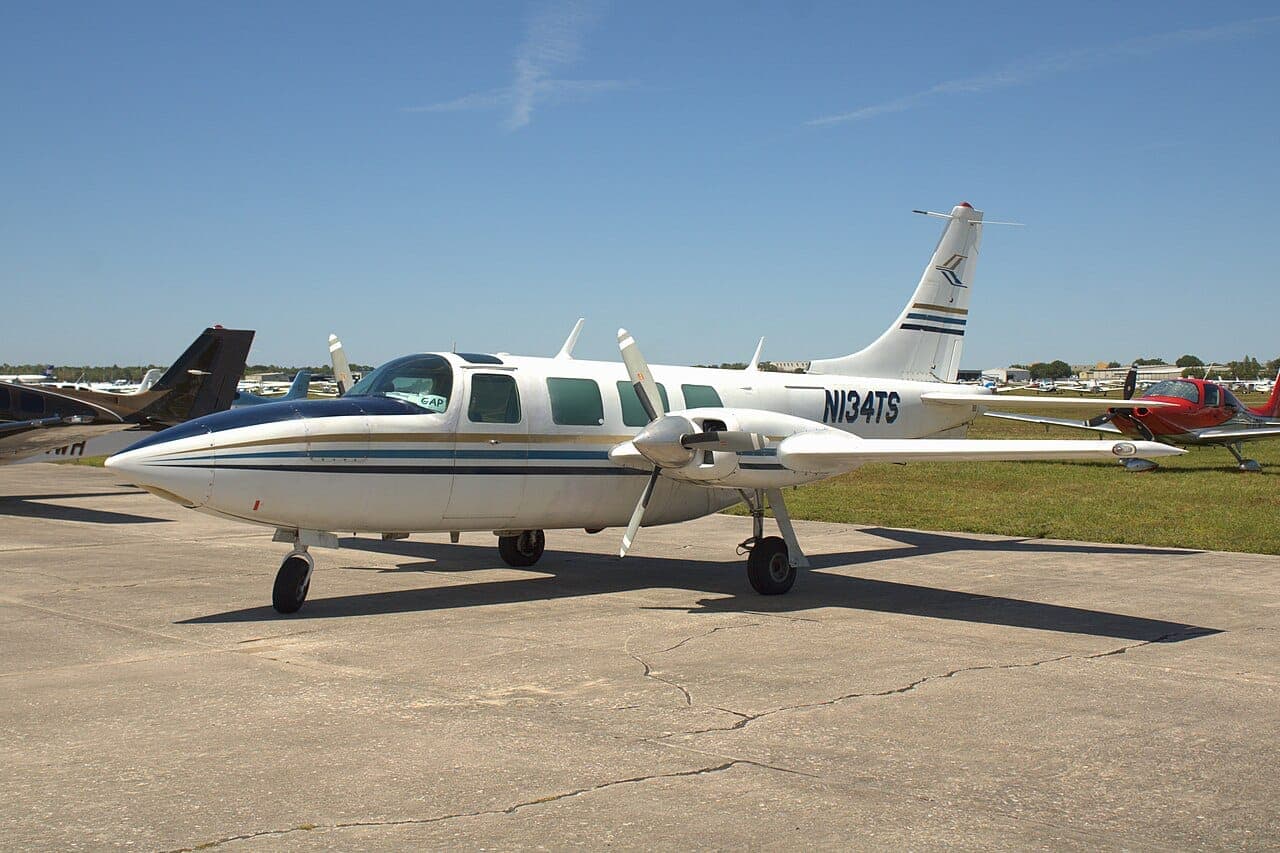
Aerostar owners typically plan 210 to 225 knots true in the low-to-mid twenties on 34 to 38 gallons an hour total. That is a genuinely efficient number for a pressurized piston twin — the airframe is slick, the wing is small, and the engines are close to the fuselage. The 601P is certified to 25,000 feet, which is its ceiling, not a stretch goal.
The 421C book numbers are optimistic compared with what people see. Most owners plan 200 to 215 knots true, burning 42 to 46 gallons an hour. It will climb higher — service ceiling is a bit over 30,000 feet — and its single-engine ceiling near 14,900 feet is far better than the Aerostar's, which is published at about 8,800 feet.
At $6.50 a gallon for 100LL, roughly the self-serve national average through 2025, the Aerostar burns about $234 an hour in fuel and the 421C about $286. Combine that with the engine reserve gap and the Aerostar is moving faster for less money. At 200 hours a year, the Aerostar works out near $2.26 a nautical mile all-in; the 421C near $3.15. On a 700-nautical-mile trip, that is roughly $620 of difference each way.
Heads Up: The Aerostar's fuel system is not a set-and-forget arrangement. Fuel lives in the wings and a fuselage tank, and transfer has to be managed. Mismanagement has caused accidents in this type. Model-specific training is not optional here, whatever your insurer says.
Edge: Aerostar 601P on efficiency; Cessna 421C on altitude capability and engine-out performance.
| Specification | Aerostar 601P | Cessna 421C |
| Engines | 2 × Lycoming IO-540-S1A5, turbocharged | 2 × Continental GTSIO-520, geared and turbocharged |
| Rated power | 290 hp each | 375 hp each |
| Published TBO | 1,800 hours | 1,600 hours |
| Max gross weight | 6,000 lb | 7,450 lb |
| Typical useful load | 1,700–1,900 lb | 2,100–2,350 lb |
| Usable fuel (standard) | about 165 gal | about 213 gal (optional tanks larger) |
| Typical cruise, owner-reported | 210–225 kt | 200–215 kt |
| Typical total fuel burn | 34–38 gph | 42–46 gph |
| Maximum operating altitude | 25,000 ft | service ceiling just over 30,000 ft |
| Single-engine ceiling | about 8,800 ft | about 14,900 ft |
| Cabin width | about 46 in | about 55 in |
| Standard seating | 6 | 6, commonly 7–8 configured |
| Cabin altitude at FL250 | about 11,000 ft | about 9,000 ft |
| Cabin entry | single cabin door | airstair door |
| Production | 1970s–early 1980s (Ted Smith, later Piper) | 1976–1985 |
Flying411 keeps pressurized piston twins from Aerostars to Cessna 400-series airplanes in one place, so you can compare engine times, avionics and equipment side by side before you call a broker.
Annuals, Parts and Finding a Shop
Both of these airplanes carry the three cost multipliers of the pressurized twin world: two engines, retractable gear, and a pressure vessel with door seals, outflow valves and controllers that all age.
A 421C annual inspection, done properly, commonly runs $12,000 to $18,000 as of 2025 before anything is fixed. Deice boots, pressurization components, exhaust and gear rigging all take time. Cessna's Supplemental Inspection Documents for the 400 series add structural inspections that are mandatory for commercial operators and strongly recommended for everyone else; a shop that has never opened a 400-series wing will quote you a surprise. The FAA has also issued wing spar inspection directives affecting Cessna 400-series airplanes — the 402C and 414A most prominently — and any 421C buyer should ask the shop specifically which directives apply to that serial number and whether the inspections have been signed off.
An Aerostar annual is typically a bit cheaper, $9,000 to $14,000 in the same market, mostly because there is less airplane to inspect and the systems are simpler in places. The catch is who does it. Aerostar Aircraft Corporation of Hayden, Idaho holds the type certificate and supports parts, and a handful of shops around the country know the airplane well. Outside that circle, you are paying a mechanic to learn on your dime. The hydraulic gear and flap system, the fuel transfer plumbing, and the pressurization controller all have their own personalities.
Parts tell a similar story from the other direction. Roughly 1,900 Cessna 421s of all variants were built, and they share structure, systems and a lot of hardware with the 402 and 414 fleets. That means salvage yards, PMA parts and shops with the right tooling. Aerostar production across all models was around a thousand airplanes, and single-source parts for a type with a small fleet behave exactly how you would expect: available, but priced like they know you have no alternative.
Good to Know: Ask any candidate airplane's shop for the last three annual invoices, not the logbook stamps. The stamp tells you an inspection happened. The invoice tells you what the airplane actually needs every year.
Edge: Draw. Aerostar wins on the inspection bill; the 421C wins on parts availability and the number of shops that can do the work.
Cabin, Payload and What the Airplane Is For
This is where the 421C earns its keep. At about 55 inches wide, with an airstair door and a cabin laid out for six to eight, it is a genuine cabin-class airplane. Passengers board without climbing over a wing, bags go in nose and aft lockers, and the cabin holds around 8,000 feet at FL250 — lower and more comfortable than the Aerostar at the same altitude. If you fly clients, in-laws or a crew of four plus luggage on a regular basis, that difference shows up in whether they want to come again.
The Aerostar cabin is about 46 inches wide. Two up front and two behind is pleasant; four behind is a long afternoon. Useful load is lower too, and with full fuel you are planning around 800 to 900 pounds of people and bags on most airframes. That is four adults with light luggage, not six with golf clubs.
Range is closer than the weights suggest. The Aerostar's 165 gallons at 34 to 36 gallons an hour gives about four hours plus IFR reserves, roughly 850 nautical miles in still air. The 421C's 213 standard gallons at 42 to 44 gallons an hour covers similar ground, and optional tankage extends it. Both airplanes do the 700-to-900-mile business trip in one hop, which is the mission most buyers in this class are actually buying.
One more practical difference: runway. The Aerostar is a small wing on a fast airplane, with approach speeds that feel more like a light turboprop than a piston twin. It likes long, hard surfaces and pilots who hold their numbers. The 421C stalls slower and lands more like the big Cessna it is. If your home field is 3,000 feet with trees, that matters more than any cost table.
Edge: Cessna 421C, comfortably, on cabin and mission flexibility.
Flying411 keeps useful-load and equipment details alongside each listing, so you can compare what a specific airframe will actually carry rather than what the brochure promised in 1979.
Insurance, Training and Resale
Insurers price both of these as serious machines, and neither is a reasonable first twin. For a 421C owner with a few hundred hours of multi-engine time, an instrument rating and annual recurrent training at a simulator provider, annual premiums in the $8,000 to $15,000 range are common as of 2025, driven mostly by hull value.
The Aerostar is the harder underwriting conversation. The fleet is small, the airplane has a reputation for demanding speed discipline, and there are fewer instructors with meaningful time in type. Expect requirements for model-specific initial training, a minimum number of hours with a qualified instructor before solo, and premiums that are proportionally higher against hull value than the 421C's. Several owners report that finding the training was harder than finding the coverage. Budget for a trip to an Aerostar-specific school rather than a weekend with the local twin instructor.
On resale, the 421C market is deeper. More airplanes, more buyers, more comparable sales for an appraiser to point at. Aerostars sell well to people who want an Aerostar and sit otherwise — the buyer pool is enthusiastic and small, so both ends of the transaction take longer. Neither airplane is an investment. Both are tools that lose value slowly and cost money steadily, and the thing that protects resale in each case is the same: complete logs, current directives, mid-time engines and avionics somebody wants.
Keep in Mind: ADS-B, a modern navigator and a current autopilot are table stakes in this class now. An airplane that still needs $60,000 of panel work is not cheap because the asking price looks low.
Edge: Cessna 421C, on insurability, training access and market liquidity.
The Numbers Side by Side
Here is a working cost model for both airplanes using late-2025 pricing: 100LL at $6.50 a gallon, overhaul reserves spread across published TBO, and typical owner-reported maintenance and fixed costs. Your hangar, your insurance and your shop rate will move these, but the shape of the comparison holds.
| Cost item | Aerostar 601P | Cessna 421C |
| Fuel (per hour) | $234 (36 gph) | $286 (44 gph) |
| Engine and turbo reserve | $67/hr | $119/hr |
| Propeller reserve | $8/hr | $10/hr |
| Unscheduled maintenance reserve | $45/hr | $55/hr |
| Oil and consumables | $6/hr | $8/hr |
| Variable subtotal | $360/hr | $478/hr |
| Insurance (per year) | $9,000 | $11,000 |
| Hangar (per year) | $6,000 | $7,000 |
| Annual inspection (per year) | $9,000 | $13,000 |
| Subscriptions, charts, misc. | $2,500 | $2,500 |
| Fixed subtotal | $26,500/yr | $33,500/yr |
| All-in cost at 100 hr/yr | about $625/hr | about $813/hr |
| All-in cost at 200 hr/yr | about $493/hr | about $646/hr |
| Cost per nautical mile at 200 hr/yr | about $2.26 | about $3.15 |
Two things jump out. First, the gap narrows as you fly more, because fixed costs spread out — but it never closes, because the engine and fuel difference is baked into every hour. Second, both airplanes are expensive at low utilization. At 75 hours a year, the 421C crosses $900 an hour and the Aerostar is not far behind. These are airplanes for people who fly 150 hours or more, or who split the fixed costs with a partner.
Pro Tip: If your flying is under 100 hours a year, compare both of these against a well-equipped Cessna 340A before you commit. It gives up cabin size and speed but drops a tier in engine and inspection cost. Our Cessna 340A vs 414A vs 421C comparison walks through where each one makes sense.
Which One Should You Buy?
The owner-pilot flying two or three people on business, 150 to 250 hours a year. Buy the Aerostar 601P. This is exactly the airplane's mission: four seats that get used, 215 knots, and an hourly cost that is roughly a quarter less than the 421C's. You will spend real money on initial training and you will plan your maintenance around a shop that knows the type, possibly not your home field. In exchange you get the fastest piston twin in the class per dollar of fuel. If you do not have a competent Aerostar shop within reasonable ferry distance, reconsider — that single factor has soured more Aerostar ownerships than the airplane ever did.
The family or small company moving five or six people with bags. Buy the Cessna 421C. The Aerostar cannot do this trip comfortably and loading it to try is how people get into trouble. The 421C's airstair door, 55-inch cabin and 8,000-foot cabin at FL250 are worth the extra $150 an hour when the back seats are full. Budget honestly for the GTSIO-520s: assume you will overhaul both at some point in your ownership and that the bill will be north of $190,000 at current rates. If that number ends the conversation, the 421C is not the airplane for you. Our Cessna 414A vs 421C cost comparison covers the cheaper way to get most of that cabin.
The buyer shopping on purchase price alone. Buy neither until you have run the numbers above against your actual flying. Both of these airplanes are cheap to acquire relative to their capability, and both punish owners who confuse acquisition price with cost. The pattern is well documented across this whole category — the Beechcraft Duke B60 is the textbook example of an airplane that costs little to buy and plenty to keep. If a pressurized twin's purchase price looks like a bargain, the market has already priced in what comes next.
Fun Fact: Ted Smith designed the Aerostar after working on the Douglas A-20 and designing the Aero Commander. The engines sit close to the fuselage partly for that reason — it keeps asymmetric thrust manageable when one quits, which is why the airplane handles engine failures better than its reputation for speed would suggest.
Flying411 keeps Aerostar, Cessna 400-series and other cabin-class twin listings in one place, so you can compare engine time, total time and avionics without jumping between five sites.
Making the Call
Settle the Aerostar 601P vs Cessna 421C decision on two questions, in this order. How many seats do you fill on a typical trip, and is there a shop you trust that already works on the type? Answer those and the cost table stops being an argument and starts being a confirmation. If you fly light and fast and have the support, the Aerostar saves you real money every hour for the life of the airplane. If you fill the cabin, the 421C does a job the Aerostar simply cannot do, and the extra cost is the price of that job.
Whichever way you lean, buy the airplane and not the model. A pre-buy by a shop that specializes in the type, a careful review of directive compliance, and a borescope on every cylinder will tell you more about your next five years of cost than any comparison article can. Twins in this class reward boring, thorough diligence and punish enthusiasm. If you want more context on how the rest of the cabin-class piston fleet stacks up, our Navajo Chieftain vs Cessna 402C operating cost breakdown and the Cessna 340A vs Baron 58P comparison cover the neighbours on either side of these two.
When you are ready to compare listings, visitFlying411and see what is on the market today.