Why can you buy a pressurized, cabin-class twin that cruises in the low 200-knot range for less than a clean used Bonanza? Because the asking price on a Beechcraft Duke B60 is the smallest check you will ever write on it. The market has already done the math on two high-output, turbocharged Lycoming TIO-541s, and it has discounted the airframe accordingly. It is a reason to buy one with your eyes open. Think of it like a twenty-year-old German luxury sedan going for used-Corolla money: the sticker is cheap because everyone knows what the timing chain job costs. Here is exactly where the money goes, and what to check before you hand over a deposit.
Why the Duke Is Cheap: What the Market Already Knows
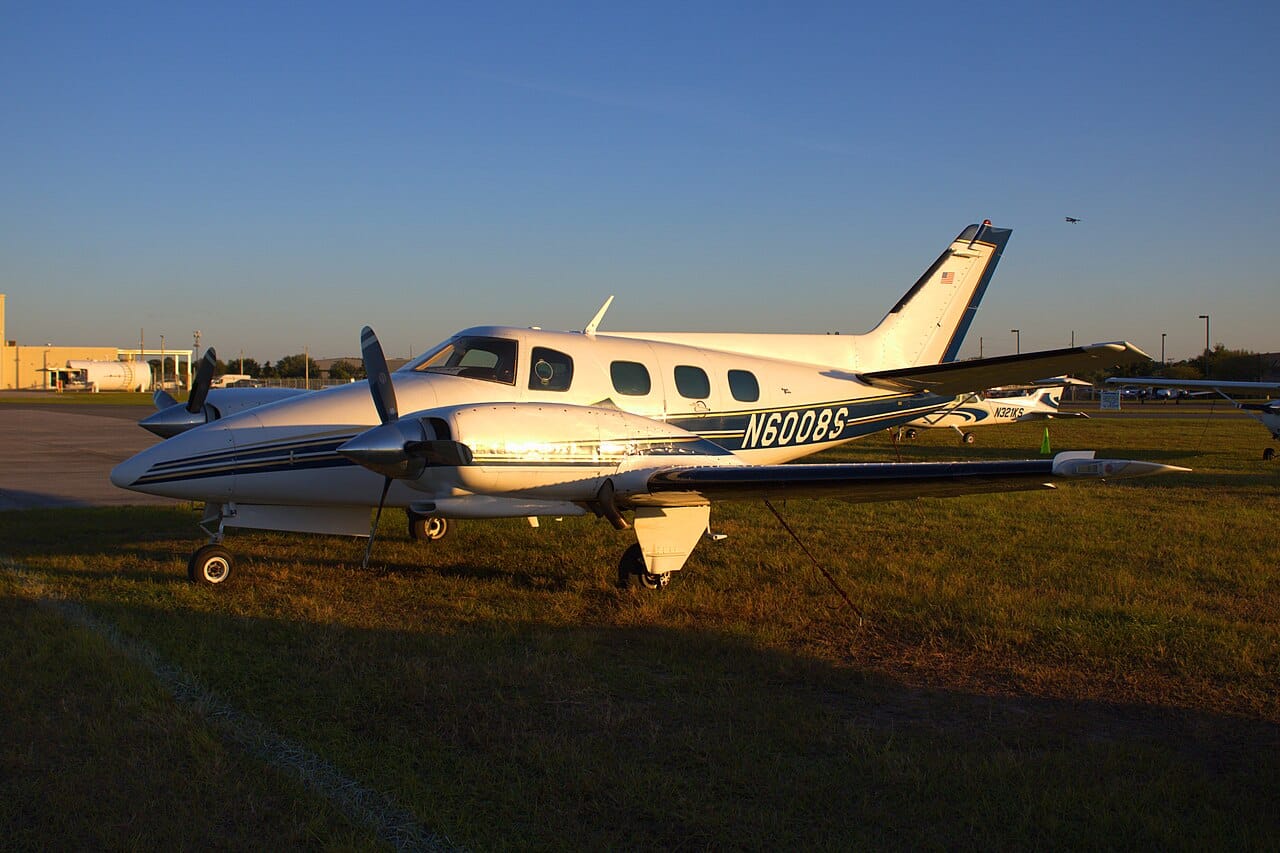
Beechcraft built just under 600 Dukes between 1968 and 1982, and the B60 (1974 onward) makes up more than half of them. It is a beautiful, fast, pressurized six-seater that Beech styled like a scaled-down Queen Air. It is also powered by a pair of Lycoming TIO-541-E1C4 engines — 380 horsepower each, turbocharged, fuel-injected, and direct-drive — with a 1,600-hour recommended time between overhauls. Those engines are the whole story. A low price usually means the airplane is close to, or past, the point where someone has to pay for them.
- Compare the asking price to the remaining engine value. Good: the price roughly matches what a comparable mid-time airplane sells for, and the engines have real hours left. Bad: the airplane is "a steal" and both engines are within 300 hours of TBO — you are not buying a cheap twin, you are pre-paying for an overhaul.
- Ask when each engine was last apart and by whom. Good: overhauled by a shop that works on TIO-541s regularly, with a full teardown report. Bad: "top overhauled" cylinders on a 1,900-hour bottom end, or a field overhaul with incomplete teardown and inspection documentation.
- Check how much the airplane flies. Good: 80 to 150 hours a year, flown regularly. Bad: 15 hours a year for the last five years. High-output, turbocharged engines are a poor place to gamble.
- Find out why it is for sale. Good: owner stepping up to a turboprop, hangar full of records. Bad: estate sale, shop lien, or a seller who has already been quoted a number he does not want to pay.
Fun Fact: The Duke was Beech's answer to a gap in its own lineup — too much airplane for a Baron, too little for a Queen Air. Owners who love them call the ramp presence half the reason they bought one. Nobody has ever called a Duke ugly.
If you are still weighing the Duke against the simpler, cheaper twin in the same family, our Beechcraft Duke vs Baron comparison lays out the trade in performance and running cost side by side.
The Engines: Where Most of the Money Hides
The TIO-541 is a good engine that is unforgiving of bad operating habits.The TIO-541-E1C4 is a direct-drive engine, but Lycoming still cautions against rapid throttle movement because the engine uses a dynamic counterweight system and operates at high power and RPM. Overhaul shops that specialize in the type report that most premature failures trace back to how the engine was flown, not to a design flaw.
- Get the cost of an overhaul in writing before you shop. Current quotes from shops that do this work land in the rough neighborhood of $70,000 to $100,000 per engine, and the pair with accessories, hoses, baffles and installation commonly totals $150,000 to $200,000. Good: you have a real number from a real shop. Bad: you are assuming Baron-engine pricing.
- Read the compressions, then ignore them. Good: a borescope report on all twelve cylinders with photos, plus oil analysis trends over several years. Bad: a one-line annual entry with differential compression figures and nothing else.
- Look for metal. Good: clean oil filters cut open at each change and documented. Bad: any unexplained history of metal in the filter or screen, which can indicate serious internal engine wear and deserves investigation before purchase.
- Ask about operating technique. Good: an owner who describes cowl flap discipline, gradual power reductions and target turbine inlet or cylinder head temperatures. Bad: "I just pull it back and come down."
- Check the engine monitor data. Good: a modern all-cylinder monitor with downloadable history you can review. Bad: factory single-probe gauges and no data at all.
Why It Matters: At 1,600 hours TBO and roughly $175,000 for a pair, the engine reserve alone runs about $110 per flight hour. On many cheap Dukes, that reserve over one engine cycle exceeds the purchase price of the whole airplane. Budget it as a bill, not a maybe.
Turbochargers, Exhaust and Pressurization
The Duke pressurizes its cabin with air taken from the turbocharger compressors, and it holds a maximum differential of about 4.6 psi — good for roughly a 10,000-foot cabin while you cruise in the mid-20s. That system is the reason you buy a Duke instead of a Baron, and it is also a cluster of parts that are forty-plus years old.
- Have the full exhaust system inspected, slip joints and all. Good: recent inspection with any cracked or thin sections replaced. Bad: patched or welded exhaust components, or a shop that only glanced at the tailpipes.
- Do a pressurization run on the ground and in the air during the demo flight. Good: the cabin holds differential smoothly and the outflow valve modulates without surging. Bad: the cabin will not hold, or the rate needle hunts.
- Inspect door and window seals. Good: supple seals with a known replacement date. Bad: hard, flat, cracked seals — individually cheap, but a symptom of long neglect.
- Bring your own carbon monoxide detector on the flight. Good: zero reading throughout. Bad: any reading at all. Because cabin air comes off the compressor side, an exhaust leak in the wrong place can put CO into the cabin.
- Price the turbochargers, controllers and wastegates. Good: recent overhaul or replacement documented. Bad: original-vintage units with no history; a turbo, controller and wastegate refresh on both sides is a five-figure job.
Heads Up: Pressurization is also what makes the Duke worth owning. Without it you have a thirstier Baron. If the seller shrugs off the pressurization system as "something I don't really use," that tells you which parts of the airplane have been maintained.
Flying411 keeps pressurized piston twins and their turboprop conversions in one place, so you can compare engine times, avionics and asking prices without chasing five different tabs.
Airframe, Gear and Corrosion
The good news: the Duke airframe is Beech-built and stout, and the Model 60, A60 and B60 all sit on the same FAA type certificate data sheet, so parts and paperwork are consistent across the series. The bad news: the youngest one rolled out in 1982, and low production means some parts are slow, expensive, or both.
- Swing the gear on jacks. The Duke's landing gear is electrically driven by a motor and mechanical actuator system beneath the cabin floor. Good: smooth, even extension and retraction, correct limit-switch operation, and properly rigged doors and linkages. Bad: unusual gearbox noise, poor rigging, intermittent motor operation, or excessive actuator play.
- Pull interior panels and look at the belly structure. Good: clean, painted structure with no white powder or bubbling. Bad: corrosion in the belly or around the pressure vessel, which is far more serious here than on an unpressurized airplane.
- Check the fuel bladders and their last replacement date. Good: documented replacement or recent inspection with no wrinkles or seepage. Bad: unknown-age cells and blue staining under the wing.
- Look hard at the windshield and side windows. Good: clear, no crazing, no delamination. Bad: crazing on a pressurized airplane — replacement glass is a real expense and lead times can be long.
- Verify the deice and anti-ice equipment actually works. Good: boots that inflate evenly, hot props and heated windshield panel functioning, with recent boot condition noted. Bad: inoperative equipment placarded off. Boots for a Duke are not a cheap catalog item.
- Ask the shop for a full AD compliance list, airframe and engine. Good: a current, signed list you can cross-check. Bad: "it's all in the logs somewhere."
Panel, Avionics and the Cost of Catching Up
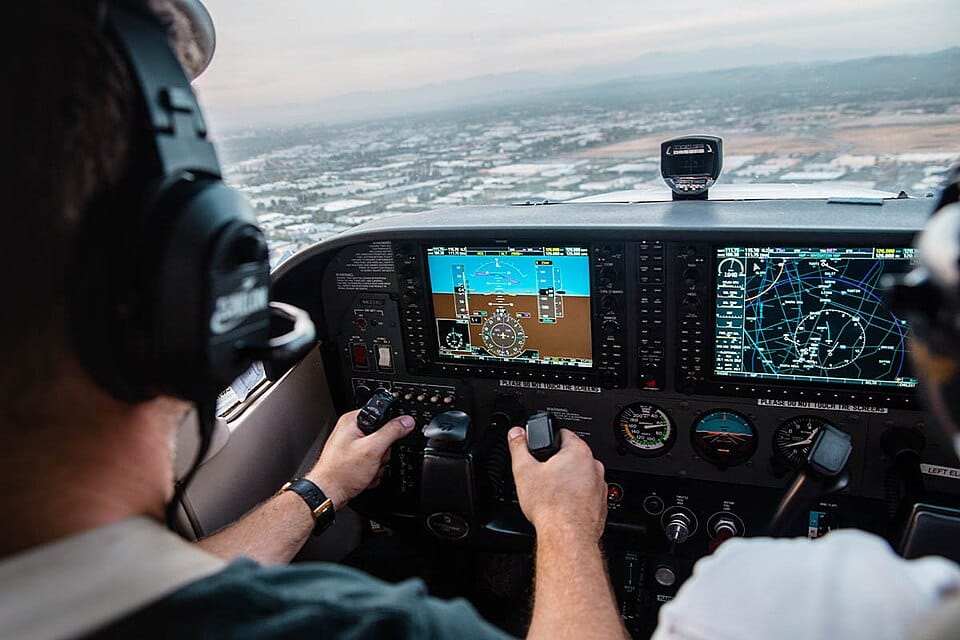
A 1970s Duke with 1970s radios is a 1970s airplane. Avionics do not affect whether it flies, but they absolutely affect what you pay after closing, and a modern panel is often the single biggest difference between two Dukes with identical engine times.
- Confirm ADS-B Out compliance. Good: an installed, working 2020-compliant transponder or position source. Bad: not equipped — that is a required install before you fly in most controlled airspace.
- Check what autopilot is fitted and whether it is supported. Good: a modern digital autopilot, or a well-maintained legacy unit with a shop that still services it. Bad: an orphaned flight control system nobody will touch. On a pressurized twin flown single-pilot in weather, a dead autopilot is a grounding issue in practice, not just a comfort issue.
- Add up the panel you actually want. Good: the airplane already has it. Bad: you are planning a $60,000 to $120,000 retrofit on top of a "cheap" purchase, which is where many Duke budgets quietly double.
- Look behind the panel during the pre-buy. Good: tidy harnesses, labeled runs, dated install paperwork. Bad: a rat's nest of abandoned wiring from three generations of radios.
- Check weight and balance against the equipment list. Good: a current W&B that reflects every install. Bad: a 1981 form and an airplane full of newer gear — useful load on a Duke is tight enough that you need honest numbers.
Good to Know: The Duke Flyers Association is an active type club, and for an airplane with fewer than 600 built, that community is worth more than it sounds. Type-club members know which shops understand the TIO-541 and which parts have a long lead time — information that does not appear in any listing.
What It Actually Costs to Own, Year by Year
Here is the part buyers skip. Owners consistently report 40 to 46 gallons an hour total at normal cruise settings, dropping into the high 30s if you slow down and lean carefully. Book max cruise is up around 240 knots high in the flight levels; most owners plan on 200 to 215 knots and sleep better. Standard usable fuel is about 142 gallons, with optional configurations increasing usable capacity to about 202 or 232 gallons. At 42 gallons per hour, standard fuel provides roughly 3.4 hours to dry tanks, so a practical trip with reserve is shorter; the optional long-range systems are what turn the Duke into a true four-plus-hour airplane.
The table below assumes 120 hours a year, avgas around $6.50 a gallon, and a full engine reserve. Adjust fuel to your region; adjust nothing else downward.
| Cost item | Typical figure | Notes |
| Fuel | $260–$300 per hour | 40–46 gph at cruise power |
| Engine overhaul reserve | ~$110 per hour | Two TIO-541s, 1,600-hour TBO |
| Propeller reserve | $10–$15 per hour | Overhaul on calendar or hours, whichever first |
| Turbos, exhaust, accessories | $25–$40 per hour | Treat as scheduled, not unscheduled |
| Unscheduled maintenance | $50–$80 per hour | Pressurization, gear, avionics, gremlins |
| Annual inspection | $9,000–$15,000 | Before squawks; a deferred-maintenance first annual can run far higher |
| Insurance | $8,000–$18,000 per year | Depends heavily on pilot time and training |
| Hangar | $6,000–$12,000 per year | Hangar it. Pressurized airframes hate weather |
| Subscriptions, charts, ADS-B services | $1,000–$2,500 per year | Panel dependent |
| All-in at 120 hours/year | roughly $85,000–$100,000 | about $700–$850 per hour |
Fly it 50 hours a year instead and the fixed costs do not shrink — your hourly number climbs past $1,100. Fly it 200 hours and the hourly figure drops toward $600, which is why the Dukes that make financial sense are the ones that actually go places. For broader context on where a cabin-class twin sits against simpler airplanes, our guide to what small planes cost to buy and own is a useful reality check.
Pro Tip: Ask your insurance broker for a quote before you make an offer, with your real hours and ratings. Some underwriters want a multi-engine rating plus meaningful turbocharged or pressurized time, plus initial and annual recurrent training in type. A Duke you cannot insure is a lawn ornament with a beautiful nose.
Records and Paperwork
On a forty-year-old pressurized twin, the logbooks are a bigger part of the value than the paint. Gaps are not just an annoyance; they are the difference between a six-figure airplane and a parts source.
- Verify continuous logs from new. Good: complete airframe, both engines and both propellers. Bad: "logs from 1996 forward" — you have no way to establish corrosion history or damage history.
- Search for damage history and check the repair paperwork. Good: a documented, properly approved repair with 337s on file. Bad: a gear-up with vague entries and no engine sudden-stoppage inspection documented.
- Cross-check the FAA registry record against the logs. Good: clean title, no open liens, registration current. Bad: a lien from a shop or lender that nobody mentioned.
- Match every STC and modification to an approval. Good: paperwork for each install, including any engine or intercooler modifications. Bad: undocumented changes, which your next annual will find for you.
- Confirm the pressurization and structural inspection items have been done on schedule. Good: signed entries at the required intervals. Bad: items that appear only when the airplane changed hands.
Flying411 keeps Beechcraft twins, singles and light jets in one place, so you can compare how a Duke's numbers stack up against a Baron, a Bonanza or a step up to turbine power.
The Checklist at a Glance
| What to check | What good looks like | Red flag |
| Engine time vs. price | Mid-time engines, price reflects them | Bargain price, both engines near 1,600-hour TBO |
| Overhaul history | Full overhaul by a TIO-541 specialist, teardown report on file | Cylinders replaced on a high-time bottom end |
| Oil filters and analysis | Years of clean cuts and stable trend data | Any history of metal, especially gearbox-related |
| Annual utilization | 80–150 hours a year, flown regularly | Sat for years with occasional short hops |
| Exhaust system | Recently inspected, cracked sections replaced | Patches, welds, or any CO reading in the cabin |
| Pressurization | Holds differential smoothly in flight | Won't hold, or seller never uses it |
| Turbos and controllers | Documented overhaul or replacement | Original units, no history |
| Landing gear | Clean hydraulic swing on jacks | Weeping actuators, repeated pump cycling |
| Corrosion | Clean belly and pressure vessel structure | Bubbling paint, white powder, coastal tiedown history |
| Windows and windshield | Clear, no crazing or delamination | Crazing on a pressurized cabin |
| Deice equipment | Boots inflate evenly, hot props and heat work | Placarded inoperative |
| Avionics | ADS-B compliant, supported autopilot, tidy install | Orphaned autopilot, $100k of catching up to do |
| Logbooks | Continuous from new, all AD compliance listed | Missing years, vague damage entries |
| Title and liens | Clean FAA registry search | Undisclosed lien or estate complications |
Before You Sign
Walk away from a Duke with runout engines unless the price is low enough that you can write the overhaul check the week after closing and still be at or below market. That is the honest test. The airplanes that ruin owners are the ones bought at a discount by someone who planned to "fly it a couple hundred more hours and see." Geared, turbocharged engines are a poor place to gamble.
Get the pre-buy done at a shop that works on Dukes specifically, not at the nearest field. Ask the shop directly how many TIO-541 overhauls and pressurization repairs it has done in the last two years. A specialist pre-buy might cost $5,000 to $10,000 with the inspections opened up, and it is the cheapest money in this entire transaction. If the seller resists a proper pre-buy at a shop of your choosing, that answer is the inspection result.
None of this makes the Duke a bad airplane. It makes it a specific airplane for a specific owner: someone who flies 100-plus hours a year, files in the flight levels, values a pressurized cabin, and has budgeted the engines as a certainty rather than a risk. For that person, a Beechcraft Duke B60 delivers speed and comfort that would otherwise cost several times the purchase price. For everyone else, a simpler twin like the Cessna 337 or a well-equipped single will do the mission for a fraction of the running cost, and our roundup of genuinely affordable small planes is the better starting point.
Flying411 keeps Duke listings, their engine times and their panel details in one place, so you can compare what you are really buying instead of just comparing prices.
When you are ready to compare listings, visitFlying411and see what is on the market today.