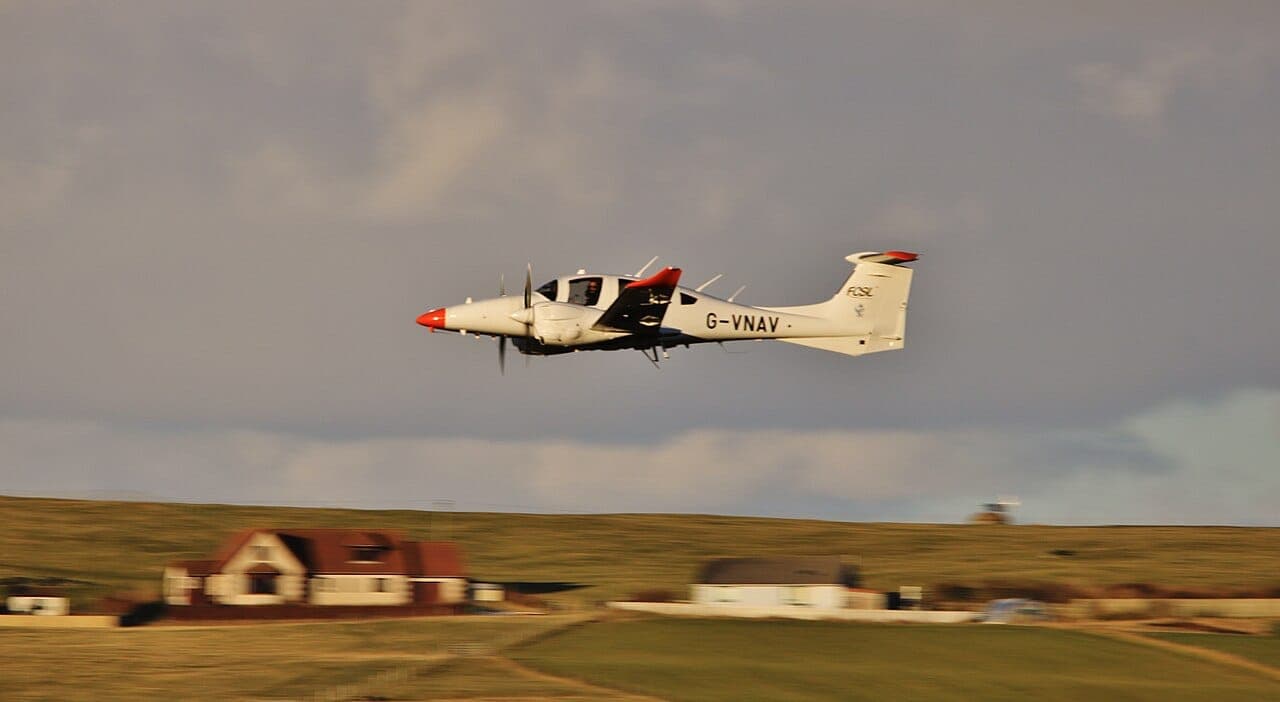
The usual assumption is that a jet-A twin is automatically the cheap one. Burn 14 gallons an hour instead of 34, the thinking goes, and the savings take care of everything else. The honest answer in the Diamond DA62 vs Beechcraft Baron G58 debate is messier: the DA62 really does cut your fuel bill roughly in half, but it gives a large part of that back in engine reserves, acquisition cost and the cost of money tied up in a more expensive airframe.
That gap matters because both of these are seven-figure airplanes with two engines to feed. Get the per-hour math wrong by $100 and, over 150 hours a year, you have mis-budgeted by $15,000 — about what a surprise cylinder job or a hard-landing gear inspection costs. This article walks the real cost drivers side by side so you can see which airplane fits your mission and your checkbook.
Key Takeaways
The DA62 wins decisively on fuel, burning roughly 14 to 16 gallons per hour of jet-A against the Baron G58's 32 to 36 gallons of 100LL for similar block times, which is a saving of well over $100 an hour at typical late-2026 fuel prices. The Baron claws much of that back through a deeper used market, lower entry prices for older airframes, overhaul-rather-than-replace engines, and a maintenance network that exists on nearly every field in North America. Engine reserves are close to a wash: a Continental IO-550-C overhaul at a 1,700-hour TBO and an Austro AE330 replacement at its published time between replacement land in roughly the same dollars-per-hour range once you do the division. On direct operating cost the DA62 typically comes out $110 to $140 per hour cheaper; on total cost of ownership the answer depends almost entirely on how many hours you fly and what you paid for the airplane. Fly 250 hours a year and the DA62's economics are hard to argue with; fly 80 hours a year and the Baron's lower capital cost usually wins.
Two Different Answers to the Same Mission
Both airplanes do the same job on paper: move four to six people 600 to 900 nautical miles at better than 170 knots, with a second engine for the nights over water, mountains or solid IFR. They arrive there from opposite directions.
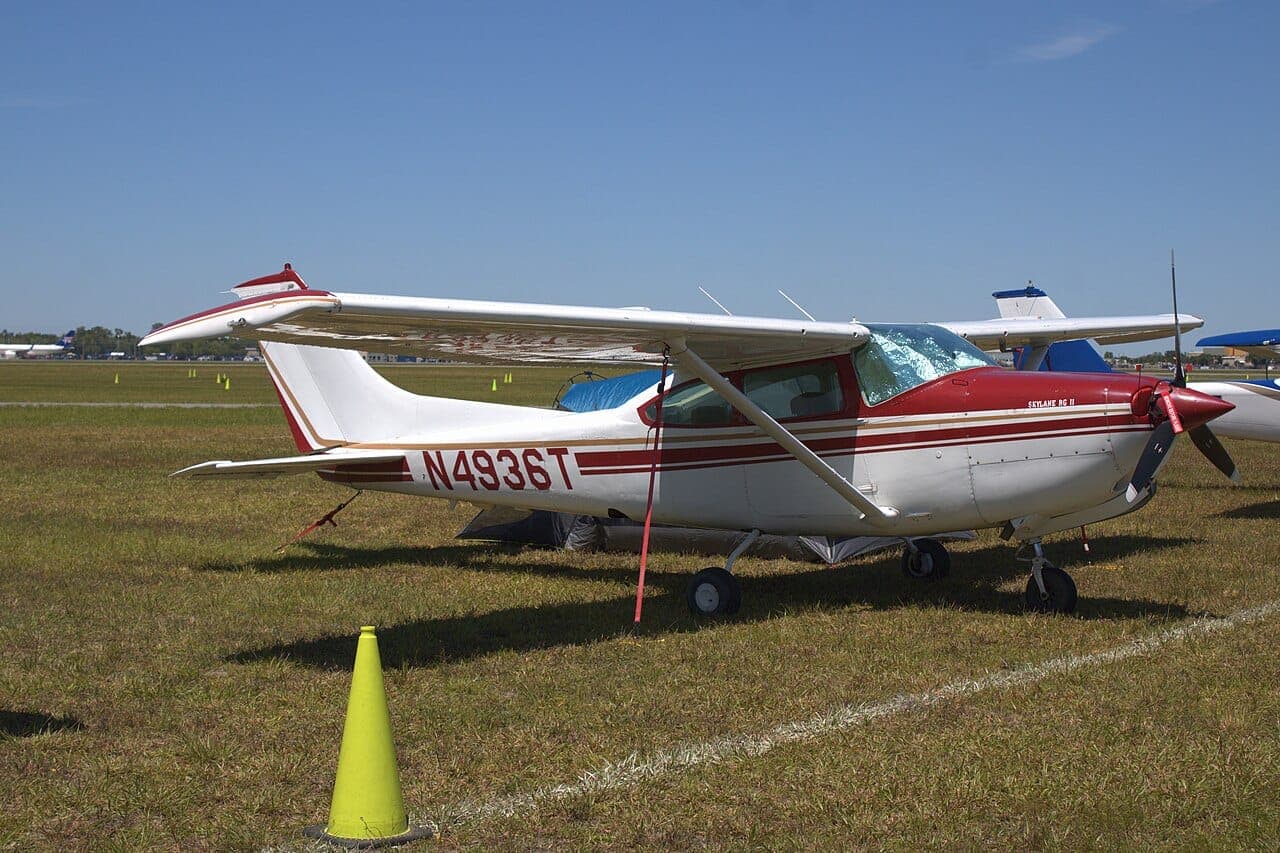
The Beechcraft Baron G58 is the final production version of a design that first flew in 1969, with a Garmin G1000 NXi panel bolted into an aluminum airframe Beechcraft has been refining for more than fifty years, and Textron Aviation has said it will end production once current orders are fulfilled. Two normally aspirated Continental IO-550-C engines make 300 horsepower each. Six seats in a club arrangement, double doors on the right rear, 5,500 pounds maximum takeoff weight. It is the family station wagon of cabin-class piston twins — nothing clever, everything proven.
The Diamond DA62 arrived in 2015 under EASA certification, with FAA validation following, and takes the opposite approach. Two Austro Engine AE330 turbocharged compression-ignition engines of 180 horsepower each burn jet-A through single-lever FADEC controls. The airframe is carbon composite, the maximum takeoff weight is 2,300 kg (5,071 lb), and the cabin seats five as standard with two small rear seats optional. Half the horsepower, nearly the same speed, because the airframe is slippery and the engines are efficient.
Why It Matters: Horsepower is not the cost driver people think it is. The DA62 makes 360 total horsepower to the Baron's 600 and loses only about 15 knots in cruise. What you are really buying with the Baron's extra power is climb rate, not speed.
What You Pay to Get In
New, both are expensive. As of 2025, Diamond was broadly quoting the DA62 in the $1.4 million to $1.6 million area depending on equipment, and Textron Aviation's G58 sat higher, generally quoted in the $1.7 million to $1.9 million range configured. Get a current quote from the factory before you plan around either figure; both have moved steadily upward since 2020.
Used is where the two markets diverge sharply. The G58 has been in production since 2005, and behind it stands the entire Baron 58 line going back to 1970 and the 55-series before that. That means a buyer who wants a six-seat Beech twin has choices across an enormous price band. As of November 2026, Flying411 had 3 Beechcraft Baron aircraft listed, asking $130,000 to $165,000 (median $140,000), with model years from 1964 to 1979 and a median total time of 5,300 hours. Those are older piston Barons rather than G58s, and they are asking prices rather than sale prices — but they illustrate the point: the Baron family gives you an entry point at a tenth of what a new one costs, and the airframe, systems and handling are recognizably the same airplane.
The DA62 has no equivalent bargain basement. The oldest examples date to 2015 or 2016, the fleet is comparatively small, and airframes with substantial engine time remaining hold their asking prices firmly. If your budget tops out well short of a million dollars, this comparison resolves itself without any further math.
Keep in Mind: Capital cost is a real operating cost even if you pay cash. A $250,000 difference in purchase price, at a 6% cost of capital, is $15,000 a year — roughly $100 an hour at 150 hours annually. That is approximately the entire fuel advantage the DA62 enjoys. Whichever airplane you buy, run that number before you run any other.
If you are weighing older Beech twins against each other rather than against a new composite airplane, our comparison of the Baron B55 and B58 covers that ground, and the Baron 58 against the Cessna 310R is the other common cross-shop at that price point.
Flying411 keeps piston twin listings from across the market in one place, so you can compare asking prices, engine times and avionics side by side before you call a broker.
Fuel and Speed: Where the Diesel Wins
This is the headline difference, and it is as large as the brochures suggest.
Diamond publishes a maximum cruise speed of 192 KTAS for the DA62 and fuel flows in the low teens of gallons per hour at economy power settings. Owners flying the airplane in real conditions typically plan on 14 to 16 gallons per hour total — both engines — for 165 to 180 knots true. Because the Austro engines are turbocharged, that performance holds up at altitude and on hot days far better than a normally aspirated engine's does.
The Baron G58, per Beechcraft, cruises at about 200 KTAS at maximum cruise power, where it drinks 34 to 36 gallons per hour of 100LL. Pull it back to a long-range setting and you can fly at 180 to 185 knots on roughly 28 to 30 gallons per hour. There is no setting at which it approaches diesel numbers, because there is nothing wrong with the airplane — it is simply two big normally aspirated sixes doing what they do.
Put prices on it. In October 2026, national full-service averages were about $7.85 per gallon for 100LL and $8.66 for jet-A, with self-service 100LL near $6.82. Call both $6.50 for argument's sake, and know that this understates the DA62's advantage at current full-service prices. The DA62 at 15 gallons per hour spends about $98 per hour on fuel. The Baron at 34 gallons per hour spends about $221. That is a $123 per hour difference before anything else is counted, and it widens every time you fly somewhere avgas is scarce or priced at a premium — which, outside North America, is most places.
Good to Know: The DA62's advantage per nautical mile is smaller than the per-hour number suggests, because the Baron is faster. At 175 knots the DA62 spends about $0.56 per nautical mile on fuel; at 195 knots the Baron spends about $1.13. Still roughly double — but on a 700-nm trip the Baron also gets there about 25 minutes sooner.
| Specification | Diamond DA62 | Beechcraft Baron G58 |
| Engines | 2 × Austro AE330 turbocharged jet-A, 180 hp each | 2 × Continental IO-550-C, 300 hp each |
| Fuel type | Jet-A / Jet A-1 / diesel | 100LL avgas |
| Propeller control | Single-lever FADEC, no mixture or prop levers | Conventional throttle, prop, mixture (six levers) |
| Seats | 5 standard, 7 optional (rear pair child-size) | 6 standard, club seating |
| Max takeoff weight | 5,071 lb (2,300 kg) | 5,500 lb |
| Typical useful load | Published useful load | ~1,545 lb (manufacturer figure, before options) | ~1,559 lb (manufacturer figure) |
| Usable fuel | ~50 US gal standard; ~86 US gal with optional 36-gal auxiliary tank | 194 US gal (long-range tanks) |
| Max cruise | 192 KTAS (manufacturer figure) | ~200 KTAS (manufacturer figure) |
| Typical planning burn | 14–16 gph total | 32–36 gph total |
| Maximum range | ~1,288 nm with auxiliary tank (50% power, no reserves) | ~1,480 nm |
| Service ceiling | 20,000 ft | 20,688 ft |
| Rate of climb, both engines | ~1,100–1,200 fpm | ~1,700 fpm |
| Engine life limit | Time between replacement per Austro service documents (hours and calendar) | 1,700 hrs (S/N before 1006000) or 1,900 hrs (later), or 12 years, per Continental SIL98-9C |
| Certification | EASA 2015, FAA validated | Final production version under the Beech Model 58 type certificate (Textron has announced production will end) |
| Airframe | Carbon fiber composite | Aluminum |
| Cabin access | Two forward gull-wing doors plus rear door | Forward door plus double aft doors |
Engines: Overhaul Versus Replace
This is where the diesel advantage narrows, and it is the part most buyers underestimate.
The Baron's Continentals
Continental's SIL98-9C lists a 1,700-hour TBO for IO-550-C engines built before serial number 1006000 and 1,900 hours for later ones, each with a 12-year calendar limit, and this article uses 1,700 hours as a conservative planning figure. That is a recommendation rather than a legal limit for Part 91 operation, and plenty of well-flown Baron engines reach it in good health — but plenty also need a cylinder or two along the way. A factory rebuilt or quality field overhaul on an IO-550-C has generally run in the $55,000 to $70,000 range per engine as of 2025, installed cost depending heavily on accessories, baffling, hoses and what the shop finds. Divide the midpoint by 1,700 hours and you are reserving roughly $35 per hour per engine, or about $70 per hour for the pair.
The important part is flexibility. You can top a cylinder, you can run past TBO on condition, you can shop three overhaul houses, and you can defer. The work is understood by hundreds of shops.
The DA62's Austros
The AE330 is not overhauled in the traditional sense. Austro Engine publishes a time between replacement, and the engine is exchanged rather than rebuilt in a local shop. Austro has extended that interval through successive service documents since the engines entered service, and there is a calendar limit alongside the hour limit — verify both against the current Austro service documentation for your specific engine serial numbers, because what applied to a 2016 airframe is not necessarily what applies to a 2022 one. The reduction gearbox also carries its own inspection and replacement schedule.
Work the arithmetic the same way. If a replacement engine lands around $65,000 installed and the applicable interval is 1,800 hours, that is about $36 per hour per engine, or roughly $72 per hour for the pair — plus a gearbox reserve on top. In other words, close to the Baron, not dramatically better.
Heads Up: Do the engine reserve math before you make an offer on any DA62, and do it with the actual hours and calendar dates on the airplane in front of you. An airframe with 300 hours left on both engines carries a liability of well over $100,000 that does not appear anywhere in the asking price. With a Baron, a run-out engine is an inconvenience you can schedule; with the Austros, the limit arrives whether you are ready or not.
The same calculus applies one size down the Diamond range, which we cover in our look at the DA42 against the Piper Seminole.
Maintenance, Parts and Who Can Work on It
Here the Baron's age becomes an asset. Any shop with a piston twin on the field has seen a Baron. Parts come from Textron Aviation, from a deep aftermarket, and from salvage. The American Bonanza Society, which covers Barons as well, maintains a body of service clinic knowledge that is genuinely useful when you are chasing a nosewheel shimmy or a fuel selector leak. Typical annual inspection cost on a well-kept G58 runs somewhere in the $6,000 to $10,000 range before squawks, with the usual twin-specific items — landing gear rigging, magneto 500-hour inspections, exhaust system checks — appearing on schedule.
The DA62 is a dealer-network airplane. Inspections follow Diamond's schedule, parts come from Diamond or Austro, and composite structural repair needs a shop with the right approvals and materials. Owners report routine annual costs that are broadly comparable to the Baron's and sometimes a bit lower, because there are no magnetos, no carburetors, no spark plugs to clean and no mixture-related damage to repair. What catches people out is lead time: a part the Baron owner picks up from a distributor the next morning may ship from Austria for the Diamond.
Pro Tip: Before you commit to either airplane, phone the two maintenance shops nearest your home field and ask them directly whether they work on it, how many they see a year, and what their lead time is. If the honest answer for the DA62 is "we would have to send it out," add ferry time and two overnight hotel stays to every inspection you will ever pay for.
Fuel system handling differs too. The Austros run on jet-A, which means no lead fouling, no hot-start mixture drama and no 100LL supply anxiety as the industry works through the unleaded avgas transition under the FAA-backed EAGLE initiative. It also means diesel-specific concerns: fuel cleanliness, cold-weather gelling and additive discipline, high-pressure fuel system components, and ECU backup batteries that get replaced on a calendar schedule.
Flying411 gathers maintenance and ownership guides for piston twins in one place, so you can price out the recurring items before you start negotiating.
Payload, Cabin and the Mission That Decides It
The marketing says the DA62 seats seven and the Baron seats six. Treat both numbers the way you would treat the seating capacity printed on a minivan brochure.
The DA62's published useful load of about 1,545 pounds sounds reasonable until you fill the tanks. Eighty-six gallons of jet-A, which requires the optional auxiliary tank, weighs about 575 pounds, leaving something in the region of 970 pounds on paper for people and bags, and less once options are installed — four adults and overnight bags, comfortably, or five adults with tanks partly filled. The two rearmost seats are for children, full stop.
The Baron G58's published useful load of about 1,559 pounds is nearly the same, but full fuel is 194 gallons weighing roughly 1,164 pounds, which leaves only about 395 pounds of cabin load. The Baron also wins on bulky loads thanks to the double aft doors and the club cabin, which let you slide a dog crate, a folded wheelchair or four golf bags straight in. The DA62's gull-wing forward doors and separate rear door are elegant and easy for passengers, but less accommodating of awkward shapes.
Cabin width favors the Diamond slightly — Diamond quotes roughly 50 inches across the front seats against the Baron's 42-inch cabin — and the DA62 is noticeably quieter inside, a direct consequence of lower propeller RPM and no exhaust-note roar from 600 horsepower.
Why It Matters: Single-engine performance after a failure is where the mission profiles really split. The Baron's normally aspirated engines lose power with altitude, which puts its single-engine service ceiling in the vicinity of 7,000 feet — a real consideration over the Rockies. The DA62's turbocharged engines hold their rated power higher, which is one of the strongest non-financial arguments for the Diamond if you fly west of Denver or over long stretches of water.
Running the Numbers: Cost Per Hour
Here is the comparison assembled, using 150 hours per year, $6.50 per gallon for both fuels, and the engine reserves calculated above. Your insurance, hangar and shop rates will differ; treat the structure as the useful part and substitute your own figures.
| Cost item (150 hr/year) | Diamond DA62 | Beechcraft Baron G58 |
| Fuel | 15 gph × $6.50 = $98/hr | 34 gph × $6.50 = $221/hr |
| Engine reserve | ~$72/hr (2 × $65,000 ÷ 1,800 hr) | ~$70/hr (2 × $60,000 ÷ 1,700 hr) |
| Gearbox / accessory reserve | ~$15/hr | Included in overhaul reserve |
| Propeller reserve | ~$8/hr | ~$10/hr |
| Oil, filters, consumables | ~$8/hr | ~$12/hr |
| Routine maintenance and annual | ~$45/hr ($6,750/yr) | ~$55/hr ($8,250/yr) |
| Variable subtotal | ~$246/hr | ~$368/hr |
| Insurance, hangar, databases, misc. | ~$22,500/yr = $150/hr | ~$22,500/yr = $150/hr |
| Total, excluding capital cost | ~$396/hr | ~$518/hr |
| Cost per nautical mile at typical cruise | ~$2.26/nm at 175 kt | ~$2.66/nm at 195 kt |
Roughly $120 an hour separates them, or about $18,000 a year at 150 hours. That is a real, bankable difference — and it is also about what the DA62's higher purchase price costs you in forgone interest or loan payments. Which is exactly why the annual hours question decides this.
At 250 hours a year the fuel saving grows to $30,000 and the DA62 pulls clearly ahead. At 75 hours a year, the fuel saving shrinks to about $9,000 while the capital difference stays fixed, and the Baron wins on total cost without much argument. Our walkthrough of Cessna 414A and 421C costs per hour applies the same framework to cabin-class twins, and the Cessna 340A against the Baron 58P does it for the pressurized options.
Insurance, Resale and the Long View
Insurance on either airplane is driven far more by the pilot than by the airplane. A 500-hour pilot with 50 hours of multi time and no instrument currency will pay dearly for both, or be declined for both. Expect underwriters to require a type-specific initial course, a stated number of dual hours, and annual recurrent training on a six-seat twin at this value.
Hull value matters because premiums are quoted as a percentage of it. A $1.3 million DA62 and a $1.1 million G58 will produce broadly similar dollar premiums; a $400,000 earlier Baron 58 will cost materially less to insure than either. The DA62's single-lever FADEC removes a category of engine-handling mistakes that underwriters know about, but it is a newer type with a thinner claims history, and that cuts both ways in underwriting.
On resale, the Baron has what every seller wants: five decades of transaction history, broad buyer familiarity and a value curve that moves slowly and predictably. The DA62's used market is young and comparatively thin, and its resale value is tightly linked to remaining engine life in a way the Baron's is not — a buyer looking at engines near their replacement interval will discount hard, because the bill is non-negotiable.
Keep in Mind: The Baron's long-run risk is fuel. Leaded avgas is on a path toward replacement, and while unleaded alternatives are progressing, the transition will not be free or instant at every field. The DA62's long-run risk is support: a small fleet, a single engine manufacturer and a dealer-centric parts chain. Decide which of those two risks you would rather hold for the next fifteen years.
Flying411 brings twin-engine listings, ownership cost guides and model comparisons together in one place, so you can test your assumptions before you spend seven figures.
Conclusion
On the narrow question that heads this article — the Diamond DA62 vs Beechcraft Baron G58 cost per hour — the DA62 wins by roughly $120 an hour on direct operating cost, almost all of it from fuel, with engine reserves and routine maintenance landing close to even. That is the honest number, and it does not change much however you adjust the assumptions.
What changes the answer is everything around that number. Buy the DA62 if you fly 200 hours a year or more, operate from high or hot airports, cross terrain where single-engine ceiling keeps you awake, fly internationally where jet-A is the only sensible fuel, or simply want the quietest and most modern piston twin flying. Buy the Baron G58 if you fly under about 125 hours a year, need to load six adults and their luggage through big rear doors, want a shop on every field that already knows the airplane, or want the option of stepping into a thirty-year-old Baron 58 today and upgrading later. If your budget cannot reach a million dollars, the Baron family is the only one of the two that has an answer for you — and a well-sorted older 58 flies the same missions at a fraction of the capital cost.
Neither choice is wrong. One of them is wrong for your specific hours per year, and that is the number to settle first.
When you are ready to compare listings, visitFlying411and see what is on the market today.
Frequently Asked Questions
Does the DA62 really burn half the fuel of a Baron G58?
Yes, and the gap is slightly wider than half in most conditions. Diamond quotes economy fuel flows in the low teens of gallons per hour total, and owners commonly plan 14 to 16 gph for 165 to 180 knots. The Baron G58 burns 32 to 36 gph at normal cruise power and around 28 to 30 gph pulled well back. The Baron buys about 15 to 20 knots with those extra gallons.
Can an Austro AE330 be overhauled like a Continental?
No. The AE330 is replaced rather than field-overhauled, on a schedule Austro Engine publishes as a time between replacement with both an hour limit and a calendar limit. Austro has extended those intervals through successive service documents since the engines entered service, so check the current documentation against your specific engine serial numbers rather than relying on a figure you read in a forum thread.
Which airplane is easier for a newly multi-rated pilot?
The DA62, on most counts. Single-lever FADEC removes mixture, propeller and cowl-flap management entirely, and the lower installed power makes an engine failure less dramatic to control. That said, insurance underwriters will want type-specific training and a minimum amount of multi-engine time for either airplane, and the Baron's conventional systems are what most multi-engine instructors teach every day.
Is a used Baron 58 a sensible alternative to either new airplane?
For many buyers, yes. The airframe, cabin and mission are essentially the same as the G58's; what you give up is the factory warranty, the G1000 NXi panel as installed from new, and the confidence of known history. As of November 2026, Flying411 had 3 Beechcraft Baron aircraft listed with asking prices of $130,000 to $165,000 (median $140,000) for 1964 to 1979 model years — those are asking prices on current listings, not valuations, but they show how wide the Baron family's price range runs.
How many hours a year do I need to fly before the DA62 makes financial sense?
Using the figures in this article, the DA62 saves roughly $120 per hour in direct operating cost. If the DA62 you are considering costs $250,000 more to buy, the extra capital costs you about $15,000 a year at a 6% cost of capital, so you need roughly 125 hours a year just to break even — and more than that before the Diamond is genuinely cheaper. Run the calculation with your own purchase prices and your own fuel costs.
Do both airplanes offer known-icing protection?
The DA62 has been offered with a TKS fluid-based ice protection system as a factory option, while the Baron G58 uses pneumatic wing and tail deice boots with electrically heated propellers, but approval status varies by serial number and installation. Never assume an individual airplane is approved for flight into known icing because the model is available that way — confirm it in the aircraft flight manual supplements and the equipment list during pre-purchase.