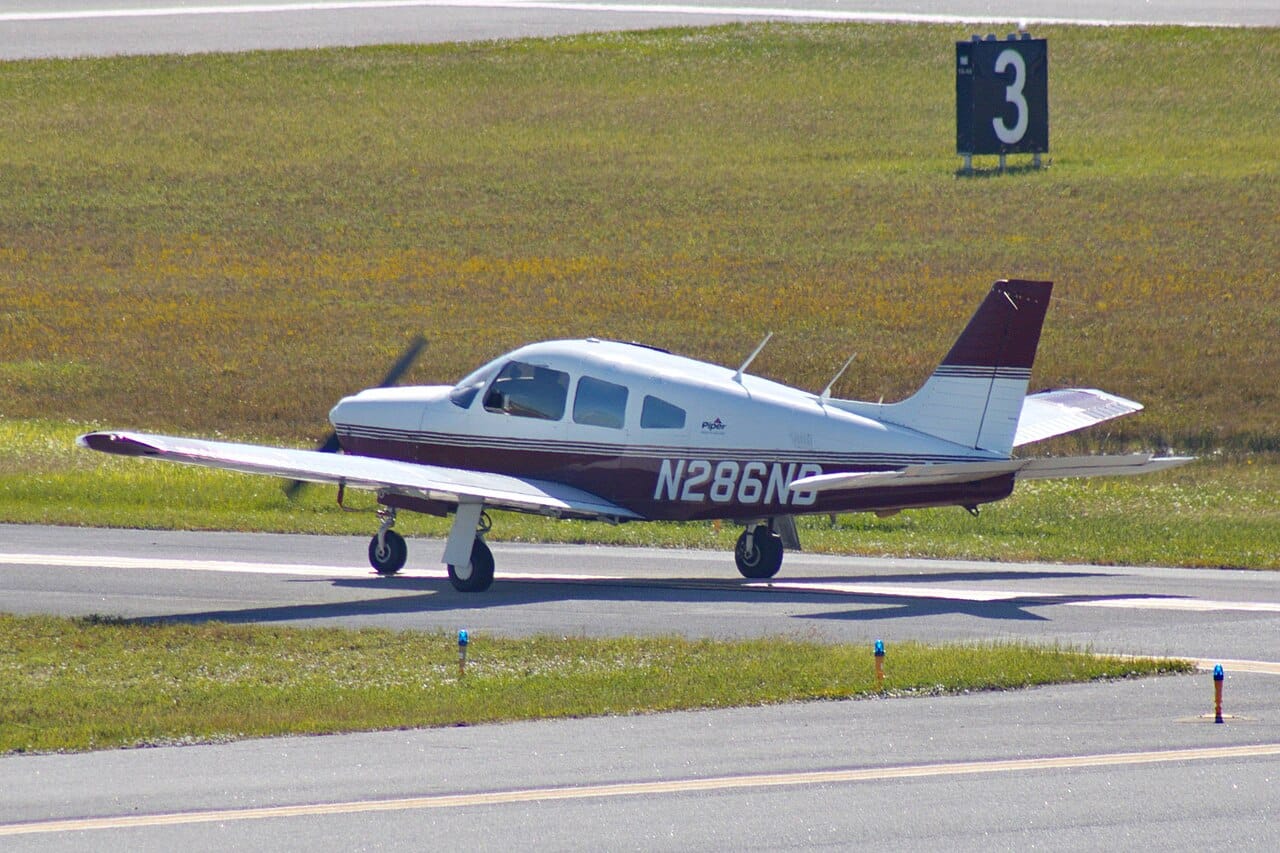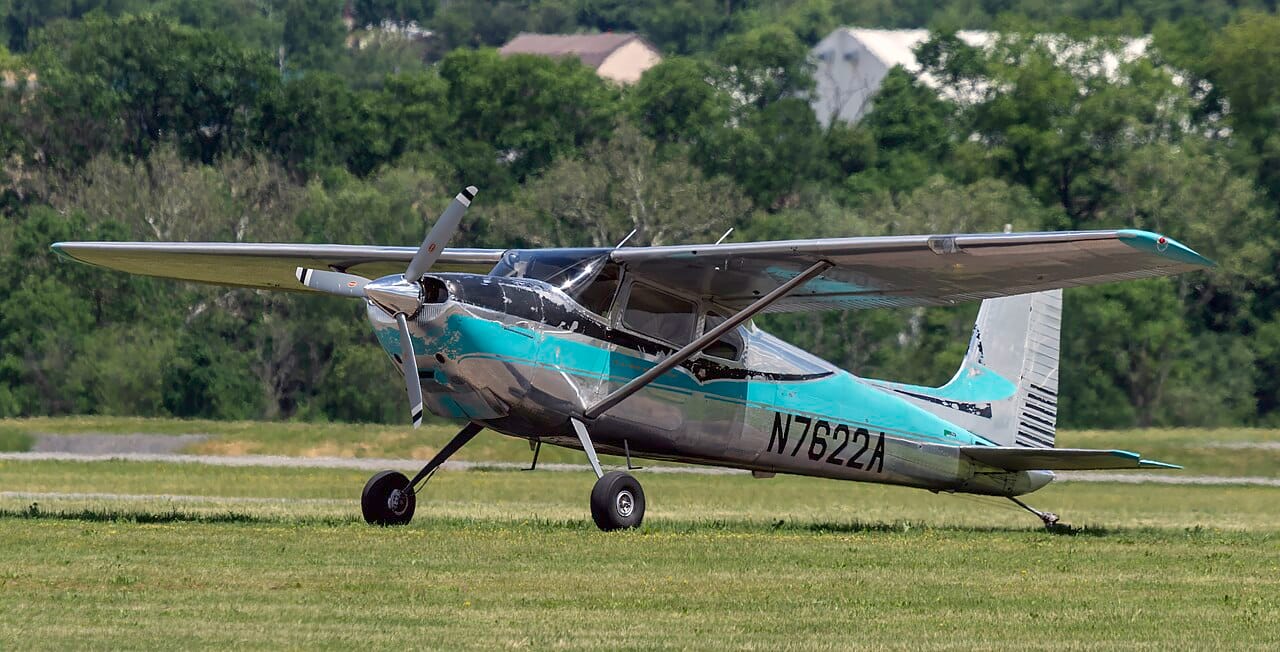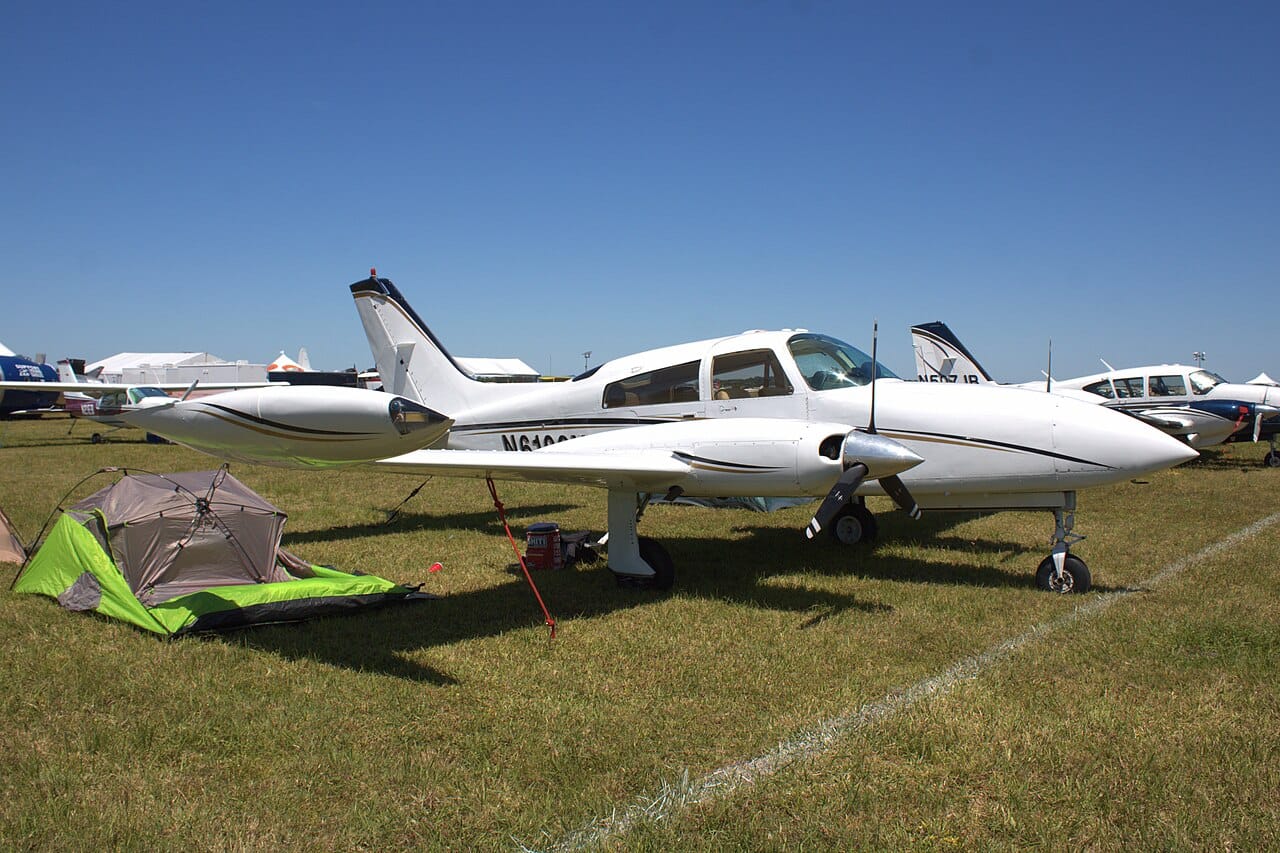
The Beechcraft Baron 58 and Cessna 310R occupy almost the same part of the piston-twin market. Both are six-seat aircraft from roughly the same era, both use 285- to 300-horsepower Continental engines, and both cruise close to 200 knots. The main differences show up in cabin access, baggage space, fuel-system design, acquisition price, and long-term maintenance support.
And both will happily consume your annual flying budget if you buy the wrong one. This is where the Beechcraft Baron 58 vs Cessna 310R question stops being a bar argument and starts being a real financial decision. The two airplanes overlap on paper and diverge almost everywhere else: how people get in and out, how the fuel system works, how much parts support you can expect, and how much a shop will charge you to bring a neglected one back to airworthy.
The short version is that the Baron is the nicer airplane and the 310 is the better value, but that is too tidy to be useful. What actually matters is your mission, your hangar, your mechanic, and how much cash you can absorb in year one. Let us go through it the way a buyer's agent would if you were standing on the ramp with the logbooks in your hand.
Key Takeaways
The Baron 58 is still in production as the G58, which means Textron Aviation parts support, a deep type-club knowledge base, and a cabin that genuinely works for six adults thanks to its aft double doors and club seating. The Cessna 310R stopped rolling off the Wichita line around 1980, so you are buying into a used-parts and PMA world, but you get comparable speed, more baggage volume spread across nose and wing lockers, and an acquisition price that is often $75,000 to $150,000 lower for a similar avionics and engine picture. Direct operating costs are close enough that they rarely decide the contest; acquisition price, the condition of the two Continental engines, and whether the Cessna SID inspections have been done are what move the number. If you regularly fill the back two seats with adults, the Baron wins on comfort and resale. If you are hauling gear, flying mostly two-up, and want the most twin for the money, the 310R is hard to beat.
| Quick Answer | Beechcraft Baron 58 | Cessna 310R |
| Years built | 1970 to present (G58) | 1975 to about 1981 |
| Engines | Continental IO-520-C, 285 hp (to 1983); IO-550-C, 300 hp (1984 on) | Continental IO-520-M/MB, 285 hp |
| Typical cruise | About 190 to 200 KTAS | About 185 to 197 KTAS |
| Max takeoff weight | 5,400 lb (later models 5,500 lb) | 5,500 lb |
| Usable fuel | About 136 gal standard, 166 gal optional | 100 gal standard, up to 203 gal usable with optional auxiliary and wing-locker tanks |
| Cabin access | Forward crew door plus aft double doors | Single forward door, right side |
| Baggage | Nose compartment plus large aft cabin area | Large nose locker plus optional wing lockers |
| Parts support | Factory current, type certificate 3A16 | Out of production, type certificate 3A10 |
| Best for | Six people in comfort, long-term resale | Maximum capability per dollar spent |
What Each Airplane Actually Is
The Baron 58 in one paragraph
Beechcraft stretched the Baron 55 fuselage by ten inches, moved the wing forward, and put a pair of double doors on the right rear. That single change turned a good light twin into a genuine six-seat airplane, because passengers no longer have to climb over a wing and crawl forward. Early Model 58s used the 285-horsepower Continental IO-520-C. From 1984 the factory switched to the 300-horsepower IO-550-C, which brought slightly better climb and a smoother-running engine. The airframe is covered under FAA type certificate 3A16, the same document that covers the Baron 55 family, and Textron Aviation still builds the airplane today as the G58 with Garmin G1000 NXi glass. Very few forty-year-old piston airplanes can say the factory still makes the part you broke.
The Cessna 310R in one paragraph
The 310 line ran from 1954 to 1980, and the R model is the last and longest of them. Cessna stretched the nose by about a foot for the R, which added a cavernous forward baggage compartment and improved the loading envelope, and hung the same 285-horsepower IO-520 that the early Baron used. The tip tanks are the airplane's signature: they hold the main fuel, sit at the wingtips where they help relieve wing bending loads, and they give the 310 a look nothing else on the ramp has. It is covered under type certificate 3A10. Production ended around 1981, and Cessna later published Supplemental Inspection Documents for the 300 and 400 series twins, which we will come back to because they can be the single biggest surprise in a 310 pre-buy.
Fun Fact: The Cessna 310's nose baggage compartment is so useful that owners routinely describe it as the airplane's best feature. Two full-size roller bags, a tool kit, and a case of oil disappear in there, and none of it is sitting in the cabin with your passengers.
Speed, Climb and What You Actually See En Route
Is the Baron faster than the 310R?
Marginally, and mostly at the top end. A 300-horsepower Baron 58 flight-planned at 75 percent power in the mid-altitudes will show roughly 195 to 200 knots true while burning something in the neighborhood of 32 to 36 gallons per hour combined. A clean 310R on the same day is usually a few knots behind, call it 185 to 197 knots, at a similar burn. Book numbers for both airplanes were generated with new paint, new seals, and factory-fresh engines, so treat any published figure as a ceiling rather than a promise.
Climb performance is closer than it first appears. A late Baron 58 is published at about 1,700 feet per minute at sea level, while the 310R is about 1,660. On one engine, the Baron's published climb rate is roughly 390 feet per minute versus about 370 for the 310R at sea level and gross weight under standard conditions. At high density altitude, both figures deteriorate quickly, so actual engine-out performance still demands careful planning.
Why It Matters: Single-engine performance in a light piston twin is not a safety margin you can rely on by default. It is a margin you earn with recurrent training, disciplined weight management, and honest runway planning. Insurers know this, which is why they price twin coverage the way they do.
How far can each one really go?
Fuel capacity is where the two airplanes separate in an interesting way. A Baron 58 with the optional long-range tanks carries about 166 usable gallons, which at economy cruise supports a leg well past 1,000 nautical miles with reserves. The standard tank airplane, at about 136 usable gallons, is a comfortable four-hour machine.
The 310R starts with 102 gallons total and 100 usable in the standard tip-tank system, but optional auxiliary and wing-locker tanks can raise capacity as high as 207 gallons total and 203 usable. That gives the airplane genuinely long legs. The catch is complexity: fuel returned from the engines goes back to the tip tanks, so proper tank sequencing matters to avoid overfilling the mains and venting fuel overboard. Every 310 checkout should devote serious attention to fuel management.
Heads Up: If you are transitioning from a single or from a simpler twin, budget more transition training for the 310R than for the Baron. The airframe is not hard to fly. The fuel management is where new owners get into trouble.
Cabin, Loading and Real-World Utility
Which one is actually comfortable for six?
This is the Baron's clearest win, and it is not close. The aft double doors mean rear-seat passengers step in at the back and sit down. Club seating, with the middle row facing aft, gives four adults legroom that feels like a small business aircraft rather than a light twin. The cabin is roughly twelve and a half feet long from the forward bulkhead to the aft baggage area. If you fly your in-laws, your kids, or clients, the difference in how they feel after two hours is worth money.
The 310R has one door, on the right side, forward. Everyone loads through it and shuffles aft. The rear seats are usable but tighter, and the cabin narrows behind the wing. Think of it as the difference between a minivan with sliding doors and a two-door coupe with a folding front seat. Both hold people. Only one of them makes your passengers happy about it.
Where the 310R claws back ground is cargo. Between the stretched nose locker and the optional wing lockers, you can distribute a remarkable amount of baggage outside the cabin, which keeps the passenger space clear and gives you real flexibility with the center of gravity. Photographers, hunters, and anyone hauling tools tend to prefer the Cessna for exactly this reason.
Keep in Mind: Neither airplane fills all six seats and all the tanks at the same time. Useful load on both typically lands somewhere between 1,600 and 1,900 pounds depending on equipment and interior. Run a real weight and balance for your typical trip before you fall in love with either one.
Flying411 keeps Baron and Cessna twin listings in one place, so you can compare equipment, engine times and asking prices side by side instead of chasing three different tabs.
Systems, Quirks and Known Trouble Spots
What breaks on a Baron 58?
The Baron's landing gear is electrically driven through a gearbox and torque tubes. It is reliable when maintained, but the gearbox, the actuator rods, and the rigging need periodic attention, and a shop unfamiliar with Beech gear can spend a lot of your money learning. Have the retraction test done by someone who does Barons regularly.
Beyond that, the usual suspects on any airplane of this age apply: corrosion in the wing carry-through structure, aging fuel bladders, tired exhaust systems, and control cable wear. Beech build quality is genuinely good, which is part of why these airframes are still flying in numbers, but good structure hides corrosion just as well as bad structure does. Pay for a borescope and a flashlight in the hands of someone who knows where to point them.
The other Baron reality is parts pricing. Factory support is excellent, and factory support is expensive. A Beech-specific part number often costs noticeably more than the equivalent Cessna item, and there are fewer aftermarket alternatives. The upside is that you can usually get the part at all, which is not always true on the Cessna side.
What breaks on a Cessna 310R?
Start with the Supplemental Inspection Documents. Cessna published SIDs covering the 300 and 400 series twins, aimed at aging-aircraft structural issues. For US Part 91 operators these are generally not mandatory, but many maintenance shops, insurers, and some foreign authorities treat them as required. A 310R that has never had its SIDs addressed is not necessarily a bad airplane, but it carries an unknown liability that can run into five figures if the inspections uncover spar carry-through corrosion or cracked structure. A 310R with the SID work documented and complete is worth materially more, and you should treat the difference as real money, not paperwork.
Beyond SIDs, watch the exhaust systems, which crack and are expensive to replace properly; the hydraulic power pack that drives the gear and flaps; tip tank attach structure and bladder condition; and the nose gear, which works hard on an airplane with that much weight forward. The 310's electrical and fuel plumbing is more complex than the Baron's, and complexity ages badly when maintenance has been deferred.
Pro Tip: On any 310R pre-buy, ask specifically for the SID compliance status in writing, and ask which SIDs were done, not just whether "the SIDs" were addressed. The list is long and shops sometimes complete a subset. The same disciplined document-first approach we describe in our pre-buy inspection checklist applies double when there are two engines involved.
What They Cost to Buy and to Keep
Purchase price: how big is the gap?
Asking prices move with the market, engine times, avionics, and paint, so treat these as orientation rather than gospel. As a general shape of the market, clean 1970s Baron 58s tend to sit in the mid-$200,000s to around $350,000, with 1980s and 1990s IO-550 airplanes carrying modern panels reaching well past $400,000 and climbing from there. Good 310Rs more commonly trade in the $150,000 to $300,000 band, with the top of that range reserved for low-time engines, complete SID compliance, and a current IFR panel.
That gap is the crux of the whole comparison. For a buyer with $300,000, the choice is often a mid-time, older-panel Baron versus a 310R with fresher engines, a Garmin GTN and a glass PFD, and money left in the maintenance account. The airplane with reserves in the bank is usually the one that gets flown.
| Annual Cost Item | Baron 58 | Cessna 310R |
| Fuel at 32 to 36 gph | Roughly $200 to $250 per hour at typical avgas prices | Roughly $195 to $245 per hour |
| Engine overhaul reserve | Two Continentals, plan $50,000 to $70,000 each plus accessories | Two Continentals, similar range |
| Typical published TBO | Check Continental's current service information; commonly 1,700 hours for these installations | Same engine family, same guidance |
| Propeller overhaul | Two props, several thousand dollars each | Two props, similar |
| Annual inspection | $6,000 to $12,000 typical, more with squawks | $6,000 to $14,000, higher if SIDs are due |
| Insurance | Higher for low-time multi pilots; expect four to five figures | Similar, sometimes slightly higher on value-adjusted hulls |
| Hangar and annual fixed | Comparable | Comparable |
What does the hourly number look like when you are honest?
Once you add fuel, oil, engine and prop reserves, and a realistic share of the annual, both airplanes land in the same general territory: figure $500 to $650 per hour all-in for an owner who flies 100 to 150 hours a year and funds reserves properly. Fly fifty hours a year and the fixed costs, hangar, insurance, database subscriptions and the annual, dominate everything, and the hourly figure gets ugly fast.
That is the same math that drives the perennial question of whether a turboprop makes more sense once you are already paying twin-engine bills. We worked through that in is a turboprop cheaper to run than a piston twin, and the answer is more nuanced than most owners expect.
Good to Know: Two engines means two of everything. Two magneto sets or two ignition systems, two starters, two alternators, two turbo systems if equipped, two sets of cylinders. Most first-time twin owners underestimate maintenance by budgeting like it is one airplane instead of two engines bolted to a shared fuselage.
Flying411 keeps engine times, total airframe hours and equipment lists visible on every listing, so you can spot the mid-time twin that is priced like a run-out one.
Flying Qualities and Training
Which is easier to fly well?
Beech built the Baron with the control harmony the company is known for. Roll forces are moderate, pitch is well balanced, and it lands like a heavier Bonanza, which is to say it rewards a stabilized approach and punishes excess speed with float. Pilots stepping up from a Bonanza feel at home almost immediately, which is one reason the Bonanza-to-Baron path is so well worn. If you are still deciding between a fast single and a light twin, our comparison of the Bonanza and the Piper Saratoga covers the single-engine side of that decision.
The 310R flies heavier and more deliberately. It is stable, a good instrument platform, and honest, but the tip tanks give it noticeable roll inertia and it likes a firm hand in gusty crosswinds. Landing technique matters: the 310 does not appreciate being flown onto the runway fast, and the nose gear will tell you about it.
Both airplanes require a multi-engine rating and, in practice, a formal insurance-approved checkout. Expect underwriters to ask for something in the range of 25 to 50 hours of multi-engine time, ten to twenty-five hours in type with an instructor, and annual recurrent training. If you are working toward that rating now, see our overview of the best twin engine piston aircraft for context on where these two sit in the broader field.
Quick Tip: Ask your insurance broker for quotes on both specific tail numbers before you make an offer. Underwriters occasionally price one type meaningfully differently than the other for a given pilot profile, and that difference can be several thousand dollars a year.
Resale, Support and the Long View
Which one holds value better?
The Baron, and the reason is structural rather than sentimental. An airplane the factory still builds has current parts catalogs, current service information, an active dealer network, and a buyer pool that includes people who cross-shop new G58s and decide a good used one makes more sense. That keeps the floor under used Baron prices.
The 310R depends on a healthy but finite ecosystem: specialist shops, salvage inventory, PMA suppliers, and owner knowledge. That ecosystem is real and it works, but it thins over time, and occasionally a specific part becomes a months-long hunt. Values for well-documented, SID-complete 310Rs have been steady and generally rising with the rest of the piston market, but the spread between a good one and a neglected one is enormous. With Barons, a neglected airplane is expensive. With 310s, a neglected airplane can be economically unrepairable.
Where do these two sit against the rest of the field?
If you want more speed, pressurization, or turbocharging, the conversation moves up a tier to the cabin-class Cessnas, and we broke that tier down in Cessna 340A vs 414A vs 421C. On the Beech side, stepping up from the Baron leads to the Duke, which trades operating economy for altitude and ramp presence; our Duke versus Baron comparison gets into why most owners land back on the Baron. Going the other way, the four-seat Duchess is a far cheaper twin, but it is a training and light-travel airplane, not a six-seat cross-country machine.
Flying411 keeps the whole piston twin market in one place, so you can see how a Baron 58, a 310R and a 340A actually price against each other on the same day.
Who Should Buy Which
Buy the Baron 58 if...
You regularly carry four to six people and want them to arrive comfortable. You value factory parts support and want the easier resale conversation in ten years. You are stepping up from a Bonanza and want familiar handling. You have the budget for both a higher purchase price and Beech parts pricing, and you would rather pay more up front than absorb surprises later.
Buy the Cessna 310R if...
You are usually flying two or three people plus a lot of gear. You want the most airplane per dollar and you have, or can find, a shop that knows 300-series Cessnas. You are willing to do the homework on SID compliance and pay for a thorough structural pre-buy. You like the idea of putting the price difference into fresh engines, a modern panel, or five years of maintenance reserve instead of into the purchase itself.
Heads Up: Whichever way you go, the single worst outcome is buying the cheapest example of either type. In light twins, a low asking price is almost always the market pricing in deferred maintenance that you will pay for anyway, at retail, with less negotiating leverage.
Conclusion
The honest answer to the Beechcraft Baron 58 vs Cessna 310R question is that condition beats type. A well-kept 310R with documented SID compliance, mid-time engines and a clean panel is a far smarter buy than a tired Baron with two run-out Continentals and a corrosion story nobody wants to tell. Flip the condition and the answer flips with it.
If both airplanes in front of you are equally good, then the tiebreaker is your passenger manifest. Six people, regularly, means the Baron and its aft double doors. Two people and a lot of luggage, on a budget that needs to stretch, means the 310R and its nose locker. Everything else, speed, fuel burn, hourly cost, is close enough that it should not drive the decision.
Get a pre-buy from a shop that specializes in the type you are buying, not a general shop that will do its best. Read every logbook page. Price the insurance before you sign. Then go fly a twin that you know the history of, which is the only kind worth owning.
When you are ready to compare listings, visitFlying411and see what is on the market today.
Frequently Asked Questions
Is the Baron 58 or the Cessna 310R cheaper to operate?
Direct operating costs are close. Both burn roughly 32 to 36 gallons per hour in cruise and both use 285-to-300-horsepower Continental engines with similar overhaul costs. The Baron tends to cost more in parts; the 310R can cost more in one-time structural inspection work if the Cessna SIDs have not been completed. Over ten years, the purchase price difference usually matters more than the hourly difference.
How many hours do I need to insure a Baron 58 or a 310R?
Requirements vary by underwriter and by your total time, but a common pattern is a multi-engine rating plus 25 to 50 hours of multi time, ten to twenty-five hours of dual in type, and annual recurrent training. Low-time pilots can often get coverage, but the premium and the training requirement both rise. Always get a quote on the specific airplane before making an offer.
What is the biggest deal-breaker on a Cessna 310R pre-buy?
Undocumented or incomplete Supplemental Inspection Document compliance combined with any sign of corrosion in the wing spar carry-through. The inspections themselves are manageable; what they find can be expensive. Cracked exhaust systems and tired tip tank structure are the next items to scrutinize closely.
Does the Baron 58 with the IO-550 engines fly noticeably better than the earlier IO-520 version?
You gain about fifteen horsepower per side, which shows up mostly in climb and in hot-and-high performance rather than in cruise speed. Owners generally report the IO-550-C runs smoother and, with good engine management, tolerates high-power operations well. The later airframes also tend to come with better panels, which affects price as much as the engine change does.
Can either airplane fly into known icing?
Both were offered with known-ice equipment packages, typically including boots, heated components and appropriate certification. Whether a specific airplane is approved depends on its equipment list and its documentation, not on the model name. Verify the approval in the aircraft flight manual supplements before you count on it, and remember that a known-ice certification is an escape tool, not a permission slip.
Which one is a better first twin?
For most pilots, the Baron 58, because its systems are simpler, its handling is more conventional, and the training and maintenance network is deeper. The 310R is an excellent airplane but its fuel system demands more discipline, and a first twin owner has enough new things to learn already.