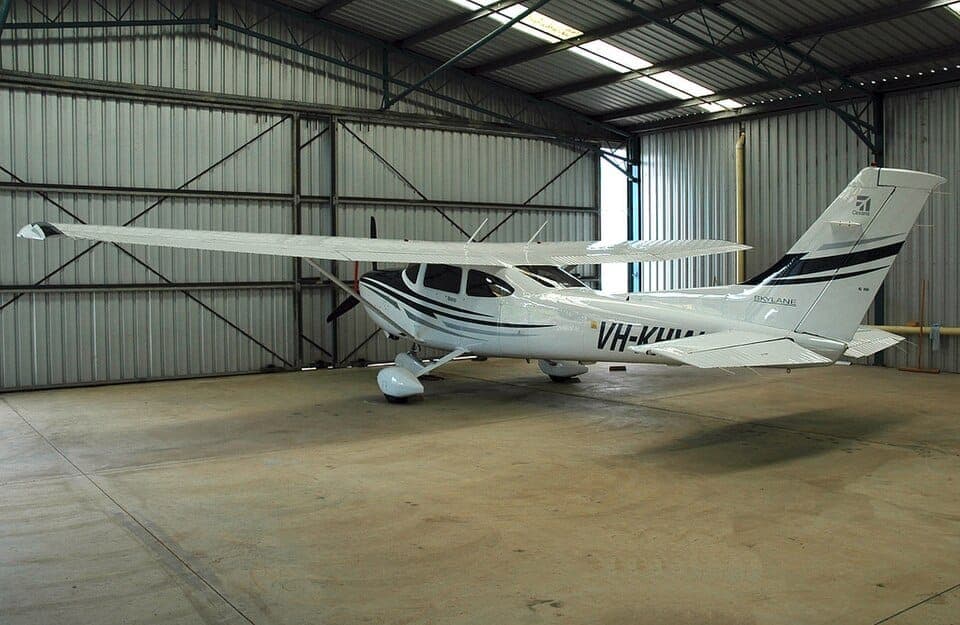
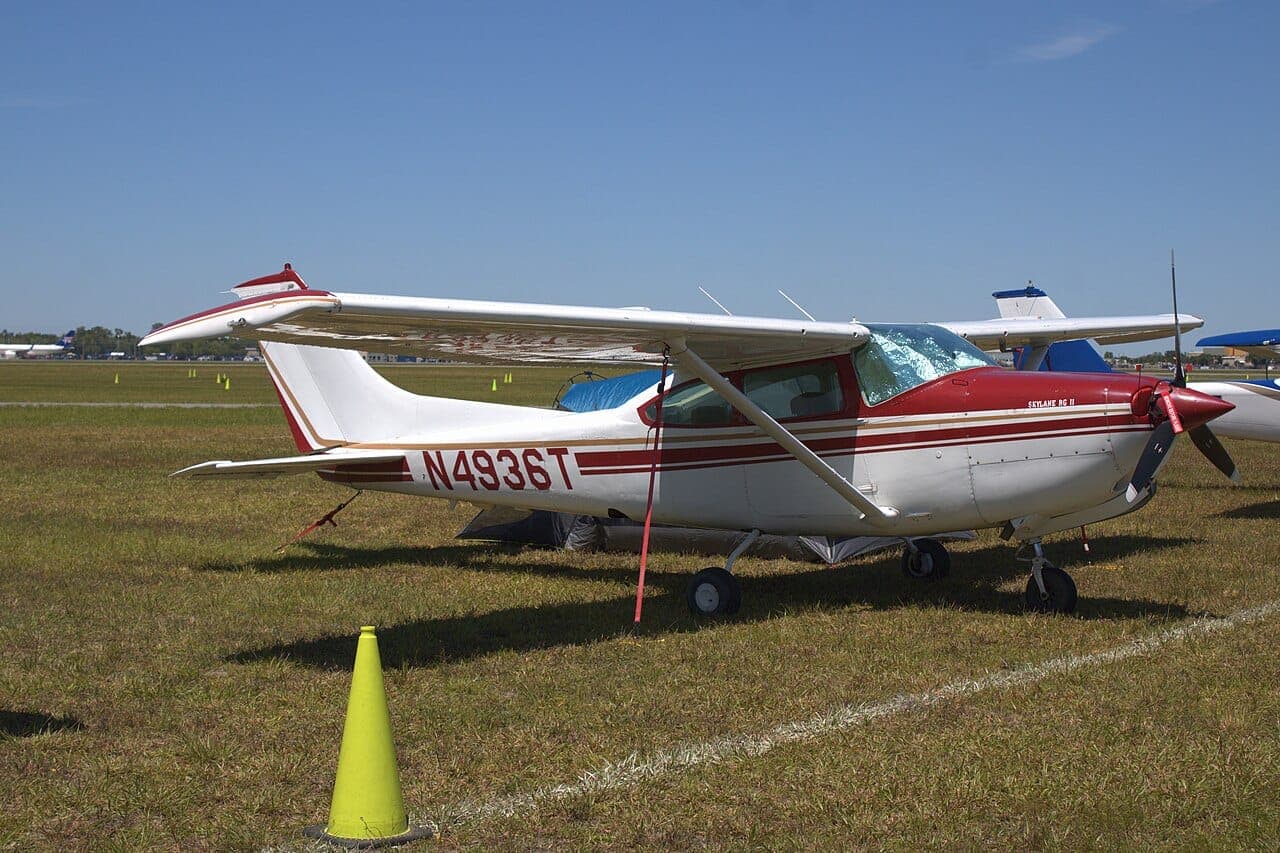
For most owners, the honest answer in the Cessna R182 Skylane RG vs fixed-gear 182 debate is that the retractable is worth it only if you fly long legs often, have the pilot time to buy insurance at a sane rate, and are comfortable budgeting a gear system that never stops needing attention. If you fly 100 hours a year in 200-mile hops, the fixed-gear 182 will do nearly the same job for less money and fewer surprises.
That is the summary. What follows is the arithmetic behind it: how much speed the gear actually buys, what the hydraulic system costs to keep healthy, what insurers do with a retractable on the application, and which buyer profile lands where.
The Short Answer
Buy the fixed-gear 182 if you are stepping up from a 172, if you fly mostly within a few hundred miles of home, if you use grass or rough strips, or if your logbook is still thin enough that insurance companies want to see training hours before they will quote a retractable. Buy the R182 if you regularly fly 500 to 900 nautical mile trips where 15 extra knots turns a long day into a short one, you already hold a complex endorsement with meaningful retractable time, and you can absorb a five-figure repair without changing your flying plans. Both airplanes carry four adults and real bags, both burn roughly the same fuel, and both are Skylanes at heart. The difference is not capability. It is how much complexity you are willing to own.
Speed: What the Gear Actually Buys
The R182 uses a 235-horsepower Lycoming O-540-J3C5D; the late fixed-gear 182Q and 182R use a 230-horsepower Continental O-470-U. Five horsepower is nothing. Tucking the wheels away is something. At 75% power, book figures put the R182 around 155 to 160 knots true, while a 182Q or 182R sits closer to 140 to 145 knots. Fuel burn at that setting is about 13 gallons an hour either way.
So the retractable gives you roughly 10 to 12 percent more speed on the same fuel.On a 300-nautical-mile trip, that is about 12 minutes. On a 900-nautical-mile day, it is closer to 35 minutes. It is the difference between driving 65 and driving 72 on the interstate: real, measurable, and completely invisible on short errands.
Climb is the other honest gain. With the gear swinging up on departure, the R182's book rate of climb at sea level is around 1,100 feet per minute against roughly 865 to 925 fpm for the fixed-gear models. Out of a high-density-altitude strip on a warm afternoon, that margin is worth having.
Why It Matters: Speed gains compound with trip length, not with hours flown. Two owners who each fly 120 hours a year get wildly different value from an R182 if one flies 150-mile legs and the other flies 600-mile legs. Before you shop, add up your last three years of trips by distance, not by hours.
Edge: Cessna R182, clearly, and the gap widens the farther you fly.
What Each One Costs to Own
Acquisition is where the two models sit closest. Both are 1970s and 1980s airframes competing for the same buyer, and both have been pushed up in price by the general run-up in used piston singles. As of November 2026, Flying411 had 6 Cessna 182 aircraft of all variants listed, with asking prices ranging from $125,000 to $415,000 and a median of $185,000, model years from 1962 to 2008, and a median total time of 5,250 hours. Those are asking prices on live listings across fixed-gear and retractable airframes, not sale prices and not a valuation. What a specific R182 is worth depends far more on engine time, avionics and gear system history than on the letter in front of the model number.
Fixed costs are where the two separate. Hangar and tie-down are identical. The annual inspection is not. A fixed-gear 182 with no deferred items typically annuals in the range most owners quote for a clean, simple single; an R182 adds a jack-and-swing retraction test, gear door rigging checks, hydraulic line and powerpack inspection, and the squawks that fall out of all three. Shops commonly bill a few hundred to a thousand dollars more for the retractable annual before any parts are replaced, and parts on a 40-year-old hydraulic system are not cheap.
Engine reserve is close to a wash.Continental publishes a 2,000-hour TBO for O-470-U engines built to specification 11 or later (earlier O-470-U specifications carry 1,500 hours), and Lycoming publishes 2,000 hours for the O-540-J3C5D. Through 2025 and into 2026, overhaul quotes for either engine from reputable shops have generally landed in the $40,000 to $60,000 band, with factory rebuilt and new options higher. Set aside roughly $20 to $30 an hour for the engine on either airplane and you are in the right neighborhood. Note that earlier 182s with the O-470-R or O-470-S carry a 1,500-hour TBO, which is a reason to prefer a Q or R model whose O-470-U data plate shows specification 11 or later if you are shopping the fixed-gear side.
Note on the earlier airframes: if you want the deeper cost-per-hour math on the fixed-gear Skylane against its usual rivals, we have already run those numbers in Mooney M20J vs Cessna 182 and Bonanza A36 vs Cessna 182.
Edge: Fixed-gear 182, by roughly $1,500 to $3,000 a year in recurring costs before any gear repair.
| Spec | Cessna 182Q / 182R (fixed gear) | Cessna R182 Skylane RG |
| Years built | 182Q 1977–1980; 182R 1981–1986 | 1978–1986 (TR182 turbo same years) |
| Engine | Continental O-470-U, 230 hp | Lycoming O-540-J3C5D, 235 hp |
| Published TBO | 2,000 hours (O-470-U spec 11 or later) | 2,000 hours |
| Max gross weight | 2,950 lb (Q); 3,100 lb (R) | 3,100 lb |
| Typical equipped useful load | About 1,150–1,300 lb | About 1,100–1,250 lb |
| Cruise, 75% power | About 140–145 KTAS | About 155–160 KTAS |
| Fuel burn, 75% power | About 13 gph | About 13 gph |
| Book climb, sea level | About 865–925 fpm | About 1,100 fpm |
| Landing gear | Fixed; spring-steel mains, no moving parts | Electro-hydraulic retractable, powerpack driven, emergency hand pump |
| Complex endorsement required (14 CFR 61.31(e)) | No | Yes |
| High-performance endorsement required (61.31(f)) | Yes (over 200 hp) | Yes (over 200 hp) |
| Unimproved-strip suitability | Good | Limited; gear doors and wells are vulnerable |
| Fleet size | Part of a 182 family exceeding 20,000 airframes | About 2,000 R182/TR182 built |
Both models are certificated under FAA Type Certificate Data Sheet 3A13, which is worth knowing when you are chasing weight and balance limits or fuel capacity for a specific serial number, since tanks and gross weights changed across the production run.
Flying411 keeps fixed-gear and retractable Skylanes in one place, so you can compare asking prices, engine time and panel upgrades side by side instead of guessing what the retractable premium really is.
The Gear System: What Breaks and What It Costs
The R182's gear is driven by an electrically powered hydraulic power pack that extends and retracts the mains and nose gear, with a hand pump for emergency extension if the system loses pressure. It is a well-proven design, and plenty of R182s have gone decades without drama. But every part of it is a wear item, and the youngest R182 rolled off the line in 1986.
The items that cost owners money, in rough order of how often they come up:
- Power pack leaks and seal failures. The pack can seep, lose pressure, or cycle the pump more often than it should. Overhaul or exchange is a low-four-figure item with labor.
- Main gear pivot and saddle wear. Bushings and pivot points wear, the gear gets sloppy, and rigging drifts out of tolerance. This is the one that turns an annual into a surprise.
- Gear door hardware and rigging. Doors that do not time correctly chafe, bind, or hang open and cost you the very speed you bought the airplane for.
- Actuator and down-lock hardware. Replacement parts for a 40-year-old Cessna retract system are not always on the shelf, and lead time is its own kind of cost.
- Squat switch and indication gremlins. Cheap parts, expensive troubleshooting labor.
Then there is the event nobody budgets for. A gear-up landing in an R182 means a prop strike, and a prop strike on the Lycoming O-540 triggers Lycoming Service Bulletin No. 533, which calls for engine disassembly and inspection of the crankshaft gear and related parts. Add a propeller, belly skins, flap and gear door damage, and paint. Owners and repair shops routinely describe total bills in the $20,000 to $50,000 range depending on how hard the airplane came down and how much corrosion the shop finds once the belly is open. Your insurer may pay most of it, but you will pay the deductible, you will lose the airplane for months, and your next renewal will reflect the claim.
Heads Up: A gear-up is not just a pilot-error story. Several of them start with a hydraulic failure, an unnoticed breaker, or a distraction on a busy arrival. If you buy an R182, make emergency extension practice part of every flight review, and know roughly how long the hand pump takes before you need it for real.
Cessna also issued Supplemental Inspection Documents (SIDs) for the 100-series piston singles, covering structural and systems inspections on aging airframes. They are mandatory in some countries and advisory for most Part 91 operators in the United States, but a seller who has worked through them has given you real information about the airplane. On a retractable, the gear-related items are the ones to read first.
Edge: Fixed-gear 182. No gear system is the cheapest gear system there is.
Insurance and the Pilot Behind the Airplane
Insurers do not price the airplane so much as they price the pairing of airplane and pilot. A fixed-gear 182 is one of the easiest singles in the fleet to insure, which is part of why it is such a popular first airplane. The R182 is a retractable, and retractables draw a different underwriting response: more required dual in make and model, higher minimum total time before a competitive quote appears, and in many cases a requirement for annual recurrent training.
The pattern owners and brokers describe is consistent even when the dollar figures move year to year. A 500-hour instrument-rated pilot with retractable time will get a quote on an R182 that is not far above the same pilot's fixed-gear quote. A 200-hour private pilot with no complex time will either pay a large premium, be required to fly 10 to 25 hours of dual before solo coverage, or be declined outright on the retractable while being quoted comfortably on the fixed-gear airplane. Hull value drives the rest of it: the more you insure the airframe for, the more the percentage rate hurts.
We cover the underwriting questions in more detail in Insuring a Retractable or High-Performance Single. The short version for shoppers: get a real quote with your actual logbook numbers on a specific N-number before you sign a purchase agreement, not after. The answer sometimes decides the airplane for you.
Good to Know: The old argument that an RG is worth owning because you need complex time for a commercial certificate has weakened. Since 2018, 14 CFR 61.129(a)(3)(ii) has allowed the required 10 hours to be flown in a complex airplane, a turbine-powered airplane, or a technically advanced airplane, so a well-equipped fixed-gear 182 with a modern panel can satisfy that requirement too.
Edge: Fixed-gear 182, and the gap is widest for lower-time pilots.
Useful Load, Field Performance and Resale
The retract hardware costs the R182 roughly 50 to 80 pounds of empty weight against a comparably equipped fixed-gear 182R at the same 3,100-pound gross. That is one small bag or ten gallons of fuel. Neither airplane is a true four-adults-plus-full-fuel machine once you load it honestly, so treat this as a tiebreaker rather than a deciding factor. If you need serious hauling, the real answer is a 206, which we compare directly in Cessna 182 vs 206: Cost Per Hour to Own.
Field performance is where the fixed-gear airplane wins something the spec sheet does not show. Spring-steel legs and a big nosewheel take abuse. Grass, gravel, a rough ranch strip in spring: the fixed-gear 182 shrugs at all of it, and if something does get bent, it is a straightforward repair. On an R182, open gear doors and wells sit right in the path of anything the tires throw, and a stone through a door or a hydraulic line is an expensive afternoon.
Keep in Mind: Think of the retract system the way you think of a power tailgate on a pickup. It is genuinely useful, and it is also one more thing that can fail in a way the manual version never could. If the truck's main job is hauling dirt down a farm road, the simple version is the smarter buy.
On resale, both hold value well because the 182 name carries the market. The fixed-gear airplane has the broader buyer pool, which usually means a faster sale. The R182 appeals to a narrower, more experienced audience and tends to sell best when the gear system has a clean, documented history and the engine has time remaining. A retractable Cessna with vague gear logs is a hard sell at any price, the same way a Cessna 210 without clear spar AD compliance sits on the market.
Flying411 keeps listing details like total time, engine time since overhaul and avionics in one place, so you can compare how two Skylanes with the same asking price are actually equipped.
Edge: Fixed-gear 182 on field performance and liquidity; a draw on value retention when the retractable is well kept.
Which One Should You Buy?
The first-airplane owner stepping up from a 172. Buy the fixed-gear 182. You will get a quote without a fight, you will not be managing a hydraulic system while you are still learning the airplane, and you will fly more because the fixed costs are lower. The 182 is the natural next airplane after a Skyhawk, and we lay out the family differences in Cessna 172 vs 182 vs 206. If you still want a retractable in five years, your fixed-gear 182 will have been easy to sell.
The instrument-rated owner flying 400 to 900 nm trips several times a year. Buy the R182, and buy the best-documented one you can find rather than the cheapest. At that trip length the speed is real time saved, the climb helps on IFR departures, and you already have the experience insurers want to see. Budget an extra $2,000 to $3,000 a year above a fixed-gear 182 for gear-related maintenance and the higher premium, and keep a reserve for the day the power pack gives up.
The owner who flies into grass, gravel or short strips. Buy the fixed-gear 182, no hesitation. The retract system is the wrong tool for that mission, and the first time you wash a gear door in a muddy strip you will know it. If backcountry work is really the goal, step sideways to a 180 or 185 instead, which we weigh against the Maule in Maule M-7-235 vs Cessna 180/185.
Pro Tip: On any R182 pre-buy, pay for a full gear swing on jacks with the inspector watching timing, door rigging and down-lock engagement, plus a hydraulic pressure check. It adds a few hundred dollars to the inspection and it is the single most useful money you will spend on that airplane.
Making the Call
In the Cessna R182 Skylane RG vs fixed-gear 182 decision, the retractable is not a trap and the fixed-gear airplane is not a compromise. They are two answers to different mission profiles. The R182 charges you a few thousand dollars a year, more underwriting scrutiny and a repair risk the fixed-gear airplane does not carry, and it pays you back in roughly 15 knots and 200 feet per minute of climb. Fly far and fly often, and that trade makes sense. Fly local, fly short, or fly off grass, and you are paying rent on capability you never use.
Whichever way you lean, shop the individual airplane harder than the model. Engine time, corrosion, SID history, panel and gear logs will swing your real cost of ownership far more than the letter R ever will.
When you are ready to compare listings, visitFlying411and see what is on the market today.