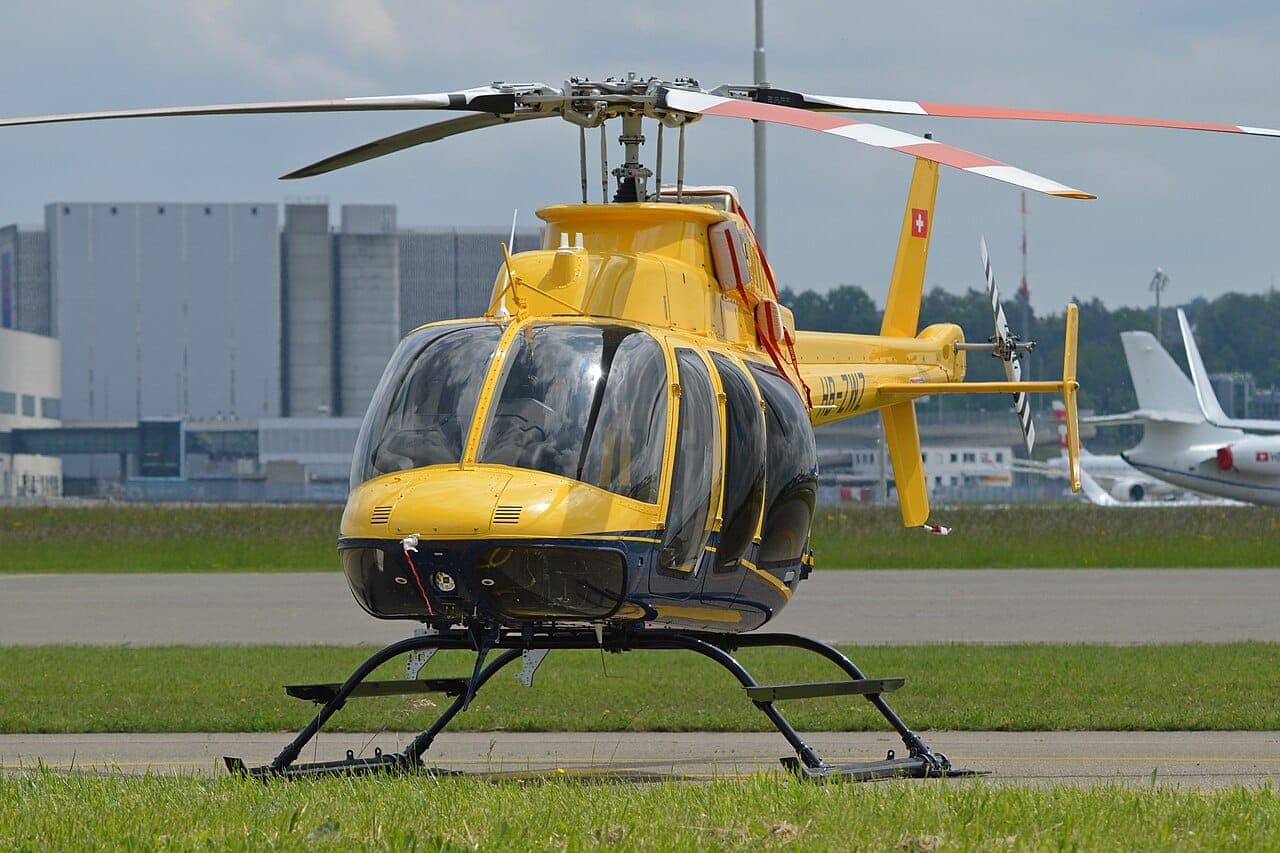
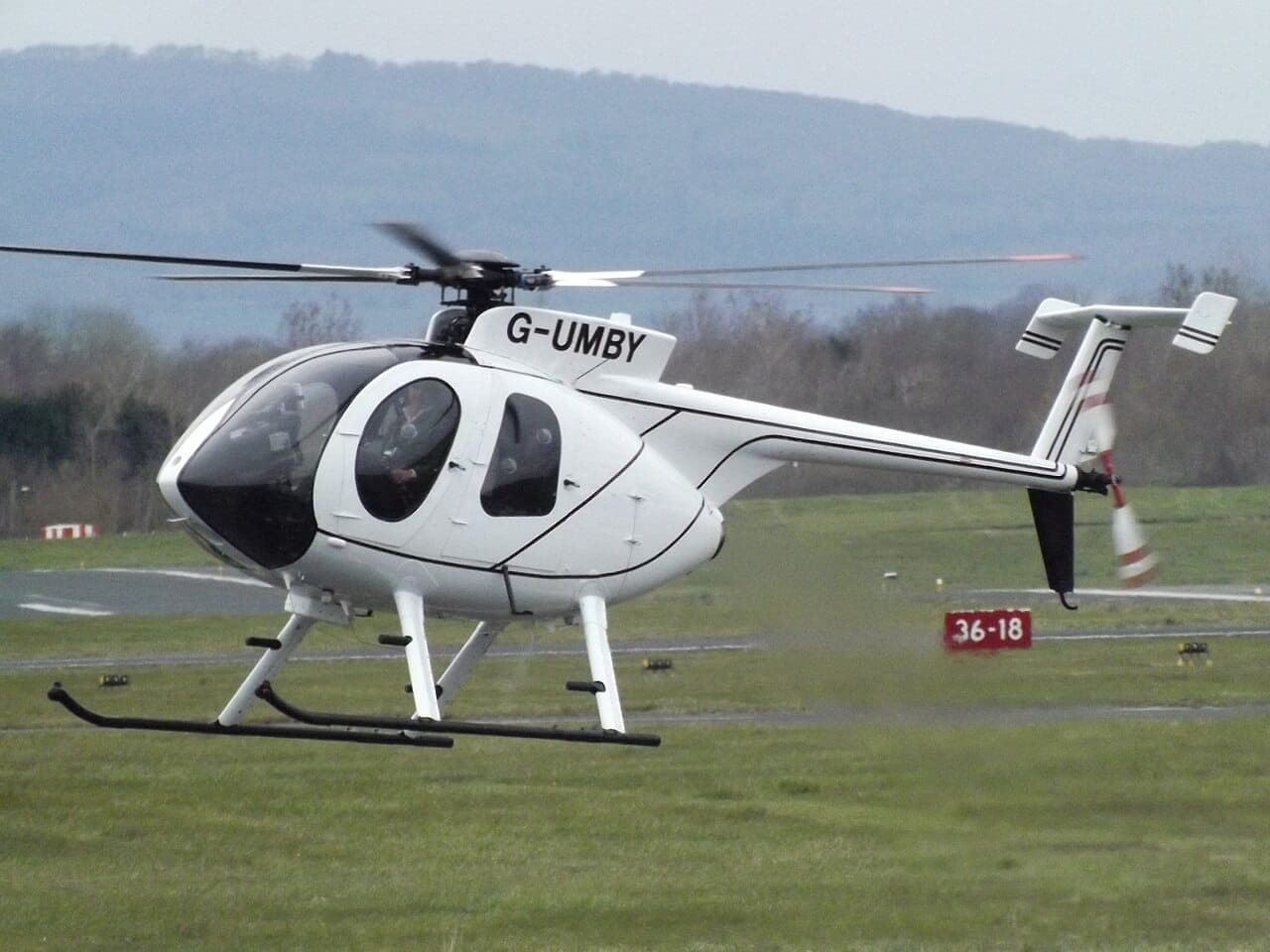
Most buyers assume the MD 500E is the expensive one. It looks faster, it came out of a military program, and the egg-shaped fuselage reads like something that bills by the minute. The truth is duller and more useful: the MD 500E vs Bell 206B JetRanger hourly cost gap is small, because both helicopters burn Jet A through the same Rolls-Royce M250 engine family with the same 3,500-hour overhaul interval. What separates them is airframe parts pricing, shop availability, and how many miles you get for each gallon.
That matters to your wallet in a specific way. At 200 hours a year, a $40-per-hour difference is $8,000 annually — real money, but less than one unplanned gearbox event. The bigger lever is whether you can get parts and a mechanic when you need them, and whether the speed difference actually shortens your trips.
Key Takeaways
On a straight cost-per-hour basis the Bell 206B-3 comes out slightly cheaper, mostly because its airframe parts are cheaper and more shops already stock them. On cost per nautical mile the MD 500E wins, because it cruises roughly 15 to 20 knots faster on about three gallons an hour less fuel. Both run a Rolls-Royce M250-C20 series engine with a 3,500-hour recommended TBO and a mid-life hot section inspection near 1,750 hours, so one of the largest reserve lines on your spreadsheet is nearly identical.l. The 500E gives you a much stronger power margin for hot, high and heavy work; the 206B gives you a bigger cabin, more fuel, gentler autorotations and a support network that never sleeps. Pick on mission and parts access, not on the hourly number, because the hourly numbers land within about five percent of each other.
What You Are Actually Comparing
These two came out of the same 1960s U.S. Army Light Observation Helicopter competition. Hughes won it with the OH-6 Cayuse, which became the civil 369 series and eventually the MD 500E. Bell lost with the OH-4A, turned that design into the Model 206 JetRanger for the civil market, and then won the rerun as the OH-58 Kiowa. Sixty years later you can still buy either one.
The MD 500E — certified under FAA type certificate H3WE as a Hughes/MD 369E — carries a five-blade main rotor, a 3,000 lb internal maximum gross weight, and a Rolls-Royce 250-C20B rated at 375 shp for takeoff out of a 420 shp engine. Empty weight on a typical equipped airframe runs near 1,600 lb. Standard usable fuel is about 640US gallons.
The Bell 206B-3 JetRanger III, certified under H2SW, uses a two-blade teetering main rotor, a 3,200 lb internal gross weight, and a Rolls-Royce 250-C20J installed at 317 shp for takeoff. Standard usable fuel is about 91 gallons, which is the single most underrated spec in this comparison — it is why the JetRanger can go five hours of tour work between fuel stops while the 500E is looking for a truck.
Think of it as a hot hatch against a full-size pickup. The 500E is quick, tight, and loves to be flown. The 206B hauls people and gear in comfort, and every parts counter in the country knows the part number.
Fun Fact: The OH-6A, the 500's direct ancestor, set a string of world records in 1966 including a non-stop distance flight of more than 2,200 miles. The airframe's reputation for efficiency is not marketing — it was earned early.
Fuel and Speed: Think Cost Per Mile, Not Per Hour
Owners typically report the MD 500E burning 22 to 25 gallons per hour in normal cruise, and the Bell 206B-3 burning 25 to 28. Call it 23 and 26 for planning. At $6.50 a gallon for Jet A — a reasonable U.S. retail average through 2025, though you will see $5.00 at a self-serve pump and $9.00 at a resort FBO — that is about $150 an hour of fuel in the 500E and $169 in the JetRanger.
Now add speed. The 500E cruises comfortably at 125 to 135 knots. The 206B-3 settles at 110 to 115 knots in real-world trim with the doors on and four people aboard. Run the arithmetic per nautical mile and the picture flips: the 500E is spending roughly 0.18 gallons per mile against 0.23 for the JetRanger. Over a 200-mile leg, the 500E lands about 20 minutes earlier having burned less fuel.
Why It Matters: If you fly point-to-point — utility inspection, executive transport, ranch work spread across a county — the 500E's speed converts directly into fewer billed hours on every component in the aircraft. If you fly circuits, tours, photo orbits or training, speed buys you nothing and the JetRanger's cheaper parts win.
Flying411 keeps light turbine helicopter listings and the ownership math in one place, so you can compare a 500E and a JetRanger on the same screen instead of guessing.
Engine Reserves: The Same Heart in Two Chests
Here is where the comparison gets genuinely close. Both airframes use the Rolls-Royce M250-C20 series turboshaft. Rolls-Royce publishes a 3,500-hour recommended time between overhauls for these engines, with a hot section inspection recommended near the 1,750-hour midpoint. Same core, same compressor, same scheduled events, same network of authorized overhaul facilities.
What that means in practice is that one of your largest reserves — the engine — is effectively a wash.Shops quote M250-C20 overhauls as a range rather than a fixed price because the outcome depends on turbine wheel and compressor condition, and Rolls-Royce offers hourly cost programs through its authorized service network that smooth the cash flow. Budgeting somewhere in the $75 to $90 per hour range for overhaul plus hot section, on an engine reaching full TBO, is a defensible planning figure for either helicopter.
Heads Up: Buy the engine, not the airframe. An M250 with 2,900 hours since overhaul and a hot section due is a five- or six-figure bill arriving on a schedule you do not control. Pull the engine log, confirm the last HSI date and findings, and check for any compressor erosion history if the aircraft worked in dusty or coastal conditions. Our guide on how much to set aside per flight hour walks through building the reserve account properly.
Airframe, Dynamic Components and Parts Support
This is where the two separate, and it is the reason the JetRanger usually finishes cheaper on the hourly line.
Bell 206B: the parts bin everyone stocks
More than 7,000 JetRangers were built across the 206 family before Bell ended 206B-3 production around 2010. That fleet created an enormous aftermarket. Blades, skids, windshields, transmissions, tail booms, servos — there is new, overhauled and serviceable inventory, often from several vendors competing on price. Nearly every turbine-rated helicopter shop in North America has worked on one. Labor estimates come back fast because the mechanic has done the job before.
MD 500E: fewer built, pricier parts
The 369/500 civil fleet is far smaller, and MD Helicopters went through Chapter 11 in 2022 before emerging under new ownership. Parts flow has improved since, and a healthy independent support base exists, but you should expect higher per-part pricing and occasional lead-time surprises on rotor system and gearbox components. The five-blade head has more parts in it than Bell's two-blade teetering system — more pitch links, more dampers, more bearings, more inspection points.
Both aircraft carry life-limited dynamic components with retirement times stated on their component cards, and both have gearbox overhaul intervals you must verify aircraft by aircraft rather than assume from a brochure. For planning, budgeting roughly $85 per hour of dynamic-component reserve on a 206B and around $110 on a 500E reflects what owners of each type generally report.
Keep in Mind: Component cards are the real logbook on a turbine helicopter. A pre-purchase inspection that does not reconcile every life-limited part against its card and remaining hours is not a pre-purchase inspection, it is a nice look around the hangar.
Insurance, Training and Pilot Supply
Hull insurance on either machine tends to price in the same band — commonly in the 1.5 to 2.5 percent of insured hull value range for an experienced turbine pilot, higher for low-time pilots or commercial exposure, as of 2025. Liability adds to that. The variable that moves your quote most is not the model, it is your logged turbine time and whether you fly single-pilot commercial work.
Where the JetRanger clearly wins is pilot supply and recurrent training. The 206B has been the backbone of U.S. turbine transition training for decades, so finding a qualified pilot, a checkout instructor, or an underwriter-approved recurrent course is simple. The 500 series demands a slightly quicker hand — higher disc loading means a crisper autorotation entry — and underwriters often want model-specific time before they write the policy at a sensible rate.
If you are stepping up from piston, it is worth understanding the whole jump first; our explainer on piston versus turbine helicopters covers what changes beyond the fuel bill, and the R44 versus Bell 206B cost comparison sets the baseline from the piston side.
Flying411 keeps turbine helicopter listings, specs and ownership guides in one place, so you can compare engine times and component status before you book a trip to see an aircraft.
The Numbers Side by Side
The model below assumes 200 flight hours a year, Jet A at $6.50 per gallon, and a privately operated aircraft under Part 91. Fixed costs cover hangar, insurance, annual inspection labor, subscriptions and recordkeeping. Your numbers will move with region, utilization and insured value — treat this as a structure to fill in, not gospel.
| Dimension | MD 500E | Bell 206B-3 JetRanger III |
| Engine | Rolls-Royce 250-C20B, 375 shp takeoff | Rolls-Royce 250-C20J, 317 shp takeoff |
| Recommended TBO / HSI | 3,500 hr / ~1,750 hr | 3,500 hr / ~1,750 hr |
| Max gross weight (internal) | 3,000 lb (3,550 lb external load) | 3,200 lb (3,350 lb external load) |
| Seats | 5 (pilot + 4) | 5 (pilot + 4) |
| Typical cruise | 125–135 kt | 110–115 kt |
| Usable fuel (standard) | ~60 US gal | ~91 US gal |
| Planning fuel burn | 23 gph | 26 gph |
| Fuel cost/hr at $6.50/gal | $150 | $169 |
| Engine reserve/hr | $85 | $80 |
| Dynamic component reserve/hr | $110 | $85 |
| Scheduled + unscheduled maintenance/hr | $90 | $80 |
| Direct operating cost/hr | ~$435 | ~$414 |
| Fixed costs/yr (hangar, insurance, inspection) | ~$35,000 | ~$35,000 |
| Total cost/hr at 200 hr/yr | ~$610 | ~$589 |
| Cost per nautical mile | ~$4.70 | ~$5.12 |
| Parts availability | Smaller fleet, higher part pricing | 7,000+ built, deep aftermarket |
| Best suited to | Fast point-to-point, hot/high, utility | Tours, training, passenger comfort, endurance |
Good to Know: Fly only 100 hours a year and that $35,000 of fixed cost becomes $350 per hour instead of $175 — pushing either aircraft close to $800 an hour all-in. Utilization moves the number more than the model choice does.
Which One Should You Buy
If your flying is passengers, tours, training or anything where cabin room and long legs matter, buy the Bell 206B-3. It is cheaper per hour, easier to insure, easier to staff, and easier to sell when you are done. It is the family sedan of turbine helicopters, and there is no shame in that.
If your flying is fast point-to-point work, operations at high density altitude, or anything where a strong power margin earns its keep — utility, patrol, mountain access — buy the MD 500E. You will pay a little more per hour and a lot more for certain parts, but you will cover more ground per dollar and you will have performance the JetRanger simply cannot match at weight on a hot day.
Either way, do the arithmetic on your own annual hours and your own hangar rate before you fall for a paint job. For more context on where these two sit among the alternatives, see our roundup of the best light turbine helicopters, the 206B versus 206L LongRanger cost breakdown if you need more cabin, and the R66 versus Bell 505 comparison if a newer airframe is on the table. The honest summary of MD 500E vs Bell 206B JetRanger ownership is that the hourly costs are close cousins, and the mission decides it.
Flying411 keeps MD and Bell helicopter listings side by side, so you can compare engine time, component status and equipment without opening six tabs.
When you are ready to compare listings, visitFlying411and see what is on the market today.
Frequently Asked Questions
Do the MD 500E and Bell 206B use the same engine?
Effectively yes. Both use the Rolls-Royce M250-C20 series turboshaft — the 500E with the C20B at 375 shp for takeoff, the 206B-3 with the C20J at 317 shp. Rolls-Royce lists a 3,500-hour recommended overhaul interval for both, with a hot section inspection around the 1,750-hour midpoint, so engine reserves are nearly identical.
Which helicopter is faster, and by how much?
The MD 500E. It cruises roughly 125 to 135 knots against 110 to 115 for a typically equipped 206B-3. On a 200-nautical-mile leg that saves about 20 minutes and a few gallons of Jet A, which is why the 500E wins on cost per mile even though it loses on cost per hour.
Is the Bell 206B easier to insure?
Usually, yes. Hull rates for both sit in a similar band, but underwriters have decades of JetRanger loss data and a large pool of qualified pilots to draw on. Low-time turbine pilots generally find a 206B checkout and approval easier to arrange than a 500-series one.
Are MD 500E parts still available?
Yes. MD Helicopters emerged from Chapter 11 in 2022 under new ownership and continues to support the 500 series, and an established independent aftermarket exists. Expect higher per-part prices and occasional longer lead times than on the Bell, and ask any prospective seller about recent parts wait times on their aircraft.