The Piper Seminole and Diamond DA42 are two of the most common modern choices for multi-engine training, but they take very different approaches to the same job. The Seminole uses a conventional aluminum airframe and twin Lycoming avgas engines, while the DA42 pairs a composite airframe with FADEC-controlled Jet-A piston engines. Both are four-seat, retractable-gear twins, but their fuel burn, maintenance requirements, engine reserves, and acquisition costs differ enough to change the ownership math significantly.
They do the same job. Both are four-seat, retractable-gear light twins used to teach the multi-engine rating, and both are still in production. What they do not share is a cost structure. One saves you money at the fuel pump and spends it back on engine reserves. The other burns more gas per hour but overhauls on parts you can find at any shop in the country.
If you are a school owner, a flying club board member, or an individual buyer trying to decide where your money goes, the honest answer to Diamond DA42 vs Piper Seminole operating cost is not a single number. It is a break-even point that moves with your local fuel prices, how many hours you fly each year, and how long you plan to keep the airplane. This article walks through where each one wins.
Key Takeaways
The Seminole is cheaper to buy used, cheaper to fix, and cheaper to overhaul, because its Lycoming O-360 engines are the most common four-cylinder powerplant in general aviation and every A&P knows them. The DA42 burns roughly a third less fuel, runs on Jet-A instead of 100LL, and has far better engine-out performance, but its Austro AE300 engines are replaced rather than overhauled, and that reserve eats most of the fuel savings in a typical U.S. market. Where 100LL is expensive or hard to get, the DA42 pulls clearly ahead. Where avgas is cheap and mechanics are plentiful, the Seminole stays hard to beat. Utilization matters more than either airframe: a twin flown 600 hours a year costs far less per hour than the same twin flown 150.
| Quick answer | Diamond DA42 | Piper Seminole PA-44-180 |
| Cheaper per hour on fuel | Yes, by a wide margin | No |
| Cheaper engine reserve | No | Yes |
| Cheaper routine maintenance | Usually no | Yes |
| Cheaper acquisition (used) | No | Yes |
| Best where avgas is scarce or costly | Yes | No |
| Best where shops and parts are everywhere | No | Yes |
What Each Airplane Actually Is
The Piper Seminole in one paragraph
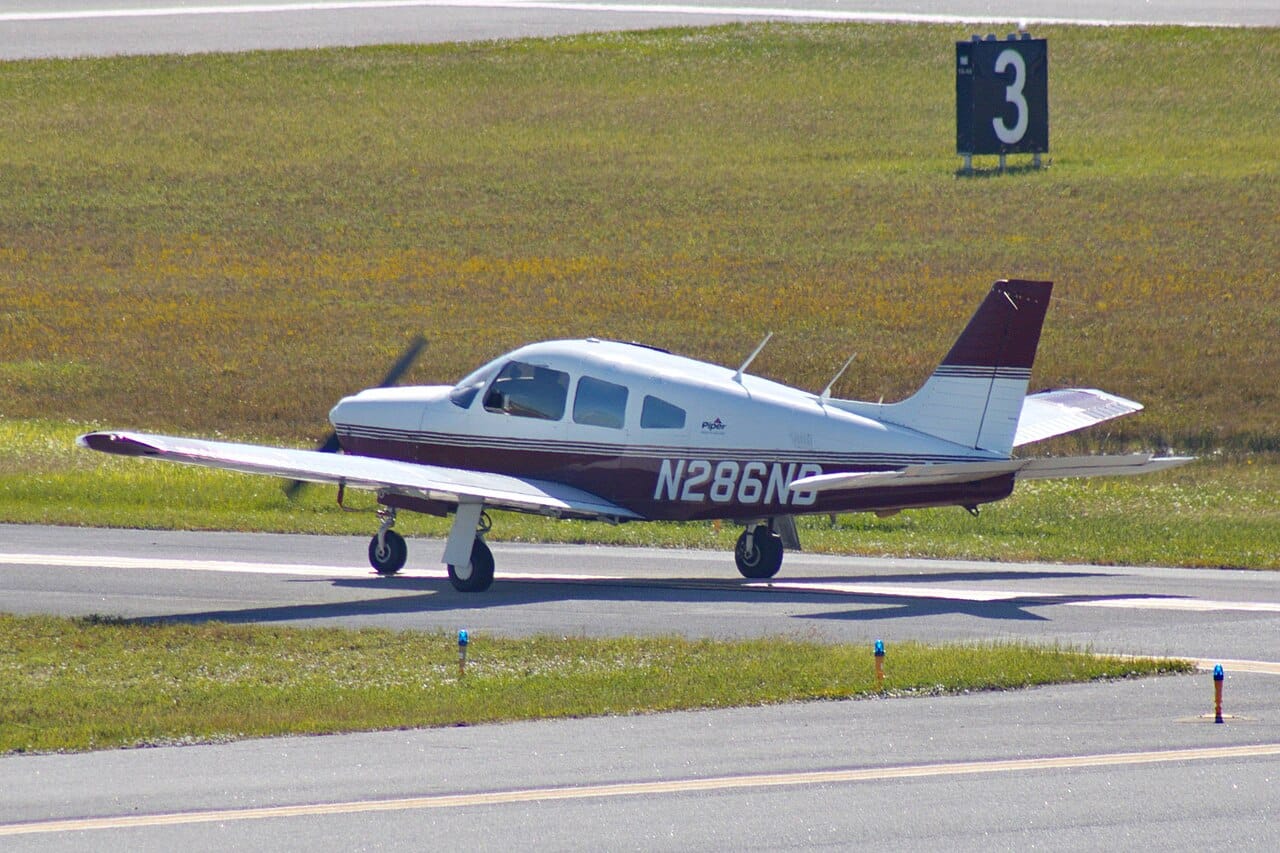
The PA-44-180 first appeared in 1979, went out of production, came back, and is still rolling out of Vero Beach today with a Garmin G1000 NXi panel. It carries two 180-horsepower Lycomings — an IO-360-B1G6 and counter-rotating LIO-360-B1G6 — so there is no critical engine, which is one reason instructors like it. Maximum takeoff weight is 3,800 pounds, fuel capacity is 110 gallons with 108 usable, and Piper publishes a maximum cruise in the neighborhood of 162 knots true. It is, in the best sense, an ordinary airplane: rivets, tubes, cables, and an engine design that has been in continuous production since the Eisenhower administration.
The Diamond DA42 in one paragraph
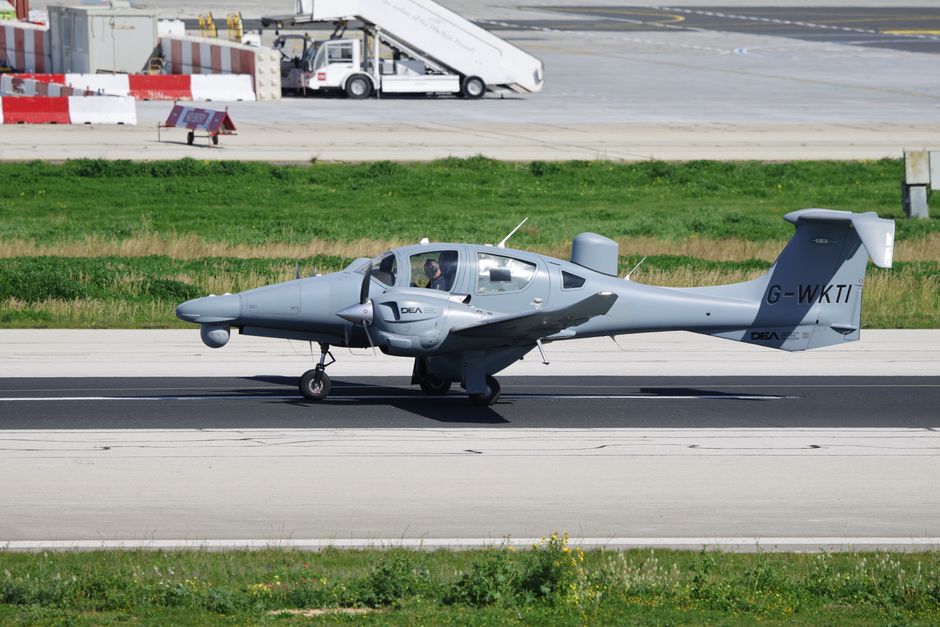
The DA42 Twin Star arrived in 2004 as something genuinely new: a composite light twin running two Jet-A piston engines with FADEC and single-lever power control. Early airplanes used Thielert Centurion diesels; after Thielert's 2008 insolvency, Diamond developed its own Austro AE300 for the DA42 NG, and the current DA42-VI uses the same 168-horsepower engine family with aerodynamic cleanups. Diamond quotes a maximum cruise near 197 knots true and a combined fuel burn that can drop to roughly 11 to 12 gallons per hour at economy power settings. Maximum takeoff weight on the current DA42-VI is 4,407 pounds. The wing is long, the glide is flat, and it climbs on one engine in a way no Seminole pilot has ever experienced.
Good to Know: "Diesel" on a DA42 spec sheet means compression ignition running on Jet-A or Jet A-1, not automotive diesel fuel. You are buying from the same truck that fuels the King Airs, which is part of the appeal at airports where the 100LL pump is an afterthought.
Head-to-Head Numbers
| Spec | Diamond DA42-VI | Piper Seminole PA-44-180 |
| Engines | 2 × Austro AE300, 168 hp, Jet-A | Lycoming IO-360-B1G6 / LIO-360-B1G6, 180 hp each, 100LL |
| Propellers | Constant speed, FADEC-controlled, counter-rotating not required | Constant speed, counter-rotating (no critical engine) |
| Max takeoff weight | 4,407 lb | 3,800 lb |
| Usable fuel (standard) | ~50 US gal (long-range tanks optional) | 108 US gal |
| Typical cruise fuel burn | ~11–14 gph combined | ~17–20 gph combined |
| Max cruise (manufacturer) | ~197 KTAS | ~162 KTAS |
| Seats | 4 | 4 |
| Airframe | Composite | Aluminum |
| Engine life limit | Replacement-based; verify current Austro interval | Up to 2,600 hr on eligible factory-new/rebuilt engines; verify current Lycoming SI 1009 |
Why It Matters: The fuel numbers are the headline, but look at the tank sizes. The Seminole hauls 108 gallons of avgas — 648 pounds — which is why its full-fuel payload is modest. The DA42 carries about 50 gallons of Jet-A in standard tanks and still flies farther, because it is sipping. For a school doing one-hour lessons, neither matters much. For a private owner flying four people somewhere, it matters a lot.
The Fuel Math, Done Honestly
How much does the DA42 actually save per hour?
Use round numbers you can re-run with your own FBO prices. Say 100LL is $6.25 a gallon and Jet-A is $5.75 — spreads vary enormously by region, and in much of the country Jet-A is the cheaper of the two by a dollar or more.
| Fuel cost per hour | DA42 (12 gph Jet-A) | Seminole (18 gph 100LL) |
| At $5.75 / $6.25 | ~$69 | ~$113 |
| At $6.50 / $7.50 | ~$78 | ~$135 |
| At $4.50 / $5.50 | ~$54 | ~$99 |
So the DA42 saves somewhere between $40 and $60 an hour on fuel alone in typical conditions. Over 500 hours a year, that is $20,000 to $30,000 — real money, and the number that sells DA42s.
Keep in Mind: Fuel savings are only half a sentence. The other half is what you set aside every hour for engines, and that is where the Seminole claws it back.
Engine Reserves: The Deciding Line Item
What does it cost to get to the other side of TBO?
Lycoming's current Service Instruction 1009 allows up to 2,600 hours for certain eligible factory-new and factory-rebuilt IO-360 engines, while overhauled engines may have shorter recommended intervals depending on their status and compliance. The Seminole's engines are still conventionally overhauled rather than replaced outright. Budget roughly $30,000 to $45,000 per engine and calculate the reserve using the actual TBO applicable to the installed engines rather than assuming a blanket 2,000-hour interval.
The Austro AE300 works differently. It is a life-limited engine: at the published time between replacement, the engine comes off and a replacement or exchange unit goes on. Diamond and Austro have extended that interval repeatedly as fleet experience accumulated, so the number that applies to your serial number depends on current Austro service information — do not budget off a forum post from 2014. There are also life-limited sub-assemblies, notably the reduction gearbox and high-pressure fuel system components, that come due on their own schedules before the engine itself does.
Owners and school operators generally report that the all-in DA42 powerplant reserve lands meaningfully above the Seminole's — often in the $60 to $90 per hour range for the pair once gearboxes and life-limited parts are included. That is the crux of the comparison: a $45/hour fuel win against a $30-to-$45/hour reserve penalty is close to a wash in a cheap-avgas U.S. market, and a clear DA42 victory anywhere avgas is expensive or scarce.
Pro Tip: When you evaluate a used DA42, ask for the engine and gearbox hours and the current Austro documentation in the same breath. A DA42 that is 200 hours from a double engine replacement is not the same airplane as one that is 1,400 hours away, and the price should reflect it. The same discipline applies to any complex purchase — our pre-purchase inspection checklist covers how to structure that review.
What about legacy Thielert-powered DA42s?
Early DA42 TDI airframes with Centurion engines are the cheapest twins on the used market wearing a Diamond badge, and there is a reason. Those engines are now supported by Continental Aerospace Technologies as the CD-series, with their own replacement intervals and a gearbox schedule that arrives well before the engine limit. Some owners run them happily. Others discovered that the reserve math on a 1,200-hour engine with a mid-life gearbox is brutal on a low-utilization airplane. If you are shopping the bottom of the DA42 market, price the next three years of powerplant events before you price the airplane.
Flying411 keeps DA42 and Seminole listings in one place, so you can compare engine time, gearbox time and avionics side by side instead of chasing three different dealer sites.
Maintenance, Parts and the Shop Problem
Which one is easier to keep flying?
This is the Seminole's strongest argument and it has nothing to do with the spec sheet. A PA-44 is an aluminum Piper with Lycoming engines. Almost any shop in North America can annual it, almost any A&P has worked on the engines, and parts come from a supply chain that also serves thousands of Arrows, Archers and Warriors. When something breaks on a Tuesday, the airplane is usually flying again by Friday.
The DA42 asks more of you. The airframe is composite, so repairs beyond the routine want a shop with composite experience and Diamond training. Engine work is Austro-specific, with software, tooling and diagnostics that a general-practice A&P will not have on the shelf. Parts come from Diamond's network, and operators outside of areas with a Diamond service center routinely report longer lead times than they would accept on a Piper. None of this makes the airplane unreliable — the European and Asian training fleets run DA42s hard, year after year — but it does mean your downtime cost depends heavily on how close you are to support.
Heads Up: Before you buy either airplane, call the two nearest maintenance shops and ask what they charge to annual it and whether they will take it. If the honest answer for a DA42 is "we'd have to send it 400 miles," that ferry time is part of your operating cost forever.
What do the annuals actually run?
A light twin trainer annual is a bigger event than a single. Two engines, two of every accessory, retractable gear, and a gear swing to perform. For a Seminole in decent condition, owners commonly budget in the $4,000 to $8,000 range for a straightforward annual, more when cylinders, gear components or hoses come due. DA42 annuals start in similar territory but are more variable, because Diamond's maintenance program includes calendar- and hour-based replacement of specific components — rubber, hoses, and powerplant items — that arrive whether you flew or not. That is a real disadvantage for a lightly flown private DA42 and close to irrelevant for a school flying 600 hours a year.
Insurance, Hangar and the Rest of the Fixed Costs
Does the insurer care which one you pick?
Underwriters price a twin trainer on hull value, pilot experience and intended use far more than on the badge. That said, two patterns show up. First, hull values on late-model G1000 NXi Seminoles and DA42-VIs are both in seven figures new, so neither is cheap to insure at full value. Second, composite repair costs can nudge DA42 hull rates upward, because a gear-up or a hangar rash incident is a more specialized repair than it would be on aluminum. Schools with low-time renter pilots will find both airplanes expensive, and both markets will ask for a training and checkout program before they quote.
| Annual fixed cost item | Notes that apply to both |
| Hangar or tiedown | DA42's 44-foot wingspan needs a wider door than the Seminole's 38.7 feet — check before you sign a lease |
| Insurance | Driven by hull value and pilot experience; get quotes on the specific tail number |
| Annual inspection | Twin-trainer annuals run several thousand dollars in normal years |
| Database subscriptions | G1000 NXi navigation data is a recurring four-figure annual cost on either type |
| Required calendar items | Pitot-static and transponder every 24 calendar months under FAR 91.411 and 91.413; ELT battery per 91.207 |
Fun Fact: DA42's 47-foot-9-inch wingspan needs a wider door than the Seminole's 38-foot-6-inch span — check before you sign a lease
Training Value: Not Everything Is a Dollar
Which airplane teaches a better multi-engine pilot?
Reasonable instructors disagree, loudly. The Seminole gives a student six levers — two throttles, two props, two mixtures — plus cowl-flap discipline and a genuine, uncomfortable, low single-engine service ceiling of roughly 3,800 feet. Lose an engine at gross on a hot day and the airplane is telling you the truth about light twins. Many examiners and employers like that the Seminole forces conventional piston engine management, because that is what a new multi-engine commercial pilot is likely to meet in the field.
The DA42 gives a student two levers and a FADEC that handles the rest. Engine-out performance is dramatically better — Diamond publishes a single-engine service ceiling in an entirely different league than the Seminole's — which makes training in mountainous terrain or high density altitude less of a compromise. Critics say the automation means students learn less about mixture, detonation and shock cooling. Advocates answer that the student is learning the systems they will actually fly behind in a modern cockpit, and that a twin which climbs on one engine is a safer classroom.
Quick Tip: If your students will go straight into regional airline cadet programs, ask the programs which type they prefer to see in a logbook. The answer varies by region and changes over time, and it is worth more than any brochure.
If you are earlier in that path and still deciding what to train in before the twin, our comparisons of the Cessna 172 and Piper Archer and the Cessna 172 versus Diamond DA40 cover the same fork in the road one rating earlier — and the DA40 comparison is especially useful here, because a school standardized on Diamond singles has a natural upgrade path into the DA42.
Fuel Supply, the Long Game
Does the 100LL question change the answer?
It might. Unleaded replacement fuels are working their way through approval and distribution, and the industry's stated goal is a lead-free future for piston aviation. Nobody should buy or avoid a Seminole today purely on that basis — avgas is not disappearing next year, and Lycoming engines are part of every transition plan. But if you are making a fifteen-year decision for a flight school, a Jet-A airplane is insulated from that uncertainty in a way an avgas airplane is not. Outside the United States, the question is already settled in places where avgas is imported, taxed and priced accordingly, which is exactly why the DA42 dominates training fleets in Europe and much of Asia.
Good to Know: Fuel price spread is the single variable that flips this comparison. Re-run the per-hour table with your own airport's posted prices before you decide anything. If Jet-A is $2 a gallon cheaper than 100LL where you operate, the DA42 wins on cash flow even after the engine reserve.
Flying411 keeps multi-engine trainer listings, specs and market data in one place, so you can compare a 2008 DA42 NG against a 2015 Seminole without rebuilding a spreadsheet from scratch.
Resale and Depreciation
Which one holds value better?
Both types have a captive buyer pool — flight schools always need twins — which supports values on well-maintained airframes. The Seminole benefits from being a known quantity with a deep, liquid market and buyers who can value it confidently. The DA42's market is thinner and more segmented: NG and -VI airplanes with Austro engines and time remaining trade well, while Thielert-era airframes carry a discount that reflects their powerplant risk.
The practical lesson for a seller of either type is the same one that applies across general aviation: value follows documentation. Complete logs, current airworthiness directive compliance, clear engine and life-limited component status, and a clean damage history are worth more at closing than fresh paint. Our guide to aircraft valuation and depreciation walks through how appraisers weight those factors, and the broader question of what drives cost per hour in any fleet is covered in 9 cost drivers that make one aircraft cheaper to operate — the airline-scale version of the same arithmetic you are doing here.
Who Should Buy Which
| Your situation | Lean toward |
| Flight school, 400+ hours a year, avgas under $6 | Seminole — reserve and maintenance simplicity win |
| Flight school where Jet-A is much cheaper or avgas is unreliable | DA42 — fuel spread overwhelms the reserve |
| High density altitude or mountain training | DA42 — engine-out climb is not close |
| Private owner, 100–150 hours a year, far from a Diamond service center | Seminole — calendar items and support distance punish low use |
| Private owner who wants a fast, efficient four-seat traveling twin | DA42 — 190-knot cruise on 12 gph is unique |
| Tight acquisition budget | Seminole — deeper used market at lower entry prices |
Pro Tip: Whichever way you lean, model utilization first. A twin flown 150 hours a year carries its hangar, insurance and annual across very few hours, and the per-hour number gets ugly fast. Many owners solve that with a partnership or leaseback — our overview of shared and fractional ownership structures lays out how those arrangements are usually written.
Conclusion
The short version of Diamond DA42 vs Piper Seminole operating cost is that the Seminole is the cheaper airplane to own and the DA42 is the cheaper airplane to fly, and which of those matters more depends entirely on your fuel prices and your annual hours. Fly 600 hours a year somewhere Jet-A undercuts 100LL, and the Diamond's efficiency turns into a five-figure annual saving that survives its higher engine reserve. Fly 150 hours a year in a region full of Lycoming shops, and the Piper will cost you less every single year without argument.
Do not settle it from a brochure. Take both per-hour tables above, drop in your own FBO's posted fuel prices, the current Austro or Lycoming reserve figures for the specific airplanes you are considering, and a realistic hours-per-year number. Whichever airplane comes out ahead in that spreadsheet is the right one for you, regardless of which one looks better on the ramp.
When you are ready to compare listings, visitFlying411and see what is on the market today.
Frequently Asked Questions
How much does a DA42 burn per hour compared with a Seminole?
Diamond advertises combined fuel consumption as low as roughly 11 to 12 gallons per hour at economy cruise for the DA42-VI, with most operators planning 12 to 14 in real training use. A Seminole typically plans 17 to 20 gallons per hour of 100LL in cruise. That is roughly a one-third reduction, and the DA42 burns Jet-A, which is often cheaper per gallon as well.
Does the Austro AE300 get overhauled like a Lycoming?
No. The AE300 is life-limited and replaced or exchanged at its published interval rather than field-overhauled, and certain sub-assemblies such as the reduction gearbox have their own shorter life limits. Austro has extended those intervals over the years, so always verify the current published figures for the specific engine serial numbers on the airplane you are buying.
Is the Seminole harder to fly on one engine?
It is less capable on one engine. The Seminole's single-engine service ceiling is around 3,800 feet, so on a hot day at a high airport an engine failure leaves you with very little performance margin. The DA42's long wing and lighter wing loading give it far better engine-out climb, which is why it is popular for training in mountainous regions. The Seminole's counter-rotating propellers do mean there is no critical engine, which simplifies some of the handling.
Should I avoid used DA42s with Thielert engines?
Not automatically, but price them carefully. Those airframes are supported today through Continental Aerospace Technologies' CD-series program, with replacement intervals and gearbox limits that arrive sooner than the Austro's. Work out the cost of every powerplant event due in the next three years, add it to the purchase price, and then decide whether the airplane is still a bargain.
Which airplane do airlines and cadet programs prefer to see?
Both are accepted; the multi-engine rating is the multi-engine rating. Some instructors argue the Seminole teaches more traditional piston engine management, while others value the DA42's modern FADEC cockpit and its safer engine-out performance during training. If a specific cadet program matters to you, ask that program directly rather than relying on general advice.
What fixed costs surprise new twin owners the most?
Hangar width, insurance, and the annual inspection. A twin annual is a multi-day event with two of everything plus a landing gear swing, and quotes in the several-thousand-dollar range are normal even in a clean year. Add recurring navigation database subscriptions and the 24-calendar-month pitot-static and transponder checks required by FAR 91.411 and 91.413, and the fixed side of the budget adds up before you burn a drop of fuel.