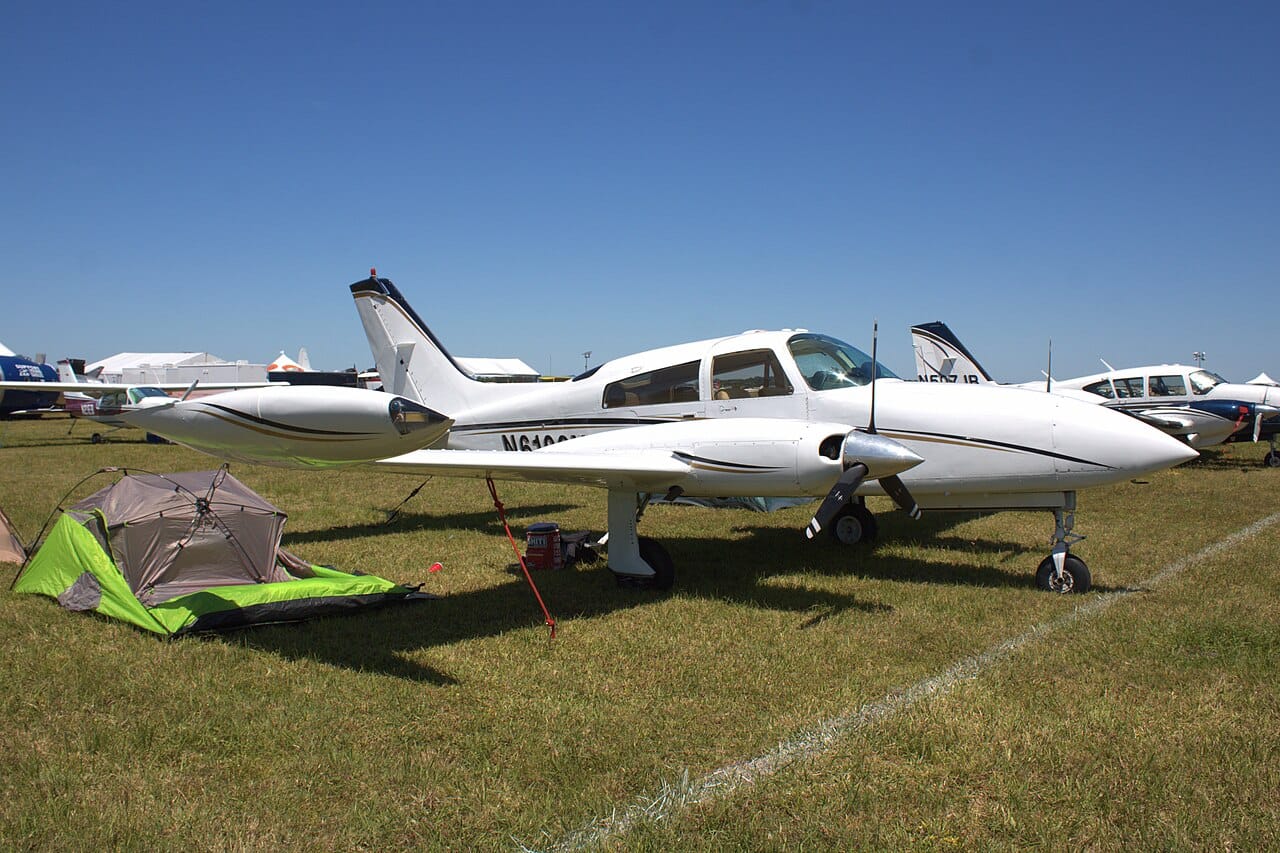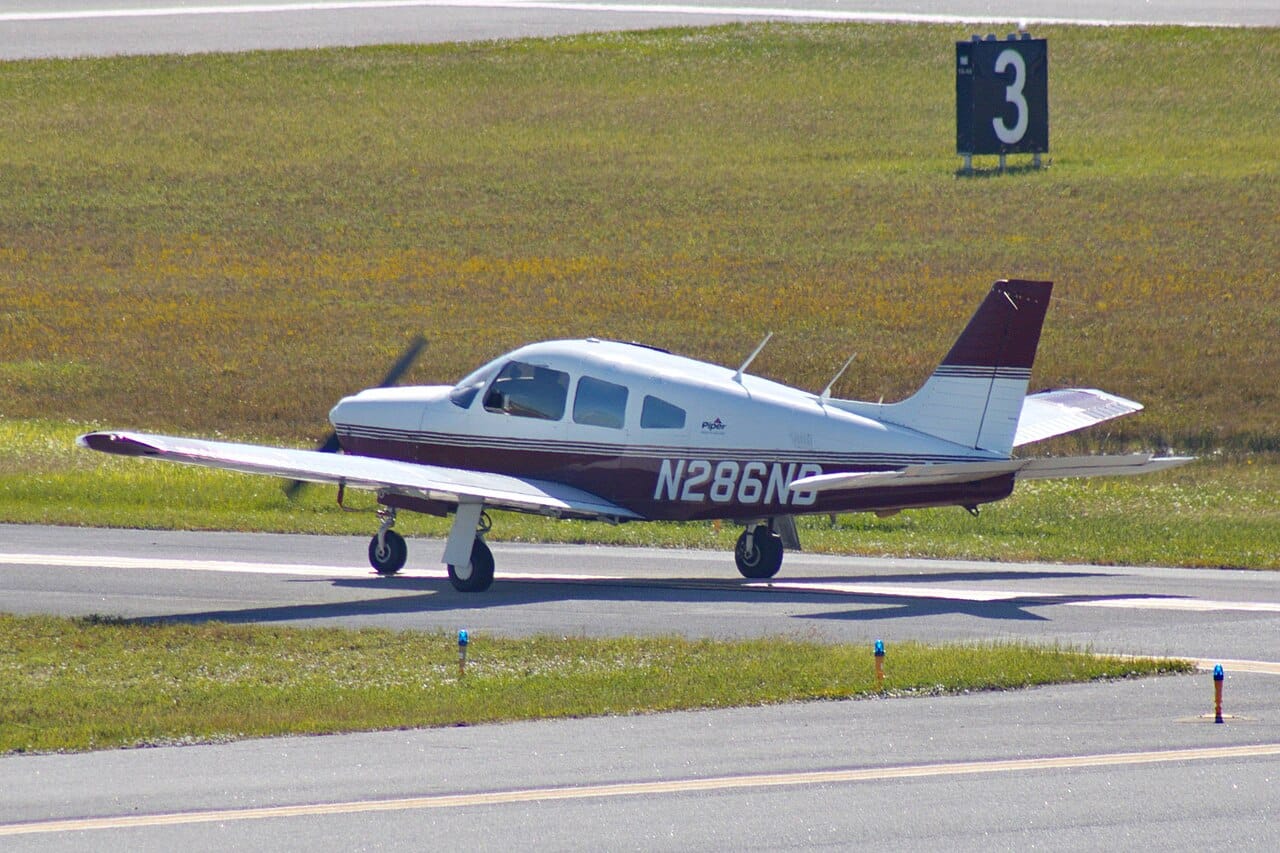
Walk down a flight line at almost any busy general aviation field and you will eventually find two Piper Arrows parked a few tiedowns apart. Same low wing, same 200-horsepower nose, same three-blade or two-blade prop glinting in the sun. The difference is at the back. One has a conventional tail with the stabilator down low, tucked behind the rudder. The other carries its stabilator up on top of the fin like a weather vane. That second airplane is the Piper Arrow IV, and its tail has been the subject of hangar arguments for forty-odd years.
Here is why it matters to you as a buyer. The T-tail Arrow IV usually sells for less than a comparable Arrow III. Sometimes noticeably less. If the airplanes are mechanically the same underneath - and to a large extent they are - then that discount is either free money or a warning label, and you need to know which.
This article answers the question buyers actually type into a search box: is the T-tail Arrow IV a smart buy, or should you wait for an Arrow III? We will go through what actually changed between the two, what the tail does to takeoff and landing technique, how the numbers compare, what the pre-buy inspection needs to catch on either one, and who each airplane really suits.
Key Takeaways
The Arrow III (PA-28R-201) and Arrow IV (PA-28RT-201) share the same 200-hp Lycoming IO-360, the same semi-tapered wing, the same 77-gallon fuel system and nearly the same book speeds, so you are not buying a slower or thirstier airplane when you buy the T-tail. What you are buying is a different takeoff and landing feel: the stabilator sits out of the propeller wash, so the nose will not come up until the airplane is going faster, which lengthens the ground roll and punishes sloppy short- and soft-field technique. The Arrow IV typically trades at a modest discount to an equivalent Arrow III, and that discount has less to do with safety statistics than with resale psychology and a smaller buyer pool. For a pilot who flies from paved runways of decent length, the Arrow IV is often the better value per dollar. For a buyer who flies off grass, plans to resell in three years, or wants the deepest instructor and type-club knowledge base, the Arrow III is worth the wait and the premium.
| Quick answer | Arrow III (PA-28R-201) | Arrow IV (PA-28RT-201) |
| Production years | 1977-1978 | 1979-early 1980s |
| Tail | Conventional, low stabilator | T-tail, stabilator on top of fin |
| Engine | Lycoming IO-360-C1C6, 200 hp | Lycoming IO-360-C1C6, 200 hp |
| Published TBO | Up to 2,600 hr on eligible factory-new/rebuilt engines; verify current Lycoming SI 1009 | Same |
| Fuel | 77 gal total / 72 usable | 77 gal total / 72 usable |
| Max gross weight | 2,750 lb (2,900 lb turbo) | 2,750 lb (2,900 lb turbo) |
| Planning cruise | 135-140 KTAS | 135-140 KTAS |
| Takeoff feel | Nose comes up early, in propwash | Rotation delayed until higher speed |
| Typical asking price | Higher | Usually 5-15% less for like condition |
| Best for | Grass strips, resale, instruction | Value buyers on paved runways |
What Actually Changed Between the Arrow III and the Arrow IV
Is the Arrow IV a different airplane or just a different tail?
Mostly just a different tail, and that surprises people. The Arrow III introduced the big changes in 1977: the semi-tapered wing with a 35-foot-plus span, fuel capacity raised to 77 gallons total with 72 usable, and a gross weight of 2,750 pounds for the normally aspirated version. When Piper rolled out the Arrow IV for the 1979 model year, it kept that wing, that fuel system, that gross weight and the same 200-horsepower Lycoming IO-360-C1C6. Current Lycoming TBO guidance varies by engine build and overhaul status, with eligible factory-new and factory-rebuilt engines reaching up to 2,600 hours.
The empennage is the headline change. Piper moved the all-flying stabilator from the aft fuselage to the top of the vertical fin, redesigned the fin, and reshaped the aft fuselage and rudder to suit. The company also put a T-tail on the Lance (which became the Turbo Lance II and Saratoga family) and on the Tomahawk in the same era. It was a styling and marketing direction as much as an engineering one - in the late 1970s, a T-tail looked modern, the way tailfins looked modern on a 1959 sedan.
Fun Fact: Piper eventually walked the idea back. When Arrow production resumed in the late 1980s after a long pause, the airplane came back with a conventional tail as the PA-28R-201, and it stayed that way through the final production runs in the 2000s. The T-tail Arrow is a closed chapter with a defined serial number range, which is part of why the used market treats it as its own thing.
What about the turbocharged versions?
Both generations were offered with turbocharging: the Turbo Arrow III (PA-28R-201T) and Turbo Arrow IV (PA-28RT-201T), both using the Continental TSIO-360 series rather than the Lycoming. The turbo airplanes carry a higher gross weight of 2,900 pounds, a higher service ceiling, and a shorter published TBO than the normally aspirated Lycoming - Continental lists 1,800 hours for the TSIO-360 family. They also bring turbocharger, wastegate, induction and exhaust maintenance that the normally aspirated airplanes simply do not have.
If you are comparing a Turbo Arrow IV against a normally aspirated Arrow III, you are no longer comparing tails. You are comparing two very different ownership cost structures, and the tail question becomes a footnote.
Heads Up: Turbo Arrow exhaust systems and induction couplings deserve a specialist's eyes at pre-buy. Cracked exhaust components on a turbocharged airplane are both an engine problem and a carbon monoxide problem, because cabin heat comes off that same hot section. Budget for a careful inspection, not a flashlight-and-mirror glance.
The T-Tail: What It Really Does in Flight
Why does the nose stay down on takeoff?
Think of the propeller as a fan blowing air down the length of the airplane. On a conventional Arrow, the stabilator sits right in that blast, so even at low taxi-speed the tail surface has air moving over it and can lift the nose early. On the Arrow IV, the stabilator is up above that stream. Until the wing and the tail are both seeing real airspeed from forward motion, the nose stays planted.
The practical effect is that you hold the nosewheel on the ground longer and rotate at a higher indicated airspeed than an Arrow III pilot would. The ground roll is longer, especially at heavy weights, high density altitude, or on a soft surface. Pilots who transition from a conventional Arrow and pull back at their usual speed find nothing happens, then over-rotate when the tail finally bites.
Why It Matters: The Arrow IV's reputation is not really about danger, it is about margin. On a 5,000-foot paved runway at sea level, the additional takeoff distance and higher rotation speed are usually easy to accommodate.
Does it land differently?
Somewhat. With the stabilator up out of ground effect and out of the propwash, elevator authority in the flare feels different - many owners describe it as needing a more deliberate, earlier flare and more attention to airspeed control on final. Get slow and behind the power curve on short final and you have less pitch authority available to fix it than you would in an Arrow III. Fly the numbers and the airplane lands normally.
The other handling note owners mention is pitch feel in slow flight and stalls at aft center of gravity. It is not exotic, but it is different enough that a checkout with an instructor who actually has T-tail Arrow time is worth every penny. Most insurers will want dual time in make and model anyway.
Is the Arrow IV less safe?
Independent reviews of the Arrow fleet over the years have generally not found the T-tail version to be a statistical outlier in fatal accident rate compared to its conventional-tail siblings. The recurring themes in Arrow accidents across all variants are the ones you would expect from any retractable single: gear-up landings, fuel mismanagement between the two tanks, and loss of control in the pattern. None of those are caused by where the stabilator lives.
What is fair to say is that the Arrow IV demands more precise takeoff technique on short or unimproved fields because pitch authority builds later in the takeoff roll.
Performance and Payload: How Close Are They Really?
Do you give up speed with the T-tail?
Essentially no. Both airplanes plan out around 135 to 140 knots true at 75 percent power in the low altitudes, burning roughly 10 to 11 gallons an hour. With 72 usable gallons, that is a comfortable four to five hours plus reserve, which in real terms means Chicago to Atlanta with one stop and no drama. Any speed difference between a given Arrow III and a given Arrow IV on the ramp today has far more to do with rigging, gear door fit, wheel fairings, paint condition and prop choice than with the tail.
Climb is in the same neighborhood too - plan on roughly 800 to 900 feet per minute at sea level at gross, and considerably less on a hot day. Neither airplane is a mountain climber in the normally aspirated form; that is what the Turbo Arrows are for.
| Planning number | Normally aspirated Arrow III / IV | Turbo Arrow III / IV |
| Max gross weight | 2,750 lb | 2,900 lb |
| Typical useful load | ~950-1,100 lb, equipment dependent | ~950-1,050 lb, equipment dependent |
| Usable fuel | 72 gal (432 lb) | 72 gal (432 lb) |
| Cabin load with full fuel | Roughly 520-670 lb | Roughly 520-620 lb |
| Baggage limit | 200 lb | 200 lb |
| Planning fuel burn | 10-11 gph | 12-14 gph |
| Engine | Lycoming IO-360-C1C6 | Continental TSIO-360 series |
| Published TBO | Up to 2,600 hr on eligible factory-new/rebuilt engines; verify current SI 1009 | 1,800 hr |
Can you fill the seats and the tanks?
Not both, and this is where the four-seat brochure meets arithmetic. Full fuel in either airplane is 432 pounds. Subtract that from a typical useful load and you have room for two adults, some bags, and not much else. Fill three seats with adults and you are tankering somewhere in the 50 to 60 gallon range. This is normal for the class - the same math applies to a Mooney M20J or a Cessna Cardinal RG - but it is worth doing with the actual weight and balance sheet of the specific airplane you are considering, not a generic one.
Keep in mind: Every airplane's empty weight drifts up over forty years. New paint, a heavy interior, a full glass panel and an air conditioning installation can eat 100 pounds of useful load compared to the factory figure. Ask the seller for the current weight and balance, signed, and check the date.
Flying411 keeps Arrow III and Arrow IV listings in one place, so you can compare equipment, engine time and asking price side by side instead of guessing what the market is doing.
Price, Resale and the Size of the T-Tail Discount
How much less does an Arrow IV cost?
In like-for-like condition - similar engine time, similar avionics, similar corrosion history - the Arrow IV usually asks somewhere in the range of 5 to 15 percent less than an Arrow III. That is a general market observation, not a fixed rule, and on any given week a well-equipped Arrow IV with a fresh engine and a modern panel will out-price a tired Arrow III with 1,700 hours on the Lycoming and a steam gauge stack.
The discount exists mostly because the buyer pool is smaller. Some flight schools avoid T-tails for primary complex training. Some insurers ask for a few extra hours of dual. Some buyers simply heard a story at a fly-in. Reduced demand lowers price even when the airplanes are mechanically equivalent, which is the same reason a manual-transmission car can be a bargain to the person who actually wants one.
Will that discount follow you when you sell?
Yes. That is the honest trade-off. You buy in at a discount and you sell out at a discount, so the T-tail does not make you money - it lowers your capital tied up in the airplane and, if you fly it for a decade, that is a real benefit. If your plan is to own for two or three years and move up to a Bonanza or a twin, the narrower resale market can mean a longer time on the market. Our piece on how airplanes hold their value over time walks through why airframe reputation, engine time and panel currency move the needle more than anything else.
Pro Tip: On any 40-year-old retractable, the engine reserve dwarfs the tail debate. A high-time Lycoming IO-360 can represent a major future expense, but the remaining time depends on the engine’s actual overhaul history and the current Lycoming TBO guidance. Field overhauls on this engine have commonly run in the mid-to-high five figures in recent years, and turbocharged Continentals run higher. Price the airplane as purchase price plus remaining engine life, not as a sticker. Our explainer on engine core charges and what a run-out core is worth is useful when you start collecting overhaul quotes.
What to Inspect Before You Buy Either One
The wing spar issue every PA-28 buyer should know
In 2018 a PA-28R-201 operated by a university flight program suffered an in-flight wing separation. Piper issued a service bulletin covering main wing spar inspection for affected PA-28 and PA-32 models, and the FAA followed with AD 2020-26-16, which requires owners to calculate "factored service hours" based on the airplane's history - crediting hours flown in 100-hour inspection service, which is a proxy for training use - and, once a threshold is reached, to perform an eddy current inspection of the main wing spar bolt holes.
This applies to Arrow IIIs and Arrow IVs alike. What it means for you as a buyer is simple: get the factored-service-hour calculation in writing, with the logbook entries that support it. An ex-flight-school Arrow with sketchy records is a much bigger question mark than one flown 60 hours a year by a retired owner. A missing decade of logs is not a discount, it is an unknown.
Good to Know: A clean, continuous logbook set is worth real money on a 1970s airframe. Our guide to what a thorough pre-buy inspection looks for is written around the 172, but the records discipline it describes transfers directly to an Arrow.
Landing gear and the automatic extension system
The Arrow's retractable gear is hydraulically actuated by an electric pump, and it is generally well regarded, but it is forty years old. Look for hydraulic seepage at the actuators and pump, worn gear trunnion bushings, tired down-lock springs, and a proper gear swing on jacks as part of the pre-buy. Ask when the emergency extension was last functionally checked.
Arrows of this era were also fitted with an automatic gear extension system that senses airspeed and drops the gear if you get slow with the power back. Many airplanes have had the system deactivated or locked out under an approved procedure, which is legal and common but changes how you fly the airplane. Confirm in the logs and the placards which configuration you are buying, and make sure the flight manual supplement matches.
Corrosion, avionics and paperwork
Check the wing spar area, the aft fuselage and bulkheads, the control surface hinges, and any airplane that lived near salt water. Look at the stabilator attach hardware carefully on the Arrow IV, simply because it is up where nobody looks and where a mechanic needs a ladder. Inspect fuel tank sealing and the fuel selector - fuel mismanagement between the two tanks is a recurring Arrow accident theme, and a sticky selector makes it worse.
On the panel, be realistic. An ADS-B Out installation, a modern WAAS navigator and a digital engine monitor together can represent $30,000 or more installed. An Arrow that already has them is frequently the cheaper airplane overall, even at a higher purchase price.
Flying411 gathers avionics detail, total time and engine time for every listing in one place, so you can tell the genuinely upgraded airplanes from the ones that only look upgraded in the photos.
Getting it home after you buy
If the airplane you are buying is out of annual - very common on airplanes that have sat while a sale went through - you cannot simply fly it home. Read our walkthrough on getting a ferry permit for an out-of-annual aircraft before you book a one-way ticket. And get the paperwork right the first time: our step-by-step aircraft bill of sale guide covers what the FAA Registry actually needs.
Who Should Buy Which
Buy the Arrow IV if...
You operate from paved runways of 3,000 feet or more, you plan to keep the airplane for the long haul, and you want the most airplane per dollar. You are comfortable getting a proper checkout and flying the takeoff by the book every time. You would rather put the price difference into a fresh engine, a WAAS navigator or an engine monitor than into the shape of the tail. For a retractable-gear cross-country machine that carries two people and bags at 140 knots on ten and a half gallons an hour, the Arrow IV is one of the quieter bargains in the used market.
Hold out for the Arrow III if...
You fly off grass or short fields, you operate regularly at high density altitude, you intend to use the airplane for commercial or complex instruction, or you know you will sell within a few years. The Arrow III's broader buyer pool, easier instructor availability and slightly friendlier field performance justify the premium in those cases. It is the same logic as buying the more common trim level of a car because the dealer stocks parts for it.
What about using one for training or leaseback?
Arrows have been complex trainers for decades. Note that the FAA changed the commercial single-engine practical test requirements in 2018 so the checkride may be conducted in a technically advanced airplane rather than a complex one, which softened demand for complex trainers somewhat. Retractable time still matters for insurance, for multi-engine transition and for many employers. If a training or rental role is part of your plan, read whether buying an airplane for flight training pencils out and our piece on renting your airplane out to offset costs before you commit - the economics of a retractable on leaseback are tougher than a fixed-gear trainer because of insurance and gear maintenance.
Quick Tip: Join the type club before you buy, not after. Piper owner groups maintain serial-specific knowledge on spar inspection compliance, gear rigging and turbo induction issues that no general pre-buy checklist will capture. Membership costs less than one hour of shop labor.
Conclusion
The honest verdict on the Piper Arrow IV is that the T-tail is a handling characteristic, not a defect. Underneath, it is the same airframe, the same wing, the same 200-horsepower Lycoming and the same 72 usable gallons as the Arrow III that costs more. The tail changes your takeoff technique and your field length planning, and the market charges you less for accepting that. If your mission fits, you are being paid to learn a slightly different rotation.
Where the Arrow III genuinely wins is at the margins: short grass, hot and high, training operations, and a resale market with more buyers in it. Neither answer is wrong. What would be wrong is letting the tail debate distract you from the things that will actually determine your ownership cost - engine time remaining, spar inspection compliance, corrosion, logbook continuity and the state of the panel. Sort those out on a specific airplane and the tail becomes the least interesting thing about the deal.
When you are ready to compare listings, visitFlying411and see what is on the market today.
Frequently Asked Questions
Is the Piper Arrow IV harder to fly than the Arrow III?
Not in cruise, in the pattern or on instruments - it feels like an Arrow. The difference shows up on takeoff, where the nose will not lift until a higher indicated airspeed because the stabilator sits above the propeller wash, and in the flare, where pitch authority feels different. A few hours of dual with an instructor who has T-tail time resolves it, and most insurers will require that dual anyway.
Is the Arrow IV slower than the Arrow III?
No meaningful difference. Both plan at roughly 135 to 140 knots true at 75 percent power on about 10 to 11 gallons an hour. Real-world speed differences between two specific airplanes come from rigging, wheel fairings, prop and paint, not the tail.
What is the biggest hidden cost on either Arrow?
The engine. A high-time Lycoming IO-360 represents a large future bill, but its current recommended TBO depends on engine build and overhaul status under Lycoming SI 1009. The turbocharged Continental TSIO-360 generally carries a shorter published TBO plus turbo, wastegate and exhaust maintenance..
Does AD 2020-26-16 apply to the Arrow IV?
The wing spar airworthiness directive covers affected PA-28 and PA-32 models including the Arrow series. Compliance depends on calculated factored service hours, which weight time flown in 100-hour inspection service. Ask any seller for the calculation and the supporting logbook entries in writing before you make an offer.
Why did Piper stop building T-tail Arrows?
Market response. The T-tail styling did not sell the way Piper hoped, and when Arrow production resumed after the 1980s downturn the airplane returned with a conventional tail as the PA-28R-201, which is what Piper built until the end of the line.
Can an Arrow IV operate from grass?
It can, but with less margin than an Arrow III, because you cannot lift the nosewheel early to reduce rolling resistance. If soft-field operations are routine for you, the conventional-tail airplane is the better tool. If grass is an occasional summer fly-in, plan conservatively for runway length, density altitude and weight, and get specific soft-field instruction in the airplane.