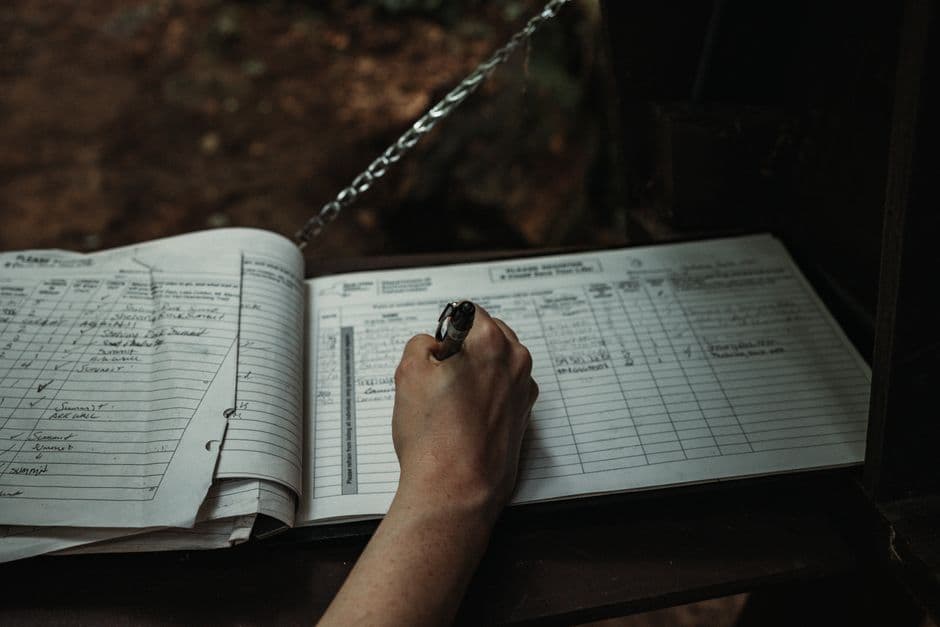
How do you know the hours written in a logbook are the hours the airplane actually flew? You don't, not from the logbook alone. The only honest way to verify an airplane's engine and airframe hours is to check the seller's numbers against records the seller never had a chance to touch, and then to check the airplane itself against both. A logbook is a handwritten claim. Everything else is evidence.
The good news is that an airplane leaves a paper trail in half a dozen places outside its own books, and the trails are easy to pull. Here is the order to work through them.
Start With the FAA's Copy, Not the Seller's
The FAA Civil Aviation Registry maintains registration, ownership and other submitted aircraft records, including many FAA Form 337 major repair and alteration reports. These records provide an independent source for checking an aircraft's documented history, but they are not a complete maintenance archive. Routine maintenance entries generally remain in the aircraft's records rather than being filed with the FAA, so buyers should compare the registry file with the seller's logbooks and available maintenance-provider records.
- Order the complete aircraft record. It arrives as a scanned file of every registration, bill of sale, lien, and FAA Form 337 the FAA has on that tail. Good answer: the ownership chain is unbroken and the 337s match what the seller described. Bad answer: a 337 for a wing replacement or engine mount repair that appears nowhere in the logbooks you were handed.
- Read every available Form 337. Under 14 CFR Section 43.9(d) and Part 43, Appendix B, major repairs and alterations generally require FAA Form 337, with certain exceptions. Some forms or their supporting records may include aircraft time in service, which can help verify the maintenance timeline. Compare these figures against the logbooks, but remember that Form 337 does not universally require an aircraft-total-time entry, and discrepancies should be investigated before assuming records were altered.
- Run a title and lien search. Escrow and title firms that work the Oklahoma City registry do this routinely. Good answer: clear title, no open liens. Bad answer: an unreleased lien from a lender that went out of business, which can stall a closing for months.
- Search the NTSB and FAA accident and incident databases by N-number. A reported event with no corresponding repair entry in the books is one of the loudest signals you will ever get.
Why It Matters: Damage history and missing hours usually travel together. The same owner who wanted an accident to disappear had a reason to want the hours to look different too.
Read the Logbooks as a Timeline, Not a Total
Most buyers flip to the last page, read the total time, and stop. That is like judging a used car by the odometer without looking at the service history. The value in a logbook is the sequence, because a forged total has to survive every entry that came before it.
- Plot hours per year. Write down the total time at each annual inspection and subtract. A privately owned piston single that flies 60 to 150 hours a year is normal. A trainer at 400 to 700 is normal. Bad answer: a year where the airplane allegedly flew nine hours, followed by a year it flew 420, with no change of ownership or operation to explain it.
- Check that hours never go backwards or sideways. Good answer: every entry's total is equal to or greater than the one before it. Bad answer: a tachometer reading that drops, with no entry documenting a tach replacement and the new instrument's starting number.
- Confirm the required records are actually there. 14 CFR 91.417(a)(2) requires the owner to keep total time in service for the airframe, each engine and each propeller, the status of life-limited parts, time since overhaul on anything overhauled on a time basis, current inspection status, and a current AD compliance list with method, date and AD number. Under 91.419 those records transfer to you at sale. Bad answer: "the AD list is in my head."
- Look for the dull entries. Pitot-static and transponder checks under 91.411 and 91.413 happen every 24 calendar months, ELT batteries get dated, oil changes stack up. These boring lines are hard to fake convincingly because there are so many of them. Good answer: a thick, tedious, consistent record. Bad answer: a suspiciously clean book with only annuals in it.
Flying411 keeps listings, specs and ownership guidance in one place, so you can compare how two airplanes with the same advertised total time are really documented.
Make the Engine Prove Its Own Time
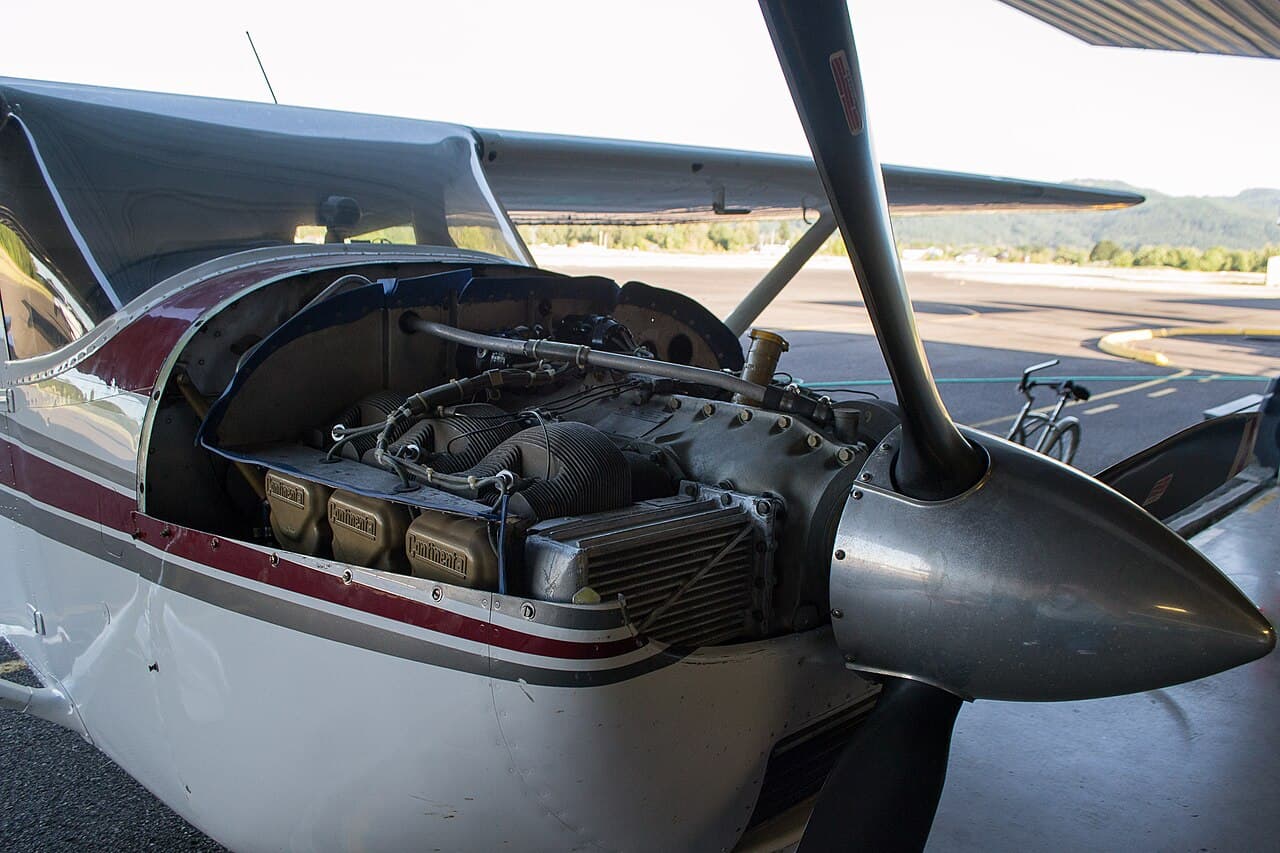
Engine time is where money hides. "500 since major" and "500 since a shop painted it and wrote a line" look identical in a logbook and differ by the price of an overhaul. Our guide on why engine overhaul quotes differ by thousands explains how much variation hides behind that one word.
- Demand the overhaul work order, not just the entry. A real overhaul produces a shop work order, a parts list, crankshaft and cylinder dimensional data, and 8130-3 or yellow tags for overhauled accessories. Good answer: a folder. Bad answer: one handwritten line reading "engine overhauled IAW manufacturer specifications" with a signature and nothing behind it.
- Know what "zero time" legally means. Under 14 CFR 91.421, only an engine rebuilt by the manufacturer or an agency approved by the manufacturer may start a brand-new record at zero time. A field overhaul does not erase total time since new. Bad answer: a shop-overhauled engine advertised as zero-timed.
- Separate TSN, TSMOH and time since top. A cylinder job is not an overhaul. If the seller quotes one number, ask for all three, and read up on what TBO actually means before you let a number reassure you.
- Download the engine monitor. Modern digital monitors log run time and flight count internally. The file does not care what the logbook says. Good answer: recorded hours that line up with the last several years of entries. Bad answer: the seller says the download cable is lost.
- Order the oil analysis history. Labs keep records by registration. A continuous run of samples is both a condition record and a hours record, because samples are taken at oil changes.
Heads Up: A low-time engine that sat for years is often worse than a mid-time engine that flew weekly. Corrosion does not show up in the hours column. If the history shows long idle stretches, read what to inspect on an airplane that sat for a year before you value it as low-time.
Check the Instruments That Count the Hours
Tach time and Hobbs time are two different clocks, and confusing them is how honest sellers end up quoting hours that are wrong by hundreds.
- Identify how aircraft time in service is recorded. Tachometers and Hobbs meters measure operating time differently, and neither automatically establishes the aircraft's legally recorded time in service. Under FAA guidance, maintenance time in service generally runs from liftoff to landing. Review the aircraft's established recording method, account for instrument replacements or recalibrations, and confirm that the logbooks maintain a consistent, explainable total-time record.
- Compare the panel to the last entry. The reading in front of you should be the last logged number plus whatever flying happened since. Bad answer: a panel reading 40 hours lower than the last annual.
- Look for an undocumented instrument swap. Good answer: an entry stating the old tach reading, the new tach reading and the aircraft total at the change. Bad answer: a shiny new tach, a very low number, and silence in the books.
Let the Airframe Tell On Itself
Metal wears at a rate that matches use, not paperwork. This is the cross-check that costs nothing and catches most of what the documents miss.
- Look at the high-touch spots. Rudder pedal faces, seat rails, the pilot-side door sill, the yoke grip, the step, the fuel cap chains. Good answer on a 1,200-hour airplane: crisp texture, legible placards. Bad answer: pedals worn smooth and seat rail holes elongated on an airplane claiming light use.
- Check seat rail hole wear specifically. It is a known inspection item on older Cessnas and a reliable use indicator.
- Count the patches. Doublers, repaired skins and replaced control surfaces all mean a working life. If none of it appears in the books, the books are short.
- Read the data plate. Serial number must match the registration, the airworthiness certificate and the logbooks. Bad answer: a serial that matches nothing, or a data plate that looks newer than the airplane.
Hours drive price more than almost anything else on the spec sheet, which is exactly why they get massaged. Our piece on how airframe hours affect aircraft value shows the size of the gap you are protecting yourself from.
Specific Signs the Books Have Been Altered
Forgery in general aviation is rarely sophisticated. It is usually a missing page, a rewritten book, or a line added in a hurry. Here is what to physically look for with the books in your hands.
- Removed pages. Check page numbers, stitching and staple holes. Good answer: an intact binding with sequential pages. Bad answer: torn stubs in the gutter, or page 47 following page 44.
- A "reconstructed" book. Entries spanning 1974 to 2005 in the same ink and the same handwriting mean somebody copied an old book into a new one. Even if innocent, the original is now unverifiable and the airplane is worth less.
- Whiteout, erasure, or overwritten digits. A legitimate correction is a line through the error with an initial and date, not a 3 turned into an 8.
- Signatures that do not check out. Every entry needs a name and a certificate number. The FAA's public airmen and repair station lookups let you confirm the holder exists. Bad answer: a certificate number with the wrong digit count, or a repair station that was never certificated.
- Dates that conflict with other paperwork. An annual signed in June while a Form 337 in the FAA file puts the airplane in a shop 600 miles away that same week.
- The "lost logbook" story. It happens honestly. It also happens to airplanes with histories. Either way, treat the total time before the gap as unproven and price it that way.
- A total that is too round. Real totals are 3,847.6, not 3,800.0.
Good to Know: Missing original logbooks can sometimes be reconstructed using maintenance-shop records, FAA documents, previous-owner information and other supporting evidence. However, reconstructed records may not establish every historical fact, and missing documentation can still affect airworthiness compliance and resale value. Buyers should distinguish between successfully reconstructed maintenance history and information that remains unverifiable.
Flying411 keeps aircraft listings and ownership research in one place, so you can compare how sellers document hours before you spend money on a trip to see the airplane.
The Checklist at a Glance
| What to check | What good looks like | Red flag |
| FAA aircraft record | Clean chain of title, every 337 also appears in the logbooks | FAA-filed repairs missing from the books |
| Hours per year | Steady, explainable usage curve | A year with impossible or near-zero time, unexplained |
| Total time continuity | Numbers never decrease; tach changes documented | Hours jump backwards or a page is gone |
| Engine overhaul proof | Work order, parts list, dimensional data, yellow tags | A single line entry and nothing behind it |
| "Zero time" claim | Factory rebuild under 14 CFR 91.421 | Field overhaul marketed as zero-timed |
| Panel vs last entry | Reading matches last logged time plus recent flights | Panel lower than the last annual |
| Wear points | Wear consistent with claimed hours | Worn pedals and seat rails on a "low-time" airplane |
| Signatures | Name and valid certificate number on every entry | Certificate numbers that do not check out |
| AD compliance list | Current, itemized, with method and date | Verbal assurances only |
| Prop and accessory logs | Separate records with their own time since overhaul | Prop time assumed equal to engine time |
Before You Sign
Walk away when the story and the paper disagree and the seller gets annoyed that you noticed. One honest gap in a 1960s logbook is life. A missing engine overhaul package, an undocumented tach swap and an accident in the NTSB file that nobody mentioned is a pattern, and patterns do not improve after closing. Walk away too if the seller will not release the logbooks for an independent review before the prebuy, or insists the books stay with the airplane until money changes hands.
Get a professional opinion any time real money is on the table, which is almost always. A prebuy inspection by a shop that knows the type, chosen by you and not by the seller, is the single best money you will spend. Ask that shop to review the records as a separate line item, not as something squeezed in while the cowling is off. For turbine and jet aircraft, insist on current maintenance tracking program reports and life-limited part cycle counts, because there hours are only half the clock. And if the books show an engine near the end of its run, price it against real numbers using our guides on when to overhaul an aircraft engine and the signs an aircraft is overpriced.
You cannot buy a clean history after the fact. You can only confirm one before you wire the money, and the work to verify an airplane's engine and airframe hours takes a few days and a few hundred dollars against a purchase that will cost you tens or hundreds of thousands.
When you are ready to compare listings, visitFlying411and see what is on the market today.