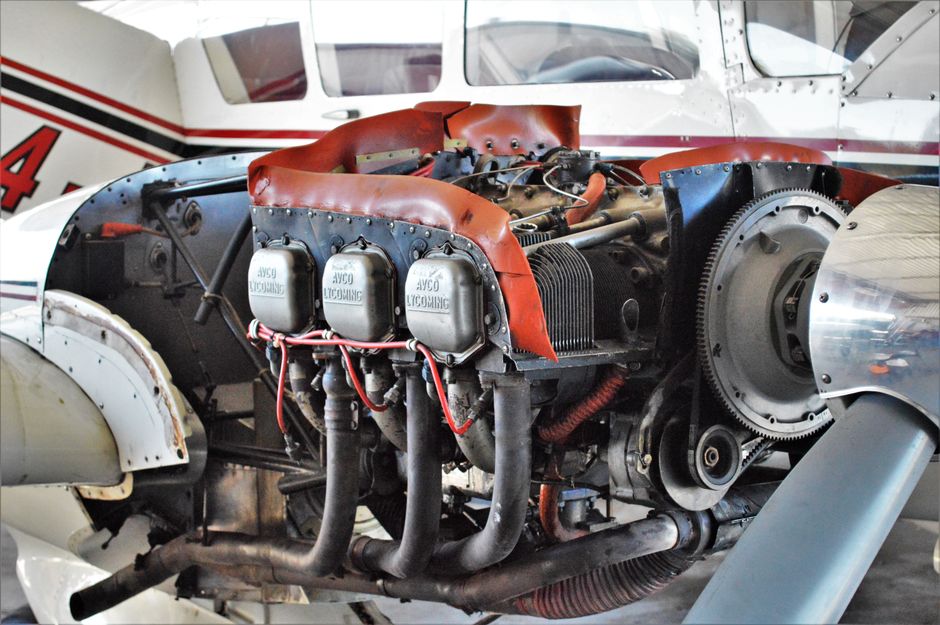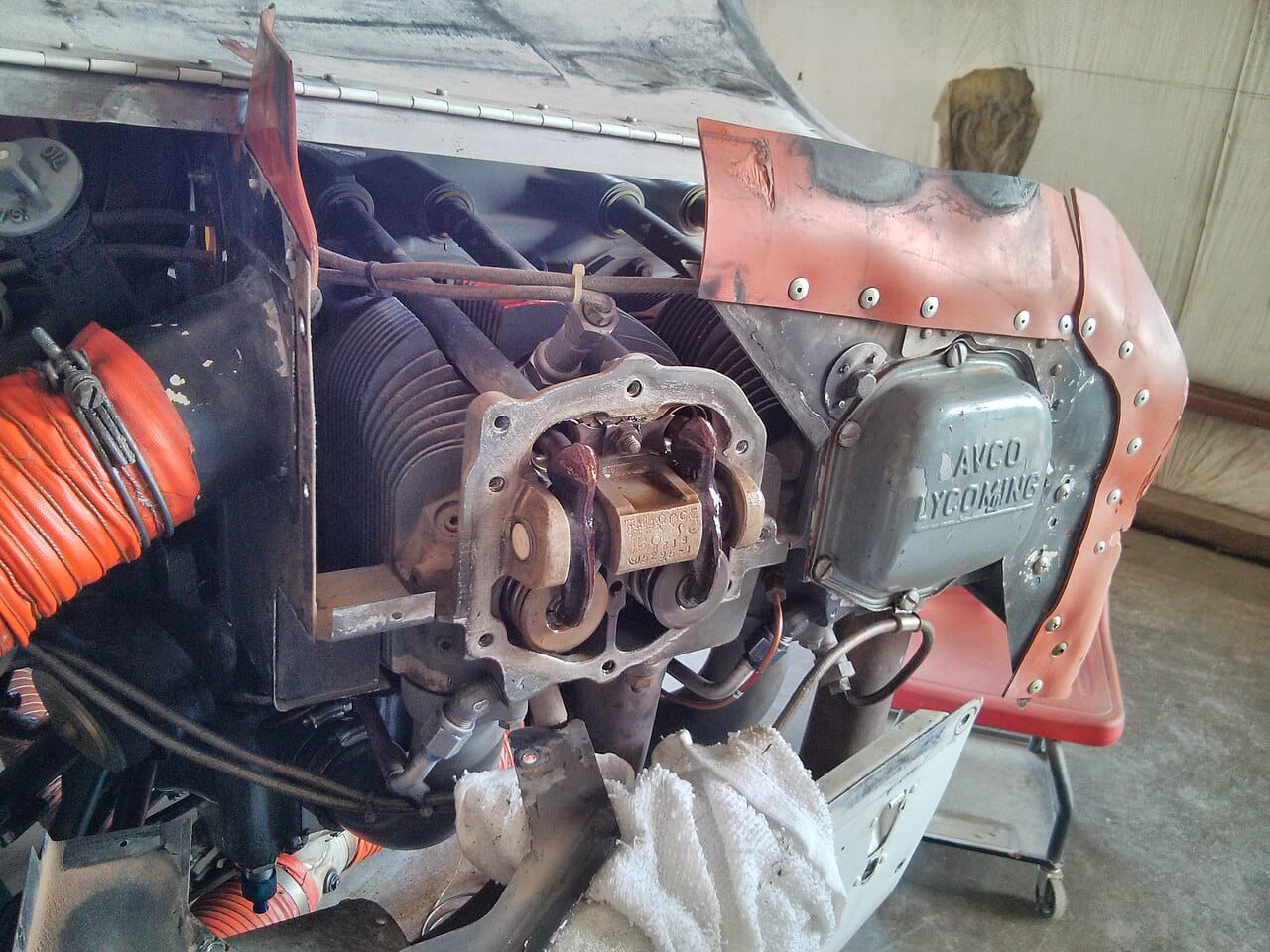
Most of the gap between two engine overhaul quotes is not labor. It is parts, and specifically which parts the shop has decided to throw away before anyone has even looked inside your engine. Two honest shops can quote the same Lycoming O-360 and land $15,000 apart without either one being wrong, because the word "overhaul" allows a wide legal range of outcomes.
Think of it like two bids on a kitchen remodel. One contractor plans to reface the cabinet doors; the other plans to rip out the boxes and start over. Both say "new kitchen" on the first page. The difference shows up on page three, and that is exactly where you need to read an overhaul quote.
Why do two overhaul quotes for the same engine differ by thousands?
Because the quotes are built on different assumptions about what gets replaced, what gets reused, and what is not included at all. There are five places almost all of the spread lives: the standard the shop overhauls to (service limits versus new limits), the mandatory replacement parts list the shop follows, whether cylinders are new or overhauled, whether accessories such as magnetos and the carburetor or fuel servo are overhauled, replaced or simply reinstalled, and how much firewall-forward work is folded into the number.
A sixth factor is honesty about the unknowns. A shop that quotes a hard number before teardown has either padded it or has written exclusions you have not read yet. A shop that quotes a base price plus a teardown report looks more expensive on paper and is often cheaper in the end. The engine decides, not the estimator.
What does the FAA actually mean by "overhauled"?
Less than most owners assume. Under 14 CFR Section 43.2, an engine may be described as overhauled after it has been disassembled, cleaned, inspected, repaired as necessary, reassembled, and tested using approved or FAA-acceptable standards and technical data. The regulation does not require an overhauled engine to meet new-part tolerances; that new-tolerance standard is specifically associated with the separate definition of a rebuilt engine. One can cost a third more than the other.
The regulation also separates overhaul from rebuilt. Section 43.2(b) sets the technical standard for describing an engine as rebuilt: it must be processed and tested to the same tolerances and limits as a new item. Separately, 14 CFR Section 91.421 allows a new maintenance record without previous operating history only for an engine rebuilt by the manufacturer or by an agency approved by the manufacturer. That is why a qualifying manufacturer or manufacturer-approved rebuilt engine may receive a new maintenance record without its previous operating history under 14 CFR Section 91.421, while a field-overhauled engine does not. Your field-overhauled engine carries its total time since new forever, which matters later when you sell. We cover that distinction in more detail in Lycoming Rebuilt vs Overhaul.
Good to Know: For Part 91 owners, the published time between overhaul is a recommendation, not a limit. Lycoming publishes its TBO figures in Service Instruction 1009, which also carries a twelve-year calendar recommendation; Continental publishes its own in a service information letter. Neither is an airworthiness requirement outside commercial operations, which is why condition and oil analysis matter more than the number on the tach.
What are mandatory replacement parts, and who decides?
The engine manufacturer's current overhaul instructions identify parts that are to be replaced during overhaul. Lycoming publishes its current list in Service Bulletin No. 240AA, while Continental addresses overhaul replacement requirements in its applicable maintenance and overhaul data. When an overhaul is performed using the manufacturer's current overhaul instructions, those specified replacement items are part of the overhaul process; another method would need to be acceptable to the FAA. Continental publishes equivalent requirements in its Standard Practice Maintenance Manual (M-0) and in the overhaul manual for each engine model.
The categories are consistent even when the exact part numbers are not. Expect every gasket, oil seal and O-ring to be replaced. Expect main and rod bearing inserts, piston rings, and specific fasteners — connecting rod bolts and nuts, certain gear retaining bolts and lockplates — to be new. On many models the exhaust valves, valve springs and oil pump gears or impellers are on the list too. Because revisions get added over the years, the current revision for your engine model is the only version that counts; ask the shop which revision it is working to.
It is the same logic a dentist uses with a needle. It does not matter that it looks fine. It is single-use, and the manufacturer has already decided. Separately, a few parts carry hard retirement lives rather than condition-based inspection, and those cannot be negotiated either — see Life Limited Parts Explained.
Here is the part owners miss: the mandatory list is the floor, not the quote. Every shop building a legal overhaul replaces those items, so they are roughly a constant between your two quotes. The thousands of dollars of difference come from the parts that are judged, not mandated.
What is the difference between service limits and new limits?
Service limits are the wear figures at which a part is still legal to reuse. New limits are the dimensions of a brand-new part. A crankshaft, camshaft or crankcase measured within service limits can go back in the engine, and the result is a perfectly legal overhaul — it just starts its next run already partway through its wear life.
Compare it to tires. A tire with legal tread is legal, and nobody says otherwise. But a tire at minimum legal tread and a brand-new tire are not the same purchase, and you would not expect them to cost the same. A service-limits overhaul is the airplane equivalent, and it is why some engines overhauled to the cheaper standard do not make it anywhere near the next published TBO.
A shop advertising a new-limits overhaul generally intends the engine and its reusable components to conform to tighter, new-part dimensional standards rather than merely remaining within allowable overhaul or service limits. Depending on the condition of the engine, that can require machining, reconditioning, exchange components or replacement parts, which is why these overhauls can cost substantially more. Those four items alone can account for most of the spread between your two quotes.
Flying411 keeps listings with factory rebuilt, freshly overhauled and runout engines side by side in one place, so you can compare what the market actually pays for each engine status before you spend money on your own.
Which parts cause the biggest price swings?
Cylinders, crankshaft, crankcase, camshaft and accessories, in roughly that order of how often they move a quote. The table below shows where a low bid and a high bid typically part company on a four-cylinder Lycoming. Figures are typical U.S. ranges as of 2025 and vary by region, shop rate and parts availability — treat them as the shape of the problem, not as your invoice.
| Line item | Lower quote approach | Higher quote approach | Typical spread |
| Cylinder assemblies (4) | Overhauled or exchange cylinders reinstalled | New factory cylinder assemblies | $2,500 – $5,500 |
| Crankshaft | Inspected, within service limits, reused | Reground to new limits or replaced new | $1,500 – $18,000+ |
| Crankcase | Inspected and reused as-is | Welded, machined and aligned, or replaced | $2,500 – $12,000+ |
| Camshaft and lifters | Reused if within limits | New cam, new lifter bodies | $1,200 – $3,500 |
| Mandatory parts kit (gaskets, seals, bearings, rings, hardware) | Included — required either way | Included — required either way | Little to none |
| Magnetos and harness | Reinstalled or 500-hour inspected | Overhauled or new mags, new harness | $1,200 – $4,500 |
| Carburetor or fuel servo | Reinstalled as removed | Overhauled or exchanged | $1,200 – $3,500 |
| Starter, alternator, oil cooler | Reused | Overhauled or new | $1,000 – $3,500 |
| Hoses, baffles, exhaust, mounts | Owner's responsibility, excluded | Included firewall-forward package | $2,000 – $8,000 |
| Removal and reinstallation labor | Excluded — "engine only" | 15 – 30 hours at $110 – $165/hr | $1,600 – $5,000 |
Add the middle of those ranges and you have explained a $15,000 to $20,000 difference without accusing anyone of anything. For model-specific numbers, our cluster has them broken out in Lycoming O-Series Engine Overhaul Cost and Lycoming IO-Series Engine Overhaul Cost.
Is the cheaper quote cutting corners?
Usually not — it is answering a different question. A service-limits overhaul with exchange cylinders and reused accessories is a legitimate product with a legitimate buyer: the owner who flies 60 hours a year, plans to sell within five years, or needs a flyable airplane now rather than a showpiece in four months. The problem is only that it gets compared to a new-limits overhaul as though they were the same thing.
What you should be suspicious of is not a low number. It is a low number with no teardown report, no list of what was replaced, and no statement of which standard the engine was built to. Ask for the yellow tags and the parts list. A shop that has nothing to hide hands you a line-by-line accounting of every serialized component, every exchange unit, and every item signed off within service limits rather than replaced.
Heads Up: Watch for "as removed" accessories quietly reinstalled on a freshly overhauled engine. An as-removed magneto has no inspection status at all, which is a different thing from an overhauled one. Our explainer on what "as removed" means for aircraft parts covers why the condition code changes the value.
There is one more thing the lower quote may be hiding, and it is not malice. It may simply not include the discoveries. Airworthiness directives that come due at overhaul — the long-running directive covering certain ECi cylinder assemblies on Continental 520 and 550 engines is the classic example — can turn a reuse plan into a replacement plan the day the cylinders come off.
What is usually left out of the quote entirely?
The firewall-forward items that are not part of the engine but are off the airplane anyway. This is where owners get surprised by $8,000 they did not budget. Common exclusions: engine mount inspection and new shock mounts, all flexible fuel and oil hoses, the exhaust system, engine baffles and seals, the oil cooler, the propeller and governor overhaul, new engine controls or cables, crating and freight, the core charge if your old parts are not serviceable, and the break-in oil and oil changes during the first 50 hours.
Also missing from most quotes: the prop. Many owners overhaul the propeller at the same time because the labor to pull it is already paid for, and a prop overhaul commonly runs $2,500 to $6,500 depending on type as of 2025. Skipping it is reasonable. Being surprised by it is not.
Finally, ask about the test run. A test cell run with instrumented break-in costs money and produces a data sheet. An engine broken in on the airframe by the owner during the first flights is the cheaper path and puts more responsibility on your right hand. Both are normal; only one shows up on the invoice.
Flying411 keeps maintenance and ownership guides for the same airframes it lists in one place, so you can compare overhaul economics against what a comparable airplane is asking before committing to a shop slot.
Should I just buy a factory rebuilt or exchange engine instead?
For many popular four- and six-cylinder engines, the factory rebuilt exchange is the easiest apples-to-apples comparison you can make, and it often sits between the two shop quotes rather than above both. You pay a fixed exchange price, you get a zero-time maintenance record under 91.421, you get a manufacturer warranty expressed in both hours and months, and you get the airplane back weeks sooner because the engine ships from inventory rather than waiting on your crankcase to come back from a machine shop.
What you give up is control and, sometimes, cash. Factory rebuilt and factory new prices rise most years, and a four-cylinder exchange has moved well past what a service-limits field overhaul costs. You also give up the relationship: a good local shop that knows your airplane will chase a cold cylinder or a weeping seal in a way a distributor cannot. Our side-by-side on the decision is in Should I Overhaul or Replace My Lycoming Engine? and the broader version in Should You Replace or Overhaul Your Aircraft Engine?
If you are selling rather than keeping, run the numbers before you spend anything. A fresh overhaul rarely returns its full cost in asking price, which is the point of Selling an Aircraft With a Runout Engine.
What should I ask before I sign?
Eight questions will normalize any two quotes into something you can actually compare. Put them in an email so the answers are in writing.
The eight questions
- Are you overhauling to service limits or new limits, and will the logbook entry say which?
- Which revision of the manufacturer's mandatory replacement bulletin are you working to?
- Are the cylinders new factory assemblies, overhauled, or exchange units — and from whom?
- Is the crankshaft being reused within service limits, reground, or replaced? Same question for the camshaft, lifters and crankcase.
- Which accessories are overhauled, which are exchanged, and which go back on as removed?
- What is excluded? Specifically: hoses, exhaust, baffles, oil cooler, engine mounts, prop, governor, freight, core charges.
- Will I receive a teardown report with measurements before parts are ordered, and will I approve overages in writing?
- What is the warranty, in hours and in months, and who honors it if the engine is 600 miles from your shop?
Pro Tip: Ask each shop to quote your engine both ways — service limits and new limits — on the same sheet. The internal spread inside one shop's own quote tells you more about your engine's actual condition than the difference between two shops ever will.
Before any of this, confirm the engine genuinely needs the work. Compression numbers, oil consumption, oil analysis trends, filter contents and a borescope tell a better story than hours alone, and our guides on when to overhaul an aircraft engine and the aircraft engine overhaul requirements checklist walk through the evidence. If you want to know which components are most likely to drive the bill upward once the case is split, 10 Lycoming Engine Parts Most Often Replaced is the short list.
Flying411 keeps engine, maintenance and valuation guides alongside live aircraft listings in one place, so you can compare a freshly overhauled airplane against a midtime one without hunting across half a dozen sites.
At a Glance
Two engine overhaul quotes differ by thousands because 14 CFR 43.2 lets one shop build to the manufacturer's service limits and the other build to new-part tolerances, and both results are legally an overhaul. The mandatory replacement parts published in Lycoming Service Bulletin 240 or Continental's standard practice manual — gaskets, seals, O-rings, bearings, rings, rod bolts and specific hardware — are a constant in every honest quote, so they are almost never the cause of the gap. The gap lives in cylinders, crankshaft, crankcase, camshaft and accessories, plus roughly $2,000 to $8,000 of firewall-forward items that cheaper quotes exclude and richer ones include. Ask which standard, which bulletin revision, which parts are new versus reused, what is excluded, and what the warranty covers in hours and months. Get a teardown report before parts are ordered, keep the yellow tags, and remember that only the factory may call an engine rebuilt and reset the record to zero time. Price the factory exchange too — it is often the clearest benchmark in the whole comparison.
When you are ready to compare listings, visitFlying411and see what is on the market today.