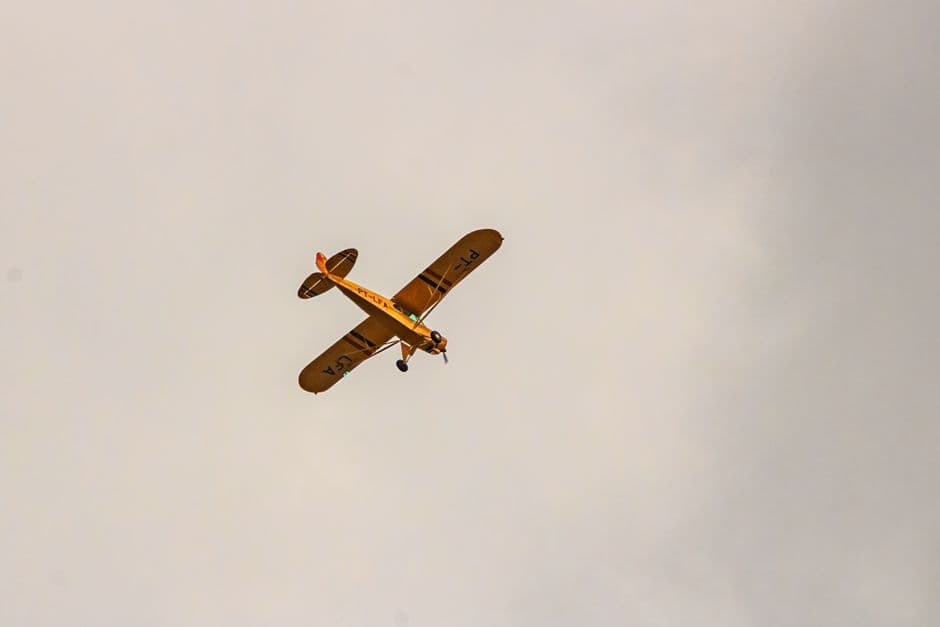
If your goal is a first taildragger, the Van's RV-6A is the wrong airplane to shop for — the "A" in Van's model names means tricycle gear. The taildragger is the plain RV-6. That one letter decides whether you are comparing a Piper Super Cub to a tailwheel airplane at all, and it is the single most common mix-up we see from first-time buyers in this corner of the market.
Once you sort that out, the real question gets interesting. A PA-18 Super Cub and an RV-6 are both two-seat tailwheel airplanes with a Lycoming four-cylinder up front, and that is roughly where the similarity ends. One lands on a gravel bar in 300 feet. The other crosses three states before lunch. They cost very different money to buy, they are insured on completely different terms, and they ask different things of a pilot who has never flown from behind the wheel before.
Below is the head-to-head, then the parts that actually move your budget: purchase, insurance, training, maintenance and resale.
| Item | Piper PA-18-150 Super Cub | Van's RV-6 (taildragger) |
| Certification | Type certificated (FAA TCDS 1A2) | Experimental, Amateur-Built |
| Landing gear | Conventional (tailwheel) only | RV-6 is tailwheel; RV-6A is nosewheel |
| Seating | Two, tandem | Two, side by side |
| Typical engine | Lycoming O-320, 150 hp; TBO depends on engine history, up to 2,600 hr for eligible engines | Lycoming O-320 (150/160 hp) or O-360 (180 hp); TBO depends on engine history, up to 2,600 hr for eligible engines |
| Gross weight | 1,750 lb standard | 1,600 lb (1,375 lb for aerobatics) |
| Fuel capacity | 36 gallons | 38 gallons |
| Cruise speed | About 100–115 mph (87–100 kt) | About 180 mph (around 157 kt) at 75% power, Van's published figure for 160 hp |
| Stall speed | About 43 mph, flaps down | About 51 mph |
| Takeoff ground roll | Piper published roughly 200 ft at gross; less on big tires | Van's published figures in the 400–600 ft range; plan on more |
| Fuel burn in cruise | About 8–9 gph | About 8 gph with the O-320 |
| Rough miles per gallon | Roughly 10–11 nm per gallon | Roughly 19–20 nm per gallon |
| Aerobatics | Not approved | Builder-approved, +6/-3 g at 1,375 lb |
| Floats, skis, big tires | Yes, all three, by STC | No |
| Annual inspection | Annual inspection by an A&P with Inspection Authorization | Condition inspection by an A&P or the holder of the repairman certificate for that aircraft |
| Who may do maintenance | Owner limited to Part 43 preventive maintenance | Owner may do nearly all of it |
The "A" problem, and why it matters before you spend a dollar
Van's Aircraft has used the same naming convention for forty years. RV-4, RV-6, RV-7, RV-8 are tailwheel. RV-6A, RV-7A, RV-8A, RV-9A, RV-10, RV-14A are nosewheel. So if you set a saved search for an RV-6A because the ad photos looked right, you are shopping for a tricycle-gear airplane and you will arrive at the hangar with a tailwheel endorsement you did not need.
That is not an argument against the RV-6A. It is a fast, efficient, pleasant two-seater, and if your real goal is going places rather than mastering the tailwheel, it may be the better buy. We cover what to look at on one in our guide to buying a Van's RV-6A. Just be honest with yourself about which goal you are buying for, because the two airplanes do not swap.
Heads Up: Van's nosewheel models have a known soft-field weakness. The nose gear leg can dig in on rough or soft ground and tip the airplane over, and Van's has published service information and an improved leg design in response. If you were buying an RV-6A partly to use grass strips, that history belongs in your decision.
For the rest of this article, when we say RV-6 we mean the taildragger.
What each one costs to buy
The gap here is large and it has been large for years. A sound, flying PA-18-150 has been a six-figure airplane for well over a decade. Through 2025, clean unrestored examples have generally traded in the $150,000 range and up, with fresh restorations, big-tire conversions and desirable modifications climbing well past $250,000. Supply is the reason. Piper stopped building them in the 1990s, and the airplanes that remain are mostly in the hands of people who do not want to sell.
A flying RV-6 or RV-6A is a fraction of that. Through 2025 most have changed hands well under half the price of a comparable Super Cub, with engine time, panel and build quality driving the spread far more than the year on the data plate. Prices move, so treat any figure you read — including ours — as a starting point and check what is actually listed this week.
Why the number in the ad is not the number on the bill of sale is its own subject; see our piece on asking price versus actual sale price and the used aircraft negotiating playbook.
Financing is not symmetrical
Most aircraft lenders will write a loan on a certificated Super Cub without blinking. Experimental amateur-built aircraft are a different conversation. Some lenders decline them outright, others require a larger down payment and charge a higher rate, and the loan term is often shorter. Plan on arranging experimental financing before you shake hands, not after.
Why It Matters: If you have $60,000 in cash, you can own an RV-6 outright and still have money for fuel. The same $60,000 is a down payment on a Super Cub, which means a monthly note sitting on top of insurance, hangar and maintenance. Two airplanes, two completely different household budgets.
Keep in Mind: With a homebuilt, you are buying one person's workmanship, not a factory's. A pre-buy done by someone who knows RVs specifically — wiring, fuel system plumbing, control surface balance, the builder's logs and photos — is worth more than a generic look-over. Our explainer on pre-buy versus annual inspections spells out why the two are not the same thing.
Flying411 keeps Super Cubs, RVs and the rest of the tailwheel market in one place, so you can compare asking prices, engine time and panels side by side instead of chasing listings across half a dozen sites.
Insurance: where the two really diverge
This is the line item new tailwheel buyers underestimate most, and the two airplanes get there from opposite directions.
Hull insurance is priced largely as a percentage of the hull value you declare. For a low-time pilot with no tailwheel experience, rates in the 2% to 4% range of hull value have been common in recent years, dropping toward 1% to 2% once you have a few hundred hours in type and a clean record. Run that math on a Super Cub insured for $200,000 and you are looking at thousands of dollars a year, simply because the airplane is worth so much. Run it on an $85,000 RV and the same percentage produces a much smaller bill.
Then experimental status pushes the other way. Many underwriters surcharge amateur-built aircraft, a few will not write them for a low-time pilot at all, and the pool of carriers willing to quote is smaller than it is for certificated airplanes. So the RV's advantage is real but narrower than the price difference alone suggests.
What underwriters want before they quote
Expect an open-pilot warranty and training requirements written into the policy. For a Super Cub, a dual requirement of 10 to 25 hours in make and model is typical for a pilot with no tailwheel time. For an RV, insurers lean on transition training — Van's has recommended it for decades, and there are instructors who do nothing else. Budget for that training as part of the purchase, not as an optional extra, because your policy will probably require it in writing.
Good to Know: Liability-only coverage is dramatically cheaper on both airplanes and is a legitimate choice if you own the aircraft outright and could absorb the loss. A lender will not allow it. That is one more way financing a Super Cub raises your true cost of ownership.
If you want a feel for how these quotes are built, our first-airplane guide walks through the same underwriting questions on a much cheaper hull.
What you can actually do with each
Here is the part no spreadsheet captures. These airplanes do not compete. They barely overlap.
The Super Cub's job
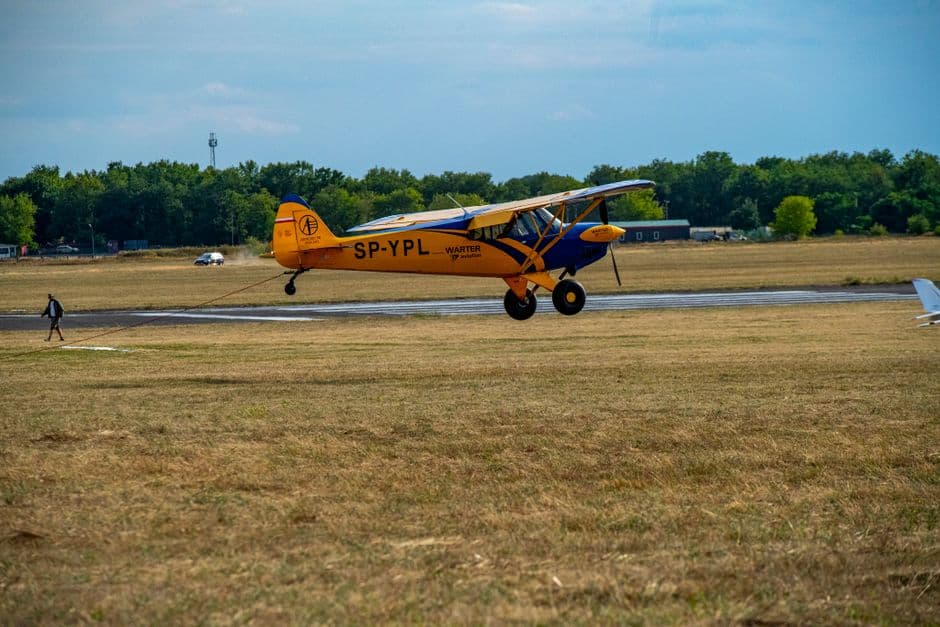
The PA-18 exists to get into and out of places other airplanes cannot use. Piper's published takeoff run is about 200 feet at gross weight, and on 31-inch tires with a skilled pilot and a headwind it is shorter still. Flaps down, it stalls around 43 mph, which means the whole approach happens at speeds where mistakes cost you a bent gear leg instead of an airframe. Put it on floats, skis or tundra tires and the mission list grows again: lakes, snow, river bars, hunting camps, remote cabins, glider towing, survey work, pipeline patrol.
The price is speed. At 100 to 115 mph true, a 400-nautical-mile trip is a four-hour-plus flight with a fuel stop, in a tandem cabin with a bench of a back seat and very little room for bags. Think of the Super Cub as a pickup truck with good tires — enormously capable within thirty miles of where you parked it, tiring on the interstate.
The RV-6's job
The RV-6 is built around going fast on a small engine. Van's published cruise for a 160-horsepower RV-6 is about 180 mph at 75% power, on roughly eight gallons an hour. That is close to twice the miles per gallon of the Cub. The same 400-nautical-mile trip is under three hours, nonstop, with two people sitting side by side where they can talk and share a chart.
It also rolls. Van's designed the RV-6 for sport aerobatics within its recommended aerobatic gross weight of 1,375 pounds and structural limits of +6/-3 g. Maneuvers such as loops and rolls are part of its appeal, but Van's specifically discourages recreational spinning because the RV-6 can develop rapid rotation and requires deliberate recovery technique. Aerobatic flying must also remain within the individual aircraft's approved operating limitations, demonstrated capabilities and weight-and-balance limits. Add the large RV formation and fly-in community, and you have an airplane with an active social scene.
What it will not do is operate off a 600-foot gravel bar. The RV wants pavement or well-kept grass, a reasonable run and a smooth surface. Its touchdown speed is roughly half again the Cub's, and energy goes up with the square of speed — which is exactly why a directional mistake in an RV is a bigger event than the same mistake in a Cub.
Fun Fact: Van's RV-6 and RV-6A together are one of the most-built kit designs in history, with well over two thousand completed and flying. Production of the kit ended around 2001 when the RV-7 replaced it, so every one you look at is a used airplane with a builder's name attached. Our comparison of the RV-7 and RV-8 covers what changed after the -6.
Learning to fly it: which is the kinder teacher
Either way you need a tailwheel endorsement under 14 CFR 61.31(i): logged training and an instructor's sign-off covering normal and crosswind takeoffs and landings, wheel landings and go-arounds. Nothing about that rule changes between the two airplanes. What changes is how forgiving the airplane is while you learn.
The Super Cub is the better teacher, and it is not close. Everything happens slowly. Approach speeds in the 55 to 65 mph range give you time to see a swerve start and fix it. Instructors who teach tailwheel in Cubs are everywhere, and rental Cubs and Champs exist in a way rental RVs do not. The visibility over the nose in a three-point attitude is poor, which is itself part of the lesson.
The RV-6 is not a difficult airplane — plenty of pilots get their endorsement in one — but it is a quicker one. The gear is responsive, the airplane is light on the controls, and touchdowns happen around 60 knots. Most insurers will insist you arrive with an endorsement already in hand and then add transition dual on top. That is a sensible requirement, not an insult.
Pro Tip: Get your tailwheel endorsement in a rented Cub or Champ before you buy either airplane. It costs a couple of thousand dollars, it satisfies most of what an underwriter wants to see, and it tells you honestly whether you enjoy flying a taildragger before you own one.
Good to Know: Flight training in experimental aircraft was tangled up in letters of deviation authority after a 2021 FAA policy change. Congress addressed it in the FAA Reauthorization Act of 2024, which removed the LODA requirement for most training conducted in an owner's own experimental aircraft. If you buy an RV-6 and want dual in it, that path is open again.
Flying411 keeps tailwheel listings and the ownership guides that go with them in one place, so you can compare what a Cub and an RV really ask of a new tailwheel pilot before you commit.
Maintenance, parts and who gets to sign it off
The Super Cub is a certificated airplane, so it needs an annual inspection signed by an A&P holding Inspection Authorization, and your own hands-on work is limited to the preventive maintenance list in Part 43 Appendix A. Expect a routine Cub annual in the low four figures, more if the shop finds corrosion in the steel tube structure or tired fabric.
Two Cub-specific cost items deserve planning. The first is fabric. A covered airframe can last 15 to 25 years or longer depending on climate, storage and maintenance, while a full recover can exceed $30,000. The second is airworthiness directive compliance. FAA AD 2015-08-04, which superseded earlier wing lift-strut directives including AD 99-01-05 R1, applies to affected PA-18 aircraft and requires recurring inspections of applicable wing lift struts and attachment forks unless an approved terminating action has been completed. During the prebuy, verify the specific aircraft's strut configuration, inspection history and AD compliance records. Parts support remains strong through suppliers such as Piper, Univair, Dakota Cub and Airframes Alaska.
The RV-6 is experimental amateur-built, which changes its maintenance rules. It generally requires a condition inspection within the preceding twelve calendar months, performed by someone authorized under its FAA-issued operating limitations. An A&P can perform this inspection without an Inspection Authorization, as can the qualified original builder holding the aircraft-specific repairman certificate. Following the FAA's 2025 MOSAIC changes, appropriately rated light-sport repairmen may also conduct condition inspections on eligible experimental amateur-built aircraft when the operating limitations permit it. A second owner may qualify through this route rather than automatically relying on an A&P. Between inspections, owners can generally perform and document maintenance themselves.
Airworthiness directives on the airframe do not apply to an amateur-built aircraft, but ADs against a certificated engine, propeller or appliance are generally treated as applying wherever that part is installed. Ask your mechanic. Van's also publishes service bulletins, and they matter even though they are advisory — the 2014 bulletin on main wing spar web cracking in the RV-6, -7 and -8 series is the one a buyer should confirm has been inspected and documented.
Keep in Mind: Both airplanes commonly use Lycoming four-cylinder engines with traditionally recommended overhaul intervals around 2,000 hours. However, Lycoming Service Instruction 1009BF, issued July 20, 2026, allows eligible factory-new and factory-rebuilt O-320 and O-360 engines to qualify for recommended TBOs of up to 2,600 hours. Actual intervals depend on engine model, configuration and maintenance history. With illustrative overhaul costs of $30,000 to $40,000, a conservative 2,000-hour planning interval produces an engine reserve of approximately $15 to $20 per flight hour.
Resale, and what it costs you to be wrong
Super Cubs have been one of the most reliably strong holds in general aviation. The design is out of production, the mission is irreplaceable, and demand from Alaska, the mountain west and the backcountry community does not soften much. Owners routinely sell for what they paid or more. The practical effect is that a Super Cub is an expensive airplane to buy and a comparatively cheap airplane to have owned, because the capital largely comes back.
RVs hold value well for homebuilts, but the ceiling is set by the builder. A beautifully built RV-6 with a mid-time engine, clean wiring and a modern panel sells quickly. A rough one with thin documentation sits, and discounts hard. Experimental resale rewards paperwork more than certificated resale does: build logs, photos, the airworthiness certificate and operating limitations, weight and balance, engine and prop records, and any avionics work.
Why It Matters: If you buy the wrong Super Cub, the market will probably bail you out. If you buy the wrong RV, it will not. That asymmetry is a real part of the risk calculation for a first-time buyer, and it is the strongest financial argument the expensive airplane has.
For the sequence of documents, inspections and money movements that protect you either way, work through our aircraft purchase checklist before you send a deposit.
Conclusion
For most people choosing a first taildragger, the honest call goes like this. If you want to learn stick and rudder flying properly, use short grass and gravel strips, and you can afford a six-figure airplane that will likely give the money back, buy the Super Cub. It is slow, it is loud, it carries almost nothing, and it is the better teacher and the safer financial bet.
If your flying is trips — weekends 300 miles away, two people side by side, maybe some aerobatics and formation with the RV crowd — buy the RV-6. It costs a fraction as much to acquire, it insures for less because the hull is worth less, you can legally wrench on it yourself, and it goes nearly twice as fast on the same fuel. Accept that it wants real runways, that transition training is non-negotiable, and that the builder's quality is the whole ballgame.
And if you find yourself drawn to an RV-6A, that is fine — just know you have stopped shopping for a taildragger. If cost per mission is what is driving you, compare the Cub against its modern rivals in our Husky vs Super Cub vs Carbon Cub ownership cost breakdown, or look at a four-seat alternative in Cessna 180 vs 185.
Flying411 keeps Super Cub, Husky, Cessna 180 and Van's RV listings in one place, so you can compare hours, mods and panels across the whole tailwheel market in a single sitting.
When you are ready to compare listings, visitFlying411and see what is on the market today.
Frequently Asked Questions
Is the Van's RV-6A a taildragger?
No. The "A" suffix on a Van's model means tricycle gear. The RV-6 is the tailwheel version and the RV-6A is the nosewheel version of the same airframe. They were built from the same kit family and look nearly identical in photos, so always confirm the gear configuration in the listing and on the aircraft registration before you travel to see one.
Can a low-time pilot get insured in a Super Cub?
Usually yes, but with conditions. Underwriters commonly require a tailwheel endorsement plus 10 to 25 hours of dual in make and model before you fly solo, and the premium reflects both your experience and the hull value you declare. Because Super Cub hull values are high, the dollar premium is high even at a reasonable rate. Getting your endorsement and some tailwheel time before you apply will improve both the price and the number of carriers willing to quote.
Who can do the annual inspection on an RV-6?
An experimental amateur-built aircraft generally requires a condition inspection every twelve calendar months. An A&P or the aircraft's qualified original-builder repairman may perform it. Under updated FAA rules, appropriately rated light-sport repairmen may also conduct these inspections when permitted by the aircraft's operating limitations. A second owner cannot inherit the original builder's certificate but may qualify for separate light-sport repairman privileges.
Which is cheaper to own per year?
The RV-6, in almost every case. It insures for less because the hull is worth less, the owner may legally perform most maintenance, the condition inspection costs less than a certificated annual, and it burns similar fuel while covering nearly twice the distance per gallon. The Super Cub's counterargument is resale: the capital you tie up in it has historically come back, which the RV's cannot be counted on to do.