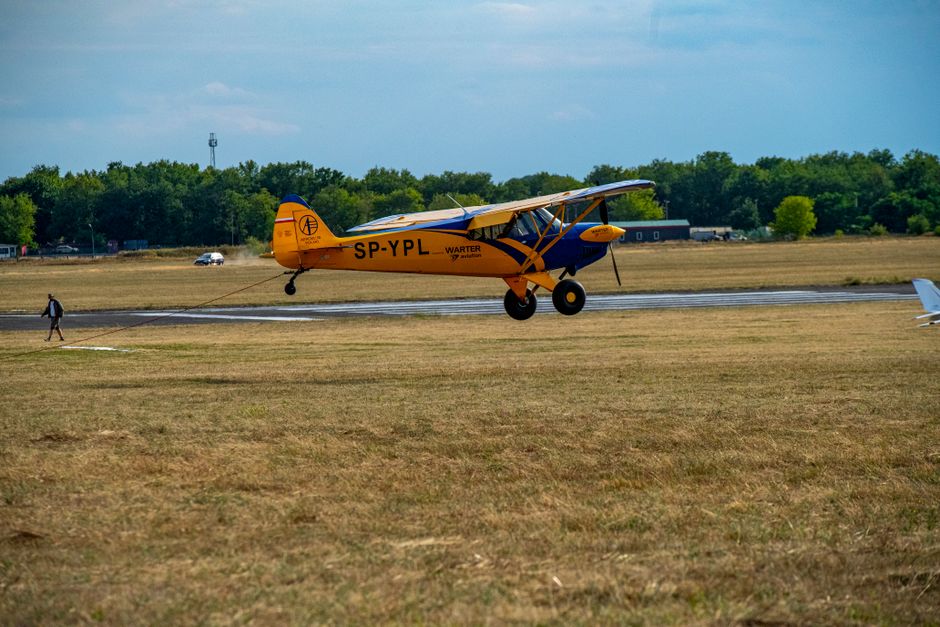
The Super Cub gets cast as the thrifty choice in this group because it is the oldest design and the simplest airframe. That is not how the money works anymore. A well-sorted PA-18-150 now costs about what a factory-built Carbon Cub kit costs, it burns more fuel per hour than the Carbon Cub, and it is far and away the most likely of the three to hand you a five-figure surprise in your first year of ownership. If you are trying to work out the cheapest backcountry two-seater to own, the airplane's age tells you almost nothing useful.
What matters is the order of the cost buckets. Purchase price and what happens to that money over ten years dwarfs fuel. Fuel dwarfs the annual inspection. And the certification basis of the airplane, meaning whether it is a certified type, a light-sport aircraft or an experimental, quietly decides who is legally allowed to turn a wrench on it, which changes your maintenance bill more than any spec on the brochure.
This is a real decision with real money attached. The spread between the cheapest and the most expensive of these three, over ten years and 1,000 hours, runs well into six figures.
What "Cheapest to Own" Actually Means Here
Aircraft ownership costs fall into three buckets, and pilots almost always argue about the smallest one.
The first bucket is capital cost: what the airplane does to your money while you own it. If you buy new and the airplane loses value, that loss is a real expense even though no check ever gets written. If you buy a type that has been climbing in value, that bucket can be zero or even negative.
The second is fixed cost: hangar, insurance, state registration or property tax, the annual inspection, and database or avionics subscriptions. You pay these whether the airplane flies 20 hours or 200.
The third is variable cost: fuel, oil, tires, brakes, and the money you set aside each hour toward the eventual engine overhaul and recover. This is the bucket everyone talks about, and for a low-time owner flying 50 hours a year, it is often the smallest of the three.
Keep that ordering in mind as you read, because it explains why the airplane with the lowest fuel burn is not automatically the cheapest to own, and why the oldest airplane is not automatically the bargain.
Why It Matters: At 75 hours a year, a $60,000 difference in purchase price spread over ten years costs you roughly $6,000 a year in capital, before a single gallon of avgas. A 4 gph difference in fuel burn costs about $2,000 a year at the same usage. The sticker matters more than the gauge.
Purchase Price and What Happens to Your Money
Piper PA-18 Super Cub
Piper stopped building the PA-18 in 1994, and the type certificate, 1A2, has changed hands since. There is a fixed supply of airframes chasing rising demand, and the market has behaved accordingly. Through 2025, clean, honest PA-18-150s with reasonable time and no damage history have generally traded in the mid-six-figure-adjacent range for light aircraft, which is to say well north of $150,000, with heavily modified and freshly restored examples trading higher still. Type club members and brokers have watched the same airplane appreciate steadily for two decades.
That appreciation is the Super Cub's single biggest financial advantage. A certified airplane that holds or grows its value effectively hands your capital cost back to you when you sell. It is the vintage pickup truck of the bush-plane world: it costs real money to buy, but it does not melt.
Aviat Husky
Aviat still builds Huskies in Afton, Wyoming, and a new A-1C carries a list price in the low-to-mid $400,000 range as of the mid-2020s, depending on avionics, floats provisions and gear. That is the key difference from the Super Cub: there is a steady stream of new airframes, so used values track the new price rather than scarcity. A 1990s A-1 or A-1A sits at a small fraction of new. A late-model A-1C-200 with a glass panel sits close to it.
Used Huskies depreciate gently rather than steeply, and older ones have largely flattened out. If you buy a twenty-year-old A-1B, your capital cost over the next ten years is likely to be modest. If you buy new, plan on a meaningful hit in the first five years, the way you would with any new certified single.
CubCrafters Carbon Cub
Carbon Cub is a family, not one airplane, and the variant you pick changes the math completely. The factory-built Carbon Cub SS is a special light-sport aircraft (S-LSA) with a 1,320-pound gross weight. The EX-3 is an amateur-built kit and the FX-3 is the same airplane finished under CubCrafters' builder-assist program; both fly as experimental amateur-built at a 2,000-pound gross weight. The XCub is the fully certified Part 23 model and the most expensive of the lot.
Factory-built Carbon Cubs have listed north of $300,000 in recent years and the certified XCub higher again. The kit route lands well below the factory price, but you pay the difference in time, typically many hundreds of hours of your own labor, plus the risk that a partly built project is worth less than the sum of its boxes.
Carbon Cubs have held value well, helped by strong demand and a factory that keeps supporting older serial numbers. But experimental resale is a narrower market than certified resale, and a buyer will look closely at who built the airplane and how well.
Flying411 keeps backcountry taildraggers from every certification basis in one place, so you can compare a certified Husky, a restored Super Cub and an experimental Carbon Cub side by side instead of chasing three separate corners of the market.
Fuel, Oil and the Hourly Running Cost
Here the Carbon Cub wins, and it is not close.
The Super Cub's Lycoming O-320-A2B makes 150 horsepower and burns roughly 8 to 9 gallons an hour at a normal cruise power setting, delivering about 100 mph true. The Husky A-1C-180 runs a 180-horsepower Lycoming O-360 and burns roughly 9 to 10 gallons an hour, giving you a genuine cruise in the 125 to 130 mph range. The Carbon Cub's CubCrafters CC340 and CC363i engines make 180 to 186 horsepower for takeoff but are designed to cruise at a low, efficient continuous power setting, and CubCrafters advertises around 5 gallons an hour in cruise. Owners generally back that up.
With 100LL averaging somewhere in the $6 to $7 a gallon band across the country through 2025, that 4 gph gap between a Husky and a Carbon Cub is about $26 an hour. Over 100 hours, that is $2,600 a year. The Carbon Cub sips like a big motorcycle while the Husky drinks like a small V8.
Fuel grade is part of the equation
The Super Cub's low-compression O-320-A2B was certified on 80/87 avgas and is one of the classic candidates for an autofuel supplemental type certificate, the kind Petersen Aviation and EAA have held for decades. If your field sells mogas or you can legally truck it in, that is another dollar or more off every gallon. CubCrafters approves premium unleaded automotive fuel for its engines as well. The Husky's O-360 is the one most likely to keep you tied to 100LL.
Good to Know: An autofuel STC is not a blanket permission slip. It is specific to the engine model, the airframe, and sometimes an altitude limit, and it has to be in the aircraft records with the correct placards installed. Check that the paperwork exists before you count the savings.
Overhaul reserve
Lycoming's current Service Instruction 1009BF, issued in July 2026, extends recommended TBO to as much as 2,600 hours for qualifying factory-new and factory-rebuilt O-320 and O-360 engines. The applicable interval still depends on the exact engine model, configuration and overhaul history, so verify the installed engine against the current TBO schedule before calculating an overhaul reserve.
CubCrafters builds its engines on Lycoming-pattern parts, and the sensible planning assumption is to reserve at the same rate and confirm the current published overhaul interval with the factory before you buy. The wrinkle is sourcing: a CC340 or CC363i goes back through CubCrafters rather than to any Lycoming shop in the country, which is convenient but not competitive.
Propellers are a quiet difference. The Husky A-1C typically carries a constant-speed Hartzell, which adds an overhaul cost of several thousand dollars on its own interval plus its own AD exposure. Most Super Cubs turn a simple fixed-pitch metal prop, often a Borer for climb. Carbon Cubs usually run a light composite fixed-pitch prop. Fixed-pitch is cheaper to own, full stop.
Inspections, ADs, and Who May Legally Maintain It
This is the section that separates the three airplanes most sharply, and it is the one buyers think about least.
The Husky and Super Cub are type-certificated aircraft. They require an annual inspection approved for return to service by an appropriately authorized person, replacement parts must be eligible for installation, and major alterations require approved data and the applicable maintenance records, normally including FAA Form 337. Minor alterations do not automatically require an STC or field approval. Every applicable Airworthiness Directive is mandatory, with one-time or recurring compliance determined by the individual AD.
The Carbon Cub SS, as an S-LSA, needs an annual condition inspection rather than an annual inspection. That can be signed by an A&P or by a person holding a Light-Sport Repairman certificate with a maintenance rating, which is earned in a two-to-three-week course rather than through the full A&P path. Shops that do LSA condition inspections routinely quote less than a certified annual because the paperwork and the parts rules are lighter.
An experimental amateur-built EX-3 or FX-3 is different again. If you built the majority of it, you can apply for a repairman certificate for that specific airplane and sign your own condition inspections for as long as you own it. You can also do essentially all the maintenance yourself with approved parts sourcing that is far more flexible. For a hands-on owner, that is the single biggest recurring saving available in this comparison.
Keep in Mind: Experimental does not mean unregulated, and an S-LSA still has manufacturer-developed maintenance and continued-airworthiness information that deserves close attention. Under the post-MOSAIC rules, however, manufacturer-issued safety directives and service information are no longer automatically mandatory for the owner/operator to comply with. Review every applicable directive for safety significance and document how it was addresse
Heads Up: Airworthiness Directive 93-10-06 covers sealed lift struts on a long list of Piper singles, including the PA-18. It requires repeat inspections unless the struts have been replaced with approved non-sealed replacements. Before you buy any Super Cub, confirm in the logbooks which path the airplane is on, because "recurring inspection forever" and "new struts installed" are very different ownership experiences.
The Super Cub carries the longest AD list of the three simply because it has been flying since 1949 and the fleet has been studied to death. The Husky's list is short. The Carbon Cub, in its experimental forms, has none in the regulatory sense.
Flying411 keeps listings with their maintenance history and modification records in one place, so you can compare what an airplane has actually had done to it rather than what the ad says it is.
Fabric, Corrosion and the Big-Ticket Surprises
All three of these airplanes are steel-tube-and-fabric at heart, and fabric has a service life. A quality recover job on a Cub-sized airframe, done properly with the airplane stripped, the tubing inspected and treated, and the whole thing repainted, has commonly run $30,000 to $50,000 in recent years. A modern covering system with a hangared life can last 20 to 30 years; an airplane left outside in the sun and salt air will not get there.
The risk is not evenly distributed. A Carbon Cub delivered in the last ten years is nowhere near needing fabric. A Husky from the 2000s may be approaching it. A 1958 Super Cub might have been recovered three times already, and the question is not whether the fabric is good but what the steel underneath looks like. Cub tube frames rot from the inside out, particularly at the lower longerons and the tail post, where water and mud collect. A cheap-looking Super Cub with soft tubing is not cheap.
Pro Tip: On any tube-and-fabric pre-buy, pay a shop that knows the type to pull inspection panels and put a borescope inside the lower fuselage tubing. It costs a few hundred dollars and it is the single highest-value hour of the entire inspection. The same discipline applies to any older taildragger, which is why our Cessna 180 vs 185 comparison spends as much time on structure as on speed.
Bush flying also eats consumables faster than pavement flying. A pair of 31-inch bush tires runs into the thousands of dollars, shock cords or shock struts need attention, and the odds of a prop strike or a gear repair over ten years of gravel bar operations are not small. Budget an unscheduled maintenance allowance of at least $2,000 to $4,000 a year on any of the three if you actually use it the way it was designed to be used.
Insurance, Hangar and the Fixed Costs
Hull insurance on a taildragger is priced mostly on two things: the insured value and the pilot's tailwheel experience. Rates through 2025 have generally landed in the 1.0 to 2.5 percent of hull value range for a pilot with solid tailwheel time, higher for a newly endorsed pilot, plus liability premium on top.
Run the arithmetic and the ranking flips from the fuel-burn ranking. A $180,000 Super Cub might insure for $2,500 to $4,500 a year. A $400,000 new Husky or Carbon Cub might run $5,000 to $9,000. The cheaper airplane to insure is the cheaper airplane to buy, regardless of what is under the cowl.
Do not overlook the tailwheel endorsement itself. Under 14 CFR 61.31(i), you need logged training and an endorsement before acting as pilot in command of a tailwheel airplane, and your insurer will almost certainly require more dual than the regulation does, often 10 to 25 hours in type plus a checkout. Budget for it.
Hangar rent varies enormously by region, from roughly $250 a month at a rural field to $700 or more near a metro area. Every one of these airplanes deserves a hangar, because fabric and sunlight do not get along.
Fun Fact: The Husky is built in the same Afton, Wyoming, factory that turns out Pitts aerobatic biplanes. It is one of the very few Part 23 piston singles to have been in continuous production in the United States since the 1980s, which is part of why factory parts support is so good.
Good to Know: The FAA's MOSAIC rule, finalized in 2025, substantially widened what qualifies as a light-sport aircraft and what a sport pilot may fly. If you are weighing a Carbon Cub SS partly because you want to fly on a driver's license medical rather than a third-class medical, confirm with CubCrafters and your CFI exactly how the current rule applies to the specific serial number and the specific certificate you hold.
Capability Per Dollar
Cost is only half a decision. What you get for the money differs a lot.
The Husky is the cross-country airplane of the three. With 50 gallons usable, a 2,000-pound gross weight on the A-1C-180, and a real 125-plus mph cruise, it will take you and a passenger and camping gear somewhere five hundred miles away and still land on a gravel strip when you get there. It is also the most comfortable, with the widest cabin and the best factory-installed panels. You pay for that in fuel and in insurance.
The Super Cub is the reference standard for short-field work and the one with the deepest aftermarket. Univair, Dakota Cub, Airframes Alaska and a long list of others make nearly everything, and the STC catalog for extended wings, bigger gross weights, heavier engines and extended tanks is enormous. A well-modified PA-18 does things the factory never imagined. It is slow, the 36 gallons of standard fuel limits your legs, and it is the least comfortable of the three on a long day.
The Carbon Cub has the best power-to-weight ratio in the group and the shortest takeoff roll, and the low cruise burn makes recreational flying genuinely cheap per hour. The SS version's 1,320-pound gross weight is the catch: once you load fuel, two adults and gear, you run out of numbers fast. The 2,000-pound-gross EX-3 and FX-3 solve that and are the versions most serious backcountry owners buy, at the cost of building the airplane or accepting an experimental airworthiness certificate on resale.
Flying411 keeps Husky, Super Cub and Carbon Cub listings in one place, so you can compare engine time, gross weight STCs and modification packages without opening five browser tabs.
Key Takeaways
If you fly a lot of hours and you are willing to own an experimental, the Carbon Cub EX-3 or FX-3 is the cheapest of the three to run, because roughly 5 gallons an hour and an owner-signed condition inspection beat anything a certified airplane can do. If you fly modestly and you want the smallest total cost over ten years, a good older Super Cub or an older Aviat Husky is likely to win, because your capital cost is close to zero and the fuel gap only matters at high usage. The Husky is the most airplane for cross-country use and the most expensive per hour, and it earns that if your missions are 300 miles long rather than 30. Across all three, the two numbers that decide your total bill are what you paid and what the airplane is worth when you sell, not the gallons per hour on the brochure. And the single biggest financial risk in the group is buying a cheap-looking Super Cub with corroded tubing, which is a problem you inspect your way out of, not negotiate your way out of.
| Dimension | Aviat Husky A-1C-180 | Piper PA-18-150 Super Cub | CubCrafters Carbon Cub (SS / FX-3) |
| Certification basis | Part 23 certified, in production | CAR 3 certified, TCDS 1A2, out of production since 1994 | S-LSA (SS) / Experimental amateur-built (EX-3, FX-3) |
| Engine and power | Lycoming O-360, 180 hp | Lycoming O-320-A2B, 150 hp | CubCrafters CC340 or CC363i, 180–186 hp takeoff |
| Recommended TBO | Verify exact O-360 against current Lycoming SI 1009BF; qualifying engines may reach 2,600 hr | Verify exact O-320 against current Lycoming SI 1009BF; qualifying engines may reach 2,600 hr | Manufacturer-published; plan on ~2,000 hr |
| Typical cruise fuel burn | 9–10 gph | 8–9 gph | ~5 gph |
| Typical cruise speed | 125–130 mph | ~100 mph | 105–115 mph |
| Usable fuel | 50 gal | 36 gal standard; extended tanks via STC | 24 gal on the SS; larger tanks available on kit builds |
| Gross weight | 2,000 lb | 1,750 lb standard; higher with STC | 1,320 lb (SS) / 2,000 lb (FX-3) |
| Approved fuel | 100LL | 100LL; autofuel STC widely available | 100LL or premium unleaded mogas per CubCrafters |
| Propeller | Constant-speed (added overhaul cost) | Fixed-pitch metal, typically | Fixed-pitch composite |
| Annual inspection | IA-signed annual, $1,800–$3,500 typical | IA-signed annual, $2,000–$5,000 typical on an older airframe | Condition inspection, $1,200–$2,500; owner-signed if you built it and hold the repairman certificate |
| Who may maintain it | A&P/IA; owner preventive maintenance per 14 CFR 43 App. A | A&P/IA; owner preventive maintenance per 14 CFR 43 App. A | A&P or LSA repairman (SS); builder-owner on experimental |
| AD exposure | Short list | Longest of the three, including AD 93-10-06 lift struts | Experimental aircraft are treated differently for AD applicability; S-LSA manufacturer safety directives are no longer automatically mandatory under post-MOSAIC maintenance rules |
| Estimated direct cost per hour (fuel, oil, reserves) | ~$90–$110 | ~$75–$95 | ~$55–$75 |
| Parts sourcing | Aviat factory, single source | Very deep aftermarket (Univair, Dakota Cub, Airframes Alaska and others) | CubCrafters factory, single source |
| Value trend | Gentle depreciation; older airframes largely flat | Appreciating for two decades | Holds value well; narrower resale pool on experimentals |
Cost figures above are planning estimates based on 2025 fuel prices and shop rates, not quotes. Your region, your usage and your mechanic will move them.
Conclusion
Pick by mission first, then by how you want to spend your maintenance dollars. A builder-owner who flies 150 hours a year off gravel and does his own work will spend the least on a Carbon Cub EX-3 or FX-3, and it is not a close call. A pilot who flies 60 hours a year, wants a certified airplane with an IA's signature in the book, and cares about getting the purchase money back will do best in a sound, well-documented Super Cub. Someone flying real distances with a passenger and gear should buy the Husky and stop pretending the fuel burn is the problem, because the Husky is the only one of the three that does that job comfortably.
What you should not do is buy the cheapest example of any of these and assume you found a deal. The same lesson runs through our look at the Beechcraft Duke B60 and our Grumman Tiger versus Cessna 177B cost comparison: in light aircraft, the purchase price is a deposit, and the airplane decides the rest. Get a type-specific pre-buy, read every AD compliance entry, and price the deferred maintenance before you shake hands. Do that, and the cheapest backcountry two-seater to own becomes whichever one actually fits the flying you do.
When you are ready to compare listings, visitFlying411and see what is on the market today.
Frequently Asked Questions
Is a Carbon Cub really cheaper to maintain than a Super Cub?
In the experimental EX-3 and FX-3 versions, yes, and by a wide margin, provided you built the airplane and hold the repairman certificate for it. You sign your own condition inspections, source parts flexibly, and skip the recurring AD burden a 1950s certified airframe carries. Buy a Carbon Cub someone else built and you lose the repairman privilege, which erases most of that advantage; you then need an A&P for the annual condition inspection like anyone else.
Does the Super Cub still appreciate, or has that run out?
Values have climbed steadily for roughly two decades, driven by a fixed supply and continued demand from backcountry and utility flying. Nobody can promise that continues, but the structural reason for it, no new PA-18s being built, has not changed. Treat appreciation as a reasonable hope rather than a plan, and never overpay for a corroded airframe on the theory the market will bail you out.
Can I fly a Carbon Cub without a medical certificate?
A sport pilot flying a qualifying light-sport aircraft may use a valid US driver's license in place of an FAA medical, subject to the conditions in the regulations. The FAA's MOSAIC rule, finalized in 2025, broadened what qualifies.MOSAIC substantially expanded the aircraft that may be operated while exercising sport-pilot privileges, so the aircraft's S-LSA or experimental certification category and a 2,000-pound gross weight do not by themselves answer the question. Verify that the specific EX-3, FX-3 or Carbon Cub SS meets the current Part 61 operating criteria and that you meet the applicable pilot requirements. BasicMed is the route most owners of the certified Husky and Super Cub use instead of a third-class medical.
How much should I budget in total for a year of ownership?
For 75 hours a year with a hangar, insurance, an annual and honest reserves, plan on roughly $18,000 to $24,000 a year for a Husky, $16,000 to $22,000 for a Super Cub, and $14,000 to $19,000 for a Carbon Cub, excluding any capital cost or loan payment. Regional differences in hangar rent and fuel move those numbers several thousand dollars in either direction, and a recover or an overhaul coming due changes the picture entirely.