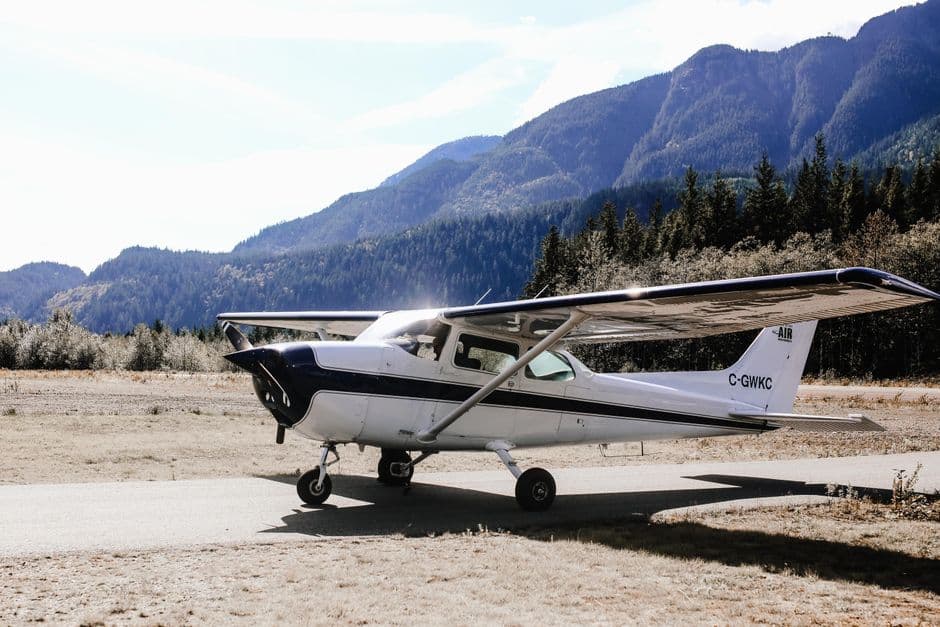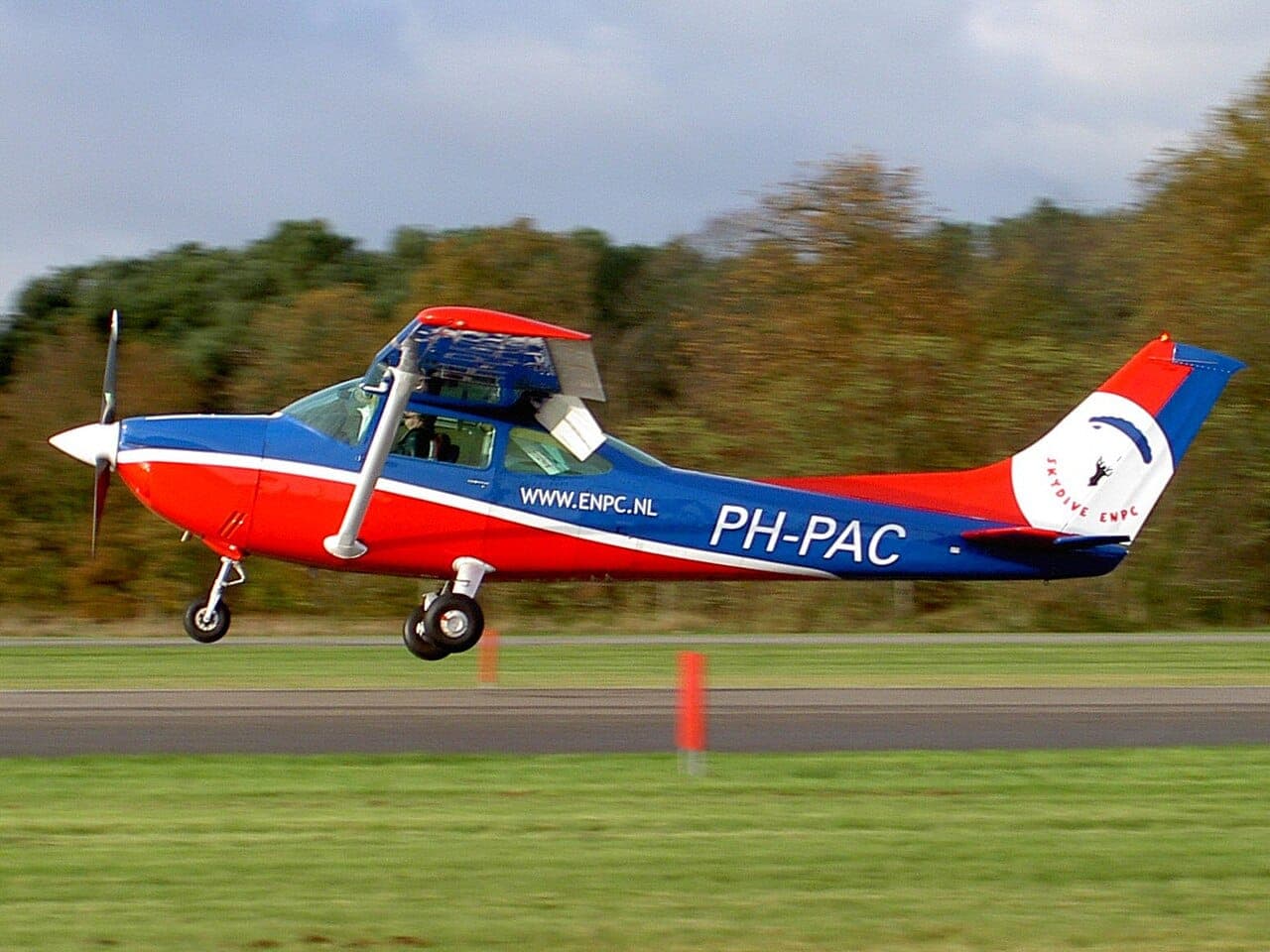
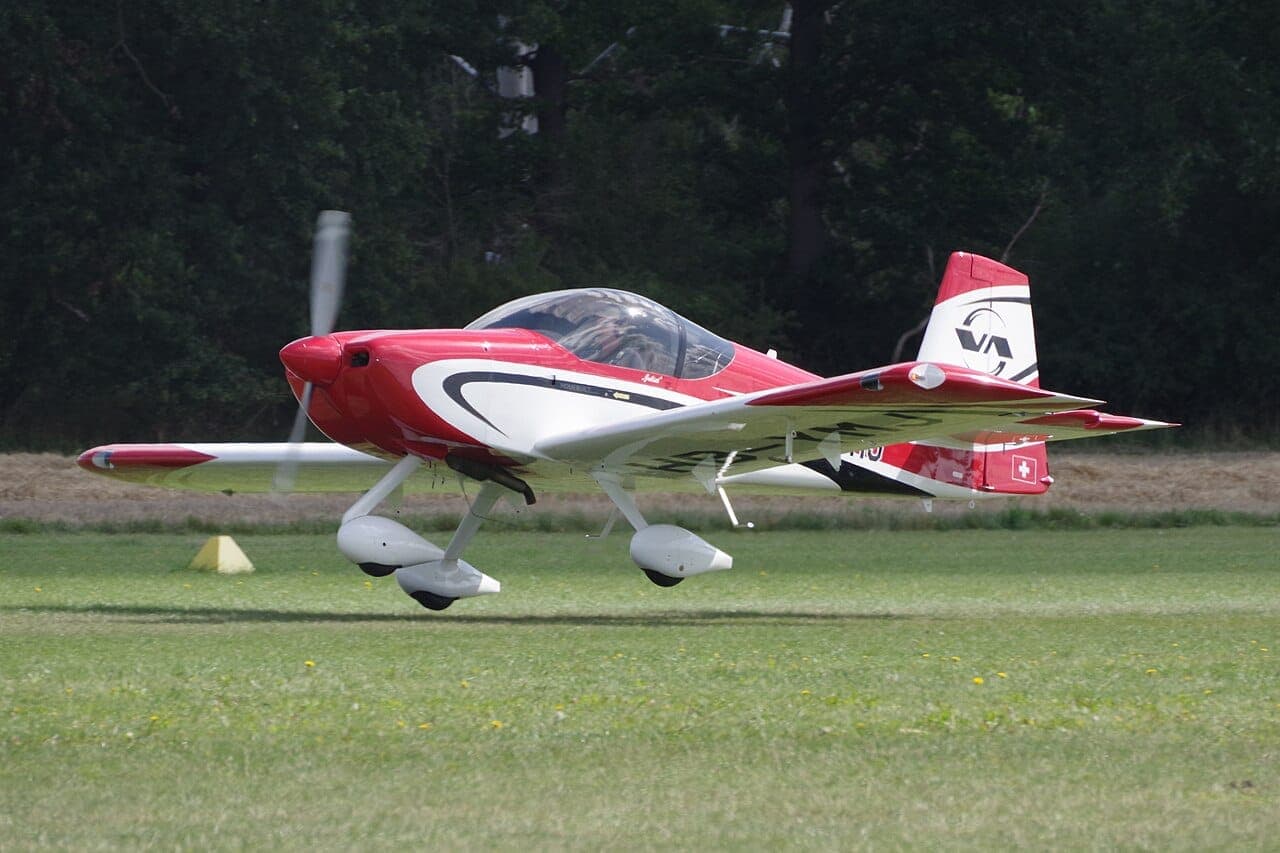
A Van's RV-14A vs Grumman AA-5B Tiger decision usually comes down to two things: how many seats you actually need, and whether you are comfortable owning an airplane that no factory supports. The RV-14A is faster, climbs harder, and is cheaper to inspect every year. The Tiger carries four people, costs less to get into, and comes with a type certificate, a parts supplier, and a resale market that a bank understands.
And yes — an A&P mechanic can sign off an experimental. A standard amateur-built condition inspection does not require an Inspection Authorization, which is one of the quiet cost advantages of the RV. The details of that rule matter enough that we give it its own section below.
This article walks through what each airplane costs to buy and run, what the yearly paperwork looks like for each, and which one fits which kind of owner.
Mission first: two seats or four
The RV-14A is a two-seat, side-by-side airplane with 100 pounds of baggage space behind the seats. That is it. There is no back seat, no child seat, no fourth person on a club trip. If your flying is you and one other adult going somewhere quickly, that limit costs you nothing. If it is a family of four, the RV-14A is the wrong airplane and no amount of cost math fixes that.
The Tiger is a genuine four-seater at 2,400 pounds gross, with a useful load that typically lands near 1,050 pounds. Fill the 51 usable gallons and you still have roughly 740 pounds for people and bags — three adults and luggage without arithmetic gymnastics, four smaller adults on a shorter leg. The sliding canopy makes loading easy and makes summer taxiing bearable, because you can run it partly open.
Performance is where the RV pulls away. Van's publishes a 75 percent cruise near 170 knots at 8,000 feet behind the 210-horsepower Lycoming IO-390 and a constant-speed Hartzell. The Tiger's book number is about 139 to 143 knots true at 75 percent behind a 180-horsepower Lycoming O-360 and a fixed-pitch prop. Climb is not close either: an RV-14A at light weights will show better than 1,400 feet per minute, where a loaded Tiger on a warm day is working at 700 to 800.
Why It Matters: At the same fuel flow — both airplanes burn roughly 9.5 to 10 gallons an hour in cruise — the RV-14A covers about 30 more nautical miles every hour. On a 500-nautical-mile trip that is a 40-minute difference and about $50 less in fuel. Over 100 hours a year, speed is the only free money in aviation.
One more split: Van's designs the RV-14 to +6/-3 G at a reduced aerobatic gross weight, and plenty of owners fly loops and rolls in theirs. The Tiger's handbook prohibits spins and aerobatics outright. If a little upset training or aerobatic fun is part of the plan, the Tiger is out.
Cost to buy, and the two ways in
The Tiger has one entry route: buy a used airplane. Grumman American built roughly 1,300 AA-5Bs between 1975 and 1979, and the design came back twice — as the AG-5B from American General in the early 1990s and again from Tiger Aircraft in Martinsburg, West Virginia, until 2006. The newest airframes are therefore around twenty years old, and the bulk of the fleet is pushing fifty. Price is driven almost entirely by engine time, avionics, paint, and whether the bonded structure is clean.
The RV-14A has two routes. You can build it, which Van's sells as a series of sub-kits — empennage, wings, fuselage, finish — plus engine, propeller, and panel bought separately. Builders generally report somewhere around 1,500 to 2,000 shop hours on an RV-14, and total project costs that run well into six figures once a new IO-390, a blended-airfoil Hartzell, and a two-screen EFIS panel are on the invoice. Or you can buy one already flying, which is what most shoppers do, and which costs more up front than a Tiger in every market we have watched.
Buying flying has one consequence people miss: the repairman certificate does not come with the airplane. More on that below, because it is the single biggest paperwork difference between these two.
Flying411 keeps experimental and certificated four-seat singles in one place, so you can compare an RV-14A and a Tiger on the same screen instead of guessing at the price gap.
| Spec | Van's RV-14A | Grumman AA-5B Tiger |
| Certification | Experimental amateur-built (E-AB) | Standard airworthiness, FAA type certificated |
| Seats | 2, side by side | 4 |
| Engine | Lycoming IO-390, 210 hp | Lycoming O-360-A4K, 180 hp |
| Propeller | Constant-speed (commonly Hartzell) | Fixed-pitch (Sensenich) |
| Recommended TBO (SI 1009BF) | Up to 2,600 hr for eligible IO-390 engines; otherwise generally 2,000 hr | Up to 2,600 hr for eligible O-360-A4K engines; otherwise generally 2,000 hr |
| Gross weight | 2,050 lb | 2,400 lb |
| Typical empty weight | 1,200–1,300 lb as completed | About 1,350 lb |
| Typical useful load | 750–850 lb | About 1,050 lb |
| Usable fuel | 50 gal | 51 gal |
| Cruise (75% power) | About 170 kt at 8,000 ft (Van's) | About 139–143 kt (handbook) |
| Cruise fuel burn | About 9.5–10 gph | About 10 gph |
| Baggage allowance | 100 lb | 120 lb |
| Aerobatics | +6/-3 G design, reduced aerobatic gross | Prohibited, including spins |
| Yearly inspection | Condition inspection, 12 calendar months | Annual inspection, 12 calendar months |
| Who may sign it | A&P, aircraft-specific builder repairman, or eligible light-sport repairman when operating limitations permit | A&P holding Inspection Authorization (IA) |
| Typical inspection labor | Roughly $600–$1,500 at a shop | Roughly $1,500–$3,000 at a shop |
| Parts source | Van's Aircraft, plus standard hardware | True Flight Aerospace (TC holder) and used-parts specialists |
Inspection labor figures are typical shop quotes rather than published rates, and they move with region and with how clean your airplane is.
Cost to run, line by line
Fuel
Call 100LL $6.50 a gallon, roughly the national average through 2025. At 100 hours a year the Tiger burns about 1,000 gallons, or $6,500. The RV-14A burns about 950 gallons at a similar power setting, or $6,175 — but it flies about 3,000 more nautical miles for that money. Lean-of-peak operation with the fuel-injected IO-390 pulls the RV's burn down near 8.5 gph at a still-respectable cruise, something the carbureted O-360 in the Tiger does not do as cleanly.
Engine and propeller reserve
Lycoming's July 2026 Service Instruction 1009BF lists up to 2,600 hours between overhauls for eligible factory-new or factory-rebuilt IO-390 and O-360 engines. Other overhauled engines generally retain a 2,000-hour base interval, subject to applicable extensions and engine history. Lycoming also recommends a 12-year calendar overhaul interval. For both aircraft, verify the exact engine model, overhaul history and applicable service instructions before using any TBO figure for maintenance planning.
Put a reserve against it. A replacement IO-390 for an experimental runs into the high five figures as of 2025, so about $20 to $22 an hour over 2,400 hours is honest. An O-360 field overhaul is a cheaper proposition, roughly $16 to $18 an hour over 2,000 hours. Then add the RV's constant-speed propeller — Hartzell publishes overhaul intervals in both hours and calendar years, and a governor-and-prop event is money the fixed-pitch Tiger simply never spends.
Keep in Mind: The experimental engine on an RV carries no TBO in the regulatory sense. Nothing forces you to overhaul it. That sounds like savings until you are the seller and a buyer is looking at 2,600 hours on a logbook with no overhaul entry.
Insurance
This is where the RV can surprise a first-time owner. Hull value on a well-equipped RV-14A is substantially higher than on most Tigers, and premiums scale with hull value. Underwriters also want to see time in type or a transition course before they will write an experimental for a pilot new to the design, and many will attach a dual-instruction requirement to the first policy. The Tiger is conventional enough that most carriers quote it without drama, though the sliding canopy and the brisk approach speed mean a few will still ask for a checkout.
The yearly inspection
Here the RV wins clearly. A condition inspection on an E-AB airplane is performed to the scope and detail of Appendix D to Part 43, but it does not require an IA, and an RV-14A built to plans is a straightforward airplane to open up. Owners commonly pay a few hundred dollars to something over a thousand in labor.
A Tiger annual costs more because an IA's time costs more and because a fifty-year-old airframe produces findings. Budget $1,500 to $3,000 for the inspection itself and assume some years will bring another $1,000 to $3,000 in squawks. Our guide to owner-assisted annuals covers how to legally knock a chunk off that bill on the certificated side, and if your shop has ever balked at signing, FAR 43.11 explains what the mechanic actually owes you.
Hangar, tiedown, database subscriptions, and annual registration are a wash. Both airplanes fit a standard T-hangar with room to spare.
Can an A&P sign off an experimental?
Yes. For an experimental amateur-built aircraft, the operating limitations issued with the airworthiness certificate require a condition inspection once every 12 calendar months, and they allow it to be performed and signed by either an appropriately rated mechanic — that is, a certificated A&P — or by the holder of a repairman certificate issued for that specific aircraft under 14 CFR 65.104. No Inspection Authorization is needed. An IA may of course do it, but you are not required to find one.
The repairman certificate is personal, not transferable
Under 14 CFR Section 65.104, the FAA issues an aircraft-specific repairman certificate to the qualifying primary builder, and that certificate does not transfer when the airplane sells. However, the FAA's MOSAIC changes also allow eligible RV-14A owners to obtain a light-sport repairman certificate with an appropriate inspection rating and sign their own annual condition inspections when the aircraft's operating limitations permit. Otherwise, an appropriately authorized A&P or repairman must perform the inspection. An Inspection Authorization is not required.
Think of it like a homeowner who wired his own house to code: the inspector's blessing applies to that house and that owner's work, not to the next family who moves in.
What you can do yourself in between
This is the part that saves real money. Part 43 does not apply to aircraft operating without a standard airworthiness certificate — see 14 CFR 43.1(b) — so on an E-AB airplane, maintenance in between condition inspections may be performed by anyone the owner chooses, including the owner. Change your own brake pads, replace a tire, pull a cylinder, swap an EFIS screen. The one annual event that requires a certificated person is the condition inspection itself.
On the Tiger, you are bound by Part 43 in full. Preventive maintenance listed in Appendix A(c) is yours to do and log as the owner-pilot; everything else needs an A&P, and the yearly inspection needs an IA.
Heads Up: "No Part 43" does not mean "no rules." Airworthiness Directives affecting engines, propellers or appliances installed on experimental aircraft must be evaluated individually. Under FAA Advisory Circular 39-7D, the AD's applicability language determines whether it covers components installed on non-type-certificated aircraft. Owners should review relevant ADs rather than assume they all apply or that experimental status provides a blanket exemption. Under 14 CFR Section 91.7, the pilot remains responsible for determining that the aircraft is in condition for safe flight, while Section 91.319 establishes additional operating restrictions.
Flying411 keeps experimental listings and their builder documentation in one place, so you can see before you call whether a project has clean logs and a transferable history.
Parts, support, and the resale question
Van's sells RV-14 parts from stock, the kit is still in production, and much of the airplane is standard AN hardware you can buy from any of the big suppliers. When an RV owner needs a wingtip or a canopy latch, it ships. The flip side is that every RV is slightly different — panels, interiors, engine accessories, builder modifications — so the airplane you buy is really the builder's airplane, and the quality of the build is the whole ballgame. Our RV pre-buy walkthrough applies almost line for line to a 14A, and the kit buyer's guide is worth reading before you consider an unfinished project.
The Tiger's type certificate is held by True Flight Aerospace in Valdosta, Georgia, which supports the fleet with parts, and a used-parts network keeps the older airframes flying. The structure is where your attention belongs: the AA-5 series uses bonded aluminum honeycomb rather than rivets through most of the wing and tail, so a pre-buy needs someone who knows what delamination and corrosion look like on that structure. Ask the American Yankee Association, the type club, who inspects Grummans in your region — and read our explainer on what a pre-buy covers that an annual does not before you book either one.
Good to Know: The Tiger's nose gear is free-castering. You steer with differential braking on the ground, which takes an hour to learn and then becomes a party trick, but it does mean brake wear is a real line item.
On resale, RVs have been remarkably durable in value, largely because well-built examples are scarce relative to demand and because the type has an enormous community behind it. Tigers have appreciated too, like most of the clean 1970s four-seat fleet. The practical difference is financing and insurance: lenders are more conservative on experimentals, and some will not write them at all, so plan on a larger down payment or a cash purchase.
Who should buy which
Buy the RV-14A if you fly two-up, you value speed and climb, you want a modern glass panel without certification surcharges, and you are willing to own an airplane whose quality depends on one person you may never meet. It is the better cross-country machine per dollar of fuel, the cheaper airplane to inspect, and the more fun airplane to fly.
Buy the Tiger if you need four seats, if you want a lower entry price and conventional financing, if you would rather have a factory-built airframe with a parts supplier behind it, or if the people you fly with include children, in-laws, or dogs. It also sits in a well-understood market — see how it stacks against the Piper Archer II and the Cessna 172 if you are still shopping the certificated side.
If you want RV speed and four seats, you are really shopping the RV-10, and our RV-14A vs RV-10 comparison covers that fork directly.
Flying411 keeps RV-series listings and classic Grumman singles in one searchable place, so you can compare engine time, panel, and total time side by side before you book a pre-buy.
Conclusion
In a Van's RV-14A vs Grumman AA-5B Tiger comparison, the RV is the cheaper airplane per mile flown and the cheaper airplane to inspect — an A&P can sign its condition inspection, no IA required, and you may do the rest of the maintenance yourself. The Tiger is the cheaper airplane to acquire and finance, and it is the only one of the two that carries four people. Neither answer is wrong; they are answers to different questions.
Price out your real mission before you shop. Two hundred hours a year of two-up travel favors the RV so strongly that the higher purchase price pays itself back in fuel and inspection labor. Fifty hours a year with the family aboard favors the Tiger just as clearly.
When you are ready to compare listings, visitFlying411and see what is on the market today.
Frequently Asked Questions
Does an experimental condition inspection require an IA?
No. The operating limitations for an experimental amateur-built aircraft allow the 12-month condition inspection to be performed and signed by an appropriately rated A&P mechanic, or by the holder of a repairman certificate issued under 14 CFR 65.104 for that specific aircraft. An Inspection Authorization is not required, which is one reason RV owners pay less than Tiger owners for the yearly sign-off.
If I buy a flying RV-14A, can I get the repairman certificate?
You cannot obtain the original builder's aircraft-specific repairman certificate under 14 CFR Section 65.104 unless you qualify as that aircraft's primary builder. However, as a secondhand RV-14A owner, you may qualify for a light-sport repairman certificate with an inspection rating under MOSAIC. With the appropriate training, rating and operating limitations, you may perform your own condition inspection. Otherwise, an appropriately authorized A&P or repairman must sign it.
Do airworthiness directives apply to an experimental?
Some do. Airworthiness Directives can apply to engines, propellers and appliances installed on experimental aircraft, but applicability depends on the specific AD wording. FAA Advisory Circular 39-7D explains how to determine whether an AD covers products installed on non-type-certificated aircraft. RV-14A owners should review applicable ADs and related safety information rather than assume every engine or propeller AD is automatically mandatory.
Which is faster on the same fuel?
The RV-14A, by a wide margin. Van's publishes about 170 knots at 75 percent power at 8,000 feet, against roughly 139 to 143 knots for the Tiger, with both airplanes burning near 10 gallons an hour. That is about 17 nautical miles per gallon versus about 14.
Can the Tiger really carry four adults?
With a typical useful load near 1,050 pounds, full fuel of 51 gallons leaves about 740 pounds for people and baggage. That is three adults and bags comfortably, or four lighter adults with reduced fuel. Always run the actual weight and balance for the specific airframe, since empty weights vary with avionics and interior.
Is the RV-14A harder to insure?
Generally yes, at first. Hull values are higher, and underwriters commonly ask for transition training or a set number of dual hours in type before issuing a policy to a pilot with no RV experience. Premiums usually improve after the first year in type.