Most people shopping for a homebuilt buy the panel and the paint, then skim the construction log for ten minutes on the way to the test flight. That is the single most expensive habit in this corner of the market. A thin or missing builder's log does not ground an airplane, but it can cut $10,000 to $20,000 off what you get back at resale, and it hides every part of the structure you will never see again once the skins went on. This guide covers what to inspect, what the paperwork has to show, and what the airplane really costs to keep, so that buying a Van's RV-6A ends with a sorted airplane instead of someone else's unfinished project at finished-airplane prices.
Here is the shape of the money. As of 2025, flying RV-6 and RV-6A aircraft typically change hands somewhere between about $50,000 and $125,000. The bottom of that band is a 1990s build with a mid-time O-320, round gauges and tired paint. The top is a low-time O-360 with a constant-speed prop, dual screens, an autopilot and a builder who documented everything. Once it is yours, plan on roughly $11,000 to $20,000 a year at 100 hours of flying, which works out to about $110 to $200 per hour all in. Hangar rent and how you handle the engine fund move that number more than anything else.
What an RV-6A Costs to Buy
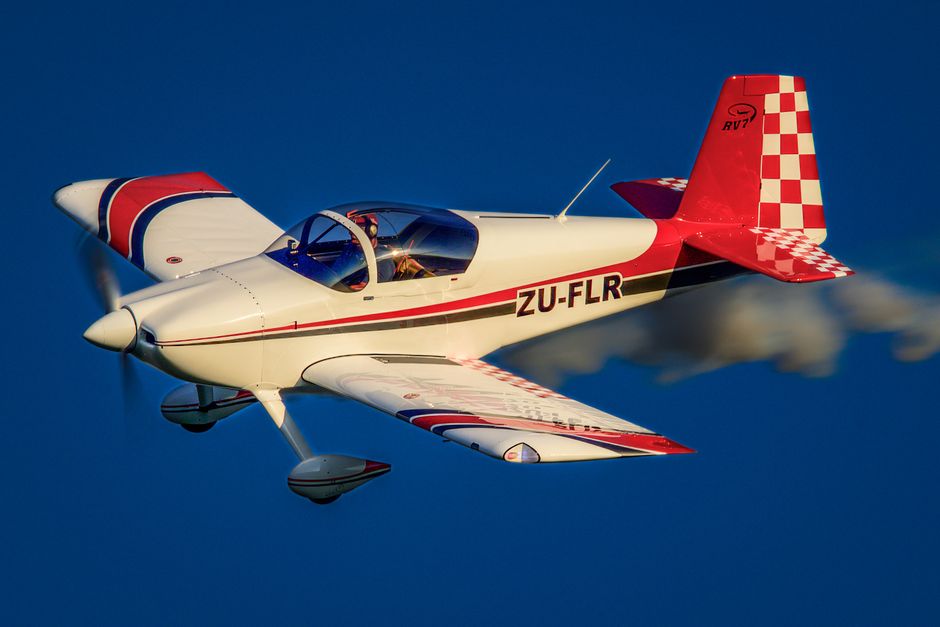
The RV-6 arrived in the mid-1980s as Van's Aircraft's side-by-side two-seater, and the nosewheel RV-6A followed a couple of years later. Van's stopped selling the kit around 2001 when the RV-7 and RV-7A replaced it. Van's completion tally puts the number of RV-6 and RV-6A aircraft flown to date in the neighborhood of 2,600 to 2,700, which makes it one of the most common homebuilts on any American ramp.
Van's published figures for the airframe with 150 to 180 horsepower show a cruise in the 170 to 185 mph range at 75 percent power, a stall around 50 mph, climb rates north of 1,500 feet per minute, and 38 gallons of fuel in two wing tanks. Design gross weight is 1,600 pounds. Empty weights vary by builder, commonly 1,000 to 1,150 pounds, and that variation is the whole ballgame for useful load.
Why It Matters: An RV-6A that came out heavy may only have 450 pounds of useful load. Fill the tanks and you have used 228 pounds of that on fuel alone. Two adults and a weekend bag will put you over gross. Ask for the current weight and balance before you ask about the paint.
What moves the asking price, in rough order of influence: engine time since overhaul, whether the engine is a 180 hp O-360 with a constant-speed prop or a 150/160 hp O-320 with a fixed-pitch, the avionics generation, the quality and completeness of the builder's documentation, and the presence of a second or third owner who kept flying it regularly. Airframe hours matter less than they would on a Cessna, because these airplanes are all-metal and few have high time. Corrosion history matters a great deal if the airplane has lived near salt water.
Flying411 keeps experimental and certified light singles in one place, so you can compare an RV-6A against a Grumman Tiger or an early Bonanza without opening six tabs.
What to Inspect Before You Buy
There is no type certificate data sheet for an RV-6A. No factory built it, no FAA engineer signed off the finished article, and no two examples are identical. A pre-buy on a homebuilt is less about verifying against a standard and more about judging the workmanship of one person you will probably never meet. Hire a mechanic who has worked on RVs specifically. Budget $800 to $2,000 for a thorough one, more if you want the wings pulled or a borescope of every cylinder. Our guide to the aircraft pre-purchase inspection covers the general process; the items below are what changes when the airplane is amateur-built.
The nose gear, first and hardest
The A-model nose gear is the known weak point of the whole family. The leg is a slender rod with a fork and a small wheel, and on soft or rough surfaces it can dig in and tuck under, which flips the airplane. Van's addressed it with Service Bulletin 07-11-09 covering the nose gear leg and wheel on A-model RVs, and with guidance on wheel bearing preload, tire pressure and the heavier nose fork. Ask for written evidence of compliance. Then look at the leg itself for any bend, at the fork for cracks, and at the firewall and engine mount attach points for elongated holes or fresh paint that might be hiding a repair.
Wings, spar and fuel tanks
Pull an inspection panel or two and look at rivet quality inside the wing. You are looking for consistent, well-set rivets, no smoking rivets (the dark grey halo that means a rivet is working loose), and no drilled-and-redone clusters around the spar. Check both fuel tanks for weeping at the seams and around the fuel sender. Tank sealant is the kind of repair that is cheap in parts and brutal in labor. Look at the wing attach bolts and the area around them for corrosion, especially on coastal airplanes.
Canopy, rollover and egress
RV-6s were built with either a tip-up or a sliding canopy. Tip-ups are lighter and give a cleaner view forward; sliders are heavier and generally considered easier to get out of after a mishap. Inspect the plexiglass for cracks radiating from fastener holes, check the latch mechanism for positive engagement, and look for a rollover structure behind the seats. Some builders installed one, some did not.
Engine, mount and exhaust
Most RV-6As run a Lycoming O-320 or O-360. Do a compression check, borescope every cylinder, cut the oil filter, and send an oil sample out. Look hard at the exhaust system for cracks at the slip joints and hangers, because homebuilt exhausts see more vibration than certified installations. Check the engine mount tubing for cracks at the weld clusters, especially around the nose gear socket.
Wiring, panel and systems
This is where builder skill shows most. Open the panel and look at the back of it. You want labeled wire, proper terminations, service loops, and a wiring diagram somewhere in the paperwork. Bundles of unlabeled wire held with electrical tape are a warning, not a deal-breaker, but they tell you what the rest of the airplane is probably like. Confirm the ADS-B Out installation is real and works; a flight through a Mode C veil and a free FAA Public ADS-B Performance Report will tell you in a day.
Heads Up: The laser-cut parts issue that Van's disclosed in 2023 applies to kits shipped in roughly 2022 and 2023. It has nothing to do with an RV-6A built in the 1990s. Do not let a seller use it as a bargaining chip in either direction.
What the Builder's Logs Must Show
Think of the builder's log the way you would think of the inspection photos from a house remodel. Once the drywall is up, those photos are the only honest record of what is behind it. On an RV-6A, the wing spar, the control system and the fuel tanks all disappeared behind aluminum years ago. The log is what you have.
The documents that have to be in the airplane
At minimum, the airplane should carry its special airworthiness certificate (FAA Form 8130-7, experimental amateur-built), its operating limitations as a separate signed document, the registration certificate, and a current weight and balance. The operating limitations are not boilerplate. Read them. They set the Phase I test area, the flight test hours, the wording of the entry that ends Phase I, and whether night or IFR flight is permitted. A missing set of operating limitations means a trip to the FSDO before the airplane is legal to fly.
The eligibility paperwork
Amateur-built certification rests on 14 CFR 21.191(g) and the so-called 51 percent rule, and the FAA's guidance in Advisory Circular 20-27G describes how it is documented. The builder signs FAA Form 8130-12, the Eligibility Statement. Ask to see a copy in the file. Ask to see the construction log itself: dated entries, photographs of internal structure, and receipts from Van's showing the kit and its serial number. Confirm that the serial number on the fireproof data plate matches the registration and the kit invoices.
The repairman certificate does not come with the airplane
This one surprises nearly every first-time buyer. Under 14 CFR 65.104, the repairman certificate for an experimental aircraft goes to the primary builder, one per aircraft, and it is not transferable. Buy the airplane and you do not get it. From that point, the condition inspection must be signed by someone authorized under the aircraft's operating limitations — commonly an A&P mechanic, although current light-sport repairman privileges may also apply in some cases. The original builder's experimental-aircraft repairman certificate does not transfer with the airplane. The mechanic does not need an Inspection Authorization, which is one small mercy, but you do need to find one willing to sign for an airplane they did not build.
The flip side is generous. Part 43 does not apply to aircraft holding experimental airworthiness certificates, so outside of that yearly condition inspection you may do your own maintenance, your own upgrades and your own repairs without a mechanic's signature. That freedom is a large part of why people buy these airplanes, and it is why the running costs below land where they do.
Phase I, and what happens after a major change
Look for the logbook entry that closed out Phase I flight testing. Older operating limitations commonly used 25 hours with an eligible type-certificated engine/propeller combination or 40 hours otherwise, while current FAA operating limitations may also use an approved task-based flight-test plan. The aircraft's own operating limitations and logbook entries control.
Good to Know: The RV-6A airframe itself is not a type-certificated product, so airframe ADs written only for type-certificated aircraft do not automatically apply to it. Installed engines, propellers and appliances must be checked against each AD's applicability statement, because some ADs expressly apply to those products even when installed on experimental aircraft. Van's service bulletins are generally advisory unless incorporated into the aircraft's operating limitations or another binding requirement, but an unaddressed bulletin is still a safety and resale concern.
Insurance and Storage: The Fixed Costs
Insurance on an experimental is written differently than on a Skyhawk. Underwriters care about your total time, your retractable or tailwheel background, your time in type, and whether you have an instrument rating. Because the RV-6A is a nosewheel airplane, it insures more cheaply than the taildragger RV-6, sometimes noticeably so.
As of 2025, a reasonably experienced private pilot with an instrument rating and some RV time can expect hull and liability on a $90,000 RV-6A to land in the $1,300 to $3,000 per year range. Hull rates on experimentals commonly run about 2 to 3.5 percent of insured value. A low-time pilot with no RV experience may be quoted much higher, required to complete 5 to 10 hours of dual in type before solo coverage, or declined outright. Liability-only coverage, if you are willing to self-insure the airframe, usually runs $400 to $800.
Storage is the other fixed cost and the one that varies most by geography. A T-hangar runs anywhere from about $100 a month at a rural field to $650 or more in a metro area, with waiting lists to match. An outside tie-down runs $30 to $150 a month. An RV-6A's painted aluminum and big plexiglass canopy both do better indoors, and canopy covers are cheap insurance if you tie down. Our breakdown of hangar versus tiedown costs works through when paying for the hangar actually pencils out.
Fuel and Oil: What Each Hour Burns
This is where the RV-6A earns its reputation. A 160 hp O-320 at a normal cross-country power setting burns roughly 7 to 8 gallons per hour while doing better than 160 knots true. A 180 hp O-360 with a constant-speed prop will burn 8 to 9.5 gph and go a bit faster. Either way, you are covering ground at Bonanza speeds on Cessna 172 fuel.
With 100LL averaging roughly $5.50 to $8.00 a gallon across the United States in 2025 depending on region and whether you buy self-serve, fuel works out to about $40 to $75 per hour. Many RV-6As with low-compression engines are set up to run automotive premium, and because the airplane is experimental no supplemental type certificate is required to do it. That can cut the fuel line by a third, at the cost of hauling cans and watching for ethanol.
Oil is minor but real. The Lycoming holds eight quarts, most owners change at 25 to 50 hours with a filter, and a change runs $80 to $140 in parts. Call it $2 to $5 an hour.
Pro Tip: Cut the oil filter every change and look at it yourself. On an engine you cannot pull records for from a factory, the filter media is the cheapest diagnostic you will ever run.
Condition Inspection and Unscheduled Maintenance
The experimental equivalent of an annual is the condition inspection, required every 12 calendar months by your operating limitations and performed to the scope and detail of Part 43 Appendix D. Without a repairman certificate, you pay a mechanic. The good news is that an RV-6A is a simple, accessible airplane with removable panels everywhere, and shops that know the type move fast through them.
Expect $700 to $1,800 in labor for a straight inspection with no findings. Owner-assisted arrangements, where you do the panel removal and cleaning and the mechanic does the inspecting and the signing, commonly bring that to $300 to $600. Findings are extra, and on a 25-to-35-year-old airframe you should assume some every year: brake pads, tires, hoses, a magneto that needs its 500-hour service, a cracked exhaust hanger.
Budget $800 to $2,500 a year for unscheduled maintenance and parts on top of the inspection. Homebuilt owners often spend less than certified owners here because parts are not artificially priced and because you can do the labor. They sometimes spend more, because a one-off installation has no parts catalog behind it and the fix is fabrication.
Flying411 keeps listings, specs and ownership guides in one place, so you can see how an RV-6A's running costs stack up against a certified two-seater before you commit.
Engine and Propeller Reserve
The reserve is the cost that owners pretend is optional and then regret.Lycoming's current Service Instruction 1009BF, issued in July 2026, lists recommended overhaul intervals by exact engine model and history, with qualifying factory-new and factory-rebuilt O-320 and O-360 engines eligible for intervals as high as 2,600 hours. Verify the installed engine against the current schedule before calculating an overhaul reserve. On an experimental those are recommendations, not requirements, but the metal does not know that.
A field overhaul of a parallel-valve O-360 by a reputable shop in 2025 generally runs $28,000 to $42,000 installed, depending on cylinders, accessories and whether the crankshaft passes inspection. A Lycoming factory rebuilt or overhauled engine sits higher, often in the $45,000 to $60,000 range once you add removal, installation and hoses. The hourly reserve depends on the installed engine's applicable TBO and overhaul cost, so calculate it from the specific engine rather than assuming a universal 2,000-hour interval.
Propellers are smaller. A fixed-pitch Sensenich metal prop is effectively a replace-when-damaged item, with new units running roughly $4,000 to $5,500. A constant-speed Hartzell wants an overhaul on a calendar and hour schedule, commonly $4,500 to $7,500 in 2025, which works out to $3 to $5 per hour. The constant-speed prop buys you climb performance and short-field capability; it costs you about 25 pounds of useful load and that reserve line.
Key Takeaways
An RV-6A is cheap to run and expensive to buy badly. Purchase lands between roughly $50,000 and $125,000 as of 2025, and the difference between those two numbers is mostly engine time, panel and documentation. Fixed costs — insurance, storage, the condition inspection, registration and ordinary parts — come to about $3,600 at the frugal end and $15,000 or more if you hangar in an expensive market. Variable costs run about $58 to $108 per hour once you include a real engine reserve. Fly 100 hours a year and the honest all-in number for most owners is $13,000 to $18,000, or roughly $130 to $180 an hour, for an airplane that cruises at 165 knots on eight gallons. The single biggest lever is the engine fund: skip it and the airplane looks like a bargain right up until the day it does not.
| Cost item | Low | High | Type |
| Purchase price (flying RV-6A, 2025) | $50,000 | $125,000 | One-time |
| Pre-purchase inspection by an RV-experienced shop | $800 | $2,000 | One-time |
| Insurance (hull and liability) | $1,300/yr | $3,000/yr | Fixed |
| Hangar or tie-down | $360/yr | $7,800/yr | Fixed |
| Annual condition inspection (labor only) | $300/yr owner-assisted | $1,800/yr shop | Fixed |
| Unscheduled maintenance and parts | $800/yr | $2,500/yr | Fixed |
| Registration, database subscriptions, misc. | $150/yr | $800/yr | Fixed |
| Fuel (7–9.5 gph) | $40/hr | $75/hr | Per flight hour |
| Oil and filters | $2/hr | $5/hr | Per flight hour |
| Engine overhaul reserve (based on applicable Lycoming SI 1009BF interval) | $14/hr | $23/hr | Per flight hour |
| Propeller reserve | $2/hr | $5/hr | Per flight hour |
| Total, 100 hours flown per year | $9,700 | $26,600 | Combined |
Ways to Spend Less
Buy the O-320 airplane with a fixed-pitch prop. It costs less up front, burns a gallon an hour less, has no prop reserve and no governor to overhaul, and still cruises within about 10 knots of the 180 hp version. What you give up is climb rate on hot days and short-field margin. If you fly out of a 4,000-foot runway near sea level, you will rarely miss it.
Do your own maintenance. Part 43 does not apply to your airplane, so everything except the yearly condition inspection is yours to do. Owners who wrench routinely cut the maintenance line by half or more. The trade is time, tools and a real obligation to learn the airplane. An EAA chapter and a technical counselor are the cheapest way to start.
Find a hangar an airport further out. Moving from a metro field to a rural one 25 minutes away commonly saves $3,000 to $5,000 a year. You pay in drive time, and sometimes in fuel price and maintenance availability on the field.
Share it. A two-way partnership splits every fixed cost while barely touching the variable ones, and a two-seat airplane with a dispatch-friendly reputation is easy to schedule between two owners. The trade is the partnership agreement itself, which needs to spell out the engine fund, the upgrade veto and the exit.
Fly more, not less. Fixed costs per hour fall fast with utilization. At 50 hours a year the same airplane costs well over $200 an hour; at 150 it drops toward $110. Engines also dislike sitting. The cheapest hour in an RV-6A is the one that comes soon after the last one.
Keep in Mind: Experimental amateur-built aircraft cannot be flown for compensation or hire, so you cannot leaseback an RV-6A to a flight school to offset costs. Rules around paid flight instruction in experimentals changed following the FAA Reauthorization Act of 2024; check current FAA guidance before you plan any training arrangement around the airplane.
Is an RV-6A the Right Airplane for You?
The case for it is straightforward. For the price of a tired 1970s Cessna you get an airplane that cruises 40 knots faster on the same fuel, handles beautifully, and is legal for you to maintain yourself. The case against it is equally straightforward. Its quality is the quality of one builder's weekends, there is no factory behind it, resale depends on paperwork a stranger created, and the A-model nose gear demands respect on anything but pavement. Both things are true of the same airplane, which is why the inspection and the logs matter more here than on any certified single.
If you are weighing an experimental against a certified airplane in the same budget, the cost comparison in RV-10 vs SR22 shows how the numbers separate at the four-seat level, and the Grumman Tiger versus Cessna 177B comparison covers the certified alternatives at roughly RV-6A money. Do the math with your own hangar rate and your own hours before you decide. And when you are seriously buying a Van's RV-6A, spend the $1,500 on a real pre-buy from someone who knows the type. It is the only money in this whole article that reliably pays for itself.
Flying411 keeps homebuilt and certified singles side by side in one place, so you can compare asking prices, engines and equipment before you book a trip to see anything.
When you are ready to compare listings, visitFlying411and see what is on the market today.
Frequently Asked Questions
Can I do my own annual on an RV-6A I bought used?
No, not the condition inspection itself. Under 14 CFR 65.104 the repairman certificate belongs to the original builder and does not transfer with the airplane. A condition inspection must be performed by someone authorized under the aircraft's operating limitations, commonly an A&P mechanic, although current light-sport repairman privileges may also apply in some cases. Everything else — oil changes, brake work, avionics, modifications — you may legally do yourself, because Part 43 does not apply to experimental aircraft.
What if the builder's log is missing entirely?
The airplane can still fly and still be sold. Its airworthiness certificate does not expire. But you are buying blind on the internal structure, some insurers will ask about it, and you will face the same question from your buyer someday. Missing logs are worth a real discount and a much more invasive pre-buy, including pulling wing root and tail fairings.
Is the RV-6A nose gear actually dangerous?
It is unforgiving of soft fields, long grass and heavy braking with the nosewheel loaded. Accident records show nose-over events concentrated in those conditions. Flying the airplane with the nosewheel light on rollout, keeping the recommended tire pressure and bearing preload, and complying with Van's Service Bulletin 07-11-09 address most of it. Treat unimproved strips with caution.
How does an RV-6A compare to an RV-6 taildragger on cost?
Purchase prices are similar, with taildraggers sometimes holding a small premium among enthusiasts. Insurance is the real difference: the nosewheel version generally costs less to insure and is easier for a low-time pilot to get covered on at all. Running costs are effectively identical.
Can an RV-6A be flown IFR?
Only if its operating limitations permit it and the aircraft is equipped and inspected accordingly, including the pitot-static and transponder checks under 14 CFR 91.411 and 91.413. Read the operating limitations before you assume. Some older experimental limitations restrict the aircraft to day VFR regardless of what is in the panel.