A modern fighter jet is no longer just a fast plane with guns and missiles. It is a flying computer, a sensor platform, a data hub, and a stealth weapon all rolled into one airframe. The world's air forces have spent decades pushing what these machines can do, and the most advanced fighter jets in service today look almost nothing like the jets that came before them. They see further, they hide better, and they share information in ways that older aircraft never could.
What separates a great fighter from a truly advanced one comes down to a handful of things. Stealth shaping that bounces radar signals away. Engines that can cruise past the speed of sound without burning fuel like crazy. Radars that scan huge slices of sky in a heartbeat. Cockpits that fuse everything into a single picture for the pilot. The jets that nail all of that are the ones shaping how modern air power actually works. Some of these machines cost more than a small island, and every dollar shows up the second they leave the runway.
Key Takeaways
The most advanced fighter jets in 2026 are mostly fifth-generation stealth aircraft like the F-22 Raptor, F-35 Lightning II, Chengdu J-20, and Sukhoi Su-57, with highly upgraded 4.5-generation fighters like the Eurofighter Typhoon, Rafale, and F-15EX still playing important roles. Sixth-generation programs are also starting to take shape, with the Boeing F-47 leading the way in the United States.
| Topic | Quick Answer |
| Most advanced fighter today | F-35 Lightning II (multirole) and F-22 Raptor (air dominance) |
| Generation that defines "advanced" | Fifth-generation, soon sixth-generation |
| Key features | Stealth, sensor fusion, supercruise, AESA radar, data links |
| Top non-US contenders | Chengdu J-20, Sukhoi Su-57, KF-21 Boramae |
| What is coming next | Boeing F-47, GCAP Tempest, FCAS, J-XX |
| Cost range | Tens of millions to well over $150 million per airframe |
Flying411 keeps a close eye on aviation tech for buyers, sellers, and aviation pros who want to stay sharp on how the industry is changing.
What Makes a Fighter Jet "Advanced" in 2026
Before jumping into specific aircraft, it helps to understand what aviation experts mean when they call a jet "advanced." The word gets thrown around a lot, but it has a real meaning rooted in design choices and onboard systems.
A modern advanced fighter usually combines several core features at once. Stealth shaping reduces how visible the jet looks to enemy radar. Sensor fusion blends data from radar, cameras, infrared sensors, and outside sources into one picture for the pilot. Networked data links let jets, ships, and ground units share what they see in real time. Supercruise lets the aircraft fly past the speed of sound without using fuel-hungry afterburners. And smart weapons bays keep missiles tucked inside the airframe to maintain stealth.
Good to Know: A fighter does not need every advanced feature to be considered cutting-edge. The Eurofighter Typhoon, for example, is not a stealth jet, but its sensors, weapons, and electronic warfare suite still keep it in the conversation as one of the most capable fighters flying today.
Fighter Jet Generations Explained
Air forces use "generations" to group fighter jets by their technology level. The lines are not perfectly clean, but they give a useful sense of how each aircraft fits into the bigger picture.
- Fourth generation: Jets from the 1970s and 1980s like the early F-16, F-15, F/A-18, Mirage 2000, and MiG-29. Fast, agile, and built around analog systems.
- Generation 4.5: Upgraded fourth-gen jets with modern AESA radar, advanced electronics, and improved weapons. Think Rafale, Eurofighter Typhoon, Gripen E, F-15EX, and F-16V.
- Fifth generation: Stealth, sensor fusion, supercruise (in some), and full network-centric warfare. The F-22, F-35, J-20, and Su-57 lead this group.
- Sixth generation: Still in development. Expected to feature even deeper AI integration, drone teaming, optionally manned operation, and new propulsion concepts.
How Stealth, Sensors, and Networks Changed Air Combat
For most of the jet age, air combat came down to speed, maneuverability, and pilot skill. Today, those still matter, but the first jet to see the other one usually wins long before any dogfight begins. That shift is the single biggest reason the most advanced fighter jets look the way they do.
Stealth is not invisibility. It is about making the radar return so small that enemy systems either miss the aircraft entirely or detect it too late to react. Designers achieve this with careful shaping, radar-absorbent materials, and by tucking weapons and fuel inside the airframe. The result is a jet that can slip closer to a target than non-stealth fighters can.
Why It Matters: In modern air combat, detection range often decides the fight. A stealth fighter that spots a non-stealth jet at 100 miles can fire first, turn away, and never be seen. That kind of advantage reshapes everything from training to fleet planning.
Sensor fusion is the other half of the puzzle. Instead of forcing the pilot to read separate displays for radar, infrared, and threat warnings, advanced jets merge everything into one clear picture. The F-35 is widely considered the benchmark for this, partly because it pulls in data from other aircraft and ground stations too. Pilots talk about flying it almost like a video game with the whole battlefield laid out in front of them.
The 11 Most Advanced Fighter Jets in the World
Now for the main event. These are the aircraft that currently sit at the top of the global fighter pack, based on a mix of stealth, sensors, weapons integration, network capabilities, and overall combat readiness. The order reflects rough technological standing rather than a strict ranking, since each jet shines in slightly different ways.
1. Lockheed Martin F-22 Raptor (United States)
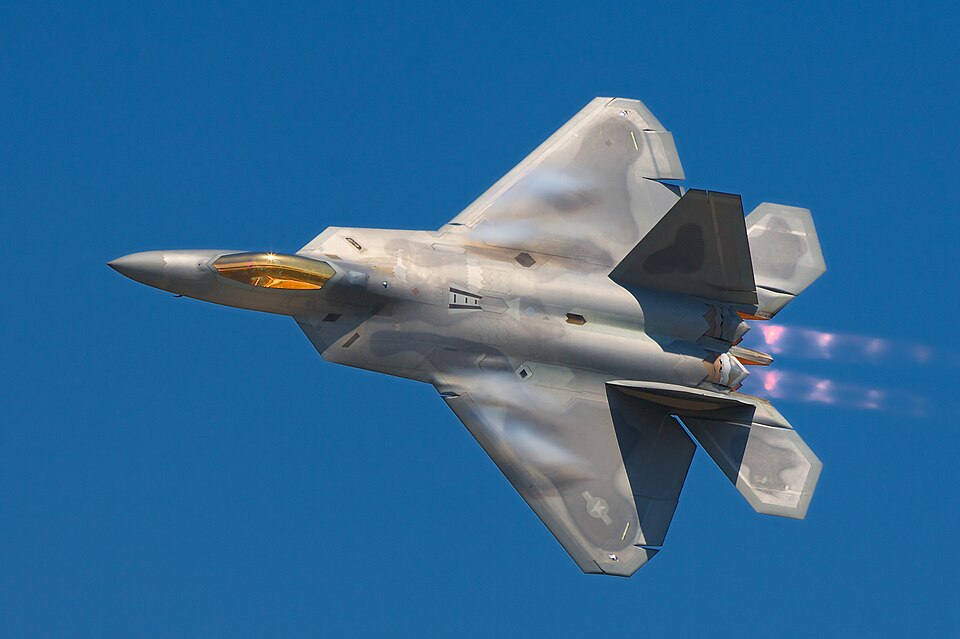
The F-22 Raptor is still widely considered the gold standard for air dominance. It was built for one main job: winning the fight against other fighters. The Raptor pairs stealth shaping with twin Pratt & Whitney F119 engines and thrust-vectoring nozzles for jaw-dropping maneuverability.
- Top speed: Around Mach 2.25
- Supercruise: Yes, around Mach 1.5 without afterburners
- Stealth: Among the lowest radar cross-sections of any operational fighter
- Engines: 2 × Pratt & Whitney F119-PW-100
Production ended years ago, which limits how many Raptors the US Air Force can field. But ongoing upgrades to sensors, software, and electronic warfare keep the jet relevant even against newer threats. If you ever want to dig into the kind of post-stall flying the Raptor is known for, the way aircraft execute the Cobra maneuver gives a good visual of why thrust vectoring matters so much.
2. Lockheed Martin F-35 Lightning II (United States)
If the F-22 is the air-to-air specialist, the F-35 is the Swiss Army knife. It is widely seen as the most advanced multirole fighter in mass production, mainly because of its sensor fusion, network capability, and the sheer scale of its global fleet.
- Top speed: Around Mach 1.6
- Variants: F-35A (conventional), F-35B (short takeoff and vertical landing), F-35C (carrier)
- Engine: 1 × Pratt & Whitney F135
- Operators: Used by more than a dozen allied air forces
The F-35B is also a key example among aircraft capable of vertical takeoff and landing, and the way the F-35's vertical takeoff system works is one of the most clever pieces of engineering on the platform. Block 4 upgrades continue to expand its weapons and electronic warfare capabilities, although the software side of those upgrades has been famously slow.
Fun Fact: The F-35's helmet is so advanced it lets pilots "look through" the floor of the jet, since cameras around the aircraft feed live video straight into the visor.
3. Chengdu J-20 Mighty Dragon (China)
The J-20 is China's first operational fifth-generation stealth fighter and the most credible challenge to Western air dominance in decades. By 2026, open-source estimates suggest the fleet has grown into the hundreds, making it the second-largest fifth-generation fleet in the world after the F-35.
The newer J-20A version reportedly carries the domestic WS-15 engine, which improves performance and finally gives China a homegrown high-thrust powerplant for the jet. Stealth shaping, long-range air-to-air missiles like the PL-15, and a large internal bay make the J-20 well-suited for the wide distances of the Indo-Pacific theater.
- Engines: Two, with the newer WS-15 entering wider service
- Stealth: Designed with low-observable shaping, though exact figures remain classified
- Role: Long-range air superiority and strike
4. Sukhoi Su-57 Felon (Russia)
Russia's Su-57 is the country's first fifth-generation fighter and the most advanced design in the Russian Aerospace Forces. The jet uses stealth shaping, 3D thrust vectoring, and an infrared search and track system to give it both low-observable and high-agility traits.
The Su-57's place on this list comes with caveats. Production has been slow, the airframe's stealth maturity is widely considered behind US and Chinese designs, and Russia lacks the same ecosystem of supporting sensors, satellites, and data links that NATO air forces enjoy. Still, the jet is actively flying, and recent upgrades have added new long-range missiles.
5. Boeing F-15EX Eagle II (United States)
The F-15EX is not a stealth jet, and it does not pretend to be. What it offers is something different: huge payload, long range, and a deeply modernized version of one of the most successful fighter designs ever built.
- Top speed: Around Mach 2.5, one of the fastest fighters in service
- Weapons: Among the highest air-to-air missile capacities of any fighter
- Avionics: Digital fly-by-wire, EPAWSS electronic warfare suite, modern cockpit displays
The Eagle II is designed to fight alongside stealth jets, not replace them. In a typical mission, an F-22 or F-35 might handle the deep-stealth work while the F-15EX hangs back with a deep magazine of missiles, ready to launch as a "missile truck." That kind of teamwork is becoming a defining feature of modern air combat.
6. Dassault Rafale (France)
The Rafale shows that you do not need stealth to build a top-tier fighter. As a refined 4.5-generation jet, it pairs outstanding agility with a modern AESA radar, excellent electronic warfare suite, and a wide range of mission capabilities, including nuclear deterrence.
Pro Tip: When comparing fighters, look at how many roles they can fly without major reconfiguration. The Rafale's "omnirole" design means the same airframe can fly air defense, ground strike, reconnaissance, and nuclear delivery missions back-to-back, which is part of why it has done well on the export market.
The Rafale has been picked up by several export customers in recent years, including India, Egypt, the UAE, Qatar, Croatia, Greece, and Indonesia. France continues to roll out updates to keep it competitive against newer threats.
7. Eurofighter Typhoon (Europe)
The Typhoon is the result of a four-nation European program involving the UK, Germany, Italy, and Spain. Originally built as a high-performance interceptor, it has grown into a capable multirole jet with strong air combat performance.
Its standout features include:
- High climb rate and excellent agility
- The new Captor-E AESA radar on later tranches
- A growing list of integrated weapons, including modern beyond-visual-range missiles
- Strong electronic warfare capability on the latest ECR variant
The Typhoon is expected to remain in frontline European service well into the era of sixth-generation programs like GCAP. Continuous upgrades keep the airframe relevant, and several export operators continue to add the jet to their fleets.
8. Saab JAS 39 Gripen E/F (Sweden)
Sweden's Gripen E/F punches well above its weight. It is one of the most cost-efficient high-performance fighters in service, with strong electronic warfare capabilities and a network-centric design philosophy baked in from the start.
- Engine: Single General Electric F414-GE-39E
- Radar: Raven ES-05 AESA
- Strength: Affordability, ease of maintenance, and strong EW suite
Smaller air forces love the Gripen because it can be operated from short, rough runways and supported with far fewer ground crew than typical Western jets. That practicality is a big part of why Sweden built it the way they did.
9. KAI KF-21 Boramae (South Korea)
The KF-21 is South Korea's homegrown 4.5-generation fighter, with strong potential to grow into something closer to fifth generation in later blocks. The aircraft completed its first flight in 2022 and entered limited service with the Republic of Korea Air Force in the mid-2020s.
The KF-21 carries weapons semi-recessed for now rather than fully internally, which keeps it just shy of full stealth status. But the avionics, AESA radar, and overall design make it one of the most ambitious indigenous fighter programs of the last decade. Indonesia is a partner on the program, and other export prospects continue to emerge.
Heads Up: Many of the newest "homegrown" fighter programs around the world are not pure indigenous designs. They rely on engines, sensors, and software components from larger industry players. That is normal for modern aerospace, but it is worth knowing when comparing programs.
10. Chengdu J-10C (China)
The J-10C earns a spot here as one of the most capable 4.5-generation fighters in active service. Equipped with an AESA radar, modern electronic warfare suite, and the long-range PL-15 missile, it has been credited with strong performance against Western-supplied fighters in recent combat scenarios.
It is not a stealth jet, and it does not try to compete with the J-20 in that arena. But its sensor suite, networking capability, and weapons make it a credible threat to many fourth and 4.5-generation Western fighters. Several export operators have lined up to buy it.
11. Lockheed Martin F-16V Viper (United States)
The F-16V is the latest configuration of one of the most-produced fighters in history. By bolting AESA radar, modern mission computers, a new cockpit, and updated weapons onto the proven F-16 airframe, Lockheed Martin has kept the Viper relevant well into the 2020s.
It is not the most advanced fighter on this list in raw terms, but it is one of the most important. The F-16V is the workhorse that allows smaller air forces around the world to get modern radar, weapons, and sensor capability without the price tag or political complexity of a fifth-generation jet.
Flying411's marketplace lists everything from light singles to turbine aircraft, including the kinds of advanced avionics upgrades that have kept legacy fighters and civilian aircraft alike on the cutting edge.
How Pilots Train to Fly These Jets
Flying a modern fighter takes more than stick-and-rudder skill these days. Pilots have to manage massive amounts of information, coordinate with other aircraft, and make decisions in seconds based on data streaming in from satellites, sensors, and other jets.
Most fighter pilot training programs now include heavy use of full-motion simulators. These simulators are detailed enough that pilots can practice complex scenarios without burning expensive flight hours on the real jet. For something like the F-35, a huge chunk of advanced training happens in simulators before the pilot ever takes off.
Pilots also have to learn how to trust the jet's automation. The F-35's sensor fusion does a lot of the threat-correlation work that older jets forced the pilot to do manually. Letting the computer handle the routine tasks frees the pilot to focus on bigger tactical decisions.
Keep in Mind: Even with all this technology, basic airmanship still matters. A bad takeoff or a missed checklist item can take down even the most expensive jet in the world. The fundamentals never go away.
What Comes After Fifth Generation: The Sixth-Gen Race
The current top of the food chain is fifth generation, but the race for sixth generation is well underway. Each major program has its own flavor, but they share a few common themes: artificial intelligence as a decision aid, the ability to team with unmanned aircraft, deeper stealth, and new propulsion concepts.
Here is a quick look at the major sixth-generation programs:
| Program | Lead Countries | Status |
| Boeing F-47 (NGAD) | United States (USAF) | Selected in 2025, in development |
| F/A-XX | United States (US Navy) | In development |
| GCAP (Tempest) | UK, Italy, Japan | In development |
| FCAS / NGF | France, Germany, Spain | In development |
| MiG-41 / PAK DP | Russia | Concept and development |
| J-XX programs | China | Reportedly in flight test |
The Boeing F-47 was selected as the winner of the US Air Force's Next Generation Air Dominance program in 2025 and is now in development to eventually replace the F-22 Raptor. The US Navy is pursuing its own separate F/A-XX to replace the F/A-18E/F Super Hornet.
Quick Tip: When reading about sixth-generation programs, take cost estimates with a grain of salt. These projects are still early enough that real per-airframe pricing is mostly guesswork. The F-35 program is a good reminder that early estimates and final costs rarely match.
Drone Teaming and the "Loyal Wingman" Idea
One of the most interesting sixth-generation concepts is the idea of a manned fighter flying with a small group of unmanned "loyal wingman" drones. These drones could carry extra missiles, jam enemy radar, scout ahead, or even absorb the first wave of enemy fire while the manned jet stays safer.
Several programs are already flying early versions of these drones. The Boeing MQ-28 Ghost Bat in Australia and the General Atomics YFQ-42 and Anduril YFQ-44 in the US are examples of where this idea is heading. By the time sixth-generation jets enter wide service, this kind of manned-unmanned teaming is expected to be standard.
How Advanced Fighters Compare to Bombers and Other Combat Aircraft
Fighter jets get most of the spotlight, but they are only one part of modern air power. Bombers handle long-range strike, cargo aircraft move people and gear, and specialized platforms like AEW&C handle command and control. Each one fills a role that even the most advanced fighter cannot.
For example, the world's most advanced stealth bomber in service remains the Northrop B-2 Spirit, and it will soon be joined by the next-generation B-21 Raider. If bombers interest you, the rundown of legendary bomber aircraft through history and the breakdown of different bomber categories make a good starting point.
Stealth aircraft as a whole also extend beyond fighters. The bigger picture of today's leading stealth aircraft shows just how widely the technology has spread across different mission types, from strike to reconnaissance to electronic warfare.
Looking to research aircraft beyond just the military side of aviation? Browse the listings on Flying411 for new and used airplanes, helicopters, jets, and turboprops from leading manufacturers.
Costs, Limitations, and Real-World Trade-Offs
The most advanced fighter jets are not just expensive to buy. They are even more expensive to operate, maintain, and upgrade. That reality shapes how air forces actually use them.
Some of the practical trade-offs include:
- Per-airframe cost: Stealth fighters typically run from around $80 million on the low end to well over $150 million on the high end, depending on configuration.
- Cost per flight hour: Fifth-generation jets often cost tens of thousands of dollars per hour to operate, far more than older fourth-generation fighters.
- Maintenance complexity: Stealth coatings, sensitive electronics, and tight production tolerances all add to the workload.
- Pilot training: Each pilot represents years of investment and many millions of dollars before they are mission-ready.
- Export limits: Some of the most advanced fighters, like the F-22, are banned from export entirely, which is why countries like Japan and South Korea developed their own stealth programs.
Keep in Mind: Just because a jet is advanced does not mean it is right for every air force. Smaller countries often get more real combat capability per dollar from a heavily upgraded 4.5-generation fighter like the Gripen E or F-16V than they would from a fifth-generation jet that strains their entire defense budget.
The Role of Software and Continuous Upgrades
One of the biggest shifts in modern fighter design is that the airframe alone no longer defines how advanced a jet is. Today's combat aircraft get most of their capability from software, sensors, and weapons that can be swapped out and upgraded over time.
The F-35 is the clearest example. Block 4 upgrades alone include hundreds of new capabilities, from new weapons integration to improved electronic warfare and target identification. Similarly, the F-22 has been upgraded multiple times since it entered service, including new sensors and weapons.
This is why some older airframes can stay competitive for decades. An F-16V today is in many ways a different airplane from an early F-16A built in the 1980s, even though they share the same family name. Software, radar, and weapons updates have transformed what the airframe can do.
Why "Most Advanced" Is Always Moving
The list above reflects where things stand now, but the lineup shifts every couple of years. New variants enter service, upgrades roll out, and entirely new programs reach first flight. By the late 2020s, the sixth-generation programs will start to land on these lists, and some of today's headline fighters will start sliding down the rankings.
Fun Fact: The F-22 Raptor first flew as the YF-22 prototype back in 1990, before many of today's frontline fighter pilots were even born. That kind of longevity is a testament to how solid the original design was, even though the program had its share of political and budget drama.
If there is one constant in fighter aviation, it is that the technology keeps moving. The most advanced fighter jets of today will be the upgrade benchmarks of tomorrow, and the cycle keeps repeating.
Conclusion
The story of the most advanced fighter jets in 2026 is really a story about how air combat itself has changed. Stealth, sensors, networks, and software now matter as much as speed and agility, and the jets that combine all of those elements well are the ones leading the pack. The F-22 and F-35 still set the bar in the West, China and Russia have pushed their own designs into the conversation, and Europe and Asia continue to refine high-end 4.5-generation fighters that are far more capable than the labels suggest.
Sixth-generation programs are around the corner, drone teaming is becoming standard, and the next decade is going to reshape what people mean when they call a fighter "advanced." For pilots, enthusiasts, or anyone curious about where aviation is heading, this is one of the best times to be paying attention.
Curious about the broader aviation world beyond fighter jets? Browse aircraft, parts, engines, and services on Flying411 to see what's moving in the marketplace right now.
Frequently Asked Questions
What is the difference between fifth-generation and sixth-generation fighter jets?
Fifth-generation fighters focus on stealth, sensor fusion, supercruise, and network-centric warfare, while sixth-generation jets are expected to add deeper AI integration, manned-unmanned teaming, optionally manned operation, and new propulsion technologies. Sixth-generation aircraft are still in development and not yet in operational service.
How much does a modern advanced fighter jet cost?
Costs vary widely, but fifth-generation stealth fighters typically run from around $80 million to well over $150 million per airframe before factoring in long-term support and maintenance. Cost per flight hour also tends to be much higher than for older fourth-generation jets.
Which country builds the most advanced fighter jets?
The United States remains the leading builder of fifth-generation fighters, with the F-22 and F-35 in service and the Boeing F-47 in development. China, Russia, and several European and Asian partners are also active, with strong programs across multiple generations.
Are stealth fighters truly invisible to radar?
No, stealth fighters are not invisible. They are designed to have a very small radar cross-section, which makes them harder to detect at long range. Specific radar systems and conditions can still pick them up, but the goal is to shrink detection range enough to gain a significant tactical edge.
Can civilians ever own a fighter jet?
Yes, in limited cases. Some retired military trainers and older fighter-style jets like the L-39 Albatros or the Aero Vodochody series can be privately owned, though regulations, maintenance, and operating costs are significant. Frontline fifth-generation fighters like the F-35 and F-22 are not available for private ownership.