From the roaring engines of the B-17 Flying Fortress to the sleek lines of the Avro Lancaster, bomber planes changed how wars were fought. These machines didn’t just fly—they carried the power to alter the course of the war. Each bomber aircraft was designed with a purpose: to strike targets far away, disrupt supply lines, and test the limits of aviation technology.
During World War 2, the skies became crowded with military aircraft from all sides. Fighter aircraft, attack aircraft, and reconnaissance aircraft all played their roles—but the bomber stood out as a symbol of strength and reach. From strategic bombing campaigns to ground attack missions, bombers pushed both engineering and tactics forward.
As nations like the United States Air Force, Royal Air Force, and Army Air Forces raced to design the best bomber, aircraft like the Boeing B-29 Superfortress, North American B-25 Mitchell, and Junkers Ju 88 took center stage. These were not just planes; they were versatile aircraft built for range, payload capacity, and defensive armament.
So, what exactly defines a bomber plane—and how did these flying powerhouses change the face of modern air warfare? Let’s take a closer look.
WHAT DEFINES A BOMBER PLANE
To understand bomber planes, we first need to look at what makes them unique compared to other aircraft types. A bomber is designed to carry and drop explosives on enemy targets, such as bases, ships, or factories. Its role is strategic bombing—to weaken the enemy’s ability to fight.
Here’s a quick breakdown of what defines a bomber:
| Feature | Description |
| Purpose | To deliver bombs during bombing raids or precision strikes on enemy targets. |
| Design | Built for long-distance missions with a strong fuselage and large fuel tank. |
| Types | Includes heavy bomber, medium bomber, dive bomber, and day bomber roles. |
| Crew | Usually carries multiple crew members for gun turret, machine gun, navigation, and bombing control. |
| Armament | Equipped with defensive armament and bombs in internal bays or external racks. |
| Range | Varies by mission type; long-range bombers can reach targets hundreds of miles away. |
| Speed | Typically slower than fighter aircraft, but still capable of a high top speed for their size. |
| Altitude | Can fly at high altitude to avoid enemy aircraft or ground defenses. |
KEY CHARACTERISTICS OF BOMBER PLANES
- Payload Capacity: The most critical measure of a bomber’s power is how much it can carry. For example, the B-29 had a bomb load of up to 20,000 pounds.
- Defensive Weapons: Bombers like the Boeing B-17 Flying Fortress had multiple machine guns and gun turrets for protection against enemy aircraft.
- Range and Endurance: Heavy bombers like the Avro Lancaster could fly long missions thanks to large fuel tanks and durable engines.
- Crew Coordination: Crews had specialized roles—pilots, navigators, bombardiers, and gunners—all working together for precise bombing missions.
Some aircraft in aviation history became legends. The B-17 bombers and Boeing B-29 Superfortress were iconic for the USAAC aircraft and Army Air Corps, while the Junkers Ju 88 represented German aircraft innovation. The North American B-25 was famous for the Doolittle Raid, one of the boldest airfield strikes of the war.
By the end of World War II, bomber technology had reached new heights. Production aircraft lines from Consolidated Aircraft and North American Aviation delivered hundreds of war II bombers that shaped the military history of their nations. Each aircraft produced was a result of rapid aircraft manufacturing and a race for air superiority.
HOW BOMBER PLANES INFLUENCED MODERN AIR WARFARE
Bombers didn’t just define World War 2—they redefined how nations planned and fought wars from the air. The concept of strategic bombing changed the air force from a support branch to a leading strike power.
During the Battle of Britain, the Royal Air Force relied heavily on fighter aircraft like the Spitfire, but it was the bomber aircraft that carried the fight across borders. Night bombers such as the Avro Lancaster and Junkers Ju 88 targeted factories, bridges, and military bases deep behind enemy lines. These missions required precision, courage, and incredible endurance.
IMPACT ON TECHNOLOGY AND TACTICS
- Improved Design: The success of aircraft like the B-29 Superfortress encouraged better aerodynamics and stronger fuselage structures for future combat aircraft.
- New Roles: Bombers became reconnaissance aircraft and attack aircraft, supporting troops on the ground.
- Training and Coordination: Large squadrons under the army air forces perfected coordinated bombing raids that could devastate targets in minutes.
- Extended Range: Long-range bombers allowed nations to strike far from home bases, creating the idea of global air force bases for rapid deployment.
- End of the War and Beyond: When the end of the war came, bombers like the B-29 played a decisive role, and after the end of World War II, they evolved into jet-powered strategic bombers used by the United States Air Force.
LEGACY IN MODERN AVIATION
Modern bomber used designs come from these early examples. Twin-engine aircraft and jet-powered bombers expanded on aircraft that could fly higher and faster, reaching new maximum speed records. The lessons learned from army air strategies and bombing tactics laid the groundwork for the next generation of production aircraft.
Even today, the DNA of the boeing b-17 flying fortress and north american b-25 mitchell lives on in every key bomber aircraft. They remain icons of aircraft played a central role in military service and aircraft manufacturing progress.
FAMOUS BOMBER PLANES OF WORLD WAR II
When it comes to the most powerful machines in WW2, bomber planes stood at the center of every major campaign. Each design represented years of testing, engineering, and the boldness to push aircraft that could reach higher, faster, and farther than before. During this time, the USAAF and other major air forces developed some of the most iconic bombers in military aviation history. Let’s look at how these incredible planes came to life and what made them so important.
EARLY DEVELOPMENT AND THE START OF WAR
Before the war began, countries were racing to perfect the concept of a long-range bomber. The idea was simple: build aircraft that could carry heavy bomb loads deep into enemy territory and return safely. When World War II started, nations had prototypes that would soon change air combat forever.
Several of these bombers first flew in the late 1930s. For example:
- The Boeing B-17 Flying Fortress made its first flight in 1935. It was tough, reliable, and capable of defending itself with several machine guns.
- The Avro Lancaster, built by the British, entered production soon after the war began. It was designed for long-range missions with a large payload capacity.
- Germany’s Junkers Ju 88 took off for the first time in 1936, proving to be a versatile aerial weapon for bombing, dive attacks, and reconnaissance.
When these aircraft entered World War II, they became the backbone of national air strategies. The USAAF aircraft, in particular, helped turn the tide in Europe and the Pacific by striking industrial targets, enemy airfields, and transportation lines.
PERFORMANCE AND DESIGN BREAKTHROUGHS
During the war, engineers pushed aircraft limits in every possible way. The range of the aircraft became a top priority since bombers needed to fly long distances without refueling. This required bigger fuel tanks, lighter fuselage designs, and more efficient engines.
Some of the most important innovations included:
- Pressurized cabins: Planes like the B-29 could fly higher without affecting crew performance.
- Defensive armament: Gun turrets and multiple machine gun positions gave crews a fighting chance against enemy interceptors.
- Improved navigation: Better radar and bomb sights meant higher accuracy during bombing missions.
- Longer wingspans: This improved lift, helping bombers carry heavier loads over vast distances.
As a result, aircraft flew faster, higher, and farther than ever before. The famous Boeing B-29 Superfortress, for example, could travel nearly 3,000 miles—an incredible figure for its time. It was used in both Europe and the Pacific, leading many to call it perhaps the most famous heavy bomber ever built.
KEY BOMBERS THAT SHAPED THE WAR
Every nation had its star bombers, and each played a unique role in defining WW2 air combat.
UNITED STATES: BOEING B-17 AND B-29
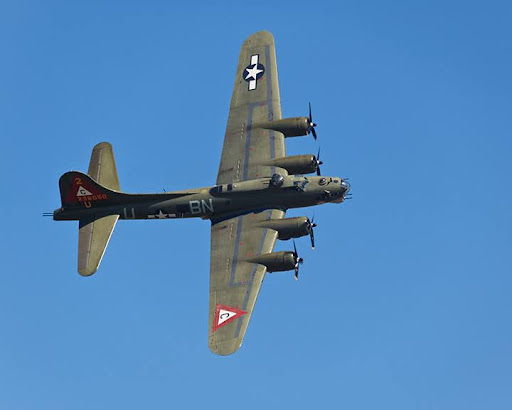
The Boeing B-17 Flying Fortress earned its name for a reason. It carried up to 8,000 pounds of bombs, defended by up to 13 machine guns. Crews loved its strength; many B-17s made it home even after taking heavy damage.
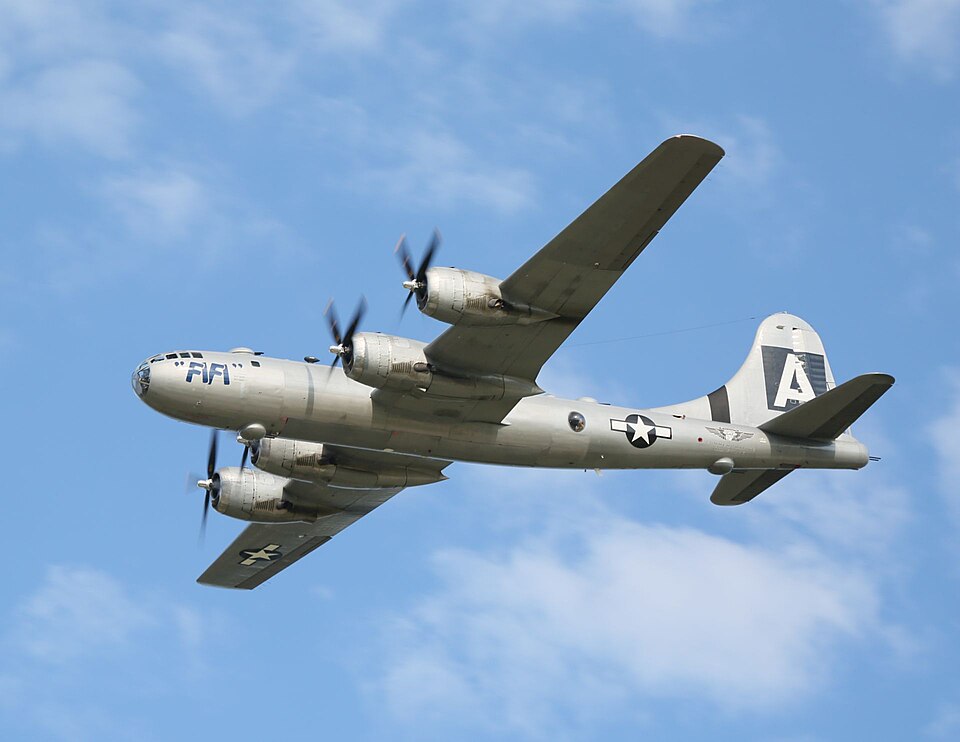
Then came the B-29 Superfortress, a major step forward in aviation technology. It featured pressurized cabins, remote-controlled gun turrets, and a much longer range. The B-29 became famous for missions in the Pacific, including the atomic bombings of Hiroshima and Nagasaki.
Both of these bombers symbolized American industrial strength and the ability of the USAAF to strike anywhere on the globe.
UNITED KINGDOM: AVRO LANCASTER
The Avro Lancaster became the heart of Britain’s Royal Air Force Bomber Command. It was fast, reliable, and could carry up to 22,000 pounds of bombs—more than any other WW2 bomber. Its role in the “Dambusters Raid,” where crews used special bouncing bombs to destroy German dams, made it one of the most legendary aircraft in aviation history.
GERMANY: JUNKERS JU 88
The Junkers Ju 88 was Germany’s most flexible bomber. It could dive-bomb, perform level bombing, and even serve as a night fighter. Its versatility made it essential throughout the war, especially during the Battle of Britain. While it lacked the range and payload of heavier bombers, its speed and adaptability made it valuable in multiple theaters of war.
JAPAN: MITSUBISHI G4M
Japan’s Mitsubishi G4M, known by Allied forces as “Betty,” was used by the Japanese Navy for long-range missions. Although lightly armored, its long range and speed made it effective in the Pacific’s island campaigns. It showed how different nations approached bomber design depending on their strategy and geography.
TACTICS AND MISSIONS
Bombing missions were dangerous and demanding. Crews faced enemy fighters, anti-aircraft guns, freezing temperatures, and long hours in cramped conditions. Still, these missions played a crucial role in breaking enemy production and morale.
There were two main types of bombing operations:
- Strategic Bombing: Focused on large industrial targets, cities, and supply centers to weaken the enemy’s ability to fight.
- Tactical Bombing: Targeted bridges, roads, and front-line positions to support advancing ground troops.
The USAAF aircraft and Royal Air Force often coordinated massive raids involving hundreds of bombers flying in tight formations. This made defense easier but also required precise timing and communication.
BOMBERS AFTER THE WAR
When the end of World War II came, bomber technology continued to shape the future of air combat. Engineers used wartime experience to create faster, higher-flying bombers for the Cold War. Jet-powered designs like the B-47 Stratojet and B-52 Stratofortress were direct descendants of the lessons learned from the WW2 era.
The impact of these bombers went far beyond the battlefields. They influenced the development of passenger planes, led to breakthroughs in aircraft manufacturing, and helped define the structure of modern air forces around the world.
LEGACY OF THE BOMBER ERA
Even today, the stories of WW2 bombers continue to capture attention. Museums, airshows, and documentaries highlight how these planes combined bravery, innovation, and sacrifice.
When we think about perhaps the most famous examples, the B-17, B-29, and Avro Lancaster still stand as icons of power and perseverance. Each represents a chapter of history where technology and teamwork met at extraordinary heights.
The USAAC aircraft and USAAF efforts proved how aircraft could define the outcome of wars. The teamwork among pilots, engineers, and mechanics allowed the aircraft flew longer missions, with greater precision and endurance. The range of the aircraft they built reshaped warfare forever, giving nations the ability to fight across oceans and continents.
By the time the last WW2 bomber entered World War II service, it was clear that aviation had changed forever. These planes weren’t only tools of war—they were milestones of engineering. They showed how far human skill and determination could go under pressure.
CONCLUSION
From the first flight of early bombers to the final missions at the end of World War, bomber planes have shaped every chapter of military history. These aircraft produced by companies like Boeing, Tupolev, and North American Aviation defined the power and reach of nations. They proved how far human ingenuity could go in the face of war.
If you’re fascinated by historic bomber aircraft or curious about modern aviation, visit Flying411.com to explore the world of famous bomber planes and the stories behind them.
FREQUENTLY ASKED QUESTIONS
1. WHAT WAS THE MOST POWERFUL BOMBER OF WORLD WAR II?
The B-29 Superfortress is often considered the most powerful, with advanced pressurization, a long range, and a massive bomb load.
2. HOW DID THE B-17 FLYING FORTRESS GET ITS NAME?
It earned its name because of its heavy defensive armament and ability to withstand severe damage during missions.
3. WHICH COUNTRY BUILT THE AVRO LANCASTER?
The Avro Lancaster was built by the United Kingdom for the Royal Air Force, serving as a top night bomber in World War II.
4. WHEN DID THE FIRST BOMBER ENTER SERVICE?
The earliest bombers entered service during World War I, but war II bombers were the first to define modern strategic bombing.
5. WHAT IS THE DIFFERENCE BETWEEN A MEDIUM AND HEAVY BOMBER?
A medium bomber carries a moderate payload capacity and shorter range, while a heavy bomber is designed for long-range missions and larger bomb loads.