The idea of a vertical takeoff might seem like something from a futuristic movie, but the f-35 can actually do it. The whole process looks smooth and strong, especially when shown in the video clips online. Many people see it hover, spin, and rise before it starts to fly, but they wonder how the aircraft pulls it off. The answer comes from smart technology, mechanical timing, and strong engine power working together.
Once you see the full motion, the next question often comes fast: how can a jet do that without tipping over or shaking apart? The movement looks easy, but the structure underneath is complex. The pilot depends on a computer-controlled system that adjusts balance many times every second. Everything must work at the exact moment so the plane can take off and land safely and vertically.
This type of flight gives the fighter a unique capability. It can land on a ship, a small runway, or an amphibious assault platform used by the navy or usmc. It can also perform short takeoff movements and a vertical landing when the space is limited. Because of this, the aircraft supports real missions in combat areas.
Now that the idea feels clear, let’s look at how the full motion happens step-by-step. The sequence explains how the f35, especially the f-35b variant, goes from sitting still on a deck to hovering in the air.
What Happens During A Full Vertical Takeoff Sequence
A full vertical take-off sequence happens in stages. Each stage allows the plane to keep balance, build power, and control thrust. The process starts before the operation even looks dramatic to the eye.
Step 1: System Prep and Engine Positioning
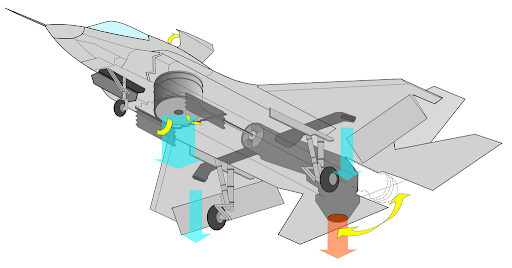
The pilot starts by preparing the vtol functions. The computer checks the gear, the engine, the fan, and the lift system. The pilot confirms the amount of fuel, because a full payload can affect hover performance. Then, the rear nozzle begins to rotate downward using a bearing swivel. At the same time, the large shaft in the nose area connects to the fan, which will help create upward lift.
Step 2: Building Thrust and Lift
Once everything locks into position, the jet builds controlled thrust. Air enters the fan in the front, and the energy helps push the aircraft upward. The rear nozzle points downward to produce strong redirected thrust. During this moment, the aircraft becomes stable enough to break contact with the surface.
Step 3: Hover and Control
The aircraft begins to hover. Computers control small adjustments in pitch and balance so the movement stays smooth. This stage looks similar to a helicopter, but the internal system works very differently. During the hover, the aircraft is fully capable of staying in place, rotating, or gently moving sideways. This helps during short take or short takeoff and vertical landing.
Step 4: Transition to Flight
When ready, the pilot adds forward motion. The rear engine rotates again, airflow changes direction, and the aircraft slowly transitions into normal flight. At this point, the jet begins acting closer to regular jets and can reach supersonic speed.
How The F-35 Engine System Enables Vertical Takeoff
| Component | Description | Function |
| Lift Fan | Front-mounted, connected by a shaft | Creates upward lift |
| Bearing Swivel Nozzle | Rear rotating nozzle | Turns thrust downward |
| Rolls Royce System | Core part of the STOVL setup | Supports thrust control |
| Redirected Thrust | Output from nozzle and fan | Enables hover and takeoff |
| Computer Control | Automatic flight adjustments | Keeps balance and controls movement |
The f-35b depends on a special design called stovl aircraft engineering. STOVL means short takeoff and vertical landing. This setup lets the plane take off and land in small spaces, like the carrier deck used by the navy or the usmc.
One of the most important parts is the bearing swivel rear nozzle. It turns downward so the exhaust forces the jet upward. At the same time, the large fan in the front creates extra lift. A strong shaft rotates because of the main engine, and all the motion builds balanced power. This design makes the jet capable of both short takeoff and full vertical take launch.
The idea came from earlier harrier systems, including the harrier jump jet and the av-8b, but the engineering in the first f-35b took the idea further. Now, the jet can perform a vertical takeoff and landing and still remain a strong fighter with stealth features, supersonic ability, and usable weapon storage.
The f-35's smart computer support makes handling safer. The system adjusts controls automatically. The pilot stays in command, but the aircraft handles tiny stability corrections faster than a person ever could.
Because the plane can take off and land vertically, it gives forces the ability to carry equipment, support missions, and operate from smaller areas. That makes the aircraft useful for marine missions and carrier platforms in many locations. Some footage has been shown in the video clips online, and some even appear on youtube for public viewing.
The f-35a and f-35c do not use the same stovl setup, but they share some design parts. Only the f35b includes the full vertical lift capability.
HOW THE F-35 CONTROL SYSTEM KEEPS THE AIRCRAFT STEADY DURING HOVER
When the f-35b hovers, many things happen at the same time. The system must stay balanced so the aircraft does not tilt or slide. This part of the flight looks calm from the outside, but inside the computer, hundreds of adjustments happen every second. These adjustments help the pilot stay in control during the hardest part of flying: holding the jet in one place above the ground.
The main goal is stability. The aircraft must stay level while creating enough lift to support its weight. If the force shifts too far to one side, the aircraft may drift. The control system prevents that by reacting faster than a human can.
The system works with sensors, hydraulic parts, and flight software. Together, they make small corrections to keep the movement steady and predictable.
How the System Knows What to Adjust
The aircraft uses sensors to read its position. These sensors check things like angle, height, and motion. The computer uses the results to control the engine output and airflow. If the jet begins to lean, the system adds tiny corrections. The pilot still controls direction and speed, but the computer handles the tiny details.
Some examples of small changes include:
- Adjusting nozzle angles
- Changing thrust levels
- Moving flaps around the body
- Reducing or increasing fan power
These movements happen so quickly that the hovering looks smooth. When people watch a video online, the motion looks calm. Many forget the system is working very hard during that moment.
Why Hover Requires Strong Power
The hover stage demands strong power because the jet must support itself without using forward motion. A normal airplane uses airflow over the wings to stay up. In a hover, the f-35 must rely only on downward force.
During hover, the aircraft burns fuel faster. The load also matters. A heavier setup may shorten the hover time. This detail is important during combat operations. The pilot plans fuel use carefully so the hover does not last longer than needed.
How the Pilot Uses Controls During Hover
The pilot does not work alone. The flight computer helps a lot, but the pilot still gives main commands. These commands include:
- Move up or down
- Turn left or right
- Move forward slowly
- Hold still
Hovering feels similar to balancing, but the computer makes it easier. The stovl setup makes the takeoff and landing flexible for small spaces. That gives the aircraft a strong mission capability.
When the aircraft prepares to land after a hover, the controls slow movement. The end result is a smooth vertical landing in a controlled space.
The Transition Back to Forward Flight
Once the hover stage is complete, the aircraft shifts into forward motion. This transition requires timing and careful thrust control. The main idea is simple: move from holding still to flying ahead.
Steps in the transition include:
- Reduce lift from the front fan
- Increase forward thrust
- Adjust nozzle angle
- Allow airflow over wings
- Gain speed
Once forward speed increases, the jet acts like a normal f35 flight profile. After that point, it does not need hovering support.
The ability to take off and land vertically also makes a short take departure possible. A pilot can begin flight with a short roll, then lift upward. This helps when the space is limited, like when launching from a ship.
Some people compare this skill to the older harrier aircraft, but the control system on the F-35 is more advanced. It helps reduce pilot workload and keeps motion precise.
Why This Ability Matters
The feature helps in many real missions. The aircraft can launch from areas where runways are small or damaged. It can also operate from ships or mobile bases. This gives forces more flexibility and support in a mission. The ability to take off and land vertically is valuable for military planning.
This skill also helps during training and emergency cases. Pilots can practice safe operations in controlled spaces before real missions. When the jet needs to land in a tight space, the system supports a calm approach.
Conclusion
The vertical takeoff and landing ability of the F-35B model shows how strong engineering and computer assistance can work together in a modern aircraft. The system creates balance, control, and useful mission options for forces that need flexible operations in different areas. Once you understand how the parts work, the movement feels simple and predictable.
If you want to explore more about aircraft, aviation, or the topic HOW DOES THE F-35 VERTICAL TAKEOFF WORK? A SIMPLE BREAKDOWN, check out Flying411.com for helpful guides, updates, and listings.
FAQs
1. HOW LONG CAN THE F-35B HOVER?
It can hover for a short period. The exact time depends on fuel load, temperature, and mission setup.
2. DOES THE F-35B NEED A RUNWAY?
It can use one, but it can also launch vertically or with a short roll if space is limited.
3. HOW HEAVY CAN THE JET BE DURING A VERTICAL TAKEOFF?
Weight limits matter. A lighter load supports vertical launch. A heavier setup may require short takeoff.
4. CAN THE F-35C OR F-35A PERFORM VERTICAL TAKEOFF?
No. Only the F-35B has the full VTOL and STOVL equipment.
5. IS THE SYSTEM AUTOMATED?
The computer assists with balance and control, but the pilot still manages the primary commands.