Some fighter jets ruled the skies for decades. Others barely flew at all. A handful were built in the single digits, tested in secret, and then quietly tucked away into hangars or museums. These are the planes that pilots dream about and aviation fans travel across the country to see in person.
The story of the rarest fighter jets in the world is full of bold ideas, canceled programs, political fights, and budgets that ran out at the worst possible time. Some were ahead of their time. Others were too strange to survive. A few were simply unlucky.
Behind every rare jet is a wild story of engineers chasing ideas the rest of the world wasn't ready for.
Key Takeaways
The rarest fighter jets in the world are aircraft that were built in very small numbers, often as prototypes, technology demonstrators, or limited production runs that ended early. Many never entered full service. Some lost competitions to other jets. Others were canceled when budgets shifted or politics got in the way. A few are still flying today in small fleets that may not last much longer.
| Aspect | What It Means |
| Definition | Fighter jets built in very small numbers, often fewer than 200, sometimes just 1 or 2 |
| Why they are rare | Canceled programs, lost competitions, high costs, political shifts, or experimental purpose |
| Where to find them | Mostly in museums, a few still in active military service |
| Most famous examples | YF-23 Black Widow II, Su-47 Berkut, F-117 Nighthawk, F-22 Raptor |
| What makes them special | Bold designs, cutting-edge tech, and stories that shaped modern aviation |
| Active vs retired | Most are retired; a few rare types are still flown by small operators |
Flying411 keeps a close eye on the aviation world, from rare birds in museums to the planes still hitting the skies today.
What Makes a Fighter Jet "Rare"?
Before jumping into the list, it helps to understand what "rare" actually means in the world of fighter jets. It is not always about age. A 1940s plane and a 1990s plane can both be rare for very different reasons.
A fighter jet is usually called rare when one of these things is true:
- It was built in very small numbers, often fewer than a few hundred
- Only one or two prototypes were ever made
- It lost a major competition and never reached production
- It was canceled mid-program due to budget cuts or politics
- Only a handful of operating examples are left flying today
- It was built in secret and remained classified for years
Good to Know: A "fighter jet" is a military aircraft built mainly for air-to-air combat or strike missions. Bombers, cargo planes, and trainers are usually grouped separately, even if some of them look similar.
Some rare jets are stunning examples of what almost came to be. Others are reminders of how brutal aviation development can be. Both are worth knowing about.
Why So Many Fighter Jets End Up Rare
It might seem strange that countries pour billions into building advanced fighter jets just to make a handful and stop. But the reasons happen more often than you would think. Modern fighter programs are some of the most expensive projects governments ever take on, and a lot can go wrong before a plane reaches full production.
Here are the most common reasons a fighter jet ends up rare:
- Budget cuts. Defense budgets shift. A program that was a top priority one year can be on the chopping block the next.
- Lost competitions. Two or more designs go head-to-head, and only the winner gets built in numbers. The loser may never make it past the prototype stage.
- Changing strategy. A jet designed to fight one type of war might no longer fit when the threats change.
- Political pressure. Lawmakers, allies, and contractors all influence which programs survive.
- Technical risk. Some designs are too far ahead of their time and can't be made reliable enough.
- Export restrictions. Some jets are so advanced that the country building them refuses to sell them abroad, keeping the fleet small.
Why It Matters Understanding why jets become rare helps explain why some of the most famous aircraft today were almost lost to history. A canceled program in one decade often shapes what gets built in the next.
The Rarest Fighter Jets in the World
The list below is a mix of one-off prototypes, small production runs, and fighters that came close to greatness but ran out of road. Some flew in combat. Some never did. All of them are extraordinary in their own way.
1. Northrop YF-23 Black Widow II
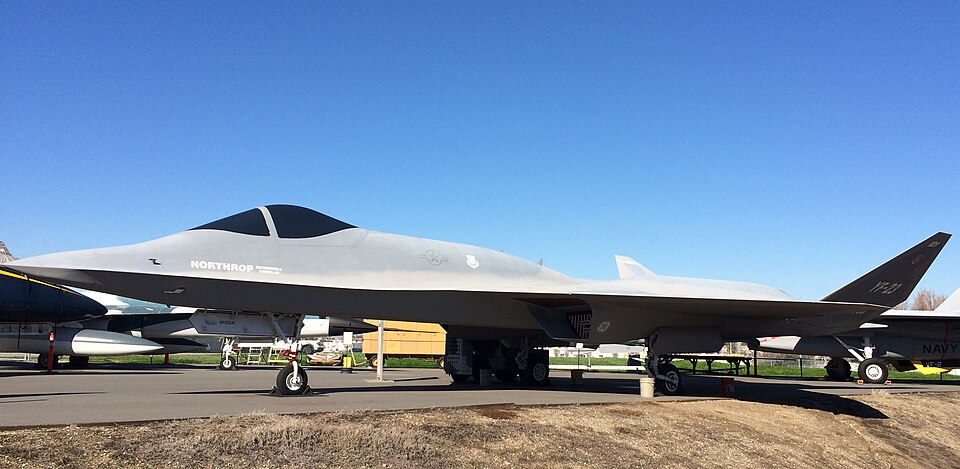
The YF-23 is one of the most famous "what could have been" stories in modern aviation. It was built by Northrop and McDonnell Douglas as part of the U.S. Air Force's Advanced Tactical Fighter program in the late 1980s and early 1990s. Two prototypes were made, nicknamed "Black Widow II" and "Gray Ghost."
The YF-23 went up against the Lockheed YF-22 in a head-to-head competition. By many accounts, it was stealthier and faster than its rival, with a striking diamond-shaped wing and a slim profile that some compared to the SR-71 Blackbird. Both prototypes flew a combined 50 flights and around 65 hours of flight time during testing.
In the end, the U.S. Air Force chose the YF-22, which became the F-22 Raptor. The YF-23 program was canceled. Only two were ever built, and both now sit in museums.
Key facts about the YF-23:
- Total built: 2 prototypes
- First flight: 1990
- Status: Retired, both in museums
- Reason it is rare: Lost the ATF competition to the YF-22
Fun Fact One of the two YF-23 prototypes is on display at the National Museum of the U.S. Air Force in Dayton, Ohio. Aviation fans often travel from across the country just to see it up close.
2. Sukhoi Su-47 Berkut
If you have ever seen a fighter jet with wings that sweep forward instead of backward, you were probably looking at the Sukhoi Su-47 Berkut, which means "Golden Eagle" in Russian. It is one of the strangest-looking and rarest fighter jets ever built.
Only one prototype was ever made. It first flew on September 25, 1997, with Sukhoi test pilot Igor Votintsev at the controls. The forward-swept wing design was meant to give the aircraft incredible maneuverability at high angles of attack, sometimes up to 45 degrees or more.
The Su-47 was never meant for mass production. It was a flying laboratory used to test composite materials, fly-by-wire control systems, and aerodynamic ideas that would later show up in newer Russian fighters like the Su-57. Funding troubles and a shift toward conventional stealth designs ended any hope of putting it into service.
Pro Tip If you are ever visiting an air show that features Russian aircraft, keep an eye out for footage of the Su-47. It made several public appearances at MAKS air shows in the late 1990s and early 2000s, and the videos are still some of the most memorable in modern aviation.
3. Lockheed F-117 Nighthawk
The F-117 Nighthawk changed how the world thought about military aviation. It was the first operational stealth aircraft, built by Lockheed for the U.S. Air Force. Its angular, faceted shape was designed to scatter radar waves, and the entire aircraft was painted black so it would be harder to spot at night.
According to the Reagan Foundation, between 1981 and 2008, Lockheed Martin produced 59 operational F-117s and five developmental prototypes. The aircraft's existence was not officially acknowledged by the U.S. government until 1988, even though it had been flying for years.
Production ended in 1990 with the 59th plane, and the type was officially retired in 2008. A few are still occasionally seen flying for testing and training purposes, which surprises a lot of aviation watchers who assumed the entire fleet had been mothballed.
Why it stands out:
- First-ever operational stealth aircraft
- Hidden from public view for years
- Limited production run of fewer than 65 total airframes
- Iconic angular shape that influenced every stealth jet that came after
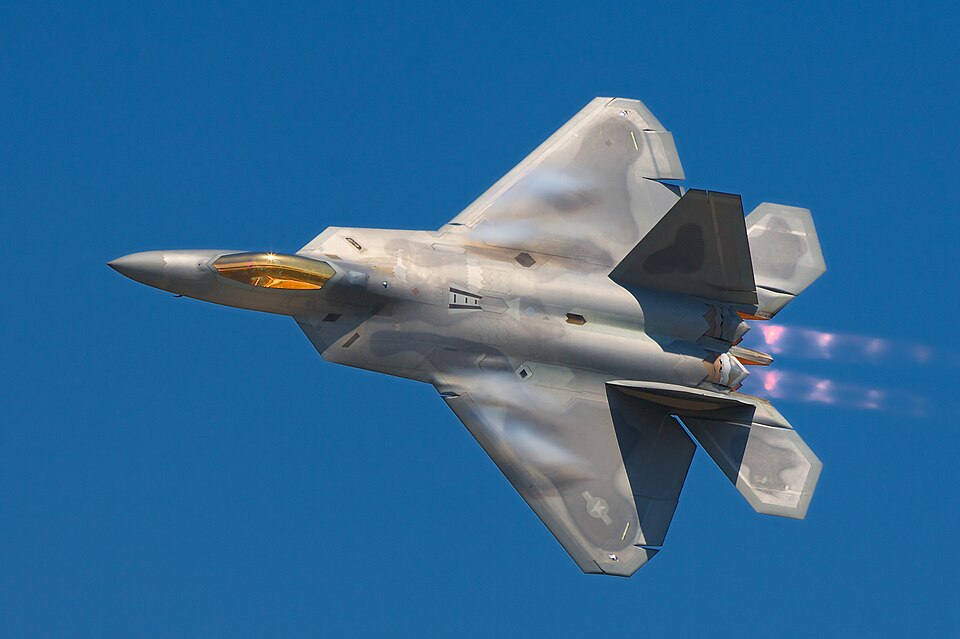
4. Lockheed Martin F-22 Raptor
The F-22 Raptor is widely considered one of the most advanced air superiority fighters ever built. It was the first fifth-generation fighter to enter service, combining stealth, supercruise, and a powerful sensor suite. So why is it on a list of rare jets?
Because there are so few of them.
The U.S. Air Force originally planned to buy hundreds of Raptors. According to Wikipedia and multiple defense sources, that number was scaled down again and again until production was halted at 195 total airframes, including test aircraft. Only around 186 operational F-22s were ever built before the program shut down. The production line was closed, the tooling was retired, and restarting it would now cost billions.
Even more limiting, the F-22 has never been exported. A 1998 law banned its sale to any foreign government to protect its stealth technology. That means every F-22 in the world flies under one flag.
Heads Up Even though the F-22 is still in active service, its rarity comes from how few were built and how impossible it is to make more. Once a Raptor is lost, it cannot be replaced.
5. Grumman F-14 Tomcat (Iranian Service)
The F-14 Tomcat is one of the most famous fighter jets in pop culture, thanks to its starring role in Top Gun. The U.S. Navy retired its Tomcats in 2006, which made the aircraft instantly nostalgic. But there is one country that kept them flying long after that, and it is not who you would expect.
Iran.
Before the 1979 revolution, the Shah of Iran ordered 80 F-14s from Grumman. According to NPR and other sources, 79 were delivered before the revolution upended U.S.-Iran relations. After the political fallout, Iran became the only foreign operator of the F-14, and after 2006, the only operator in the world.
Keeping those jets flying has been a decades-long challenge involving spare parts smuggling, cannibalizing airframes, and homemade fixes. By the mid-2020s, only a small number of Iranian Tomcats were still considered airworthy, and recent strikes have reduced that number even further.
Keep in Mind The F-14 was once a frontline fighter for the U.S. Navy and a symbol of American naval aviation. Its ongoing service in a single foreign country gives it one of the most unusual operational stories of any modern fighter.
6. Avro Canada CF-105 Arrow
The Avro Canada CF-105 Arrow is one of the most heartbreaking stories in fighter jet history. It was a Canadian-built supersonic interceptor that featured advanced aerodynamics, powerful engines, and sophisticated avionics for its time.
In the 1950s, the Arrow looked like it could become one of the best fighter jets of the Cold War. But on February 20, 1959, a day later called "Black Friday" in Canadian aviation circles, the program was suddenly canceled. The decision came down to escalating costs and political pressure.
According to SlashGear, only five aircraft were built, and they were all destroyed following the cancellation. Around 14,000 engineers were left without jobs almost overnight. Many of them moved south to the United States, where some ended up working on NASA's Apollo program.
Why the Arrow remains so iconic:
- Cutting-edge design for its era
- Canceled before it could ever enter service
- Total airframes built: 5
- All physical examples destroyed after cancellation
7. McDonnell XF-85 Goblin
The McDonnell XF-85 Goblin is one of the strangest fighter jets ever built. It was sometimes called the "parasite fighter" because it was designed to be carried inside the bomb bay of a Convair B-36 Peacemaker bomber and dropped mid-flight to defend the bomber from enemy fighters.
It is widely considered the smallest jet fighter ever made. According to SlashGear, the Goblin was only about 14 feet long with a wingspan of around 21 feet. It had no landing gear because it was supposed to dock back to its mothership in midair.
Only two prototypes were built, and they were tested in 1948. The tests did not go well. Pilots had serious trouble with turbulence and the docking process, and the program was abandoned. Today, the Goblin is mostly remembered as a wild experiment from a creative era of aviation.
Fun Fact The XF-85 was so small that pilots had to climb in through a tight hatch and fly the jet from a nearly seated-upright position. It was reportedly cramped, loud, and stressful to operate.
8. Boeing X-32
The Boeing X-32 is the runner-up nobody talks about. It was Boeing's entry in the Joint Strike Fighter (JSF) competition, going up against the Lockheed X-35. The winner of that competition would go on to become the F-35 Lightning II, one of the most produced fighters of the modern era.
Boeing built two X-32 prototypes. They were unusual-looking aircraft, with a wide chin intake that gave them what some pilots described as a "flying frog" appearance. The X-32B variant was even capable of full vertical takeoff and landing in the same way as the Harrier jump jet.
Lockheed's X-35 won the competition, and the X-32 program ended. One of the X-32 prototypes is now preserved at the NAS Patuxent River Museum, while the other ended up at the National Museum of the U.S. Air Force.
Quick X-32 facts:
- Total built: 2 prototypes
- Lost the JSF competition to the Lockheed X-35
- Memorable for its wide intake design
- Both surviving examples are now in museums
9. North American XB-70 Valkyrie
The XB-70 Valkyrie is a slightly different case. It was originally designed as a high-altitude, high-speed strategic bomber rather than a traditional fighter, but it is often included in lists of rare military jets because of how few were built and how unique its design was.
The XB-70 was meant to fly at Mach 3 and cruise at 70,000 feet, putting it out of reach of enemy interceptors of its time. According to the National Museum of the U.S. Air Force and other sources, only two prototypes were ever built. One was lost in a midair collision in 1966. The other was retired and flown to the museum in 1969, where it remains today as the only surviving Valkyrie.
Quick Tip If you ever visit the National Museum of the U.S. Air Force in Dayton, Ohio, the Valkyrie is one of the most jaw-dropping aircraft on display. Its sheer size and futuristic design make it a must-see for any aviation fan.
10. Convair F2Y Sea Dart
The Convair F2Y Sea Dart is one of the most unusual fighter concepts ever to actually fly. It was a seaplane jet fighter designed to take off and land on water using two retractable hydro-skis. It was built for the U.S. Navy in the 1950s.
The Sea Dart is widely said to be the only seaplane to break the sound barrier. Only a handful were built, and the program was eventually canceled when supercarriers made the idea of a seaplane fighter unnecessary. The hydro-skis also caused serious vibration problems during testing, which made the design difficult to refine.
Today, surviving Sea Darts are scattered across U.S. aviation museums, where they remind visitors of an era when designers were willing to try almost anything in the name of innovation.
Flying411's marketplace and aviation insights regularly feature stories on rare aircraft, from canceled prototypes to one-off civilian conversions, for collectors and pilots who love the history behind these machines.
11. Sukhoi Su-57 (Felon)
The Sukhoi Su-57 is Russia's first attempt at a fifth-generation stealth fighter, and it has ended up on rarity lists for a different reason than the others. It is in active service, but produced in very small numbers compared to its American and Chinese rivals.
While exact production figures are debated, defense outlets generally agree that the Su-57 has been built in much smaller batches than expected, with delays and engine development problems slowing things down. Compared to the hundreds of F-35s and J-20s now in service, the Su-57 fleet is tiny.
This makes the Su-57 an interesting case. It is not a canceled program or a failed prototype. It is simply a modern fighter that has been rare from the moment it entered service.
Pro Tip When comparing modern fighters by rarity, it helps to look at total operational airframes, not just production starts. Some programs announce big numbers and only build a few jets per year.
12. Mikoyan MiG-1.44
Russia's MiG-1.44 is another classic "almost was" story. It was developed in the 1980s and 1990s as the Soviet Union's answer to the F-22. It featured a delta-wing design with canards and was meant to be a fifth-generation air superiority fighter.
Only one prototype was built, and it flew just a small number of test flights before the program was effectively shelved. The collapse of the Soviet Union, funding shortages, and shifting priorities all played a part in killing the project. Russia eventually moved on to the Su-57 program.
The single MiG-1.44 prototype still exists, though it is rarely seen in public. For aviation historians, it stands as a reminder of how close Russia came to having a true fifth-generation fighter much earlier than it did.
Why the MiG-1.44 stands out:
- Total built: 1 prototype
- Designed as a Soviet rival to the F-22
- Canceled after only a handful of test flights
- Marks a turning point in modern Russian fighter development
Looking to follow more aviation stories like these? Flying411's blog covers the aircraft, parts, and people that make the aviation world so unique.
How Rare Fighter Jets Get Preserved (Or Lost)
Once a rare fighter jet's flying days are over, it usually ends up in one of three places. The luckiest ones go to museums. Some are stored in long-term facilities like the famous "Boneyard" at Davis-Monthan Air Force Base. The unluckiest ones are scrapped, destroyed, or lost in accidents.
Preserving a rare jet is not as simple as parking it indoors. Old aircraft need:
- Climate-controlled storage to slow corrosion
- Regular cleaning and inspection
- Restoration work for parts that degrade over time
- Specialized handling because parts are no longer made
- Detailed documentation for future generations
Good to Know Some museum aircraft are technically still owned by the military and only loaned out for display. That is why you sometimes see famous jets disappear from one museum and reappear at another after a few years.
When a rare jet is destroyed, the loss is often permanent. Many programs were so secret that blueprints were classified, supply chains were dismantled, and the original engineers retired or moved on. Restarting production is almost always more expensive than building something new from scratch.
The Future of Rare Fighter Jets
The rarest fighter jets of the future may already be flying today. As programs like the U.S. Next Generation Air Dominance (NGAD) and various sixth-generation projects in Europe and Asia move forward, expect to see more limited-production stealth fighters built in small numbers and tightly controlled.
Several trends are likely to keep producing rare jets:
- Higher unit costs. Modern fighters cost so much that smaller fleets are becoming the norm.
- Stricter export controls. Sensitive technology means fewer countries can buy advanced jets.
- Faster tech cycles. Some designs are made obsolete before they can enter mass production.
- Smaller, smarter fleets. Air forces are trading numbers for capability, especially with the rise of drones and AI-assisted aircraft.
The next decade may give us a fresh batch of rare aircraft to talk about, including secret prototypes that the public has not yet seen.
Frequently Asked Questions
What is the rarest fighter jet ever built?
There is no single answer because rarity can be measured in different ways. By total production, jets like the Sukhoi Su-47 and the Mikoyan MiG-1.44, with only one airframe each, are among the rarest. By small operational fleets, the F-22 Raptor and Iran's surviving F-14 Tomcats also rank near the top.
Are any rare fighter jets still flying today?
Yes. The F-22 Raptor remains in active U.S. service, and a small number of F-14 Tomcats are still flown by Iran. A few F-117 Nighthawks have been spotted flying for testing purposes long after their official retirement. Most other rare fighters live in museums.
Why was the F-22 Raptor production stopped so early?
According to multiple defense sources, F-22 production was halted at 186 operational aircraft mainly due to cost concerns, shifting strategic priorities after the Cold War, and the rise of the multirole F-35 program. Restarting production has been ruled out as too expensive.
How can someone see a rare fighter jet in person?
Most rare fighter jets are displayed at major military aviation museums. Examples include the National Museum of the U.S. Air Force in Dayton, Ohio, the National Air and Space Museum, and the NAS Patuxent River Museum, which displays one of the X-32 prototypes.
What is the difference between a rare fighter jet and an experimental aircraft?
A rare fighter jet is generally one that was either built in small numbers or has very few operational examples remaining. An experimental aircraft is built specifically for testing new ideas, materials, or technologies, often without the goal of entering service. Many rare fighter jets started as experimental aircraft, like the Su-47 Berkut and the YF-23.
If you are tracking down hard-to-find aviation history or shopping for your next aircraft, Flying411 is the marketplace and resource hub built for people who love everything that flies.