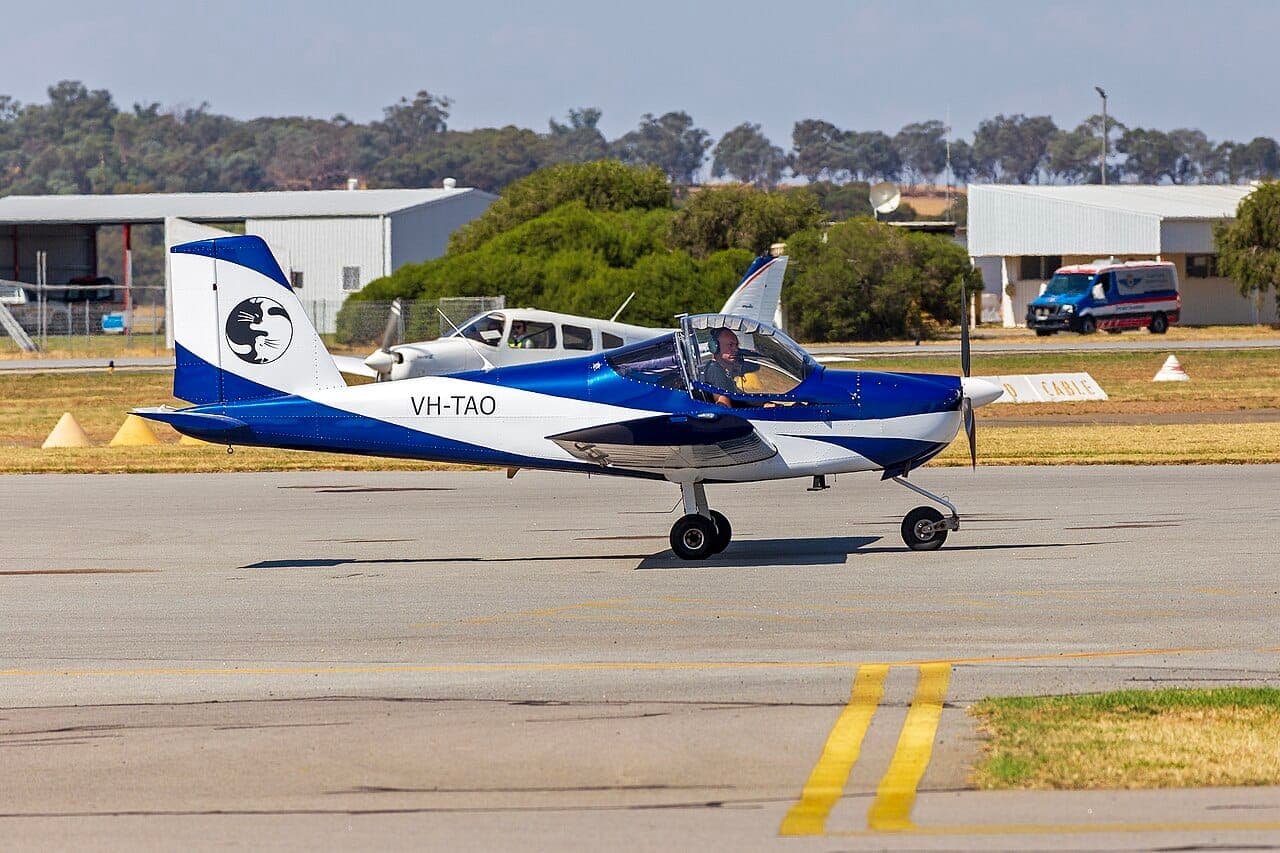
Yes, since October 22, 2025, if your operating limitations allow it. If you bought an experimental amateur-built airplane that somebody else built, you cannot use the builder's repairman certificate issued under 14 CFR 65.104, which belongs to the person who built the aircraft. But under the MOSAIC rule, a 16-hour course earns the LSR-I certificate, which now lets you sign the condition inspection on an experimental amateur-built airplane you own, in the aircraft category you trained on.
That answer decides whether you pay an A&P every year for the life of the airplane or sign the book yourself after a short course. This article sets out what each certificate actually covers, why your aircraft's operating limitations now matter as much as the certificate, and the paperwork questions worth asking before you wire the money for an experimental you didn't build.
Key Takeaways
The annual condition inspection on an experimental amateur-built (E-AB) aircraft may be performed by the holder of a repairman certificate (experimental aircraft builder) for that specific airframe, by any certificated mechanic holding airframe and powerplant ratings (no inspection authorization (IA) required), or, since the MOSAIC rule took effect on October 22, 2025, by an owner holding the light-sport repairman certificate with an inspection rating. … requires a 16-hour course and lets the holder inspect experimental aircraft they own, including E-AB and E-LSA, in the aircraft category covered by the training. The catch is the operating limitations: airworthiness certificates issued before Revision L of FAA Order 8130.2 typically do not name an LSR as an allowed inspector. Your aircraft's operating limitations, not a forum post, are the governing document, so read them before you buy.
What Each Certificate and Code Actually Means
Experimental paperwork uses a handful of terms that sound interchangeable and are not. Think of them the way you would think of a driver's licence versus a commercial endorsement versus the registration for one particular truck: three different documents, three different scopes, and mixing them up gets expensive.
| Term or code | What it actually means |
| E-AB (14 CFR 21.191(g)) | Experimental amateur-built. The major portion was fabricated and assembled by a person building for education or recreation — the "51% rule." Most RVs, Lancairs, Kitfoxes and Sonexes. |
| E-LSA (14 CFR 21.191(i)) | Experimental light-sport. Built from a kit matching an existing special light-sport model, or a converted former two-place ultralight trainer. No 51% requirement. |
| S-LSA | Special light-sport, factory-built and ready to fly. Holds a special airworthiness certificate, not an experimental one, and has stricter maintenance rules. |
| Condition inspection | The annual inspection required by an experimental aircraft's operating limitations. Not an "annual" in the Part 43 sense, though the scope is the same list. |
| Appendix D to Part 43 | The checklist of items an annual or 100-hour inspection must cover. Experimental operating limitations borrow it by reference as the required scope and detail. |
| Repairman certificate (experimental aircraft builder) | Issued under 65.104 to the primary builder. Privilege: perform condition inspections on the one aircraft that person constructed. Nothing else. |
| LSR-I | Repairman certificate (light-sport) with an inspection rating, 65.107 and 65.109. Privilege: the annual condition inspection on an experimental aircraft owned by the holder, including E-LSA and E-AB, in the category and class covered by the training. The aircraft's operating limitations must allow it. |
| LSR-M | Same certificate with a maintenance rating, a far longer course with no fixed hour requirement (EAA describes it as nominally three weeks). Broader privileges, including work on S-LSA and condition inspections on experimental aircraft, including E-AB, that the holder does not own. |
| A&P | Certificated mechanic with airframe and powerplant ratings. Can perform the condition inspection on any experimental aircraft the operating limitations allow. |
| IA | Inspection authorization. Needed for annual inspections on standard-category aircraft. Not needed for an experimental condition inspection. |
| Operating limitations | The FAA-issued document that is part of the airworthiness certificate and must be aboard the aircraft. It states who may sign the condition inspection for that specific airplane. |
| FAA Form 8610-2 | Airman Certificate and/or Rating Application — the form used to apply for either repairman certificate. |
Good to Know: 14 CFR 43.1(b) says Part 43 does not apply to aircraft holding an experimental certificate, unless the FAA previously issued that aircraft a different kind of airworthiness certificate. That is why the term is "condition inspection" and not "annual inspection," and why your logbook entry quotes Appendix D rather than certifying compliance with Part 43 itself.
Why the Builder's Certificate Does Not Come With the Airplane
Section 65.104 sets out four eligibility items, and the one that stops buyers cold is the second: the applicant must be the primary builder of the aircraft to which the privileges apply. The FAA issues that certificate to a person, names the aircraft on it, and expects the holder to have the knowledge and skill to judge whether that airframe is safe. A buyer who has never riveted a rib has none of that history, so there is no route to the certificate no matter how well they know the airplane now.
Two consequences follow, and the second one surprises people. First, the certificate does not transfer with the bill of sale. Second, the wording of 65.104(b) ties the privilege to "the aircraft constructed by the holder" rather than to ownership — so the original builder generally retains the ability to perform that aircraft's condition inspection after selling it. Plenty of buyers arrange exactly that, flying back to the builder's field once a year. It works until the builder moves, loses interest or passes away, which is why it is a convenience and not a plan.
Heads Up: Rebuilding a wrecked homebuilt does not make you the primary builder. A local FSDO may consider a repairman certificate in genuinely unusual cases where someone has reconstructed the major portion, but it is discretionary, rare, and not something to count on when you are negotiating a price. Advisory Circular 65-23A covers how the agency evaluates these applications.
Flying411 keeps experimental and certified listings in one place, so you can compare an E-AB against an E-LSA version of the same design before the inspection question becomes your problem.
Where the LSR-I Fits, and Where It Does Not
The light-sport repairman certificate with an inspection rating is the one piece of good news for non-builders, and it is narrower than its reputation. Under 65.107, an applicant must be at least 18, read, speak, write and understand English, and complete a 16-hour training course acceptable to the FAA ccovering the category, and class where applicable, of experimental aircraft involved. Courses typically run two days and cost a few hundred dollars, and EAA maintains a list of accepted providers.
The privilege granted is specific: perform the annual condition inspection on an experimental aircraft owned by the holder, including both E-LSA and E-AB, in the category and class covered by the training. Not on a friend's airplane. Not on an S-LSA. And not in a category you did not train for. The category on the airworthiness certificate and the signatories named in the operating limitations are what count.
The RV-12 Case That Catches Buyers
Van's RV-12 is the clearest example in general aviation. The same design has been certificated both as E-LSA and as E-AB, depending on how the kit was built and licensed. Buy the E-LSA version, take the 16-hour course, and you can legally sign your own condition inspections for as long as you own it. Buy the E-AB version, take the same course, and you can sign too, provided its operating limitations name an LSR as an allowed inspector, which airworthiness certificates issued before Revision L of Order 8130.2 typically do not. Two identical-looking airplanes on the ramp can carry different inspection paperwork, so check the airworthiness certificate and the operating limitations, not the paint.
Why It Matters: The LSR-I follows you, not the airframe. Sell the E-LSA, buy another experimental aircraft of the same category and class, and the rating still applies. The builder's repairman certificate works the opposite way — it stays welded to one serial number forever.
One more point worth keeping straight: because Part 43 does not apply to experimental aircraft, you may already perform maintenance on your own E-AB or E-LSA without any certificate at all. The LSR-I is not permission to turn wrenches. It is permission to sign the one annual entry that keeps the airplane legal to fly.
Who Can Sign What
| Aircraft | Builder repairman (65.104) | LSR-I (65.107) | A&P |
| E-AB you built | Yes, that aircraft only | Yes, if you own it and your limitations allow | Yes |
| E-AB you bought | No (unless the original builder does it) | Yes, if you own it and your limitations allow | Yes |
| E-LSA you own | No | Yes, in your trained class | Yes |
| E-LSA owned by someone else | No | No | Yes |
| S-LSA | No | No | Yes |
Always check the signatory wording in your own operating limitations. The standard language the FAA uses has been revised over the decades, and older documents sometimes name an appropriately rated repair station as well. Whatever your copy says is what binds you, because 14 CFR 91.9(a) requires you to operate within the limitations the certificating authority prescribes.
Flying411 keeps homebuilt listings and their certification details in one place, so you can compare what each airplane will actually cost to keep legal, not just what it costs to buy.
The Mistakes That Cost Owners Money
Assuming you need an IA. You do not. Any A&P can perform and sign an experimental condition inspection. Some shops quote IA rates out of habit; owners report that a straightforward RV condition inspection usually runs several hundred to roughly $1,500 in labor as of 2025, before parts and before anything found gets fixed. If a quote looks like a Cessna annual, ask why. Our guide on what an IA can and cannot refuse under FAR 43.11 covers the certified-side equivalent.
Using the wrong logbook wording. The entry an experimental requires is not the Part 43 annual entry. Standard E-AB operating limitations call for a statement along the lines of: "I certify that this aircraft has been inspected on [date] in accordance with the scope and detail of appendix D to part 43 and was found to be in a condition for safe operation," together with the aircraft's total time in service and the signature and certificate number of the person signing. Copy the wording from your own limitations exactly.
Buying on the assumption that the builder will keep inspecting it. Get it in writing if it matters to your budget, and price the airplane as though it will not happen.
Skipping the pre-buy because the condition inspection is current. A fresh signature is not an endorsement of build quality. Have a mechanic who knows the type look at it independently — the difference between the two is laid out in pre-buy versus annual, and the type-specific checks for one popular airframe are in our RV-6A buyer's walkthrough.
Quick Tip: Ask the seller for the aircraft's builder log, the FAA Form 8130-6 application package and the operating limitations before you travel to see it. If the operating limitations are missing, the airplane is not legally airworthy until the FAA reissues them.
Keep in Mind: The FAA's MOSAIC final rule, published in July 2025, took effect for repairman certificates on October 22, 2025, and extended the LSR-I inspection privilege to experimental amateur-built aircraft the holder owns. If you are buying specifically to self-inspect, confirm the current text of 65.107 and 65.109, and your aircraft's operating limitations, with your FSDO.
Decide This Before You Sign the Check
The condition-inspection question is one of the few ownership costs you can lock in before purchase rather than discover afterwards. If annual self-sufficiency is the goal, shop E-LSA and budget for the 16-hour course. If you want the speed and payload of a bigger homebuilt — the kind of trade examined in our comparisons of the RV-10 against a Cessna 182 and the RV-14A against a Grumman Tiger — accept that an A&P signature is part of the yearly bill, and find one who likes experimentals before you need one. You can still do most of the work yourself; an owner-assisted approach applies just as well here. And if you are still deciding between a kit and a finished airframe, our experimental kit buyer's guide walks through the 51% question that decides who holds the repairman certificate in the first place. Whatever you choose, the LSR-I certificate is a real and useful credential, and since MOSAIC it can rescue a buyer of somebody else's homebuilt, provided the operating limitations allow it.
Flying411 keeps experimental, light-sport and certified aircraft in one place, so you can compare asking prices alongside the paperwork that drives their running costs.
When you are ready to compare listings, visitFlying411and see what is on the market today.