A flyable ATR 72-200 cost lands somewhere between about $600,000 and $3.5 million as of 2026, and the direct cost of flying one runs roughly $2,400 to $4,900 per block hour before you add the overhead of running an air carrier certificate. The spread is enormous because the sticker price on a 30-plus-year-old turboprop tells you almost nothing — what matters is how many hours are left on the engines, the propellers and the landing gear.
This guide breaks the number down line by line: acquisition, engine and prop reserves, fuel, scheduled checks, crew, insurance and parking. It also explains why the cheapest -200 on the market is frequently the most expensive airplane you could buy.
What an ATR 72-200 Actually Is
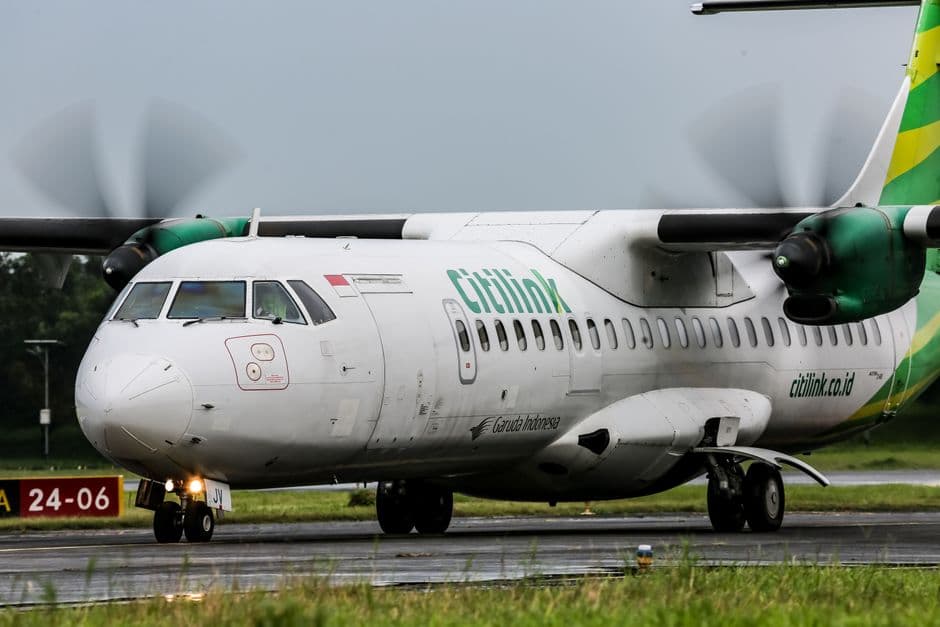
The ATR 72 first flew in October 1988 and entered service with Finnair in late 1989. The early -200 series, designated ATR 72-201 and -202, uses two Pratt & Whitney Canada PW124B engines, each rated at 2,160 shaft horsepower for takeoff, with 2,400 shaft horsepower available under specified operating ratings. These engines drive four-blade Hamilton Standard 14SF-11 propellers. The aircraft has a basic maximum takeoff weight of 21,500 kg (47,399 lb), with a 22,000 kg option, and ATR lists 66 seats in its standard configuration. Maximum operating altitude is 25,000 feet, while maximum cruise speed is approximately 278 knots true airspeed under ATR's published reference conditions.
Later variants moved to the more powerful PW127 family: the -210 series, the -500 (type-designated -212A) and today's -600. That matters to your wallet. The -200 is the oldest, least powerful and least supported branch of the family, which is exactly why it is cheap.
Buying one is a bit like buying a 30-year-old city transit bus. The purchase price is small enough to feel like a bargain, but the engine, the brakes and the structure are where the real bill lives, and none of those care what you paid for the shell.
Good to Know: The ATR 72's 25,000-foot ceiling keeps it below RVSM airspace, so you skip the RVSM equipment and approval costs that bite jet operators. That is one of the few places an old turboprop is genuinely simpler than a modern jet.
Purchase Price: What a -200 Costs Today
Passenger-configured ATR 72-200s in airworthy condition generally change hands in the $600,000 to $3.5 million range. Cargo-converted airframes with a large main-deck door sit higher, commonly $2.5 million to $5 million, because the conversion itself is a seven-figure project and the freight market still wants the capacity.
What pushes a -200 to the bottom of that range:
- Engines near or past overhaul, or with no remaining time on life-limited parts
- Landing gear approaching its overhaul window
- Incomplete or non-English maintenance records, which can make a Western registry import impractical
- Long-term storage without an approved preservation program
- Tired interiors and no ADS-B Out or modern navigation capability
What pushes it to the top: recent engine events, a C-check just completed, fresh gear, clean and traceable back-to-birth records on life-limited parts, and a cabin that does not need to be stripped and rebuilt.
Budget separately for getting the airplane into service. A pre-purchase inspection on a 70-seat turboprop, including borescopes, record review and a check-flight, runs $40,000 to $120,000. Ferry, import, registration, a conformity inspection and any required return-to-service work can easily add $100,000 to $500,000. On the cheapest airframes, entry-into-service spending routinely exceeds the purchase price.
Flying411 keeps turboprop and regional airliner listings in one place, so you can compare asking prices against engine and gear status instead of guessing from a single advertisement.
Engines and Propellers: Your Largest Reserve
The PW124B is a member of Pratt & Whitney Canada's PW100 family, and it is the single biggest financial variable on the airplane. Most operators run these engines on an on-condition basis with hot section work planned in the several-thousand-hour range and a full overhaul somewhere in the 9,000 to 12,000-hour band, depending on the operating environment, the escalation approvals in place and the condition of life-limited parts.
A full PW100-series overhaul is a major shop visit. Operators generally plan on $700,000 to $1.2 million per engine for a full overhaul with typical life-limited part replacement, with hot section visits running a fraction of that. Spread across the overhaul interval, a realistic engine reserve for the pair is $350 to $650 per flight hour. Dusty, hot, short-sector operations push you to the top of that band; long sectors in clean air push you down.
The six-blade propellers are their own line item. Prop overhauls fall on both an hours interval and a calendar interval, and shop visits commonly run $60,000 to $120,000 per propeller depending on blade condition and whether the hub needs work. Budget $40 to $90 per hour for the pair.
Heads Up: Engine condition is where a cheap -200 gets expensive fastest. Two run-out PW124Bs can represent more money than the airframe is worth. Always borescope both engines and verify remaining cycles on life-limited parts before you sign anything. Our guide on what aircraft engines cost explains why turbine shop visits scale the way they do.
Also check parts availability before you buy. Pratt & Whitney Canada continues to support the PW100 family, but PW124B-specific parts increasingly come from teardown inventory rather than new production. That lengthens shop turn times, and an airplane sitting on jacks waiting for a part still costs you insurance, parking and crew.
Fuel: The Predictable Part of the Bill
Fuel is the one cost you can model with real confidence. In cruise, operators typically plan on 600 to 750 kg per hour (roughly 1,300 to 1,650 lb). On short sectors where climb dominates the profile, block fuel climbs toward 800 to 900 kg per hour. The PW124B burns slightly more than the PW127 engines on later -500 and -600 models, which is one of the quiet reasons airlines retired the -200s first.
In US gallons, that works out to roughly 200 to 270 gallons per block hour. At Jet A prices of $5.50 to $8.00 per gallon for a smaller operator buying at retail or light contract rates, you are looking at $1,100 to $2,100 per hour. A large operator with negotiated fuel contracts can land well under that; a charter operator buying FBO retail at a secondary field will exceed it.
Total usable fuel is about 5,000 kg (roughly 11,000 lb), which gives the airplane something in the neighborhood of 700 to 900 nautical miles with a full passenger load. That is a short-haul machine by design, and short-haul means many cycles — which drives maintenance more than hours do.
Why It Matters: On a 70-seat airplane, fuel per seat is remarkably low. At 250 gallons an hour and 70 passengers, you are burning about 3.6 gallons per seat-hour. That is the whole argument for turboprops on thin routes, and it is covered in more depth in our piece on what makes one airliner cheaper to operate.
Scheduled Maintenance, Checks and Landing Gear
ATR publishes a maintenance planning document that drives the check cycle, and operators build an approved program from it. In broad terms, line checks and A-checks fall at intervals measured in hundreds of flight hours, while heavier C-checks come up every few thousand hours or every few calendar years, whichever arrives first. On a low-utilization airplane, calendar limits — not hours — will dictate your spending.
Realistic figures to plan around:
- A-check: $15,000 to $45,000, depending on findings and labor rates
- C-check: $300,000 to $900,000, with corrosion findings on a 30-plus-year-old airframe being the main variable
- Landing gear overhaul: roughly $350,000 to $700,000 for a ship set, on an interval measured in years and landings
- Rotable and component reserve: $100 to $250 per hour as an illustrative allowance for wheels, brakes, avionics, hydraulic components and other aircraft accessories; the ATR 72-200 does not have an auxiliary power unit.
Spread over the year, airframe scheduled maintenance plus components generally works out to $450 to $1,050 per flight hour for a -200 flown at reasonable utilization. Fly it 200 hours a year instead of 1,200, and the per-hour number roughly triples because the calendar-driven work happens regardless.
Two compliance items deserve naming. First, the FAA and EASA mandated expanded de-icing boots and revised icing procedures for the ATR 42 and ATR 72 fleet following the 1994 American Eagle Flight 4184 accident at Roselawn, Indiana, and the icing-related airworthiness directives that came out of that work remain part of the type's compliance history. Verify the airplane you are looking at is fully compliant and that the records prove it. Second, ATR has published extended service goal programs that let early airframes keep flying past their original structural limits — but complying with one is an inspection and modification package with real cost attached, not a paperwork exercise.
Pro Tip: Ask for the airplane's current cycle count and its remaining margin to the next structural threshold before you talk price. On a short-haul turboprop, cycles accumulate fast, and a high-cycle -200 can hit an expensive inspection milestone within a year of purchase.
Crew, Insurance, Parking and Certificate Overhead
Crew. The ATR 72 is a two-pilot airplane, and a 70-seat passenger configuration needs cabin crew as well. In the US regional market as of 2026, turboprop captains commonly earn in the $95,000 to $165,000 range and first officers $60,000 to $100,000, with cabin crew well below that. Allocated across a typical annual flying program, crew works out to roughly $450 to $1,000 per block hour, and it behaves as a fixed cost whether the airplane flies or not.
Insurance. Hull and liability on a commercially operated 70-seat turboprop is written on a commercial aviation policy, not a general aviation one. With a hull value of $1 million to $3 million and liability limits that passenger charter customers and lessors typically demand, annual premiums commonly land between $100,000 and $350,000. Operator experience, route structure, claims history and the countries you fly in move that number more than the hull value does.
Parking and hangar. With a wingspan of roughly 88 feet, the ATR 72 does not fit in most general aviation hangars. Most live outside. Ramp parking at a secondary airport runs $1,000 to $4,000 a month; hangar space, where you can find a door wide enough, runs $5,000 to $15,000 a month. Annual: $12,000 to $150,000.
Certificate overhead. This is the cost buyers miss. In the United States, a 70-seat airplane carrying passengers for hire operates under Part 121, not Part 135. That means a continuing airworthiness organization, an approved maintenance program, a training program, a dispatch function and the staff to support all of it. Expect $50,000 to $250,000 a year in records, compliance and technical support attributable to a single airframe, more if you are standing up a certificate from scratch. Cargo operators have more structural options, which is a large part of why the surviving -200s skew toward freight.
Finally, add per-cycle costs: landing fees, handling, navigation charges and de-icing. Depending on where you fly, that is $250 to $1,200 per cycle, and on 45-minute sectors you fly a lot of cycles.
Flying411 keeps regional airliner and business turboprop listings in one place, so you can compare a -200 against a -500 or a used regional jet before you commit to a fleet type.
Key Takeaways
Plan on an illustrative acquisition budget of $600,000 to $3.5 million for a flyable ATR 72-200, plus $150,000 to $600,000 for inspection, import and entry into service. Using the cost assumptions in this guide, direct operating expenses total approximately $2,350 to $4,890 per block hour, including fuel, engine and propeller reserves, airframe maintenance and allocated crew costs. Fixed annual expenses add approximately $162,000 to $750,000 for insurance, parking and regulatory support. At 1,000 block hours annually, those assumptions produce a budget of roughly $2.5 million to $5.7 million before acquisition, financing and other unlisted expenses, or approximately $38 to $86 per available seat-hour using ATR's standard 66-seat configuration. These are illustrative estimates, not verified 2026 operator quotations.
| Cost item | Low | High | Type |
| Purchase price, passenger config | $600,000 | $3,500,000 | One-time |
| Purchase price, freighter conversion | $2,500,000 | $5,000,000 | One-time |
| Pre-purchase inspection | $40,000 | $120,000 | One-time |
| Import, ferry, return to service | $100,000 | $500,000 | One-time |
| Fuel (200–270 gal/hr) | $1,100 | $2,100 | Per flight hour |
| Engine reserve, both PW124Bs | $350 | $650 | Per flight hour |
| Propeller reserve, pair | $40 | $90 | Per flight hour |
| Airframe scheduled maintenance | $350 | $800 | Per flight hour |
| Landing gear and component reserve | $100 | $250 | Per flight hour |
| Flight and cabin crew, allocated | $450 | $1,000 | Per flight hour |
| Landing, handling, navigation fees | $250 | $1,200 | Per cycle |
| Hull and liability insurance | $100,000 | $350,000 | Fixed, annual |
| Parking or hangar | $12,000 | $150,000 | Fixed, annual |
| Records, CAMO and certificate support | $50,000 | $250,000 | Fixed, annual |
Ways to Spend Less
Buy engine time instead of airframe polish. An airplane with a scruffy interior and 6,000 hours left on both engines is a far better deal than a pretty one with run-out powerplants. The trade: you will spend money on the cabin and you will not impress anybody on the ramp for a year or two.
Fly it more. Fixed costs — insurance, parking, calendar-driven inspections, certificate overhead — do not care how often you launch. Going from 400 to 1,200 hours a year can cut your true cost per hour by a third or more. The trade: you need the route or the contract to justify it, and higher utilization accelerates the hours-based items.
Consider a -500 instead. A later ATR 72-500 costs considerably more to buy but brings PW127 engines with broader parts support, better hot-and-high performance, higher payload and a longer remaining structural life. Over a ten-year hold, the -500 often wins on total cost. The trade: a much larger cheque on day one. Our comparison of Bombardier versus ATR turboprops is a useful next step if you are still choosing a type.
Use a power-by-the-hour engine program if you can get one. Converting an unpredictable seven-figure shop visit into a fixed hourly rate makes financing and leasing far easier. The trade: program rates on older PW124Bs can be expensive or simply unavailable, and you pay whether or not you reach the overhaul.
Fund real reserves from hour one. Operators who skip reserves end up grounding airplanes. Set aside the engine, prop and gear money every month, in a separate account. Our guide on how much to set aside per flight hour covers the arithmetic. The trade: nothing, honestly — this is the one saving with no downside except discipline.
Look at cargo. Freight operations avoid cabin crew, cabin maintenance and most passenger-service costs, and feeder freight is where the surviving -200s have found their second life. The trade: conversion cost, and a cargo door modification is a major structural project.
Flying411 keeps freighter conversions and passenger airframes side by side, so you can compare what a converted aircraft asks against what the conversion would cost you.
Is an ATR 72-200 Still Worth Buying?
For a cargo feeder operator with its own maintenance capability, or an operator in a market where a 70-seat turboprop is the only sensible airplane for the runway and the route, yes — the ATR 72-200 cost of entry is lower than anything else that carries that many seats, and the per-seat economics are hard to beat. For a buyer without an existing certificate, a parts pipeline and the cash to absorb a surprise engine event, the math is unforgiving. The airplane is cheap to buy precisely because it is old, and the market has already priced in what the next ten years of maintenance will cost.
If you want a shorter runway into airline-style operations, look at the trade-offs in our review of a used CRJ-200 as a corporate shuttle, or at the broader numbers in our breakdown of what a Boeing 737 costs new and used. Price the mission first, then price the airplane.
When you are ready to compare listings, visitFlying411 and see what is on the market today.
Frequently Asked Questions
How much does an ATR 72-200 cost per hour to fly?
Direct operating cost runs roughly $2,400 to $4,900 per block hour, covering fuel, engine and propeller reserves, airframe maintenance and crew. Add fixed annual costs of about $160,000 to $750,000 for insurance, parking and regulatory support, then divide by your annual hours to get your true cost per hour.
What is the difference between the ATR 72-200 and the ATR 72-500?
The -200 uses PW124B engines of about 2,400 shaft horsepower. The -500, type-designated -212A, uses PW127 engines with more power, better hot-and-high performance, higher maximum takeoff weight and six-blade composite propellers. The -500 is newer, better supported and considerably more expensive to buy.
How much fuel does an ATR 72-200 burn?
Operators typically plan 600 to 750 kg per hour in cruise, roughly 1,300 to 1,650 lb, rising toward 800 to 900 kg per hour on short sectors where climb dominates. In US gallons that is about 200 to 270 gallons per block hour.
Can one person own and operate an ATR 72-200 privately?
An individual or company can legally own an ATR 72-200, but operating it in the United States involves substantial regulatory requirements. Passenger-carrying commercial airline operations generally fall under 14 CFR Part 121, while private, non-common-carriage operations normally fall under Part 125 because the aircraft exceeds the applicable seating and payload thresholds. Certain exceptions may permit operations under Part 91. The aircraft also requires two pilots, an appropriate maintenance program and substantial operating support.
Why are ATR 72-200s so cheap compared to newer turboprops?
They are 30 to 37 years old, their PW124B engines have a shrinking new-parts supply, they carry less payload than later variants, and they face calendar-driven structural inspections that newer airframes have not reached yet. The low price reflects the maintenance liability a buyer is taking on, not a bargain the market has overlooked.