Buying a helicopter sounds like a dream. You picture yourself lifting off from your backyard, skipping traffic, and landing wherever you please. And honestly? That dream is more achievable than most people think. But before you sign anything or hand over a deposit, there is a lot to sort through.
Knowing what to know before buying a helicopter can save you from some very expensive surprises. We are talking about purchase prices that range from under $100,000 for an older used model to several million dollars for a new turbine aircraft. That is just the beginning. Add in training, insurance, hangar fees, maintenance, and required inspections, and the picture gets a lot more complex. This guide walks you through every major decision point so you can go in with your eyes open and your budget intact.
Key Takeaways
Buying a helicopter is a major financial and logistical commitment that goes far beyond the sticker price. You need a valid FAA helicopter pilot certificate, a clear understanding of your intended use, a pre-purchase inspection, and a realistic ongoing budget that covers fuel, insurance, maintenance, and storage. Purchase prices vary widely depending on the aircraft type and age, with used piston models starting in the tens of thousands and new turbine helicopters reaching well into the millions.
| Topic | Key Detail |
| Pilot License Required | FAA Private Pilot Certificate (Helicopter) at minimum |
| Entry-Level Purchase Price | Used piston models can start around $33,000 to $100,000+ |
| New Light Helicopter Cost | Robinson R44 Raven II starts around $375,000 to $500,000 |
| New Turbine Helicopter Cost | Bell 407GXi ranges from roughly $3.1M to $4.5M+ |
| Annual Insurance (Light) | Roughly $15,000 to $26,000 per year |
| FAA Inspection Requirement | Annual inspection every 12 calendar months required |
| Training Cost (Private License) | Approximately $18,000 to $30,000 |
| Main Hidden Cost | Life-limited components and TBO overhauls |
Flying411 covers the full world of rotorcraft ownership and aviation knowledge in plain, honest language. Whether you are buying your first helicopter or your fifth, it is a great place to start doing your homework.
Do You Actually Need to Own One?
This is the first question any honest advisor will ask you. Owning a helicopter makes sense in some situations and not in others. Before committing to ownership, think carefully about how many hours per year you plan to fly.
Most personal operators fly somewhere in the range of 50 to 150 hours annually. If your number is on the lower end, chartering or joining a fractional ownership program can be a far more cost-effective path. You get access to a well-maintained aircraft without carrying the full weight of fixed costs year-round.
On the other hand, if you plan to fly regularly, need the aircraft available on short notice, or want to use it for a business purpose, ownership starts to make more sense. The more hours you fly, the more the fixed costs spread out per flight hour.
Good to Know: Fractional helicopter ownership programs exist and allow multiple owners to share costs and flight time on a single aircraft. It is worth researching before committing to full ownership.
What Kind of Helicopter Should You Buy?
Helicopters fall into a few broad categories based on engine type, size, and intended mission. Matching the right type to your actual needs is one of the most important decisions you will make.
Piston vs. Turbine
The biggest dividing line in the helicopter market is the engine type.
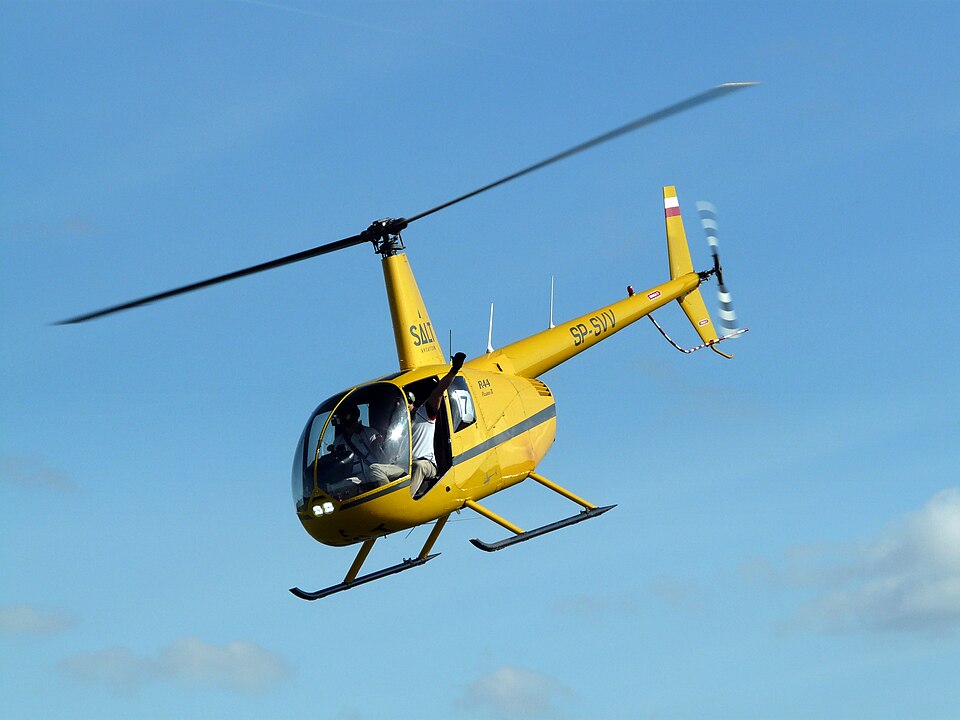
Piston-powered helicopters use a reciprocating engine similar to what you find in a car. They are less expensive to purchase and cheaper to operate per hour. The Robinson R22 and R44 are the most common examples in this category. A used R22 can be found for as little as $33,000 to $100,000+ depending on age and remaining component life, while a new R44 Raven II starts around $375,000 to $500,000.
Turbine-powered helicopters use a jet engine, which produces more power, operates at higher altitudes, and generally carries more passengers and payload. They are significantly more expensive. A new Bell 407GXi, for example, runs from roughly $3.1 million to $4.5 million. Used turbine models can sometimes be found for less, but operating costs remain high.
Pro Tip: If this is your first helicopter purchase, a piston-engine model like the Robinson R44 is widely regarded as an excellent starting point for private owners and is one of the most popular training and personal-use helicopters in the world.
Common Helicopter Categories
| Category | Examples | Typical New Price Range | Best For |
| Light Piston (2-seat) | Robinson R22 | $250,000+ new | Training, personal recreation |
| Light Piston (4-seat) | Robinson R44 Raven II | $375,000 to $500,000 | Personal use, light tours |
| Light Turbine (4-5 seat) | Robinson R66, Airbus H130 | $900,000 to $3.5M+ | Personal/corporate transport |
| Mid-Size Turbine | Bell 407GXi | $3.1M to $4.5M+ | Corporate, EMS, tours |
| Heavy/Twin Turbine | Sikorsky S-76, AW139 | $5M to $15M+ | Corporate, offshore, EMS |
Understanding how a helicopter engine works can help you make a smarter decision between piston and turbine options before you ever step into a showroom.
The Real Cost of Owning a Helicopter
The purchase price is just the beginning. New buyers are often surprised by how quickly ongoing costs add up. Here is a breakdown of what to expect.
Purchase Price
As outlined above, prices range from under $100,000 for older used piston models to well over $10 million for heavy twin-turbine aircraft. For a detailed look at current pricing across popular models, how much a helicopter costs is a great resource to bookmark.
Fuel
Fuel consumption depends on engine type. A piston helicopter like the R44 burns considerably less fuel per hour than a turbine model. A mid-size turbine like the Bell 407 can consume 50 or more gallons of jet fuel per hour of flight time. Depending on your location and how much you fly, annual fuel costs can add up to tens of thousands of dollars.
Fun Fact: Helicopters are not designed to fly everywhere without limits. High altitude and thin air can significantly reduce lifting capacity, which is one reason helicopters cannot fly to the top of Mount Everest under normal conditions.
Insurance
Annual insurance premiums for a light helicopter typically run in the range of $15,000 to $26,000, while a turbine model like the Bell 407 can cost $30,000 to $50,000 or more per year. Premiums are influenced by the value of the aircraft, your total flight hours, your ratings, and how you plan to use the helicopter.
Heads Up: Insurance companies will look carefully at your total logged flight time and specific helicopter time. Low-time pilots will generally pay higher premiums. Building hours before buying can help reduce your ongoing costs.
Maintenance
This is where helicopter ownership gets complicated in a hurry. Helicopters have mandatory inspection intervals, life-limited components that must be replaced after a set number of hours, and time-between-overhaul requirements for major components like the engine and transmission.
Required maintenance under FAA regulations includes:
- Annual inspections every 12 calendar months
- 100-hour inspections for aircraft operated for compensation or hire
- Life-limited component replacement at manufacturer-specified intervals
- TBO overhauls for the engine, transmission, tail rotor gearbox, and other major assemblies
- Airworthiness Directive (AD) compliance as issued by the FAA
For a small turbine helicopter, direct operating costs including fuel, insurance, maintenance, and overhaul reserves can reach several hundred dollars per flight hour. Larger aircraft like the Bell 407 can carry annual scheduled and unscheduled maintenance costs that run into the hundreds of thousands of dollars.
Flying411 has a full breakdown on how helicopter engines work that can help you understand exactly what gets inspected and why.
Hangar and Storage
Parking your helicopter outside is not ideal. Weather, birds, and UV exposure cause real damage over time. Hangar fees vary significantly by airport and region, but even a modest hangar space adds up to several thousand dollars per year at minimum.
Keep in Mind: Some airports have long waiting lists for hangar space. If you are planning to base your helicopter at a specific facility, check hangar availability before finalizing your purchase.
Getting Your Helicopter License Before You Buy
Here is a non-negotiable: you must hold a valid FAA pilot certificate with a helicopter rating to legally fly your own helicopter. You cannot buy a helicopter and then figure out the license part later while it sits in the hangar.
The minimum required is a Private Pilot Certificate (Helicopter), which the FAA requires a minimum of 40 total flight hours to earn, including at least 20 hours of dual instruction with a certified flight instructor and 10 hours of solo flight time.
Training costs for a private helicopter license typically range from around $18,000 to $30,000, depending on the school, the aircraft used, and your location. Adding an instrument rating or pursuing a commercial certificate will increase that figure considerably.
For a full breakdown, the helicopter license cost guide covers every level of certification in detail.
Why It Matters: Even if you plan to hire a professional pilot to fly the aircraft, having your own license gives you a far deeper understanding of the machine you own and the regulations that govern it. It also dramatically expands your ability to use the aircraft on your schedule.
9 Things to Know Before Buying a Helicopter
This is the core of what separates buyers who are happy with their purchase from those who are not. Work through each of these before you commit.
1. Define Your Mission First
What will you actually use this helicopter for? Personal transportation between two properties? Sightseeing? Agricultural work? Medical transport? The answer shapes everything, from the type and size of aircraft you need to the certifications required. A buyer who needs four seats and 300 miles of range needs a completely different machine than someone flying solo on short recreational hops.
2. Set a True Total Budget
The purchase price is one line item. Your total budget must also account for training (if you are not yet licensed), insurance, fuel for your expected annual flight hours, scheduled maintenance, overhaul reserves, hangar fees, and a cushion for unscheduled repairs. Many first-time buyers underestimate the ongoing cost by a significant margin.
3. Understand Life-Limited Components
This is one of the most important and overlooked factors in helicopter ownership. Helicopters have components with fixed service lives measured in flight hours. Once a life-limited part reaches its limit, it must be replaced regardless of how good it looks. Rotor blades, dynamic components, and structural parts all have defined limits. When evaluating a used helicopter, always ask for a complete component status report showing how many hours remain on every life-limited part.
4. Always Get a Pre-Purchase Inspection
Never buy a used helicopter without a thorough pre-purchase inspection performed by an independent FAA-certificated mechanic who has no relationship with the seller. The inspection should include a review of all maintenance logbooks from the aircraft's birth to present, compliance with all applicable Airworthiness Directives, a title search to confirm there are no outstanding liens, confirmation that all life-limited components are accounted for, and a physical inspection of the airframe, dynamic systems, and avionics.
Pro Tip: Gaps in the maintenance logbooks are a red flag. Complete logs from the date of manufacture forward are the standard you should expect.
5. Check the Damage History
Ask your mechanic and the seller directly about any prior accidents or incidents. Some manufacturers maintain records of aircraft that have been involved in accidents. Even repaired damage can affect structural integrity and resale value. A title search through the FAA registry will surface NTSB accident and incident reports tied to the aircraft's registration.
6. Know the FAA Registration Requirements
To legally operate a helicopter in the United States, you must hold a current FAA Registration Certificate and a valid airworthiness certificate. The airworthiness certificate must be displayed in the aircraft. Maintenance records must be kept current and available for FAA inspection. For anything beyond recreational personal use, such as flying for compensation or hire, additional operating certificates and regulatory compliance may be required.
7. Understand Weather Limitations
Helicopters are highly capable aircraft, but they have real weather limitations. Flying into conditions for which you are not rated or trained is one of the most common causes of accidents in general aviation. Understand what your aircraft is certified for, what ratings your license covers, and what the practical limits are in real-world conditions. For example, what happens if a helicopter gets struck by lightning is a real concern for pilots flying in areas prone to afternoon thunderstorms.
8. Learn How to Approach and Operate Around the Aircraft Safely
Safety around a running helicopter is not intuitive. The rotor disc and tail rotor create serious hazards that every owner and anyone who works around the aircraft must understand. Proper helicopter approach procedures are taught during flight training, but refreshing that knowledge before bringing an aircraft home is always worthwhile.
9. Consider Resale Value
Helicopter values are influenced by total airframe hours, remaining component life, avionics upgrades, damage history, and overall market demand for the specific model. Popular models like the Robinson R44 tend to hold value reasonably well. More obscure or older models can be difficult to sell. Before you buy, consider how easy it would be to sell the aircraft if your needs change in the future.
Flying411 has a detailed guide on how much a Blackhawk helicopter costs if you are curious about what military-grade rotorcraft look like on the civilian market.
New vs. Used: Which Is Right for You?
Both new and used helicopters can be excellent choices depending on your priorities. Here is a quick comparison to help you think it through.
| Factor | New Helicopter | Used Helicopter |
| Purchase Price | Higher | Lower |
| Component Life Remaining | Full life on all parts | Varies by age and hours |
| Maintenance History | None yet | May be complete or spotty |
| Warranty | Usually included | Generally none |
| Financing | Often available through dealers | Available but sometimes harder |
| Customization | More options | Limited to current configuration |
| Risk of Hidden Issues | Very low | Requires careful due diligence |
A newer used model with clean logs and plenty of life left on all components can be a very smart buy. An older model priced low because components are near their limits can be deceptively expensive once overhauls are factored in.
Quick Tip: When evaluating a used helicopter, add up the estimated cost of all upcoming required maintenance and overhauls. Then subtract that figure from the asking price to see what you are really paying for the aircraft in its fully brought-up condition.
Financing a Helicopter Purchase
Yes, helicopter loans exist. Lenders evaluate the creditworthiness of the borrower, the value and type of the aircraft, and its intended use. Loan terms typically range from five to fifteen years, with interest rates that vary based on the lender and the borrower's credit profile.
Aviation-specific lenders tend to understand the unique aspects of aircraft collateral better than general commercial banks. It is worth comparing several lenders before committing to financing terms.
Good to Know: Lenders will want to see a current appraisal and may require specific insurance coverage levels as a condition of the loan. Factor insurance costs into your pre-approval planning.
Conclusion
Owning a helicopter is genuinely one of the most exciting things a person can do. It opens up a kind of freedom that very few people ever experience. But the best helicopter owners are the ones who did their homework first. They understood the real costs, got their training sorted, did their pre-purchase due diligence, and matched the aircraft to their actual needs before signing anything.
If you have worked through every section of this guide, you are already ahead of most first-time buyers. The next step is to keep building your knowledge.
For everything from helicopter pricing to safety tips to pilot training, Flying411 is the resource that will keep you informed every step of the way.
Frequently Asked Questions
Do I need a pilot's license to own a helicopter?
You do not need a license simply to own a helicopter, but you do need one to legally fly it yourself. If you plan to act as pilot in command, a minimum FAA Private Pilot Certificate with a helicopter rating is required.
Can I store a helicopter at my home?
In some rural or agricultural areas, it is legally possible to store a helicopter on private property, but local zoning laws, HOA rules, and FAA airspace regulations all apply. Most owners store their aircraft at a local airport in a rented hangar.
What is the cheapest helicopter you can legally fly in the U.S.?
Used piston helicopters like older Robinson R22 models can sometimes be found for prices starting in the low tens of thousands of dollars. However, the total cost of bringing an older aircraft into fully airworthy condition can add significantly to that number.
How often does a helicopter need maintenance?
At minimum, all U.S.-registered helicopters operating under FAR Part 91 require an annual inspection every 12 calendar months. Aircraft used for compensation or hire also require a 100-hour inspection. Life-limited components must be replaced at manufacturer-specified intervals regardless of condition.
Is helicopter ownership worth it?
For pilots who fly regularly and have a clear operational need, helicopter ownership can absolutely be worth it. For those who fly fewer than 50 to 100 hours per year, chartering or fractional programs often deliver better value. The answer depends entirely on your usage, budget, and personal goals.