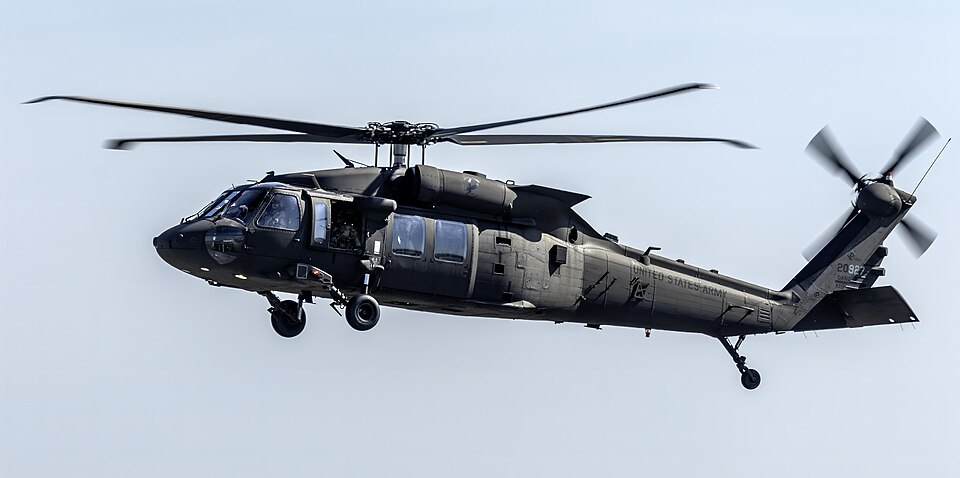
Few aircraft have earned a reputation as enduring as the Sikorsky UH-60 Black Hawk. Since entering service with the U.S. Army in 1979, the Black Hawk has become one of the most recognized and widely used military helicopters in the world. It has flown combat missions, evacuated wounded soldiers, carried presidents, and even inspired a major Hollywood film. But for all its fame, one question tends to stop people cold: how much does a Black Hawk helicopter cost?
The price depends heavily on the variant and configuration. Estimated costs for a Black Hawk helicopter generally range from around $6 million on the lower end to well over $25 million for the most advanced, fully equipped versions.
The wide range reflects everything from basic utility models to high-tech special operations aircraft packed with sophisticated electronics and weapons systems.
Understanding that range — and what drives it — gives you a much clearer picture of why this helicopter carries such a significant price tag.
Key Takeaways
The cost of a Black Hawk helicopter varies by variant, configuration, and quantity ordered. A standard UH-60L model is estimated to start around $6 million per unit when purchased in bulk, while a fully outfitted UH-60M or specialized variant can exceed $25 million. Operating costs add significantly to the total, with flight hour expenses and annual maintenance running into the hundreds of thousands of dollars or more. Civilian versions like the Sikorsky S-70 are available but still cost in the range of roughly $13 million new.
| Variant | Estimated Unit Cost | Primary Role |
| UH-60L Black Hawk | ~$6 million | Utility / troop transport |
| HH-60G Pave Hawk | ~$10.2 million | Search and rescue (USAF) |
| UH-60J Black Hawk | ~$13–$14 million | Search and rescue (Japan) |
| Sikorsky S-70i (civilian) | ~$15 million | Civilian / commercial use |
| HH-60M (medevac / advanced) | $21–$25+ million | Medical evacuation / advanced ops |
| VH-60N White Hawk | ~$1.6 million (reported) | VIP transport |
| Specially configured variants | $25 million+ | Special operations / custom roles |
Flying411 covers a wide range of aviation topics, from helicopter mechanics to general aviation insights, making it a great starting point for anyone curious about the world of flight.
The Black Hawk: A Brief Background
To understand why the Black Hawk commands such a high price, it helps to know what you are actually getting. The UH-60 was developed in response to a U.S. Army requirement in the early 1970s for a helicopter that would replace the aging Bell UH-1 Iroquois, better known as the "Huey." The Army needed something tougher, faster, more reliable, and capable of flying in high-altitude, high-heat conditions.
Sikorsky Aircraft answered that call. The Black Hawk is a four-blade, twin-engine, medium-lift utility helicopter powered by two General Electric T700 turboshaft engines. Its design emphasized dual redundancy throughout — meaning if one system fails, a backup keeps things running. That kind of engineering does not come cheap, but it is exactly what makes the aircraft so dependable in demanding environments.
Fun Fact: The Black Hawk got its name from the Native American war chief Black Hawk of the Sauk tribe. The U.S. Army has a long tradition of naming helicopters after Native American tribes and leaders.
The aircraft entered full-rate production in the early 1980s and has been in continuous production ever since, making it one of the longest-running military helicopter production programs in history. Today, Black Hawks serve with the armed forces of dozens of countries around the world.
Why Black Hawk Helicopter Prices Vary So Much
Not all Black Hawks are created equal. The price of any given aircraft depends on a handful of key factors that can push the cost from a relatively modest military purchase to an eye-watering special operations contract.
Variant and Mission Role
Different versions of the Black Hawk are designed for very different jobs. A utility transport helicopter does not need the same electronics, sensors, or weapons systems as a combat search and rescue aircraft or a special operations platform. The more specialized the role, the more sophisticated — and expensive — the equipment.
Configuration and Avionics
Advanced avionics packages, including terrain-following radar, night-vision compatible cockpits, electronic warfare suites, and GPS navigation systems, can add millions to the base price. Newer digital glass cockpit systems found in the UH-60M are significantly more expensive than the analog setups in older variants like the UH-60A or UH-60L.
Good to Know: The UH-60M is the most advanced and widely produced variant currently in production. It features a fully digital cockpit, improved rotor blades, and upgraded engines that give it better range, lift capacity, and fuel efficiency compared to earlier models.
Quantity Ordered
Like most large procurement purchases, buying in bulk lowers the per-unit cost. The U.S. Army regularly orders Black Hawks through multi-year contracts that cover hundreds of aircraft, which helps drive down individual unit pricing. A single aircraft purchased in a custom configuration will cost substantially more than one purchased as part of a large government contract.
Foreign Military Sales
When the U.S. government sells Black Hawks to allied nations, the package often includes far more than just the aircraft. Training for pilots and maintenance crews, spare engines, spare parts inventories, countermeasure systems, and logistical support are typically bundled in. This is why foreign military sale totals can look staggeringly large. In 2024, for example, the U.S. State Department approved a combined sale of 36 UH-60M helicopters to Sweden, Austria, and Brazil valued at close to $2.9 billion — working out to roughly $80 million per aircraft when all the extras are included.
Why It Matters: That $80 million-per-aircraft figure from foreign military sales is not just the helicopter price. It reflects years of training, spare parts, maintenance packages, and advanced electronic systems. The raw aircraft cost is a much smaller slice of the total.
New vs. Used
Used Black Hawks, particularly older UH-60A or UH-60L models, are available on the secondary market at prices that can be considerably lower than new production aircraft. Exact pricing depends on airframe hours, maintenance history, installed equipment, and the legal and regulatory requirements that come with transferring military aircraft. These are complex transactions and not something the average private buyer simply walks into.
How Much Does a Black Hawk Helicopter Cost: Variant by Variant
Here is a closer look at the major variants and what each one is estimated to cost, keeping in mind that no official public price list exists and these figures represent widely cited estimates.
UH-60L Black Hawk
The UH-60L is the Army's workhorse utility transport variant. It is a twin-engine, four-blade, medium-lift helicopter used for troop transport, aerial assault, reconnaissance, and acting as an airborne command post. When purchased in standard configuration as part of a large military contract, estimates put the per-unit cost at around $6 million. That makes it the most affordable member of the Black Hawk family, though "affordable" is relative when you are talking about a military helicopter.
HH-60G Pave Hawk
The HH-60G Pave Hawk is the U.S. Air Force's search and rescue variant. Derived from the standard UH-60, it incorporates the Air Force's PAVE suite of electronic systems, which includes terrain-following and terrain-avoidance radar, an inertial navigation system, and a forward-looking infrared sensor. These additions make it a highly capable search and rescue platform for both combat and peacetime emergencies. The estimated per-unit cost is around $10.2 million.
Pro Tip: If you are researching helicopter costs and see a price that seems surprisingly low for a Black Hawk, check which variant is being referenced. The UH-60L and the HH-60G are both "Black Hawks" but have very different price points.
HH-60M Black Hawk (Medevac)
The HH-60M is the medical evacuation version of the UH-60M. Equipped with the Medical Evacuation Mission Equipment Package (MEP), it provides advanced day-and-night emergency casualty evacuation capabilities. As the most technologically advanced member of the family, it is also among the most expensive. Estimates place its cost at $21 million or more per unit, with some configurations reaching $25 million and above.
UH-60J Black Hawk
Developed for Japan's Air Self-Defense Force and Maritime Self-Defense Force and built under license by Mitsubishi Heavy Industries, the UH-60J is used primarily for search and rescue missions. It is almost exclusively used within Japan. Per-unit cost estimates range from roughly $13 million to $14 million, reflecting its search-and-rescue-specific equipment package.
Sikorsky S-70i (Civilian / Export Variant)
The S-70i is the commercial and export version of the Black Hawk platform, built by Sikorsky at its facility in Poland and marketed to international customers outside of traditional U.S. military sales channels. It keeps the same rotor system as the original UH-60A but incorporates upgraded components. The S-70i is used for a wide range of civilian and paramilitary roles including firefighting, search and rescue, VIP transport, and offshore energy support. New units are estimated to cost around $15 million, making it the primary option for private or commercial operators. You can read more about the engineering behind this platform in this overview of how helicopter engines work.
Keep in Mind: The S-70i is the version most likely to be accessible to civilian or commercial operators. It is not a standard military UH-60 and does not come equipped with military-specific weapons systems or classified electronics.
VH-60N White Hawk
The VH-60N, nicknamed the "White Hawk," serves as a VIP transport helicopter for senior U.S. government officials, including the President and Vice President, and visiting heads of state. Think of it as the helicopter equivalent of Air Force One. Despite its prestigious role, its reported per-unit cost of around $1.6 million is relatively low because this version does not carry the heavy military electronics and weapons systems found in combat-oriented variants.
Specially Configured and Stealth Variants
At the top end of the price spectrum sit the highly customized variants built for special operations. The most famous example is the modified Black Hawk used by the 160th Special Operations Aviation Regiment (SOAR) in the 2011 operation that resulted in the death of Osama bin Laden. That aircraft incorporated low-observable technology — features like special materials, redesigned rotor blades, and noise-reduction measures borrowed from stealth jet aircraft. The cost of such specially configured aircraft is not publicly disclosed, but estimates suggest figures of $25 million per unit or considerably higher are plausible.
Flying411 has explored many fascinating aspects of helicopter performance, including why helicopters struggle to reach extreme altitudes — which connects directly to the engineering challenges that drive up Black Hawk development costs.
The Real Cost of Operating a Black Hawk
The purchase price is only the beginning. For any organization operating a Black Hawk fleet, the ongoing cost of keeping those aircraft in the air is a massive ongoing commitment.
Cost Per Flight Hour
One of the most practical ways to think about helicopter operating costs is the cost per flight hour, which accounts for fuel, maintenance labor, and parts consumed during regular operation. For the UH-60 Black Hawk, published estimates place the cost somewhere in the range of $3,000 to $3,200 per flight hour. That is substantially less expensive than attack helicopters like the AH-64 Apache (which runs higher) or naval variants like the MH-60R Seahawk (which can reach many times that figure due to its complex anti-submarine warfare systems). For context, understanding how a helicopter engine works helps explain why turbine-powered aircraft carry such high hourly costs — these engines require rigorous inspection intervals and expensive component replacements.
Heads Up: Per-flight-hour costs are often cited from different time periods and using different accounting methods. Treat any specific figure as a general estimate rather than a precise current cost. The actual number varies based on usage intensity, maintenance contract structure, and whether personnel costs are included.
Fuel Consumption
A typical UH-60 Black Hawk burns approximately 180 to 220 gallons of fuel per hour depending on conditions such as altitude, payload, and airspeed. At current aviation fuel prices, that alone represents a significant operating expense before maintenance is even considered. High-altitude flight — something the Black Hawk is designed to handle better than many of its predecessors — tends to increase fuel burn further.
Maintenance Costs
Keeping a Black Hawk airworthy requires a constant cycle of inspections, component replacements, and overhauls. The U.S. Army's two-engine configuration means every major engine event doubles the expense. Engine overhauls alone are estimated to cost somewhere between $500,000 and $1 million per engine, and since the Black Hawk has two, that is a considerable sum when those intervals come due. Annual maintenance expenses across a Black Hawk fleet can run into the hundreds of thousands of dollars per aircraft — sometimes considerably more depending on usage.
Crew and Personnel
A standard Black Hawk mission requires two pilots and at least one crew chief. Medical evacuation missions add a flight medic. Training and retaining qualified personnel carries its own substantial cost, particularly for the highly specialized roles that Black Hawk operations demand.
Flying411 offers a wide range of articles to help aviation enthusiasts understand the finer details of helicopter operations — including what to know before approaching a helicopter safely.
Comparing the Black Hawk to Other Major Military Helicopters
To put Black Hawk pricing in perspective, it helps to see where it sits relative to other well-known military rotary-wing aircraft.
| Helicopter | Estimated Unit Cost | Primary Role |
| UH-60L Black Hawk | ~$6 million | Utility transport |
| UH-60M Black Hawk | $21–$25 million | Advanced utility / medevac |
| AH-64 Apache | $60–$130 million | Attack helicopter |
| CH-47 Chinook | $35–$40 million | Heavy-lift transport |
| MH-53 Pave Low | ~$40 million | Special operations |
| Sikorsky S-70i (civilian) | ~$15 million | Commercial / export |
The Black Hawk sits at a mid-range price point for military helicopters. It is far less expensive than dedicated attack helicopters like the Apache, but significantly more capable — and more expensive — than simpler light utility aircraft. For what it delivers in terms of reliability, performance, and mission flexibility, many military analysts consider the Black Hawk to represent strong value for the investment.
Fun Fact: The Black Hawk has been operated by the armed forces of more than 25 countries. Its broad global adoption is one reason Sikorsky has been able to maintain long-running production contracts that help keep per-unit costs relatively controlled.
Can a Private Buyer Own a Black Hawk?
This is a question that comes up more often than you might expect. The short answer is that purchasing a genuine military Black Hawk as a private individual in the United States is extraordinarily difficult and subject to significant legal restrictions.
Military surplus aircraft sales are tightly controlled by the U.S. government, and combat-capable aircraft rarely if ever make it onto the open market in flyable condition. Demilitarized airframes — stripped of engines, avionics, and other key components — occasionally appear at auction, but these are essentially large metal artifacts rather than functional helicopters.
The more realistic option for private or commercial operators is the Sikorsky S-70i, the civilian and export variant. Organizations involved in firefighting, emergency medical services, search and rescue, or offshore energy support can and do purchase S-70i aircraft through normal commercial channels. The S-70i carries a price tag in the range of roughly $15 million new and requires significant operational infrastructure to support.
Good to Know: Even the civilian S-70i requires highly trained crews, specialized maintenance facilities, and substantial insurance coverage. This is not a helicopter for the casual aviation enthusiast — it is a serious piece of equipment designed for professional operators.
If you are interested in how military aviation compares across different types of attack aircraft and helicopters around the world, Flying411 has a helpful list of attack helicopters by country that puts the Black Hawk in its broader global context.
What Factors Drive Up the Price Beyond the Base Aircraft
A surprising amount of what inflates Black Hawk pricing has nothing to do with the airframe itself.
- Avionics and electronics packages: Modern digital cockpits, radar systems, countermeasure suites, and night-vision compatible lighting can add millions to a base platform.
- Weapons integration: Mounting and certifying external weapons systems — including door-mounted guns, rocket pods, or missiles — involves engineering, testing, and certification costs that are passed through to the buyer.
- Training packages: Large government purchases typically include comprehensive pilot and maintainer training programs that are built into the contract price.
- Spare parts provisioning: Initial spare parts inventories to support fleet operations are often bundled into the purchase price for foreign military sales.
- Sustainment contracts: Long-term maintenance and logistics support contracts, sometimes spanning a decade or more, can dwarf the original purchase price over a helicopter's operational life.
- Customization: Unique mission-specific modifications — like the stealth features on SOAR aircraft — are essentially one-off engineering projects with costs that reflect their bespoke nature.
- Certification and testing: For export sales, aircraft often need to go through additional airworthiness certification processes in the receiving country, adding time and cost.
Lightning strikes are another operational risk that requires careful design consideration and adds to engineering costs. Flying411 has an informative piece on what happens when a helicopter gets struck by lightning — a real hazard that the Black Hawk's designers had to account for.
The Black Hawk Among the World's Biggest and Most Notable Helicopters
The UH-60 is a medium-lift helicopter, which places it in the middle tier of the rotary-wing world. It is considerably smaller and lighter than the massive heavy-lift aircraft that dominate certain military and industrial roles. For comparison, Flying411 has a look at the top 10 biggest helicopters in the world — a list that includes aircraft capable of carrying payloads that dwarf what a Black Hawk can lift. Understanding where the Black Hawk sits in that spectrum helps explain why it strikes a sweet spot between cost and capability that has made it so popular for so long.
Conclusion
The Black Hawk helicopter is not cheap, and it was never designed to be. It is a purpose-built military aircraft engineered to perform reliably in some of the most demanding conditions on earth — and that level of capability comes with a price that reflects the engineering behind it. Depending on the variant and configuration, how much a Black Hawk helicopter costs ranges from an estimated $6 million for a standard utility model in a bulk military order to well over $25 million for the most advanced or specially configured versions. Operating costs add significantly to that total over time.
For those curious about aviation, military aircraft, or the broader world of rotary-wing flight, there is always more to explore.
For reliable, engaging aviation content that covers everything from helicopter mechanics to aircraft history, Flying411 is a destination worth bookmarking.
Frequently Asked Questions
How much does a brand-new UH-60M Black Hawk cost?
A brand-new, fully equipped UH-60M Black Hawk is generally estimated to cost between $21 million and $25 million per unit, a figure that includes mission equipment and initial support but can vary based on the specific configuration ordered.
Can civilians buy a Black Hawk helicopter?
Civilians cannot typically purchase a military Black Hawk, but the civilian Sikorsky S-70i variant is available through commercial channels for qualified buyers, with new units estimated around $15 million.
How much does it cost to fly a Black Hawk per hour?
Estimates for the per-flight-hour operating cost of a UH-60 Black Hawk are generally in the range of $3,000 to $3,200, though this figure varies depending on accounting method, usage, and whether personnel costs are included.
How long does a Black Hawk helicopter last?
With proper maintenance and periodic upgrades, the operational lifespan of a Black Hawk is generally estimated at around 30 to 40 years. The U.S. Army has extended the economic useful life of the UH-60M program to 25 years for procurement planning purposes.
How does the Black Hawk compare in cost to the Apache helicopter?
The Black Hawk is significantly more affordable than the AH-64 Apache attack helicopter, which carries estimated unit costs ranging from $60 million to over $100 million depending on the variant, reflecting the Apache's far more complex weapons and targeting systems.
Why are Black Hawk foreign military sale totals so much higher than the aircraft's unit cost?
Foreign military sales packages bundle in training, spare engines, spare parts inventories, electronic systems, maintenance support, and logistics that can easily multiply the per-aircraft headline price several times over.
What is the cheapest Black Hawk variant available?
The UH-60L in standard configuration ordered in bulk is generally considered the most affordable variant, with per-unit estimates around $6 million, though exact pricing is not publicly disclosed.