There is something almost magical about watching a helicopter lift straight off the ground, hover in midair, and spin on a dime. No runway, no forward momentum — just pure mechanical muscle working against gravity. But what is actually happening under that rotor? What kind of engine makes any of that possible?
Understanding how a helicopter engine works is easier than you might think. Once you break it down step by step, the whole system clicks together like a well-designed machine — because, well, it is one. The science is fascinating, and it touches everything from how power gets made to how that power reaches the spinning blades above your head.
This guide covers both main engine types used in helicopters today, walks through every key component, and explains how power flows from fuel to flight. By the end, you will have a clear picture of what is really going on inside one of aviation's most remarkable machines.
So, how does a helicopter engine work?
Key Takeaways
A helicopter engine works by burning fuel to create energy, then transferring that energy through a shaft and transmission system to spin the rotor blades. Most modern helicopters use a turboshaft engine, which is a type of gas turbine that converts expanding hot gases into rotational shaft power rather than jet thrust. Smaller and lighter helicopters often use piston engines, which work more like a car engine. In both cases, the engine does not push the helicopter forward — it spins blades that generate lift.
| Takeaway | Quick Detail |
| Main engine type | Turboshaft (gas turbine) for most medium and large helicopters |
| Alternative engine type | Piston (reciprocating) for smaller, lighter helicopters |
| How power moves | Engine shaft to transmission to rotor mast |
| Fuel used | Avgas (piston) or Jet-A / Jet A-1 (turbine) |
| Rotor RPM vs. engine RPM | Engine spins many thousands of RPM; gearbox reduces it to roughly 300-400 RPM at the rotor |
| Safety backup | Autorotation allows a safe landing if the engine fails |
| Key difference from jet planes | Power drives rotors for lift, not exhaust for thrust |
At Flying411, aviation enthusiasts and aspiring pilots can find in-depth guides, buying advice, and honest answers to the questions that matter most in rotorcraft and general aviation.
A Short History of Helicopter Engines
Helicopters did not always have the sophisticated engines they use today. Early designs relied on rubber bands, springs, and whatever creative power sources inventors could dream up. When the internal combustion engine arrived, it changed everything — but early piston engines were heavy, underpowered, and pushed the limits of what a rotor could lift.
Igor Sikorsky's VS-300, widely considered the first practical single-rotor helicopter, used a piston engine with an opposing cylinder layout. It flew in 1939 and proved that a single engine could drive both the main rotor and tail rotor at the same time. That was a major leap.
Fun Fact: The first turboshaft-powered helicopter flight is said to have taken place in December 1951, when a Kaman K-225 synchropter took to the air with a Boeing T50 turboshaft engine installed. It marked the beginning of a new era in rotorcraft design.
Through the 1940s and 1950s, engineers pushed piston engines to their limits. The problem was weight. Bigger helicopters needed more lift, more lift needed more power, and more power meant heavier engines — a shrinking return.
The turboshaft engine solved that problem. Lighter than a piston engine for the same power output, cleaner in operation, and far more reliable at sustained high speeds, the turboshaft quietly took over. By the late 1950s and into the 1960s, it became the standard for medium and large helicopters. Today, most helicopters above the light training category run on turboshaft engines.
The Two Main Types of Helicopter Engines
Before diving into the mechanics, it helps to know which type of engine a helicopter is likely using. The answer usually comes down to size.
Turboshaft Engines
The turboshaft engine is a type of gas turbine. It works by burning fuel to create rapidly expanding hot gases, then using those gases to spin turbine wheels. The turbine wheels are connected to a shaft, and that shaft delivers rotational power to the helicopter's transmission.
The key word is "shaft." Unlike a turbojet engine, which pushes thrust out the back, a turboshaft captures nearly all of its energy as spinning shaft power. The exhaust itself produces very little thrust. All the usable power goes through the drivetrain and into the rotors.
Good to Know: Turboshaft engines are also used in military tanks, large naval vessels, and hovercraft — not just helicopters. The same compact, high-power design that works so well in the air also performs well in demanding ground and sea applications.
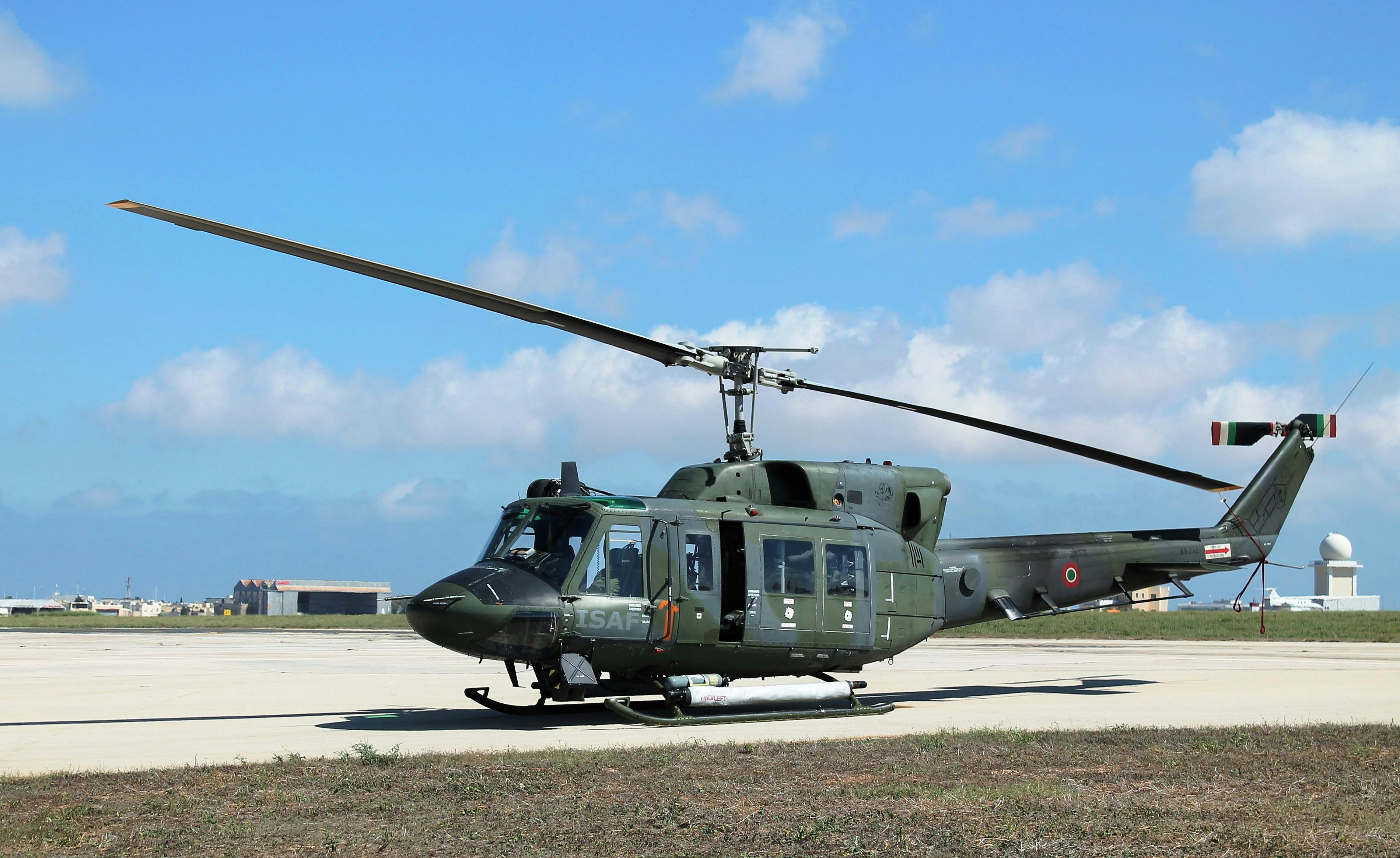
Turboshaft engines come in two main layout styles used in helicopters. The first is a reverse-flow design, where air enters the front, travels to the back, reverses direction through the combustion section, and exits at the top or sides. The Rolls-Royce (formerly Allison) M250 series is a well-known example of this type and is common in Bell helicopters. The second is a straight-through or axial-flow design, where air enters from one end and travels directly through the engine before exiting out the back. This layout is more widely used across helicopter models worldwide.
Both designs follow the same operating principle. The airflow path is just arranged differently to fit the helicopter's frame.
Piston Engines
Piston engines, also called reciprocating engines, are what most people picture when they think of a car engine. Cylinders contain pistons that move up and down in a repeating cycle. That motion rotates a crankshaft, which ultimately drives the rotor system through a gearbox.
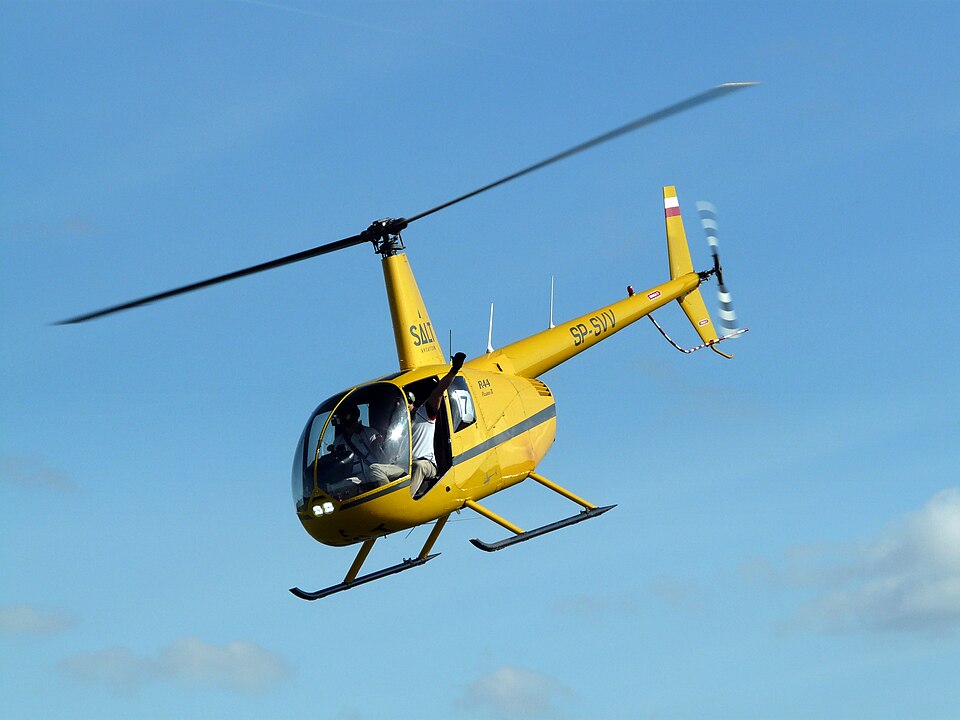
Most small training helicopters run on piston engines. The Robinson R22 and R44 are two of the most recognizable examples. These engines are significantly less expensive than turbines, which makes them a practical choice for flight schools and private owners flying lighter aircraft.
Pro Tip: If you are thinking about learning to fly helicopters, there is a good chance your first hours will be in a piston-powered aircraft. They are affordable to operate and do an excellent job for training at lower altitudes and speeds.
The trade-off is power-to-weight ratio. Piston engines are heavier relative to the horsepower they produce, which limits how much lift a helicopter can generate before the engine itself becomes the problem. For small helicopters used in training, tours, or light utility work, that trade-off is perfectly acceptable. For larger machines doing heavier lifting, turbines win every time.
How a Turboshaft Engine Works: Step by Step
This is the core of how does a helicopter engine work for most modern aircraft. The process happens in a continuous loop as long as fuel keeps flowing.
Step 1: Air Intake
Air enters the engine through an intake. The shape and position of the intake vary depending on the helicopter model and engine design, but the goal is always the same — bring in a steady, clean supply of ambient air.
The volume of air pulled in is significant. More air means more oxygen for combustion, which means more power. At higher altitudes, thinner air reduces engine performance because there is simply less of it to work with.
Step 2: Compression
The incoming air moves through a compressor. Most turboshaft engines use a two-stage compressor system, combining axial-flow stages (which act like a series of fan blades pushing air rearward) with a centrifugal stage (which flings the air outward into channels, compressing it further).
As the air gets compressed, its pressure rises, its temperature increases, and its velocity changes. This high-energy, dense air is now ready for combustion.
Why It Matters: Compression is what makes gas turbine engines so efficient. By squeezing the air before ignition, the engine gets far more energy out of each unit of fuel than a simple open-air burn would provide.
Step 3: Combustion
The compressed air flows into the combustion chamber. Here, fuel — typically Jet-A or Jet A-1 kerosene — is sprayed in as a fine mist and ignited by igniters. The mixture burns, and the gases expand rapidly.
Once the engine reaches self-sustaining operating speed, the igniters are no longer needed. The continuous burn keeps itself going as long as fuel and air keep arriving. Increasing the fuel flow makes a bigger, hotter burn. That produces more expanding gas, which creates more power downstream.
Step 4: Gas Generator Turbine
The hot expanding gases rush through the first set of turbine blades, called the gas generator turbine or high-pressure turbine (HPT). These blades spin in the gas flow and are connected directly to the compressor through a shaft. Their job is to extract just enough energy from the gases to keep the compressor spinning — essentially powering the engine's own air supply.
This section is self-sustaining once running. The compressor feeds the combustion chamber, which feeds the gas generator turbine, which feeds the compressor again. It is a continuous loop of energy.
Step 5: Free Power Turbine
After the gas generator turbine, the gases still carry a large amount of energy. They pass through a second set of turbine blades called the free power turbine (FPT) or low-pressure turbine (LPT).
This is where the helicopter gets its power.
The free power turbine is mechanically separate from the gas generator section. It does not connect to the compressor at all. Instead, it connects to an output shaft that feeds into the helicopter's gearbox and transmission. The gases spin these blades, the blades turn the shaft, and that shaft carries usable rotational power out of the engine.
Keep in Mind: The "free" in free power turbine means it can spin at its own speed, independent of the gas generator. This design gives pilots smoother power response and makes autorotation much easier to manage in an emergency.
Step 6: Exhaust
What remains of the gases after passing through both turbine sections exits through the exhaust. In a turboshaft engine, this exhaust carries very little leftover energy — most of it has already been captured as shaft power. Unlike a jet plane, the exhaust does not meaningfully push the helicopter anywhere. It is essentially spent gas on its way out.
Step 7: Gearbox and Transmission
The output shaft from the free power turbine spins at a very high RPM — often in the range of tens of thousands of revolutions per minute. Helicopter rotor blades, by contrast, need to turn at a much lower speed, generally somewhere between 300 and 400 RPM for the main rotor.
A reduction gearbox bridges that gap. It uses sets of interlocking gears to trade rotational speed for torque, slowing the shaft down dramatically while increasing its turning force. The transmission then distributes that power to both the main rotor mast and the tail rotor drive shaft.
How Engine Power Reaches the Rotor Blades
Getting power from the engine to the rotor is its own engineering story. The transmission is the central hub of this system.
The main transmission sits above the cabin, below the main rotor mast. It receives power from the engine shaft, reduces speed further if needed, and drives the mast that holds the rotor hub. The tail rotor is powered by a separate drive shaft running along the tail boom, also fed from the main transmission.
The swashplate assembly sits at the top of the mast and translates the pilot's control inputs into changes in blade pitch. When a pilot moves the cyclic or collective control, the swashplate tilts or rises, changing the angle of each blade as it passes through its rotation. This is how the helicopter climbs, descends, or moves in any direction.
Fun Fact: The swashplate is one of the most mechanically creative inventions in aviation. It allows the pilot to change the pitch of a spinning blade while that blade is in constant rotation — a problem that stumped engineers for decades before an elegant mechanical solution was found.
How a Piston Engine Powers a Helicopter
For smaller helicopters, the piston engine follows a four-stroke cycle familiar from car engines: intake, compression, power (combustion), and exhaust. Each cylinder fires in sequence, and the combined motion of all pistons rotates a crankshaft.
The crankshaft connects to a clutch and then to the main rotor gearbox. One key difference from turboshaft helicopters is that piston-engine helicopters typically use a centrifugal clutch, which automatically disengages the rotor from the engine at low speeds. This allows the engine to idle without spinning the rotor, which is useful during startup and also important for autorotation.
Piston helicopter engines generally run on Avgas (aviation gasoline), the same fuel used in small piston airplanes. Some newer designs have moved toward diesel or unleaded fuel alternatives, though Avgas remains the most common choice.
What Happens If a Helicopter Engine Fails?
Engine failure sounds catastrophic, but helicopters have a built-in safety feature that makes a controlled landing possible even with total engine loss. It is called autorotation.
When an engine fails, a special freewheel unit (also called a sprag clutch or overrunning clutch) automatically disconnects the rotor from the engine. This allows the rotor to keep spinning freely. As the helicopter descends, air flowing upward through the rotor from below keeps the blades turning — similar to the way a maple seed spins as it falls.
A skilled pilot can manage the descent rate using blade pitch and use the stored rotor momentum to flare just before touchdown, achieving a safe landing. It is a demanding maneuver, but it is one of the first emergency skills taught to every helicopter pilot.
Heads Up: Autorotation requires rotor RPM to be maintained throughout the descent. If a pilot lets the rotor slow too much during the glide, there may not be enough stored energy for the flare at the bottom. This is why practicing autorotations is a core part of any helicopter training program.
If you are considering stepping into a cockpit, a look at the best helicopters for beginner pilots can help you understand which aircraft are designed to make this kind of training manageable and safe.
Turboshaft vs. Piston Engines: A Direct Comparison
| Feature | Turboshaft Engine | Piston Engine |
| Power-to-weight ratio | High | Lower |
| Fuel type | Jet-A / Jet A-1 | Avgas (100LL) |
| Typical helicopter size | Medium to large | Small / light |
| Cost | Significantly higher | More affordable |
| Reliability | Very high | Good |
| Fuel consumption | Higher | Lower |
| Warm-up time | Shorter | Slightly longer |
| Maintenance complexity | Specialized | More widely accessible |
| Start cycles | Counted and recorded | Not typically counted |
Key Components of a Helicopter Engine System
Understanding how a helicopter engine works also means knowing the names and jobs of its main parts. Here is a clear breakdown of every major component:
The Compressor
The compressor draws in air and squeezes it to high pressure. Most turboshaft engines use a combination of axial and centrifugal compression stages. Each stage increases the air pressure further before it reaches the combustion chamber.
The Combustion Chamber
Also called the combustor or burner, this is where fuel mixes with compressed air and burns. The chamber is designed to sustain a stable flame and manage the extremely high temperatures involved — often well above what most metals can handle without special alloys and coatings.
The Gas Generator Turbine
This turbine section extracts power from the hot gases to spin the compressor. It is mechanically connected to the compressor on a shared shaft. Everything in the engine depends on this section keeping the compressor turning.
The Free Power Turbine
This is the section that actually generates usable power for the helicopter. It spins in the gas flow and drives the output shaft. Because it is mechanically separate from the gas generator section, it can respond to changing load demands without disrupting the compressor speed.
The Reduction Gearbox
The reduction gearbox slows the high-speed turbine shaft down to a speed the rotor system can use. The reduction ratio can be quite large — the turbine might spin tens of thousands of RPM while the rotor turns at just a few hundred. The gearbox makes that conversion while multiplying the torque dramatically.
The Transmission
The transmission distributes power from the gearbox to both the main rotor and the tail rotor. It also contains various protections — torque limiters and oil systems — to prevent overloading the drivetrain during demanding maneuvers.
The Tail Rotor Drive Shaft
A long drive shaft runs from the main transmission along the tail boom to a small gearbox at the base of the tail rotor. This shaft keeps the tail rotor spinning in sync with the main rotor system. The tail rotor counters the torque reaction produced by the main rotor, preventing the helicopter body from spinning in the opposite direction.
The Governor
The governor is an automated control system that monitors rotor RPM and adjusts fuel flow to keep it within the correct range. When the pilot increases collective pitch — adding aerodynamic load to the rotor — the governor senses the slight drop in rotor speed and automatically increases fuel to the engine to compensate. The result is a nearly hands-free RPM management system that lets the pilot focus on flying.
What Fuel Does a Helicopter Engine Use?
Fuel choice depends on engine type:
- Turboshaft helicopters use Jet-A or Jet A-1, a kerosene-based aviation fuel. Turbine engines are flexible and can, in many cases, run on a range of fuels including diesel in an emergency, though certified fuel is always preferred.
- Piston helicopters primarily use Avgas 100LL (low-lead), the same fuel used in light piston aircraft. Some newer piston helicopter models are certified for unleaded alternatives, and the aviation industry has been working toward a full transition away from leaded fuels.
Good to Know: Turbine engines generally burn more fuel per hour than piston engines. However, for larger helicopters carrying heavy payloads, the higher power density of a turbine engine makes it the only practical option regardless of fuel cost.
Engine Starting: More Complex Than It Looks
Starting a turboshaft engine is not as simple as turning a key. The process involves carefully managing airflow, RPM, and fuel delivery to bring the engine up to operating speed safely.
The battery or an Auxiliary Power Unit (APU) provides the initial electrical power to spin the engine up through a starter motor. The engine must reach a minimum rotational speed before fuel is introduced and ignited. If fuel flows before the engine is spinning fast enough, the intake air cannot prevent heat from building up inside — a condition called a hot start, which can damage turbine components.
A wet start occurs when fuel reaches the combustion chamber but fails to ignite. The engine must then be ventilated to clear the unburned fuel before another attempt.
Because starting puts significant thermal and mechanical stress on turbine components, most operators carefully track start cycles alongside flight hours. For helicopters that fly many short missions with multiple engine starts per day, start cycle limits can sometimes be reached before the engine's total flight hour limit.
Pro Tip: Leaving a turbine engine running for a short wait rather than shutting it down and restarting can actually extend component life in high-cycle operations. A warm, idling engine costs far less than the wear of another start cycle.
Helicopter Engine Performance at High Altitudes
Altitude affects helicopter engine performance in ways that differ depending on the engine type.
For piston engines, power output is closely tied to air density — specifically density altitude. Thinner air at higher elevations reduces the amount of oxygen available for combustion, directly cutting power. Pilots operating piston helicopters at high elevation must carefully manage this limitation.
For turboshaft engines, performance is more precisely governed by pressure altitude and outside air temperature. This distinction matters for pilots planning operations in mountain environments or during hot summer days at elevation.
Either way, high altitude reduces the air a helicopter engine can work with. This is one reason why flying to extreme elevations presents such significant challenges — a topic explored in detail in this article on why a helicopter can't fly to the top of Everest.
Single-Engine vs. Multi-Engine Helicopters
Not all helicopters use just one engine. The number of engines installed depends on the helicopter's size, purpose, and the level of redundancy required.
Single-engine helicopters are the most common type in general aviation. One turboshaft or piston engine drives the entire rotor system. Engine failure requires an immediate autorotation. Single-engine designs are lighter and more economical to operate, making them well-suited for training, tours, agricultural work, and light utility missions.
Twin-engine helicopters carry two turboshaft engines. If one fails, the other can often sustain flight, though performance is reduced. Twin-engine configurations are common in offshore oil support, emergency medical services (EMS), search and rescue, and military applications where losing power over water or remote terrain is a serious risk.
Three-engine configurations appear on the heaviest utility and military helicopters. These aircraft carry enormous payloads and the extra engine provides both redundancy and the raw power needed to lift heavy cargo.
Why It Matters: Twin-engine helicopters are significantly more expensive to purchase and operate than single-engine models. For many missions, that extra safety margin is worth every cent. For others, a well-maintained single-engine aircraft operated with good procedures is the practical choice.
If the idea of a compact, one-person helicopter interests you, there are some fascinating options out there — including single-person mini helicopters designed for personal aviation, and even some that push the boundaries of what a single-person helicopter design can look like.
Safety and the Helicopter Engine
Helicopter engine safety goes beyond just autorotation. Several systems work together to protect both the engine and the people on board.
Torque limiters prevent pilots from demanding more power than the drivetrain can safely handle. Exceeding torque limits can cause catastrophic gearbox failure, so these protections are taken seriously.
Fire detection and suppression systems on larger helicopters monitor for heat and smoke near the engine compartment and can trigger suppression if needed.
Engine health monitoring in modern aircraft tracks temperatures, vibration levels, RPM, and other indicators in real time. Unusual readings can flag developing problems before they become emergencies.
Lightning is another safety consideration. While helicopters are generally designed to handle a strike, understanding what actually happens when a helicopter encounters lightning reveals just how much engineering goes into protecting the aircraft and its occupants — read more about what happens if a helicopter gets struck by lightning for a closer look.
And if you ever find yourself on a helipad or near a running aircraft, it is worth knowing the correct and safe way to approach a helicopter — the spinning tail rotor is not always easy to see and is one of the most dangerous hazards on the ground.
Ready to take your aviation knowledge further? Flying411 is the go-to resource for honest, in-depth content on all things aviation — from how engines work to which aircraft fits your lifestyle.
Conclusion
Helicopters are a product of some truly clever engineering. At the center of every flight is an engine — either a turboshaft spinning at incredible speed or a piston engine firing in a steady rhythm — converting fuel into the rotational power that lifts a machine off the ground and keeps it stable in the air.
Understanding how does a helicopter engine work changes the way you see these aircraft. Every hover, every climb, every smooth change of direction is the result of a tightly coordinated system working together: intake, compression, combustion, turbine, gearbox, transmission, and rotor. Pull any one piece out of that chain and the whole thing stops.
Whether you are a curious observer, a student pilot, or someone thinking about owning a helicopter one day, knowing what is under the cowling makes the whole experience more meaningful.
And when questions come up — about types, performance, safety, or what aircraft fits your goals — Flying411 has the answers you need.
Frequently Asked Questions
What type of engine do most helicopters use?
Most medium and large helicopters use a turboshaft engine, which is a type of gas turbine optimized to produce shaft power rather than jet thrust. Smaller light helicopters, especially training aircraft, commonly use piston engines.
Do helicopters use jet fuel?
Turbine-powered helicopters run on Jet-A or Jet A-1, which is a kerosene-based fuel similar to what commercial airliners use. Piston-powered helicopters generally use Avgas, an aviation gasoline.
Can a helicopter fly with the engine off?
Yes, through a maneuver called autorotation. When the engine fails or is shut down, the rotor disengages from the engine via a freewheel clutch and continues spinning from aerodynamic forces. A trained pilot can use this to descend at a controlled rate and land safely.
Why do helicopter engines have a high RPM but rotor blades spin slowly?
Turbine engines produce their best power at very high rotational speeds, often tens of thousands of RPM. Rotor blades, however, need to spin much more slowly — typically in the 300 to 400 RPM range for the main rotor. A reduction gearbox bridges this difference by trading speed for torque.
What causes a hot start in a helicopter turbine engine?
A hot start occurs when fuel is introduced before the engine is spinning fast enough to move sufficient cooling air through the turbine section. The unburned or burning fuel causes temperatures to spike beyond safe limits. It most often results from starting with the throttle too far open or from a weak battery that cannot bring the engine up to the required speed before ignition.