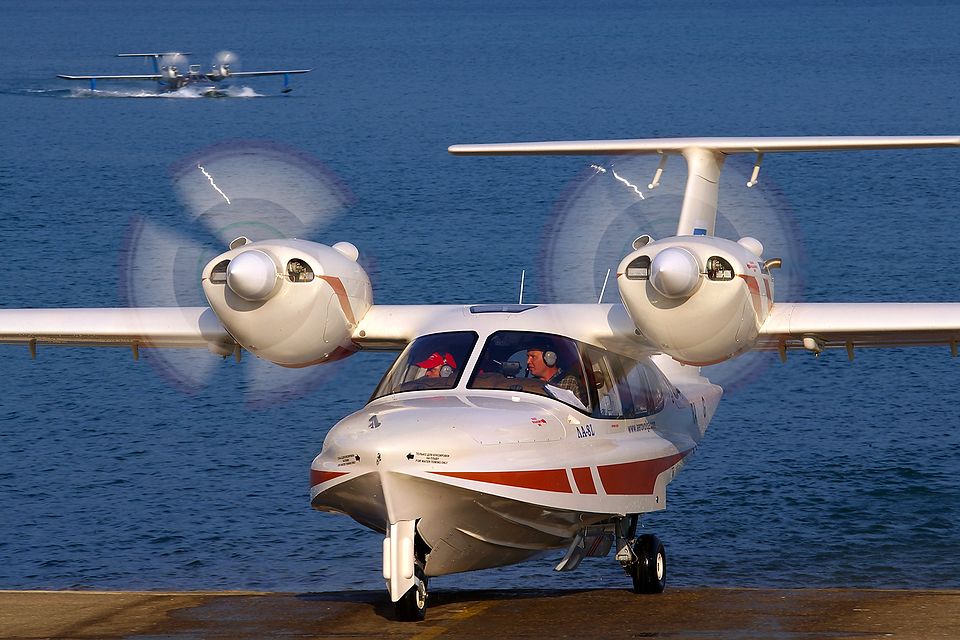
Buying a twin engine amphibious aircraft is one of the most exciting decisions a pilot can make. These aircraft can land on runways and lakes, rivers and bays, giving you access to places most planes can never reach. Seaplanes are said to represent one of the oldest and most versatile categories in aviation history, with designs dating back well over a century that still influence modern builds today.
If you have been researching twin engine amphibious aircraft options, you already know the category has a lot of variety.
The real challenge is figuring out which aircraft fits your budget, your experience level, your mission, and your home base. That is exactly what this article walks you through.
Choosing the right twin engine amphibious aircraft comes down to matching the aircraft's capabilities to your real-world needs.
You need to think about where you will fly, how often, how many passengers you will carry, and what kind of maintenance support is available in your area. Experience level matters too. Some of these aircraft are demanding to fly, especially on the water.
Key Takeaways
Twin engine amphibious aircraft are among the most capable and flexible machines in general aviation, but they also come with serious responsibilities. Choosing the right one means matching the aircraft to your actual mission, your pilot experience, your home base infrastructure, and your long-term budget. Two engines add a critical safety margin over water. The amphibious design opens up thousands of destinations unreachable by standard aircraft. But the added complexity means higher maintenance costs, specialized insurance, and the need for water-specific flight training. Buy smart, inspect carefully, and match the aircraft to the life you actually live.
| Key Takeaway | What It Means |
| Twin engines add safety | Two engines give you more options if one fails, especially over water |
| Amphibious equals more access | You can land on water and land runways |
| Maintenance is higher | More complex systems mean more upkeep |
| Used models need hull checks | Corrosion and water damage are top concerns |
| Budget beyond purchase price | Add insurance, training, docking, and inspections |
| Match aircraft to your mission | Recreational versus commercial use requires different aircraft |
| Water operations require training | A seaplane rating and multi-engine rating are both required |
Flying411 is your go-to resource for everything in general aviation, from buying guides to aircraft comparisons. Bookmark it and come back often.
What Exactly Is a Twin Engine Amphibious Aircraft?
A twin engine amphibious aircraft is a plane that can take off and land on both water and solid ground. It has two engines, which immediately sets it apart from single-engine designs, and it is built with a hull or floats that let it operate on water. The word "amphibious" comes from the idea of living in two worlds. These planes move comfortably between land and water without needing any modification between the two.
Most twin engine amphibious aircraft use retractable landing gear, which tucks up into the body of the plane during water operations and lowers again for runway landings. This makes the design mechanically more complex than a standard float plane, but it also makes the aircraft far more flexible.
Fun Fact: Some of the most iconic amphibious aircraft in history came from Grumman, a manufacturer long celebrated for building tough, reliable flying boats for both military and civilian use. Their designs are said to have set a standard for durability that still influences the category today.
Some of the most iconic examples came from Grumman, a manufacturer famous for building tough, reliable amphibious aircraft for both military and civilian use. The Grumman designs set a standard for durability and utility that still shapes the industry today. If you want to understand the full picture of what amphibious flight looks like beyond the twin-engine world, exploring personal amphibious aircraft gives a helpful broader view of how the category breaks down.
Here is what makes a twin engine amphibious aircraft unique:
- Two engines provide redundancy, especially important when flying over water where engine failure has serious consequences
- Amphibious hull or floats allow water operations without additional equipment
- Retractable landing gear enables transitions from water to paved runways
- Larger airframe compared to most single-engine seaplanes, allowing for more payload and range
- Higher certification requirements due to the complexity of the systems involved
How the Hull and Airframe Are Different
The cabin on most twin engine amphibious aircraft is more spacious than what you would find on a small seaplane. Many models are designed to carry six to twelve passengers comfortably, which makes them useful for charter operations, island hopping, or remote access missions.
The airframe on these aircraft has to handle more stress than a standard airplane. Water landing creates impact forces that land runways do not produce. Because of this, manufacturers design amphibious hulls with reinforced structures and use materials that resist moisture and corrosion over time.
Why It Matters: The takeoff sequence on water is completely different from a runway departure. The pilot must manage water resistance during the run-up phase before the hull lifts onto the "step," a raised section of the hull that reduces drag. Wind and wave conditions play a huge role in performance, and takeoff distances on water are generally longer than on pavement.
A Brief Look at Twin Engine Amphibious Aircraft
To understand the aircraft available today, it helps to know where they came from.
The twin engine amphibious aircraft traces its roots to the early days of aviation, when water was often the only practical surface available for long-distance flight. Flying boats connected continents before paved airports existed in meaningful numbers. By the mid-twentieth century, companies like Grumman, Consolidated, and Dornier had developed designs that served military, commercial, and private operators around the world.
The postwar era brought a shift. As paved airport infrastructure expanded globally, the demand for pure flying boats declined. But the amphibious design, which could use both water and land runways, remained attractive to operators working in remote regions. Alaska, Canada, the Caribbean, and Southeast Asia all continued to rely heavily on amphibious aviation long after it faded from mainstream use elsewhere.
Good to Know: The Grumman Mallard, one of the most recognized twin engine amphibians in history, is said to have had fewer than 60 examples built during its original production run in the late 1940s. Today, surviving examples are rare and often highly modified.
Modern production of twin engine amphibious aircraft is limited. Most of what is available on the market today is pre-owned, often with decades of service history. Understanding that history, including what has been modified, what has been neglected, and what has been restored, is central to making a smart purchase.
Where Can a Twin Engine Amphibious Aircraft Actually Take You?
The short answer is almost anywhere with water or a runway. That is a remarkable amount of the world.
In the United States alone, there are thousands of lakes, bays, coastal inlets, and rivers that are legally accessible to seaplanes. Add in paved airports, grass strips, and gravel runways, and a twin engine amphibious aircraft becomes one of the most flexible tools in general aviation. You can fly from a city airport in the morning, land on a remote lake by midday, and be back on a paved runway by evening.
Here are some of the most common use cases:
- Remote access travel: Reaching fishing lodges, hunting camps, or cabins with no road access
- Island and coastal transport: Connecting communities in Alaska, the Pacific Northwest, the Gulf Coast, and the Florida Keys
- Charter and air taxi operations: Offering premium access to water-adjacent destinations
- Search and rescue: Operating in areas where helicopters may not have range and land planes cannot reach
- Tourism and sightseeing: Flying passengers over scenic coastlines and water destinations
Pro Tip: International operations in the Caribbean, Southeast Asia, Scandinavia, and the South Pacific all have established seaplane infrastructure and strong demand for amphibious aircraft. If your mission involves international water routes, research local regulations and seaplane base availability well before you buy.
Internationally, the possibilities expand even further. A twin engine amphibious aircraft is especially valuable in areas where road and airport infrastructure is limited. In parts of Alaska and Canada, water is the highway. The aircraft does not need a prepared surface, just a calm enough stretch of water and enough room to climb out safely.
That said, the more places you can go, the more planning and local knowledge you need. Water depth, obstacles, local regulations, and seasonal conditions all matter. Most experienced amphibious pilots develop a detailed pre-approach checklist for water operations, just as they would check weather before a cross-country flight.
How Twin Engine Amphibious Aircraft Compare to Other Seaplane Types
Before committing to a twin engine design, it helps to understand how it stacks up against other categories. Not every mission needs this level of capability, and the added complexity comes with real costs.
| Aircraft Type | Engines | Water Capable | Runway Capable | Typical Payload | Complexity |
| Single-engine floatplane | 1 | Yes (floats only) | No | Low to moderate | Moderate |
| Single-engine amphibian | 1 | Yes | Yes | Low to moderate | Moderate to high |
| Twin engine amphibian | 2 | Yes | Yes | Moderate to high | High |
| Flying boat (non-amphibian) | Varies | Yes | No | Varies | High |
| Amphibious ultralight | 1 | Yes | Yes | Very low | Low to moderate |
If a smaller and simpler option fits your mission, a single-engine amphibious aircraft may be a more practical and affordable starting point. If sheer size and payload capacity are your priorities, understanding the category of the largest amphibious aircraft gives useful context for how big these machines can get.
Keep in Mind: For pilots who want amphibious capability at a much lower price point and simpler operating experience, an amphibious ultralight aircraft occupies a completely different and more accessible tier of the market.
Why Do Some Twin Engine Amphibious Aircraft Perform Better Than Others?
Not all twin engine amphibious aircraft are built the same. Performance differences come down to a few key factors: powerplant choice, hull design, gross weight, and how well the aircraft has been maintained over its life.
The engine type matters enormously. Aircraft with more powerful engines can carry heavier loads, climb faster, and handle challenging water conditions more confidently. In the twin engine amphibious category, you will find a range of powerplants, from older piston designs to modern turbine conversions, and each comes with trade-offs in cost, reliability, and parts availability.
Hull shape is another major factor. A well-designed hull creates less drag during water runs, which shortens takeoff distance and reduces stress on the airframe. Hull design also affects how stable the aircraft is at rest on the water and how it handles in crosswind conditions during water approaches.
What Separates Good Performers from Average Ones
- Engine reliability and power-to-weight ratio: More power helps on hot days, high altitudes, and rough water
- Hull hydrodynamics: Better hull design means shorter water runs and smoother operation
- Avionics and automation: Modern avionics reduce pilot workload and improve situational awareness
- Weight and balance: Aircraft that are well-balanced carry more usefully and handle more predictably
- Maintenance history: A well-maintained aircraft performs more consistently and reliably
Fun Fact: Some operators have transformed aging piston-powered amphibians into high-performance aircraft through turbine conversions. Frakes Aviation became well known for converting Grumman Mallard airframes from original radial piston engines to turbine power, dramatically improving reliability and single-engine climb performance.
The difference in real-world performance can also come down to modifications and upgrades done over the aircraft's life. Some operators have invested in avionics upgrades, engine conversions, or hull refurbishments that dramatically improve safety and performance. Others have deferred maintenance in ways that reduce reliability. That is why inspection history matters so much when evaluating any used aircraft in this category.
How Do You Pick the Right Twin Engine Amphibious Aircraft for Your Needs?
This is where the real decision-making happens. Choosing the right aircraft is not just about picking the one that looks impressive or has the most famous name. It is about honest, careful matching of the aircraft's capabilities to your actual situation.
Who Is This Aircraft For?
The first question is simple but important: who is flying it, and what for?
A twin engine amphibious aircraft is a complex machine. It requires a multi-engine rating, a seaplane rating, and depending on the specific aircraft, possibly a type rating as well. If you are a low-time pilot who just earned a private certificate, stepping directly into a twin engine amphibious aircraft is not a safe or practical starting point. You need time in simpler aircraft first, building judgment and stick-and-rudder skills before adding the demands of water operations and multi-engine management.
For experienced pilots, the next question is the mission:
- Recreational pilots often do well with smaller, lighter twin amphibians that are easier to maintain and less expensive to operate
- Commercial operators running charter or airline-style routes need aircraft certified for passenger transport, which means looking at transport category aircraft with proper FAA certification
- Remote access users need range, payload, and the ability to handle rough water conditions
- Flight training organizations may want something with dual controls, good visibility, and forgiving handling characteristics
Good to Know: The Grumman Wigeon is a smaller and lighter twin amphibian than the Mallard, making it a better fit for private use and small group transport. Knowing which aircraft fits which mission is the foundation of a smart buying decision.
If you want an overview of which models tend to perform best across different mission profiles, reviewing the best amphibious aircraft across categories can help you build a solid shortlist before you start shopping.
What Should You Check Before Buying?
Before you get excited about a specific aircraft, you need to look at the facts on paper and in person.
Type certification is the starting point. Every aircraft sold in the United States must have valid FAA type certification or be operating under an experimental certificate. For a twin engine amphibious aircraft, confirm that the specific make and model has valid type certification and that the aircraft itself has a current airworthiness certificate.
Maintenance history is just as important. Ask for the full logbooks, both airframe and engine logs. You want to see a consistent pattern of regular inspections, on-time overhauls, and no unexplained gaps. Red flags include missing logbook entries, engine time that does not match airframe time, or signs that major repairs were done without proper documentation.
Hull condition deserves special attention. Water operations create unique wear and tear, especially in salt water environments. Corrosion is the enemy of any amphibious aircraft, and it often hides in places that are not immediately visible. A proper pre-purchase inspection by an A&P mechanic experienced with amphibious aircraft is not optional. It is essential.
Pre-purchase inspection checklist:
- Confirm airworthiness certificate is current
- Review full airframe and engine logbooks
- Check hull for corrosion, especially in bilge areas and around the step
- Inspect retractable landing gear actuators and door seals
- Review avionics for currency and functionality
- Confirm float attachments and water rudder condition
- Check propeller condition and last overhaul date
- Verify compliance with all outstanding Airworthiness Directives
- Inspect fuselage interior for signs of water intrusion
- Confirm engine mounts and firewall condition
Heads Up: The hull is your most expensive structural component. Cracks, repairs, and chronic leaking all signal costly work ahead. Never skip the hull inspection, even if the seller assures you the aircraft has been well maintained.
When Does New vs. Used Make Sense?
The new versus used question is really a cost and support question.
New twin engine amphibious aircraft are rare. Very few manufacturers produce them in any volume today, and when they do, prices are significant. The Dornier Seastar is one example of a modern production amphibian built with composite construction and turbine power, but it comes at a premium that puts it out of reach for most private buyers.
Used aircraft dominate this market. Finding a well-preserved example of a classic design like the Grumman Mallard or Wigeon requires patience and careful searching.
| Scenario | New Makes Sense | Used Makes Sense |
| Modern avionics required | Yes | Possible with upgrades |
| Factory warranty needed | Yes | No |
| Commercial certification required | Often yes | Depends on model |
| Budget is a primary constraint | No | Yes |
| Parts community is important | Less critical | Very important |
| Turbine reliability is a priority | Yes | Yes, with conversion |
Some operators choose a middle path: a used airframe that has received significant upgrades. A Pratt and Whitney Canada PT6A-powered Mallard with a solid maintenance history can be an excellent value, combining the classic flying boat airframe with modern turbine reliability.
Where Will You Base and Service Your Aircraft?
Where you park and service your aircraft matters as much as what you buy.
A twin engine amphibious aircraft needs both land and water access, ideally close together. If your home airport is far from the nearest suitable body of water, operating the aircraft as a true amphibian becomes logistically complicated. The ideal setup is a facility that sits directly on or very near water, with hangar space available and maintenance personnel who know amphibious aircraft.
Pro Tip: Before you finalize any purchase, identify at least two or three A&P shops within a practical distance that have specific experience with amphibious aircraft and your particular model. Parts sourcing for classic flying boats can be a long lead-time process, and local expertise is not guaranteed.
Harbor-based operations are common for amphibious aircraft. Some operators use private docks with dedicated ramps, while others lease space at established seaplane bases. Access to water for regular operations is a practical necessity, not a nice-to-have.
Consider these logistics questions before you commit:
- Is there a seaplane base or water access within practical distance of your home airport?
- Does your local area have mechanics experienced with amphibious aircraft?
- Are parts for your specific aircraft readily available, or do they need to be sourced from specialty suppliers?
- What are the seasonal limitations on water operations in your area?
Why Your Budget Goes Well Beyond the Purchase Price
The purchase price is just the beginning. A realistic operating budget for a twin engine amphibious aircraft includes several ongoing costs that add up quickly.
Insurance Costs
Insurance for amphibious aircraft is specialized and often expensive. Insurers look at pilot total time, time in type, multi-engine time, and seaplane time. A pilot with limited experience in any of these areas will pay higher premiums, or may struggle to get coverage at all. Budget significantly for insurance until you have built up substantial time in the specific aircraft type.
Training Costs
Training is another cost that many buyers underestimate. If you are new to amphibious airplane operations, you will need type-specific training from a qualified instructor. Some insurers require documented training before they will bind coverage. This training is one of the most important investments you can make.
Keep in Mind: Annual inspections on a twin engine amphibious aircraft are more involved and more expensive than a standard general aviation annual. The scope covers the entire hull, all water operations components, the retractable landing gear system, both engines and propellers, and all associated systems.
Other Ongoing Costs to Plan For
- Docking or hangar fees, often both depending on your base
- Corrosion control treatments, especially for salt water operations
- Engine reserves for both powerplants
- Avionics updates and database subscriptions
- Fuel costs, since twin engine aircraft burn more than single-engine models
Do not let these costs catch you off guard. Build them into your decision from the start.
How to Test Fly and Evaluate a Twin Engine Amphibious Aircraft
A test flight in a twin engine amphibious aircraft is unlike any other aircraft evaluation. You are assessing performance in two completely different environments, and both need to be done well.
What to Watch on the Water
On the water, pay attention to how the aircraft handles during the water run. Does the hull ride smoothly, or does it pound excessively? Does the aircraft track straight during the takeoff and landing roll, or does it require constant correction? Watch for water spray patterns. Abnormal spray can indicate hull damage or a design issue with the step.
Positive climb performance after lift-off is critical. A healthy aircraft should climb away from the water with authority. Weak climb performance is a warning sign, especially in hot-and-high conditions.
What to Watch on Land
On land, evaluate the landing gear operation closely. The retractable landing gear must extend and retract smoothly, lock positively in both positions, and show no signs of hydraulic leaks. Test the gear warning systems and confirm they function properly.
Quick Tip: Always ask the seller or an experienced amphibious specialist to walk you through any aircraft-specific quirks during the test flight. Every older amphibian has them. Knowing what is normal versus what is a problem is the difference between a good purchase and an expensive mistake.
During the flight itself, assess:
- Engine run-up and power output from both engines
- Single engine performance: how does the aircraft handle with one engine at idle?
- Co-pilot visibility and control accessibility
- Cruise performance versus published technical specifications
- Aerodynamic handling characteristics including stability, control feel, and response
- Low-speed behavior, especially on approach to water
Conclusion
Choosing the right twin engine amphibious aircraft takes time, research, and honest self-assessment. You have to think about your experience level, your mission, your budget, your home base, and your long-term support options, all at once. That is a lot to manage, but it is also what makes this decision so rewarding when you get it right. The aircraft that fits your life well will open up destinations and experiences that most pilots never get to enjoy.
Take your time, inspect carefully, fly before you buy, and never skip the pre-purchase inspection.
When you are ready to research more, Flying411 has the resources to help you move forward with confidence.
Frequently Asked Questions
Do I need a special pilot certificate to fly a twin engine amphibious aircraft?
Yes. You need a multi-engine rating and a seaplane rating at minimum. Depending on the specific aircraft, you may also need a type rating. The FAA requires pilots to be specifically qualified for each category and class of aircraft they fly, and amphibious aircraft fall under a distinct classification that requires water-specific training and documented sign-off.
How does salt water affect a twin engine amphibious aircraft over time?
Salt water accelerates corrosion significantly. Aircraft operated in coastal or ocean environments need more frequent corrosion inspections, protective treatments, and fresh water rinses after each water operation. Over time, neglected salt water exposure can damage the hull, landing gear components, control cables, and engine mounts, making routine corrosion control one of the most important parts of ownership.
What is the typical range of a twin engine amphibious aircraft?
Range varies widely by model and configuration. Smaller piston-powered twins may have a range in the neighborhood of 500 to 700 nautical miles, while turbine-converted aircraft like the Frakes Mallard can extend that considerably depending on fuel load and payload. Always check the specific aircraft's published performance charts and account for fuel reserves, especially when planning over-water routes.
Are there any modern twin engine amphibious aircraft being produced today?
Yes, but in small numbers. The Dornier Seastar is one of the few modern designs in production, built with composite materials and turbine engines. There is also growing interest in electric and hybrid amphibious designs for short-range operations. The overall market remains small, which means used aircraft from earlier decades dominate the available inventory for most buyers.
How long does a pre-purchase inspection take for a twin engine amphibious aircraft?
A thorough pre-purchase inspection typically takes two to four days, depending on the aircraft's age and complexity. It should be performed by an A&P mechanic with specific experience in amphibious aircraft. The inspection should cover the hull, landing gear systems, both engines and propellers, all avionics, and a full review of logbooks and maintenance records. Rushing this process is one of the costliest mistakes a buyer can make.
What qualifications should the pre-purchase inspector have?
Look for an A&P mechanic who has hands-on experience with the specific type of amphibious aircraft you are buying, not just general seaplane experience. Ideally, they should have performed inspections or annual maintenance on the same make and model before. If your prospective aircraft is a Grumman design, an inspector with Grumman flying boat experience is worth seeking out specifically.
Is it hard to find parts for older twin engine amphibious aircraft?
Parts availability varies significantly by model. Some classic designs have active owner communities and specialty suppliers who stock or fabricate hard-to-find components. Others require lengthy searches and custom fabrication for certain parts. Before buying, research the parts supply situation for your specific aircraft. Talk to existing owners and the mechanic who would perform your annual inspections. Parts scarcity can add significant cost and downtime to ownership.
Can a twin engine amphibious aircraft be used for commercial passenger operations?
Yes, but only if the aircraft holds the appropriate type certification for passenger-carrying operations and the operator holds the required FAA operating certificates. Many older amphibious aircraft are certified under regulations that allow commercial use, but the specific requirements depend on the number of passengers, the nature of the operation, and the regulatory framework that applies. Consult with an aviation attorney or FAA-certified consultant before planning any commercial use.