Some planes need a runway. Others need open water. And then there is a rare, extraordinary category of aircraft that needs neither exclusively — because they can use both. The largest amphibious aircraft ever built are engineering achievements that most people will never see up close, yet they quietly do some of the most critical work in aviation.
They fight wildfires in remote mountain forests. They pull survivors from the open ocean. They patrol coastlines where no land base exists.
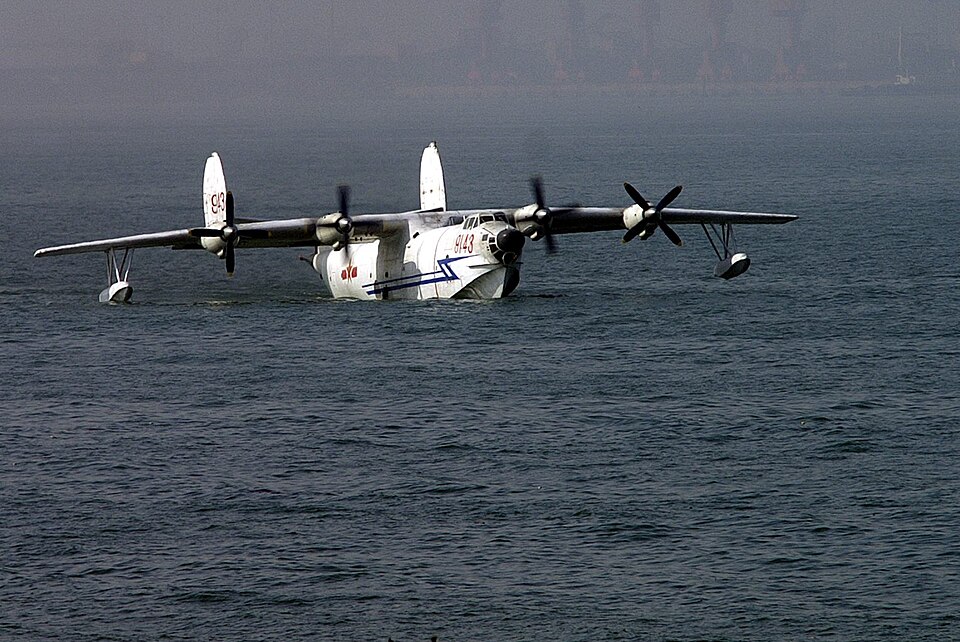
China's AG600, the world's largest amphibious aircraft currently in service, has a wingspan of roughly 127 feet. That is said to be about the length of a 12-story building tipped on its side. That kind of scale demands serious engineering.
From Cold War-era flying boats to modern firefighting giants, the ranking ahead covers the biggest, boldest amphibious planes ever to take to the sky — and the water.
Key Takeaways
The largest amphibious aircraft ever flown are ranked mainly by their maximum takeoff weight and overall size. China's AG600 currently holds the top spot as the world's biggest civil amphibious aircraft in certified production. Other giants include Russia's Beriev A-40, which holds the highest raw takeoff weight of any amphibious design ever built, the American Martin JRM Mars, and Japan's Shin Meiwa US-2. These aircraft are used for firefighting, search and rescue, and maritime patrol around the world.
| Rank | Aircraft | Country | Max Takeoff Weight | Primary Use |
| 1 | AVIC AG600 | China | ~53,500 kg | Firefighting, rescue |
| 2 | Beriev A-40 | Russia | ~86,000 kg | Maritime patrol |
| 3 | Martin JRM Mars | USA | ~74,843 kg | Transport, firefighting |
| 4 | Shin Meiwa US-2 | Japan | ~47,700 kg | Search and rescue |
| 5 | Beriev Be-200 | Russia | ~37,200 kg | Firefighting, rescue |
| 6 | Consolidated PB2Y Coronado | USA | ~29,257 kg | Patrol, transport |
| 7 | Short Sunderland | UK | ~26,308 kg | Maritime patrol |
| 8 | Dornier Do 24 | Germany | ~18,400 kg | Rescue, patrol |
| 9 | Grumman HU-16 Albatross | USA | ~14,969 kg | Search and rescue |
| 10 | Canadair CL-215 | Canada | ~19,731 kg | Aerial firefighting |
Flying411 has in-depth guides on aircraft types, aviation careers, and the business of buying and selling planes. Whether you are just getting curious or already deep in the hobby, it is a great place to keep exploring.
What Makes an Amphibious Aircraft Different from a Regular Plane
An amphibious aircraft is a plane that can take off and land on both water and regular runways. That sets it apart from almost every aircraft you see at a commercial airport. Most planes need a paved surface. Amphibious aircraft are built with hulls or floats that let them operate on lakes, rivers, bays, and open ocean — then fly back to a land-based airport when needed.
Hull Design and Structural Differences
Instead of a flat belly, amphibious aircraft have a boat-like hull that cuts through water cleanly and supports the aircraft during water landings and takeoffs. Most amphibious planes also have wheels that retract for water operations and extend again for land use. Water is much denser than air, and landing on it creates strong impact forces. That means the airframe has to be significantly tougher than on a standard aircraft. Sealed, watertight compartments are also built into the hull to keep the aircraft buoyant and protected during water contact.
How Amphibious Aircraft Compare to Floatplanes and Flying Boats
It helps to understand how these aircraft compare to similar types. A floatplane uses external pontoons attached under the fuselage instead of a built-in hull. Understanding the differences between seaplanes and floatplanes can help clarify why amphibious designs require so much more engineering. A flying boat has the hull built directly into the fuselage body. An amphibious aircraft combines the flying boat design with retractable wheels, giving it the ability to use both water and land surfaces.
Good to Know: Landing on water comes with real challenges that land-based pilots never face. Waves, currents, debris, and unpredictable surface conditions all add complexity. That is part of why amphibious pilots go through specialized training and why the aircraft themselves are built to higher structural standards.
Why Scale Makes Everything Harder
The biggest amphibious aircraft take all of those design requirements and scale them up significantly. Larger hulls, larger engines, more fuel capacity, and much heavier airframes all compound one another. The engineering challenge grows quickly as the aircraft gets bigger. What works on a small floatplane cannot simply be enlarged to work on a 50,000-kilogram flying boat. Every system has to be rethought at scale.
Who Still Builds the Largest Amphibious Aircraft Today
The honest answer is not many companies. Building a large amphibious aircraft is one of the most complex tasks in the entire aviation industry. The number of manufacturers actively developing new large models today is very small.
AVIC, the Aviation Industry Corporation of China, is currently the most active builder of large amphibious aircraft in the world. AVIC developed the AG600, which is now the largest civil amphibious aircraft flying today. The program took years of engineering work and involved cooperation between Chinese aerospace companies and government agencies. The Civil Aviation Administration of China, known as CAAC, played a key role in overseeing the aircraft's certification process.
Active Manufacturers and Their Programs
| Manufacturer | Country | Current Model | Status |
| AVIC | China | AG600 | Certified, deliveries underway |
| Beriev Aircraft Company | Russia | Be-200 | In production and active service |
| ShinMaywa Industries | Japan | US-2 | Active military service |
| De Havilland Canada | Canada | CL-415 | In production, widely deployed |
Why It Matters: Most other manufacturers have focused on smaller amphibious aircraft or discontinued large programs entirely. The costs and complexity involved in building and certifying a large amphibious aircraft make it a very difficult market to enter. That is why only a handful of programs exist worldwide.
AVIC has made the biggest investment in new large amphibious development in recent decades. The AG600 program represents a major national effort to give China its own large maritime aviation capability. It took many years to bring the aircraft from design to flight test to certification. Most other manufacturers have narrowed their focus to smaller models or have stepped away from the segment entirely.
Where the Largest Amphibious Aircraft Operate Around the World
Large amphibious aircraft fill roles that no other type of aircraft can cover as effectively. Their ability to operate in remote water environments, far from any runway, makes them genuinely useful in parts of the world where infrastructure is limited or emergencies require a water-capable response.
Firefighting Operations
Large amphibious aircraft scoop water from lakes and reservoirs and drop it on wildfires. The Canadair CL-215 and its successor the CL-415 are the gold standard for this role in Europe and North America. The AG600 is being developed to serve this same role in China, where forest fires in remote regions are a growing concern. Aerial firefighting demands aircraft that can operate repeatedly over long days, refilling quickly and returning to the fire zone without landing at a base.
Search and Rescue Missions
Japan's US-2 operates across vast stretches of the Pacific, recovering survivors from disabled vessels and downed aircraft. Its ability to land on rough open-ocean water makes it one of the most capable rescue platforms in service anywhere. If you want to understand how personal-scale amphibious designs contribute to rescue operations, amphibious personal aircraft represent a growing category of lighter rescue-capable platforms that complement these larger machines.
Fun Fact: Japan's Shin Meiwa US-2 is said to be one of the only large amphibious aircraft in the world designed to land safely in wave heights of up to 3 meters. Most amphibious aircraft require much calmer conditions.
Maritime Patrol and Disaster Response
Several large amphibious aircraft have served military patrol roles, monitoring coastlines, tracking surface vessels, and supporting naval operations. The South China Sea is one area where China has significant interest in developing its amphibious aviation capability. When earthquakes, floods, or storms cut off road access to coastal or island communities, amphibious aircraft can reach areas that land-based planes cannot. They can land on flooded surfaces, bays, or rivers to deliver supplies or evacuate survivors.
Remote Area Transport
In regions like Alaska, northern Canada, and parts of Southeast Asia, amphibious aircraft connect communities that have no paved runway. Planes that can land on water serve as the primary air link for some of these communities. The geographic spread of these missions is wide. From the Pacific Islands to the Mediterranean coast to the forests of British Columbia, large amphibious aircraft operate in some of the most demanding environments in the world.
The 10 Largest Amphibious Aircraft Ever Flown, Ranked
1. AVIC AG600 — China's Record-Holding Firefighting Giant
The AG600 is the biggest amphibious plane flying today. Developed by AVIC, it represents one of the most ambitious aviation projects China has ever completed. The AG600 had its maiden flight in 2017, taking off from an airport in Zhuhai in southern China. That first flight was a major milestone for Chinese aviation and drew significant international attention.
The aircraft is enormous. It has four WJ-6 turboprop engines, a maximum takeoff weight of around 53,500 kilograms, and a wingspan of roughly 127 feet. It is designed to scoop up water from a lake or reservoir and drop it on a forest fire. According to published program data, it can collect around 12 tonnes of water in approximately 20 seconds while skimming across a water surface, making it exceptionally effective for aerial firefighting. It can carry that load across significant distances on a single tank of fuel, which matters greatly for remote fire response missions.
Beyond firefighting, the AG600 is built for search and rescue operations. It is reported to be capable of retrieving up to 50 people from the water in a single mission, making it highly valuable for disaster response along China's coastlines and inland waterways.
Pro Tip: When comparing the AG600 to other aircraft on this list, keep in mind that "largest" can mean different things. The AG600 leads in certified civil production status. The Beriev A-40 has a higher raw takeoff weight. The Martin JRM Mars had one of the longest wingspans of the group. Context matters when comparing these aircraft.
The path to certification was long. The AG600 went through extensive flight test programs over several years before obtaining its type certificate from the CAAC in 2022. That certificate is a formal confirmation that the aircraft meets all safety and airworthiness standards required for operation. Reports from Chinese government sources at the time indicated that AVIC had a number of orders on the books when certification was completed.
The AG600 program was treated as a national priority alongside other major Chinese aviation programs including the C919 commercial jet and the Y-20 strategic transport. In terms of certified production status, the AG600 holds its position as the largest civil amphibious aircraft ever certified, with no current competitor from any other country close to matching it in the civil amphibious category.
2. Beriev A-40 — Russia's Heavyweight Maritime Patrol Prototype
Before the AG600 arrived, the Beriev A-40 held the record as the world's largest amphibious aircraft by raw maximum takeoff weight. Developed in the Soviet Union during the 1980s, the A-40 was built for maritime patrol and anti-submarine warfare. Its maximum takeoff weight is reported to have reached approximately 86,000 kilograms, which is actually heavier than the AG600 by that single measure.
The A-40 used turbofan engines and had an impressive performance profile for its era. However, it never entered full production. The collapse of the Soviet Union disrupted funding, and the program was eventually shelved. Only a small number of prototypes were built and flown.
| Feature | Beriev A-40 | AVIC AG600 |
| Country | Russia | China |
| Max Takeoff Weight | ~86,000 kg | ~53,500 kg |
| Engine Type | Turbofan plus booster jets | Turboprop |
| Production Status | Never entered production | Certified, in production |
| Primary Role | Maritime patrol, anti-submarine | Firefighting, search and rescue |
Despite never reaching production, the A-40 remains an important part of amphibious aviation history. It proved that a large flying boat design could achieve jet-powered performance at a scale no one had attempted before. It pushed the technical boundaries of what was considered possible in its era.
Keep in Mind: The Beriev A-40's raw weight figure looks impressive on paper, but the aircraft never flew in operational service. Production aircraft and prototype designs are not always a fair comparison, which is one reason different sources rank these aircraft differently.
3. Martin JRM Mars — The Largest American Flying Boat Ever Built
The Martin JRM Mars was the largest flying boat ever operated by the United States Navy. Built by the Glenn L. Martin Company, it entered service near the end of World War II as a long-range transport aircraft. Its job was to move cargo and personnel across the Pacific Ocean, a mission that required size, range, and the ability to operate from open-ocean anchorages.
The Mars had a maximum takeoff weight of around 74,843 kilograms and was powered by four large radial engines. It had a wingspan of roughly 200 feet, which is among the largest of any flying boat ever built. After the war, several Mars aircraft were converted into aerial water bombers. Two converted aircraft, operated by Coulson Flying Tankers in British Columbia, Canada, became legendary firefighting platforms. The last operational Mars aircraft were retired from firefighting service around 2015.
Fun Fact: The Martin JRM Mars is said to have been capable of carrying up to 27,000 litres of water as a tanker, making it one of the most capable firefighting platforms of its era long before modern designs came along.
4. Shin Meiwa US-2 — Japan's Open-Ocean Rescue Platform
The US-2 is Japan's dedicated open-ocean search and rescue platform. It is operated by the Japan Maritime Self-Defense Force and is specifically designed to land on rough water. According to published specifications, it can operate in wave heights up to 3 meters, which makes it genuinely capable in real ocean rescue conditions. A boundary layer control system helps it maintain lift at very low airspeeds during water approaches.
The US-2 remains in active service and has no close equivalent anywhere else in the world. It represents a level of open-water capability that is genuinely rare among large aircraft of any type.
5. Beriev Be-200 — Russia's Jet-Powered Firefighting Aircraft
The Be-200 is a jet-powered amphibious aircraft built by the Beriev Aircraft Company. It is smaller than the A-40 but far more practical for civil operations. It has been used for firefighting across southern Europe and has also served in search and rescue roles. Russia has exported it to several countries. Its two turbofan engines give it a speed advantage over turboprop competitors, which can help in time-sensitive firefighting situations.
Good to Know: The Beriev Be-200 has a passenger and cargo transport variant, making it one of the more versatile large amphibious aircraft still in production. Most aircraft on this list are single-purpose platforms, which makes the Be-200 stand out in terms of commercial flexibility.
6. Consolidated PB2Y Coronado — America's Wartime Pacific Patrol Boat
The Consolidated PB2Y Coronado was a large American patrol flying boat used during World War II. It served primarily in the Pacific theater in maritime patrol and long-range transport roles. Like many large flying boats of that era, it was retired after the war as land-based aircraft took over most of its missions. Its maximum takeoff weight reached approximately 29,257 kilograms, which was remarkable for its time.
7. Short Sunderland — Britain's Sub-Hunting Atlantic Workhorse
The Short Sunderland was one of the most capable maritime patrol aircraft of World War II. Built in Britain, it served across the Atlantic and in other theaters, hunting submarines and providing long-range reconnaissance. It could carry depth charges, bombs, and defensive gun turrets, making it a genuinely versatile wartime platform. Some versions remained in service into the 1950s, well past the end of the war.
8. Dornier Do 24 — Germany's Three-Engine Sea Rescue Aircraft
The Dornier Do 24 was a German three-engine flying boat used extensively during World War II for search and rescue missions. It is widely regarded as one of the most effective rescue aircraft of the war, credited with recovering a significant number of downed airmen from the sea. Its three-engine layout was unusual for large flying boats of the period. A modernized version, the Do 24 ATT, was developed in Spain decades later and demonstrated renewed interest in the original design's capabilities.
9. Grumman HU-16 Albatross — America's Versatile Multi-Role Amphibian
The HU-16 Albatross served across multiple branches of the U.S. military from the late 1940s through the 1970s. It was used for search and rescue, coastal patrol, and utility transport. Its rugged design made it a reliable performer in demanding conditions. Several HU-16 aircraft are still flying today in civilian hands, a testament to how well the original airframe was designed. For those interested in smaller amphibious platforms, single-engine amphibious aircraft share much of the same rugged design philosophy that made the Albatross such a long-lived platform.
Heads Up: The Grumman HU-16 Albatross has a devoted community of civilian owners and enthusiasts. If you ever get a chance to see one at an airshow, it is worth stopping to look. The aircraft is smaller than the others on this list but just as historically significant.
10. Canadair CL-215 — The Aircraft That Defined Aerial Firefighting
The Canadair CL-215 was designed from the ground up as an aerial firefighting platform. It is widely said to be the first aircraft in history built specifically for that purpose. It entered service in 1969 and went on to become one of the most widely deployed water bombers in the world. Its ability to scoop water from a lake surface while in motion made it far more efficient than tanker aircraft that needed to return to an airport to reload.
The CL-215's successor, the CL-415, is still in production and active service across Europe and North America. Both aircraft are operated by governments and aerial firefighting agencies in countries with significant wildfire risk. Their design has defined how the industry thinks about aerial firefighting for more than half a century. If you want to understand which aircraft are considered among the best amphibious aircraft for different missions, the CL-215 and CL-415 consistently appear near the top of that conversation.
How Amphibious Aircraft Designs Have Changed Over the Decades
The history of large amphibious aircraft is really the history of what militaries and governments needed at any given time. During World War II, the demand was for long-range patrol and transport over open ocean. Flying boats like the Sunderland, the Coronado, and the Mars filled that role. After the war, land-based aircraft became faster and more capable, and most large flying boat programs were cancelled.
The Cold War Shift and the Rise of Specialized Roles
The Cold War gave new life to amphibious aviation through maritime patrol and anti-submarine missions. The Soviet Union invested heavily in flying boat technology through the Beriev design bureau. That investment eventually led to the A-40, which pushed the technical limits of what a large amphibious aircraft could do. In the West, attention shifted mostly to smaller platforms like the HU-16 Albatross, which could fulfill rescue and patrol roles without the expense of a much larger aircraft.
Modern Amphibious Aircraft and the Firefighting Era
The CL-215 changed the conversation in the late 1960s by creating an entirely new mission category. Aerial firefighting gave large amphibious aircraft a civilian purpose that militaries alone could not provide. That opened the door for programs like the Be-200 and eventually the AG600 to justify their development costs through both military and civilian applications.
Pro Tip: When evaluating any large amphibious aircraft program today, look at whether the aircraft has a credible civilian mission alongside any military role. Programs without a dual-use case have historically struggled to find the sustained funding they need to reach production.
Understanding the full range of float plane types helps put these large platforms in context. The engineering principles that make a floatplane work on a small lake scale upward into the massive hull designs that allow the AG600 to scoop water at speed.
How to Compare Amphibious Aircraft Fairly
Comparing aircraft across different eras is genuinely tricky. A World War II flying boat and a modern turboprop firefighter were designed for completely different missions, built with completely different materials, and certified under completely different standards. Raw numbers like maximum takeoff weight tell part of the story but not all of it.
What the Numbers Do and Do Not Tell You
Maximum takeoff weight is a useful proxy for overall size, but it does not capture payload efficiency, water-scooping capability, range, rough-water performance, or operational reliability. The Beriev A-40 outweighs the AG600 by a significant margin, but the AG600 is the only one of the two that has ever entered certified production. The Martin JRM Mars had one of the longest wingspans of any flying boat ever built, but its piston engines made it slower and less fuel-efficient than modern turboprop designs.
Quick Tip: When reading comparisons of large amphibious aircraft, pay attention to whether the figures cited are for the original production version, a prototype, or an upgraded variant. Specifications often vary significantly between versions of the same aircraft.
Mission Fit Matters More Than Raw Size
The most meaningful comparison is usually mission fit. Japan's US-2 is not the heaviest or the largest aircraft on this list, but for open-ocean rescue operations it has capabilities that no other aircraft in the world can match. The CL-215 is one of the smaller aircraft by weight, but its water-scooping design made it the gold standard for aerial firefighting for decades. Size is relevant, but it is not the whole story.
Conclusion
The largest amphibious aircraft ever built represent some of the most ambitious engineering projects in aviation history. From the massive wartime flying boats of the 1940s to the modern AG600 now operating in China, these aircraft pushed the limits of what a plane can do. They operate in places most aircraft cannot reach, carry out missions that require both air and water capability, and continue to serve critical roles in firefighting, rescue, and maritime operations around the world.
The list will likely shift and grow as programs like China's AG600 mature and new missions are developed. For now, the ten aircraft ranked here stand as the biggest and most capable of their kind ever to fly.
If you want to keep learning about aircraft types, aviation history, and what it takes to fly some of the most extraordinary machines ever built, Flying411 has resources built to help you at every level.
Frequently Asked Questions
What is the largest amphibious aircraft in the world right now?
China's AVIC AG600 is widely considered the world's largest civil amphibious aircraft currently in certified production. It has a maximum takeoff weight of around 53,500 kilograms and a wingspan of roughly 127 feet. Russia's Beriev A-40 had a higher reported maximum takeoff weight but never entered full production, which is why many sources give the active record to the AG600.
Can amphibious aircraft land on the ocean in rough conditions?
Most amphibious aircraft are designed for calm or moderately choppy water. The open ocean creates large swells that can be dangerous during water landings. Japan's Shin Meiwa US-2 is a rare exception. It is specifically engineered to operate in wave heights up to 3 meters, making it one of the only large amphibious aircraft capable of real open-ocean rescue operations.
How long does it take to certify a new large amphibious aircraft?
Certifying a large amphibious aircraft is a lengthy process. China's AG600 took roughly five years from its first flight in 2017 to receiving its type certificate in 2022. The process involves hundreds of hours of flight testing, structural evaluations, and safety reviews by the country's aviation authority before the aircraft is cleared for operational use.
Are large amphibious aircraft used for passenger travel today?
Large amphibious aircraft are not commonly used for scheduled passenger service today. Their primary roles are firefighting, search and rescue, and military patrol. However, the Beriev Be-200 has a passenger and cargo transport variant, and China has explored the idea of using the AG600 in island-hopping routes where conventional runways are not available.
What fuel do large amphibious aircraft typically use?
Large amphibious aircraft use the same types of aviation fuel as other large propeller or jet aircraft. Turboprop models like the AG600 use aviation turbine fuel, commonly known as Jet-A. Piston-engine models from earlier eras used aviation gasoline. Fuel efficiency is an important factor in mission planning, especially for firefighting operations that require multiple water drops over a long workday.
How do pilots train to fly amphibious aircraft?
Pilots transitioning to amphibious aircraft need specialized water operations training on top of their existing fixed-wing credentials. This includes learning water taxiing, water takeoffs and landings, beaching procedures, and emergency protocols specific to water environments. Many pilots train at facilities near lakes or coastal areas where they can practice water operations in controlled conditions before moving to more demanding real-world missions.
What happened to most of the large flying boats built during World War II?
Most large flying boats built during World War II were retired shortly after the conflict ended. Advances in land-based aircraft made them faster, longer-ranged, and cheaper to operate. Without the need for ocean patrol missions at the wartime scale, programs like the Consolidated PB2Y Coronado and Short Sunderland lost their primary justification. A few, like the Martin JRM Mars, found a second life in civilian roles such as aerial firefighting.
How does the AG600 scoop water during firefighting operations?
The AG600 skims across the surface of a lake or reservoir at low altitude and uses hull scoops to pull water into onboard tanks while still in motion. According to published program data, this process takes approximately 20 seconds and can collect around 12 tonnes of water per pass. The aircraft then climbs and delivers the water as a drop over the fire zone before returning for another pass.
What is the difference between a flying boat and an amphibious aircraft?
A flying boat is an aircraft that can only operate on water. Its hull is designed to float and taxi on water surfaces, but it has no retractable landing gear for use on runways. An amphibious aircraft adds retractable wheels to that design, allowing it to land and take off from both water and paved surfaces. All amphibious aircraft share characteristics with flying boats, but not all flying boats are amphibious.
Are there any new large amphibious aircraft programs in development today?
As of the time this article was written, China's AG600 program is the most significant new large amphibious development in the world. It is moving from initial certification toward expanded operational deployment. No other country is currently known to have an active program developing a new large amphibious aircraft at a comparable scale. Smaller amphibious aircraft programs continue in several countries, but the large-platform segment remains very limited.