There is something different about an aircraft that can splash down on a lake, taxi up to a dock, and then climb back into the sky on the strength of two engines instead of one. A twin engine seaplane sits in that special spot where rugged utility, redundancy, and freedom of access all meet. It is the airplane of remote villages, island hopping resorts, search and rescue crews, and the occasional well-heeled owner who likes the idea of a backyard with a runway and a shoreline.
These aircraft have a long, colorful history and a very practical present. They show up over the Maldives, along the Inside Passage of British Columbia, on Alaskan fjords, and across countless lakes in the Lower 48. They carry passengers, cargo, divers, firefighters, scientists, and sometimes a fishing rod or two. The second engine changes the math for pilots who fly far from pavement, and that math is what makes this whole category interesting.
The story of a twin engine seaplane is really a story about choices, the kind pilots and owners make every time they look at a long stretch of open water and decide what kind of aircraft belongs on it.
Key Takeaways
A twin engine seaplane is an aircraft with two engines that can take off from and land on water, either as a floatplane on pontoons or as a flying boat with a boat-shaped hull. The second engine adds redundancy, payload, and climb performance, which matters most when you are flying over remote water, mountains, or weather. The tradeoff is higher purchase prices, more fuel burn, and more maintenance, so most buyers pick a twin only when the mission really calls for it.
| Topic | Quick Answer |
| What it is | A water-capable aircraft with two engines, either floatplane or flying boat |
| Main advantage | Redundancy, higher payload, better climb performance |
| Main tradeoff | Higher cost to buy, fuel, insure, and maintain |
| Most common roles | Commuter flights, island transfers, charter, firefighting, military patrol, private use |
| Well-known examples | DHC-6 Twin Otter, Grumman Mallard, Grumman Goose, Dornier Seastar, ShinMaywa US-2 |
| Typical buyers | Charter operators, regional airlines, government agencies, high-utility private owners |
Flying411 is the online aviation marketplace where buyers and sellers connect over aircraft like these, along with engines, parts, and the certified pros who keep them flying.
What Is a Twin Engine Seaplane?
A seaplane is any fixed-wing aircraft that can operate from water. A twin engine seaplane is simply one that does this with two engines instead of one. That sounds basic, but the design choices behind it shape everything about how the aircraft flies, what it costs, and what it can do.
Seaplanes come in two main flavors. The first is the floatplane, which is essentially a normal airplane with pontoons (floats) bolted under the fuselage in place of wheels. The second is the flying boat, which uses the underside of the fuselage itself as a hull, with smaller wingtip floats or sponsons for stability.
Good to Know: When people say "seaplane," they sometimes mean just floatplanes, and sometimes they mean both floatplanes and flying boats. In casual conversation the words get mixed up, but the FAA and most pilots use "seaplane" as the umbrella term that covers both.
A twin engine seaplane can be either type. The DHC-6 Twin Otter on floats is a floatplane. The Grumman Mallard, the Dornier Seastar, and the ShinMaywa US-2 are flying boats. Both setups can use two engines, and both setups have their fans.
Most modern twin engine seaplanes are amphibious, which means they have retractable wheels built into the floats or hull. That lets them operate from regular runways too, which adds a lot of flexibility. A pure water-only seaplane stays off paved airfields entirely, and that limits where the aircraft can be based.
How a Twin Engine Seaplane Differs From a Single-Engine Floatplane
Single-engine floatplanes are the backbone of bush aviation. The de Havilland Beaver, the Cessna 185 on floats, and the Cessna Caravan amphibian all carry the workload in places like Alaska, northern Canada, and the lake country of Minnesota. They are simple, reliable, and relatively affordable to operate.
Adding a second engine changes the airplane in some clear ways:
- Redundancy: If one engine quits, the other can keep the airplane flying. This is the headline benefit and the reason many operators choose a twin in the first place.
- Payload: Twins generally carry more passengers and more weight. The Twin Otter routinely flies with 19 seats. A Beaver carries about six.
- Climb performance: Two engines give a stronger climb off the water, which helps when the lake is short or the air is hot and thin.
- Speed and range: Twin engine seaplanes usually cruise faster and fly farther, especially the turboprop models.
- Complexity: Two engines means twice the propellers, twice the fuel systems, twice the maintenance hours, and twice the chances of something going wrong with an engine.
Heads Up: Twin engine aircraft are not automatically safer than single-engine ones in every scenario. Pilots have to be specifically trained to handle an engine failure in a twin, because the asymmetric thrust can be tricky if it is mishandled. The safety advantage shows up most clearly when pilots stay current and proficient.
The choice between one engine and two often comes down to mission. If the typical flight is a short hop in friendly weather over land or close to shore, a single can do the job at much lower cost. If the route crosses long stretches of open water, mountains, or unforgiving terrain, the second engine starts to look very attractive.
Why Two Engines Matter on Water
There is a special argument for twin engines when you spend a lot of time over water. Forced landings on land are not great, but a skilled pilot can sometimes pick a road, a field, or a beach. Forced landings on water in a wheeled aircraft are usually much worse. A seaplane can land on water by design, of course, but only if the water is calm enough and the pilot has enough altitude and energy to reach it.
A second engine buys time. It also opens up routes that would be uncomfortable or off-limits in a single. Some of the biggest island-to-island seaplane operators in the world fly twins for this exact reason.
Why It Matters: In commercial operations, regulations sometimes require a twin for certain passenger-carrying routes, especially when flying over water beyond gliding distance to shore. The second engine is more than a comfort item, it can be a legal requirement.
The advantage shows up on takeoff too. A seaplane has to break the suction of the water before it can fly, and that takes power. On hot days, with a heavy load, on a short lake, with glassy water, a single engine can feel marginal. Two engines deliver the muscle the airplane needs to get up on the step and into the air. Pilots talk about this in terms of useful load and density altitude, but the practical version is simple. More power means more options.
Notable Twin Engine Seaplane Models Worth Knowing
The category of twin engine seaplane is small compared to the broader world of aviation, but it is rich in history and personality. Some of these aircraft are old warhorses still working today. Others are modern turboprops built for resort transfers and government work. A handful are rare experimental designs. Here are eight that any aviation fan should be familiar with.
1. de Havilland Canada DHC-6 Twin Otter
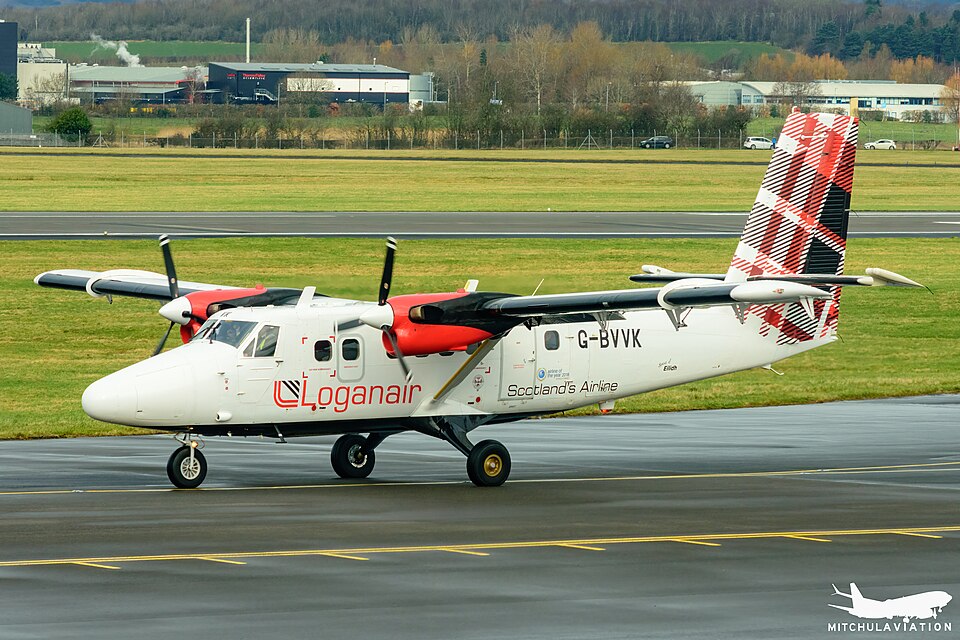
If there is a single airplane that represents the modern twin engine seaplane, it is the Twin Otter. Designed by de Havilland Canada in the 1960s and now built by Viking Air in British Columbia, the DHC-6 is a high-wing, twin turboprop STOL aircraft that can be set up with wheels, skis, tundra tires, or floats.
- Engines: Two Pratt & Whitney Canada PT6A turboprops
- Typical seating: Up to 19 passengers
- Common roles: Island transfers, commuter routes, polar research, parachute operations, medevac
The Twin Otter is the backbone of resort transfers in the Maldives, where Trans Maldivian Airways flies one of the largest seaplane fleets in the world. It also serves Scottish islands, Canadian Arctic communities, and Antarctic research stations. The aircraft is famous for its short takeoff and landing performance and its ability to keep flying in places with no real airport at all.
2. Grumman G-73 Mallard
The Mallard is a piston twin amphibious flying boat designed by Grumman just after World War II. Only a few dozen were built, but it pioneered the idea of a luxurious twin engine seaplane for executive travel. The Mallard carried world leaders, business tycoons, and the occasional royal. Some are still flying today, lovingly maintained by private owners and small commuter operators.
- Engines: Two Pratt & Whitney R-1340 radial piston engines (in original form)
- Typical seating: Around 10 passengers in executive layout
- Why it stands out: Classic Grumman build quality, elegant lines, and a luxurious cabin tradition
3. Grumman G-21 Goose
Older and smaller than the Mallard, the Grumman Goose first flew in the 1930s and served in both military and civilian roles during and after World War II. It is a twin engine flying boat amphibian that became a workhorse in Alaska and the Caribbean for decades. Many Geese have been upgraded over the years, sometimes with turboprop conversions that gave the airframe a second life.
Fun Fact: The Grumman Goose is said to have inspired countless adventure stories and films. Its silhouette has been a fixture of bush flying lore for generations, and surviving examples are now prized by collectors.
4. Grumman HU-16 Albatross
The Albatross is the largest of Grumman's classic flying boat family. It was built primarily for military search and rescue duty in the U.S. Coast Guard, Navy, and Air Force, with a tall hull designed for rough water work. After military service, many Albatrosses entered civilian life as private and charter aircraft.
- Engines: Two Wright R-1820 radial pistons
- Typical role: Long-range search and rescue, maritime patrol
- Civilian use today: Limited but iconic, often as private executive transport
5. Dornier Seastar
The Dornier Seastar is a modern twin engine turboprop amphibian designed in Germany. It uses a distinctive push-pull engine arrangement, with one engine pulling and one pushing on a centerline pod above the fuselage. This setup avoids the asymmetric thrust problem that can complicate engine-out handling in conventional twins.
The Seastar was first certified back in the early 1990s and has been the subject of several relaunch efforts over the years. The all-composite hull resists corrosion, which matters a lot for an aircraft expected to spend its life around salt water.
6. ShinMaywa US-2
The ShinMaywa US-2 is in a different league entirely. Built in Japan for the Maritime Self-Defense Force, it is a large four-engine search and rescue amphibian, but it is worth mentioning here as a benchmark for what a modern flying boat can do. It is widely known for handling rough seas that would ground smaller seaplanes, and it has performed long-range ocean rescues hundreds of miles from shore.
Smaller twin engine seaplanes cannot match the US-2 for sea state capability, but the airplane shows what serious water performance looks like. Many design choices in smaller flying boats trace back to lessons learned on aircraft like this one.
7. Beriev Be-12 and Be-200 (Russian Heritage)
Russian aviation has a long tradition of building large flying boats. The Beriev Be-12 was a Cold War-era twin turboprop patrol aircraft used for maritime reconnaissance and anti-submarine work. The newer Be-200 is a twin jet amphibian used widely for aerial firefighting, which involves scooping water from a lake while flying.
Pro Tip: Aerial firefighting is one of the most demanding water-operations roles in aviation. The aircraft has to fly at low altitude, drag a hull or floats through a lake to scoop hundreds of gallons of water, climb out heavy, and then drop the load on a fire. Twins handle that workload routinely.
8. UC-1 Twin Bee
The Twin Bee is one of the more unusual entries on this list. It is a twin engine conversion of the single-engine Republic RC-3 Seabee, built in small numbers starting in the 1960s by a small company in Massachusetts. The original Seabee's pusher engine was removed and replaced with two wing-mounted piston engines, giving the airframe much better performance and the safety of a second powerplant.
Only a handful of Twin Bees were built, so they are rare birds today, but they show how the twin engine seaplane idea even made its way into the small private aircraft world.
Flying411 makes it easy to browse listings of new and used amphibious aircraft, helicopters, jets, and turboprops, including the twin engine seaplanes featured above, from major manufacturers and certified sellers.
Common Uses for Twin Engine Seaplanes
Twin engine seaplanes are not built for everyone, but they fill some very specific roles extremely well. Here are the most common reasons operators choose two engines over one when the airplane is going to spend its life on water.
Scheduled commuter flights. Regional airlines flying short routes between islands or coastal towns often use Twin Otters or similar aircraft. Harbour Air in British Columbia and Trans Maldivian Airways are well-known examples.
Resort and luxury transfers. Some of the most beautiful places on earth are only reachable by water. Twin engine seaplanes carry guests from a city airport to a private island, often in a matter of minutes. The configuration may include leather seats, climate control, and high-end finishes that mirror a small business jet.
Search and rescue. Coast guards, navies, and air forces around the world have used twin engine flying boats for decades. The combination of long range, good fuel capacity, and the ability to land on water makes them ideal for ocean rescue work.
Aerial firefighting. Some twins are specifically built to scoop water from lakes and drop it on wildfires. The Canadair CL-415 and the Beriev Be-200 are the most famous examples in this role.
Cargo and humanitarian flights. In places without paved runways, the seaplane is sometimes the only way in. Twins carry medicine, food, equipment, and people to remote villages and disaster zones.
Private and corporate use. A small number of well-heeled owners use twin engine seaplanes for personal travel, particularly to lakeside homes, fishing camps, or coastal estates. The Grumman Mallard built much of its reputation in this niche.
Specialty operations. Skydiving, scientific research, marine mammal surveys, environmental monitoring, and parachute training all show up on twin engine seaplane résumés.
If you want to dig deeper into the wider amphibian world, the broader category of twin engine amphibious aircraft covers more of the airframes that fall just outside the pure-seaplane bucket. There is also a great look at smaller amphibious airplanes for buyers who want a lighter footprint, and a worthwhile read on military amphibious aircraft for anyone interested in the defense side of the category.
What It Costs to Own and Operate a Twin Engine Seaplane
Costs depend heavily on the airplane, but a twin engine seaplane is almost always more expensive than its single-engine cousin. Here is a general framework, with the strong reminder that real numbers vary by model, year, condition, and market.
| Cost Category | What to Expect |
| Purchase price | Higher than a comparable single-engine floatplane, sometimes by a wide margin |
| Fuel | Two engines burn more fuel than one, especially turboprops |
| Insurance | Often higher due to hull value and twin-rating requirements |
| Maintenance | Two engines, two propellers, two fuel systems means more inspections |
| Hangarage and dockage | Larger airframes need larger storage, on water and on land |
| Pilot training | Multi-engine and sea ratings, with recurrent training, add cost |
A modern Twin Otter on amphibious floats is a multimillion-dollar airplane new, and even older airframes can hold strong resale value because of their utility. A vintage Grumman Goose or Mallard in flying condition tends to be expensive too, because there are so few of them left and they require specialized maintenance.
Buyers focused on budget often look at the most affordable amphibious aircraft as a starting point, since the entry tier in this category is mostly singles. The jump to twins usually represents a significant step up in price and operating cost.
Keep in Mind: Operating cost per hour is what really hurts on a twin, beyond the sticker price itself. Two engines burning fuel for several hours per flight adds up fast, and overhauls are a major expense when they come due.
Ready to start shopping? Use Flying411 to browse current listings of twin engine seaplanes, see real pricing, and connect with sellers and brokers who know the category.
Maintenance Realities for Twin Engine Seaplanes
The combination of saltwater exposure, twin engines, and water-operations stress makes maintenance a serious topic for any owner. A twin engine seaplane works harder than most aircraft, and that workload shows up in the logbook.
Salt is the big enemy. Aluminum airframes corrode when they live around the ocean, so freshwater rinses after every saltwater flight are part of the routine. Operators that keep their aircraft on lakes have an easier time on that front. Composite-hulled flying boats like the Dornier Seastar are designed to resist corrosion better, which is one reason the design appeals to coastal operators.
Other maintenance points to know:
- Float and hull inspections. Floats can leak. Hulls can develop fatigue cracks. Both need regular attention.
- Propeller wear. Water spray, in particular saltwater spray, is hard on propeller blades.
- Engine overhauls. Each engine has a recommended time between overhauls (TBO). With two engines, that bill comes around twice.
- Avionics protection. Moisture is a constant threat to electronics. Seals, gaskets, and protective coatings matter.
- Specialized mechanics. Not every A&P mechanic has worked on a flying boat or a floatplane. Owners may need to fly to a specialist or fly a specialist in.
A pre-purchase inspection by someone who knows the specific airframe is essential, and the inspection should look closely at the floats or hull, the engines, the corrosion history, and the recent logbook entries. Skipping that step on a twin engine seaplane is a fast way to end up with a very expensive surprise.
Buying Tips Before You Pull the Trigger
For anyone seriously considering a twin engine seaplane, the buying process is more involved than picking up a typical land-based single. A few practical tips can save real money and headaches.
- Define the mission first. Do you need long range, high payload, a luxury cabin, or short takeoff performance? The right airplane depends on the answer.
- Decide on floatplane versus flying boat. Floatplanes are easier to dock and load. Flying boats handle rougher water but can be harder to bring alongside.
- Check the saltwater history. A freshwater-only airplane usually has a much cleaner airframe than one that has spent years on the coast.
- Look at parts availability. Some classic twins, like the Mallard or Goose, depend on a small parts supply. Modern types like the Twin Otter still have factory support.
- Budget for surprises. First-year ownership of a complex amphibian almost always costs more than expected. Set aside reserves.
- Get the right ratings. A multi-engine sea rating is not the same as a single-engine sea rating, and most insurers will require recurrent training.
- Use a knowledgeable broker. Specialized brokers and marketplaces know the quirks of the category and can spot warning signs faster than a generalist.
There is also a useful angle in looking at how other countries approach the category. The story of Japanese amphibious aircraft like the ShinMaywa US-2 shows how serious water-performance engineering can push the envelope, and that is worth understanding even for buyers shopping smaller types.
Quick Tip: Take a demo flight if at all possible, and ideally on the kind of water you actually plan to operate from. Glassy calm conditions are very different from choppy seas, and your impression of the airplane will change with the surface.
If you are serious about adding a twin engine seaplane to your hangar, Flying411 puts the marketplace, the service providers, and the industry know-how in one place, so you can move from research to ramp with confidence.
Conclusion
A twin engine seaplane is a very particular kind of aircraft for a very particular kind of mission. It is the answer when the route is long, the water is open, the payload is heavy, or the consequences of an engine quitting are not acceptable. It is also a beautiful kind of flying, the sort that mixes the freedom of a small airplane with the access of a boat. There is a reason these airframes inspire long-term loyalty in the pilots and owners who fly them.
The category is small, the costs are real, and the maintenance demands are not for the faint of heart. But for those who need what these airplanes do, nothing else really does the job the same way. From a Twin Otter on glassy floats to a classic Grumman flying boat in your hangar or a modern composite amphibian on the coast, the twin engine seaplane world has more to offer than most people realize.
Two engines, two floats, and a whole lot of open water are waiting. Start your search on Flying411, where the marketplace meets the people who actually know how to keep these airplanes flying.
Frequently Asked Questions
Are twin engine seaplanes legal to fly with a regular pilot license?
A standard private pilot license is not enough on its own. Pilots typically need both a multi-engine rating and a seaplane rating, and they need to log recurrent training to stay current and insurable.
How long does it take to learn to fly a twin engine seaplane?
It varies, but most pilots already hold a multi-engine rating before adding seaplane time, and the seaplane add-on usually takes several days to a couple of weeks of focused training. Becoming truly proficient on a complex twin amphibian takes much longer.
Can a twin engine seaplane land on the ocean in rough weather?
Some can, within limits. Larger flying boats like the ShinMaywa US-2 are widely known for handling heavy seas, while smaller floatplanes are usually limited to wave heights of about a foot or less. Sea state is one of the most important operational factors for any seaplane.
Are twin engine seaplanes still being built today?
Yes. Viking Air still produces the DHC-6 Twin Otter, and the Dornier Seastar program has gone through several relaunch efforts. Various military and specialty amphibians are also still in production around the world.
What is the biggest twin engine seaplane in service?
That depends on how you count it, but the DHC-6 Twin Otter is the most widely produced modern twin engine seaplane in regular commercial service. Larger twin engine flying boats from the past, like the Grumman Albatross, are mostly retired or in private hands today.