A replacement part for a certificated airplane must come from an authorized production source and be eligible for installation on that aircraft. Under 14 CFR Section 21.9, the FAA recognizes seven production pathways, including parts produced under a type certificate, FAA production approval, or by an aircraft owner for their own airplane. Understanding these rules is essential when choosing legal replacement parts for a certificated airplane. Just because a part fits does not mean it is approved for installation.
Here is where owners get tripped up. A part being legal and a part being documented are two different things, and resale value tracks the second one almost as closely as the first. An FAA-PMA alternator with a clean release certificate is an easy sale. A perfectly serviceable bracket that somebody made in a shop out back, with nothing in the logbook explaining where the design came from, is a line item on a prebuy squawk sheet.
This guide walks the four sources you will actually be choosing between — PMA, OEM new, surplus, and owner-produced — what makes each one legal, what paperwork should come with it, and what a buyer's mechanic will say about it three years from now.
| Part source | What makes it legal | Paperwork to keep | Effect on resale |
| OEM new (under the type certificate) | 14 CFR 21.9(a)(1) | 8130-3 or OEM packing slip and invoice | Neutral to slightly positive |
| PMA (FAA production approval) | 14 CFR 21.9(a)(2) and 21.303 | FAA-PMA marking per 45.15, 8130-3 or certificate of conformity | Neutral on most piston airframes; can matter on turbines and exports |
| Standard part (AN, MS, NAS hardware) | 14 CFR 21.9(a)(3) | Supplier certificate of conformity | None |
| New surplus / new old stock | Originally produced under (1) or (2) — status depends on traceability | Trace back to the OEM or an accredited distributor | Neutral when traceable, negative when not |
| Used serviceable | Returned to service under Part 43 after inspection or overhaul | 8130-3, yellow tag or shop maintenance release | Neutral if documented; the trace is the whole story |
| Owner-produced | 14 CFR 21.9(a)(5) | Logbook entry naming the design data and the owner's role | The riskiest at prebuy if the entry is thin |
The Six Legal Doors Into Your Airplane
14 CFR Section 21.9 says that a replacement or modification article reasonably likely to be installed on a type-certificated product must come from an authorized production pathway. These include production under a type certificate, FAA production approval, established standard-part specifications, commercial-part provisions, owner or operator production, fabrication by an appropriately rated certificate holder under specified conditions, or another production method approved by the FAA.
Notice who the rule is aimed at: the producer. Your obligations as the owner come from a different place. Under 14 CFR 43.13, the mechanic returning the airplane to service has to use methods, techniques and practices acceptable to the Administrator, and has to be satisfied the installed part is airworthy and eligible for that airplane. In plain terms, the maker has to be allowed to make it and your A&P has to be willing to sign for it. Both have to be true.
Who decides a part is eligible for your serial number?
Your mechanic, working from the parts catalog, the type certificate data sheet, any applicable STC, and the part's own eligibility listing. A PMA part is approved for the specific makes and models named on its approval, not for everything with the same bolt pattern. Same with surplus: a part number that fits a 182 is not automatically approved for a 172 just because the hole spacing matches.
Why It Matters: The FAA publishes Unapproved Parts Notifications when suspect parts reach the field. They are free to search, and a five-minute check before a big-ticket install is cheaper than pulling the part back out.
PMA Parts: Legal Everywhere, Welcome Almost Everywhere
A Parts Manufacturer Approval is an FAA production approval issued under 14 CFR 21.303. The holder has shown the design meets the airworthiness requirements — either by identicality under a licensing agreement with the type certificate holder, or by test and computation — and has an approved quality system to build it the same way every time. PMA parts are as legal as factory parts. They are not knockoffs, and the FAA does not treat them as second tier.
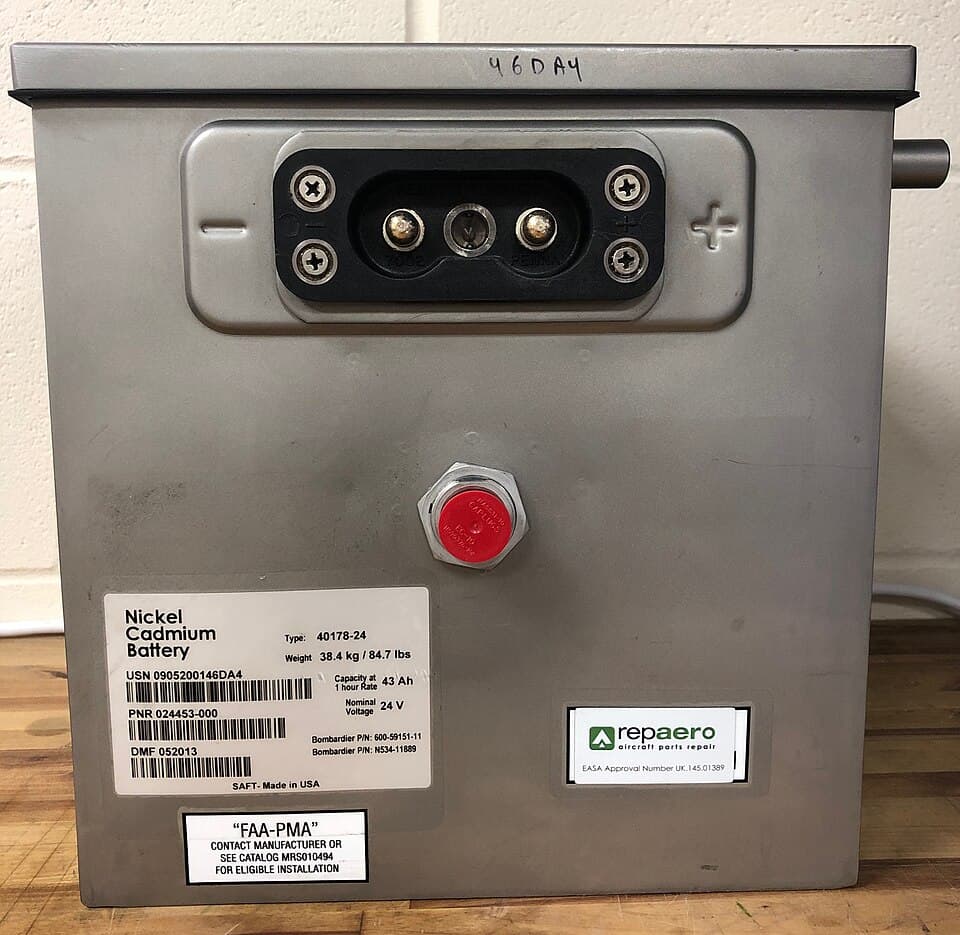
Under 14 CFR Section 45.15, a PMA article must normally be permanently marked with "FAA-PMA," the manufacturer's approved identification, and the part number. The regulation also allows alternative identification on the part or its container when the FAA determines that direct marking is impractical. Installation eligibility must still be verified against the PMA approval and applicable aircraft documentation. If a part is advertised as PMA but its markings or supporting documentation are missing or inconsistent, verify its approval before installation.
Shops and owners generally report PMA pricing landing meaningfully below the OEM number on common consumables — filters, brake linings, vacuum pumps, alternators, gaskets, engine cylinders — which is exactly why the category exists. We cover the approval process in more depth in What Is a PMA Part in Aviation.
When does PMA actually cost you at resale?
Three situations. First, factory engine warranties: engine makers generally warrant their own parts, and mixing in non-OEM components during the warranty window can narrow what is covered — read the warranty document rather than the forum post. Second, export. Under the US–EU bilateral safety agreement, EASA does not automatically accept every FAA PMA article; critical parts and parts approved by test and computation can need separate validation, so an airplane headed overseas with PMA critical parts may need paperwork work. Third, turbine aircraft, where some operators and lessors write OEM-only parts policies into their own contracts.
On a piston single flying Part 91 in the United States, PMA parts are a non-event at prebuy. Buyers' mechanics look at them, note them, and move on.
Flying411 keeps aircraft listings and ownership guidance in one place, so you can compare how two otherwise similar airplanes were actually maintained before you fly out to look at either.
Surplus Parts: The Word Covers Three Very Different Things
"Surplus" is a sloppy word that gets used for new old stock sitting in an OEM-sealed bag since 1988, for parts pulled from a teardown airframe, and for whatever came out of a hangar cleanout. Legally, the part's origin never changes — a Cessna-produced bracket is still a part produced under a type certificate — but your ability to prove that changes everything.
Advisory Circular 20-62, Eligibility, Quality, and Identification of Aeronautical Replacement Parts, is the FAA's guidance on this and it comes down to traceability. The practical hierarchy a mechanic applies:
| What you are handed | How an A&P reads it |
| FAA Form 8130-3 authorized release certificate | Strong evidence of approved production or maintenance release status, depending on how issued; does not independently establish installation eligibility |
| OEM packing slip plus unbroken original packaging | Good for new old stock |
| Overhaul or inspection release from a repair station | Fine for used serviceable, with the work scope attached |
| Invoice from a distributor accredited under AC 00-56 | Supports the trace; not a substitute for a release |
| "It came off a good airplane" | Not evidence of anything |
Heads Up: Life-limited parts require special attention. Their accumulated hours, cycles, or other mandatory life limits must be established before installation. If the remaining life cannot be reliably determined, the part cannot be treated as eligible for installation merely because it looks serviceable. Missing records may be recoverable through maintenance history or other acceptable documentation, but a component with an unverified life status should remain out of service until its eligibility is established. See Life Limited Parts Explained.
Age alone does not disqualify new old stock, but rubber, seals, hoses, batteries, pyrotechnics and anything with a shelf life do expire whether or not they were ever installed. A thirty-year-old sealed gasket set is a gamble; a thirty-year-old machined aluminum fitting usually is not. Our comparison of new versus new surplus parts and the breakdown of USM versus OEM go deeper on when each wins.
Good to Know: If a deal is far below market and the seller gets vague about paperwork, that is the classic counterfeit-parts pattern. Spotting counterfeit parts before they fly is a short read with a long payoff.
Owner-Produced Parts: The Narrowest Door of All
14 CFR 21.9(a)(5) lets an owner or operator produce a part for maintaining or altering their own product. It is a real, legal pathway, and it is the only practical answer when a part for a 1950s airframe has been out of production for forty years. It is also the one most often misused.
Two limits matter. First, the part may only go on your airplane. The moment you make a second one and sell it, you have become an unapproved parts manufacturer. Second, you cannot simply hand a drawing to a machinist and call the result owner-produced. FAA guidance holds that the owner must participate in the part's manufacture in at least one of five ways: supplying the design or performance data, supplying the materials, supplying the fabrication processes, supplying the quality control procedures, or personally supervising the manufacture. You do not have to run the lathe. You do have to be genuinely in charge of something.
How do you document one so it survives a prebuy?
The logbook entry is the whole defense. A good one names the part and the aircraft part number it replaces, states that it was produced by the owner under 21.9(a)(5), identifies the approved or acceptable data used for the design, records the material specification and any heat treat or process certifications, and describes how the owner participated. Attach the drawing, the material cert and photos to the aircraft records. If the part is anything structural or in a primary control path, expect your IA to want approved data — possibly an FAA Form 8110-3 from a DER — and be glad they asked.
Pro Tip: Before fabricating anything, call the type club. Owner groups for Cessna, Piper, Beech, Mooney, Grumman and the antique types usually know which parts somebody already got PMA'd and which salvage yards have the shelf stock. A lot of "we had to make it" turns out to be "we had not called the right person yet."
Keep in Mind: Producing the part is a separate act from installing it. Unless the job is on the preventive maintenance list in Part 43 Appendix A, a certificated mechanic still has to install it and sign the return to service. Our guide to what owners may legally do and how to log it draws that line.
Flying411 keeps maintenance, parts and ownership-cost explainers in one place, so you can compare what a repair should cost against what you were quoted.
What Each Choice Actually Does to Resale
Valuation guides do not carry a line item that says "minus $4,000 for PMA parts." The hit, when it comes, arrives through the prebuy inspection, and it comes in one of three forms: a part the buyer's mechanic cannot verify, a part that is not eligible for that model, or a logbook entry so thin that the buyer's lender or insurer starts asking questions.
| Scenario | Likely outcome at prebuy |
| PMA parts throughout, all documented | Noted, no price effect on a US Part 91 piston airplane |
| New surplus with 8130-3s in a binder | Reads as a careful owner; often helps |
| Used serviceable avionics or accessories, tags filed | Neutral, assuming eligibility checks out |
| Owner-produced part, full entry plus drawing and material cert | Usually accepted, especially on an out-of-production type |
| Owner-produced part, one vague line in the logbook | Escrow holdback, replacement demand, or a dead deal |
| Any part with no trace at all | Treated as unairworthy until proven otherwise |
Quick Tip: Keep a parts binder organized by date, not by part type, so it reads alongside the logbook. A buyer's mechanic who can match every entry to a release certificate in under an hour is a mechanic who stops looking for problems.
There is an asymmetry worth internalizing. A well-documented cheap part costs you nothing at sale. A poorly documented expensive part can cost you multiples of what you saved. The same logic shows up in avionics work — see buy the equipped plane or upgrade the panel — and in engine work, where overhaul quotes differ by thousands largely because of which parts are new, PMA, serviceable or reused.
Fun Fact: PMA approval by identicality exists because the FAA recognized that many "OEM" parts were never made by the aircraft manufacturer at all — they were bought from the same subcontractors who now hold the PMA.
Flying411 keeps type-specific buying guides and parts explainers in one place, so you can compare what a model's known maintenance items are before the prebuy, not after.
Key Takeaways
Replacement and modification parts for certificated aircraft must meet an applicable production pathway under 14 CFR Section 21.9, which recognizes seven authorized routes. The installing mechanic must also verify the part's eligibility and airworthiness for the specific aircraft. PMA parts are fully approved and are a non-issue on a US-registered piston airplane, with real caveats only around engine warranties, turbine operators' own policies, and export validation under the EASA bilateral. Surplus parts are as legal as the day they were built, but their value to you and to the next buyer rests entirely on traceability — an 8130-3, an OEM packing slip, or an accredited distributor's trace. Owner-produced parts are legitimate under 21.9(a)(5), limited to your own aircraft, and require that you genuinely participate in the design, materials, processes, quality control or supervision. In every case the resale damage comes from missing paperwork rather than from the part category itself, which means the cheapest insurance in aviation is a thorough logbook entry.
Conclusion
Choosing between legal replacement parts for a certificated airplane is less a safety decision than a documentation decision, because the unsafe options were never legal to begin with. Buy PMA when it saves money and the eligibility listing names your model. Buy surplus when the trace is clean and the shelf life has not run out. Produce your own part only when the type club and the salvage yards have both come up empty, and then document it as if a stranger's mechanic will read the entry — because one will.
Treat the parts binder as part of the airplane. It is the only piece of equipment that gains value with age.
When you are ready to compare listings, visitFlying411and see what is on the market today.