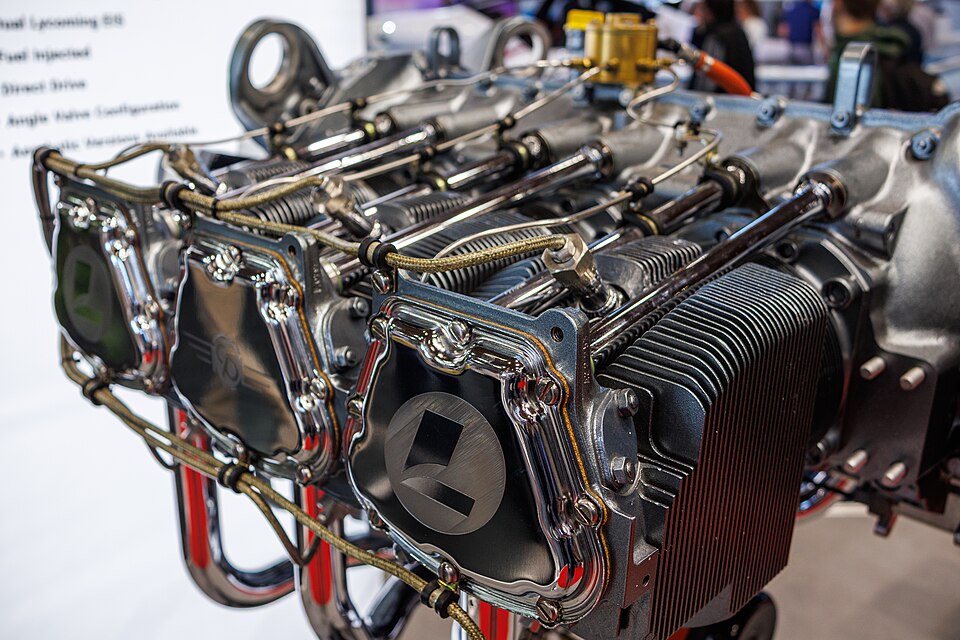
Preventive maintenance gives aircraft owners a legal way to handle certain routine tasks without paying a mechanic for every job. Oil and filter changes, spark plug servicing, tire replacement, lubrication, and several other simple tasks can fall within that privilege when performed correctly. The important part is knowing exactly where the FAA draws the line and documenting the work properly, because unauthorized or poorly recorded maintenance can create problems during an annual inspection or future pre-buy.
That gap is the whole story. Owner preventive maintenance is one of the best deals in aircraft ownership: the FAA lets a certificated pilot do a specific list of jobs on an airplane they own, without a mechanic standing over their shoulder, and shop labor is the fastest-growing line item in most owners' budgets. But the authority is narrow, the list is literal, and the logbook entry is not an afterthought — it is the part a buyer's mechanic will read three years from now with a flashlight and a skeptical eye.
This article answers the question owners actually type into a search box: what can I legally do myself on a standard-category, certificated airplane, what is off the list no matter what the hangar says, and how do I write it up so it adds confidence instead of raising questions at the prebuy? Think of a logbook like the service history on a used car — except the buyer is required to care, and a missing page can knock five figures off the price.
Key Takeaways
Under 14 CFR 43.3(g), a pilot certificated under Part 61 may perform preventive maintenance on an aircraft they own or operate, as long as it is not being flown under Part 121, 129, or 135. The work you may do is not open-ended — it is the numbered list in Part 43, Appendix A, paragraph (c), which covers tires, wheel bearings, spark plugs, filters, batteries, bulbs, lubrication, seats and belts, side windows, hose connections, and a short list of avionics tasks. Under 43.7(f), you need at least a private pilot certificate to approve the aircraft for return to service after you do it. Every job needs a logbook entry that meets 14 CFR 43.9: a description of the work with the data you followed, the date, and your signature with your certificate number and kind of certificate. Sloppy or missing entries are the single easiest way to turn a well-maintained airplane into a discounted one.
| Question | Short answer |
| Where is the legal list? | 14 CFR Part 43, Appendix A, paragraph (c) — 32 numbered items |
| Who may perform it? | Holder of a Part 61 pilot certificate, on an aircraft they own or operate (43.3(g)) |
| Who may return it to service? | At least a private pilot certificate (43.7(f)); sport pilots, light-sport aircraft only (43.7(g)) |
| Does it apply to rentals or Part 135? | Part 135 is generally excluded; rental eligibility depends on whether you qualify as the aircraft's operator and on the owner's or school's authorization |
| Does an A&P have to sign it off? | No, if the task is on the list and you hold the right certificate |
| What must the entry contain? | Description and data reference, date, signature, certificate number and kind (43.9) |
| Biggest resale risk | Vague entries, gaps in the record, and parts with no paperwork |
What the Rules Actually Say
Which regulation gives you the authority?
Three short paragraphs do all the work. 14 CFR 43.3(g) is the permission slip: except for sport pilot certificate holders, a pilot certificated under Part 61 may perform preventive maintenance on any aircraft owned or operated by that pilot, provided the aircraft is not used under Part 121, 129, or 135. A sport pilot may do the same on an aircraft issued a special airworthiness certificate in the light-sport category.
Part 43, Appendix A, paragraph (c) is the menu. It opens with a limitation people skip right past: preventive maintenance is limited to the listed work "provided it does not involve complex assembly operations." If a job on the list turns into pulling a control surface or splitting a structure to reach something, it has stopped being preventive maintenance.
14 CFR 43.9 is the paperwork, and 43.7(f) is the return-to-service authority. Alongside them, 14 CFR 91.403 reminds you that the owner or operator is primarily responsible for keeping the aircraft in airworthy condition, and 91.417 tells you which records you must keep and for how long. The FAA also publishes AC 43-12A, Preventive Maintenance, which walks through the same ground in plain language if you want the agency's own summary.
Good to Know: Part 43 generally does not apply to an aircraft originally certificated only in the experimental category, although an aircraft that previously held another type of airworthiness certificate can be treated differently. For a typical experimental amateur-built aircraft, maintenance and condition-inspection privileges follow a different set of rules — see our guide on how to build your own airplane kit step by step for how repairman certificates and condition inspections work in that world.
Who counts as "the owner or operator"?
The regulation says "owned or operated by that pilot." That phrase is broader than the title on the registration. A partner in a co-ownership who flies and maintains the airplane is operating it. A member of a single-purpose LLC that holds the airplane is normally operating it too. A rental requires more care. Section 43.3(g) applies to an aircraft “owned or operated” by the pilot, but whether a particular rental arrangement makes you the operator is not something to assume. The aircraft owner's authorization, rental agreement, and maintenance policies should be checked before performing any work.
The line matters in one more place. If the airplane is on leaseback to a school that flies it for hire under Part 135, 43.3(g) is off the table for those operations. Training conducted under Part 61 in an aircraft you own is fine. If you are weighing that arrangement, our piece on buying an airplane for flight training covers how leaseback changes the maintenance math.
Does your certificate level matter?
Yes. Section 43.3(g) allows holders of Part 61 pilot certificates other than sport pilots to perform qualifying preventive maintenance, but 43.7(f) requires at least a private pilot certificate to approve the aircraft for return to service afterward. FAA guidance also makes clear that a pilot using this privilege may approve only preventive maintenance that the pilot personally performed. A student or recreational pilot therefore cannot independently complete and return the aircraft to service under this provision; the practical route is to perform the work under the supervision of an appropriately certificated mechanic under 43.3(d).
Sport pilots have their own narrow lane under 43.7(g), limited to aircraft with a special light-sport airworthiness certificate. If the new MOSAIC rule changed what you can fly, our overview of which planes a sport pilot can fly under MOSAIC is the companion read. A standard-category Skyhawk flown by a sport pilot is still a standard-category airplane, and the light-sport maintenance privileges do not follow you into it.
The List, and the Jobs People Get Wrong
What owners actually use
Appendix A(c) runs to 32 items, but a handful cover ninety percent of real hangar work. Tires come off and go back on (item 1). Shock struts get air and oil (item 3). Wheel bearings get cleaned and greased (item 4). Lubrication that does not require disassembly beyond removing cowlings and fairings is yours (item 6). Hydraulic reservoirs get topped off (item 8). Upholstery and decorative interior work is allowed when it does not disturb structure or an operating system (item 11). Safety belts (14) and approved replacement seats or seat parts (15) are on the list. Position and landing light bulbs, reflectors, and lenses (17). Cowling that can come off without pulling the prop or disconnecting flight controls (19). Spark plugs, including gapping them (20). Hose connections other than hydraulic (21). Prefabricated fuel lines (22). Fuel and oil strainers and filter elements (23). Batteries (24). Magnetic chip detectors (29).
Two avionics items are worth reading word for word. Item 31 permits removing and replacing self-contained, front-panel-mounted nav and com units that use tray-mounted connectors, where the unit slides in and out and a self-test confirms it is working. Item 32 permits updating navigation database software on those same self-contained panel-mounted units, provided no disassembly is required and instructions are available. Neither item lets you install something new — see below.
Heads Up: Replacing brake linings is not on the list. It is one of the most commonly assumed owner tasks in general aviation and it simply is not there. Neither is changing a tailwheel spring, adjusting magneto timing, replacing an alternator, or safetying anything beyond "replacing defective safety wiring or cotter keys" that you disturbed doing a listed task.
What about oil changes?
You will not find the words "change engine oil" in Appendix A. What you will find is item 6, lubrication not requiring disassembly, and item 23, cleaning or replacing oil strainers or filter elements. The FAA has long treated a routine drain-and-fill with a filter change as preventive maintenance on that basis, and AC 43-12A reflects the same reading. Do it to the engine manufacturer's instructions — Lycoming Service Instruction 1014 for oil and filter recommendations, or the equivalent Continental service information — and say so in the entry.
Cutting the old filter open and inspecting the pleats is good practice and costs nothing. If the media has metal in it, stop and call your mechanic before you fly. That decision tree runs straight into our articles on replacing versus overhauling an aircraft engine.
What is never preventive maintenance
Anything that changes the aircraft from its type design is an alteration, not maintenance, and a major alteration needs approved data and an FAA Form 337 signed by an appropriately rated mechanic or repair station. Installing a different radio than the one that came out, adding a USB port to the panel, swapping a flooded battery for a different type, mounting a camera bracket to structure, or fitting an STC'd kit — none of these are yours to sign off, even if the physical work looks identical to something on the list.
Inspections are also excluded. You cannot perform or sign an annual or a 100-hour inspection, and you cannot sign off an airworthiness directive — AD compliance is a determination, not a task, and it belongs to a certificated mechanic or a repair station unless the AD itself specifically authorizes pilot compliance. If your airplane is out of annual and sitting at a seller's field, the fix is paperwork, not a screwdriver; see how to get a ferry permit for an out-of-annual aircraft.
| Task | Owner may do it? | Why |
| Oil and filter change | Yes | App. A(c) items 6 and 23, per engine maker's instructions |
| Clean, gap, and replace spark plugs | Yes | Item 20 |
| Replace main battery | Yes | Item 24 — same approved part number |
| Replace landing light bulb | Yes | Item 17; item 16 covers landing light wiring faults |
| Mount a tire on a wheel, service bearings | Yes | Items 1 and 4 |
| Slide a nav/com out of its tray and back | Yes | Item 31, self-contained tray-mounted units only |
| Update a panel-mounted GPS database | Yes | Item 32 |
| Replace brake linings | No | Not on the list |
| Time the magnetos | No | Not on the list |
| Install a new ADS-B transponder | No | Alteration; needs approved data and likely a Form 337 |
| Sign off an AD or an annual | No | Reserved to mechanics and repair stations |
| Repaint a balanced control surface | No | Item 9 specifically excludes balanced control surfaces |
Flying411 keeps aircraft listings, maintenance guides, and ownership cost resources in one place, so you can compare what a well-documented airframe is asking against one with thin records before you write an offer.
How to Log It So It Holds Up
What 43.9 requires in every entry
Section 43.9(a) is short and specific. Each person who performs maintenance or preventive maintenance must make an entry containing four things: a description of the work performed, or a reference to data acceptable to the Administrator; the date of completion; the name of the person performing the work if different from the person signing; and, if the work is satisfactory, the signature, certificate number, and kind of certificate held by the person approving the work for return to service. That signature is not a rubber stamp — 43.9(a)(4) says it constitutes the approval for return to service only for the work performed.
Three habits turn a legal entry into a good one. Record the tach or Hobbs time and the aircraft total time in service, because that is how everyone downstream reconciles the record. Name the data you followed, by manual chapter or service instruction number. And list the parts you installed by part number. Those three additions cost you thirty seconds and they are exactly what a prebuy mechanic is looking for.
| Element | Required by | Example |
| Date of completion | 43.9(a)(2) | 14 March 2025 |
| Time reference | Best practice | Tach 2,417.6 / TTAF 4,102.3 |
| Description of work | 43.9(a)(1) | Drained engine oil, replaced filter, serviced with 8 qt. |
| Data reference | 43.9(a)(1) | IAW Lycoming Service Instruction 1014 and POH Section 8 |
| Parts installed | Best practice | Champion CH48110-1 filter, new crush washer P/N STD-1410 |
| Statement of authority | 43.3(g) / 43.7(f) | Preventive maintenance performed under 14 CFR 43.3(g) |
| Signature and certificate | 43.9(a)(4) | /s/ Jane Ruiz, Private Pilot, Cert. No. 3456789 |
A sample entry you can copy
Here is what a complete, unambiguous owner entry looks like in an engine logbook:
"14 March 2025. Tach 2,417.6, TTAF 4,102.3, TSMOH 812.4. Drained engine oil; removed and replaced oil filter with Champion CH48110-1; cut and inspected old filter element, no metal found; serviced engine with 8 quarts Aeroshell W100 Plus; safetied filter; engine ground run, no leaks noted. Work performed in accordance with Lycoming Service Instruction 1014 and the Cessna 172S Maintenance Manual, Chapter 12. Preventive maintenance performed under 14 CFR 43.3(g); aircraft approved for return to service under 14 CFR 43.7(f). /s/ Jane Ruiz, Private Pilot, Certificate No. 3456789."
Note what it does not do. It does not say "changed oil — JR." It does not leave a reader wondering whether the filter was inspected. And it does not bury an unrelated task in the same paragraph.
Pro Tip: Write in permanent ink, never pencil, and never leave a blank line between entries. If you make a mistake, draw a single line through it, initial it, and write the correction below. Erasures and whiteout are the fastest way to make a buyer's mechanic assume something was hidden.
Which logbook does it go in?
Engine work goes in the engine log. Propeller work goes in the prop log. Everything else — tires, seats, belts, interior, lights, avionics swaps under item 31 — goes in the airframe log. Owners who dump every entry into the airframe book create hours of reconstruction work at resale, because the next buyer's appraiser has to prove the engine record is complete.
One special case: if you replace an ELT battery, 14 CFR 91.207(d)(2) requires the new expiration date to be legibly marked on the outside of the transmitter and entered in the aircraft maintenance record. Miss the marking and the airplane is not legal, even though the battery is brand new.
Keep in Mind: Under 91.417, routine maintenance records must be kept for one year or until the work is repeated or superseded, but the permanent records — total time in service, life-limited part status, time since overhaul, inspection status, AD status, and copies of Form 337s — travel with the aircraft forever. Those are the ones a buyer pays for.
How Owner Entries Affect Resale
What a prebuy mechanic is looking for
A prebuy inspection is an audit as much as an inspection. The mechanic is reading for continuity: does the total time march forward without gaps, do the engine hours reconcile with the airframe, did the tach get replaced without a note explaining the new starting number, and is every AD accounted for? Owner entries are where continuity most often breaks, because owners write them in a hurry and nobody proofreads.
Here is the uncomfortable truth: a buyer's mechanic reads a shaky owner entry as a signal about everything else. If the oil change entries are three words long, the mechanic starts wondering what else was done and not written down. That suspicion turns into inspection hours, and inspection hours turn into a lower offer. Our deeper look at how aircraft maintenance records affect resale value and price walks through the discounts that follow incomplete books.
The five entry mistakes that cost money
First, no entry at all. Unlogged work is not just a paperwork problem — legally, the maintenance was never recorded, and a buyer has no way to prove the airplane was cared for. Second, entries with no data reference, which leave open the question of whether the work followed the manufacturer's procedure or hangar folklore. Third, entries that describe work outside 43.3(g), signed by a pilot. Writing "replaced brake pads, /s/ Private Pilot" documents an unauthorized maintenance action in permanent ink, and a careful buyer will want a mechanic to inspect and re-sign it. Fourth, parts with no traceability — an unapproved part with no 8130-3 tag or manufacturer certification is a discrepancy whether or not it works. Fifth, mixing an alteration into a maintenance entry, which is how avionics installs end up with no Form 337 and no weight-and-balance revision, both of which surface immediately at prebuy.
Why It Matters: Interior work is a quiet trap. Item 11 lets you repair upholstery and decorative furnishings, but certificated cabin materials must still meet the flammability requirements in the airplane's certification basis. Fabric bought from a furniture supplier with no burn certificate can turn a tidy refresh into a finding. Keep the burn cert with the logbook.
Parts paperwork is half the value
Staple or scan the receipt and the 8130-3 release tag for every part you install, and keep them in a records binder alongside the logs. When you sell, that binder is evidence. Sellers who hand a buyer an organized folder with invoices, filter cut photos, compression readings, and clean owner entries routinely close at the top of the range, while sellers with a shoebox negotiate against every unknown. If you are trying to decide how far to go before listing, read whether to overhaul before selling and when a certified aircraft appraiser is worth it.
Flying411 keeps ownership, maintenance, and valuation guidance in one place, so you can compare what your records are worth against what comparable airplanes are actually asking.
The Other Door: Working Under Supervision
How an owner-assisted annual works
Section 43.3(d) opens a much wider door than 43.3(g). A person working under the supervision of a certificated mechanic may perform the maintenance, preventive maintenance, and alterations that the supervising mechanic is authorized to perform, provided the supervisor personally observes the work to the extent necessary to ensure it is done properly and is readily available in person for consultation. The important limitation: that provision does not authorize an unlicensed person to perform or sign a required 100-hour or annual inspection.
In practice this is the owner-assisted annual. You pull the inspection panels, clean parts, remove the interior, help with the compression check, and reassemble under the mechanic's eye. The mechanic performs and signs the inspection. You learn your airplane, save real labor money, and — this is the part owners undersell — you end up understanding the logbook because you watched it being written.
Quick Tip: Ask your mechanic at the start of the annual which tasks they are comfortable supervising, and agree on the shop rate for the hours you save them. Showing up unannounced with coveralls rarely goes well; scheduling it in advance almost always does.
Fun Fact: The preventive maintenance list has grown with technology. Items 31 and 32 — pulling tray-mounted radios and updating navigation databases — were added long after the original list, which is why they read so much more specifically than "replacing bulbs."
A Simple Owner Routine
Build a rhythm and the paperwork stops feeling like homework. Change the oil and filter on the manufacturer's schedule, typically every 25 to 50 hours depending on filter type and engine, and always at least every four months of calendar time when the airplane sits. Pull, clean, gap, and rotate the spark plugs at that same interval or the next one. Check tire pressure monthly, service the struts when they look low, grease the wheel bearings when the tires come off, and replace the main battery on condition rather than waiting for a no-start on a cold morning.
Log every one of those. A logbook with fifteen tidy owner entries a year tells a buyer the airplane was flown, watched, and cared for by someone who read the manual. That story is worth more than the labor you saved.
Good to Know: When manufacturer instructions do not exist for a task, AC 43.13-1B, Acceptable Methods, Techniques, and Practices, is acceptable data for maintenance. It is not approved data for alterations, and it never overrides the airplane's own maintenance manual.
Flying411 keeps aircraft specs, ownership costs, and maintenance explainers in one place, so you can compare the real annual cost of two airplanes before you commit to either.
Conclusion
The privilege is generous and the boundary is bright. Owner preventive maintenance under 14 CFR 43.3(g) covers a defined list of jobs in Part 43, Appendix A(c), on an aircraft you own or operate, signed off by a pilot holding at least a private certificate. Everything else — inspections, ADs, alterations, and any job not on the list — belongs to a mechanic. Stay inside that line, follow the manufacturer's data, and write an entry that a stranger could read in ten years and understand exactly what you did.
Do that consistently and the logbook stops being a liability and becomes a selling point. Buyers do not pay extra for a clean cowling. They pay extra for confidence, and confidence is made of ink.
When you are ready to compare listings, visitFlying411and see what is on the market today.
Frequently Asked Questions
Can a student pilot perform preventive maintenance on an airplane they own?
Section 43.3(g) allows a student pilot certificate holder to perform qualifying preventive maintenance, but 43.7(f) requires at least a private pilot certificate to approve the aircraft for return to service. Because a pilot exercising this privilege may sign off only work that pilot personally performed, a student owner should instead perform the work under the supervision of an appropriately certificated mechanic under 43.3(d).
Do I need an A&P to sign my oil change?
No. If you hold at least a private pilot certificate and the airplane is yours and not operated under Part 121, 129, or 135, you may perform the oil and filter change and sign the entry yourself with your certificate number and kind of certificate.
Does owner-performed maintenance lower resale value?
Correctly performed and correctly logged, no — buyers routinely see owner oil changes and plug service as a sign of an engaged owner. What lowers value is vague entries, gaps in the record, work signed by a pilot that was outside 43.3(g), and parts with no traceable paperwork.
Can I replace my own brake linings?
Not as preventive maintenance. Brake linings are not on the Appendix A(c) list. You can do the work under the direct supervision of a certificated mechanic per 43.3(d), with the mechanic making the entry and approving the return to service.
Can I install a new GPS or ADS-B unit myself?
No. Item 31 covers removing and reinstalling an existing self-contained, tray-mounted nav or com unit, and item 32 covers database updates. Installing a different unit is an alteration requiring approved data, a weight-and-balance revision, and in most cases an FAA Form 337 signed by an appropriately rated mechanic or repair station.
What happens if I never logged work I already did?
Talk to your mechanic. Entries can generally be made after the fact if they accurately state when the work was actually performed — backdating is not acceptable. For work that turns out to have been beyond your authority, the usual remedy is inspection and a corrective entry by a certificated mechanic, which is far cheaper than discovering it during a buyer's prebuy.