The question most shoppers type in some version of is simple: what does a Piper Twin Comanche actually cost to own, and what is going to bite me? The short answer is that fuel is the predictable part (plan roughly 15 to 17 gallons an hour total for 155 to 165 knots), and the expensive surprises are two engine overhauls, a landing gear system that punishes deferred maintenance, and the fact that Piper stopped building these in 1972 and no longer supports much of the airframe.
None of that makes it a bad airplane. A PA-30 or PA-39 still does something no modern piston twin does for the money: it carries four people 600 nautical miles at Bonanza speeds on about the same hourly fuel burn as a Cherokee Six. You just have to buy the right one. Here is what to check, in the order a careful buyer checks it.
Why This Airplane Exists, and Who It Suits
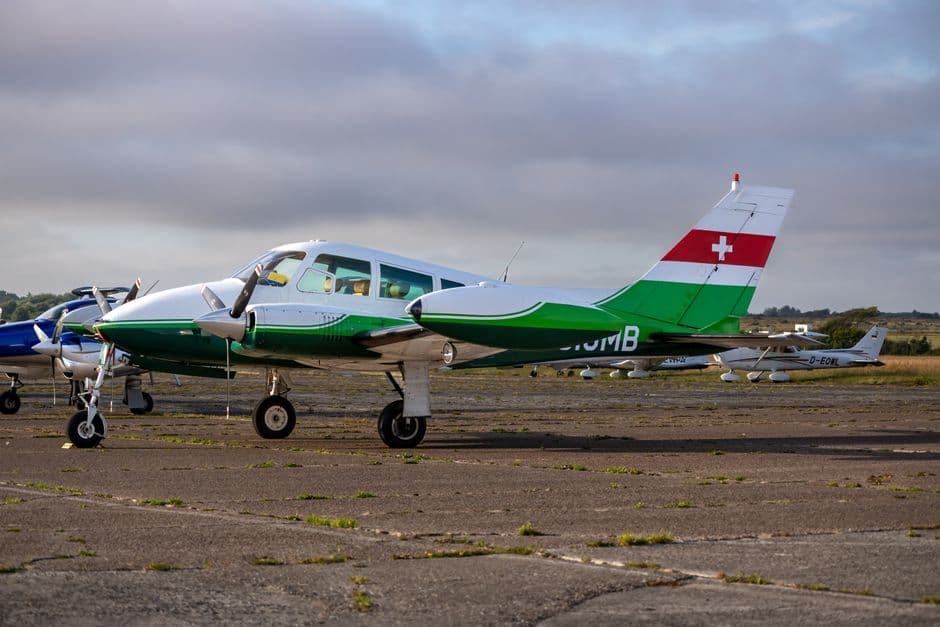
Piper took the PA-24 Comanche, stretched the wing, hung two 160-horsepower Lycoming IO-320s on it, and certified the PA-30 in 1963. The design brief was efficiency, not brute hauling: small engines, clean airframe, laminar-flow wing. Production of all Twin Comanche variants ran to roughly 2,100 airframes before Hurricane Agnes flooded the Lock Haven plant in June 1972 and destroyed the tooling. Piper never restarted the line, and the PA-40 Arapaho that would have replaced it never reached customers.
That history matters to a buyer in one practical way. Every Twin Comanche flying is at least 54 years old, and the factory is not making new skins, gear castings or fuel cells. The type survives on a strong aftermarket and an unusually active type club, the International Comanche Society, which publishes the Comanche Flyer and maintains inspection guidance most generalist shops do not have.
- Good fit: an instrument-rated owner flying 100 or more hours a year, mostly cross-country, who wants twin redundancy without turbocharged-twin fuel bills.
- Poor fit: a low-time pilot flying 40 hours a year. The fixed costs do not shrink, the insurance underwriters will not love you, and the gear system does not reward sitting still.
- Check your mission honestly: four adults plus full standard fuel is realistic; four adults, full long-range fuel and bags usually is not. A typical useful load lands in the 1,200 to 1,350 pound range, so weigh the actual airplane's equipment list, not the brochure.
PA-30, Turbo and PA-39: How the Variants Differ
Shoppers often treat all Twin Comanches as one airplane. They are not, and the differences change both the price and the maintenance picture. Think of it like model years of the same pickup truck — same bones, but the later ones fixed things the early ones taught the factory.
- PA-30 (1963–1965): the original. Four seats, two side windows, 3,600 pound gross weight. Good answer: clean, well-modified, documented. Bad answer: the cheapest one on the field with a tired panel and no mods — you will spend the savings twice over.
- PA-30B and PA-30C (1966–1969): third side window, optional fifth and sixth seats, optional auxiliary fuel, updated panel on the C. These are the volume airplanes and generally the best value.
- Turbo models (Rajay turbochargers): big true airspeeds in the high teens and a far better single-engine ceiling. Heads up: the wastegates are manually controlled on most installations, so overboost is a pilot discipline problem, not an automatic one. Expect added cost for exhaust, turbos and controllers.
- PA-39 (1970–1972): counter-rotating propellers, with a standard IO-320-B1A on the left and an LIO-320-B1A on the right. No critical engine. Only about 150 to 160 were built, so they are scarce and they command a premium.
- Stall strips and flight manual revisions: after the type's rough run of Vmc-demonstration accidents in the late 1960s, Piper revised procedures and offered a leading-edge stall-strip kit. Confirm in the logs whether the strips are installed and whether the current flight manual supplement is in the airplane.
Pro Tip: the counter-rotating PA-39 is genuinely nicer to fly engine-out, but a well-sorted PA-30 with good gear, good engines and a modern panel will serve you better than a neglected PA-39 bought for the letter on the data plate. Buy condition first, variant second.
Flying411 keeps piston twin listings and model guides in one place, so you can compare a PA-30, a PA-39 and the Seneca sitting next to it on the same ramp without juggling five tabs.
Airworthiness Directives and Service Documents to Pull First
There is no single master AD list for a 60-year-old Piper that covers every airplane, because the applicable directives depend on serial number, engine model, propeller model and which accessories and STCs are installed. Before you spend money on a pre-buy, do this free homework: get the serial number, the two engine serial numbers and the propeller model numbers from the seller, then run the FAA's AD search on each of them separately. Airframe ADs, Lycoming engine ADs, propeller ADs and appliance ADs are four separate lists.
- Recurring gear ADs and service documents. The Comanche landing gear carries a long history of directives and Piper service bulletins covering bungee cords, actuator components and rigging. Good answer: a logbook with a dedicated recurring-AD page showing each item, date, hours and next due. Bad answer: "complied with at annual" and nothing else.
- Lycoming engine ADs. Oil pump impellers, oil filter adapters and crankshaft-related directives have touched large swaths of the Lycoming fleet over the years. Ask for AD compliance signed against engine serial numbers, not against the airframe.
- Propeller and governor ADs. Hartzell has issued directives against specific hub and blade part numbers. Match the data plate on the hub to the compliance entry — not the logbook description.
- Turbo-specific items. On Rajay-equipped airplanes, the exhaust system and turbo mounting hardware are inspection items with real consequences. A cracked turbo exhaust in a light twin is a carbon monoxide and fire risk, not a squawk to defer.
- STC paperwork. Tip tanks, gross weight increases, speed mods and engine conversions all come with their own instructions for continued airworthiness. Bad answer: a mod on the airplane with no 337 and no STC in the file. That is an unairworthy airplane until somebody pays to fix the paperwork.
Why It Matters: an AD that was never signed off is not just a maintenance item. It makes the airplane unairworthy the moment the directive came due, and it is the single most common reason a pre-buy turns into a price renegotiation.
The Landing Gear: Where the Money and the Scares Live
The Comanche retraction system is electric: one motor driving a transmission, which drives push-pull tubes out to all three legs, with bungee cords helping the gear fall and lock if the motor quits. It is less like a hydraulic jack and more like a garage door opener — one motor and one chain of mechanical linkage, where everything downstream depends on correct rigging. When it is set up right, it is reliable and cheap. When it is tired, it produces gear-up landings.
- Watch a full retraction cycle on jacks. Have the shop swing the gear several times during the pre-buy and watch for hesitation, unusual motor noise or uneven door timing. Good answer: smooth, symmetrical, consistent cycle times. Bad answer: the nose gear lagging badly or the motor laboring near the end of travel.
- Inspect the bungee cords. Look for date of manufacture, hardening, fraying and stretched length against the service spec. Good answer: recently replaced, logged, with the next due date written down. Bad answer: nobody can tell you when they were changed.
- Check the side brace studs, bushings and rod ends for play. Grab each main leg and rock it. Perceptible slop in the linkage means wear that will not get better.
- Exercise the emergency extension. On jacks, pull the power and verify the gear free-falls and locks. Bad answer: it needs help, or the down-lock indication is sluggish.
- Hunt for gear-up history. Look for a logbook entry, a prop strike teardown, skin repairs on the belly, replaced gear doors or a mismatched paint patch. A repaired gear-up is not automatically disqualifying, but an undisclosed one tells you what else the seller has not mentioned.
- Confirm the gear warning system works. Throttle back below the trigger point with the gear up and listen for the horn. Silence is a cheap fix and an expensive omission.
Heads Up: if the airplane has been sitting, budget for the gear system regardless of how it looks. Bungees age on the calendar, grease dries out, and corrosion finds the linkage. A specialist shop charging you a day of labor to go through the system is the best money in the entire purchase.
Engines, Props and the Fuel System
The IO-320-B1A is one of the gentler Lycomings — four cylinders, 160 horsepower, a published TBO of 2,000 hours — and because the Twin Comanche asks so little of them, well-flown examples often make it. But you own two of everything, and two four-cylinder overhauls cost more than one six-cylinder overhaul on a Bonanza.
- Get a compression and borescope check on all eight cylinders.Good answer: even compressions and clean, unpitted exhaust valves. Bad answer: one engine noticeably weaker than the other, or valve faces starting to show uneven heat patterns.
- Read the oil analysis trend, not one sample. Three or four consecutive reports tell you something; a single clean sample tells you almost nothing.
- Check calendar time, not just hours. An engine that flew 400 hours since overhaul in 18 years is a run-out engine with low numbers on it. Internal corrosion does not care about the tach.
- Match the propellers to their logs. Verify hours and years since overhaul, check for blade erosion and any prop strike history, and confirm the governors have been overhauled with the engines.
- Drain and inspect the fuel cells. The Comanche uses rubber fuel cells that harden and wrinkle with age, and wrinkled cells trap water where the drains cannot reach it. Good answer: recent cell replacement documented. Bad answer: original cells, visible staining at the wing root, and water in the samples.
- Count the tanks and confirm the paperwork. Standard fuel lives in two main cells, with optional auxiliary tanks and tip tanks taking total capacity substantially higher. Any gross weight increase that comes with tip tanks must be supported by the STC and a current weight and balance.
Flying411 keeps engine, ownership and pre-buy articles alongside the listings, so you can read up on reserves and overhaul budgets before you make an offer rather than after.
Airframe, Corrosion and Panel
Buying one of these on price alone is like buying a house by the square foot and never going in the basement. The structure is where a cheap airplane turns expensive, and where the money you spend is least visible when you sell.
- Look hard at the wing spar carry-through and wing root area. Any shop doing a Comanche pre-buy should open enough inspection panels to see structure, not just read logbooks. Surface corrosion is manageable; pitting or exfoliation on spar material is a walk-away.
- Inspect the stabilator attach hardware and torque tube. All-moving tails concentrate load in a small number of parts. Check for play, wear at the bearings and any evidence of past repair.
- Pull the belly panels. Control cables, bellcranks and the gear linkage all live where water and dirt collect. Look for rust bloom on cables and chafing where runs pass through structure.
- Judge the panel against your mission. ADS-B Out is required in the airspace most owners use. A WAAS navigator, a modern autopilot and an engine monitor on each engine are the difference between a weekend airplane and a travelling airplane. Keep in mind: a full panel upgrade on a twin can approach the value of the airframe itself, so an airplane that already has the avionics you want is often the cheaper purchase even at a higher asking price.
- Check parts availability for what is broken. Piper no longer supports much of the Comanche line, so confirm with a Comanche specialist shop that any damaged or missing item — a gear door, a windshield, a cowl piece — is actually obtainable before you buy the problem.
What It Really Costs Per Hour
Here is the honest math, built the way an owner should build it: fixed costs that happen whether you fly or not, plus variable costs per hour, plus reserves you set aside so the overhaul is not a crisis. Figures below reflect what owners were paying through 2025 and into 2026 and will vary by region, insurance history and the shop you use. Self-serve 100LL commonly sat in the $6 to $7 a gallon range across much of the United States through 2025.
| Cost item | Typical range | Notes |
| Fuel | $95–$120 per hour | 15–17 gph total at $6.50/gal; turbos burn more up high but go faster |
| Oil and consumables | $5–$8 per hour | Two engines, two oil changes every cycle |
| Engine overhaul reserve | $35–$45 per hour | Two IO-320 overhauls at 2,000-hour TBO; field overhaul quotes vary widely by shop |
| Propeller and governor reserve | $4–$7 per hour | Two props, overhauled on time as well as hours |
| Unscheduled maintenance reserve | $20–$35 per hour | Gear components, exhaust, fuel cells, accessories on a 60-year-old airframe |
| Annual inspection | $4,000–$7,000 per year | Base inspection on a clean airplane; squawks are extra and a tired one can double this |
| Insurance | $2,500–$6,000 per year | Hull value, pilot time in type and instrument rating drive the number |
| Hangar or tiedown | $3,600–$9,600 per year | Hangar strongly recommended; corrosion is the type's long-term enemy |
| Subscriptions, pitot-static, ELT | $600–$1,200 per year | Database fees plus the 24-month checks |
Add it up and the variable cost of flying a sorted Twin Comanche lands around $160 to $215 an hour.Spread the fixed costs over 100 hours a year and the all-in number runs from about $265 an hour with a clean annual and a cheap hangar to about $455 with everything at the high end. Fly it only 50 hours a year and that all-in figure climbs to roughly $370 to $690, because insurance, hangar and the annual do not care how often you go flying. If you want to run the arithmetic on a specific airplane, our guide to how to calculate aircraft operating cost per hour walks through the same structure, and the piece on how much to set aside per flight hour covers reserves in more depth.
Good to Know: against other light twins the Twin Comanche is genuinely frugal. A Seneca or a Baron will carry more and climb better on one engine, but they do it on half again as much fuel or more. If you are cross-shopping, the Seneca II versus Seneca III comparison is a useful reality check on what the next step up costs, and the Comanche 250 buyer's guide covers the single-engine sibling that shares much of this airframe's DNA and many of its inspection items.
The Checklist at a Glance
| Item to check | What good looks like | Red flag |
| AD compliance | Separate signed lists for airframe, both engines and both props, with recurring items dated and next-due noted | "All ADs complied with" as a single line at annual, with no detail |
| Landing gear swing | Multiple smooth, symmetrical cycles on jacks; clean free-fall extension | Laboring motor, lagging nose gear, or gear that needs help to lock |
| Gear bungees and linkage | Documented replacement date, no play in side braces or rod ends | Unknown age, hardened cords, perceptible slop in the legs |
| Engine condition | Even compressions, clean borescope, several consecutive oil analyses trending flat | Low hours spread over many years, or one engine clearly weaker than the other |
| Fuel cells | Recent replacement logged, dry wing roots, clean fuel samples | Original cells, blue staining, water that keeps appearing in the samples |
| Spar and wing root structure | Panels opened, structure inspected and photographed, surface corrosion only | Pitting or exfoliation on spar material, or a shop unwilling to open panels |
| Damage history | Full logs from new, any repairs documented with 337s | Missing logbook years, unexplained belly skin repairs, prop strike with no teardown entry |
| Modifications | STC and 337 on file for tip tanks, speed mods and gross weight increases, weight and balance current | Equipment installed with no paperwork behind it |
| Avionics | ADS-B Out compliant, WAAS navigator, working autopilot, engine monitor on each side | Legacy panel the seller describes as "a good platform for an upgrade" |
| Turbo installation (if fitted) | Exhaust inspected, turbos and controllers with documented history | Soot trails, cracked exhaust, no records on turbo time |
Before You Sign
Walk away from three things without negotiating. Missing logbooks on an airframe this old, because you cannot prove AD compliance or damage history and the next buyer will ask you the same questions. Spar or carry-through corrosion that is beyond surface cleanup, because the repair economics almost never work. And a seller who will not let a shop of your choosing jack the airplane and swing the gear — that refusal is the answer.
Get the pre-buy done by somebody who knows Comanches specifically, not simply a good A&P. The gear rigging, the fuel cells and the structural hot spots are type knowledge, and a generalist shop will miss things a Comanche specialist finds in an afternoon. The International Comanche Society can point you toward shops and inspectors with real time on the type, and the membership fee is trivial next to one missed squawk. Budget the inspection as a cost of shopping, not a cost of buying — you may pay for two or three before you find the right airplane, and that is money well spent.
Price the airplane you want to own, not the one in front of you. Add the gear overhaul, the fuel cells, the panel and the engine reserves to the asking price and see whether the total still beats the alternatives. Done honestly, the sums often still favour the Piper Twin Comanche — it is one of the few ways to get twin-engine redundancy and 160 knots without a fuel bill that keeps the airplane in the hangar.
Flying411 keeps vintage twin listings, buyer's guides and operating cost breakdowns in one place, so you can compare what is for sale against what it will cost you to fly it.
When you are ready to compare listings, visitFlying411and see what is on the market today.