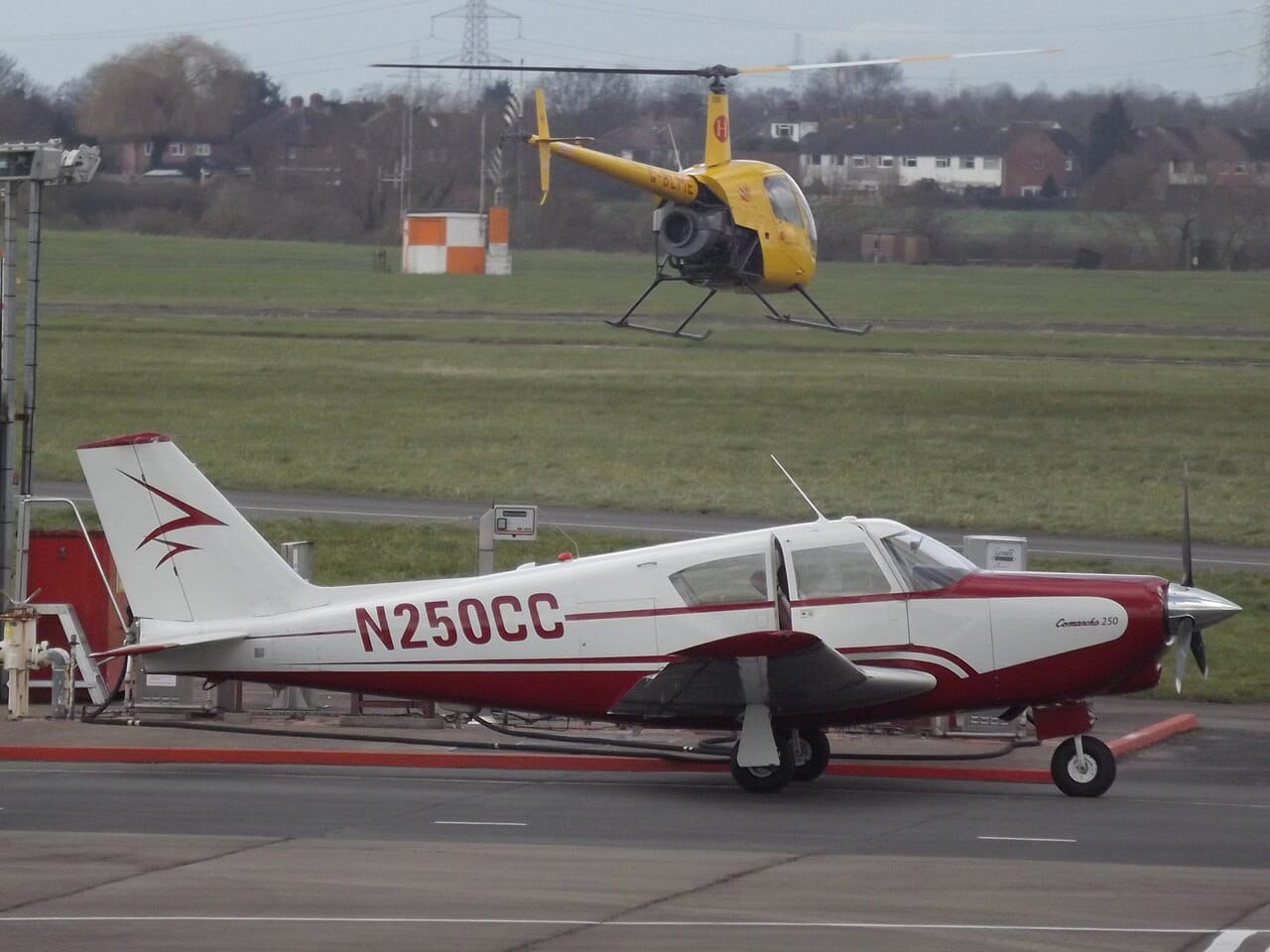
The Piper Comanche 250 remains one of the more affordable ways to get 150-plus-knot cruise performance, four seats, and a 250-hp Lycoming in a classic retractable single. Compared with a similarly equipped Bonanza, purchase prices are often lower, but the tradeoff is an out-of-production airframe with type-specific landing-gear, stabilator, corrosion, and parts-support concerns.
None of those issues automatically makes the Comanche a bad buy. The important question is whether a specific airplane has complete AD compliance, sound structure, properly maintained landing gear, and support from a mechanic who understands the type.
This guide covers the major inspection points, parts situation, ownership costs, and the items that matter most when deciding whether a Comanche 250 is still a sensible aircraft to buy.
Key Takeaways
The Comanche 250 is a 250-horsepower, four-seat retractable that cruises in the 150 to 160 knot range on roughly 13 to 15 gallons per hour, which puts it squarely in Bonanza territory for about half to two-thirds the purchase price. The landing-gear directive is real, repetitive, and manageable — it is an inspection and parts-replacement burden, not a design flaw, and a Comanche-literate shop handles it as routine annual work. Parts support comes from specialist suppliers and the type club rather than the factory, so common items are available while a few specific castings and interior pieces can mean a long search. Against a Bonanza you trade factory backing and resale liquidity for a lower entry price and lower hull value. Buy the airplane with clean logs, a documented AD compliance list, and no corrosion, and it is a genuinely good value; buy the cheap one with vague paperwork and you will spend the savings in the first year.
| Your question | Short answer |
| Is the airframe structurally sound? | Yes. The PA-24 has no wing-spar AD like the one that hit PA-28 and PA-32 models in 2020. Corrosion, not structure, is the enemy. |
| Is the landing-gear AD a deal breaker? | No. It is recurring inspection work. Budget for it every year and have it signed off by someone who knows the system. |
| Can you still get parts? | Mostly yes, through PMA specialists and the type club salvage network. Piper is not the source anymore. |
| How does it price against a Bonanza? | Typically 30% to 50% less for comparable speed and load, with correspondingly lower resale liquidity. |
| Who should not buy one? | A low-time pilot with no retractable time, no instrument rating, and a maintenance shop 200 miles from the nearest Comanche expert. |
What the Comanche 250 Actually Is
A 1958 airplane that still flies like a modern one
The PA-24-250 was Piper's first serious all-metal, retractable-gear, laminar-flow-wing single, built from 1958 into 1964 before the fuel-injected 260-horsepower version took over. It runs a carbureted Lycoming O-540 of 250 horsepower with a published TBO of 2,000 hours. Maximum gross weight varies by year: early PA-24-250s were certificated at 2,800 pounds, while later examples were increased to 2,900 pounds. Useful load therefore varies substantially with year and equipment, with many later aircraft offering roughly 1,100 to 1,200 pounds. — enough for four adults and bags if you manage fuel, which is the same honest compromise you make in almost every four-place retractable.
Standard fuel capacity is 60 gallons. Optional auxiliary fuel increased total capacity to 90 gallons on equipped aircraft, so the selector arrangement and fuel-management procedure depend on the individual airplane's configuration. Fuel mismanagement has been a recognized Comanche operating concern, making it important to verify the installed system and follow the applicable POH or supplement.
| Specification | Piper PA-24-250 Comanche |
| Production years | 1958–1964 |
| Engine | Lycoming O-540, 250 hp, carbureted |
| Published TBO | 2,000 hours |
| Typical cruise (owner reported) | 150–160 knots true |
| Typical fuel burn | 13–15 gph at cruise power |
| Gross weight | 2,800 lb on early aircraft; 2,900 lb on later PA-24-250s |
| Fuel capacity | 60 gal standard, 90 gal with aux tanks |
| Seats | 4 |
| Gear | Electrically driven retractable, manual emergency extension |
Fun Fact: The Comanche line died by weather, not by market. Hurricane Agnes flooded Piper's Lock Haven plant in June 1972 and destroyed the tooling. Piper chose not to rebuild it, which is why a 1970s airplane and a 1958 airplane share so many part numbers — nothing was ever redesigned.
The Landing Gear: What It Actually Costs You
How the system works and why it gets attention
The Comanche gear is driven by an electric motor through a transmission and a set of push-pull rods, with bungee assistance and a manual emergency extension lever between the front seats. It is a mechanically clean design, but it is sixty-plus years old, it depends on correct rigging, and the wear items — bungee cords, rod ends, transmission components, limit switches and the gear-warning system — have to be inspected and replaced on schedule rather than when they finally complain.
That is what the long-standing Piper landing-gear airworthiness directive on the PA-24 family is about. Mechanics generally refer to it as the gear bungee AD, frequently cited as AD 77-13-21, and it drives repetitive inspection and replacement of gear system components. Do not take a number from any article — including this one — as gospel. AD numbers get amended and superseded, and applicability runs by serial number. Pull the current AD list for the specific tail number from the FAA's airworthiness directive database and match it against the signed compliance record in the logbooks before you make an offer.
Why It Matters: A Comanche with a complete, dated, signed AD compliance list is worth real money more than one without. Missing compliance records are not just paperwork. Your mechanic has to assume nothing was done and re-inspect from scratch, and that first annual can run double.
What a gear-up landing really costs
Most Comanche gear stories end in an expensive scrape, not an injury. Belly skin repair, a new propeller and a mandatory engine teardown add up fast. Lycoming's guidance on propeller strikes — the Service Bulletin 475 series — calls for complete engine disassembly and inspection after a sudden stoppage, and that alone converts a bent prop into a five-figure event. Add belly and gear-door work and a gear-up on a Comanche routinely lands in the $30,000 to $60,000 range, which is a meaningful fraction of the airplane's value.
Pro Tip: Before you close, ask the seller to demonstrate a full manual emergency extension on jacks, and do it yourself from the left seat. If the lever is stiff or the rigging is off, you have found either a negotiating point or a reason to walk.
Flying411 keeps retractable-gear singles, their specs and their asking prices in one place, so you can compare a Comanche 250 against a Debonair or an early Bonanza without opening six tabs.
The Stabilator and the Rest of the Airframe
What to look at on the tail
The Comanche uses a stabilator — a single all-moving horizontal surface — rather than a fixed stabilizer with an elevator. It is a light, effective design, and it is also a primary flight control that hangs on a torque tube with attach fittings, hinge hardware and a balance weight. The stabilator deserves specific attention because AD 2012-17-06 applies to certain PA-24, PA-24-250, and PA-24-260 airplanes and requires replacement and/or repetitive inspection of the stabilator horn assembly for corrosion and cracks. Earlier FAA actions have also addressed stabilator torque-tube attachment hardware, and a Comanche-experienced inspector will go over that area with a light and a mirror rather than a glance.
The practical advice is simple. On the pre-buy, insist the tail cone comes off, the stabilator attachment is inspected and photographed, and any play in the system is measured against the maintenance manual limits rather than eyeballed. This is the part of the airplane where a generic annual signed by a shop that mostly sees 172s is worth very little to you.
Heads Up: Corrosion, not fatigue, ends most Comanches. Check the aft fuselage, the wing spar area near the fuel tanks, the belly skins and the stabilator attach region. A Florida or coastal airplane with no corrosion treatment history deserves more scrutiny than one that spent its life in a Kansas hangar.
What the Comanche does not have
Worth saying plainly: the Piper wing-spar directive that landed on PA-28 and PA-32 models in late 2020 does not apply to the PA-24. The Comanche's laminar-flow wing is a different structure with a strong service record. The airplane's reputation for being AD-heavy comes almost entirely from the gear and control-system inspections, not from the primary structure.
Parts Support in the Real World
Who actually supplies Comanche parts?
Piper holds the type certificate but has not supported the airplane as a production line for half a century. What replaced the factory is a specialist ecosystem: PMA manufacturers such as Webco Aircraft that produce Comanche-specific parts, speed-mod and component suppliers like Knots 2U, a deep salvage network, and above all the International Comanche Society, whose members and Comanche Flyer magazine have been documenting fixes, sources and gotchas for decades. Standard hardware, brakes, tires, control cables, engine accessories and instruments are generic and easy. The Lycoming O-540 is one of the most common engines in general aviation, so nothing about the powerplant is exotic.
Where you feel the pinch is airframe-unique items: certain gear components, cowling pieces, windshields and window glass, some castings, and original interior plastics and trim. These are usually findable, but "usually findable" can mean three weeks on the phone and a salvage yard in another state. Plan for a longer annual downtime than you would expect on a Cessna.
Good to Know: Join the type club before you buy, not after. A few hundred dollars in membership buys access to people who can tell you which serial numbers had which changes, which shops rig Comanche gear correctly, and whether the specific airplane you are looking at has a history in the community. For airplanes without factory support, the type club effectively is the support.
The same used-versus-new logic that applies to more common types applies here, and our guide on used versus overhauled parts is worth reading before you start sourcing components for an out-of-production airframe.
What It Costs to Own
Annual budget, honestly
The engine is the predictable part. A field overhaul on an O-540 generally runs in the $45,000 to $65,000 range depending on the shop, the accessories and whether you go factory. Spread across 2,000 hours, that is roughly $25 to $33 per hour you should be setting aside from day one, and a Comanche priced as if its 1,800-hour engine were free is not actually cheap.
| Cost item | Typical range | Notes |
| Fuel | 13–15 gph | At $6.50/gal that is roughly $85–$100 per hour |
| Engine reserve | $25–$33 per hour | Based on overhaul cost over 2,000-hour TBO |
| Annual inspection | $3,000–$6,000 | Higher on a first annual or with deferred AD work |
| Insurance | $2,000–$4,500 per year | Varies sharply with pilot time, rating and hull value |
| Hangar | $2,400–$7,200 per year | Strongly recommended — outside storage accelerates corrosion |
Keep in Mind: Insurers price retractables on pilot experience more than on airplane age. Underwriters commonly want an instrument rating, meaningful retractable time and a set number of hours of dual in type before they will write a first-time Comanche owner at a sensible rate. Get quotes before you sign a purchase agreement, not after.
Avionics are the other budget line. Many Comanches still fly with 1970s panels. If the airplane you are looking at is not already ADS-B compliant, factor that in — the same math we walked through for the cheapest path to ADS-B compliance applies here, and it is also worth understanding how ADS-B-based landing fees are changing what your transponder tells the world about where you go.
Comanche 250 vs Bonanza: The Comparison That Actually Matters
Where the money goes
Compare like for like. A four-place Comanche 250 stacks up most directly against a 1960s straight-tail Debonair or an early 35-series Bonanza, not against a late-model A36. As of 2025, decent flying Comanche 250s with mid-time engines and IFR panels generally ask somewhere in the $70,000 to $130,000 band, with project airplanes below that and exceptional restorations above. Comparable 1960s Bonanzas typically ask more, and the six-seat A36 lives in an entirely different price tier.
| Factor | Comanche 250 | 1960s Bonanza / Debonair |
| Cruise speed | 150–160 kt | Similar, depending on engine |
| Seats | 4 | 4 (Debonair/33) to 6 (36 series) |
| Factory parts support | None — specialists and type club | Deeper, line stayed in production for decades |
| Signature AD burden | Landing gear, control system inspections | V-tail cuff and ruddervator inspections on 35 series |
| Typical asking price | Lower | Higher for equivalent equipment |
| Resale liquidity | Slower, smaller buyer pool | Faster, larger buyer pool |
| Mechanic familiarity | Specialist-dependent | Widely serviced |
Both camps have their inspection history. The V-tail Bonanzas carry the mid-1990s directive that required the tail-strengthening cuff kit, along with magnesium ruddervator skin inspections, and nobody calls the V-tail unbuyable because of it. The Comanche's gear AD deserves the same framing: a known, documented, priced maintenance item on an otherwise excellent airplane.
If you are weighing the wider Beech versus Piper question, we have gone deep on it from several angles — Debonair versus Bonanza covers the straight-tail comparison, Bonanza versus Saratoga handles the six-seat class, and Cessna 210 versus A36 Bonanza is the high-performance retractable shootout. For the fixed-gear baseline, Bonanza versus Cherokee shows how much speed the retractable gear is actually buying you.
Flying411 keeps Comanche, Bonanza and Debonair listings side by side, so you can compare engine time, avionics and asking price across the whole class in one pass.
How to Buy One Without Getting Hurt
The pre-buy that is worth paying for
Do not use the seller's shop, and do not use a shop that has never opened a Comanche. Pay for a pre-buy at a Comanche-experienced facility even if it means ferrying the airplane, because the difference between a $1,500 generic look and a $3,500 informed teardown inspection is measured in tens of thousands of dollars of discovery.
What the inspection must include: full AD compliance review against the current FAA list by serial number; gear swing on jacks including manual emergency extension; gear component wear measured to manual limits; stabilator attach and torque tube inspection with the tail cone open; corrosion survey of belly, aft fuselage and wing spar area; compression and borescope on all six cylinders; fuel selector function on every position; and a complete logbook review going back to day one, with attention to damage history and any gear-up repairs.
Quick Tip: Ask specifically whether the airplane has ever been repaired after a gear collapse. It is not automatically disqualifying — a properly documented repair is fine — but it changes what you should be inspecting and what you should be paying. Our guide to reading maintenance records and logbooks covers how to spot the gaps that matter.
Who the Comanche 250 is right for
It is right for the owner who wants Bonanza performance at a lower entry price, who flies enough to keep an airplane exercised, who will hangar it, and who is willing to join the type club and build a relationship with a shop that knows the type. It is wrong for the buyer who wants the cheapest fast airplane on the market and expects to treat it like an appliance. A neglected Comanche is not a bargain — it is a restoration project wearing an airworthiness certificate.
Flying411 keeps specs, ownership guides and current listings for classic retractables in one place, so you can price the airplane and the maintenance reality together before you make an offer.
Conclusion
So, is a Piper Comanche 250 still a safe buy? Yes — with conditions. The airframe is strong, the engine is common, and the performance still embarrasses airplanes selling for far more. The landing-gear directive is a recurring cost, not a defect, and the stabilator inspections are routine work for anyone who knows the type. Parts come from specialists and the type club rather than a factory, which means patience more often than impossibility.
Buy the well-documented airplane. Pay for the informed pre-buy. Budget the engine reserve from your first flight. Do those three things and the Comanche 250 remains one of the better performance-per-dollar deals in piston aviation. Skip them and the Bonanza owner parked next to you will end up with the cheaper airplane.
When you are ready to compare listings, visitFlying411and see what is on the market today.
Frequently Asked Questions
How bad is the Comanche landing-gear AD really?
It is a recurring inspection and component-replacement requirement that is commonly reviewed during annual inspections, but its actual compliance intervals are based on the requirements of AD 77-13-21 rather than simply occurring once every year.
Can you still get parts for a Comanche 250?
For the most part, yes. The engine and standard hardware are common. Comanche-specific parts come from PMA specialists, salvage sources and the International Comanche Society network rather than from Piper. Expect some items — glass, certain castings, original interior pieces — to take weeks to find.
Comanche 250 or Comanche 260 — which should I buy?
The 260, built from 1965 to 1972, uses a fuel-injected 260-horsepower Lycoming and is generally a bit newer and a bit faster, and it prices accordingly. The carbureted 250 is simpler and cheaper to buy and maintain. If two candidate airplanes are otherwise equal, condition and logbooks matter far more than the 10-horsepower difference.
Does the Comanche have a wing-spar AD like the Cherokee?
No. AD 77-13-21 imposes recurring landing-gear inspection and component requirements, including a detailed inspection at 1,000-hour intervals and recurring bungee-cord requirements. It is manageable maintenance, but buyers should verify the actual compliance dates and times rather than assume it is simply an annual item.
Is a Comanche 250 hard to insure for a first-time owner?
Harder than a fixed-gear trainer, but not unusual for a complex single. Underwriters typically look for an instrument rating, retractable-gear time and a specified number of dual hours in type. Get written quotes before you commit to a purchase, because insurance can change your total cost of ownership by thousands of dollars a year.
What is the single biggest thing to check on a pre-buy?
Corrosion, followed immediately by the AD compliance record. Worn gear parts can be replaced and an engine can be overhauled, but significant structural corrosion on a 60-year-old out-of-production airframe is the one finding that should end the conversation.