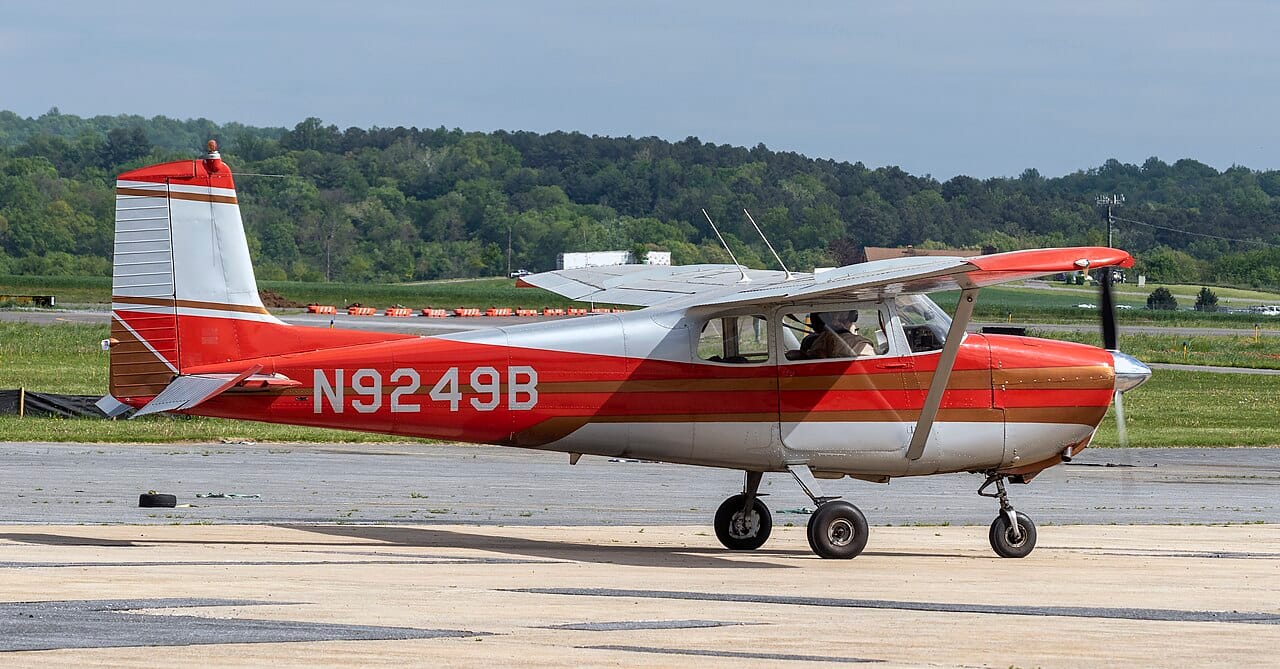
The Cessna 175 Skylark offers much of the familiarity and utility of an early Cessna 172, but its original Continental GO-300 geared engine makes it a very different airplane to own. Used examples are commonly found either with the factory GO-300 or with an STC-approved Lycoming O-360 conversion, and that engine choice can have a major effect on maintenance support, overhaul planning, resale value, and purchase price.
The original GO-300 is not automatically a reason to avoid a 175, but its 1,200-hour recommended TBO, specialized reduction gearbox, and limited parts and overhaul support deserve careful consideration. An O-360 conversion offers much broader support, but the installation and paperwork need to be inspected just as carefully as the engine itself.
This guide compares the original and converted Cessna 175, including maintenance concerns, TBO, conversion paperwork, operating costs, and the items buyers should verify during a pre-purchase inspection.
Key Takeaways
If you plan to keep the airplane a long time, fly it 75 hours a year or more, and you want the simplest ownership experience, a properly documented Lycoming O-360 conversion is usually the better buy even at a premium of $15,000 to $25,000. If you are buying the cheapest honest four-seater you can find, you understand that the geared Continental must be run at high rpm, and you have a mechanic who will work on it, the original GO-300 airplane can be a bargain. The deciding factors are not horsepower or cruise speed, which are closer than people think, but parts availability, the GO-300's 1,200-hour recommended TBO, the applicable TBO for the specific Lycoming installation and engine history, and the quality of the STC paperwork. Buy the logbooks and the engine, not the paint. And whichever way you go, get a pre-buy done by someone who has actually seen a 175 before.
| Question | Short answer |
| Is the GO-300 a bad engine? | Varies by engine history; qualifying factory-new or factory-rebuilt O-360s may now be eligible for up to 2,600 hours under Lycoming SI 1009BF |
| What is the GO-300's TBO? | 1,200 hours in Continental's published list, raised from the original 600-hour figure. |
| What does a conversion cost to do yourself? | Shops commonly quote the mid-$40,000s to $70,000 all-in with engine, prop, mount and cowl. |
| Do you gain much speed? | Not really. Expect a few knots and a much better climb, especially high and hot. |
| Which resells easier? | The Lycoming conversion, by a wide margin, because the buyer pool is larger. |
What the Cessna 175 Actually Is
Cessna built the 175 from 1958 through 1962 in four model years — 175, 175A, 175B and 175C, the later ones wearing the Skylark name — and produced roughly 2,100 of them. It shares a type certificate, TCDS 3A17, with the P172D Powermatic that followed it. The airframe is a 172 in almost every respect that costs money: same wing, same gear legs, same doors, same tail structure on the later swept-tail versions. That matters enormously for parts. Almost everything aft of the firewall can be sourced as easily as 172 parts, which is to say very easily.
Forward of the firewall is where the 175 goes its own way. The 175, 175A, and 175B have a 2,350-pound maximum gross weight, while the later 175C increased that figure to 2,450 pounds. All were powered originally by versions of Continental's geared GO-300, rated at 175 horsepower. A 0.75:1 reduction gear turns the propeller at roughly 2,400 rpm. Think of it as a small engine paired with an overdrive gearbox: the engine spins fast where it makes power, and the gearbox keeps the propeller tips subsonic and quiet.
If you want the full airframe-by-airframe breakdown, we covered it separately in Cessna 175 vs 172: How Do These Classic Trainers Differ?. This article assumes you have already decided the airframe suits you and are stuck on the engine question.
Fun Fact: The 175 outsold the 172 in exactly zero of its production years, but Cessna kept the higher gross weight and the geared engine long enough to build a P172D "Powermatic" in 1963 with a 2,500-pound gross. The market had already made up its mind.
Why did the GO-300 get such a bad name?
Two reasons, and only one of them is the engine's fault.
The first is operating technique. Pilots stepping out of a 145-hp O-300 172 heard 3,000-plus rpm in cruise and instinctively pulled it back to something that sounded civilized — 2,400, 2,500 rpm. At those settings the GO-300 makes very little power, runs cool enough to foul plugs with lead, and puts the reduction gearing through load reversals it was never meant to see steadily. Owners who treat the engine like a chainsaw — high rpm, steady throttle, leaned properly — report reaching TBO. Owners who baby it do not.
The second is the parts supply. Continental raised TBO from an initial 600 hours to 1,200, which is still only a bit more than half of what a Lycoming O-360 gets under Lycoming Service Instruction 1009. When the engine does come due, you are looking for gear sets, a specific crankshaft, and cylinders in a shrinking pool of serviceable cores. Most of the shops that were fluent in geared Continentals have retired. Today, limited parts availability and shrinking specialist support are major ownership risks in addition to the engine's operating requirements.
Heads Up: Before you make an offer on any GO-300 airplane, call two engine shops and ask point blank what a major overhaul would cost and how long the parts wait is. Get it in writing if you can. That single phone call is worth more than any forum thread.
The Conversions: What Is Actually Out There
The 175 has been converted under several supplemental type certificates over the last fifty years, and "converted to a Lycoming" is not one thing. The most common and most desirable is a 180-horsepower Lycoming O-360 installation — the same basic engine family that powers the Cessna 172S, the Piper Archer, and about a thousand other airplanes. Conversion kits developed by firms such as Avcon Industries and others have been passed between owners and shops over the decades, and some have changed hands more than once.
You will also find 175s converted to the direct-drive Continental O-300 (145 hp), which solves the gearbox problem but gives away power and gross-weight advantage, and a handful of more exotic installations including 220-hp Franklins. Those exist. They are also much harder to support and much harder to sell.
| Factor | Original Continental GO-300 | 180 hp Lycoming O-360 STC |
| Rated power | 175 hp at 3,200 rpm, geared 0.75:1 | 180 hp at 2,700 rpm, direct drive |
| Published TBO | 1,200 hours / 12 years | Varies by engine history; qualifying factory-new or factory-rebuilt O-360s may now be eligible for up to 2,600 hours under Lycoming SI 1009BF |
| Typical overhaul cost | Mid-$20,000s to $35,000+, parts dependent | Roughly $30,000 to $40,000, parts readily available |
| Cylinders and accessories | Specialty sourcing, long lead times | Shelf stock at most distributors |
| Mechanic familiarity | Low and falling | Universal |
| Cruise fuel burn | About 9 to 10.5 gph at high cruise | About 9 to 10 gph at 65–75 percent |
| Climb performance | Good at sea level, fades with altitude | Noticeably better, especially high and hot |
| Noise and vibration | Smooth six, low prop rpm, quiet cabin | Four-cylinder buzz, louder prop |
| Insurance and resale | Smaller buyer pool, longer days on market | Larger buyer pool, easier financing appraisal |
Good to Know: The GO-300 is a six-cylinder engine turning a propeller at only 2,400 rpm. Many owners who have flown both say the original airplane is the smoother and quieter of the two. If cabin comfort matters more to you than climb rate, that is a real point in the Continental's favor.
Does a conversion make the airplane faster?
Barely. Five extra horsepower is five extra horsepower, and the 175 airframe is the same slab-sided Cessna either way. Expect cruise numbers in the same neighborhood — roughly 115 to 125 knots true depending on year, gear fairings, antennas and how honest the airspeed indicator is.
What you gain is climb, particularly on a hot day out of a high-elevation strip, and the ability to swing a different propeller. What you gain even more is peace of mind. People do not convert 175s to go faster. They convert them so that a routine cylinder problem in a strange town does not turn into a three-month grounding.
Flying411 keeps Cessna 175 listings, engine details and asking prices in one place, so you can compare an original GO-300 airplane against a converted one without guessing at what the premium should be.
What the Money Really Looks Like
Prices move, so treat these as shapes rather than figures. Broadly, original-engine 175s occupy the bottom rung of the four-place Cessna market and converted examples sit noticeably above them, with avionics and paint doing the rest of the work. The spread between a run-out GO-300 airplane and a freshly converted one with a low-time O-360 can easily be $30,000 or more on the same airframe.
Here is the arithmetic that trips buyers up. Suppose you buy the cheap airplane with 900 hours on the GO-300 and plan to convert it later. You will pay for the airframe, then you will pay for the conversion. Shops report complete firewall-forward conversions — engine, mount, cowl modification, baffling, exhaust, propeller, hoses, labor and paperwork — landing somewhere in the mid-$40,000s to $70,000 range depending on whether the engine is overhauled or new and how much the cowl work costs. Add that to your purchase price and compare it honestly against the already-converted airplane's asking price. Very often the converted airplane is the cheaper path to the same result, because the previous owner ate the depreciation on that work.
Why It Matters: An engine conversion almost never returns its full cost at resale. Somebody has to absorb that loss. The question you should be asking is whether it has already been absorbed by a previous owner or whether it is waiting for you.
What about just overhauling the GO-300?
Sometimes that is the right call, and it is the same logic we walk through in Should I Overhaul or Replace My Lycoming Engine?. If the airplane is otherwise sound, if you have a shop that will do the work and a source for gears, and if you fly enough hours a year to justify the cost, an overhauled GO-300 gives you a 1,200-hour engine in an airplane you already know, and it keeps the airplane original — which a small but real slice of the market values.
Where the math falls apart is on low-utilization airplanes. Fly 40 hours a year against a 1,200-hour TBO and you will hit calendar limits and corrosion issues long before you hit hours. In that case you have effectively paid full overhaul price for a decade of light flying, twice.
Keep in Mind: Continental publishes recommended calendar limits alongside hourly TBO. An engine that sits is an engine that rusts. Cam and lifter corrosion does not care how few hours are on the tach.
Inspecting a Converted 175
A conversion is only as good as its paperwork, and this is where buyers get hurt. The airplane may fly beautifully and still be a problem on paper.
What documents must be present?
Ask for all of it before you fly out to look at the airplane:
- A copy of the actual Supplemental Type Certificate, not just a reference to one in the logbook.
- A signed STC permission letter or bill of sale showing the STC holder authorized this specific serial number. Some STCs are one-airplane-at-a-time licenses.
- The FAA Form 337 for the major alteration, properly executed and, ideally, matching a copy in the FAA's aircraft records.
- An updated weight and balance with a new equipment list. The Lycoming four is lighter than the Continental six, and the empty CG moves.
- Any required Airplane Flight Manual Supplement or placards, physically in the airplane.
- Logbook entries for the propeller, which is frequently a different part number than the original.
Order the aircraft records from the FAA yourself. A CD of the airplane's file is inexpensive and it will tell you whether that 337 was ever actually filed. If the alteration is not in the FAA record and the STC letter is missing, you are buying a squawk that a future annual inspection will eventually surface.
Pro Tip: Compare the 337's description of the work against what you see in the engine compartment. Mismatched baffling, a non-STC exhaust, or a cowl that does not match the kit drawings are all signs the installation drifted from the approved data over the years.
What should the mechanic look at?
Much of a 175 pre-buy is identical to a 172 pre-buy, and our Cessna 172 pre-buy inspection checklist covers the airframe items that apply here too. Add these 175-specific ones:
- Seat rails. AD 2011-10-09 applies across the Cessna 100 and 200 series, including the 175. Confirm inspection compliance and look at the rail hole wear yourself.
- Engine mount condition. On converted airplanes, inspect welds, powder coat and rubber mounts. A mount fabricated decades ago has a service life like anything else.
- Cowl fit and cooling. Cracked, patched, or hand-worked cowlings are common on converted 175s and a new cowl is not a cheap part.
- Gearbox evidence on GO-300 airplanes. Ask about oil analysis history, look for metal in the filter records, and ask how the previous owner cruised it. A logbook full of long cross-countries is a better sign than one full of 0.4-hour pattern flights.
- Corrosion in the wing and tailcone. These airplanes are sixty-plus years old. Where it lived matters more than what powers it.
Flying411 keeps maintenance guides, pre-buy checklists and model comparisons in one place, so you can build an inspection list before you ever call the seller.
Which One Should You Buy?
Buy the original GO-300 airplane if…
You are price-sensitive and want the most airplane for the least money. You have located a mechanic within reasonable distance who is willing to work on geared Continentals and says so. The engine has recent hours, good compressions, clean oil analysis, and a logbook that shows steady use rather than long sits. You fly enough — say 75 to 100 hours a year — that the engine stays healthy and the 1,200-hour TBO gets used rather than expiring on the calendar. And you can accept that when you sell, the pool of buyers willing to take on the engine is smaller than you would like.
There is also a fairness point worth making: plenty of GO-300s have gone to and past TBO in the hands of owners who understood them. The engine is not cursed. It is specialized, and specialized things punish casual owners.
Buy the converted Lycoming airplane if…
You want a four-seat classic Cessna that behaves like every other four-seat classic Cessna at maintenance time. You are financing the purchase and want an appraisal that lenders and insurers recognize without a conversation. You operate from a high-elevation or short field where the extra climb genuinely helps. You fly fewer than about 60 hours a year, where a 2,000-hour TBO and shelf-stock parts insulate you from long downtimes. Or you simply do not want the engine to be the most interesting thing about owning your airplane.
Quick Tip: If you are cross-shopping a converted 175 against a 172 of similar vintage, remember the 175's higher gross weight. Compared with a contemporary 2,200-pound-gross Cessna 172, early 175s have a 150-pound higher maximum gross weight, while the 175C increases the difference further with its 2,450-pound maximum gross weight.
What about buying one for training or time building?
Both versions will do it, but the converted airplane is the safer choice for anything that must be available on a schedule. Downtime is the enemy in a time-building airplane, and a rare-parts engine is a downtime generator. We work through that math in Best Plane for Time Building and in Should You Buy an Airplane for Flight Training?, and the logic transfers cleanly to the 175.
If you are new to the whole process, start with How to Buy a Private Plane before you start making offers on anything.
The Engine Family Context
It helps to place the GO-300 in its family. It shares displacement and much of its architecture with the direct-drive O-300 that powered the early 172, and the O-200 that powered the 150 is the four-cylinder relative. We compare the two direct-drive engines in Continental O-200 vs O-300, and most of what is said there about parts, cylinder work and operating habits applies to the geared version — with the gearbox and the higher operating rpm layered on top.
The Lycoming O-360 sits in the opposite position: it is arguably the most supported four-cylinder piston aircraft engine in the world, with factory overhauls, field overhauls, a deep used-parts market, and every A&P in the country familiar with it. That is not a performance argument. It is a logistics argument, and logistics are what actually determine whether your airplane flies next weekend.
Flying411 keeps engine explainers, overhaul cost guides and model-specific buying advice in one place, so you can understand what is under the cowl before you commit to the airframe.
Conclusion
For most buyers today, a properly documented 180-horsepower Lycoming conversion is the more sensible purchase, because the premium you pay is usually less than the conversion would cost you later and the parts problem simply goes away. But do not let the internet talk you out of a good airplane. A Cessna 175 with the geared GO-300 that has been flown regularly, leaned properly, cruised at the rpm the placard asks for, and backed by a shop that will support it is one of the honest bargains left in the four-seat market — a 2,350-pound-gross Cessna at a price that buys a tired 150 in some years.
Decide which risk you are more comfortable holding: the financial risk of paying more up front, or the logistical risk of a 1,200-hour engine with a thin parts pipeline. Then inspect accordingly, get the FAA records, verify the STC paperwork on anything converted, and make your offer reflect what you found rather than what the ad said.
When you are ready to compare listings, visitFlying411and see what is on the market today.
Frequently Asked Questions
How many hours will a GO-300 really last?
Continental's published TBO is 1,200 hours, up from the 600 hours originally assigned. Owners who cruise at the high rpm the engine was designed for and fly it regularly report reaching TBO. Owners who operate at low rpm, make short flights, and let the airplane sit for months routinely fall well short. Operating technique is the biggest single variable.
Is a converted Cessna 175 still a 175?
Yes. The conversion is a major alteration approved under a supplemental type certificate and recorded on FAA Form 337. The airplane keeps its model designation and its position on TCDS 3A17. What changes is the equipment list, the weight and balance, and any limitations added by the STC and its flight manual supplement.
Does a conversion increase the gross weight?
Some STCs include a gross weight increase and some do not. Never assume. Read the specific STC and the flight manual supplement for the airplane you are buying, and confirm the placarded gross weight in the cockpit matches the paperwork.
Can I convert a 175 myself to save money?
You cannot design your own installation. You must buy or be granted use of an existing STC, and the work must be performed and signed off under that approved data. Owner-assisted labor can reduce the bill at a friendly shop, but the engineering, the kit and the sign-off are not optional.
Which one is cheaper to insure?
Insurers price mostly on pilot experience, hull value and use, not engine type. The practical difference is that a converted airplane usually carries a higher hull value, which raises the premium slightly. Neither version is treated as exotic.
Is the Cessna 175 a good first airplane?
It can be. It flies like a 172, carries more than a 172 of the same year, and costs less to buy. The caveat is entirely the engine. A first-time owner without a supportive mechanic should lean strongly toward the converted airplane; a first-time owner with a good shop and realistic reserves can do very well with an original one.