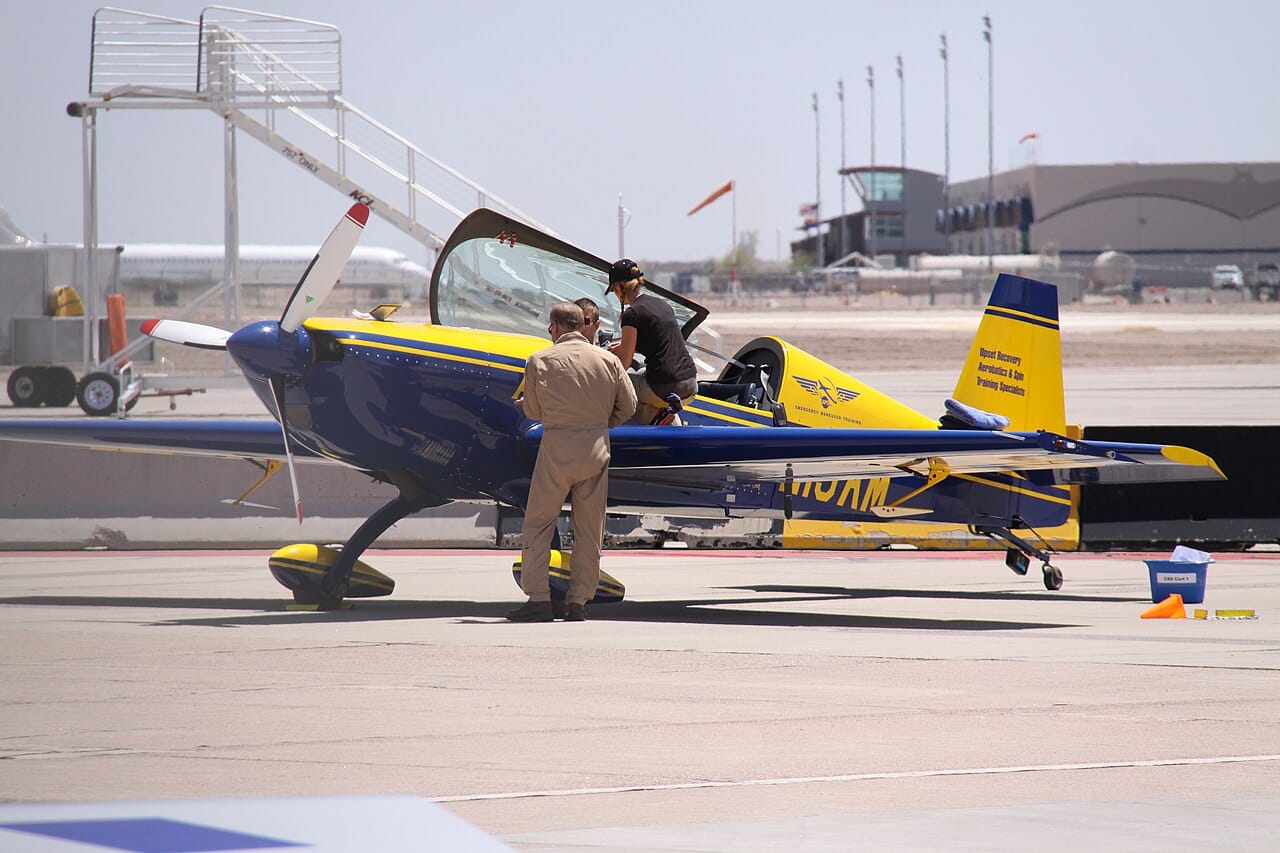
The Extra EA 300/L is a purpose-built two-seat aerobatic aircraft capable of ±10 g solo, roughly 400-degree-per-second roll rates, and performance far beyond a conventional general aviation single. Used examples can offer serious aerobatic capability for much less than a newer Extra, but buying one requires more attention to structural life, inspection history, and aerobatic use than a typical piston-aircraft purchase.
The biggest concern is not simply total airframe or engine time. The EA 300/L has manufacturer-defined life limits and recurring structural inspections for major composite components, while its 300-hp Lycoming AEIO-540, MT propeller, inverted systems, and steel-tube fuselage all require type-specific scrutiny.
This guide covers what an Extra 300/L costs to buy and operate, what its pre-purchase inspection should include, and which structural and maintenance records matter most before money changes hands.
Key Takeaways
The Extra EA 300/L is a two-seat, all-aerobatic monoplane with a welded steel-tube fuselage and a carbon-fiber composite wing, powered by a 300-horsepower Lycoming AEIO-540. It is flown solo from the rear seat, it needs a tailwheel endorsement, and it demands an inspector who genuinely knows Extras rather than a general shop that does Cherokees. Plan on all-in costs in the mid-to-high hundreds of dollars per hour once you fund an engine reserve, and budget a four-figure insurance premium even with good experience. The single most important pre-buy item is the structure: the composite wing and other listed composite components carry manufacturer-published life limits and recurring inspection requirements, while the steel-tube fuselage requires careful inspection for corrosion, cracking, and previous damage.
| Question | Short answer |
| What is it? | Two-seat tandem aerobatic monoplane, certificated in the Aerobatic category, built by Extra Flugzeugbau in Germany from the mid-1990s |
| Engine | Lycoming AEIO-540-L1B5, 300 hp, fuel injected, with inverted oil and inverted fuel systems |
| Propeller | MT three-blade composite (MTV series), overhauled on both an hourly and a calendar interval |
| Load limits | Manufacturer publishes roughly ±10 g solo and ±8 g with two occupants — confirm in the POH for your serial number |
| Cruise / Vne | Roughly 165–185 knots cruise; Vne published near 220 KIAS |
| Climb | Better than 3,000 feet per minute solo at light weight |
| Typical asking prices | Commonly in the $175,000–$300,000 range depending on hours, engine time, avionics and structural life remaining |
| Biggest pre-buy risk | Remaining life and inspection status of the composite wing and steel-tube fuselage structure |
What the EA 300/L Actually Is
What does the "/L" mean?
Walter Extra's original EA 300 was a mid-wing design: the wing met the fuselage roughly at the pilot's shoulder line. The /L moved the wing down to the bottom of the fuselage. That one change gave the pilot a much better view over the nose and down past the wing root, which matters enormously when you are trying to find the box, hold a line, or spot the runway on a tailwheel landing. The rest of the recipe stayed: a welded 4130 steel-tube fuselage with a composite and fabric shell, a carbon-fiber wing with a symmetrical airfoil, and a 300-horsepower Lycoming swinging a light composite prop.
Think of the family this way. The single-seat 300/S and later 330SC are the racing bikes — light, twitchy, built for one rider. The 300/L is the two-seat version you can actually teach in, give rides in, and fly cross-country to a contest without hating yourself. It is the practical member of the family, which is exactly why so many of them ended up in flight schools and ride operations, and exactly why you need to look hard at how each individual airplane was used.
Fun Fact: You fly the 300/L solo from the rear seat. The airplane balances there, and the front seat is for the passenger or the student. If you have only flown nosewheel singles from the left front seat, your first three landings will feel like learning to parallel park a bus from the back row.
How does it compare to a Pitts or a later Extra?
Most people cross-shopping a 300/L are also looking at a Pitts S-2B or S-2C, a Sukhoi, or one of the later Extra models. Here is the honest shape of the choice.
| Aircraft | Layout | Power | Strengths | Trade-offs |
| Extra EA 300/L | Two-seat low-wing monoplane | 300 hp AEIO-540 | Visibility, roll rate, cross-country speed, docile-for-the-class handling | Highest acquisition cost of the group; composite structure life limits |
| Pitts S-2B / S-2C | Two-seat biplane | 260 hp AEIO-540 | Lower purchase price, huge parts and knowledge base in the US | Poor forward visibility, slower, less roll authority than the Extra |
| Extra 300LX / 330LX | Two-seat monoplane | 300 hp AEIO-540 (330LX: 315 hp AEIO-580) | Newer airframes, revised wing and gear, more remaining life | Substantially more money; fewer on the used market |
| Sukhoi Su-29 | Two-seat monoplane | ~360 hp M-14P radial | Brute power, unmistakable sound | Parts and radial engine support are a specialty pursuit |
Flying411 keeps aerobatic singles, tailwheel trainers and their spec sheets in one place, so you can compare a 300/L against a Pitts or a later LX without opening six tabs.
The Wing: Composite Structure, Life Limits and Inspections
Does the Extra 300L wing have a life limit?
Yes, and this is the part of the airplane that deserves the most attention. Extra Flugzeugbau publishes life limits and recurring inspection requirements for primary structure — the composite wing and spar, the wing attachment hardware, and portions of the steel-tube fuselage — through the aircraft maintenance manual's airworthiness limitations chapter and through service bulletins tied to serial-number blocks. The EA 300/L maintenance manual establishes mandatory life limits and recurring inspections for its composite primary structure. The published Airworthiness Limitations have listed a 6,000-flight-hour life for the wing, ailerons, vertical stabilizer, rudder, horizontal stabilizer, elevators, and landing gear spring, with a Significant Items Inspection every 1,000 flight hours. Buyers should verify these requirements against the current maintenance-manual revision applicable to the specific aircraft.
That is why this guide will not hand you a single hour figure to memorize. The only number that matters is the one in the current revision of the documents for that specific serial number, confirmed by the manufacturer or its authorized service center in writing. Ask for it before the pre-buy, not after. A seller who cannot produce a clear statement of remaining structural life is telling you something.
Why It Matters: On a Cherokee, a tired spar is an argument about inspection methods. On an aerobatic airplane certificated to ±10 g, the spar is the whole product. You are buying a structure whose entire purpose is absorbing loads that would fold a normal airplane, and the manufacturer has told you how many of those loads it is good for.
Is a manufacturer life limit legally binding in the United States?
Here is the nuance that trips up buyers. Under 14 CFR 43.16 and 14 CFR 91.403(c), you must comply with the airworthiness limitations section of the manufacturer's instructions for continued airworthiness. Items that live in that section — life-limited parts, mandatory structural inspections — are not optional. A plain service bulletin that is not incorporated into the airworthiness limitations and not made mandatory by an Airworthiness Directive is, strictly speaking, advisory for a Part 91 operator in the US.
Strictly speaking. In practice, ignoring an Extra structural bulletin is a bad plan for three reasons: your insurer may take a dim view of it after an incident, the next buyer's inspector will find it, and the airplane in question is one you intend to point at the ground and pull ten g in. The compliance question and the good-idea question have the same answer here.
If you want the background on how life limits work across aviation generally, our explainer on life-limited parts and why some components must retire is worth reading before you shop. And for a look at how a structural life question plays out when the FAA turns it into a rule, see our piece on the Piper PA-28 wing spar AD — same underlying physics, very different regulatory path.
What actually hurts a composite wing?
Carbon fiber does not corrode and it does not fatigue the way aluminum does, but it has its own failure modes. Impact damage is the big one: a dropped toolbox, a hangar rash strike, a hard bounce that loads the gear into the wing root. Carbon is like a carbon bicycle frame — it will shrug off loads that would bend steel, then hide a delamination under paint that looks perfectly fine until it does not.
Heat and UV matter too. An Extra that lived outside in Arizona for fifteen years is a different airplane from one that lived in a hangar in Ohio, and paint color matters more than owners expect: dark schemes on composite structure run hotter in the sun. Ask where the airplane has been tied down, and look for evidence of blistering, print-through, or resin discoloration near the wing skins.
Heads Up: Over-g events are supposed to be logged, and an over-g triggers a specific structural inspection. The g-meter tells you the peak since the last reset — which means it tells you nothing about the event someone reset three years ago. Interview the mechanic, not just the logbook.
What the Pre-Purchase Inspection Must Cover
Who should do the inspection?
Not your regular A&P, unless your regular A&P has Extras in the hangar. This is a type-specific airplane with a European maintenance manual, a composite primary structure, inverted oil and fuel systems, and hardware that most Part 145 shops in the US have never touched. Use an Extra-experienced shop or an authorized service center, and accept that you may have to fly the airplane — or fly yourself — somewhere to get that.
The general framework still applies. If you have not bought an airplane before, start with our overview of what buyers must know about pre-purchase inspections and the step-by-step in how to conduct aircraft pre-purchase inspections. The structure of a good pre-buy — independent inspector, buyer pays, written report, airplane disassembled far enough to see what matters — is the same whether you are looking at a Cessna 172 or a ten-g monoplane. Only the checklist changes.
The structure-specific checklist
| Area | What the inspector is looking for |
| Composite wing and spar | Remaining published life, compliance with all structural bulletins, delamination, impact damage, resin cracking, evidence of repair |
| Wing attach fittings and bolts | Wear in bushings and pins, correct hardware, inspection sign-offs at the required interval |
| Steel-tube fuselage | Corrosion at cluster welds and low points, cracks at high-stress joints, condition of the protective coating inside the tubes |
| Landing gear | Composite gear leg cracks or delamination, gear attach structure, hard-landing history, tailwheel assembly wear |
| Engine (AEIO-540-L1B5) | Compression, borescope, oil analysis history, crankshaft and connecting rod service history, mount condition, exhaust cracks |
| Inverted oil and fuel | Flop tube condition and age in the aerobatic tank, oil valve function, hoses within life, no weeping fittings |
| Propeller | MT composite blade erosion and leading-edge condition, hub grease leaks, time and calendar status against MT's overhaul bulletin |
| Canopy and egress | Crazing, latch and locking function, jettison mechanism, canopy frame cracks |
| Restraints and chutes | Harness webbing age and condition, parachute pack dates, rigger records |
| Records | Complete logs, damage history, over-g entries, bulletin compliance list, weight and balance with current equipment |
Pro Tip: Ask for the flop tube's installation date. It is a flexible fuel pickup that swings inside the aerobatic tank so the engine keeps feeding upside down, and it does not last forever. A failed flop tube announces itself at the worst possible moment — inverted, low, with the engine going quiet.
Engine: what a 300-hp AEIO-540 owes you
Lycoming's Service Instruction 1009 lists a 2,000-hour recommended time between overhauls for the AEIO-540 family, with a calendar recommendation as well. Aerobatic service is not the service Lycoming had in mind. Constant power changes, negative-g operation, high cylinder head temperatures during vertical work, and a lot of time near redline mean many aerobatic owners report cylinder work well before TBO and overhauls in the 1,200-to-1,600-hour range. Treat 2,000 hours as a ceiling, not a plan.
Oil analysis history is worth more here than in almost any other piston airplane. A run of consistent reports tells you the engine has been fed properly and flown regularly; a gap in the record usually means the airplane sat, and engines that sit make rust. Ask about the crankshaft's service history against Lycoming's crankshaft directives of the mid-2000s, and get a borescope on every cylinder — not a compression check alone.
Good to Know: Hours flown per year matter more than total time on an aerobatic airplane. An Extra flown 100 hours a year by one careful owner is usually healthier than one flown 20 hours a year and hangared the rest of the time, even if the second one shows half the total time.
Flying411 gathers listings, specs and ownership guides in one place, so you can line up engine times, structural life and asking prices side by side before you book a pre-buy.
What It Costs to Own
Hourly and annual numbers
Aerobatic airplanes are cheap by turbine standards and expensive by 172 standards. The fuel burn alone gets your attention: the AEIO-540 will drink around 18 to 22 gallons per hour during a hard aerobatic sequence and settle to the mid-teens in cruise. Here is a planning framework. Your actual numbers depend on where you keep it, what you pay for fuel, and how much of the flying is contest practice versus travel.
| Cost item | Planning range | Notes |
| Fuel | $110–$170 per hour | 15–22 gph at typical US 100LL prices |
| Engine reserve | $35–$55 per hour | Overhaul commonly quoted in the $50,000–$75,000 range, divided by realistic aerobatic life |
| Propeller reserve | $5–$10 per hour | MT composite overhaul on hourly and calendar limits |
| Annual inspection | $3,000–$7,000 per year | Higher at an Extra-specialist shop; structural inspections add to it in their due years |
| Insurance | $4,000–$10,000+ per year | Driven by hull value, your aerobatic and tailwheel time, and whether you give instruction |
| Hangar | $300–$900 per month | Outside storage is a bad idea for composite structure |
| Parachutes | ~$100–$200 per rig per repack | Two rigs, repacked at the interval in 14 CFR 91.307 |
Add it up and a 100-hour year lands most owners somewhere in the $30,000 to $50,000 range all-in, before any surprise. That is roughly the cost of a second car payment plus a modest mortgage — and it is why plenty of Extras are owned by two or three pilots together. If a partnership is where your budget points, our comparison of shared versus full ownership covers the structures and the arguments they prevent.
Insurance and pilot qualifications
Insurers treat aerobatic hull coverage as its own category, and the market is thin. Expect underwriters to ask for a tailwheel endorsement under 14 CFR 61.31(i), meaningful time in type or in comparable high-performance aerobatic aircraft, and dual with a recognized instructor before solo. Low-time buyers are frequently quoted with a training requirement attached or offered liability-only coverage on a high-value hull. Get an insurance quote before you sign a purchase agreement, not after. It is the single most common unpleasant surprise in this segment.
Keep in Mind: 14 CFR 91.303 defines where and how you may fly aerobatics — not over congested areas or open-air assemblies, not in certain airspace, not below 1,500 feet AGL, and not with less than three statute miles visibility. And under 14 CFR 91.307, carrying a passenger through bank angles beyond 60 degrees or pitch beyond 30 degrees means approved parachutes, packed by a certificated rigger within the preceding 180 days for synthetic canopies.
Buying Smart
What should you pay?
Well-maintained EA 300/L examples have generally traded in the $175,000 to $300,000 band in recent years, with later airframes, low structural time, fresh engines and modern panels at the top. The spread is wide because two 300/Ls with identical total times can be worth very different money depending on remaining structural life and bulletin status. That is unusual in general aviation, where engine time normally dominates the valuation. On an Extra, structure can outweigh the engine.
Price the airplane the way a shop would: current market for the model, minus the cost of the engine you are going to need, minus any deferred structural inspection, minus avionics you will replace anyway. Then ask whether the remaining structural life supports the hours you plan to fly. If you intend 150 hours a year of contest practice, an airframe with limited remaining life is a depreciating asset on a clock.
Five things that should stop a deal
First: no clear, documented statement of remaining structural life. Second: undocumented damage history, especially anything involving the gear or wing tips. Third: gaps in the logbooks covering a period the airplane was in commercial ride or training service. Fourth: an owner who will not allow an independent, type-experienced inspector to open the airplane up. Fifth: corrosion in the steel-tube fuselage, which is the one problem on this airplane that is both hard to see and genuinely expensive to fix.
Quick Tip: Ask the seller for the airplane's competition history by name. Contest results are public, and knowing whether an airframe spent years flying Unlimited sequences tells you more about its structural life than any hour meter.
Flying411 brings aircraft listings, valuation guides and maintenance explainers together in one place, so you can research a model's known weak points before you spend money on a pre-buy.
Conclusion
The Extra EA 300/L is one of the best two-seat aerobatic airplanes ever certificated, and that has not changed with age. It is honest, enormously capable, quick enough to travel, and forgiving enough to learn advanced aerobatics in with a good instructor. What it asks in return is discipline: a type-experienced shop, a documented structural life, an engine reserve you actually fund, and an honest accounting of insurance before you commit.
Do those four things and you own a remarkable machine with predictable costs. Skip them and you own somebody else's deferred maintenance in a very fast package. Start every conversation with a seller on the same subject — what is the remaining life on the structure, and who signed for it — and let the answer tell you whether the rest of the airplane is worth your time.
When you are ready to compare listings, visitFlying411and see what is on the market today.
Frequently Asked Questions
Can a private pilot own and fly an Extra 300L?
Yes. There is no type rating required, but you will need a tailwheel endorsement under 14 CFR 61.31(i), and your insurer will almost certainly require dual instruction and a minimum amount of tailwheel and aerobatic time before turning you loose solo. Most new owners get formal aerobatic training regardless, because the airplane's roll rate and energy management are unlike anything in the training fleet.
How many hours does an Extra 300L wing last?
There is no single public number that applies to every airplane. Extra publishes life limits and recurring structural inspections that vary by model and serial-number block and have been revised over the years. Before buying, get a current written statement of remaining life for that serial number from the manufacturer or an authorized service center. Treat any seller's verbal estimate as a starting point for verification, not as an answer.
Is the Extra 300L a good cross-country airplane?
Better than most aerobatic aircraft, worse than any four-seat traveler. You get roughly 165 to 185 knots and useful range on the wing tanks, but you also get one small baggage locker, two seats, and a cockpit that is loud and warm on a long leg. Plenty of owners fly them several hundred miles to contests. Nobody uses one to move a family and luggage.
What does an annual inspection cost on an Extra 300L?
Owners commonly report $3,000 to $7,000 for a straightforward annual at a shop that knows the type, with more in years when a scheduled structural inspection or bulletin comes due. Costs climb sharply if the shop has to learn the airplane on your dime, which is the main argument for traveling to a specialist.
Should I buy a 300/L or wait for a 300LX or 330LX?
If your budget stretches to a later LX, you generally get a newer airframe with more remaining structural life, a revised wing and updated landing gear — which means fewer near-term structural questions. The 300/L is the value play: the same basic mission for meaningfully less money, provided the individual airplane's structure checks out. Buy the best-documented airframe you can afford rather than the newest badge.
Do I need parachutes to fly aerobatics in it?
If you are alone, 14 CFR 91.307 does not require one, though flying an aerobatic airplane without a chute is a choice few experienced pilots make. With a passenger aboard, exceeding 60 degrees of bank or 30 degrees of pitch requires an approved parachute for each occupant, packed by a certificated rigger within the preceding 180 days for a synthetic canopy.