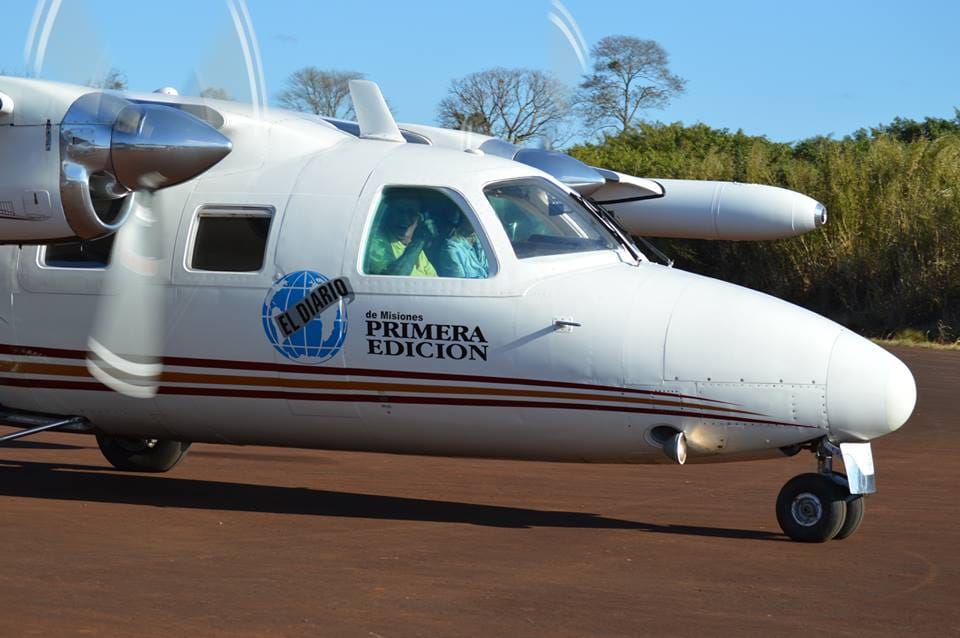
The Mitsubishi MU-2 occupies an unusual place in the turboprop market. It offers near-300-knot cruise speed, short-field capability and twin-engine redundancy at prices that often undercut comparable King Airs by a wide margin. That value is real, but it comes with a specialized training requirement and engine-maintenance costs that buyers need to understand before treating the airplane as a bargain.
That gap is why buyers keep circling back to this airplane, and why they keep hesitating. The MU-2 carries a reputation earned in the late 1970s and early 1980s that has followed it for forty years, long after the facts changed. It also carries a training rule no other civilian airplane has: a federal regulation written specifically for this one type certificate.
This Mitsubishi MU-2 buyer's guide answers the three questions that actually decide whether you should buy one. What does SFAR 108 require of you as a pilot and an owner? What do the Garrett TPE331 engines cost to keep running? And is the safety record something you should still be worried about, or a story that stopped being true in 2008?
Key Takeaways
The MU-2 gives you 290 to 310 knots on about the fuel a Cessna 421 burns, for a purchase price well under a comparable King Air, and that bargain is real rather than a trap. The catch is that the FAA requires type-specific training under what was SFAR 108 and now lives in 14 CFR Part 91, Subpart N, with recurrent training every twelve calendar months for as long as you own the airplane. The engines are Garrett (now Honeywell) TPE331 turboprops, which are reliable and long-lived but expensive when they do come due, so a reserve of a few hundred dollars per hour per engine is not optional. The safety reputation dates from a period when there was no standardized training, and the fatal accident rate dropped sharply once the training rule took effect. Budget for the training and the engines, buy a well-documented airframe, and the MU-2 is one of the best speed-per-dollar buys in general aviation.
| Quick answer | Solitaire (MU-2B-40, short body) | Marquise (MU-2B-60, long body) | King Air B200 (for reference) |
| Engines | Two Garrett TPE331-10, flat rated near 715 shp | Two Garrett TPE331-10, flat rated near 715 shp | Two P&WC PT6A-42, 850 shp |
| Typical max cruise | About 290 KTAS | About 300 to 310 KTAS | About 285 to 290 KTAS |
| Planning fuel burn | Roughly 70 to 85 gph total | Roughly 75 to 95 gph total | Roughly 95 to 110 gph total |
| Cabin seats | 6 to 8 | 8 to 11 | 8 to 9 |
| Max takeoff weight | About 10,470 lb | About 11,575 lb | 12,500 lb |
| Special training rule | Yes, Part 91 Subpart N | Yes, Part 91 Subpart N | No |
| Recent asking prices | Roughly $400K to $750K | Roughly $550K to $1.1M | Roughly $900K to $1.9M |
Keep in Mind: Price ranges move with avionics, engine time and paint. A Marquise with fresh engines and a modern glass panel can ask more than a tired King Air, and it should.
What You Are Actually Buying
Mitsubishi built roughly 704 MU-2s between 1963 and 1986, all of them certified under a single FAA type certificate, A2PC, as the MU-2B series. Every airplane is legally an MU-2B with a dash number. The marketing names came later, and those are what you will see in listings.
The design is genuinely unusual. There are no ailerons. Roll control comes from spoilers on top of the wings, which frees up the entire trailing edge for full-span double-slotted Fowler flaps. That is why a 300-knot airplane can operate comfortably off a 3,000-foot runway. Fuel lives in the wing and in permanently mounted tip tanks, which also act as endplates and improve efficiency. The wing is small and highly loaded, so the airplane is smooth in turbulence and slippery in descent.
Here is the everyday analogy: most cabin-class twins are like a family sedan with a big automatic transmission. The MU-2 is a manual-gearbox sports car. It is quicker, it is more efficient, and it rewards a pilot who actually knows what the controls are doing. It also punishes someone who treats it like a rental car.
Short body or long body?
The fleet splits into two groups. The short-fuselage airplanes (including the F, K and the final Solitaire) are lighter, a little quicker to accelerate, and carry six to eight people. The stretched long-body airplanes (G, J, N, P and the final Marquise) add about six feet of cabin, more seats and more baggage room.
Within each group, the biggest dividing line is the engine. Later airplanes use the TPE331-10 series, which has the longest published time between overhauls and the best hot-day performance. Earlier airplanes use -5 or -6 series engines with shorter intervals and less power. If you are shopping on total cost of ownership rather than sticker price, the -10 airplanes usually win.
Why It Matters: Two MU-2s with the same asking price can be a hundred thousand dollars apart in real cost once you look at engine dash number, time since overhaul and whether the airplane is on a Honeywell maintenance program.
Flying411 keeps turboprop listings, specs and ownership guides in one place, so you can compare a Marquise against a Solitaire or a King Air without opening six tabs.
SFAR 108: The Training Rule Nobody Can Skip
In 2008 the FAA issued Special Federal Aviation Regulation No. 108, titled "Mitsubishi MU-2B Series Special Training, Experience, and Operating Requirements." It was the direct result of an FAA safety evaluation of the type completed a few years earlier. In 2016 the FAA moved the same requirements into permanent regulation as 14 CFR Part 91, Subpart N, sections 91.1701 through 91.1721. Pilots and brokers still call it SFAR 108, and the shorthand is fine, but if you are searching the regulation itself, look in Subpart N.
What does the rule actually require?
Reduced to plain language, the rule says five things. First, you cannot act as pilot in command of any MU-2B unless you have completed an FAA-accepted MU-2B training program. Second, that program comes in flavors: initial, requalification, recurrent and differences training when you move between models. Third, recurrent training is required every twelve calendar months, not every twenty-four. Fourth, you must operate the airplane using the FAA-approved Airplane Flight Manual and the standardized MU-2B checklist, not a homemade one. Fifth, for single-pilot IFR operations, the required autopilot and associated systems must be operative; otherwise, the airplane must be operated with a qualified second pilot as required by the applicable rules.
The rule also sets minimum ground and flight hours for each course and puts requirements on the instructors who teach it, including meaningful pilot-in-command time in the MU-2B itself. It applies whether you fly Part 91 for yourself or Part 135 for hire. There is no personal-use exemption.
Heads Up: The annual requirement is a calendar-month deadline, not a rolling one. Miss it and you are not legal to fly your own airplane until you complete the course, which in practice can mean waiting for a slot at a provider.
How much does MU-2 training cost?
Training providers generally price initial MU-2B courses in the mid four figures to low five figures, with recurrent courses running roughly a third to half of that. Initial is typically about a week of ground school plus flight training, and most owners do it in their own airplane with an approved instructor, which means you are also paying for your own fuel and engine time. Recurrent is usually two to three days.
Add it up honestly before you buy. Call it a one-time entry cost in the range of a good avionics repair, plus a recurring annual line item forever. Owners who fly 150 hours a year absorb it easily. Owners who fly 40 hours a year feel it.
Good to Know: Mitsubishi Heavy Industries America still supports the fleet and has sponsored free MU-2 Pilots Review of Proficiency seminars, usually called PROP, for years. They are not a substitute for the required training, but they are among the better free safety education offerings in general aviation, and the fact a manufacturer still runs them for a type that left production in 1986 tells you something about fleet support.
The Safety Reputation and Why It Is Out of Date
The MU-2's reputation comes from a real cluster of accidents in the late 1970s and early 1980s. The airplane was fast, it was being sold to owner-pilots stepping up from piston twins, and there was no standardized type training. Insurance checkouts varied enormously. Some pilots learned the airplane's specific engine-out and flap handling procedures properly, and some did not.
The FAA looked at it twice. A safety review in 1984 examined the design and found no certification deficiency. A second, far more detailed MU-2B Safety Evaluation published in the mid-2000s reached the same conclusion about the airframe and pointed instead at training, proficiency and procedural discipline. That evaluation is what produced SFAR 108.
Did the rule work?
Yes, by every measure that gets published. After the training requirement took effect, the MU-2B fatal accident rate fell sharply, and the type's accident rate came into line with other cabin-class turboprop twins. The FAA's own follow-up reviews have supported keeping the rule precisely because the data improved under it. Type club members and insurance underwriters will tell you the same thing in blunter terms: the airplane was never the problem, the untrained pilot was.
This is the same reasoning we apply elsewhere on the site when readers ask whether an older airframe is inherently risky. As we cover in Aircraft Age and Safety: Are 20 Year Old Planes Safe?, the date on the data plate is a weak predictor. Maintenance history and pilot currency are strong ones. The MU-2 is the clearest case study in general aviation of a reputation attached to an airframe when it belonged to a training culture.
Fun Fact: The MU-2 was Japan's first mass-produced postwar civil aircraft, and for years it was the fastest turboprop you could buy in its weight class. Several operators still use them for air ambulance and cargo work specifically because nothing else that cheap goes that fast.
What still deserves respect?
Three things. The airplane does not slow down on its own, so you plan descents early. The spoiler roll control feels different from ailerons, especially at low speed, and the correct response to an engine failure depends on flap configuration in a way that is type-specific. And the high approach speeds mean you fly numbers, not feel. None of that is exotic. All of it is what the training course drills.
Garrett TPE331 Costs: The Real Ownership Question
The TPE331 is a direct-drive turboprop. The compressor, turbine and propeller all turn as one geared group, unlike the free-turbine PT6 where the prop section spins independently. That gives the Garrett instant throttle response and excellent single-lever power management, plus the negative torque sensing system that helps control drag after an engine failure. It also means a propeller strike is an engine event, not just a prop event.
If you want a deeper look at how the Garrett family evolved and where Honeywell fits in, we walk through it in Garrett vs Honeywell Astra Engine Differences: The Real Story.
What are the overhaul intervals and prices?
Honeywell publishes overhaul intervals by engine dash number and operating program. The TPE331-10 family is commonly published at about 5,000 hours for standard operation, with longer intervals available under qualifying commercial programs. Earlier -5 and -6 engines use different schedules. Always confirm the current interval for the specific engine serial number and maintenance program rather than relying on a generic MU-2 figure.
| Engine event | Typical interval | Planning cost, per engine |
| Compressor zone inspection (CZI) | Roughly mid-TBO | Around $90,000 to $160,000 |
| Full overhaul | About 5,000 hr on standard -10-series schedules; longer under qualifying programs | Around $250,000 to $400,000 |
| Hourly reserve if self-funding | Continuous | Around $100 to $175 per engine hour |
| Honeywell MSP enrollment | Continuous | Low hundreds of dollars per engine hour |
Shop quotes vary widely with the amount of life-limited hardware that has to be replaced, so treat the table as planning numbers and get a written quote from an MU-2-experienced overhaul facility before you commit to a purchase price.
Pro Tip: An airplane already enrolled and current on a Honeywell maintenance service plan is worth real money at resale, and it removes the single largest unpredictable expense from your budget. Verify enrollment status and transferability in writing during the pre-buy, not at closing.
What about hot starts?
The TPE331 is more start-sensitive than a PT6. Battery condition, generator health and correct technique all matter, and a bungled start can cost you a hot section. This is not a reason to avoid the engine. It is a reason to train properly, use a ground power unit when the battery is marginal, and read the starting section of the flight manual until it is boring.
Flying411 keeps turboprop engine explainers, overhaul cost guides and maintenance articles in one place, so you can price an ownership plan before you make an offer.
Total Operating Cost, Honestly
Here is the shape of an MU-2 budget for a private owner flying somewhere around 150 hours a year. Every airplane is different, so use this as a framework and fill in real quotes from your own vendors.
| Cost item | Planning figure |
| Fuel, at 80 gph average | Largest single variable expense; multiply by your local jet-A price |
| Engine reserves, both engines | $200 to $350 per flight hour |
| Propeller and accessory reserves | $40 to $80 per flight hour |
| Annual inspection | Five figures, higher on a first annual after purchase |
| Insurance | Varies widely with pilot time; get a quote before you buy |
| Required recurrent training | Annual, low to mid four figures plus travel or aircraft time |
| Hangar, subscriptions, database updates | Fixed annual, budget by local rates |
That total will surprise a first-time turbine buyer, but so does every turbine airplane. If you want the broader picture of why this equipment costs what it does, our piece on why planes are so expensive breaks down where the money actually goes.
Quick Tip: Compare cost per nautical mile, not cost per hour. At 300 knots the MU-2 covers ground fast enough that its per-mile number often beats airplanes with lower hourly costs.
The Pre-Buy: What an MU-2 Inspection Must Cover
Use a shop that knows this type. There are only a handful of specialty MU-2 facilities in the United States, and the difference between one of them and a competent generalist shop is thousands of dollars of discovered or missed squawks.
What should be on the checklist?
Corrosion in the wing and fuselage structure, particularly on airplanes that lived near salt water. Fuel leaks at the wing and tip tank joints. Landing gear component times, since parts of the gear system are on overhaul intervals rather than on condition. Pressurization vessel condition and door seal history. Full airworthiness directive research against the specific serial number, with compliance documented in the logs rather than assumed. Engine trend data and borescope results on both engines. Propeller time since overhaul and any history of sudden stoppage.
Then read the paperwork as carefully as the metal. Missing logbook pages, an unexplained registration gap or a foreign export in the history all cost money at resale. Our guides on how to read an aircraft listing and why an aircraft gets deregistered cover the paper trail problems that show up most often on 40-year-old turbines.
Heads Up: Some MU-2s sat for long periods between owners. A low-time airframe that has not flown regularly is usually a more expensive airplane than a high-time one that has been worked hard and maintained continuously.
Insurance and Getting Yourself Qualified
Underwriters look at the MU-2 as a high-performance turbine twin with a mandatory training rule, which is actually helpful. The training requirement removes the guesswork. What they want to see beyond it is multi-engine time, instrument currency and, for lower-time buyers, a block of mentor hours with a qualified MU-2 instructor before solo operations.
If you are stepping up from a piston twin, plan the transition as a project rather than a weekend. Get the insurance quote before you sign a purchase agreement, because the quote may dictate how many dual hours you need and that changes your first-year budget. Buyers coming from the training side of aviation will recognize the logic from our discussion of buying an airplane for flight training: the airplane is the easy part, the qualification plan is the part people underestimate.
Flying411 keeps buyer guides, ownership cost breakdowns and current listings in one place, so you can line up financing, insurance and a pre-buy shop before the airplane you want sells to someone else.
Conclusion
The MU-2 is the rare case where the market's fear has not caught up with the data. You get 300-knot cruise, short-field capability that embarrasses airplanes twice its size, a manufacturer that still supports the fleet decades after production ended, and a purchase price that leaves room in the budget for the engines. What you give up is the ability to be casual about it. Annual recurrent training is the law for this type, and the Garrett TPE331 will hand you a large bill on its own schedule whether you reserved for it or not.
Approach it that way and the arithmetic works. Anyone working through this Mitsubishi MU-2 buyer's guide should walk away with three action items: get an insurance quote first, get a written engine status and program-transfer confirmation second, and book your initial training slot before you take delivery rather than after.
When you are ready to compare listings, visitFlying411and see what is on the market today.
Frequently Asked Questions
Is SFAR 108 still in effect?
The requirements are still in effect, but they no longer live in an SFAR. In 2016 the FAA moved them into permanent regulation at 14 CFR Part 91, Subpart N, sections 91.1701 through 91.1721. Pilots still call it SFAR 108 out of habit, and training providers still market courses under that name.
Do I need the special training if I only fly the MU-2 privately?
Yes. The rule applies to all MU-2B operations regardless of whether you are flying Part 91 for personal use or Part 135 for compensation. There is no private-use exemption, and recurrent training is required every twelve calendar months.
Is the Mitsubishi MU-2 actually dangerous?
Not by the current data. Two FAA reviews, one in 1984 and a detailed safety evaluation in the mid-2000s, found no design deficiency and pointed to inconsistent pilot training instead. After the training rule took effect in 2008, the fatal accident rate dropped substantially and the type's record came into line with comparable cabin-class turboprop twins.
What is the TBO on an MU-2's Garrett engines?
It depends on the dash number. Later TPE331-10 engines carry published overhaul intervals in the 5,000 to 5,400 hour range with a compressor zone inspection near mid-life, while earlier -5 and -6 engines are shorter. Confirm the applicable interval against current Honeywell documentation for the specific engine serial numbers.
Marquise or Solitaire, which is the better buy?
The Marquise if you need the seats, the baggage room and the longer legs; the Solitaire if you mostly fly two to four people and want a slightly lighter, slightly cheaper airframe with the same modern engines. Both use the TPE331-10, which is the main thing to hold out for.
How much runway does an MU-2 need?
Less than most people expect for a 300-knot airplane, thanks to the full-span double-slotted Fowler flaps. Many MU-2s operate routinely from runways in the 3,000-foot range at typical weights, though you should always run the actual performance charts for your model, weight, altitude and temperature.