Most buyers come at Piper Aztec vs Cessna 310 assuming the Aztec is the cheap, slow one and the 310 is the fast, expensive one. The speed part is true. The cost part is not nearly as clean as the hangar talk suggests, because the money in a light piston twin is not in the purchase price alone — it is in two six-cylinder engines, their overhaul reserves, annual inspections, and whatever the last owner deferred.
That matters to your wallet in a very specific way. Either of these airplanes can be bought for less than a clean 1979 Cessna 182, and either one can hand you a six-figure maintenance year if you buy the wrong copy. The right question is not which airplane is cheaper. It is which airplane's costs line up with the flying you actually plan to do.
What You Are Actually Choosing Between
These are not two versions of the same airplane. They were built for different customers and it shows in every number.
The Piper Aztec (PA-23-250)
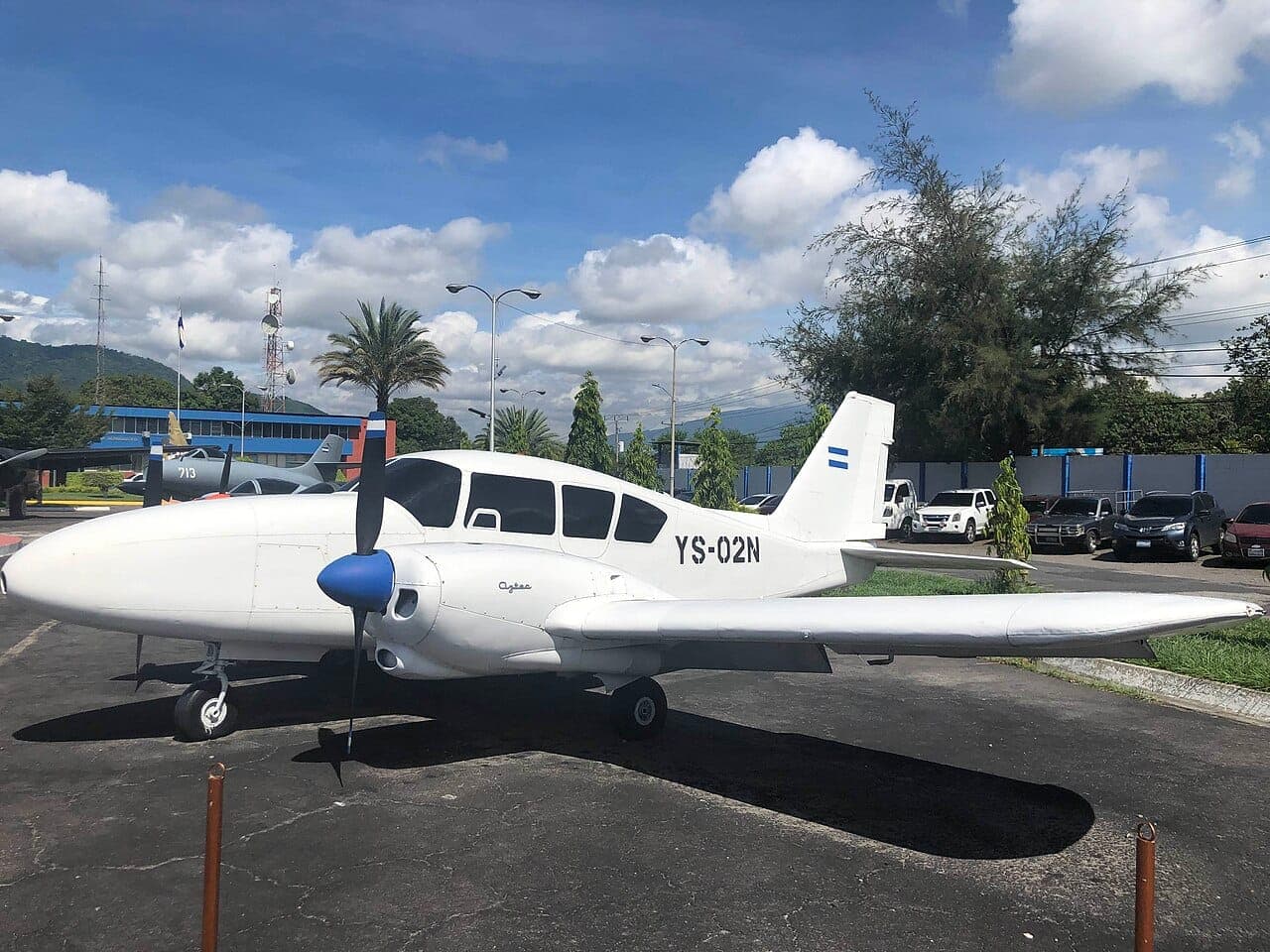
Piper built roughly 4,800 Aztecs between 1959 and 1981, running from the original 250 through the Aztec B, C, D, E and F. Power is a pair of 250-horsepower Lycoming 540-series engines — carbureted O-540s on the earliest airplanes, fuel-injected IO-540s from the C model onward, with a turbocharged TIO-540 option on the C and later. The airplane has a fat, high-lift wing, generous tires, a hydraulic power pack that drives the gear, and a cabin you load through a door at the rear rather than by climbing over a wing.
The reputation is earned: the Aztec is one of the gentlest-handling piston twins ever certified, and it spent decades hauling freight, jumpers and survey gear off strips that would make a 310 owner wince.
The Cessna 310
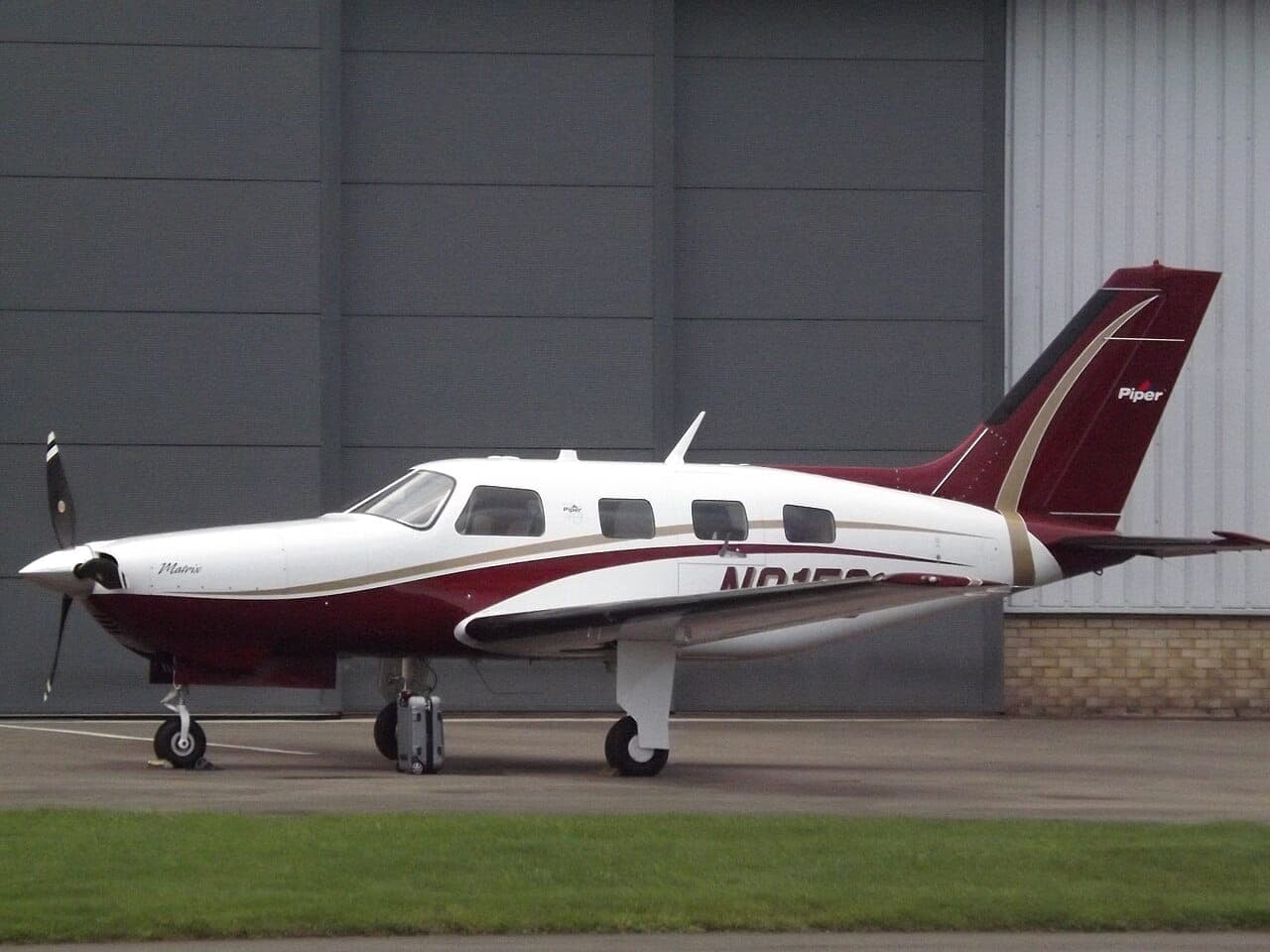
Cessna produced about 5,400 310s of all variants from 1954 to 1980, including the military U-3. Early airplanes used 240- and 260-horsepower Continental O-470 and IO-470 engines; the 310Q moved to the 285-horsepower IO-520 in later production, and the 310R — the one most buyers are shopping — uses two IO-520-MB engines of 285 horsepower each, with a stretched nose, three-blade props and a 5,500-pound gross weight. The T310R adds turbocharging.
The 310 is the faster, slicker, more systems-heavy airplane. It also has the more complicated fuel system in general aviation, which we will come back to.
Fun Fact: The Cessna 310's tip tanks are not just fuel storage — on the early straight-tip models they were the only fuel tanks, and the airplane's distinctive look came from putting the whole supply out at the wingtips.
Cost to Buy: Engine Time Beats Model Year
Asking prices for both types overlap almost completely, and that overlap is the single most useful thing to understand about this market. A tired 310R and a tired Aztec F sell for similar money. A fresh-engines, glass-panel example of either sells for a multiple of that. Model year tells you very little; the logbooks tell you everything.
Price a candidate by working backward from what it will need:
- Engines. Two overhauls is the biggest number on the page. Budget roughly $45,000 to $65,000 per engine for a quality field or factory overhaul on a 540 or 520 as of 2025, plus accessories and installation.
- Propellers. Overhaul runs in the low thousands per prop, more for three-blade units, and many shops want them done on a calendar cycle as well as an hours cycle.
- Avionics. An airplane that never got ADS-B Out, or still has a vacuum-driven panel and no WAAS navigator, is carrying a $25,000 to $60,000 deferred bill.
- Corrosion and bladders. Fuel cell replacement on either type is a four-figure-per-cell exercise, and both airplanes are old enough that "has it been hangared since 1985?" is a fair question.
A twin with 200 hours left on each engine is not cheaper than one with 1,400 hours left. It is the same airplane with an invoice attached. Think of it like buying a house where the roof, furnace and water heater are all the same age — the discount on the listing is real, but it is not a discount.
Flying411 keeps light piston twin listings in one place, so you can compare engine times, avionics and damage history side by side instead of model year against model year.
Cost to Run: Fuel, TBO and the Gap Between Them
Here is where the two airplanes genuinely separate, and it is not where most people expect.
Fuel
Owners typically plan the Aztec at 24 to 26 gallons per hour for 160 to 170 knots true. The 310R wants 28 to 32 gallons per hour and gives back 180 to 190 knots. With 100LL averaging somewhere around $6.50 to $7.00 a gallon nationally as of 2025, that is roughly $165 per hour of fuel in the Aztec against roughly $200 in the 310R. On a 600-nautical-mile trip, using representative cruise figures of 165 knots at 25 gallons per hour for the Aztec and 185 knots at 30 gallons per hour for the 310R, the Cessna arrives approximately 24 minutes sooner while burning only about 6 gallons more fuel. Actual differences vary with power settings, winds and flight conditions. Call it close to a wash per mile, with the Aztec slightly ahead on dollars and the 310 clearly ahead on time.
Overhaul reserve, and why TBO decides this
Under Lycoming's July 2026 Service Instruction No. 1009BF, the Aztec's normally aspirated IO-540-C series engines have a recommended TBO of up to 2,600 hours for qualifying factory-new or factory-rebuilt engines, while overhauled engines generally retain a 2,000-hour baseline. The applicable interval depends on the individual engine's history, configuration and compliance with Lycoming's requirements. Continental's IO-520-MB in the Cessna 310R has a published recommended TBO of 1,700 hours for earlier engine serial numbers and 1,900 hours for qualifying engines with serial number 1006000 or later, subject to Continental's applicable maintenance and eligibility requirements. The turbocharged versions are shorter still on both sides — the Aztec's TIO-540 drops to around 1,800 hours, and the T310R's TSIO-520 lands in the 1,400 to 1,600 hour band depending on model and the service instructions in force.
Run the arithmetic. Two $55,000 overhauls over 2,000 hours is about $55 per flight hour of reserve. Two $58,000 overhauls produce an engine reserve of approximately $68 per flight hour at a 1,700-hour interval, or approximately $61 per hour at 1,900 hours. Add props, cylinders and the occasional mid-life top and the Aztec's engine reserve advantage sits somewhere between $15 and $30 per hour. Over a thousand hours of flying, that is real money — but it is also less than one bad annual.
Why It Matters: TBO is a manufacturer recommendation, not a legal limit, for Part 91 operations. What it actually does is tell you how long a given engine family tends to stay healthy. Continental's 520s have a well-known appetite for cylinders in the second half of their run, and that is a cash-flow problem whether or not the engine ever reaches a legal limit.
The fixed costs nobody escapes
Two engines means two annuals' worth of inspection labor inside one annual. A straightforward inspection on either type runs in the $5,000 to $9,000 range at a shop that knows the model, before squawks. Hangar for a 37- to 40-foot wingspan twin runs $300 to $700 a month in most of the country. Insurance for a well-qualified multi-engine pilot on a modest hull value is commonly in the $4,000 to $9,000 range annually as of 2025, and considerably more for a low-time buyer stepping up.
Fly either airplane 100 hours a year and the fixed costs alone add $150 to $250 per hour on top of the direct costs. Fly it 50 hours and you double that penalty. This is the part of twin ownership that ends partnerships.
| Figure | Piper Aztec F (PA-23-250) | Cessna 310R |
| Engines | 2 × Lycoming IO-540, 250 hp each | 2 × Continental IO-520-MB, 285 hp each |
| Recommended TBO | 2,000–2,600 hours, depending on engine history and eligibility | 1,700–1,900 hours, depending on engine serial number and eligibility |
| Turbo variant TBO | TIO-540, about 1,800 hours | TSIO-520, about 1,400–1,600 hours |
| Max gross weight | 5,200 lb | 5,500 lb |
| Typical useful load | 1,700–1,900 lb | 1,700–1,900 lb |
| Owner-planned cruise | 160–170 kt | 180–190 kt |
| Typical fuel burn | 24–26 gph | 28–32 gph |
| Usable fuel | About 137 gal in the common long-range setup | About 102 gal standard; up to roughly 180–200 gal with aux and locker tanks |
| Single-engine climb at gross | About 240 fpm | About 325 fpm |
| Single-engine service ceiling | Roughly 6,000 ft | Roughly 7,400 ft |
| Seats | 6 | 6 |
| Gear system | Electro-hydraulic power pack | Electric motor with push-pull tubes |
| Cabin access | Rear door, no wing walk required | Single right-side door, over the wing |
| Production | About 4,800 built, 1959–1981 | About 5,400 built, 1954–1980 |
Performance and Mission Fit
Numbers aside, these airplanes feel completely different from the left seat, and that difference should drive your decision more than $20 an hour.
The Aztec is the pickup truck. Big wing, big tires, high gear extension speed that lets you use the landing gear as a speed brake on a tight arrival, and genuinely honest behavior with one engine shut down. It gets in and out of 2,500-foot strips without drama and does not punish a pilot who is a little rusty. It is slower, it looks slab-sided, and nobody has ever called it elegant. It also has a rear door, which is the single most underrated feature on the airplane if you regularly carry passengers who are not athletes.
The 310 is the sports sedan. It is 20 knots faster on the same mission, it climbs better on one engine, it has a higher single-engine service ceiling, and with full aux and locker tanks it has serious legs. It is also slicker, which means it needs to be flown on speed and planned further ahead, and it is less tolerant of short, soft or rough surfaces. Loading six people through one door over the wing is a genuine chore.
Heads Up: Neither airplane carries six adults, full fuel and bags. With a useful load in the 1,700 to 1,900-pound range and fuel weighing six pounds per gallon, filling the tanks on a 310R with the big tank option can consume most of your payload. Run a real weight and balance for your typical trip before you shop — that one calculation eliminates more candidates than any other.
If your flying is business trips between paved airports with instrument approaches, the 310 is the better tool and you should say so out loud. If your flying involves grass, gravel, a dirt strip at a family place, or hauling awkward cargo, the Aztec is the better tool and the speed difference will not bother you. Our roundups of the best light twin aircraft and the best twin engine piston aircraft put both of these in context with the rest of the field.
Maintenance, Inspections and Known Trouble Spots
What the 310 asks of you
Cessna published Supplemental Inspection Documents — SIDs — for the 300 and 400 series airframes. In the United States these are not mandatory for Part 91 operators, but regulators in Australia and Europe have made them compulsory, and the findings from those fleets are instructive: wing spar carry-through corrosion, wing attach fittings, and fatigue cracking in high-time airframes are the items that generate the big bills. A US buyer is not legally required to run SIDs, but a pre-buy that ignores those inspection areas is not a pre-buy.
The other 310 item is the fuel system. On models with auxiliary tanks, the engines return unburned fuel to the main tip tanks, which means you must burn down the mains before selecting aux or you will pump fuel overboard. Fuel mismanagement shows up in 310 accident histories far more often than mechanical failure does. It is learnable, but it is not intuitive, and it is the strongest argument for model-specific instruction.
What the Aztec asks of you
The Aztec's weak points are more prosaic: the hydraulic power pack and gear rigging, the four fuel cells, exhaust systems, and the Janitrol combustion heater, which carries its own recurring inspection requirements based on heater operating time. None of these is exotic. All of them are expensive if ignored.
Aztecs also tend to have harder lives. Many were freight, charter or jump airplanes, and a logbook showing 9,000 hours of Part 135 work is not automatically bad — commercially maintained airplanes are often in better shape than a privately owned hangar queen that flew 20 hours a year. But look for cycles as well as hours, and look hard at the gear.
Pro Tip: Budget a pre-buy inspection at a shop that specializes in the type, not your local field's generalist, and pay for the borescope and a compression check on all twelve cylinders. On a $100,000 twin, a $4,000 pre-buy that finds one bad cylinder has already paid for itself twice.
Support on both sides is decent. The Twin Cessna Flyer organization is an unusually strong resource for 310 owners, and Piper twin owners have the Piper Owner Society plus a deep aftermarket. Performance conversions exist for both — Colemill's Foxstar for the Aztec and the Executive 600 for the 310 are the best known — and they add speed and climb, but they also narrow your pool of mechanics and parts suppliers.
Flying411 keeps Aztec and 310 listings in one place, so you can compare SID compliance, conversion status and total airframe time without digging through five different brokers' formats.
Insurance, Training and Resale
Insurers treat these two differently, and that difference can be larger than the fuel difference. The Aztec's forgiving engine-out behavior and low accident severity tend to earn friendlier quotes, particularly for a pilot with a fresh multi-engine rating and modest total time. The 310 is faster and historically less forgiving of fuel and speed mistakes, so underwriters commonly ask for more multi time, model-specific training, and a mentor pilot period before solo. Get quotes before you make an offer on either one. A buyer who cannot get bound at a price they can live with has no deal, no matter how good the airplane is.
Good to Know: Both types reward a formal initial course and annual recurrent training far more than a single-engine airplane does. Engine-out work in a twin is a perishable skill, and it is the skill the whole second engine exists to support.
On resale, the 310 has the larger and more active buyer pool, helped by its speed and its connection to the rest of the twin Cessna family — buyers stepping up to a pressurized 340 or 414 often start there. The Aztec's buyer pool is smaller but unusually loyal, and clean, low-time, well-equipped examples do not sit long because working operators want them. In both cases, the airplanes that hold value are the ones with mid-time or better engines, current avionics, no corrosion findings and complete logs. Everything else is sold by the pound.
If you are still weighing the broader field, it is worth reading how the 310R stacks up against a Baron 58, and how a centerline-thrust option like the Cessna 337 Skymaster changes the cost math again.
Key Takeaways
The Aztec is modestly cheaper to run — roughly $35 to $50 per hour less when you combine lower fuel burn with the longer 2,000-hour TBO on its Lycoming IO-540s — and noticeably cheaper to insure for a newer multi-engine pilot. The 310R buys back that money in speed, single-engine performance and range, and it is the better airplane if your flying is paved-runway, schedule-driven travel. Purchase prices overlap so heavily that model choice should never be made on sticker alone; the engines, the avionics and the corrosion history set the real price. Both airplanes are old enough that the specific copy matters more than the type, which means the money you spend on a type-specialist pre-buy is the highest-return money in the entire transaction. Pick the mission first, then shop the logbooks, and let the airplane that fits the mission win on the cheapest well-maintained example you can find.
Conclusion
The honest answer to Piper Aztec vs Cessna 310 is that the Aztec is cheaper to own and the 310 is better at going places, and the gap in both directions is smaller than the forums suggest. If you fly short legs, carry bulky loads, use less-than-perfect runways, or are newer to twins, buy the Aztec and enjoy the gentler insurance and the longer TBO. If you fly 500-mile business legs between real airports and value an hour of your time at more than $50, buy the 310R and accept the shorter overhaul interval and the fuel system homework as the price of admission. What you should not do is buy either one on price alone — a cheap twin with two timed-out engines is the most expensive airplane on any ramp.
When you are ready to compare listings, visitFlying411 and see what is on the market today.
Frequently Asked Questions
Which is cheaper to insure, an Aztec or a 310?
For most pilots the Aztec quotes lower, particularly for someone with a recent multi-engine rating and under 500 hours of total time. Underwriters generally view the Aztec's engine-out handling as more forgiving and ask for less model-specific experience. The 310 is insurable at reasonable rates, but expect requirements for initial training, a mentor pilot period and more multi time before the best rates appear.
How many hours a year do you need to fly to justify a light twin?
Fixed costs — hangar, insurance, annual inspection, database subscriptions — typically land in the $15,000 to $25,000 range per year for either type. At 100 hours a year that spreads to $150 to $250 per hour. At 50 hours it doubles. Most owners find the economics start to make sense above about 100 hours a year, which is also roughly the point where currency in a twin stops being a worry.
Is the turbocharged version worth it?
Only if you routinely fly over high terrain or need to get above weather. Turbocharging on both types shortens TBO, adds exhaust and turbo maintenance, and raises the cost of a bad cylinder. A normally aspirated Aztec or 310R flown in the teens does most jobs at lower cost. If you live in the Rockies, the calculation flips.
Do Cessna SIDs apply to a US-registered 310?
The Supplemental Inspection Documents are not mandatory for Part 91 operators in the United States, though they are required in several other countries. Even where they are optional, the inspection areas they cover — spar carry-through, wing attach structure and fatigue-prone fittings — are exactly where an old twin hides expensive problems. Treat a SID-compliant airplane as a selling point, and treat an airframe that has never been looked at in those areas as an unknown.