If you have spent any time shopping for a used four-cylinder Lycoming engine, you have probably run into two terms that sound almost identical but mean very different things to a mechanic.
The Lycoming O-320 wide deck vs narrow deck question comes up constantly among owners, homebuilders, and shoppers, and it trips up even experienced pilots. The two engines wear the same model number, make similar power, and look nearly the same from across the hangar.
Yet the parts that bolt to them are not always the same, and that single fact can shape your budget, your overhaul plan, and even which cylinders you can buy.
The short version is that the difference hides in plain sight, right where the cylinders meet the crankcase.
Key Takeaways
The main difference between a wide deck and a narrow deck Lycoming O-320 is the thickness of the cylinder base flange, called the "deck," and the hardware used to hold the cylinders to the case. Narrow deck engines are older, use thinner cylinder flanges with hold-down plates and internal-wrenching nuts, and tend to run a little lighter. Wide deck engines came later, use a thicker flange with plain hex nuts, and are easier to find parts for today. Both make the same rated power, and the change never altered the engine model number.
| Feature | Narrow Deck (Standard Flange) | Wide Deck |
| Cylinder base flange | Thinner | Thicker |
| Hold-down hardware | Internal-wrenching nuts plus hold-down plates | Plain hex nuts, no plates |
| Era | Older design | Newer design |
| Relative weight | Slightly lighter | Slightly heavier |
| Cylinder and case swap | Not interchangeable with wide deck | Not interchangeable with narrow deck |
| Internal parts (crank, cam, pistons) | Largely shared | Largely shared |
| Parts availability today | Harder for some items | Generally easier |
| FAA model number | Same as wide deck | Same as narrow deck |
Flying411 brings together engine listings, parts, and certified aviation pros in one place, so checking the details on a Lycoming O-320 is a lot easier when everything lives under one roof.
Meet the Lycoming O-320
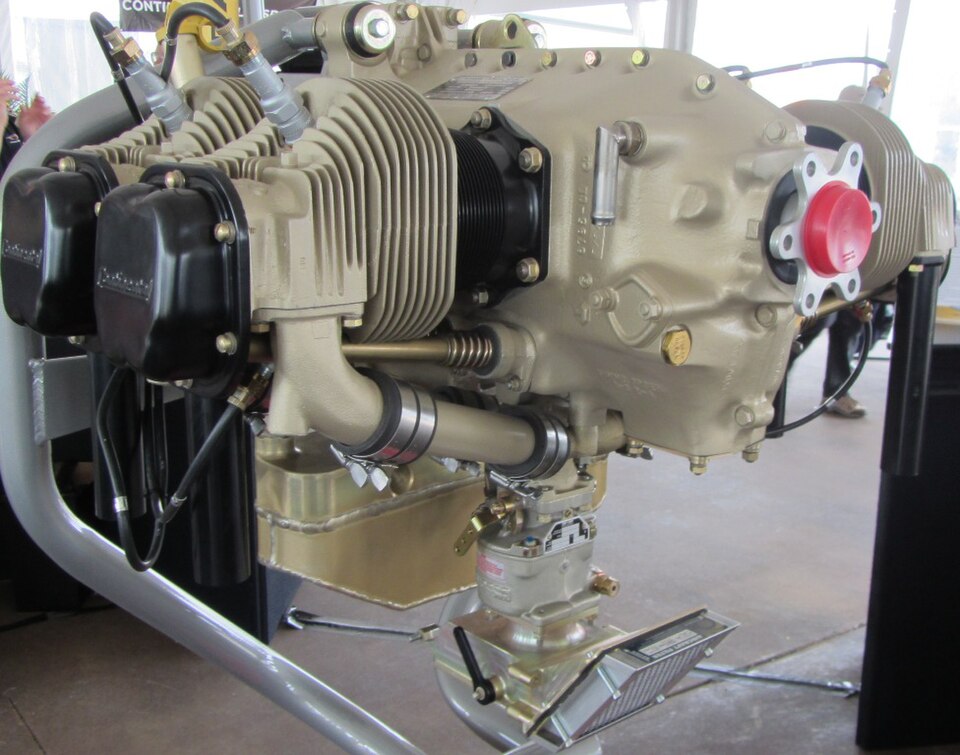
Before lining up the two designs side by side, it helps to know the engine they both share. The Lycoming O-320 is a four-cylinder, horizontally opposed, air-cooled, direct-drive engine with a displacement of about 320 cubic inches. It was introduced in the early 1950s and remains in production today, which is a remarkable run for any piece of machinery.
Most versions make either 150 or 160 horsepower at 2,700 rpm, with compression ratios across the family landing roughly between 7.0:1 and 9.0:1 depending on the model. The engine uses a 5.125-inch bore and a 3.875-inch stroke, and it relies on a simple wet sump for oil. You will find the O-320 on some of the most common light aircraft ever built, including the Cessna 172 and the Piper Cherokee, along with the Piper Super Cub and many homebuilts.
The family also branches out into several fuel and mounting variations:
- O-320 is the carbureted base engine.
- IO-320 adds fuel injection.
- AIO-320 and AEIO-320 are the inverted and aerobatic, fuel-injected members built for maneuvering flight.
- LIO-320 is a left-turning version made so twin-engine airplanes can cancel out the critical engine problem.
Good to Know: The letters and numbers after "O-320" tell you about fuel system, mounting, and accessories, but they do not tell you the deck type by themselves. Two engines with the same suffix can still be built as narrow deck or wide deck.
That last point is the heart of the confusion. The model number alone will not always answer the deck question, so you have to look a little closer.
What "Deck" Actually Means
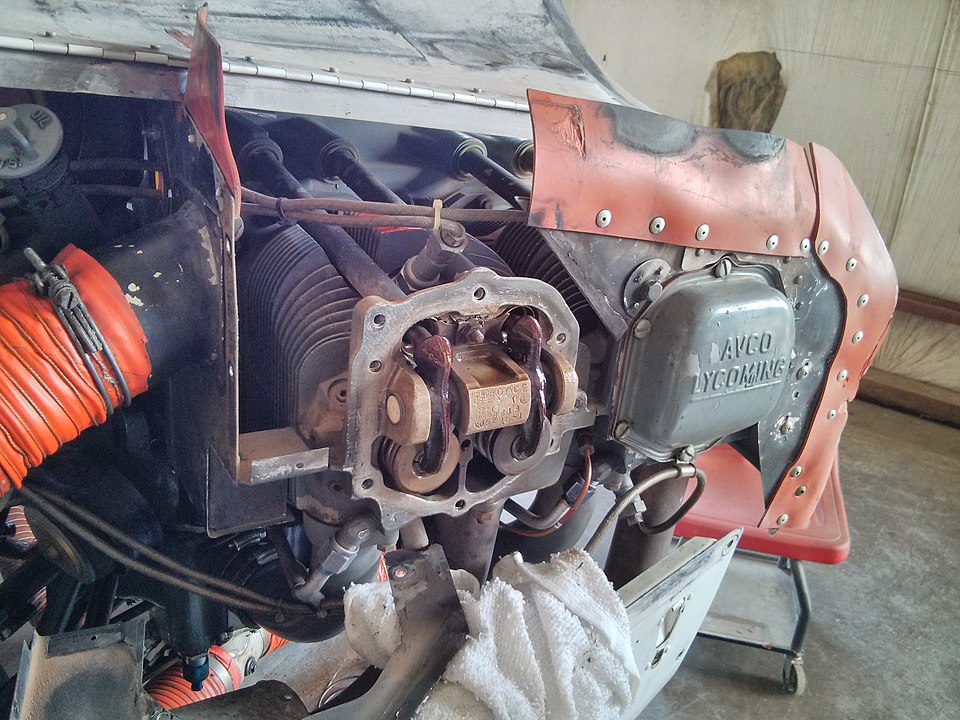
When mechanics say "deck," they are talking about the cylinder base flange. That is the flat, ring-shaped foot at the bottom of each cylinder that bolts down to the crankcase. Picture the cylinder as a tall can. The deck is the lip at the bottom that the studs and nuts clamp against.
On a narrow deck engine, that flange is thinner. Because a thin flange cannot spread the clamping load very well on its own, Lycoming added flat metal hold-down plates that sit on top of the flange, under the nuts. These plates act like big washers, spreading the squeeze across the flange so it does not get crushed or distorted. Lycoming refers to these as standard flange engines, and the plates are sometimes called banana plates because of their curved shape.
On a wide deck engine, the flange is noticeably thicker. The extra metal carries the clamping load on its own, so the hold-down plates are no longer needed. Instead of internal-wrenching nuts with provisions for safety wire, the wide deck uses ordinary hex nuts you can turn with a normal socket.
Why It Matters: The thicker wide deck flange was part of how Lycoming pushed compression ratios and overhaul intervals higher over the years. A beefier joint between cylinder and case handles more pressure and more heat cycles without loosening up.
So the names make sense once you see them. Narrow deck has a narrow (thin) flange. Wide deck has a wide (thick) flange. Everything else flows from that one design choice.
Lycoming O-320 Wide Deck vs Narrow Deck Compared Point by Point
Here is where the two designs separate. None of these differences are dramatic on their own, but together they explain why a mechanic cares which one is bolted to your firewall. The points below walk through the differences that actually affect ownership, maintenance, and buying.
1. Cylinder base flange thickness. This is the original difference and the one that names them both. The wide deck flange is meaningfully thicker than the narrow deck flange. If you set a narrow deck cylinder next to a wide deck cylinder on a bench, the difference in flange thickness is the first thing you notice.
2. Hold-down hardware. Narrow deck engines use internal-wrenching (internal spline or hex) nuts, often paired with hold-down plates over the flange. Wide deck engines use plain hex nuts and skip the plates entirely. This is the easiest visual tell, which we will cover in detail in a moment.
3. Crankcase differences. The cases are not identical. The casting around the cylinder mounting area is machined differently to suit the flange and hardware on each design. Because of this, narrow deck and wide deck crankcases are not considered interchangeable, even though they look similar at a glance.
4. Weight. The narrow deck setup tends to be a touch lighter overall. Shop measurements of stripped cases have generally put the wide deck a few pounds heavier. It is a small difference, but builders chasing every pound sometimes prefer the narrow deck for that reason.
5. Overall width and cooling baffles. Because the wide deck flange is thicker, the wide deck engine ends up very slightly wider at the cylinder bases. In most installations this is minor, but it means the cooling baffles often need trimming or adjustment when you move from one design to the other.
6. Compression and horsepower changes. On a wide deck case, bumping from a lower-compression setup to a higher-compression one is generally a matter of changing pistons and cylinders. On a narrow deck case, the same change can require the correct hold-down plates and longer case studs, which adds cost and labor.
7. Parts availability. New and overhauled wide deck cylinders are generally easier to source today, simply because the wide deck design has been the standard for decades. Some narrow deck items, including certain cylinders and camshaft-related parts, can take more hunting and sometimes cost more.
8. Case cracking tendencies. This one is debated. Some overhaul shops report seeing more cracks in wide deck cases, while others point out that narrow deck cases have their own weak spots and that history, like a past prop strike or rough handling, matters more than deck type. Treat strong claims here with caution and lean on the inspection record of the specific engine in front of you.
9. Internal parts. Here is the reassuring part. The guts of the engine, including the crankshaft, camshaft, valve gear, and pistons, are largely shared between the two designs. The big differences live at the cylinder-to-case joint, not deep inside.
Heads Up: "Not interchangeable" applies to cylinders and crankcases, not to the whole engine. You generally cannot bolt a wide deck cylinder onto a narrow deck case, or the reverse, but many internal components carry over. Always confirm part numbers before ordering.
When you keep the common knowledge about parts often replaced in mind, it becomes clear why deck type shows up on so many shopping checklists. The wear items you buy most often are the ones tied to the deck design.
How to Tell Which One You Have
You do not need to tear the engine apart to answer the deck question. There are two reliable ways, and a third that helps confirm.
Reading the serial number
The cleanest method is the serial number, which you can find on the engine data plate and stamped on the crankcase at the top parting surface. As a general rule, wide deck serial numbers end with the suffix "A," while narrow deck serial numbers do not. For example, a wide deck engine might read something ending in "27A," while the narrow deck version ends in "27."
There are a few exceptions to this pattern. The O-320-H series, for instance, does not follow the suffix rule cleanly, and a handful of other Lycoming families have their own quirks. When the suffix leaves any doubt, a quick call to Lycoming with the part and serial numbers settles it.
Quick Tip: Photograph the data plate and the crankcase stamping when you inspect an engine. Having the full serial number on hand makes parts ordering and any factory questions far smoother later.
The quick visual check
The fastest method needs no paperwork at all. Look at the nuts that hold the cylinder bases to the case.
- If you see internal-wrenching nuts that need an internal-spline or Allen-style tool, and especially if you spot hold-down plates over the flange, you are looking at a narrow deck.
- If you see ordinary six-sided hex nuts with no plates, you are looking at a wide deck.
This visual cue is so dependable that many mechanics use it as the first and final check. Pair it with the serial number and you will rarely be wrong.
The exceptions worth remembering
A few Lycoming models carry wide deck cylinders without the usual "A" suffix, and their cylinder design can look noticeably different from a conventional engine. The rocker arm setup alone is often enough to flag that the part is not interchangeable with a standard cylinder. If an engine looks unusual at the cylinder, slow down and verify before assuming anything.
Does Deck Type Change the Engine Mount?
This is one of the most common mix-ups, so it deserves a clear answer. No, the deck type does not determine the engine mount.
Lycoming O-320 engines come with different mounting setups, most commonly conical mounts and Dynafocal mounts. Which one you get depends on the specific model series, not on the deck. As a rough guide, the O-320-A and O-320-B series tend to use conical mounts, while the O-320-D and O-320-E series tend to use a Dynafocal Type 1 mount. You can find narrow deck and wide deck examples across these groups, so do not assume the mount tells you the deck or that the deck tells you the mount.
For a homebuilder, this matters a great deal. Buying a great deal on an engine only to learn it has the wrong mount for your airframe is a classic and expensive mistake. Match the mount to the airframe first, then sort out the deck details.
Can You Swap One for the Other?
In the eyes of the FAA Type Certificate Data Sheets, there is no distinction between a narrow deck and a wide deck engine. They share the same model number. In theory, you could even have a wide deck engine on one side of a twin and a narrow deck of the same model on the other.
That said, swapping does involve real work:
- Wide deck replacing narrow deck. This direction is generally workable. Because the wide deck cylinders are slightly larger at the base, you will likely need to trim or adjust the cooling baffles so they fit while still doing their cooling job correctly.
- Narrow deck replacing wide deck. This direction is harder. The baffling that was sized for the larger wide deck cylinders will not naturally take up the gap around the smaller narrow deck cylinders, and there is no easy off-the-shelf fix for that.
The bigger takeaway is about parts, not whole engines. You cannot freely mix wide deck and narrow deck cylinders and cases, because the joint hardware and machining differ. When you plan any work that touches the cylinders, the deck type belongs at the top of your notes.
If a listing leaves you guessing on deck type or mount, Flying411 connects you with A&P mechanics and overhaul specialists who can confirm the details before you commit a dollar.
Why Lycoming Made the Switch
Understanding the reason behind the change makes the whole comparison click into place. Over the years, Lycoming kept pushing horsepower, compression ratios, and overhaul intervals upward. Early engines often ran modest compression and shorter times between overhaul. A thin cylinder flange handled that just fine.
As the company asked these engines to do more, the thicker wide deck flange gave the cylinder-to-case joint more strength and more margin against heat and pressure cycles. That extra robustness was one of the pieces that helped Lycoming extend recommended overhaul intervals on its engines over time.
There was also a production angle. Standardizing the four-cylinder case around a common wide deck design helped share parts and tooling with the larger O-360 family, which lowered manufacturing complexity. By the mid-1960s, the four-cylinder engines had largely moved to the wide deck design.
Fun Fact: The change from narrow deck to wide deck never changed the engine's model number, even though the cylinders and cases are not interchangeable. Two engines stamped with the same number can be built quite differently underneath.
So the wide deck is not simply a newer version of the same thing. It is a deliberate redesign of one important joint, made to support a stronger, longer-lasting, higher-output engine.
What This Means for Buyers and Owners
For most pilots, the deck question is not about which design is "better." Both have flown reliably for decades. It is about knowing what you are buying and what it will cost to keep running.
Here are the practical points to weigh:
- Budget for parts. Wide deck cylinders and related hardware are generally easier to find. If you fall in love with a narrow deck engine, plan for the chance that a few items take longer to source.
- Plan upgrades carefully. If you want to move from 150 to 160 horsepower someday, the path is usually simpler on a wide deck case. On a narrow deck, the extra studs and plates add to the bill.
- Read the logbooks. Deck type is just one data point. The engine's total time, time since overhaul, inspection findings, and storage history tell you far more about its real condition.
- Know your overhaul numbers. Costs vary widely by shop, scope, and parts. It pays to study realistic figures before you buy, and resources on overhaul cost and the broader O-series cost picture can help you set expectations.
Pro Tip: When comparing two engines at similar price, hours, and history, the deck type alone is rarely a deal-breaker. Spend your energy verifying the maintenance record and the matching mount for your airframe instead.
A narrow deck engine that has been well cared for can be a fine choice, and many owners run them happily for years. The goal is to go in with eyes open, not to chase a "winner" that does not really exist.
Maintenance and Long-Term Care Considerations
Once the engine is yours, the deck type fades into the background of normal upkeep. Day-to-day care looks the same for both, and good habits matter far more than the flange thickness.
Solid routines around regular engine maintenance protect any O-320, narrow or wide deck. Staying current on applicable airworthiness directives is just as important, especially since certain O-320 variants, like the troublesome H series once fitted to some late-1970s Skyhawks, have a long history of service bulletins and ADs tied to their design.
If you ever notice rough running, hard starting, or uneven power, a methodical approach to common engine problems will save you guesswork. Fuel-injected IO-320 owners have a few extra tuning points to keep tidy, including the fuel injector servo, the proper fuel servo adjustment, and a correct idle mixture setting. None of these depend on deck type, but they all reward attention.
Keep in Mind: If your airplane will sit for an extended stretch, proper preservation protects the engine from internal corrosion. Learning the basics of engine pickling is worth the time for any owner facing a long layoff.
The honest summary is that a wide deck and a narrow deck O-320 ask almost the same things of you as an owner. Fly it regularly, keep up with inspections, use the right fuel and oil, and address small issues before they grow.
Ready to find your next engine or the parts to keep your current one flying? Browse the listings and connect with certified shops on Flying411 to match the right Lycoming O-320 to your airplane.
Conclusion
The whole Lycoming O-320 wide deck vs narrow deck debate comes down to one joint and the hardware that lives there. Narrow deck engines are the older design with thinner cylinder flanges, hold-down plates, and internal nuts.
Wide deck engines are the newer standard with thicker flanges and plain hex nuts, built to handle higher compression and longer service life.
They make the same power, share most internal parts, and wear the same model number, yet their cylinders and cases do not mix. Knowing which one you have keeps your parts orders correct, your upgrades realistic, and your buying decisions clear.
Once you can read the serial number suffix and glance at the cylinder nuts, you will never confuse the two again.
Whatever you fly, the smartest next step is knowing exactly what is bolted to your firewall, and Flying411 makes it easy to research, buy, and maintain the right Lycoming O-320 with confidence.
Frequently Asked Questions
Are narrow deck O-320 engines still safe and legal to fly?
Yes. Narrow deck engines remain airworthy when properly maintained and inspected, and the FAA does not distinguish between deck types on the type certificate. Many owners fly well-kept narrow deck O-320 engines for years without issue.
Is a wide deck O-320 physically wider than a narrow deck inside the cowling?
The wide deck cylinders are very slightly larger at the base because of the thicker flange, so cooling baffles often need adjustment. In most installations the overall fit is similar, but you should always confirm clearance for your specific airframe.
Can I install wide deck cylinders on a narrow deck case?
No, not directly. The cylinder flanges and hold-down hardware differ, and the cases are machined differently, so cylinders and cases are not interchangeable between the two designs.
Does the deck type affect horsepower or fuel burn?
Not by itself. Power and fuel burn come from the specific model, compression ratio, and tuning, so a 160-horsepower narrow deck and a 160-horsepower wide deck perform comparably.
Which deck type is easier to find parts for?
Wide deck parts are generally easier to source today since the wide deck has been the production standard for decades. Some narrow deck items can take longer to locate and occasionally cost more.