Shops routinely quote 20 to 40 hours of labor to install a four-cylinder engine monitor, and 40 to 60 hours for one that replaces your factory gauges as primary instruments. At typical avionics shop rates, that labor often costs more than the box itself. That is the part owners miss when they see a price tag online and assume the engine monitor install cost is what the manufacturer charges for the hardware.
Budget realistically: a supplemental four-cylinder system, installed and signed off, tends to land between $5,500 and $9,500. A primary-replacement system on a six-cylinder airplane, with fuel flow and fuel level integration, runs $10,000 to $18,000. What pushes you to the top of those ranges is cylinder count, fuel level senders, panel fabrication, and whether the shop is already inside your panel for another job.
What an Engine Monitor Actually Catches
Your factory engine gauges are a smoke detector in the hallway. An engine monitor is a smoke detector in every room. Most certified singles left the factory with a single cylinder head temperature probe and, often, a single exhaust gas temperature probe — one room out of four or six, and not necessarily the room where the fire starts.
A full monitor puts a thermocouple on every cylinder and samples every few seconds. What that turns up, in rough order of how often owners report it:
- A failing exhaust valve. Some failing exhaust valves produce a slow, rhythmic EGT oscillation that engine-data analysis can flag before the problem becomes obvious through compression testing or rough running. Savvy Aviation's FEVA system looks for this and other patterns associated with elevated exhaust-valve failure risk, prompting a borescope inspection before the valve fails in service.
- A partially clogged fuel injector. One cylinder runs lean and hot while the others look normal. Cheap to fix, expensive to ignore.
- A dying magneto or bad ignition lead. An in-flight mag check with a monitor shows exactly which cylinder is misfiring, instead of just a rough-running guess on the ground.
- Induction leaks and baffle problems. A cylinder that climbs 40 degrees hotter than its neighbors in climb usually has a baffle or seal issue, not a mechanical one.
- Real CHT numbers. Lycoming's operating literature is clear that sustained high cylinder head temperatures shorten cylinder life. Most owners who install a monitor discover at least one cylinder running hotter in climb than they ever knew.
Fun Fact: On a lot of factory-gauge airplanes, the single CHT probe is on whichever cylinder the manufacturer picked during certification — and on more than a few airframes, that is not the hottest cylinder in a summer climb. Owners find this out the week they install a monitor.
Hardware Cost: Supplemental vs Primary Replacement
There are two categories, and the price difference between them is the single biggest variable in the whole project.
A supplemental monitor is added alongside your existing gauges. Nothing comes out of the panel. Legally it is a non-required instrument, so if it quits, you fly home on the factory gauges. Four-cylinder supplemental monitors with probes and fuel-flow capability generally run in the low-to-mid thousands of dollars, with six-cylinder systems costing more. Examples include products such as the JPI EDM-730/830 series and Electronics International's UBG-series secondary monitors. The Electronics International CGR-30P belongs in the primary-replacement category, not the supplemental category.
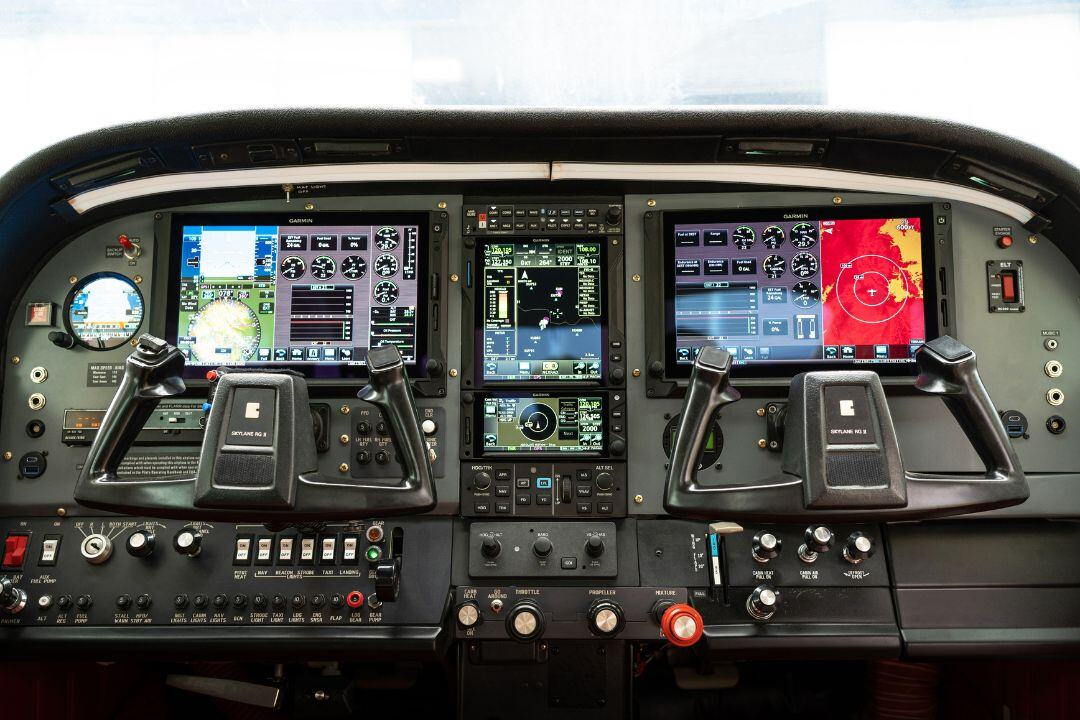
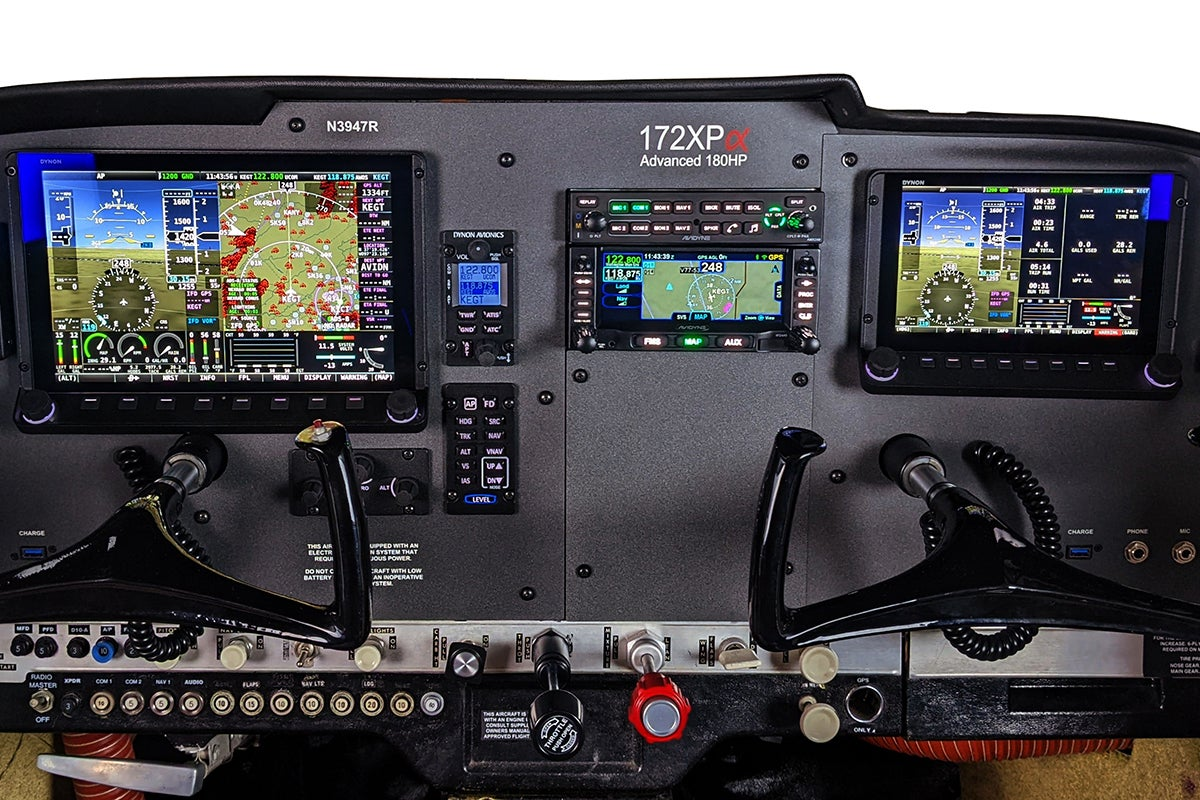
A primary-replacement monitor is approved to take the place of your original tachometer, manifold pressure, oil temperature and pressure, fuel quantity and other gauges. The instruments come out and the holes get covered. Hardware runs roughly $5,000 to $9,000 depending on cylinder count and options — the JPI EDM-900/930 series, the paired Electronics International CGR-30P/30C, and Garmin's engine-indication installations on the GI 275 or G3X Touch also fall into the primary-replacement category when installed under the applicable approval. G3X Touch installations use the GEA 24 engine interface, while GI 275 EIS installations may use a GEA 24-series or GEA 110 interface depending on the aircraft and installation.
The premium buys you panel space, one glass display instead of eight round holes, and a cleaner reversion to a single scan. It does not buy you better temperature data — a supplemental monitor reads the same probes just as accurately.
Flying411 keeps aircraft listings and owner-focused upgrade guides in one place, so you can compare what a panel actually contains before you commit to a project.
Installation Labor: Where the Hours Go
Avionics shop rates in the U.S. generally run $95 to $175 per hour, with metro shops and factory-authorized dealers at the top. Here is what those hours buy:
Probes. Every cylinder gets a CHT probe and an EGT probe. CHT probes are either bayonet-style in the existing well or a spark-plug gasket type. EGT probes require drilling and clamping each exhaust riser. That alone is several hours, and more on a tightly cowled airplane where the lower plugs are a wrestling match.
Harness and routing. A dozen or more thermocouple leads have to run from the accessory area, through the firewall, to the panel — routed away from heat, secured properly, and terminated. This is careful, slow work.
Panel work. A supplemental monitor needs a 2-1/4 or 3-1/8 inch hole and maybe a bracket. A primary replacement needs the old instruments pulled, a new panel section fabricated or a blanking plate made, fresh placards, and a weight and balance revision.
Fuel flow and fuel level. A fuel flow transducer in the line is a couple of hours. Fuel level as a primary indication is the expensive one — each tank has to be calibrated by draining and refilling in measured increments, which can eat 4 to 8 hours, and aging float senders often have to be replaced. Digital senders such as the CiES units commonly add $1,500 to $3,500 for a pair, installed.
Paperwork. STC paperwork, a Form 337 where required, flight manual supplement, and a ground run plus test flight to verify indications.
Pro Tip: The cheapest engine monitor install is the one done while the cylinders are already off. If an overhaul, a top overhaul, or a cylinder replacement is on the calendar, have the probes installed then. You can save a meaningful slice of the labor because the engine is already open and the cowling is already off.
Primary Replacement Approval: What You Can Legally Remove
This is where owners get tripped up. Under 14 CFR 91.205, a standard-category airplane needs certain engine instruments for day VFR flight — a tachometer for each engine, an oil pressure gauge, an oil temperature gauge for each air-cooled engine, a manifold pressure gauge for each altitude engine, and a fuel quantity indicator for each tank. Your type certificate data sheet and equipment list add to that. You cannot simply pull those gauges because a shiny screen shows the same numbers.
To remove them, the monitor has to be approved as a primary indication for those functions. In practice that means the manufacturer holds a Supplemental Type Certificate, usually an Approved Model List (AML) STC covering hundreds of airframes, and your make and model has to appear on that list. JPI, Electronics International and Garmin all hold AML STCs for primary engine indication on common Part 23 singles and twins. The installer checks your serial number against the list, follows the STC installation manual, and files the appropriate paperwork.
If your airframe is not on the AML, the options are a one-off field approval — which has become considerably harder to obtain than it was twenty years ago — or a supplemental install that leaves the original gauges in place. For most owners of unlisted airframes, supplemental is the practical answer.
Heads Up: Once a monitor is primary, it is required equipment. If the display fails on a Tuesday morning, the airplane is not airworthy until it is fixed, and most Part 91 light aircraft have no minimum equipment list to fly around it. Some owners deliberately keep a supplemental install for exactly this reason. Ask your shop what the STC allows you to retain as backup.
Fuel Savings and the Payback Math
The honest case for a monitor is safety and maintenance planning. The case that gets it approved by the household budget is fuel.
Accurate per-cylinder EGT and a fuel flow readout let you lean precisely, and on a fuel-injected engine with balanced injectors, that usually means running lean of peak. A 300-horsepower six-cylinder that burns about 17 gallons per hour rich of peak at cruise often burns closer to 14 gallons per hour lean of peak with a modest speed penalty. At avgas prices that have hovered in the $5.50 to $7.50 per gallon range at most U.S. self-serve pumps in recent years, that is roughly $16 to $22 per flight hour. Fly 150 hours and the monitor has paid for a good part of itself.
Scale that down honestly for a smaller airplane. A carbureted four-cylinder trainer burning 8 to 9 gallons per hour might save half a gallon to a gallon — call it $3 to $7 per hour. Real, but it will not repay a $7,000 install inside a few seasons.
Keep in Mind: Lean-of-peak operation on a fuel-injected engine usually requires balanced fuel injectors so all cylinders peak within a narrow fuel flow band. A matched injector set adds roughly $1,000 to $1,800. Plan on it if fuel savings is your main argument.
Flying411 keeps engine, ownership and operating-cost guides in one place, so you can compare what an upgrade really returns before you write the deposit check.
What It Does for Resale Value
Avionics rarely return a dollar for a dollar. Brokers and appraisers generally describe recently installed panel equipment as returning somewhere in the range of 25 to 50 cents on the dollar at sale, with newer installs at the better end. An engine monitor tends to sit toward the top of that band for three reasons, and none of them is the box.
First, it de-risks the engine for the buyer. A seller who can hand over two years of downloaded flight data, showing even CHTs and no valve anomalies, has answered the question every pre-buy inspection is trying to answer. That matters most on a mid-time engine, where the buyer is otherwise guessing. Our guide to how engine time affects aircraft value covers why that uncertainty costs real money.
Second, the data becomes part of the aircraft's record. Downloaded engine files supplement the logbooks in a way photos and receipts cannot, and complete maintenance records are consistently one of the biggest swing factors in a negotiated price.
Third, a primary-replacement install removes an entire row of failure-prone 1970s instruments from the panel. Buyers notice. So do appraisers evaluating the aircraft.
What it will not do is move a listing into a higher price bracket on its own. If you are weighing it against other panel work, our breakdown of which 172 upgrades actually increase price puts the competing options side by side.
Key Takeaways
A supplemental four-cylinder monitor lands around $5,500 to $9,500 installed; a primary-replacement system with fuel level integration on a six-cylinder runs $10,000 to $18,000, with labor at $95 to $175 an hour accounting for roughly half the bill either way. Fuel savings from precise leaning are real — roughly $3 to $7 per hour on a small carbureted engine, $16 to $22 per hour on a big fuel-injected six — so payback ranges from a few hundred hours to never, depending on what you fly. At resale, expect to recover something in the 25 to 50 percent range on the install, with the downloaded engine data doing more for the sale than the hardware does. The strongest financial argument remains the one that is hardest to put a number on: one cylinder caught before it fails is a valve job instead of a teardown.
| Cost item | Low | High | Type |
|---|---|---|---|
| Supplemental monitor hardware (4-cyl, with probes and fuel flow) | $2,500 | $4,500 | One-time |
| Supplemental monitor hardware (6-cyl) | $3,200 | $5,500 | One-time |
| Primary-replacement hardware (STC'd, 4 to 6 cyl) | $5,000 | $9,000 | One-time |
| Installation labor (20–60 hrs at $95–$175/hr) | $2,200 | $9,500 | One-time |
| Digital fuel level senders, pair, installed | $1,500 | $3,500 | One-time |
| Fuel tank calibration (primary fuel quantity) | $400 | $1,200 | One-time |
| Panel fabrication, placards, weight and balance | $300 | $1,500 | One-time |
| Balanced fuel injector set (for LOP operation) | $1,000 | $1,800 | One-time, optional |
| Engine data analysis subscription | $0 | $200 | Annual |
| Probe replacement (thermocouples fail occasionally) | $80 | $250 each | As needed |
| Fuel saved by accurate leaning | −$3/hr | −$22/hr | Per flight hour (credit) |
Ways to Spend Less
Go supplemental instead of primary. You give up the clean panel and keep eight round gauges, but you get identical per-cylinder data for roughly half the total cost — and the airplane stays legal if the monitor quits. For most owners whose goal is engine health rather than a panel remodel, this is the better value.
Skip primary fuel quantity. Calibration hours and new senders can add $2,000 to $4,500 on their own. Let the monitor handle fuel flow and totalizing, and leave the original float gauges as the legal fuel quantity indication. The trade is that you keep gauges you probably do not trust.
Bundle it with work already scheduled. Installing probes during a top overhaul, cylinder replacement, or a full engine change removes hours of teardown from the quote. The same logic applies to panel work — if the shop is already behind the instrument panel for an avionics upgrade, the incremental labor is much smaller. The trade is that you wait until that job happens.
Buy a used or previously installed unit carefully. Secondhand displays exist, but you still need the probes, the harness and the STC paperwork, and a unit pulled from a different airframe may not be covered for yours. Savings are real but modest, and you inherit an unknown service history.
Stay with one cylinder count of probes. Some owners try to save by monitoring only two or three cylinders. Do not. Partial coverage gives you the illusion of data while leaving exactly the cylinders you did not instrument free to fail quietly.
Good to Know: The monitor is only half the value. Third-party analysis services will ingest your downloaded flight files and flag trends you would never spot yourself, for an annual fee in the low hundreds of dollars — less than one hour of shop labor. Owners who never download the data get a nicer-looking panel and not much else.
Flying411 keeps maintenance, valuation and avionics articles in one place, so you can compare what upgrades cost against what they return before you list or buy.
So, Is It Worth the Install Cost?
For a fuel-injected six-cylinder flown 100 hours a year or more, the engine monitor install cost is easy to justify — leaning savings alone can repay a supplemental install inside three or four years, before you count a single avoided cylinder. For a 60-hour-a-year carbureted trainer, the fuel math does not get there, and the honest case rests on catching a problem early and on having engine data to hand a buyer later. Both are worth something; neither is worth the same to every owner. If you are already deep in a panel project or an overhaul, the marginal cost drops enough that the answer usually flips to yes. If you plan to sell within a year, read our notes on negotiating used aircraft price first — a recent install gives you something concrete to defend, but it will not carry the whole number.
When you are ready to compare listings, visitFlying411and see what is on the market today.
Frequently Asked Questions
Can I install an engine monitor myself as preventive maintenance?
No. Installing an engine monitor involves drilling exhaust risers, running firewall-forward wiring, altering the instrument panel and revising weight and balance — none of which falls under the owner-performed preventive maintenance items listed in 14 CFR Part 43. It requires a certificated mechanic or repair station, and a primary-replacement install requires following an STC.
Does a primary-replacement monitor mean I can throw away all my old gauges?
Only the functions the STC specifically approves as primary, and only on airframes covered by the Approved Model List. Anything the STC does not cover, and anything your type certificate data sheet or equipment list requires that the monitor does not display, stays in the panel.
How long does the install take at the shop?
Plan on the airplane being down roughly one to two weeks for a supplemental install and two to four weeks for a primary replacement with fuel level calibration. Shop backlog, not the work itself, is usually what determines the calendar.
Will an engine monitor lower my insurance premium?
Not directly. Underwriters price mainly on pilot experience, hull value and aircraft type. Where it can matter is indirectly — a well-documented engine supports the hull value you are asking for. Our guide to setting the right hull value covers how that conversation goes.
Is an engine monitor useful on an engine that is already near TBO?
Arguably more useful, not less. A high-time engine is exactly where a failing exhaust valve or a hot cylinder shows up first, and the data helps you decide between a top overhaul, a major, or running on with confidence. If a full replacement is on the horizon anyway, our comparison of factory new versus factory rebuilt Lycoming engines is the next thing to read.