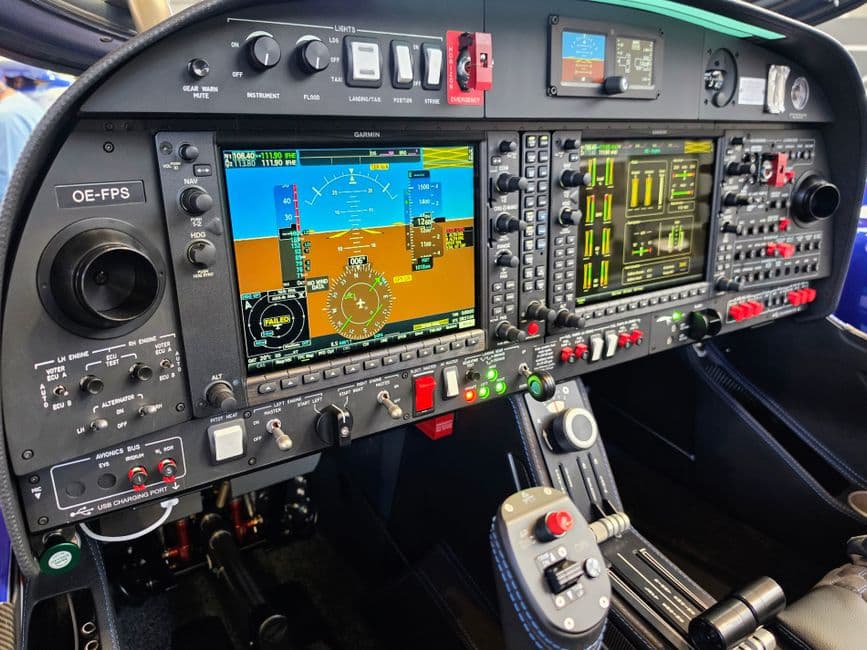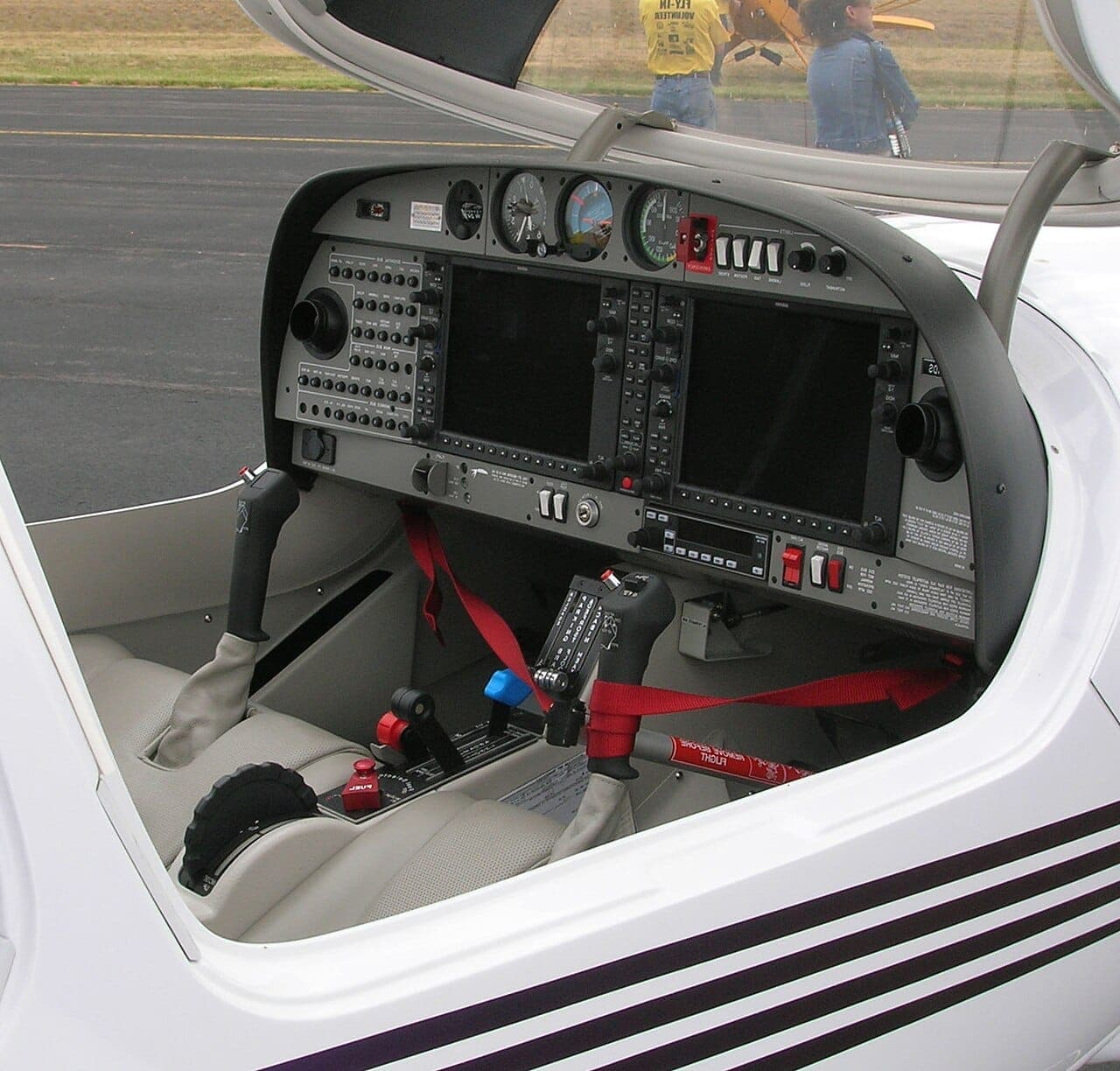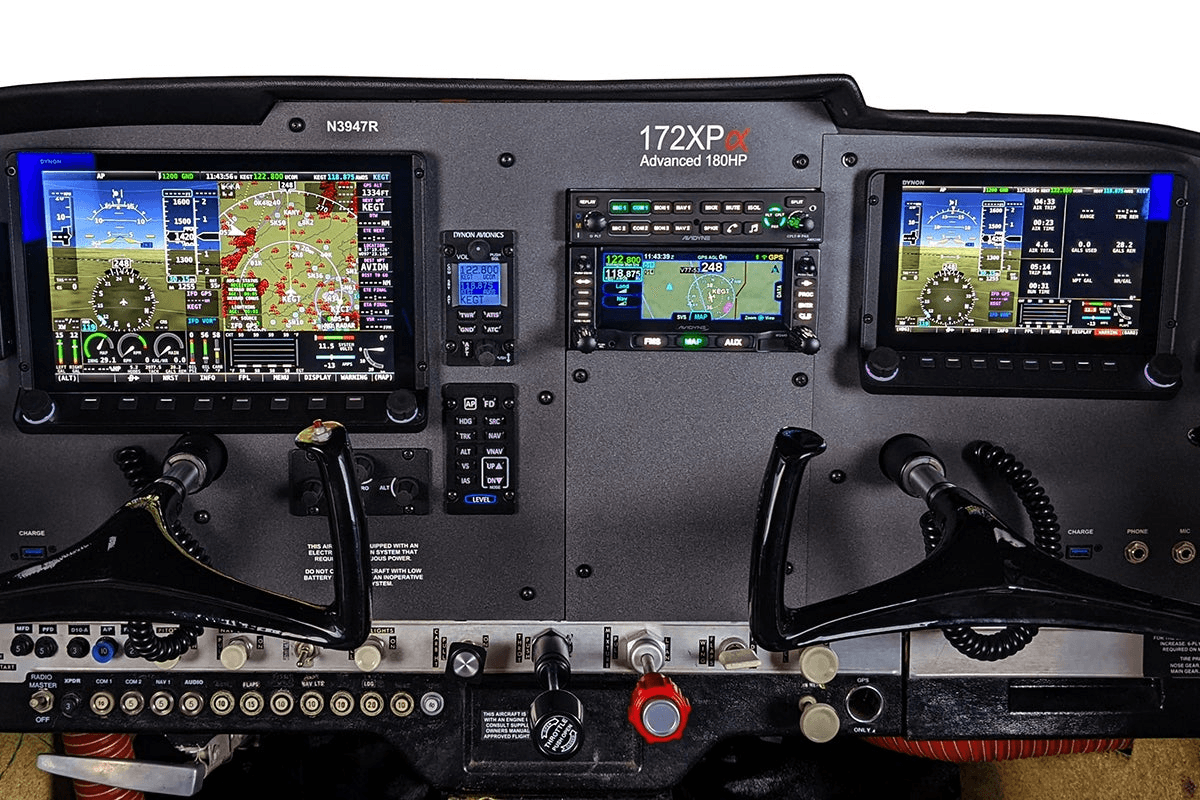
For most owners, the choice between the Garmin GFC 500 vs GFC 600 autopilot retrofit is made for you by your airframe, not your budget. The GFC 500 is approved for light piston singles and needs a Garmin G5 or GI 275 in the panel to feed it attitude data. The GFC 600 is designed for high-performance singles, piston twins and turbine aircraft. Unlike the GFC 500, it has its own attitude reference and does not require a G5 or GI 275, although the existing avionics must still meet Garmin's interface and installation requirements.
Where the two lists overlap — and they do overlap on a handful of airframes like the Bonanza — the decision comes down to what you want the autopilot to do and how much panel work you are willing to pay for. This article walks through eligibility, what each system needs installed around it, what shops are actually quoting as of 2025, and which one makes sense for three very different owners.
The Short Answer
If you fly a Cessna 172, 182, Cherokee, Mooney, Grumman or similar light single and you either already have a G5 or GI 275 or are happy to buy one, the GFC 500 is the right answer: it costs roughly half what a GFC 600 install costs and gives you the same core flying — altitude preselect, coupled LPV approaches, GPS roll steering and envelope protection. If you fly a Baron, a 400-series Cessna, a Navajo, a King Air or another airplane with a heavy, complex panel you do not want to rip out, the GFC 600 is the one, because it drops in without forcing you to replace your primary flight instruments and it brings twin-engine and turbine features the GFC 500 simply does not have. The overlap cases — mostly higher-performance Beechcraft singles — come down to whether you want a yaw damper and the extra protections badly enough to pay the difference.
Eligibility: Is Your Airplane Even on the List?
Both systems are installed under Garmin's Approved Model List Supplemental Type Certificates. That means Garmin has already done the engineering and flight testing for each airframe on the list, and your shop installs to that data rather than chasing a field approval. If your make, model and serial range is not on the list, you are not getting that autopilot, full stop — no amount of money fixes it until Garmin adds your airplane.
The GFC 500 list is built around light piston singles. Think Cessna 172, 175, 177, 182 and 210 series, Piper PA-28 Cherokees and Arrows, PA-24 Comanches, Mooney M20 variants, Beechcraft 33/35/36 Bonanzas, Grumman AA-5s, and a long tail of others that Garmin keeps adding to. The GFC 600 list runs the other direction: Beechcraft Baron 58 and 36-series, Cessna 310, 340, 414 and 421, Piper Navajo, King Air models, and a growing set of turbine airframes.
Garmin updates both lists several times a year, so the version of the list you read in a forum post from three years ago is not the current one. Check Garmin's published AML against your serial number before you budget anything, and have the shop confirm it in writing on the quote.
Heads Up: Being on the list is necessary but not sufficient. Some approvals carry conditions — a required trim configuration, a minimum navigator, specific control cable tensions, or exclusions for certain modification STCs already on your airplane. A floatplane kit, a tip-tank STC or an aftermarket engine conversion can knock you off the approval. Ask the shop to read the installation manual's limitations section with your logbooks open.
Edge: Draw — each system owns its own class of airplane, and for most owners only one list will have their airframe on it.
What Each System Needs Around It
This is the structural difference, and it drives the price gap more than anything else.
The GFC 500 is not a standalone box. It uses a Garmin G5 electronic flight instrument or a GI 275 as its attitude and air data source. No G5 or GI 275, no GFC 500. That requirement is a cost if you do not have one and a gift if you do — plenty of owners who already swapped a dying vacuum attitude indicator for a GI 275 discover the autopilot is now a much smaller job than they expected. If that swap is still ahead of you, our guide on going from a vacuum system to a G5 or GI 275 covers the payback math, and the G1000 versus G5 comparison explains how the two display philosophies differ.
The GFC 600 is self-contained. Garmin designed it so that it does not need to interface with a specific primary flight display at all — it brings its own attitude sensing and can live alongside steam gauges, a Garmin TXi, or a third-party EFIS. For an owner with a $70,000 panel that works fine and a 1980s autopilot that does not, that independence is the entire selling point. Depending on the existing equipment and the features you want, you may be able to replace the autopilot without a major flight-instrument upgrade, although some configurations still require additional compatible avionics.
Both systems need a compatible GPS navigator for the good stuff: coupled LPV approaches, GPS roll steering that flies holds and procedure turns without you touching the heading bug, and vertical navigation down a descent path. A compatible WAAS-enabled Garmin navigator can support coupled GPS approaches and roll steering, but automatic VNAV descent capability depends on the navigator model, software version, flight display and approved autopilot configuration. If your panel still has a 1990s nav/com and no WAAS GPS, add that to the budget before you add the autopilot — the autopilot is only as smart as what is feeding it.
One more install detail owners forget: both systems use Garmin smart servos that mount on brackets in the wings, tail and fuselage. That means interior panels out, inspection covers off, and in some airframes a headliner drop. The autopilot is not a panel job. It is an airframe job that ends at the panel.
Edge: GFC 600, on flexibility — it installs into any panel. GFC 500, on cost, if you already own a G5 or GI 275.
| Feature | Garmin GFC 500 | Garmin GFC 600 |
| Intended aircraft | Light single-engine piston | High-performance singles, piston twins, turbines |
| Attitude source required | G5 or GI 275 (mandatory) | Self-contained; no specific flight display required |
| Mode controller | GMC 507 | GMC 605 / GMC 607 |
| Servos | GSA 28 smart servos | GSA 87 smart servos |
| Automatic pitch trim | Optional third servo | Included on most installations |
| Yaw damper | Optional, select models only | Available on most approved models |
| Electronic Stability & Protection (ESP) | Yes | Yes |
| Level (LVL) recovery button | Yes | Yes |
| Coupled LPV approach and VNAV | Yes, with compatible navigator | Yes, with compatible navigator |
| Smart Rudder Bias (engine-out assist) | Not offered | Available on select twins |
| Typical shop labor | Roughly 60–100 hours | Roughly 150–250+ hours |
| Typical downtime | 2–5 weeks | 4–10 weeks |
| Typical installed cost, 2025 owner reports | About $25,000–$40,000 all-in | Approximately $45,000–$80,000+; actual 2026 quotes vary considerably by aircraft and equipment |
| Servo overhaul interval | On condition | On condition |
Flying411 keeps aircraft listings, equipment details and ownership guides in one place, so you can compare what a panel upgrade adds to an airplane before you write the check.
What the Install Really Costs
The sticker on the boxes is the part everyone quotes and the smaller half of the bill. On a typical GFC 500 job in a Cherokee or a 172, shops in 2025 reported hardware — mode controller, two or three servos, harness, brackets — running into the low five figures, with a certified G5 adding roughly $3,000 and a GI 275 roughly $5,000 before labor. Then comes 60 to 100 hours of shop time at $120 to $175 an hour depending on where you are, plus the AFM supplement, the compass swing, the pitot-static and transponder work if the shop touches those lines, and the flight test. All-in quotes that owners reported through 2025 clustered around $25,000 to $40,000, with the low end being an airplane that already had a GI 275 and a GTN in the panel.
The GFC 600 is a bigger animal in every direction. More servos in harder places, heavier control systems to interface with, often a yaw damper and a second trim channel, and on twins a much longer wiring run. Shop time of 150 to 250 hours is normal, and on a King Air or a pressurized twin it can go well past that. Owner-reported totals through 2025 generally landed between $45,000 and $80,000, with turbine installs higher still.
Keep in Mind: A quote that looks $8,000 cheaper than the shop down the road is usually cheaper because something is excluded. The usual suspects are the navigator interface, the annual inspection that has to happen anyway while the airplane is open, corrosion repairs discovered behind the interior panels, and the ferry flight. Ask for the quote to be itemized into hardware, labor hours, consumables and "findings allowance."
There is one genuine cost saving that applies to both: because the shop already has the interior out and the inspection plates off, this is the cheapest moment in your airplane's life to do other work. Owners often bundle in an engine monitor install, new wiring for landing lights, or an ADS-B swap. You are paying for the teardown once either way.
Edge: GFC 500, decisively. For the same mission profile in a light single, it does the job for roughly half the money.
Capability in the Air
Here is the surprise for owners coming off a 1970s wing-leveler: the GFC 500 is not a cut-down autopilot. It gives you altitude preselect, vertical speed and indicated airspeed climbs and descents, coupled approaches including LPV with a vertical path, GPS roll steering through holds and arcs, a flight director, and Garmin's Electronic Stability and Protection, which quietly nudges the controls back toward level if you get too steep or too fast with the autopilot off. The LVL button rolls wings level and pitches to level flight from a single press — the aviation equivalent of a car's lane-keeping assist, there for the moment you need it rather than the moment you want it.
What the GFC 600 adds is mostly about the airplanes it goes into. Yaw damping is available across most of its approved models rather than a select few. Smart Rudder Bias, on approved twins, senses an engine failure and automatically applies rudder force toward the operating engine while alerting you — a meaningful safety feature in exactly the phase of flight that kills twin pilots. Automatic descent on select installations handles the pressurization-failure case. Automatic trim is standard rather than an option.
Underspeed and overspeed protection is on both. So is the ability to hand-fly with the flight director showing you the command bars. For a light single flown single-pilot IFR, honestly, the GFC 500 does everything most owners will ever ask of it. The reasons to want a GFC 600 in a single are the yaw damper on a long-bodied airframe, the extra protections, and the fact that you did not want to put a G5 or GI 275 into a panel you just finished.
Fun Fact: There is a third member of the family. Garmin also certified the GFC 600H, a version for helicopters, which added full three-axis stabilization to aircraft like the Bell 407GXi — autopilots in piston helicopters were essentially unheard of a decade ago.
Edge: GFC 600, on raw capability — but the margin is narrow for single-engine operations and wide only for twins and turbines.
Flying411 keeps avionics upgrade guides and aircraft-for-sale listings in one place, so you can compare how a GFC-equipped airplane is priced against an identical one with a legacy autopilot.
Maintenance, Reliability and Resale
This is where both Garmin systems beat what they replace, and it is the argument most owners underweight. Legacy autopilots — Century, Cessna ARC, older S-TEC units — were built around mechanical gyros and servo clutches that wear. Parts support is thin, bench repair shops are retiring, and a single failed roll computer can be a multi-thousand-dollar hunt. The Garmin smart servos are brushless DC motors with built-in monitoring and no scheduled overhaul interval; they are maintained on condition. In practice, owners report very low ongoing cost beyond the occasional software update at a dealer.
Resale is the other half. A light single with a two-axis digital autopilot and coupled approach capability sells faster and to a wider pool of buyers than the same airplane with a placarded-inoperative Century III. You will not recover the full install cost — almost no avionics upgrade does — but a modern autopilot moves an airplane from "VFR fun flyer" to "serious IFR traveler" in the eyes of buyers, and that shows up in both price and days on market. The effect is strongest on 1970s and 1980s airframes, where the panel is the single biggest variable between two otherwise identical airplanes. If you are financing an older airframe and wondering how lenders see it, our piece on whether you can finance a 1970s airplane is worth reading before you commit.
Good to Know: Some insurers offer a modest premium credit or waive certain experience requirements when an airplane has envelope protection and a coupled autopilot. It is not automatic and it is not large, but ask your broker before renewal — the answer costs nothing to get.
Edge: Draw on maintenance. GFC 500 on resale return, because the spend is lower relative to the airplane's value.
Which One Should You Buy?
The 172 or Cherokee owner flying IFR cross-countries. GFC 500, and it is not close. Budget for a GI 275 or dual G5s if you do not have them, confirm your navigator talks to the autopilot, and plan on three to five weeks without the airplane. The result is an airplane that flies a coupled LPV to minimums and holds altitude better than you do on hour three of a long leg. If you are new to autopilot operation, read up on the common traps first in our guide to Cessna 172 autopilot basics, and see where the autopilot fits among the best avionics upgrades for a 172.
The Bonanza or high-performance single owner with a finished panel. This is the real overlap case. If your panel already has a G5 or GI 275 somewhere in it, take the GFC 500 and bank the difference. If your panel is all TXi or a third-party EFIS with no Garmin attitude instrument, and adding one means re-cutting a panel you just paid to have built, price the GFC 600 — the hardware costs more but you avoid tearing into finished work, and you get a yaw damper that makes a long-bodied Bonanza noticeably more pleasant in turbulence.
The twin or turbine owner. GFC 600 is the only option, and the question becomes timing rather than product. Get on a shop's schedule early, expect two months of downtime, and if the airplane is due an annual within the year, schedule them together. On an approved piston twin, Smart Rudder Bias is worth considering, but it requires a compatible GFC 600 installation with a yaw damper, Garmin TXi primary flight display and engine indication system, so the additional equipment costs should be included in the quote.
Pro Tip: Call three shops, and ask each one how many of your exact model they have done. The second install of a given airframe is always faster than the first, and a shop with the brackets, the harness routing and the gotchas already in muscle memory will quote fewer hours and hit the estimate. Travel two states to the experienced shop rather than save a ferry flight.
Getting the Quote Right Before You Commit
Settle three things in writing before the airplane goes in: that your serial number is on the current approved model list, what the quote excludes, and what happens to the schedule if the shop finds corrosion or bad wiring behind the panels. Those three questions account for nearly every unhappy story owners tell about an avionics project. The Garmin GFC 500 vs GFC 600 decision itself is usually straightforward once you know your airframe and what is already in the panel — the money and the frustration live in the install, not in the product choice.
Flying411 keeps aircraft listings, specifications and ownership guides in one place, so you can compare equipped airplanes side by side instead of guessing what a panel is worth.
When you are ready to compare listings, visitFlying411and see what is on the market today.
Frequently Asked Questions
Can I install a GFC 500 without a G5 or GI 275?
No. The GFC 500 uses a G5 or GI 275 as its attitude and air data source, and the STC requires one. If your panel has neither, that unit and its installation are part of your autopilot budget — figure roughly $3,000 for a certified G5 or $5,000 for a GI 275 in hardware as of 2025, before labor.
Is the GFC 600 worth the extra money in a single-engine airplane?
Only in specific cases. If your airplane is approved for both and you do not already own a Garmin attitude instrument, or you want a yaw damper that the GFC 500 does not offer on your model, the GFC 600 earns its price. Otherwise the GFC 500 flies the same approaches for roughly half the installed cost.
How long will my airplane be in the shop?
Plan on two to five weeks for a GFC 500 in a light single and four to ten weeks for a GFC 600, longer for a cabin-class twin or a turbine. Parts backorders and findings behind the interior panels are the two things that stretch schedules most, so do not book a trip for the week after the promised completion date.
Do the servos need periodic overhaul like older autopilots?
No. Garmin's GSA 28 and GSA 87 smart servos are maintained on condition rather than on a calendar or hour interval, which is a real departure from the mechanical servos and clutches in 1970s systems. Budget for occasional dealer software updates and little else.