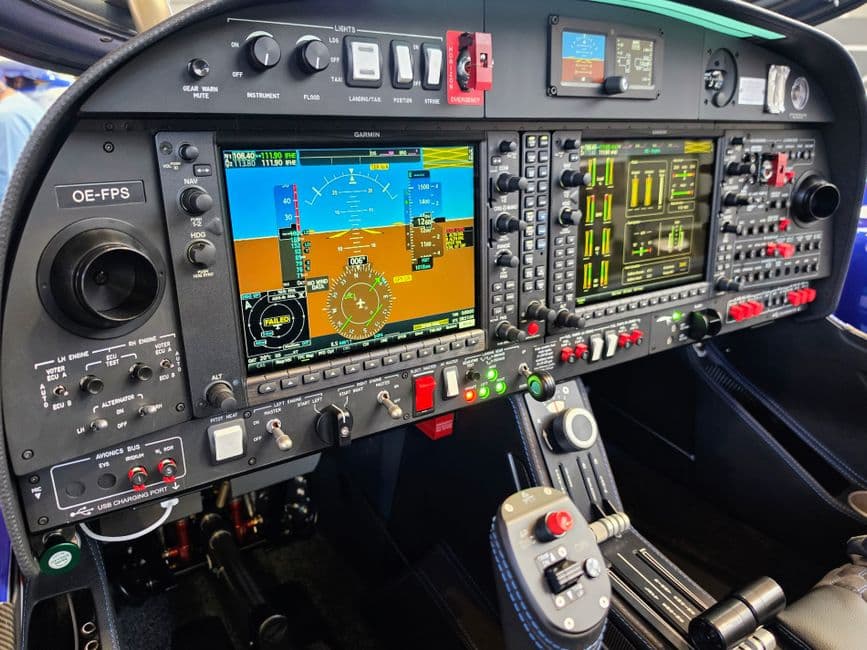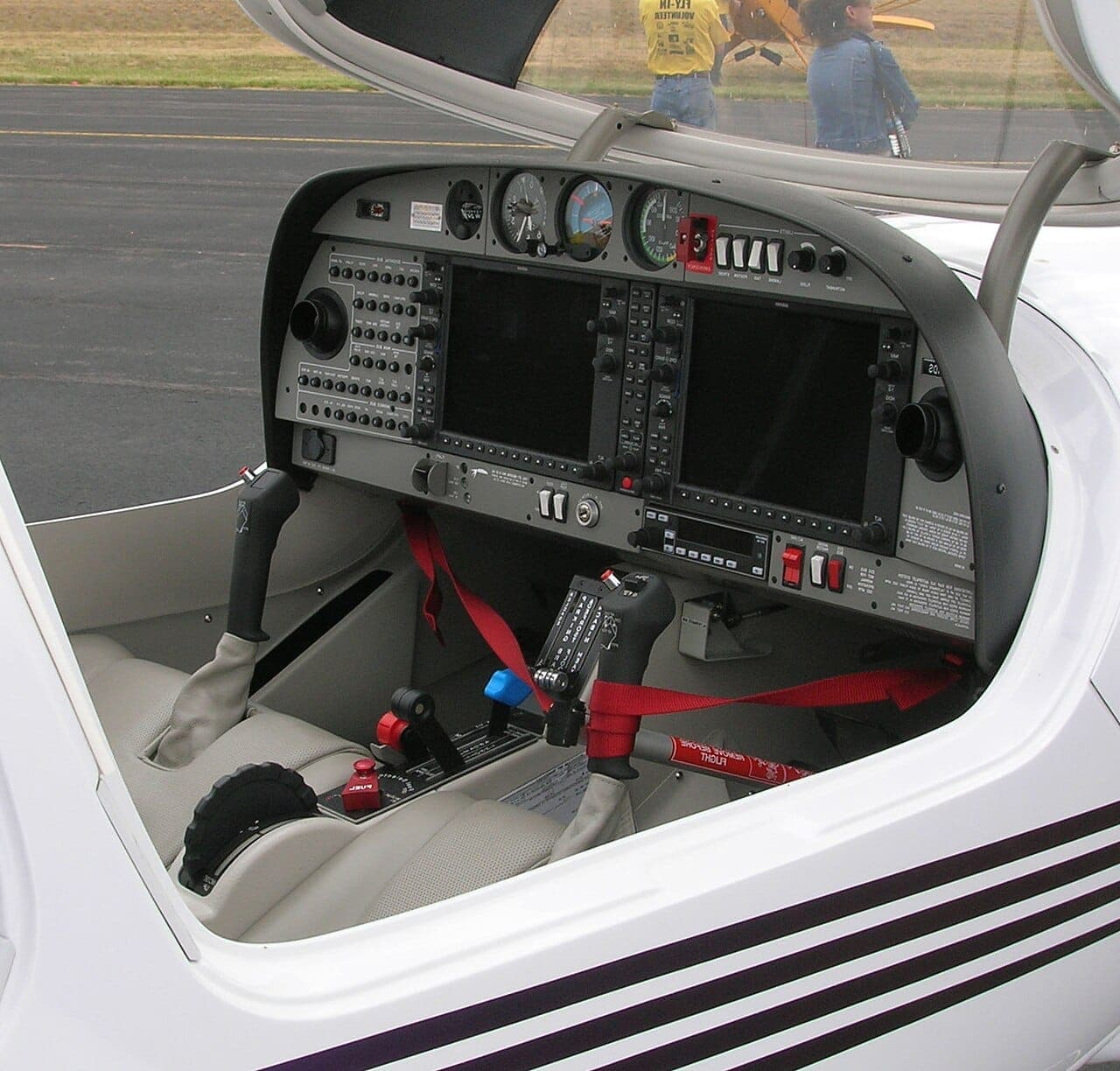

Yes — almost every 1970s single with a healthy 60-amp alternator can run a modern glass panel, because the new displays and navigators draw less current than the vacuum-driven gyros, tube radios and backlit CDIs they replace. The expensive part of a glass panel retrofit on a 1970s electrical system is not the amperage at all. It is backup power, a tired alternator and regulator, and five decades of wiring, grounds and contactors that nobody has looked at since the airplane was new.
Plan on $1,500 to $18,000 of electrical work on top of the avionics quote. You land near the bottom if your alternator and battery are recent, your grounds are clean, and your new displays carry their own internal backup batteries. You land near the top if you are adding a standby alternator, a lithium main battery, a new bus and breaker panel, and discovering corroded wiring behind the panel once the shop has it open.
Start With What the Airplane Actually Makes
Most 1970s light singles — Cessna 172s and 182s, Piper Cherokees and Archers, Grumman AA-5s — left the factory with a 14-volt system and an alternator rated somewhere between 50 and 70 amps. Fifty amps at 14 volts is about 700 watts. That is roughly one household hair dryer on low, and it has to run everything on the airplane at once.
Two things make the number on the data plate optimistic. First, a belt-driven alternator spinning slowly produces far less than its rating; at taxi RPM you may be drawing the battery down rather than charging it, which is why the ammeter swings negative while you sit at the hold short line with the strobes and landing light on. Second, a 50-year-old alternator that has never been overhauled rarely makes book output. Shops see units putting out 40 amps when the tag says 60.
Why It Matters: FAA Advisory Circular 43.13-1B recommends keeping continuous electrical loads at approximately 80 percent of alternator capacity when appropriate monitoring or load-control provisions are not available. On a 60-amp alternator, that means a planning limit of roughly 48 amps for the aircraft's total continuous electrical load, not 48 amps of unused capacity. The actual remaining capacity depends on everything operating at once, including avionics, lights, pitot heat and other equipment. An electrical load analysis must verify that the modified aircraft has sufficient generating and reserve power.
The other number that matters is the one your ammeter does not show you. Many 1970s Cessnas use a center-zero ammeter that reads battery charge or discharge, not total system load. You can be at 95 percent of alternator capacity and see a needle sitting contentedly in the middle. A loadmeter or a modern solid-state regulator with a load indication fixes that for a few hundred dollars.
What a Glass Panel Actually Draws
Here is the part that surprises owners. A complete Garmin-style IFR panel — two displays, a navigator, an ADS-B transponder, an audio panel and a two-axis autopilot — typically draws somewhere between 8 and 15 amps continuous at 14 volts. The 1970s panel it replaced, with two tube nav/coms, a glideslope, an ADF, panel lights and an electric turn coordinator, was often in the same neighborhood. Solid-state electronics are simply more efficient than what came before.
Approximate continuous draws at 14 volts, from manufacturer specifications and shop load sheets:
| Item | Typical 14V draw |
| Garmin G5 attitude or HSI display | About 0.3 amp |
| Garmin GI 275 (each) | Roughly 0.5 to 1 amp |
| Large touchscreen flight display | About 1.5 to 2.5 amps |
| GPS navigator (GTN Xi class) | About 1.5 to 3 amps |
| ADS-B In/Out transponder | About 1 amp, more in reply bursts |
| Audio panel | Under 1 amp |
| Autopilot servo, each, while working | 1 to 2 amps |
| Legacy tube nav/com it replaces | 1.5 to 2 amps |
| Incandescent landing light | About 7 amps |
| LED landing light | About 1.5 to 2 amps |
| Strobe power supply | 4 to 5 amps |
| Pitot heat | 5 to 7 amps |
| Position lights and beacon, incandescent | 5 to 7 amps combined |
Read that list again and notice where the current actually goes. The lights and the pitot heat are the hogs, not the glass. A night IFR departure in icing conditions with everything on is where a tired 60-amp alternator gets found out, and it would have been found out with the old panel too.
Good to Know: If your airplane is one of the 28-volt types — many Bonanzas, Barons and later Cessna 210s — every figure above halves. Same watts, half the amps. A 28-volt airplane almost never has a capacity problem with a glass panel.
Flying411 keeps avionics upgrade guides, model deep-dives and current listings in one place, so you can compare what a panel costs to build against what an already-upgraded airplane is asking.
Backup Power: The Real Cost of Going All-Electric
This is the expense that catches owners off guard, and it has nothing to do with running out of amps. When you pull the vacuum pump and the spinning gyros, your attitude reference becomes electric. Lose the alternator in IMC and you are flying on battery alone. A 1970s airplane with one alternator, one battery and no standby source is a single-point-of-failure design that was acceptable when the attitude indicator ran on suction.
There are three common answers, and they cost very different amounts.
Internal display batteries. Garmin rates the G5's backup battery for up to four hours of operation, while the GI 275's internal battery can provide at least 60 minutes of essential display operation under its specified conditions. Backup batteries are required for certain instrument configurations and optional for others. Their capacity, condition and installation limitations matter, and the batteries do not necessarily keep external navigators, radios or autopilot equipment running after a complete electrical failure. An avionics shop should verify whether the approved installation provides adequate backup power for the aircraft's intended operation.
An external backup battery. Systems such as the TCW Technologies IBBS sit behind the panel and hold up a defined load — typically a display and a navigator — for an hour or more after the main bus drops. Figure $1,200 to $3,000 installed depending on capacity and how much rewiring the shop has to do.
A standby alternator. B&C Specialty Products offers standby alternators that mount on an engine's accessory drive, including installations using the vacuum pump pad. However, the 8-amp SD-8 is primarily intended for experimental aircraft and does not carry a standard STC or PMA approval for installation in certified airplanes. B&C offers approved BC410 standby alternator systems for certain certified aircraft, with output and installation requirements depending on the model. Expect several thousand dollars in installed costs, and verify the approved aircraft list, electrical capacity and installation requirements before choosing a system.
Pro Tip: If you are already removing the vacuum system, price the standby alternator in the same visit. The pad is exposed, the cowl is off, and the shop is already running wire. Doing it two years later as a standalone job can double the labor. Our guide on moving from a vacuum system to a G5 or GI 275 walks through that decision in detail.
Wiring, Grounds and the Bus Nobody Quotes
Think of a 1970s airplane's electrical system the way you would think of an old house. The service panel might technically be rated for the new range you want to install, but the wiring between it and the kitchen is cloth-insulated, the ground is a copper pipe, and nobody has tightened a screw since 1974. The appliance is not the problem. The house is.
Behind a 50-year-old instrument panel a shop commonly finds brittle insulation, splices made with crimps and tape, ground wires daisy-chained to a single screw on the firewall, and a vibrating-point voltage regulator that has been quietly letting bus voltage drift. None of that mattered much to a tube radio. It matters a great deal to a display that reboots when voltage sags.
Typical costs when these come up:
- Solid-state voltage regulator (Zeftronics and similar PMA'd units): $350 to $900 installed. On a 1970s airplane this is close to mandatory, not optional.
- Alternator overhaul or exchange: $600 to $1,600 installed.
- Higher-output alternator under STC (Hartzell Engine Technologies / Plane-Power and B&C both offer kits for common legacy singles): $1,800 to $4,500 installed.
- New main and avionics bus, breaker panel, master and starter contactors: $500 to $3,500, depending on how much the shop replaces versus reuses.
- Ground strap and ground block cleanup: often a few hundred dollars, and the single highest-value item per dollar in the whole job. Most intermittent avionics gremlins are grounding problems.
Heads Up: Ask any shop quoting your panel whether wire, connectors and ground work are in the fixed price or billed as discovered. "Time and materials for anything found behind the panel" is a normal and honest term, but it is also where a $35,000 quote becomes a $42,000 invoice.
The Costs That Show Up Around the Edges
The electrical side pulls other work along with it. A new panel face has to be cut, finished and in most cases backlit, which runs $1,200 to $3,500 for a laser-cut, powder-coated panel with modern lighting. Old post lights and eyebrow lights frequently come out, and the dimmer circuit gets rebuilt.
Then there is certification paperwork. Under 14 CFR Section 91.411, aircraft operating IFR in controlled airspace generally need altimeter, static-system and altitude-reporting equipment inspections within the preceding 24 calendar months. Section 91.413 separately requires transponder testing within 24 calendar months for aircraft using an applicable ATC transponder, including during VFR operations. Additional testing may be required after installation or maintenance affecting these systems. Depending on the installation, budget roughly $300 to $700 for testing. Major alterations also require appropriate maintenance records and FAA Form 337 documentation, along with any necessary weight-and-balance and placard updates. Allow for possible post-installation squawks, which may add further expense.
Keep in Mind: An engine monitor is almost always cheaper to add during the panel job than after it, because the harness run and the panel cutout are already happening. Our breakdown of whether an engine monitor is worth the install cost covers the trade.
Key Takeaways
Capacity is rarely the obstacle. A 60-amp, 14-volt system has enough margin for a full modern IFR panel, and the glass itself usually draws less than what it replaces — the lights and pitot heat are what eat your headroom. What a 1970s airplane genuinely lacks is a second source of power and clean wiring to deliver it. Expect $1,500 to $3,500 of electrical work if your alternator, regulator and battery are sound and your displays carry internal backup batteries; $5,000 to $10,000 if you add an alternator upgrade, a backup battery and a bus rebuild; and $12,000 to $18,000 if you go all the way to a standby alternator, lithium main battery and new breaker panel. Across most 1970s singles, the electrical and infrastructure portion lands at roughly 15 to 30 percent of the total panel invoice.
Electrical Upgrade Costs at a Glance
| Item | Low | High | Type |
| Electrical load analysis and 337 paperwork | Bundled | $600 | One-time |
| Main battery, flooded or sealed AGM | $300 | $1,400 | Recurring, 2–5 years |
| Lithium main battery (True Blue Power class) | $4,000 | $8,000 | One-time, long life |
| Alternator overhaul or exchange | $600 | $1,600 | One-time |
| Higher-output alternator STC kit | $1,800 | $4,500 | One-time |
| Solid-state voltage regulator | $350 | $900 | One-time |
| Standby alternator on vacuum pad | $4,000 | $8,000 | One-time |
| External backup battery system | $1,200 | $3,000 | One-time, cells replaced periodically |
| Internal display backup battery option | $400 | $900 | One-time, per display |
| Bus, breaker panel, contactors, grounds | $500 | $3,500 | One-time |
| Panel fabrication and backlighting | $1,200 | $3,500 | One-time |
| 91.411 / 91.413 recertification | $300 | $700 | Every 24 calendar months |
| Post-install squawk visits | $0 | $2,000 | One-time, usually |
| LED lighting conversion (whole airplane) | $800 | $3,500 | One-time |
Avionics shop labor ran roughly $110 to $185 per hour across the United States as of 2025, with coastal metro shops at the top of that band. A panel job of this size is usually quoted 60 to 200 labor hours, so the rate matters as much as the parts list.
Flying411 keeps listings, avionics guides and ownership cost articles in one place, so you can compare a 1970s airframe with original wiring against one that has already had the work done.
Ways to Spend Less
Every one of these saves real money, and every one gives something up.
Keep the attitude indicator on its own power, skip the standby alternator. Two displays with internal batteries cost a fraction of an $6,000 standby alternator and satisfy most day-IFR missions. What you trade: you have a time limit after an alternator failure, not an indefinite supply. For hard IFR in weather, that is a different risk picture.
Convert the lights to LED first. Pulling 10 to 15 amps of incandescent load out of the system buys you more headroom than a new alternator, usually for less money, and the bulbs last for years. What you trade: a few thousand dollars spent on something that does not show up on the panel, and some LED units are noisier electrically than their makers admit — ask your shop which kits they have had trouble with.
Keep the existing breaker panel if the shop signs off on it. Reusing serviceable breakers and bus bars can save $1,000 or more. What you trade: a mixed-age system, and the next owner's pre-buy inspector will notice.
Stage the work across two annuals. Do the alternator, regulator, battery and grounds at one annual, the displays and navigator at the next. What you trade: you pay for panel access twice, which can erase part of the savings. This only works if the first phase is engine-side work that does not require pulling the panel.
Buy the airplane that already has it. A 1970s single with a documented modern panel typically sells for less of a premium than the upgrade cost, because panels do not return dollar for dollar at resale. Our look at which 172 upgrades actually increase price puts numbers to that, and if you are weighing the purchase route, financing a 1970s airplane covers the lender side. What you trade: somebody else's choices about boxes and layout.
Fun Fact: A lithium main battery of the True Blue Power type weighs roughly a third of the lead-acid unit it replaces — a swing of 15 pounds or so in a 172, all of it ahead of the firewall. Owners who are nose-heavy after a panel full of new glass sometimes find the battery swap pays for itself twice: once in weight and once in cranking performance.
Planning the Electrical Side Before You Sign
Ask three questions before you accept any quote on a glass panel retrofit for a 1970s electrical system. What does the load analysis show at worst-case night IFR? What happens to my attitude reference if the alternator quits over a 3,000-foot overcast? And is wire, connector and ground work inside the fixed price or billed as found? A shop that answers all three without hesitating is a shop that has done this on your airframe before. If you are still deciding which boxes go in the hole, start with the IFR avionics requirements you actually have to meet, then look at which upgrades earn their keep, and price the autopilot separately using our GFC 500 versus GFC 600 comparison. Setting aside money ahead of time helps too — our guide to how much to reserve per flight hour includes an avionics line.
Flying411 keeps panel upgrade guides, operating cost breakdowns and aircraft listings in one place, so you can compare the all-in number instead of just the sticker.
When you are ready to compare listings, visitFlying411and see what is on the market today.
Frequently Asked Questions
Will a 60-amp alternator run a full Garmin glass panel?
In nearly all cases, yes. A two-display, one-navigator, autopilot-equipped panel typically draws 8 to 15 amps continuous at 14 volts, which leaves plenty of room under the roughly 48-amp working limit of a 60-amp system. The question your shop has to answer is what happens with pitot heat, strobes, landing light and position lights all on at the same time — and whether your specific alternator still makes its rated output.
Do I need a standby alternator if I remove the vacuum system?
Not legally, in most cases, but you need some second source of power. Displays with internal backup batteries satisfy the certification requirement for most installations and give you one to four hours of attitude information. A standby alternator gives you indefinite power and costs several thousand dollars more. How much weather you fly should drive that choice, not the price tag.
How do I know whether my 50-year-old wiring needs replacing?
Have an avionics shop pull the panel and look before you commit to a quote — most will do an inspection for a few hours of labor. They are looking for brittle or cracked insulation, taped splices, corroded terminals, daisy-chained grounds and a vibrating-point voltage regulator. If the airplane has already had two or three partial panel jobs over the decades, assume the wiring is a patchwork and budget accordingly.
Should I convert my 14-volt airplane to 28 volts?
Almost never. There is no approved path for most legacy singles, and where one exists the cost of a new alternator, regulator, battery, contactors, starter and every 14-volt accessory in the airplane dwarfs any benefit. Modern avionics are dual-voltage and run perfectly well on 14 volts. Spend the money on backup power and clean wiring instead.
Is a lithium main battery worth it on an older airplane?
It depends on what you need. Lithium mains save meaningful weight, hold voltage better under crank, and last longer than lead-acid, but cost several times as much up front and require specific charging and maintenance practices. If your airplane is nose-heavy after a panel upgrade or you fly in cold climates where starting is marginal, the case is strong. For a hangar-kept trainer flying local VFR, a good sealed AGM at a fraction of the price is the better buy.