There is something almost magical about a helicopter. It lifts straight off the ground, hovers in mid-air, and can land in a clearing the size of a parking lot. No runway. No long taxi. Just up and gone.
But for all the things a helicopter can do that a fixed-wing airplane simply cannot, there are real trade-offs. Higher costs, louder cabins, limited range, and a surprising amount of mechanical complexity come along for the ride.
Understanding the advantages and disadvantages of a helicopter is important for anyone considering owning one, chartering one, or just trying to figure out if rotary-wing flight is the right tool for the job.
The full picture is more interesting than most people expect — so here is everything you need to know.
Key Takeaways
Helicopters offer unique abilities that no other aircraft can match, including vertical takeoff and landing, hovering in place, and access to remote areas with no runway. These make them invaluable for search and rescue, emergency medical services, military operations, and private travel in dense urban areas. On the downside, they are expensive to buy and maintain, slower and shorter-ranged than fixed-wing aircraft, and more sensitive to weather than many people realize.
| Factor | Helicopter | Fixed-Wing Airplane |
| Runway required | No | Yes |
| Hovering ability | Yes | No |
| Cruising speed | Lower (roughly 100-180 mph typical) | Higher (150-500+ mph) |
| Range per tank | Shorter | Longer |
| Operating cost | Higher | Lower (generally) |
| Weather sensitivity | High | Moderate |
| Maintenance complexity | Very high | Moderate to high |
| Best use case | Short trips, remote access, precision ops | Long-distance travel |
Flying411 covers everything aviation — from helicopter basics to ownership questions — in plain language that actually makes sense.
A Quick Look at How Helicopters Work
Before diving into the pros and cons, it helps to understand what makes a helicopter tick.
A helicopter generates lift through its spinning rotor blades rather than forward motion through the air. The pilot controls three main inputs: the collective (raises or lowers the rotor blade pitch to climb or descend), the cyclic (tilts the rotor disk to move forward, backward, or sideways), and the tail rotor pedals (counters torque and controls yaw). Together, these give a helicopter its remarkable freedom of movement.
Fun Fact: The idea of vertical flight goes back centuries. Designs resembling helicopter rotors appeared in ancient Chinese toys, and Leonardo da Vinci is said to have sketched a rotating aerial screw in the late 1400s. The first truly successful helicopter flight is credited to Igor Sikorsky, whose VS-300 lifted off in Connecticut in 1939.
If you want to go deeper on the mechanics, this guide on how a helicopter engine works walks through it step by step.
What Makes Helicopters Unique in Aviation
Helicopters belong to a class of aircraft called Vertical Takeoff and Landing (VTOL) vehicles. This single characteristic separates them from almost every other type of aircraft in the sky.
A fixed-wing plane needs forward speed to generate lift from its wings. A helicopter generates lift independently of forward speed, which is why it can hover, fly sideways, fly backward, and land on a rooftop, a ship deck, or a mountain ledge.
That freedom comes at a cost — literally. But before getting to the downsides, the advantages are worth appreciating fully.
Good to Know: Helicopters are used in an enormous range of industries: emergency medical services, firefighting, military operations, law enforcement, news broadcasting, offshore oil platform support, wildlife surveys, luxury transport, and even agriculture. Few machines are as versatile.
Advantages and Disadvantages of a Helicopter
Here is a thorough breakdown of both sides — starting with what helicopters do exceptionally well.
Advantage 1: No Runway Needed
This is the big one. A helicopter can take off from and land on almost any flat surface large enough to fit its rotor diameter. Rooftops, ship decks, mountain clearings, highway medians, hospital courtyards — the list is long.
This makes helicopters irreplaceable in situations where a runway does not exist and cannot be built. Remote wilderness rescues, offshore platform transfers, and urban medical emergencies all depend on this capability.
Why It Matters: In the United States, there are thousands of helipads compared to a much smaller number of public-use airports. For truly door-to-door travel in dense cities or remote terrain, a helicopter can get closer to the actual destination than any fixed-wing aircraft.
Advantage 2: The Ability to Hover
No airplane can do this. A helicopter can hang perfectly still in the air over a single point, which opens up a range of tasks that would be impossible otherwise.
Search and rescue teams hover while lowering rescuers on cables. News helicopters hover above traffic. Fire crews hover to drop water on precise targets. Utility workers use helicopters to hover next to power lines for inspection. The hover capability alone justifies the helicopter's existence in dozens of industries.
Advantage 3: Access to Remote and Hard-to-Reach Areas
Helicopters can reach places that no road, boat, or fixed-wing aircraft can access. Dense jungle canopy, steep mountain slopes, flooded valleys, and open ocean are all within reach.
Why a helicopter cannot fly to the very top of Everest is an interesting edge case — thin air limits rotor efficiency at extreme altitude — but helicopters regularly operate in high-mountain environments where no other aircraft and no road can go.
This makes them critical for:
- Mountain search and rescue
- Remote oil and gas field support
- Wildfire suppression in roadless terrain
- Medical evacuation from disaster zones
Advantage 4: Faster Emergency Response
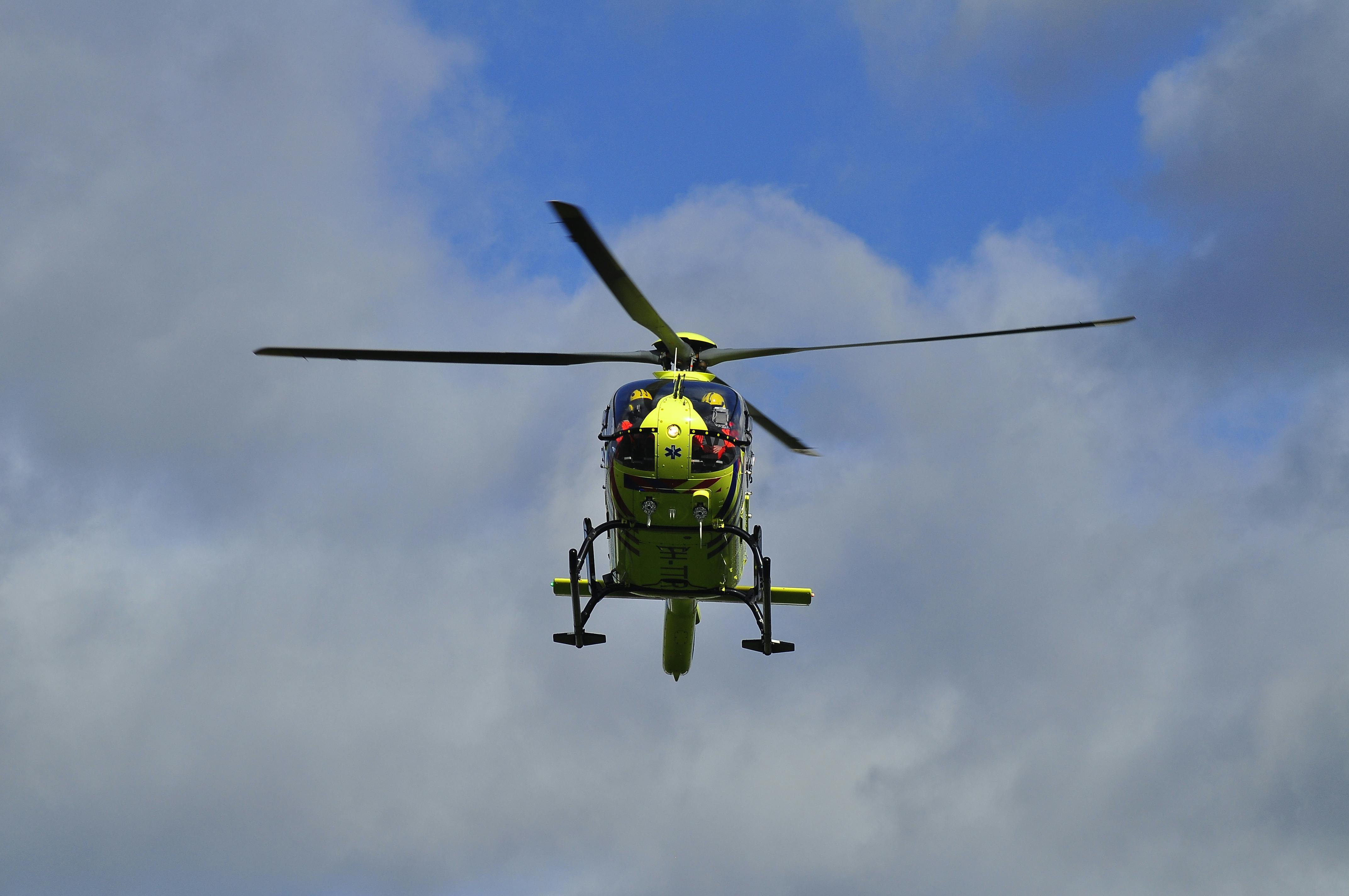
When roads are blocked, flooded, or simply too slow, a helicopter provides the fastest path from point A to point B. Emergency medical services across the United States rely on air ambulance helicopters to reach trauma patients faster and transport them to trauma centers in minutes rather than hours.
In natural disasters like earthquakes or hurricanes, helicopters are often the first responders on the scene — and sometimes the only ones who can get there at all.
Pro Tip: If you ever need to approach a rescue or medical helicopter on the ground, knowing the right safety protocols matters. This guide on how to approach a helicopter safely covers the basics every person should know.
Advantage 5: Versatility Across Industries
Few machines serve as many roles as a helicopter. The same basic airframe design can be adapted for:
- Medical transport (air ambulances)
- Military operations (troop movement, close air support, logistics)
- Law enforcement (surveillance, pursuit, tactical support)
- Firefighting (water drops, aerial supervision)
- Agriculture (crop dusting, livestock monitoring)
- Construction (heavy lift, precision placement of equipment)
- Tourism (scenic tours, sightseeing)
- Corporate and VIP transport (urban helipads, point-to-point luxury travel)
This versatility is unmatched by any fixed-wing aircraft.
Advantage 6: Low-Altitude, Low-Speed Flight
Helicopters are comfortable flying slowly and low to the ground. This makes them ideal for tasks that require close visual inspection — pipeline surveys, power line checks, wildlife counts, or aerial photography where you need to linger over a subject.
Fixed-wing aircraft need to maintain airspeed to stay aloft. A helicopter can slow to a crawl or stop entirely, giving operators time to do their work properly.
Advantage 7: Point-to-Point Urban Travel
In congested cities, a helicopter can dramatically compress travel time. A trip that takes two hours by car in heavy traffic can take under fifteen minutes by helicopter.
Many major cities around the world have extensive helipad networks. For executives, VIPs, and anyone who needs to move quickly across a metro area, helicopter travel offers a time advantage that no ground transportation can match.
Fun Fact: São Paulo, Brazil, is said to have one of the most active helicopter transportation networks of any city in the world, with hundreds of helipads and an enormous number of daily flights supporting business travel across the metro area.
Advantage 8: Unique Visual Experience
This one is less practical but worth noting. Flying in a helicopter at low altitude, with large windows and panoramic visibility, offers a view of the world that no other form of travel provides. Scenic helicopter tours over places like the Grand Canyon, the Hawaiian coastline, or Manhattan's skyline are popular precisely because the experience is unlike anything else.
Whether you are curious about costs or ready to start flying, Flying411 has the resources to help you understand what helicopter ownership actually involves.
Now for the honest other side of the equation.
Disadvantage 1: High Operating Costs
Helicopters are expensive. Not just to buy — to fly and maintain.
Fuel consumption is high relative to the distance covered. Maintenance requirements are intensive and frequent. Rotor blades, gearboxes, tail rotor components, and engines all have strict replacement intervals regulated by the FAA, regardless of apparent condition. Charter rates for a mid-size helicopter can run from roughly $1,500 to over $5,000 per hour, depending on the aircraft and operator.
For a detailed look at what ownership actually costs, this breakdown of how much a helicopter costs covers purchase price, operating expenses, and what to expect.
Heads Up: Helicopters generally require significantly more maintenance hours per flight hour than comparable fixed-wing aircraft. This is not a minor difference — it meaningfully affects the total cost of operation over time.
Disadvantage 2: Limited Speed and Range
Compared to fixed-wing aircraft, helicopters are slow and short-ranged. Most piston and turbine helicopters cruise somewhere between 100 and 180 miles per hour. A midsize business jet cruises at roughly twice that speed or more.
Range is similarly limited. Most helicopters carry enough fuel for a few hundred miles at most before needing to refuel. For long-distance travel, this makes helicopters impractical and often more expensive per mile than a fixed-wing alternative.
Disadvantage 3: Weather Sensitivity
Helicopters are more sensitive to adverse weather than most fixed-wing aircraft. High winds, heavy rain, low visibility, and icing conditions can all ground a helicopter when a turboprop or jet could continue flying.
This is particularly relevant for charter customers who need reliable point-to-point travel — a helicopter's schedule is more susceptible to weather delays than a jet's.
Keep in Mind: Helicopters and lightning are an important safety topic. While helicopters are built with some protection, understanding the risks matters. This article on what happens if a helicopter gets struck by lightning explains how these events unfold and what pilots do.
Disadvantage 4: Noise and Vibration
Helicopters are loud — both inside the cabin and on the ground below. Rotor noise and engine vibration are constant companions on any helicopter flight. Passengers on longer trips may find the noise and vibration fatiguing in ways that fixed-wing travel is not.
On the ground, helicopter noise is a genuine community concern. Many residential and urban areas restrict helicopter operations, and the noise footprint of a helicopter approach is significantly larger than a quiet turboprop or jet.
Disadvantage 5: Limited Payload and Passenger Capacity
Most civilian helicopters carry between two and eight passengers. Luggage space is tight. Even large executive helicopters carry far fewer passengers than a comparable private jet, and the baggage restrictions can be genuinely limiting for longer trips.
For group travel or any journey requiring significant cargo, a fixed-wing aircraft is almost always the better choice.
Disadvantage 6: Mechanical Complexity
A helicopter is mechanically more complex than a fixed-wing aircraft of comparable size. The rotor system, swashplate, pitch links, tail rotor drive shaft, and transmission are all intricate components that require careful, regular inspection by qualified technicians.
This complexity means higher maintenance costs and, in the event of a mechanical issue, fewer pilots and mechanics with the experience to diagnose and fix the problem quickly.
Good to Know: Helicopter pilots require a separate license from fixed-wing pilots. If you are considering learning to fly a helicopter, this guide on helicopter license costs gives a realistic picture of what the training process involves.
Disadvantage 7: Lower Altitude Ceiling Compared to Fixed-Wing Jets
Helicopters are designed to operate at relatively low altitudes. Most civilian helicopters have a service ceiling well below what a turbofan jet can reach. This means they cannot fly above most weather systems the way a high-altitude jet can, making them more susceptible to the turbulence and weather that exists at lower altitudes.
Helicopters vs. Fixed-Wing Aircraft: Side-by-Side
If you are trying to decide between helicopter and fixed-wing travel or ownership, this comparison may help clarify the decision.
| Factor | Helicopter | Fixed-Wing |
| Short urban trips | Excellent | Poor to fair |
| Long-distance travel | Poor | Excellent |
| Remote area access | Excellent | Limited |
| Payload capacity | Limited | Higher |
| Operating cost per hour | Higher | Lower (generally) |
| Weather flexibility | Lower | Higher |
| Pilot training cost | Higher | Lower |
| Noise level | High | Moderate |
| Hovering | Yes | No |
| Runway required | No | Yes |
The right choice depends entirely on the mission. For short, point-to-point travel in congested areas or remote terrain, a helicopter is hard to beat. For longer trips with more passengers and luggage, a fixed-wing aircraft almost always makes more economic sense.
Real-World Uses That Highlight the Trade-Offs
Some of the most compelling cases for helicopters also illustrate exactly where their limitations show up.
Emergency Medical Services
Air ambulance helicopters save lives that no ground vehicle could reach in time. They hover over accident scenes, land in fields and parking lots, and deliver patients to trauma centers faster than any alternative. The high operating cost is simply accepted as part of the mission.
Military Operations
The military helicopter fills roles ranging from troop transport and medevac to close air support and reconnaissance. The UH-60 Black Hawk, for instance, is one of the most widely used military helicopters in the world. Curious about what one costs? This breakdown of how much a Black Hawk helicopter costs puts it in perspective.
Corporate and VIP Travel
For executives who need to connect between a city center and a regional airport without sitting in traffic, a helicopter solves a real problem. The cost is high, but the time saved on short hops can justify the expense — especially for someone whose time carries significant value.
Pro Tip: For corporate helicopter travel, the sweet spot is generally trips in the 30-to-150-mile range. Below 30 miles, the overhead of scheduling and boarding may not save much time over a car. Beyond 150 miles, a fixed-wing aircraft usually becomes faster and cheaper.
Firefighting
Aerial firefighting helicopters carry water or fire retardant and can make precision drops on active fire lines in terrain where no ground crew can safely work. The hover capability is essential here — a fixed-wing airtanker must make high-speed passes with less precision.
Conclusion
Helicopters are one of the most remarkable machines humans have built. The ability to lift straight up, hover motionless, and land almost anywhere is genuinely extraordinary. For search and rescue, emergency medicine, remote access, and short urban hops, nothing else comes close.
At the same time, the advantages and disadvantages of a helicopter are real on both sides. High costs, limited range, weather sensitivity, and mechanical complexity are not small concerns — they shape every decision about when and whether to use rotary-wing aviation.
The key is matching the right tool to the right mission. A helicopter is the right answer for certain jobs and the wrong answer for others.
If you want help thinking through what helicopter ownership, training, or charter actually involves, Flying411 is a great place to start — with honest, practical information for anyone curious about rotary-wing aviation.
FAQs
Are helicopters safer than airplanes?
Fixed-wing aircraft generally have a lower accident rate per flight hour than helicopters, largely because helicopter operations often involve inherently riskier missions like low-altitude flight, mountain rescue, and offshore operations. However, modern helicopters are built to high safety standards, and incident rates have improved significantly over the decades.
Can a helicopter fly in rain?
Light to moderate rain is generally not a problem for most helicopters. Heavy rain combined with low visibility, strong winds, or icing conditions is a different matter and may ground the aircraft depending on the helicopter type and the pilot's equipment rating.
How far can a helicopter travel on a full tank of fuel?
This varies widely by aircraft type. A small piston helicopter might have a range of around 200-300 miles, while a larger turbine helicopter could extend that to 400 miles or more with auxiliary tanks. Range is one of the key limitations of helicopter travel compared to fixed-wing aircraft.
Is it harder to fly a helicopter than an airplane?
Most flight instructors consider helicopter flying more demanding to learn initially, particularly hovering and low-speed maneuvering, which require constant coordinated input across multiple controls. Many pilots describe the early hours of helicopter training as more challenging than the equivalent stage in fixed-wing training.
What is autorotation, and why does it matter for helicopter safety?
Autorotation is the ability of a helicopter to descend safely and land without engine power by using the airflow through the rotor blades to maintain rotation and control. It is one of the key safety features of helicopter design and is a required skill for every licensed helicopter pilot.