GE publishes a 3,600-hour, 6,600-cycle overhaul interval for the H80 turboprop with no scheduled hot section inspection in between. That second half of the sentence is the part that changes a budget. On a typical PT6A, the mid-life hot section is a five- or six-figure event that arrives around halfway to overhaul, so the engine effectively bills you twice per cycle. Understanding Walter M601 and GE H80 overhaul cost next to a PT6A means comparing the whole cycle, not the headline reserve number.
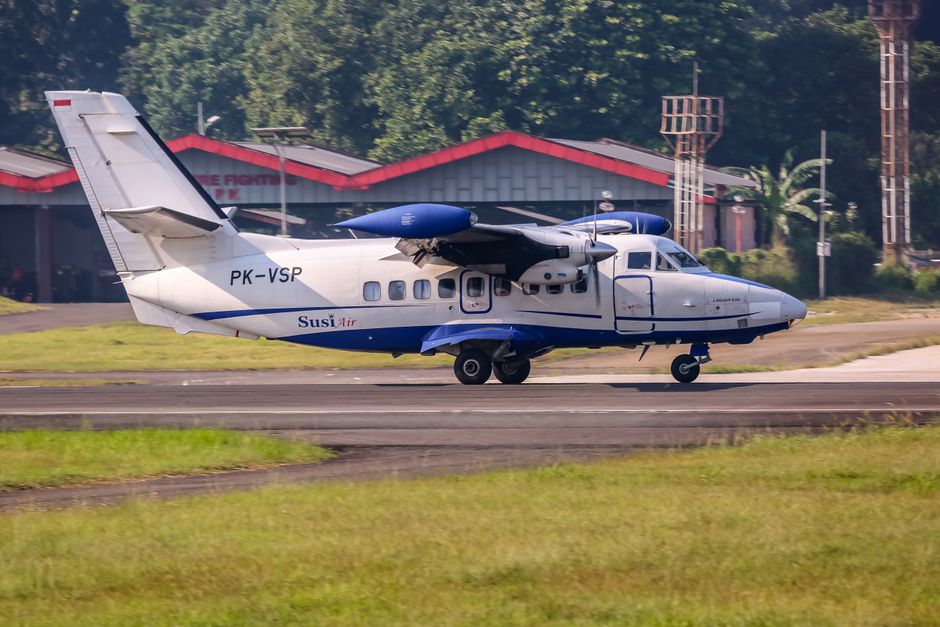
This matters most to buyers looking at a Let L-410, a Thrush 510G, a PZL M18 Dromader, a turbine Ag Cat or An-2 conversion, or a re-engined King Air C90 wearing GE H75-100s. The airframe may look familiar. The engine economics do not behave the way your PT6A experience tells you they should.
The Short Answer
If you fly a lot of hours in a place with good support, the Walter/GE engine is usually the cheaper engine to own: the overhaul invoice tends to land in the low-to-mid six figures rather than the high six figures, and current GE H-series engines skip the scheduled hot section entirely. If you fly fewer hours, operate far from a Czech-trained shop, or care about how quickly the airplane sells later, the PT6A earns its higher overhaul price through a service network that exists almost everywhere, a deep used-parts market, and a resale audience that never has to ask "who works on those?" Put simply, the M601/H80 wins on cost per hour and the PT6A wins on convenience and liquidity.
TBO and Hot Sections: Where the H80 Pulls Ahead
The Walter M601 is a free-turbine engine like the PT6A, but laid out differently. Air comes in at the front through an annular intake, passes through two axial stages and a centrifugal compressor, burns in an annular chamber, then drives a single-stage gas generator turbine and a single-stage free power turbine. The propeller reduction gearbox sits up front. The PT6A does the same job backwards, with a rear intake and reverse airflow.
What matters to your wallet is the inspection schedule. Published M601 overhaul intervals depend heavily on the variant and on which service bulletins the engine has complied with, and they generally run from roughly 1,500 hours on early M601D installations up to about 3,000 hours on later M601E engines with the applicable bulletins embodied. Many Walter M601 variants were specifically designed to operate between overhauls without a scheduled intermediate hot-section inspection. Their overhaul limits vary substantially by model, service-bulletin status, cycles, and calendar time, so the applicable maintenance program for the exact engine must be checked rather than assuming a PT6A-style mid-life hot-section event.
The GE H-Series expanded that low-maintenance concept. The original H80 was introduced with a 3,600-flight-hour or 6,600-cycle overhaul interval and no scheduled intermediate hot-section inspection. Current GE Aerospace guidance says H-Series engines can have TBOs of up to 4,000 hours depending on configuration and approved extension programs, so buyers should verify the interval for the specific model and serial number. The H75 (750 shp) and H85 (850 shp) share the family.
For comparison, common general aviation PT6A variants such as the PT6A-114A in a Caravan or the PT6A-42 in a King Air 200 carry a 3,600-hour TBO with a hot section commonly scheduled at half that. Larger and newer PT6A models run considerably longer, and Pratt & Whitney Canada has pushed many operators toward condition-based and on-condition programs that stretch the calendar further. Our article on the PT6A hot section versus full overhaul breaks that side down in detail.
Good to Know: Cycles can bite before hours do. The H80's 6,600-cycle limit sits alongside the 3,600-hour limit, and an ag operator flying 15-minute hopper loads burns cycles far faster than a charter crew flying two-hour legs. If the airplane you are looking at has done short-hop work, read the cycle count before you read the hour meter.
Edge: GE H-series, decisively. No scheduled hot section between overhauls removes an entire line item that PT6A owners plan around.
What an Overhaul Actually Costs
Shop quotes vary with engine condition, so treat every figure here as a range rather than a price list. Operators and shops report Walter M601 overhauls landing roughly in the $120,000 to $200,000 area, and GE H-series overhauls somewhat higher, commonly quoted in the $150,000 to $250,000 range depending on how much life remains in the cycle-limited rotating parts. GE has also marketed fixed-price and cost-per-hour maintenance programs for the H80, which is worth asking about if you fly enough to care.
PT6A overhauls sit in a different tier. A smaller PT6A such as a -21 or -114A commonly runs in the $250,000 to $400,000 range, while mid-size variants like the -42 or -60A frequently quote from the low $300,000s into the $500,000s and beyond once parts scrap out. Add a hot section at mid-life, typically quoted between roughly $75,000 and $150,000 on the popular models, and the cycle cost gap widens further.
Do the arithmetic per hour, which is the only honest way to compare. An H80 at $200,000 across 3,600 hours is about $56 an hour in engine reserve. A PT6A-42 at $400,000 plus a $110,000 hot section across the same 3,600 hours is roughly $142 an hour. That is a meaningful difference on an airplane flying 400 hours a year. It is also why the operators who fly the most hours per year tend to be the ones most willing to live with a less common engine.
Why It Matters: Engine reserve is not optional money. It is a bill you are already accruing whether or not you set the cash aside, the same way a roof is quietly costing you something every year before it leaks. Owners who skip the reserve are the ones who end up parting out an otherwise good airframe.
Edge: Walter/GE, by a wide margin on cost per hour.
| Engine | Power (shp) | Published TBO | Scheduled hot section | Typical overhaul range | Where you see it |
|---|---|---|---|---|---|
| Walter M601D | 657 | Varies by model, cycles, calendar time, and SB status; commonly within roughly 1,500–2,000 hr on many installations | Generally no scheduled intermediate HSI; verify exact maintenance program | $120,000–$180,000 | Ag Cat and An-2 turbine conversions, Zlin Z-137T |
| Walter M601E | 751 | Up to about 3,000 hr on applicable variants/configurations; cycle and calendar limits also apply | Generally no scheduled intermediate HSI; verify exact maintenance progra | $130,000–$200,000 | Let L-410, PZL M18 Dromader |
| GE H75 / H80 / H85 | 750 / 800 / 850 | Originally 3,600 hr / 6,600 cycles on the H80 family; current approved TBO may reach 4,000 hr depending on model/program | None scheduled | $150,000–$250,000 | Thrush 510G, L-410 NG, Nextant G90XT |
| PT6A-114A | 675 | 3,600 hr | Commonly at half TBO | $250,000–$400,000 | Cessna 208 / 208B Caravan |
| PT6A-42 | 850 | 3,600 hr | Commonly at half TBO | $300,000–$500,000+ | King Air 200 / B200 |
Overhaul figures are shop-quote ranges reported by operators and vary widely with the condition of life-limited parts. Always confirm the current interval in the applicable maintenance manual and service bulletins for the specific serial number.
Flying411 keeps turboprop listings, specs and ownership guides in one place, so you can compare an H80-powered airframe against a PT6A airframe on the numbers that actually drive your annual budget.
Parts, Shops and How Long the Airplane Sits
This is the dimension that surprises first-time Walter buyers. Think of it as the difference between owning a Ford pickup and owning a well-built European diesel: both do the work, but only one has a parts counter in every town.
Pratt & Whitney Canada supports the PT6A through a worldwide network of company and designated overhaul facilities, plus a large independent shop base, rental and exchange engine pools, and an enormous serviceable-used-parts market built up over more than 50,000 engines delivered. If your PT6A goes off-wing in most of North America, someone within a day's drive has done that job before, and a loaner may be available.
The H-Series and M601 still have a smaller support footprint than the PT6A, but the network is broader than a Czech-only operation. GE Aerospace and Avio Aero currently support the family through authorized service centers worldwide, including multiple U.S. locations, and H-Series overhauls are available both in Prague and through an authorized overhaul facility in Texas. The PT6A still has the deeper parts, rental-engine, and independent-shop ecosystem, but a U.S. H-Series owner does not necessarily have to send an engine overseas for major work.
Heads Up: Ask about the propeller before you sign anything. Many M601 installations run Avia five-blade propellers, which carry their own overhaul intervals and their own parts supply chain. A propeller overhaul coming due at the same time as the engine can add a five-figure surprise that never shows up in the engine quote.
Edge: PT6A, clearly. Downtime and shop competition are worth real money.
Life-Limited Parts: The Bill Inside the Bill
Both engines have cycle-limited rotating parts: compressor impellers, turbine discs, shafts. When those parts run out of cycles, the shop replaces them at overhaul whether or not they look healthy. That is why the same engine model can produce a $150,000 quote for one owner and a $240,000 quote for another.
When you are evaluating a specific airplane, the question is never "what does an overhaul cost." It is "what does this overhaul cost, on this serial number, with these parts at this cycle count." Ask the seller for the engine's cycle status and the remaining life on each life-limited part, in writing. On a PT6A you can often verify that history through the manufacturer's records. On an M601 with a colorful international past, you are relying on logbooks, so check them the way you would check a title. Our guide to aircraft engine overhaul requirements covers what a complete records package should contain.
Pro Tip: Convert remaining life into dollars before you negotiate. An engine with 900 hours to TBO is not "three quarters run out," it is "you owe roughly $40,000 to $55,000 of reserve between now and the shop visit" on an H80, and roughly double that on a mid-size PT6A. That number belongs in your offer.
Edge: Draw. Both engines punish you for ignoring cycle counts, and both reward careful records review.
Resale, Insurance and the Buyer After You
Engine choice follows the airframe to the next owner. PT6A-powered airplanes sell into a market that already understands the engine, finances it easily, and insures it without argument. Walter- and GE-powered airframes frequently trade at a discount for the same capability, and that discount is partly rational (thinner support) and partly reputational inertia from the M601's Cold War origins.
Insurers care too, though less than owners assume. What moves a turbine quote most is pilot experience in type, not the badge on the cowl. Still, if you are the only H80 operator on your field, expect to spend more time explaining your maintenance plan to an underwriter than the King Air owner two hangars down.
The flip side: a discounted purchase price plus a cheaper overhaul cycle can beat a premium airplane on total cost of ownership over ten years, as long as you are the one flying it and not the one trying to flip it in eighteen months. If you want a sense of how the other side of the ledger looks on a conventional turboprop twin, our breakdown of King Air F90 operating cost is a useful benchmark.
Edge: PT6A. Easier to sell, easier to finance, easier to explain.
Flying411 keeps King Air, Caravan, L-410 and utility turboprop listings in one place, so you can compare asking prices against time remaining on the engines rather than guessing.
Which One Should You Buy?
The high-utilization operator. If you are flying 500 to 900 hours a year in ag work, parachute operations, freight or bush flying, the Walter or GE engine is a serious contender. Cost per hour is what kills you at that utilization, and the H-series' no-scheduled-hot-section cycle plus a lower overhaul invoice can save six figures across a single TBO run. Build a relationship with an authorized service center before you buy, and budget for a spare engine or an exchange arrangement if downtime costs you revenue.
The owner-flown personal or business turboprop buyer. If the airplane flies 150 to 250 hours a year and lives at a small field with a local shop, the PT6A is usually the better answer. At that utilization the engine reserve difference is smaller in absolute dollars, and you are buying convenience: someone nearby knows the engine, a loaner exists, and the airplane sells quickly when you are done with it.
The conversion or experimental buyer. If you are looking at a turbine Ag Cat, an An-2 conversion, or a homebuilt with an M601 in the nose, understand that you are buying into a specialist world. Price the airplane on the assumption that you will pay for shipping and specialist labor, verify who has actually signed off work on that engine in the last five years, and confirm parts availability for your specific variant before you fall in love. The economics can be excellent. The surprises are expensive.
Keep in Mind: Under Part 91, TBO on most turbine engines is a manufacturer recommendation rather than a hard legal limit, though your insurer, your lender and your lease may treat it as one. The principle is the same one we cover in whether TBO is a legal limit for Part 91, and if the whole concept is new to you, start with what TBO means in aircraft engines. Life-limited parts are a different story: those cycle limits are mandatory.
Budget Per Hour, Not Per Invoice
The honest way to settle the Walter M601 and GE H80 overhaul cost question against a PT6A is to write down three numbers for each candidate airplane: hours remaining to overhaul, cycles remaining on life-limited parts, and the nearest shop that will actually do the work. Divide the expected shop bill by the hours remaining and you have your true reserve. On most H80 installations that number lands somewhere near $50 to $70 an hour. On most mid-size PT6A installations it lands closer to $110 to $150 once the hot section is folded in. Whether the difference is worth the thinner support network depends entirely on how many hours a year you fly and how far you are from help.
Flying411 keeps turboprop specs, overhaul guides and current listings in one place, so you can compare the engine reserve alongside the asking price instead of discovering it after closing.
When you are ready to compare listings, visitFlying411and see what is on the market today.
Frequently Asked Questions
Is the GE H80 the same engine as the Walter M601?
It is the same basic architecture, substantially improved. GE acquired the Walter engine business and re-certified the design in 2011 with a new 3D aerodynamic compressor and other changes, giving 800 shp, a 3,600-hour or 6,600-cycle overhaul interval, and no scheduled hot section inspection. Many M601 installations can be upgraded to H-series standard, but it is an engine change, not a paperwork exercise, so get a firm quote and confirm STC coverage for your airframe.
Does the H80 really need no hot section inspection?
GE publishes the engine with no scheduled hot section between overhauls. That is not the same as no inspections at all. Borescope checks, filter and chip detector checks, fuel nozzle work and periodic maintenance tasks still apply, and any engine showing trend shifts, hot starts or FOD gets opened regardless of what the schedule says. The saving is the elimination of the planned mid-life teardown, not the elimination of maintenance.
Why do PT6A overhauls cost so much more?
Three reasons: the PT6A has more stages and more expensive hot section hardware in most variants, its life-limited parts carry high replacement prices, and overhaul scope grows once parts are opened and measured. The offset is a mature market for serviceable used parts, rental engines and competing shops, which keeps quotes honest and downtime short. Our comparison of the PT6A hot section versus overhaul shows where the money goes.
How does the TPE331 fit into this comparison?
The TPE331 is the third option in this power class, a single-shaft engine with different handling and a different maintenance rhythm than either free-turbine design. Its overhaul costs sit between the Walter and the PT6A on many models, and it is the engine you inherit if you buy a Mitsubishi MU-2 or a Jetstream. If that is your shortlist, our MU-2 buyer's guide covers the TPE331 cost side in context.